
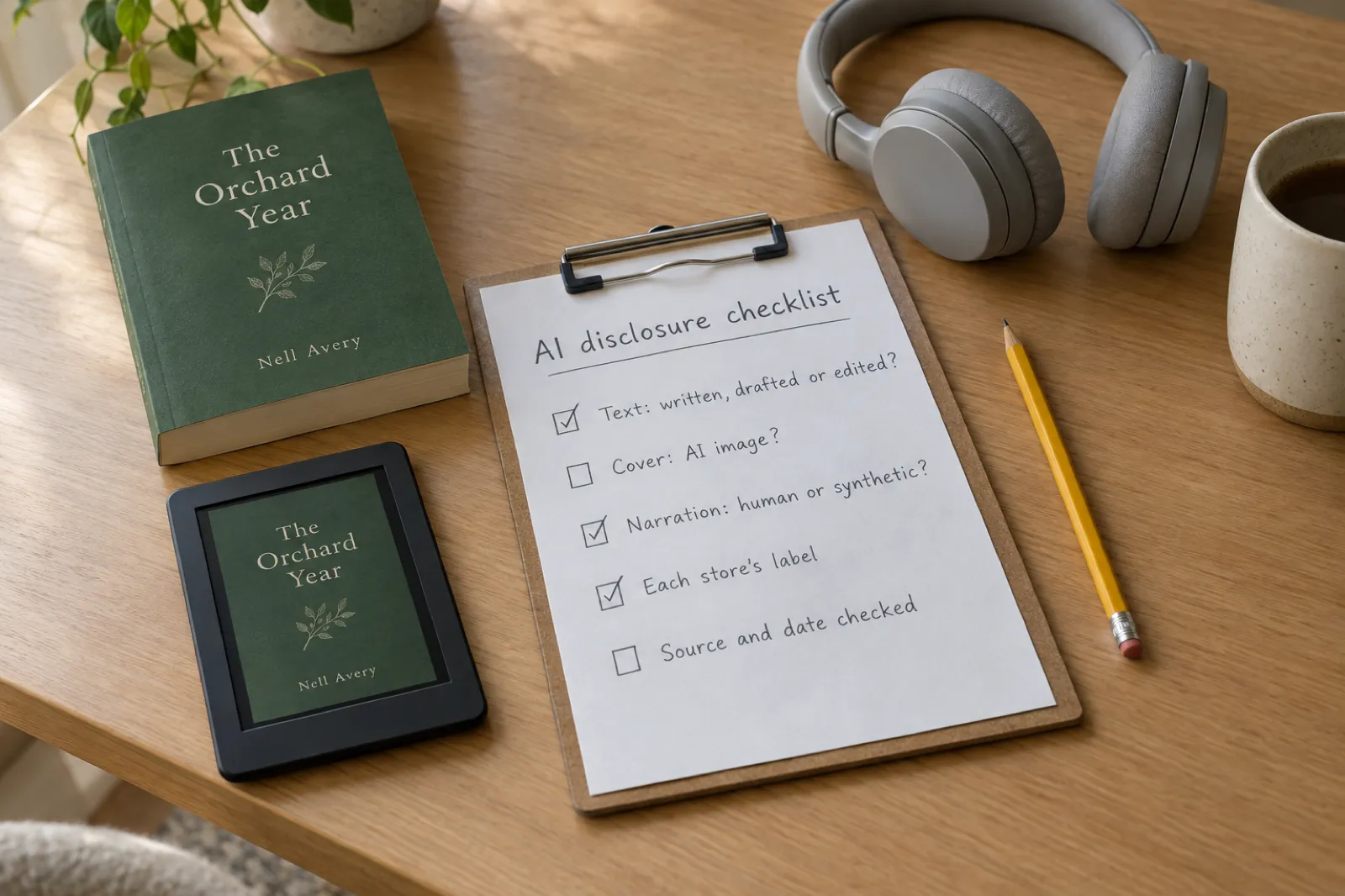
Quick Answer
Most stores allow AI-written books, but each asks something different. Amazon KDP, Apple Books and Barnes & Noble Press accept AI-generated text if you disclose it their way (KDP's AI-generated answer, Apple's "AI Generated by" role, B&N's AI-Created label). Google Play Books has no AI rule, only quality rules. Draft2Digital and IngramSpark accept AI drafts only after extensive human editing. Kobo lists "wholly or partially AI generated" among its rejection reasons. For audiobooks the picture flips: ACX wants human narrators, while Google Play and Kobo take labelled AI narration. Every rule below is quoted from the platform's own page, with the date we read it.
Ask five authors which stores allow AI-written books and you will get five answers, most of them a year out of date. The rules have moved a lot in 2026: B&N Press updated its AI disclosure page in March, Kobo's list of rejection reasons (updated in May) names AI generation, Draft2Digital added fees aimed at content farms, Etsy tightened its AI rules on 22 October, and Amazon renamed Kindle Unlimited the same day. This page puts every rule in one place, in the platform's own words, so you can check a store in ten seconds and see exactly where the answer came from.
It covers 21 routes: the big ebook stores, the aggregators that deliver to them, IngramSpark for print, the library platforms, the direct-sale platforms authors use for downloads, and the audiobook routes. For each one you get the answer for AI-written text, what you have to declare, the rule for AI covers, the rule for AI narration, and the source with the date we read it. Then there's a tool that takes how your book was made and tells you where it can go and what to tick at each store.
Disclosure: Inkfluence AI is our product. It writes books with you, makes covers and audiobooks, and publishes to Etsy and Gumroad, so we have a stake in this topic. We say plainly below where books made with it count as AI-generated.
Rules read on 28 October 2026 unless a row says otherwise. We re-check every source monthly and change the date on each row when we do. This is a summary of written policies, not legal advice.
The master table: AI rules on 21 platforms
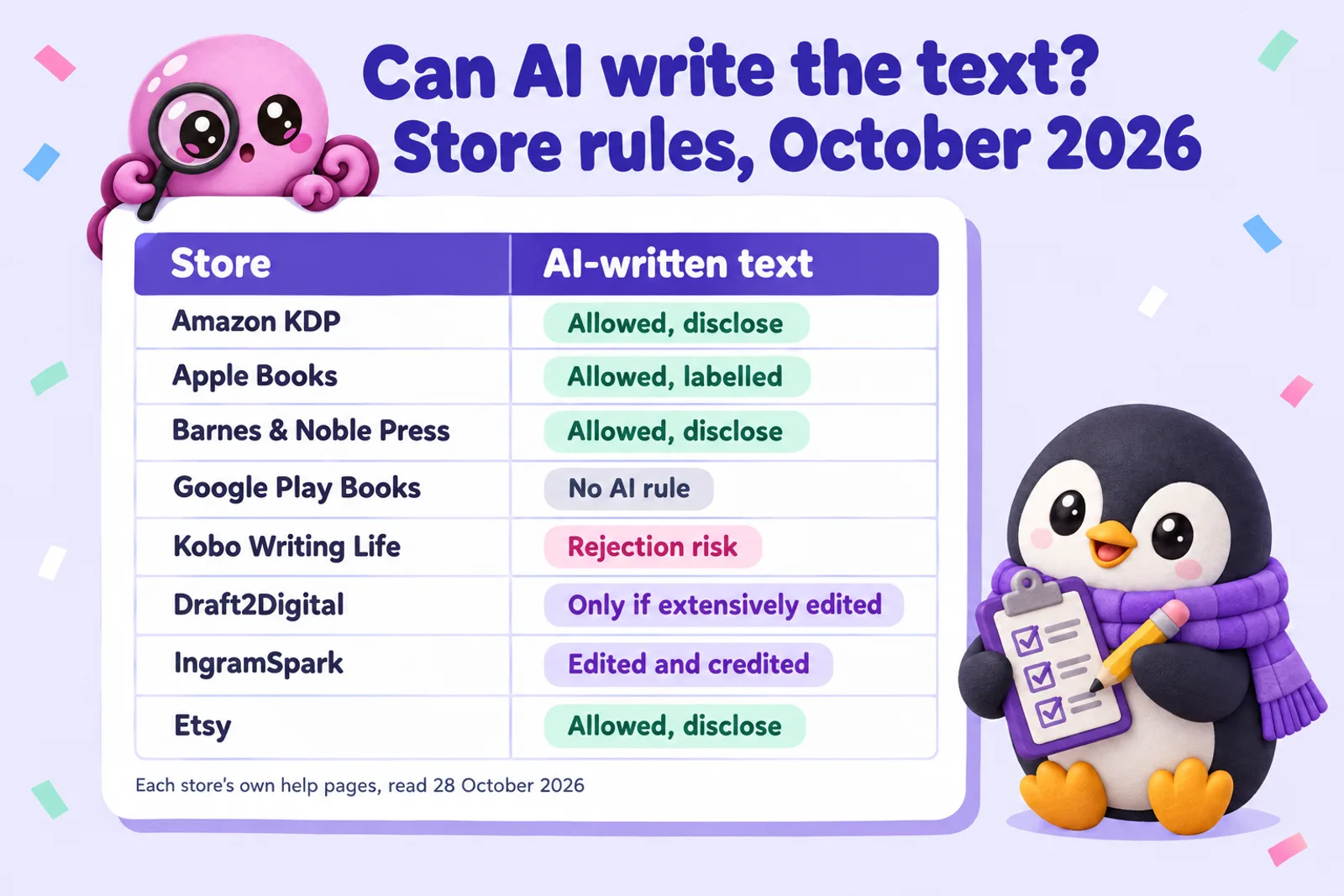
"AI-written text" is the platform's answer for a book whose words were generated by AI. Green means allowed, purple means allowed with conditions, red means a written rule that works against it, grey means no AI rule published. Scroll sideways on a phone. Every source links to the platform's own page.
| Platform | AI-written text, and what you declare | AI covers and images | AI narration |
|---|---|---|---|
| Amazon KDPStore: ebook and printKDP Content Guidelinesread 28 Oct 2026 | Allowed, disclosedAnswer the AI question on the Content page and mark text, images or translations as AI-generated. AI-assisted work needs no answer. | Allowed, disclosed. Covers and interior art both count. | Not through KDP itself: see ACX and Virtual Voice. |
| Apple BooksStore: ebooks and audiobooksApple Books Formatting and Content Guidelines, 1.13read 28 Oct 2026 | Allowed, labelledWhen a material portion is AI-generated: the "AI Generated by" contributor role, plus a sentence in the description. | An AI cover on a book a human wrote needs no label. AI illustrations that are a material part of the book do. | Its own digital narration, through a partner. Outside AI narration must be labelled and delivered by a partner. |
| Barnes & Noble PressStore: ebook and printB&N Press Help: Use of Generative AI in Your Projectread 28 Oct 2026 | Allowed, disclosedAt setup, AI-Created or AI-Assisted for the cover, manuscript, images and translations. Required before publishing. | Allowed, disclosed as AI-Created. | B&N Press sells no audiobooks. |
| Google Play BooksStore: ebooks and audiobooksPublisher Content Policies for Google Play Booksread 28 Oct 2026 | No AI rule; quality rules applyNothing for ebooks. Audiobooks: a "Synthesized voice" narrator. | No AI rule found. | Yes: your own files with a "Synthesized voice" narrator, or its own auto-narration. |
| Kobo Writing LifeStore: ebooks and audiobooksKobo Writing Life Help: Why was my Book Rejected or Blocked? (updated 6 May 2026)read 28 Oct 2026 | Rejection riskNo AI field for ebooks. Promotions: confirm works are "not authored by LLMs". Audio: narrator "Synthesised voice". | No separate cover rule found. | Yes, any language, narrator "Synthesised voice - male / female / unspecified". |
| Draft2DigitalAggregatorDraft2Digital Content Guidelines (last updated 27 Oct 2025)read 28 Oct 2026 | Only with extensive human editingNo AI field published. Each store it delivers to applies its own rule. | No separate AI rule. | A route to request Apple's digital narration; no published rule for AI audio made elsewhere. |
| PublishDriveAggregatorPublishDrive Help: AI-generated/assisted/narrated, what to declare, and how?read 28 Oct 2026 | Depends on the store; declaration mandatoryMandatory AI declaration in the Creators section, for text, translation and images, including AI editing. | Declared. Its OverDrive channel takes AI covers only, declared as illustrator. | Its table: Google Play, Kobo, OverDrive, Spotify, Storytel and others yes; Apple and Audible only their own AI narration. |
| StreetLibAggregatorStreetLib Content Integrity Guidelines (last updated 19 Feb 2025)read 28 Oct 2026 | Allowed if correctly categorisedCategorise AI use in the product sheet metadata. | Same rule as text: categorise it. | No AI audio rule found. |
| IngramSparkDistributor: print and ebookIngramSpark Content Guidelines, Generative AI guidelinesread 28 Oct 2026 | Edited and credited; never "solely" AIThe AI question at title setup, and an "Assisted By - Generative AI" contributor straight after the person the AI helped. | Same rule: significant human review and contribution, credited. | Not an audiobook route. |
| OverDrive (Libby)Library platformOverDrive Responsible AI policy (last updated 9 Jan 2025)read 28 Oct 2026 | Not excluded; self-identify. Via PublishDrive: AI covers onlyIdentify AI content in your metadata, through Kobo or your aggregator. | Accepted when declared. | Through PublishDrive, labelled AI narration. Kobo sends no audiobooks to libraries. |
| HooplaLibrary platformHoopla Hub: Transparency by design (20 Feb 2026)read 28 Oct 2026 | Screens out AI and low-quality titlesIdentify AI material in metadata, through your aggregator. | No separate cover rule found. | Libraries can view and remove AI-narrated titles. |
| BorrowBoxLibrary platformDraft2Digital Content Guidelines (the route's rule)read 28 Oct 2026 | No published AI rule foundNone published. Reached through Draft2Digital, whose rule applies. | No rule found. | No rule found. |
| EtsyDirect sales: digital downloadsEtsy Creativity Standards and 22 Oct 2026 AI updateread 22 Oct 2026 | Allowed with a creative role, disclosedSay in the listing description that AI was used. Show a real preview of the download. | Allowed and disclosed; listing images must not mislead. | Audio downloads allowed; representative images are fine if they do not mislead. |
| GumroadDirect salesGumroad Prohibited Products (last revised 16 Sep 2026)read 28 Oct 2026 | No rule on AI-made productsNone required. A line in the description is good practice. | No rule. | No rule. |
| PayhipDirect salesPayhip Help: What products are not allowed on Payhip?read 28 Oct 2026 | No AI ruleNone required. | No rule. | No rule. |
| Shopify (your own store)Direct salesShopify Acceptable Use Policyread 28 Oct 2026 | No AI ruleNone required by Shopify. The law and your partners' rules still apply. | No rule. | No rule. |
| ACX (Audible, Amazon audio)AudiobooksACX audio submission requirements (15 Apr 2026)read 28 Oct 2026 | n/a (audio only)Human narrator credited. | n/a | Human narration only. |
| KDP Virtual VoiceAudiobooksKDP Help: Audiobooks with virtual voiceread 28 Oct 2026 | n/a (audio only)Labelled as virtual voice by Amazon. | n/a | Amazon's own voices only, invite-only beta. |
| Spotify for AuthorsAudiobooksSpotify for Authors: Digital voice narrationread 28 Oct 2026 | n/a (audio only)Tick "This audiobook uses digital voice narration". | n/a | Digital voice narration from providers it names; its own Creation Tools in the US. |
| Voices by INaudio (formerly Findaway)AudiobooksVoices by INaudio: Digital Voice Narration FAQs (edited 3 Aug 2026)read 28 Oct 2026 | n/a (audio only)Digital Voice Narration workflow with an approved package. | n/a | Only unmodified packages from three approved providers. |
| Author's RepublicAudiobooksAuthor's Republic Help: AI Voice Audiobook Distribution (21 May 2025)read 28 Oct 2026 | Asks if the text was AI-written"Is your audiobook narrated by an AI Voice?" and "Was this book's written text created using AI?" | n/a | Accepted as a test; narrator named "AI Voice". |
Three patterns stand out. First, disclosure is the norm: KDP, Apple, B&N, IngramSpark, PublishDrive, StreetLib, OverDrive and Etsy all ask you to say when AI made the content, in different words. Second, editing changes the answer at some platforms but not others: Draft2Digital and IngramSpark care how much a human edited, while KDP and B&N say an edited AI draft is still AI-generated. Third, text and narration are separate questions: Kobo is the strictest store on AI text and one of the most open on AI narration, and Amazon is the reverse. ISBN agencies have started to ask as well: registering with ISBN Canada now declares a human author (see ISBN Canada's AI rule).
Write the book first, then pick the shelves
Inkfluence drafts your book chapter by chapter from your own outline, then gives you a full editor to make every chapter yours. Export EPUB, PDF, a KDP print file and an audiobook from one project.
Start writing freeAI-assisted vs AI-generated: what each store means
Most confusion comes from one question: if AI wrote the first draft and you rewrote it, which box do you tick? The platforms don't agree, so the answer depends on where you are uploading.
| Platform | The words it uses | AI draft you then edited counts as | What needs no disclosure |
|---|---|---|---|
| Amazon KDP | AI-generated / AI-assisted | AI-generated, "even if you applied substantial edits afterwards" | AI used to "edit, refine, error-check, or otherwise improve" your own work, or to brainstorm |
| Barnes & Noble Press | AI-Created / AI-Assisted | AI-Created: "It would still be considered AI-Created if you used AI to generate the content and edit it afterward" | Nothing: you answer for every element, and AI-Assisted is one of the answers |
| Apple Books | "AI Generated by" contributor role | AI-generated if "a material portion" still is | Ideas, research, editing, and AI cover images on a book a human wrote |
| IngramSpark | "Assisted By - Generative AI" credit | Acceptable with "significant and material human editorial review and contribution", credited | It asks at setup either way; spell check and proofing are "assistive" |
| Draft2Digital | AI-assisted / "generated entirely by AI/LLMs" | Acceptable after "extensive editing from a human" | No disclosure field published |
| PublishDrive | AI declaration for text, translation, image | Declared as AI; then each store decides | Nothing: AI editing is declared too |
| Kobo | "Wholly or partially AI generated" | Still "partially AI generated": a rejection risk | No disclosure field for ebooks |
| Etsy | "Seller-prompted AI creations" | Made with AI: disclose it | Etsy does not define a threshold; we would disclose any real AI use |
The same book, three ways
Take one practical non-fiction book, a beginner's guide to keeping chickens, made three different ways:
- AI-written, lightly edited. You gave an AI tool the topic, it wrote twelve chapters, and you fixed typos and a few facts. At KDP, Apple and B&N this is AI-generated and must be declared. Draft2Digital, IngramSpark and Kobo would turn it away. Google Play has no AI rule but its quality rules are aimed squarely at thin books.
- AI-drafted, heavily rewritten. You built the outline, had AI draft each chapter, then rewrote it in your own voice, cut a third, added your own flock's stories and checked every claim. KDP and B&N still want it declared as AI-generated. Apple wants the label if a material portion is still AI text. Draft2Digital and IngramSpark accept it. Kobo is still a risk.
- Human-written, AI-edited. You wrote every chapter yourself and used AI to tighten sentences and catch errors. That is AI-assisted everywhere. KDP and Apple need no disclosure; B&N wants the AI-Assisted answer; PublishDrive wants the AI editing declared.
The honest test is simple: who produced the words a reader reads? If an AI tool did, and you edited them, most stores call that AI-generated. If you did, and AI helped you improve them, that is AI-assisted.
The big stores, one by one
Amazon KDP: allowed, disclosed, and edits don't change the answer
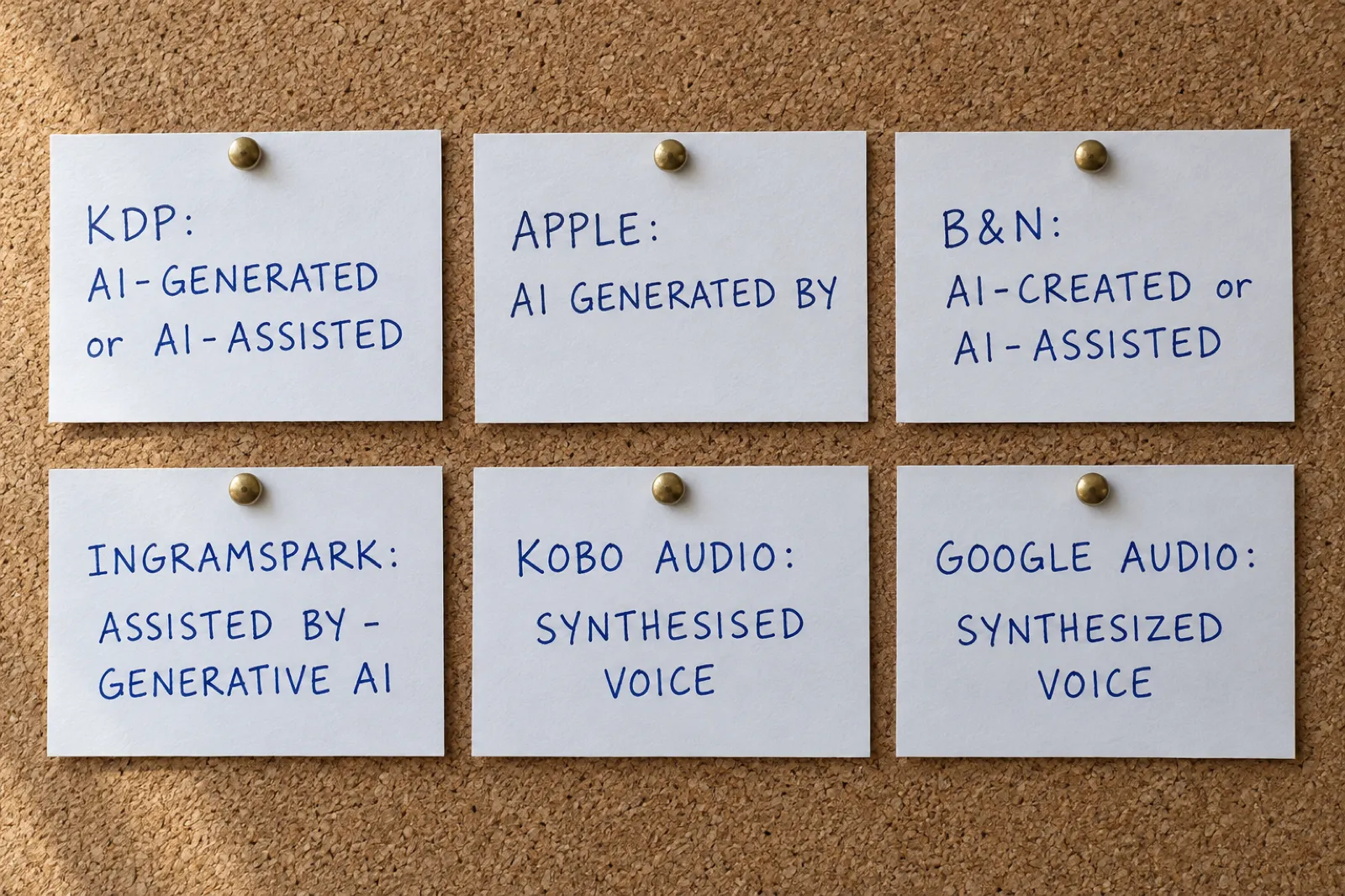
KDP's Content Guidelines say: "We require you to inform us of AI-generated content (text, images, or translations) when you publish a new book or make edits to and republish an existing book through KDP." Its definition is the one that catches most authors out: content an AI tool created is AI-generated "even if you applied substantial edits afterwards". AI-generated images "include cover and interior images and artwork". AI-assisted work, where you created the content and used AI to "edit, refine, error-check, or otherwise improve" it or to brainstorm, needs no disclosure.
In practice: on the Content page, answer the AI question and set the dropdown for text, images and translations separately. KDP's guidelines don't say this answer is shown to readers. Two other 2026 KDP changes matter here: since 21 September KDP limits new titles to two per format per week, and on 22 October Kindle Unlimited became Kindle+ (see Kindle+ for authors). Our KDP AI disclosure guide walks through the seven edge cases, and how to publish AI-generated books on KDP is the step-by-step.
Apple Books: allowed with the "AI Generated by" label
Apple has the most precise rule of any store. Section 1.13 of its Formatting and Content Guidelines: content where "a material portion of the content is generated by an AI-based tool as opposed to a human author or illustrator" must be labelled with the "AI Generated by" artist role, and the AI creation method must be stated in the description. AI-assisted content, meaning AI "used as a tool in idea generation, research, editing, or producing cover images for a book composed by a human author or illustrator", needs no disclosure. Section 2.9 lists "Missing AI-Generated Role" as a reason Apple sends a book back.
So on Apple: add a contributor with the "AI Generated by" role, and one plain sentence to the description, such as "The text of this book was generated with AI and edited by the author." The full upload process is in how to publish on Apple Books.
Barnes & Noble Press: AI-Created or AI-Assisted, element by element
B&N Press asks during setup whether generative AI was used for the cover, manuscript, images or translations, and whether each was AI-Created or AI-Assisted. Its help page defines AI-Created content as "any content (text, artwork, translations) that is created using Generative AI", adds that "It would still be considered AI-Created if you used AI to generate the content and edit it afterward", and defines AI-Assisted content as "any content you created, then used AI to edit it or expand on it". The disclosure is required: if the publish option doesn't appear, the help page sends you to complete the AI Disclosure under Rights & Other Information. B&N Press sells ebooks and print only, no audiobooks. More in our B&N Press guide.
Google Play Books: no AI rule, strict quality rules
Google's Publisher Content Policies don't mention AI-written text, and there's no AI question for ebooks. What applies is the "Content Quality and Utility" rule, which bars "gibberish, nonsensical, or repetitive text that provides no narrative or educational value" and content that "lacks the depth and curation necessary to provide a meaningful reading experience". That reads like a description of a careless AI book, so "no AI rule" is not the same as "anything goes". For audio, Google is the friendliest big store: its upload guide says "If you upload an AI-generated audiobook, select Synthesized voice." See how to publish on Google Play Books.
Kobo Writing Life: the strictest big store on AI text
Kobo takes three positions, and they point in different directions. Its help page on rejected books lists "Wholly or partially AI generated" among the reasons a book gives an unsatisfactory experience, next to "Too short/lacking content" and "Poorly translated" (updated 6 May 2026). Its content policy (26 March 2026) bars "Content generated primarily by automated tools that lacks genuine human effort, quality control, or is designed to exploit trends rather than offer genuine reader value". And its promotions page (10 June 2026) asks you to "verify the Works you are submitting have not been authored by LLMs (large language models)". Kobo's chief executive told The Next Web in June that Kobo rejected 45% of submissions in 2025, most of them books judged manifestly AI-generated and very poor.
On narration Kobo is open: its audiobook FAQ answers "Does Kobo accept AI-narrated audiobooks?" with "Yes, we do", and its AI narration article (24 September 2026) asks for the narrator to be listed as "Synthesised voice - male", "- female" or "- unspecified". Its terms also promise "Works will not be used to train generative AI technologies". Full detail in how to publish on Kobo.
Aggregators and IngramSpark
An aggregator delivers your book to many shops from one upload. Two layers of rules apply: the aggregator's own, then each store's. A book the aggregator accepts can still be refused by a shop it delivers to.
Draft2Digital: extensive human editing is the line
Draft2Digital's Content Guidelines (last updated 27 October 2025) say: "While we support AI-assisted content we do not accept content that has been generated entirely by AI/LLMs that has not gone through extensive editing from a human." The same page says it is "not a destination for mass production book farms, nor for individuals who seek to publish 100% AI-generated books". It publishes no AI disclosure field. Since April 2026 new accounts also pay a $20 activation fee, which Draft2Digital tied to curbing content farms. Our Draft2Digital review covers the rest.
PublishDrive: a mandatory declaration and a per-store table
PublishDrive asks every author to declare AI use "for writing, editing, translating, generating illustrations and/or cover image" in the Creators section, and says "this section is mandatory". Its help page includes the most useful single table in the industry: which of its partners accept AI-generated ebooks and AI-narrated audiobooks. Highlights from it, read 28 October: Everand takes no AI-generated content; OverDrive ebooks accept only an AI cover, declared as illustrator; Apple and Audible accept only AI narration from their own tools; Google Play, Kobo, OverDrive, Spotify and Storytel accept AI narration with the voice credited as narrator. Its table marks B&N and Google Play ebooks as needing no declaration through PublishDrive, which differs from B&N's own direct form. Compare it with Draft2Digital in Draft2Digital vs PublishDrive.
StreetLib: categorise it correctly
StreetLib's Content Integrity Guidelines (last updated 19 February 2025) say it may block "Books created using artificial intelligence (AI) or automated processes that are not correctly categorized using the metadata available in the product sheet, and/or containing erroneous or low-quality content." The rule is about honesty and quality: mark the AI use, and make the book good.
IngramSpark: edited, credited, never "solely" AI
IngramSpark's content guidelines list as acceptable: AI "used only in an assistive way (i.e. spell check, proofing, etc...)", work where "the majority of the work has been written or created using human creativity and contribution", and "Works or images using generative AI (including translation) but with significant and material human editorial review and contribution with proper attribution". Unacceptable: "Works created solely using generative AI". It asks about AI at title setup and uses an "Assisted By - Generative AI" contributor credit, placed straight after the person the AI helped. It adds: "While your titles may not be accepted by every channel, transparency of creatorship helps maintain trust with readers and sellers." Our IngramSpark AI policy guide has a checker, and IngramSpark vs KDP compares the two for print.
Libraries: OverDrive, Hoopla, BorrowBox
Self-published authors reach library platforms through Kobo or an aggregator, never by uploading to the library platform itself, so the route's rules apply first. Libraries also choose what they buy, title by title. Our guide to getting your ebook into libraries covers the routes and the money.
- OverDrive (Libby). Its Responsible AI policy says: "OverDrive does not exclude titles created with AI tools from the catalog. We ask that publishers self-identify content that was created with AI assistance." In practice the route narrows it: PublishDrive's table says its OverDrive channel accepts AI only on covers, and on the Kobo route Kobo's text rule applies before OverDrive sees the book. Kobo sends no audiobooks to libraries at all.
- Hoopla. Hoopla says it asks content partners for "clear identification of AI-generated materials", that "In January 2026 alone, our teams proactively declined nearly 20,000 titles for being AI-generated or low-quality", and that libraries can "opt out entirely from all publisher-tagged AI-generated content or to block specific publishers" (20 February 2026). Treat Hoopla as closed to AI-written text unless the human work is substantial and clearly declared.
- BorrowBox. We found no published AI policy from BorrowBox or its owner Bolinda. Indie ebooks reach it through Draft2Digital, so Draft2Digital's "extensive editing" rule is the one that decides.
Selling direct: Etsy, Gumroad, Payhip, Shopify
Selling downloads from your own shop puts you in charge of the listing, and the AI rules are lighter. They're not absent.
- Etsy allows AI-made digital downloads as "seller-prompted AI creations", and its Creativity Standards say "Sellers must disclose within their listing description if an item is created with the use of AI." The 22 October 2026 update banned "Bot-generated listings without any human involvement", required recipes, patterns and instructions to be "your own work, not generated by AI", and asked digital downloads to show "a visual preview or excerpt". Etsy will "continue to allow AI-generated art when sellers play a clear creative role in what they create and are transparent about their process". Details: Etsy's new AI rules and Etsy AI disclosure explained.
- Gumroad's prohibited list (revised 16 September 2026) bans "AI services", meaning selling access to AI tools, not products made with AI. There's no rule on AI-written ebooks.
- Payhip's list of products that aren't allowed doesn't mention AI. It does ban get-rich-quick schemes, which catches a lot of thin "make money" ebooks however they were written.
- Shopify has no AI rule. Its Acceptable Use Policy says "you're responsible for following the rules of your platform, your partners, and the law."
Inkfluence publishes straight to Etsy and Gumroad. On Etsy it saves the listing as a draft for you to check and publish yourself, and adds the line "Created with AI assistance using Inkfluence AI" to the description so the disclosure is never forgotten. See selling ebooks on Etsy, selling on Gumroad and selling your book on Shopify.
Publish to Etsy and Gumroad from your book
Write and edit the book in Inkfluence, then send it to Etsy as a draft listing with the AI disclosure line already in the description, or to Gumroad, without leaving the editor.
Write and list your ebookAI covers and illustrations
Covers are where the rules differ most quietly. Five things to know:
- KDP counts an AI cover as AI-generated content: "AI-generated images include cover and interior images and artwork." Declare images even when the text is all yours.
- Apple treats an AI cover on a human-written book as AI-assisted, with no label. AI illustrations that make up a material part of the book, as in a picture book, need the "AI Generated by" role.
- B&N Press asks about the cover separately: answer AI-Created or AI-Assisted for it.
- IngramSpark applies the same test to images as to text, so an image used exactly as generated is the weak case. Rework it and credit "Assisted By - Generative AI" after the illustrator.
- Etsy wants listing images that show what the buyer actually gets, and lets members report "misleading AI imagery".
For picture books and colouring books, where the art is the book, treat images like text: disclose at KDP, label at Apple, and expect Kobo to look hard. Our AI book cover generator and picture book maker make the art; the disclosure is your job at each store.
AI narration for audiobooks
Audiobooks run on different rules from text. The question that matters is whether a store takes AI audio you made yourself, or only AI audio it makes for you.
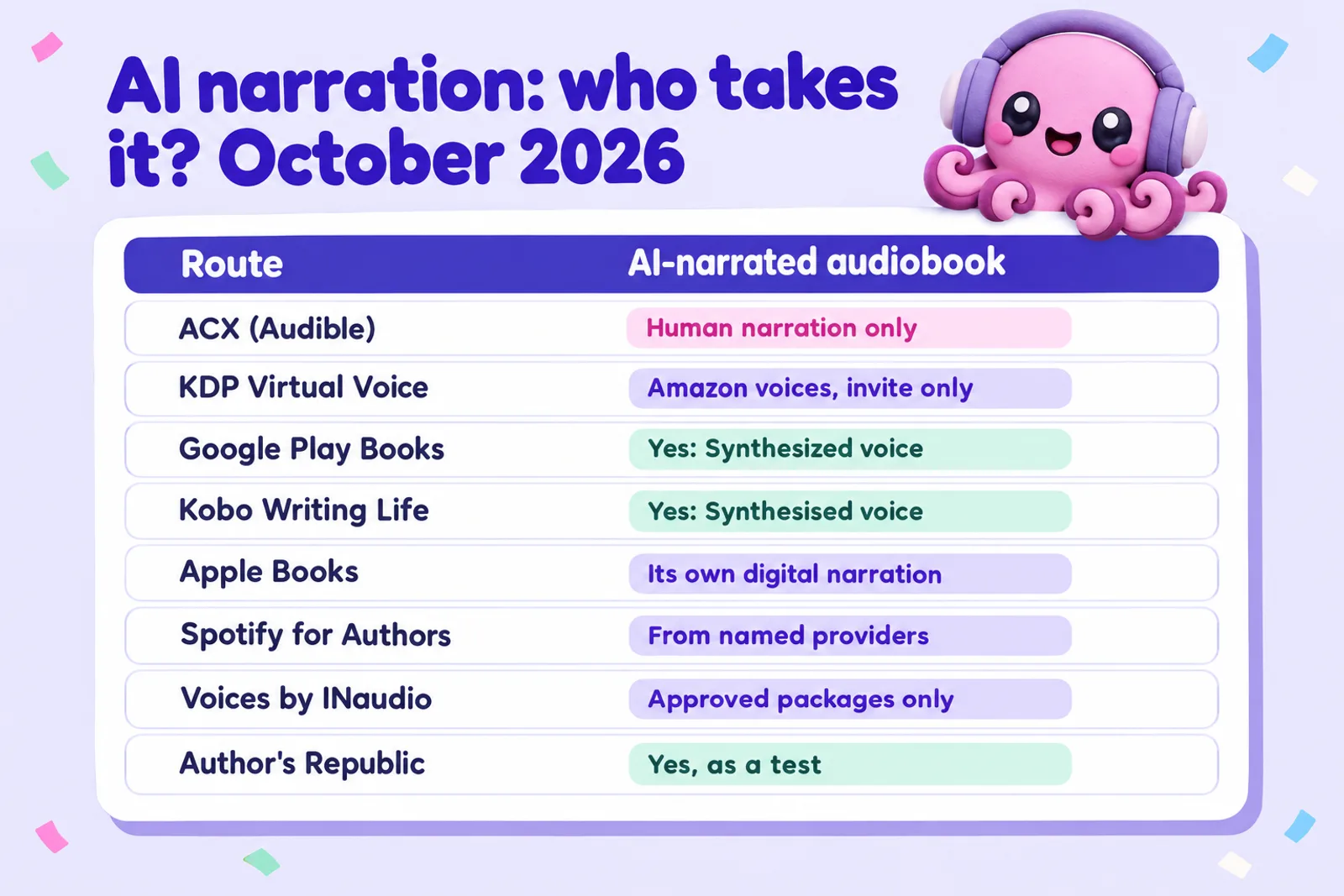
- ACX (Audible). "Your submitted audiobook must be narrated by a human unless otherwise authorized" and "Unauthorized use of text-to-speech, AI, or automated recordings in ACX titles is prohibited" (15 April 2026). The page adds that Audible "is working to accept third-party TTS content from publishers and creators who are interested", with no date.
- KDP Virtual Voice. Amazon's own AI narration of your KDP ebook, invite-only, in English, Spanish, Italian and French, labelled on Audible. Not a route for files you made. If the ebook is in KDP Select, every audio edition is Audible-only during enrolment.
- Google Play Books. Upload your files with a "Synthesized voice" narrator, or use Google's auto-narration, which turns your EPUB into an audiobook at a 52% revenue share.
- Kobo. Accepts AI narration in any language, narrator listed as "Synthesised voice", no exclusivity. No audiobooks of any kind go to libraries.
- Apple Books. Audiobooks reach Apple only through its eight preferred partners. Apple's free digital narration ("Narrated by Apple Books") is the dependable AI route. Its audiobook guidelines (1.15) also allow outside AI narration stated "in either the title or narrator field" and the description, but no partner we checked documents delivering it.
- Spotify for Authors. "We accept audiobooks with digital voice narration on Spotify", from providers it names as examples, with a box to tick so Spotify adds a disclosure to the description. Its own Audiobook Creation Tools turn an EPUB into a digitally narrated audiobook, US and English only, five projects per account.
- Voices by INaudio (formerly Findaway Voices). Accepts only "unmodified LPF packages" from three approved providers, and says "MP3 files, standard audiobook masters [...] cannot replace the required LPF package". AI titles reach only the partners that take them.
- Author's Republic. "We are testing the distribution of AI Voice-narrated audiobooks", following the Audio Publishers Association's naming guidelines; the narrator's first name is set to "AI Voice", and it warns that AI titles "are not permitted on all retail and library platforms". Since 22 October its metadata form also asks "Was this book's written text created using AI?"
- Direct. Etsy, Gumroad, Payhip and your own site take MP3s as a download. Say in the description that the narration is AI.
Our where to sell an AI audiobook page goes deeper on each, and Audible and ACX's AI narration policy covers the Amazon side. Remember that narration and text are separate questions: an audiobook of an AI-written book needs both labels where the store asks for both, as Apple's audiobook guidelines (1.16) and Author's Republic do.
Turn your book into an audiobook the open stores take
Inkfluence narrates your finished book and gives you an MP3 per chapter at 44.1 kHz, 192 kbps mono, ready for Google Play Books and Kobo with a synthesised voice narrator credit.
Make your audiobookWhere can my book go? Check your book
Pick how the book was made. The tool lists every platform on this page with its answer for your book and what to declare there, with the source and the date we read it. The rules come from the same data as the master table, so the two always agree.
"Accepts it" means the platform's written rules allow this book with the declaration shown; "With conditions" means a written condition or risk applies; "Not for this book" means a written rule works against it. Each store still reviews every book for quality. A summary of written policies, not legal advice.
Write a book every store can takeTwo things the tool can't do. It can't judge quality, which is what most rejections are really about, and it can't tell you which category your book falls into. Only you know how much of the writing is yours, so pick honestly: the stores that ask are asking exactly that.
How to write a book that is legitimately yours, with AI
Moving a book from "AI-written, lightly edited" to "AI-drafted, heavily rewritten" opens Draft2Digital, IngramSpark, libraries and most aggregators, and it's also what makes readers come back. Disclosure doesn't go away at KDP, Apple or B&N, but the book stops being the kind every store is trying to keep out. Here is what "extensive" editing means in practice, in the order we'd do it.
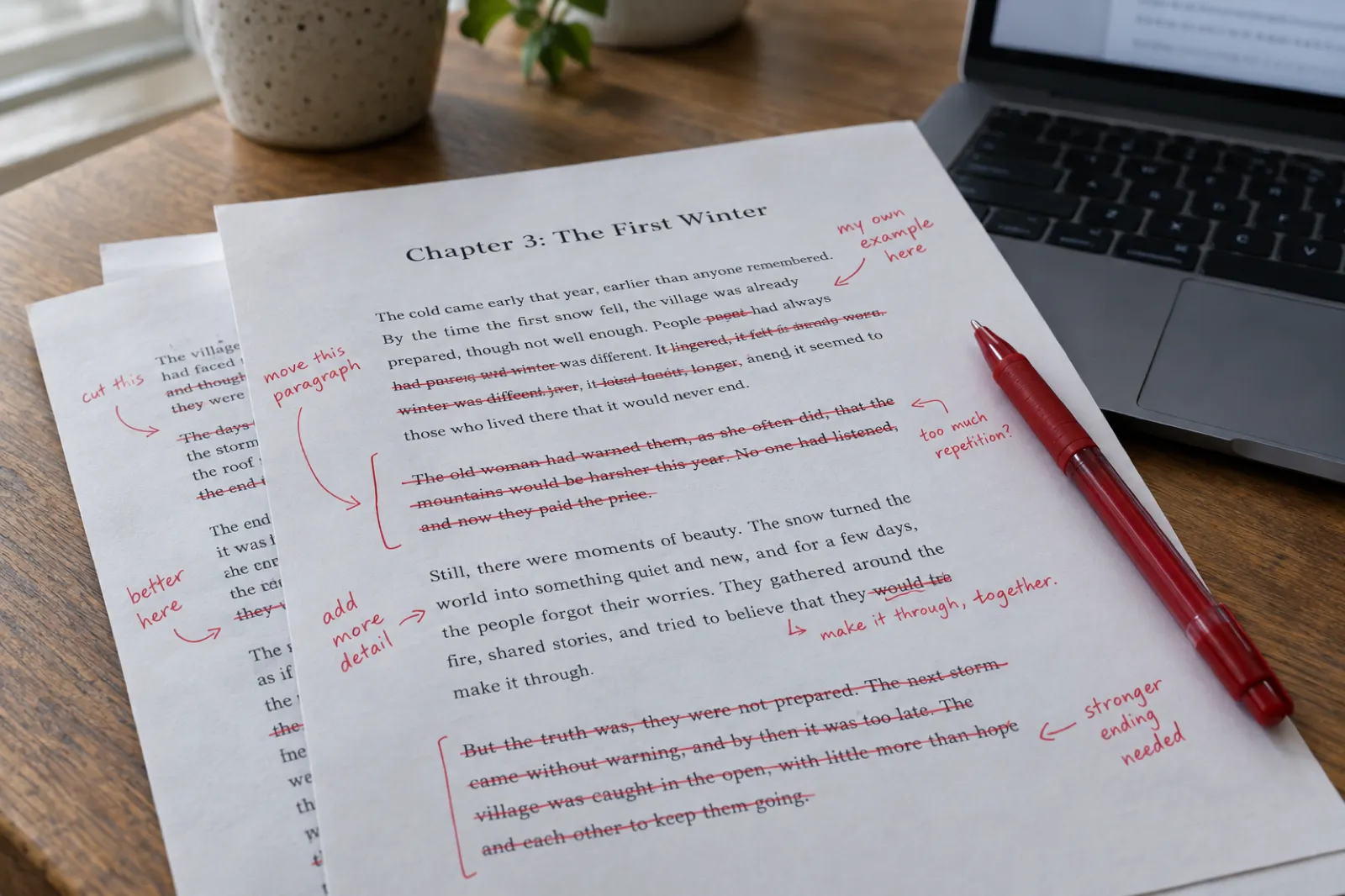
- Own the plan before any draft exists. Write the outline yourself: the argument or the plot, chapter by chapter, with what each chapter must do. A book whose structure is yours is already more yours than one generated from a title.
- Draft in chapters, not in one go. Generate one chapter, read it, and decide what stays before the next. You catch drift early and keep control of the shape.
- Rewrite in your voice. Read each chapter aloud and rewrite every paragraph that doesn't sound like you. Cut generic openings, stock phrases and summaries of what the reader just read. Expect to cut a fifth to a third.
- Add what only you know. Your stories, your clients, your mistakes, your local detail, your data. This is the part no tool can supply and the part readers remember. Our guide to avoiding generic AI book output has more.
- Check every fact. Names, dates, numbers, quotes, medical or legal claims. AI drafts state wrong things confidently. See how to make AI-assisted content original.
- Edit the whole book, not just chapters. Read it start to finish for repetition between chapters, contradictions and pacing. Our AI book editor can flag repeats, but you decide.
- Keep a record. Save your outline, your drafts and your edits. If a store ever asks how the book was made, you can show it. It also helps with copyright, which protects human authorship: see can AI-written books be copyrighted?
Is that a lot of work? Yes: a few days a book, not a few minutes. That's the point. In our own data on what 100,000 writers made, the books that sell are the ones somebody clearly worked on. And do readers care if a book is AI-written? looks at what readers say about AI disclosure.
Draft fast, then make it yours
Inkfluence writes from your outline and notes, one chapter at a time, then gives you a full editor, an AI assistant for revisions and a book-wide review, so the time you save goes into the rewrite.
Start your book freeWhat happens if you don't disclose
Every platform that asks has written down what it does when you skip it. None of them is worth the risk:
- Amazon KDP says "We reserve the right to remove content from sale" and that it may "request additional information relating to your book". If it removes a title, it tells you and you can appeal; see KDP rejected my book for the appeal process.
- Apple Books lists "Missing AI-Generated Role" (section 2.9) among its reasons for correction or rejection.
- B&N Press won't let you publish until the AI disclosure is done, so you can't skip it there.
- Kobo rejects or blocks books in quality review, and its FAQ says it is building tools to detect AI-generated and AI-rewritten pirated content.
- Etsy removes bot-generated listings and says such listings "may also result in your shop being removed from Etsy". Sellers "cannot misrepresent AI-generated work as handmade or entirely their own creation".
- Voices by INaudio says AI audio "must not be submitted as Human Narrated", that such titles "may be rejected or removed", and that "Repeated or intentional misrepresentation may result in account restrictions, suspension, or closure."
- Libraries filter on the metadata you supply. Hoopla and OverDrive both rely on publishers identifying AI content; a book caught mislabelled is easy to pull.
The less visible cost is readers. A reader who finds out after buying that a book was AI-written and not labelled tends to say so in a review, and reviews outlast any listing. An honest label on a good book costs very little. If you're unsure which answer applies, the safer reading at every store is the more disclosing one.
A practical decision guide
Put the rules together and most books fall into one of four plans:
- Lightly edited AI text. Amazon KDP (declare AI-generated), Apple Books ("AI Generated by"), B&N Press (AI-Created) and your own shop on Etsy (disclose), Gumroad, Payhip or Shopify. Skip Kobo, Draft2Digital, IngramSpark and libraries. Better still, edit the book properly first and move to plan 2.
- AI-drafted, heavily rewritten. Everything in plan 1, plus Google Play Books, Draft2Digital, IngramSpark ("Assisted By - Generative AI") and PublishDrive (declare). Kobo and Hoopla stay risky; leave them for your most human work. Declare honestly at every store that asks.
- Written by you, AI used for editing. Everywhere, including Kobo and its promotions. Nothing to declare at KDP or Apple; AI-Assisted at B&N; declare the editing at PublishDrive; answer IngramSpark's setup question truthfully.
- An AI-narrated audiobook, any of the above. Google Play Books and Kobo with a synthesised voice narrator, Spotify after checking your provider, Author's Republic (test), Voices by INaudio only with a package from an approved provider, and your own shop. Not ACX. On Apple, use Apple's own digital narration. If you want Audible, it's a human narrator or a Virtual Voice invitation.
Two more decisions sit on top. If you keep the ebook in KDP Select for Kindle+, it can't be sold on any other ebook store, whatever its AI status; weigh that in KDP Select vs going wide. And if you go wide, our wide publishing hub and where to sell ebooks compare the money as well as the rules. Selling from your own store instead? Sellfy, for example, says it allows products made with AI under its usual product rules. Put your AI disclosure answers on your metadata sheet once, so you answer every store the same honest way; the copyright page template has a line for AI use too.
What we couldn't confirm
- B&N Press blocks automated reading of its help centre; we read the AI page's text through a search index on 28 October and rely on the page's 10 March 2026 update.
- Etsy's Creativity Standards page blocked our reader on 28 October; the Etsy rules above are as we read them on 22 October 2026, the day of its AI update.
- BorrowBox and Bolinda publish no AI policy we could find.
- Libby's reader filters for AI content have been reported as planned, but OverDrive's own policy page (last updated 9 January 2025) doesn't describe them.
- Apple allows labelled outside AI narration in its guidelines, but none of its partners we checked documents delivering it.
- Kobo doesn't say what share of AI generation counts as "partially AI generated". PublishDrive's table shows Kobo accepting declared AI ebooks through PublishDrive; Kobo's own help page is stricter, and that is the rule we've shown.
We read every source again each month and update the row and its date. If a store changes its rule before then, tell us and we'll check it the same week.
Which stores allow AI-written books: FAQ
Which stores allow AI-written books in 2026?
Amazon KDP, Apple Books and Barnes & Noble Press allow AI-generated text if you disclose it in their own way. Google Play Books has no AI rule, only quality rules. Draft2Digital and IngramSpark accept AI drafts only after extensive or significant human editing. Kobo lists "wholly or partially AI generated" among its common reasons for rejecting a book. Etsy allows AI-made downloads with disclosure, and Gumroad, Payhip and Shopify have no AI rule.
What is the difference between AI-generated and AI-assisted?
AI-generated means an AI tool produced the words or images. AI-assisted means you produced them and used AI to brainstorm, edit, check or improve them. KDP and B&N Press both say AI-generated text stays AI-generated even after you edit it. Apple asks whether a "material portion" was generated by AI.
If I heavily edit an AI draft, is it still AI-generated?
On Amazon KDP and B&N Press, yes: both say content generated with AI and edited afterwards still counts as AI-generated (AI-Created at B&N). Draft2Digital and IngramSpark use a different test: they accept AI drafts that have had extensive, or significant and material, human editing.
Does Kobo accept AI-written books?
Kobo is the strictest big store. Its help centre lists "Wholly or partially AI generated" among common reasons a book is rejected, its content policy bars content generated primarily by automated tools without genuine human effort, and its promotions require works "not authored by LLMs". It does accept AI-narrated audiobooks labelled as Synthesised voice.
Do I have to disclose an AI cover?
On KDP, yes: AI-generated images include covers. On B&N Press, yes: you answer AI-Created or AI-Assisted for the cover. On IngramSpark, credit it with "Assisted By - Generative AI" after the illustrator. Apple does not require a label for an AI cover on a book a human wrote. Etsy asks you to disclose AI use in the listing.
Where can I sell an AI-narrated audiobook?
Google Play Books and Kobo accept your own AI-narrated files with a synthesised voice label. Spotify accepts digital voice narration from the providers it names. Author's Republic accepts it as a test. You can also sell the files yourself on Etsy, Gumroad, Payhip or your own site. ACX (Audible) requires human narration, Voices by INaudio takes only packages from three approved providers, and Apple's dependable AI route is its own digital narration.
What happens if I do not disclose AI use?
Stores can reject, block or remove the book. KDP reserves the right to remove content and lets you appeal; Apple lists a missing "AI Generated by" role as a reason for rejection; B&N Press will not publish a project until the AI disclosure is complete; Voices by INaudio says misrepresenting AI narration as human can lead to removal and account suspension.
Can AI-written books go into libraries?
Sometimes, but it is the hardest route. OverDrive says it does not exclude AI titles and asks publishers to self-identify them, though PublishDrive's OverDrive channel takes AI only on covers. Hoopla declined nearly 20,000 titles in January 2026 for being AI-generated or low quality. Library routes also go through Kobo or an aggregator, whose rules apply first.
Does the AI disclosure affect sales?
Apple and Spotify show it to readers or listeners; KDP's guidelines do not say the answer is shown on the product page. What hurts sales more is a book readers feel misled by. A clear, honest label on a well-edited book is rarely the problem.
Is a book written with Inkfluence AI AI-generated?
If Inkfluence drafted the chapters, yes, under KDP, Apple and B&N Press definitions, even after you edit them, so disclose it there. If you wrote the book yourself and used Inkfluence only to revise or check it, that is AI-assisted. The tool on this page tells you what to declare at each store.
One book, every shelf that fits it
Write it with AI, edit it into your own book, and export the EPUB, PDF, KDP print file and audiobook the stores above take, from one Inkfluence project.
Write your book freeRelated reading
- Can you sell AI-generated books? The ebook rules on ten platforms
- Where to sell an AI audiobook, store by store
- Amazon KDP AI disclosure: the 7 cases authors get wrong
- IngramSpark's AI policy, with a checker
- Etsy's new AI rules (October 2026)
- Audible and ACX's AI narration policy
- How to publish on Apple Books, on Kobo and on Google Play Books
- How to write a book with AI
- AI-generated books: the data
- AI audiobook generator and the audiobook length calculator
- AI book translator: translations count as AI-generated at KDP and B&N
- Book description generator, for the description line Apple asks for
- Inkfluence plans and pricing
Sources
Read on 28 October 2026 unless stated.
- KDP Content Guidelines (Amazon KDP), read 28 Oct 2026
- Apple Books Formatting and Content Guidelines, 1.13 (Apple Books), read 28 Oct 2026
- B&N Press Help: Use of Generative AI in Your Project (Barnes & Noble Press), read 28 Oct 2026
- Publisher Content Policies for Google Play Books (Google Play Books), read 28 Oct 2026
- Kobo Writing Life Help: Why was my Book Rejected or Blocked? (updated 6 May 2026) (Kobo Writing Life), read 28 Oct 2026
- Draft2Digital Content Guidelines (last updated 27 Oct 2025) (Draft2Digital), read 28 Oct 2026
- PublishDrive Help: AI-generated/assisted/narrated, what to declare, and how? (PublishDrive), read 28 Oct 2026
- StreetLib Content Integrity Guidelines (last updated 19 Feb 2025) (StreetLib), read 28 Oct 2026
- IngramSpark Content Guidelines, Generative AI guidelines (IngramSpark), read 28 Oct 2026
- OverDrive Responsible AI policy (last updated 9 Jan 2025) (OverDrive (Libby)), read 28 Oct 2026
- Hoopla Hub: Transparency by design (20 Feb 2026) (Hoopla), read 28 Oct 2026
- Draft2Digital Content Guidelines (the route's rule) (BorrowBox), read 28 Oct 2026
- Etsy Creativity Standards and 22 Oct 2026 AI update (Etsy), read 22 Oct 2026
- Gumroad Prohibited Products (last revised 16 Sep 2026) (Gumroad), read 28 Oct 2026
- Payhip Help: What products are not allowed on Payhip? (Payhip), read 28 Oct 2026
- Shopify Acceptable Use Policy (Shopify (your own store)), read 28 Oct 2026
- ACX audio submission requirements (15 Apr 2026) (ACX (Audible, Amazon audio)), read 28 Oct 2026
- KDP Help: Audiobooks with virtual voice (KDP Virtual Voice), read 28 Oct 2026
- Spotify for Authors: Digital voice narration (Spotify for Authors), read 28 Oct 2026
- Voices by INaudio: Digital Voice Narration FAQs (edited 3 Aug 2026) (Voices by INaudio (formerly Findaway)), read 28 Oct 2026
- Author's Republic Help: AI Voice Audiobook Distribution (21 May 2025) (Author's Republic), read 28 Oct 2026
- Kobo Writing Life: What Content is Not Allowed (26 March 2026), Using Promotions (10 June 2026), AI Narration and Audiobooks (24 September 2026) and FAQ: Audiobooks (18 September 2026)
- Apple Books Audiobooks Formatting Guidelines, 1.15 and 1.16
- Google Play Books Partner Center: add a new book (Synthesized voice narrator)
- Spotify for Authors: Audiobook Creation Tools
- Author's Republic: Distribution Metadata Tab (22 October 2026)
- The Next Web: Kobo rejects 45 percent of self-published books, 26 June 2026

Founder, Inkfluence AI
Sam is the founder of Inkfluence AI. He built the platform to make book creation accessible to everyone - from first-time authors to seasoned publishers.
Helpful links

Ready to write your own book?
Write with AI, make it yours, and export PDF, EPUB and KDP-ready files from one project.
Keep reading
 Publishing
ISBN Canada's AI Rule (2026): The Human-Author Declaration Explained
ISBN Canada now asks every registrant to declare their book was written by a human author, allows AI only for limited support tasks, and limits ISBNs for works primarily generated by AI. What changed on 9 October 2026, who it affects, what counts as a support task, what to do if your book is AI-assisted or mostly AI-generated, how it fits with KDP's AI question, and a checker for which ISBN route fits your book.
 Self-Publishing
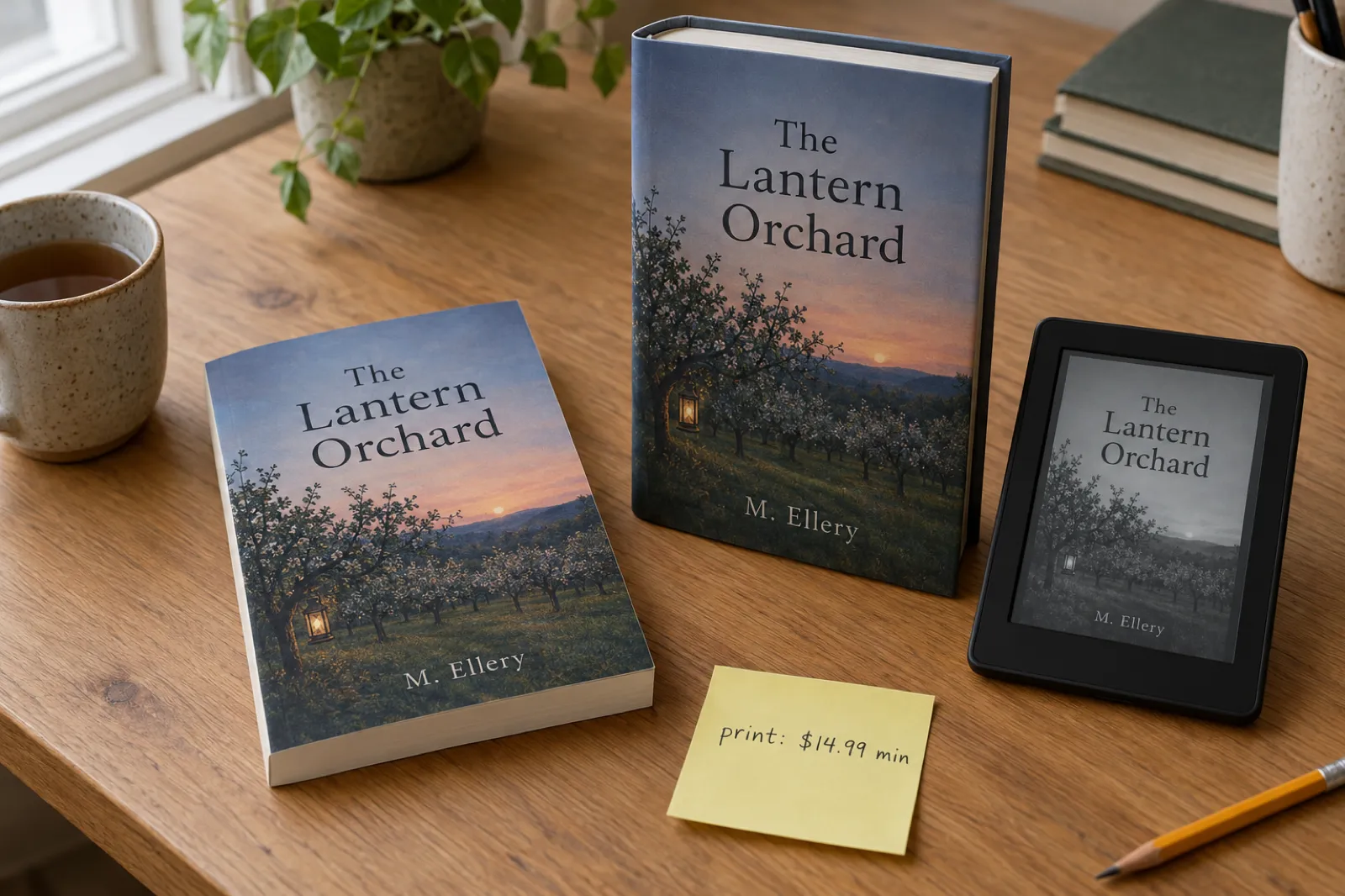
How to Publish on Barnes & Noble Press in 2026: Ebooks, Print Rules and AI Disclosure
B&N Press pays 70% on ebooks from $0.99, and 55% minus printing on print books, which since 22 April 2026 must list at $14.99 or more. It asks whether each part of your book is AI-Created or AI-Assisted, refuses public domain titles, caps accounts at 100 titles and sells ebooks to US readers. Here is every step from account to promotion, read from B&N Press's own help pages, with a royalty calculator against KDP.
 Tools
Draft2Digital Review 2026: Fees, Stores, AI Rules and Whether It's Worth It
An honest Draft2Digital review from its own pages in October 2026: the new $20 activation and $12 maintenance fees, the roughly 10% it keeps, every store and library it reaches (and the ones it does not), its AI rules, payments, print and audio, plus a calculator that tells you whether it pays for your books.

Get ebook tips in your inbox
Join creators getting weekly strategies for writing, marketing, and selling ebooks.