
AI Children's Book Creator
From Idea to KDP in Minutes
Write complete children's books with AI - fully illustrated picture books, early readers, chapter books, and middle grade fiction. Every picture book page painted to match its words, with consistent characters throughout.
Chapter outline - Age-appropriate drafting - Built-in editor - PDF/EPUB export - Cover designer
By Sam May, Founder of Inkfluence AI · Updated October 2026
Quick Answer
Inkfluence AI is a children's book creator that generates age-appropriate stories for all categories: picture books (ages 2-6), early readers (ages 5-8), chapter books (ages 6-10), and middle grade fiction (ages 8-12). It uses a dedicated children's fiction blueprint to produce correct vocabulary level, sentence structure, and story length for each age group, and its picture book mode paints a matching illustration for every page with the same characters throughout, plus a cover with the title lettered into the artwork. Character names are tracked across chapters for consistency. The free plan includes 5 chapters to start plus 5 more on the 1st of each month - enough for a complete picture book draft at no cost. Export to PDF (free) or EPUB (Creator plan, $9.99/month) for Amazon KDP Kids publishing. The children's book creator is part of the same AI book writer platform, so your story gets a structured outline, a built-in editor, and print-ready export in one place. Follow the children's book writing guide for a step-by-step walkthrough. Comparing options before you commit? See our ranked list of the best AI children's book creators.
The Children's Book Market
Why KDP authors are moving into children's books and why AI makes it accessible.
$1.6B
Children's ebook market size
Growing 8% annually
Top 3
KDP Kids & Family niche
One of KDP's strongest ebook categories
5,000+
Kids ebooks published monthly
On Amazon KDP alone
15 min
Avg. draft generation time
Picture book first draft with Inkfluence AI
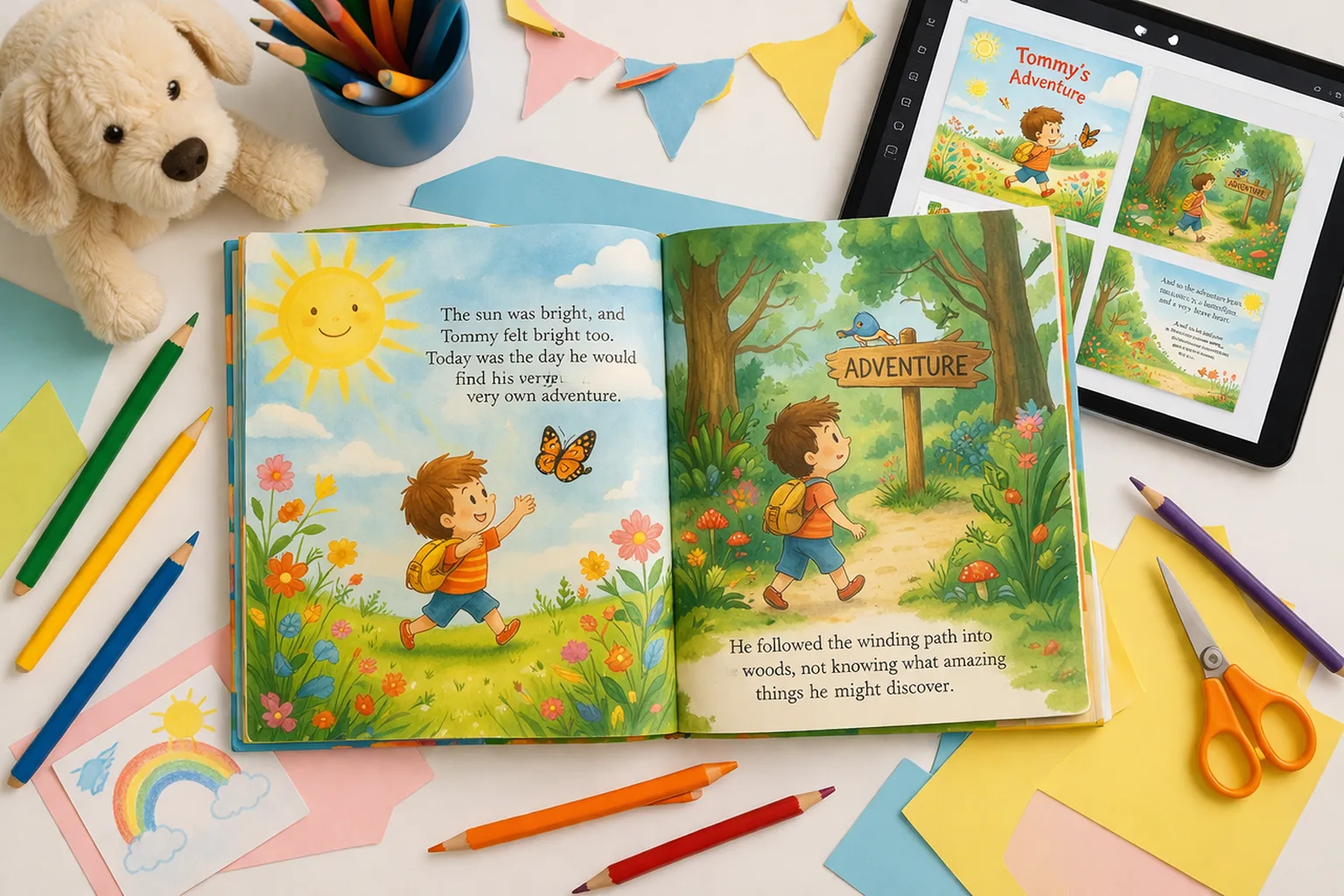
All Age Ranges Supported
Specify the target age in your premise. The AI adjusts vocabulary, sentence length, and story complexity to match.
Board Book Style
Ages 2-4Very short, repetitive, single concept per page
5-8 chapters
Picture Book
Ages 4-6Simple story arc, one central conflict, 500-800 words
8-12 chapters
Early Reader
Ages 5-8Short sentences, limited vocabulary, chapter structure
10-15 chapters
Chapter Book
Ages 6-10Multi-chapter narrative, recurring characters, series potential
12-20 chapters
Middle Grade
Ages 8-12Complex themes, longer chapters, emotional depth
15-20 chapters
What Actually Makes an AI Children's Book Work (First-Party)
From running the platform, the hard part of a children's book is not the words, it is the pictures. Keeping a character looking like the same character from page to page is the real challenge in any illustrated book, and it is where most children's projects succeed or fall apart. That is why the image tools draw on the wider project to hold a consistent style and cast across the whole story, rather than treating each illustration as a fresh, unrelated prompt.
The other thing we see is that shorter wins. The children's books that read well keep each chapter tight and rhythmic, built around a clear beat rather than padded to hit a word count. Expect to regenerate a few illustrations before the look is right, that is completely normal, and spend your editing time on the art and the read-aloud flow rather than sheer length.
How to Create a Children's Book with AI
From blank page to KDP-ready file in four steps.
Describe Your Story
Age range, main character name, the central conflict or lesson. One or two sentences is enough to get started.
Review the Outline
Inkfluence generates a chapter-by-chapter outline with scene summaries. Edit before drafting begins.
Draft the Story
The AI writes each chapter with age-appropriate vocabulary and maintains character consistency throughout.
Export and Publish
Export to PDF for print-on-demand or EPUB for Kindle Kids. Add your own illustrations or sell the text-only version.
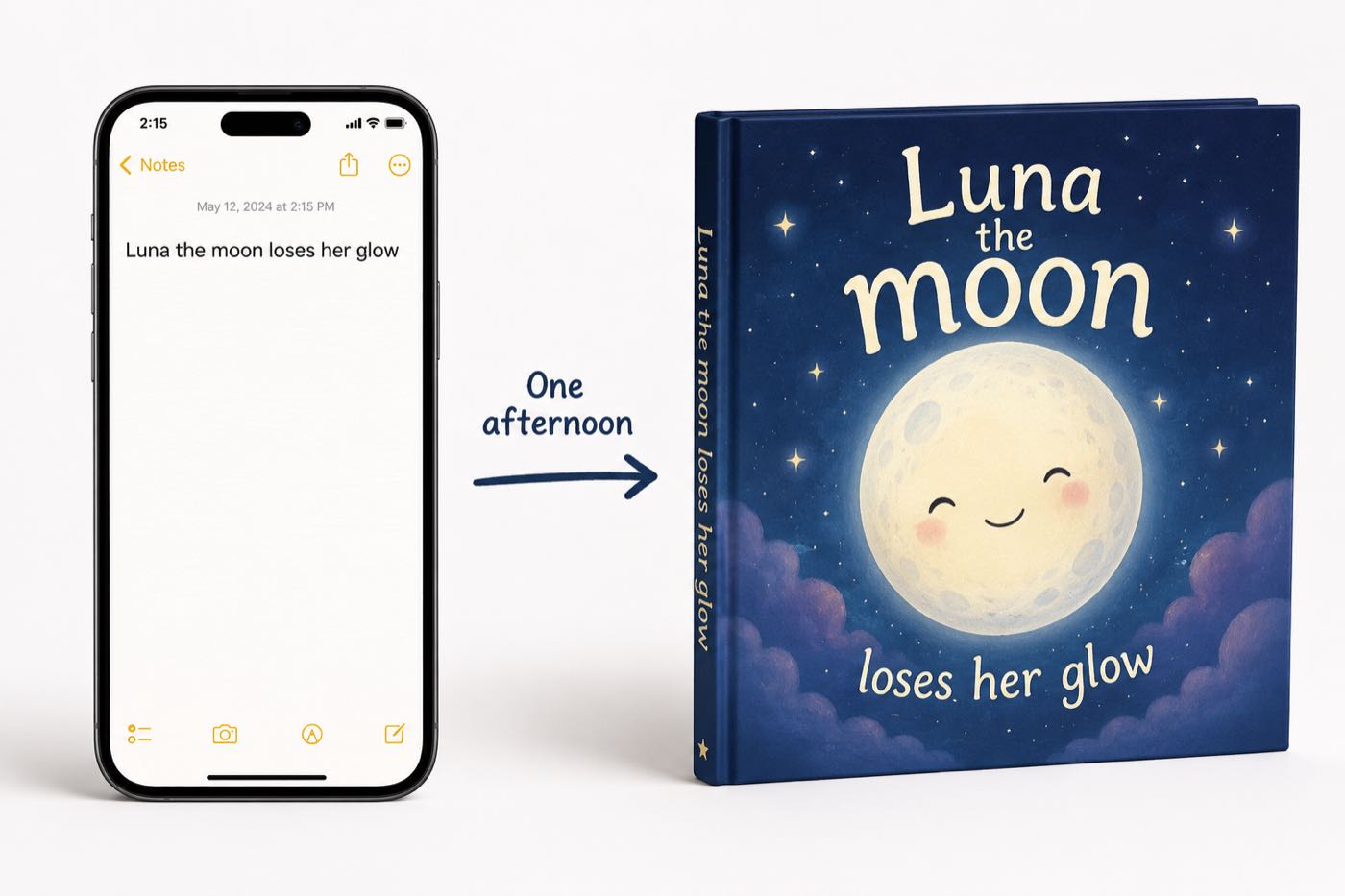
Preview AI-Generated Books
Flip through real pages from books created with Inkfluence AI
Loading preview...
How Long Should a Children's Book Be?
The question that decides everything else about the book, and the one most first-time authors get wrong.
Children's book length is set by the age of the reader, not by how much you have to say, and the bands are tighter than people expect. A picture book for three to five year olds runs roughly 500 to 800 words across 32 pages, about 25 words per spread. An early reader for five to seven year olds sits between 1,000 and 2,500 words with simple sentences and heavy repetition. A chapter book for seven to ten year olds runs 5,000 to 12,000 words in short chapters, and middle grade for eight to twelve reaches 20,000 to 45,000 with genuine subplots.
Those numbers are production constraints rather than stylistic preferences. The 32-page picture book exists because of how printing signatures fold, which is why almost every picture book you have held is 24, 32 or 40 pages. Write 1,500 words for a picture book and it cannot be laid out at any of those lengths without cutting, so the length decision has to come before the drafting rather than after it. On Amazon's print on demand those three lengths also cost the same to print in colour; the picture book royalty worked out shows what each copy then pays.
The most common mistake is an adult-length story with a child-facing subject: 4,000 words aimed at a four year old. It reads fine to the person who wrote it and it cannot be read aloud in one sitting, which is the actual use case. If you are unsure which band you are in, read the draft out loud with a stopwatch. A picture book should take three to five minutes. A bedtime chapter should take about ten. Anything longer belongs in an older band.
Vocabulary follows length. Early readers are built from a small pool of high-frequency words with deliberate repetition, which feels repetitive to an adult and is exactly what a child learning to decode needs. Chapter books can introduce unfamiliar words as long as context carries them. The test is whether a child can get through a page without stopping to ask what something means more than once, because a second stop is usually where they put the book down.
Illustration density follows the same logic. Picture books need an image on every spread, early readers roughly every other page, and chapter books often a single spot illustration per chapter. That decision drives production time far more than the writing does, so it is worth settling before generating anything. Our guide to planning a children's book walks through the age-band choice in more detail, and the children's book writing guide covers structure once the band is set.
Print adds one more constraint worth knowing early: illustrated children's books are usually printed in a fixed layout, which behaves differently from a standard reflowable ebook and needs different export settings. The paperback printing guide covers trim sizes and bleed, and the export guide covers getting files clean before upload. If you want the cover to match the interior art, generate it with the cover generator once the illustration style is settled, not before.
Keeping the Character Looking Like the Same Character
The genuine difficulty in an illustrated book, and the thing that separates a finished book from a folder of nice pictures.
Nobody abandons a children's book because the writing is hard. They abandon it because on page nine the rabbit has different ears. Character consistency across every spread is the real work in an illustrated book, and it is a fundamentally different problem from generating one good image. One good image is easy. Twelve images of the same character, in the same style, doing different things, is where projects stall.
The practical fix is to lock the description before you generate anything. Write your character down in concrete, repeatable terms: species or age, three colours, two distinguishing features, and one clothing item that never changes. A brown rabbit with a torn left ear and a red scarf survives regeneration far better than a friendly woodland rabbit, because the second description leaves every meaningful detail to chance and chance does not repeat.
Settle the style before the story too, not after. Watercolour, flat vector, soft pencil and collage all age differently for different bands, and switching halfway means regenerating everything you have already approved. Pick one, generate a single test spread, and only continue once that spread genuinely looks like the book you want. The temptation is to press on and fix the look later; that is the most expensive order to do it in.
Expect to regenerate. Even with a locked description, a proportion of illustrations will come back subtly wrong: right character, wrong mood, or an odd hand. That is normal rather than a sign something has gone amiss, and budgeting for it is what keeps the project moving. The authors who finish treat regeneration as part of the process, not as failure.
One last thing worth deciding early: whether the story rhymes. Rhyme is enormously appealing to write and unforgiving to read aloud, because a single forced line breaks the rhythm for the adult doing the reading. If the rhyme is not effortless, prose with a strong beat almost always reads better. Our guide on writing a children's book with AI covers voice and rhythm, and our comparison of children's book tools covers what to use for the illustrations themselves.
Or let the picture book mode handle all of this for you
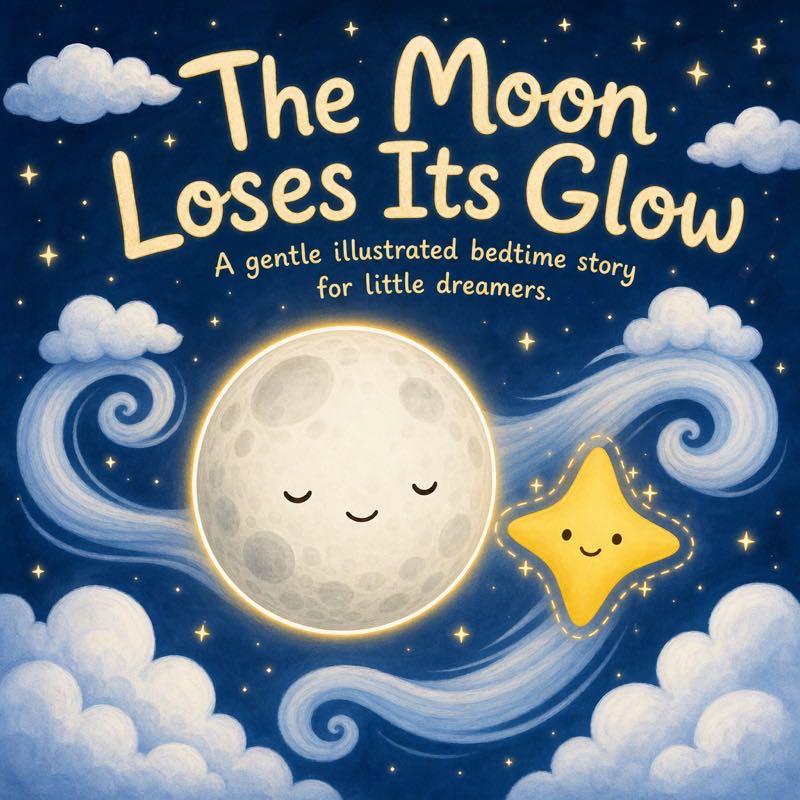
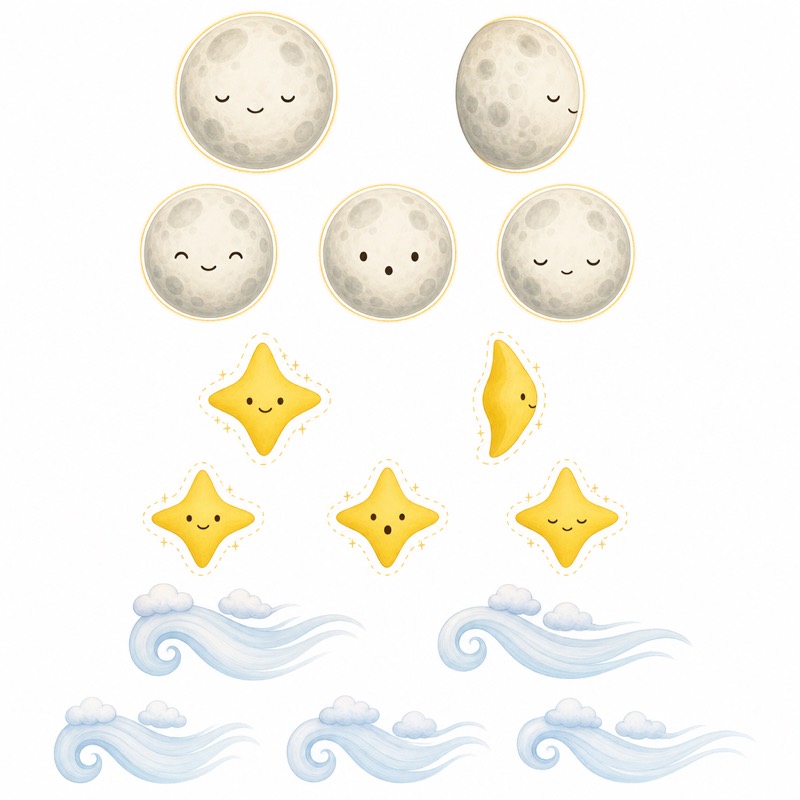
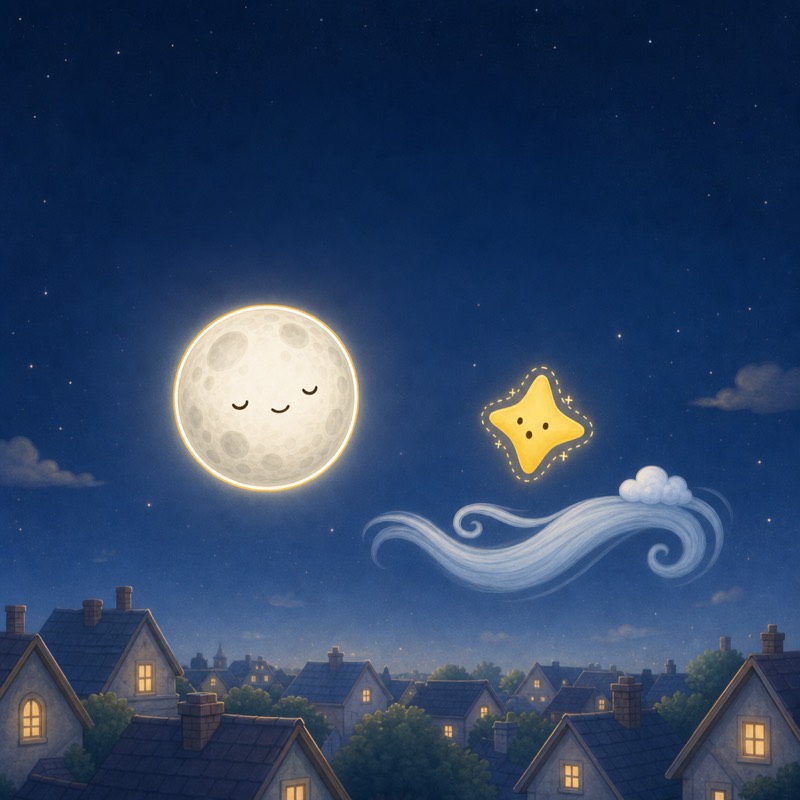
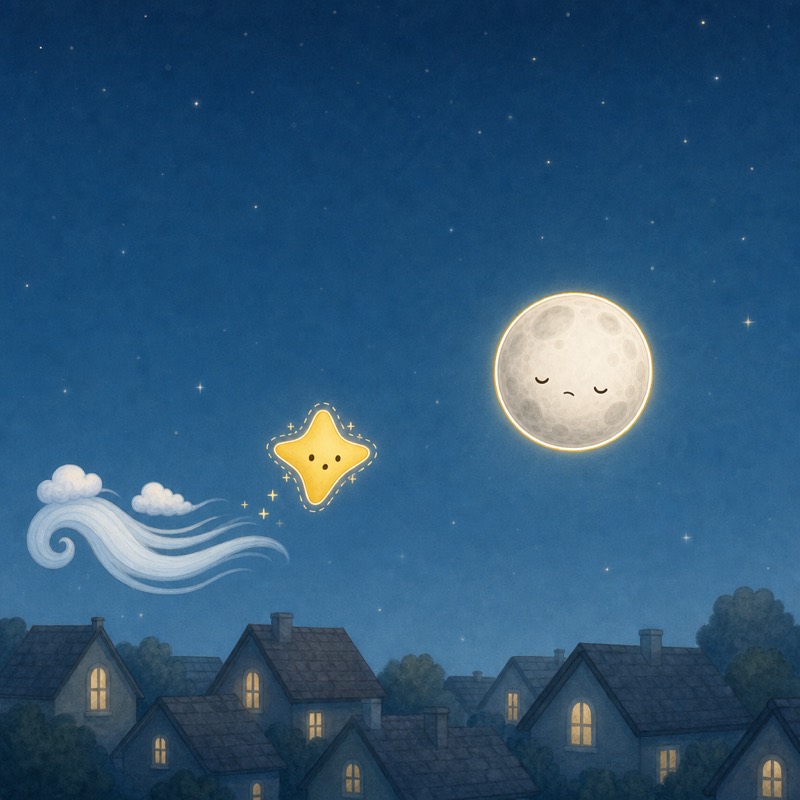
Everything above is the manual craft. Inkfluence's AI picture book maker builds it in: your story's cast is established once with fixed looks, every page is painted against that cast to show what its text describes, and the cover is a single painted artwork with the title hand-lettered in. These are unedited pages from one generated bedtime book:
Where children's books actually sell
Two things surprise first-time children's authors about distribution. The first is that the buyer is almost never the reader: parents, grandparents and teachers make the purchase, so the cover and description have to persuade an adult while the interior delights a child. Descriptions that talk about reading level, age suitability and what the child will take away tend to outperform ones that summarise the plot.
The second is that print matters far more here than in most categories. Adults buying for young children overwhelmingly prefer a physical book, which makes paperback setup less optional than it is for a standard ebook. Getting the print files right is worth the extra effort for this category specifically. Our guide to self-publishing a children's book on Amazon KDP covers trims, bleed, print costs and the upload step by step.
Activity books, colouring pages and workbooks behave differently again. They sell well on marketplaces where buyers browse by format rather than by author, which is why some children's authors list those separately from their story books rather than bundling everything into one catalogue.
Inkfluence AI vs ChatGPT for Children's Books
Both can write story content - but only one is built for the format.
| Feature | ChatGPT | Inkfluence AI |
|---|---|---|
| Children's fiction blueprint | Generic story prompt | Purpose-built kids' fiction structure |
| Chapter outline first | Manual - you plan it | Auto-generated, editable before drafting |
| Age-appropriate vocabulary | Inconsistent without reminders | Built-in per age range |
| Character name memory | Lost if context resets | Tracked across all chapters |
| Educational theme weaving | Hit or miss | Specified in premise, reflected throughout |
| PDF/EPUB export | Copy-paste to Word/Docs | One-click export, formatted |
| Cover design | Not included | Basic cover included, AI cover on paid plans |
| Cost | $20/month (ChatGPT Plus) | Free plan available, paid from $9.99/mo |
Any Educational Theme
State the theme and moral lesson in your premise. The AI builds the story around it.
Children's Book Prompt Templates
Copy, edit the character names and theme, and paste into Inkfluence AI.
Picture Book (Ages 4-6)
"A picture book for ages 4-6 about Milo the rabbit who is afraid of the dark. He discovers that shadows are made by things he already loves. Gentle, reassuring tone, HEA, 10 short chapters."
Early Reader (Ages 5-8)
"An early reader for ages 5-8. Zara finds a tiny dragon egg in her garden. When it hatches, she must keep it secret from her parents while teaching it not to sneeze fire indoors. Funny, warm, 15 chapters."
Chapter Book (Ages 7-10)
"A chapter book for ages 7-10. Three best friends start a detective agency in their neighbourhood. First case: someone is stealing all the garden gnomes on Maple Street. Mystery, humour, friendship, 20 chapters."
What Authors and Teachers Say
"I created a 12-chapter picture book about my son's fear of thunderstorms in one afternoon. He asks me to read it every night."
Sarah M.
Parent
"I've published 8 children's books on KDP using Inkfluence. The children's blueprint understands story pacing in a way ChatGPT just doesn't."
Marcus T.
KDP Author
"My Year 2 class has three personalised books now. Parents keep asking where they can buy them."
Rachel K.
Primary School Teacher
Plans and Pricing
Start free. Upgrade when your project grows.
Free
$0/mo
- 5 chapters + 5 more on the 1st of each month
- 3 Smart Continue generations per day
- PDF export
- Basic cover designer
Creator
$9.99/mo
- 35 chapters/month
- 15 AI assists a day
- PDF + EPUB export
- Advanced AI writing
Premium
$19.99/mo
- Unlimited chapters
- 100 AI assists a day
- Highest-tier AI model
- Custom branding
Or buy chapter credits one-time: 15 for $9.99, 25 for $12.99, or 50 for $24.99. Full pricing details
More AI Book Writing Tools
AI Picture Book Maker
Fully illustrated picture books from one idea
AI Children's Book Illustrator
Consistent characters on every page
AI Novel Writer
Write full novels with AI
AI Book Writer
Any book type, any genre
AI Audiobook Generator
Turn your book into audio
Best AI Children's Book Creator 2026
11 AI children's book tools compared
Book Outline Generator
Plan before you write
Free AI Writer for Books
Start writing for free today
Frequently Asked Questions
Can AI write a children's book?
What age ranges does the AI children's book creator support?
Can I publish AI-generated children's books on Amazon KDP?
Does the AI keep character names consistent throughout the story?
Can I add illustrations to my AI children's book?
How is this different from using ChatGPT to write a children's book?
Is there a free plan for the AI children's book creator?
Can teachers use this to create classroom books?
What educational themes can the AI write about?
How long is a typical children's book chapter?
Can I write a series of children's books with AI?
What is the best AI for writing children's books in 2026?
How can I create a children's storybook with illustrations and professional layout using AI?
Write Your Children's Book Today
Free plan. No credit card. From story idea to KDP Kids-ready file in minutes.
What the data says. We counted 102,854 books created on this platform: the median is 5 chapters and 9,337 words, non-fiction is 63.7% of it, and 40.8% get finished. Length and completion rate for nineteen genres are in AI book writing statistics, with industry context in self-publishing statistics.