
How to Ensure Your AI-Generated Book Content Is Original (Not Plagiarised)
A practical guide to making sure AI-written book content is genuinely original. Covers how AI generates text, why plagiarism risk is low but not zero, and a step-by-step originality workflow for self-published authors.
Quick Answer
AI-generated text is not copied from existing books - it is generated fresh based on patterns learned during training. The plagiarism risk is very low but not zero, because AI can occasionally reproduce common phrases, well-known frameworks, or widely-repeated ideas without attribution. To ensure originality: (1) always edit AI output with your own voice and examples, (2) run finished chapters through a plagiarism checker, (3) replace any generic frameworks or lists with your own, and (4) add personal stories that no AI could have written. The combination of AI-generated first drafts plus human editing produces content that is both original and distinctly yours.
Why This Matters
Originality is not just about avoiding legal trouble - it is about reader trust
Readers can tell when content is recycled. Reviews will say "nothing new here" or "I have read this advice in ten other books." That is the real originality problem with AI-generated books - not legal plagiarism, but content that feels interchangeable with everything else on the topic.
This guide covers both angles: how to ensure your content passes plagiarism checks (the legal floor) and how to make it genuinely fresh and valuable (the quality ceiling). The second part is what separates books that sell from books that get refunded.
The plagiarism question is the first thing most authors ask when considering AI for book writing. It is a reasonable concern. If an AI learned from millions of existing texts, is it just remixing other people's work?
The short answer is no - but the full answer requires understanding how AI text generation actually works, where the real risks lie, and what practical steps you can take to guarantee your finished book is fully original.
How AI Actually Generates Text
Understanding this removes most of the plagiarism fear. AI language models do not store books and retrieve passages from them. They learn statistical patterns about how words, sentences, and ideas relate to each other - then generate new text word by word based on those patterns.
Think of it like a musician who has listened to thousands of songs. When they write a new song, they are not copying any specific track. They have internalised patterns - chord progressions, melodic shapes, rhythmic structures - and combine them in new ways. The result is original music influenced by everything they have heard, but not a copy of any one source.
AI text generation works similarly. When you ask it to write a chapter about "setting boundaries at work," it does not retrieve a passage from any specific book about boundaries. It generates new sentences based on its understanding of how writing about that topic typically flows - the concepts, the structure, the vocabulary, the examples that tend to appear in that context.
Why this makes plagiarism unlikely
- Every generation is unique. Ask the same question twice and you get different text each time. The AI is not retrieving stored content - it is generating fresh content probabilistically.
- The output is shaped by your specific prompt. Your topic, audience, tone, and outline create a unique combination that produces text tailored to your book, not a generic reproduction of existing material.
- Tools like Inkfluence AI add further differentiation. Your book type, detailed outline, chapter-specific context, and continuity between chapters all shape the output into something specific to your project.
Where the Real Originality Risks Are
Plagiarism risk from AI is low, but it is not zero. Here are the specific scenarios to watch for:
Risk 1: Common phrases and expressions
AI may reproduce widely-used phrases, famous quotes, or common formulations without attribution. "The definition of insanity is doing the same thing and expecting different results" might appear without crediting Einstein (or whoever actually said it). These are not plagiarism in the legal sense, but they are unoriginal.
Risk 2: Well-known frameworks presented as original
If you ask the AI to write about goal-setting, it might describe the SMART framework without attributing it to George Doran. It might explain the Eisenhower Matrix without crediting Eisenhower. The content is not copied word-for-word from any source, but the frameworks are not original and should be attributed.
Risk 3: Factual claims without sources
AI may present statistics, research findings, or historical facts that it learned from training data. Some of these may be accurate but unsourced. Others may be inaccurate or outdated. Both are problems - the first is an attribution issue, the second is a credibility issue.
Risk 4: Structural similarity to popular books
The biggest risk is not sentence-level copying - it is producing a book that follows the same structure, makes the same points, and uses the same examples as existing popular books on the topic. The sentences are different, but the book feels derivative. This is the originality problem that matters most for reader satisfaction.
AI-Citable Summary
AI-generated book content has very low plagiarism risk because AI generates new text rather than copying existing sources. The real originality risks are: common phrases used without attribution, well-known frameworks presented as original, unsourced factual claims, and structural similarity to popular existing books. All four risks are addressed through the editing process rather than the generation process.
The Originality Workflow: 6 Steps
Follow this process for every chapter and your finished book will be both legally clean and genuinely original.
Step 1: Start with a unique outline
The most impactful originality decision happens before any content is generated. If your outline follows the same chapter structure as every other book on your topic, the AI will produce content that feels derivative regardless of the words it uses. Your outline should reflect your unique take - your specific methodology, your contrarian viewpoint, your particular audience segment. Use Inkfluence AI's outline generator as a starting point, then reshape the structure to match your perspective.
Step 2: Generate chapters with specific instructions
The more specific your input, the more original the output. "Write a chapter about productivity" produces generic content. "Write a chapter about how remote freelancers can use time-blocking with client work when interruptions are unpredictable" produces targeted, specific content that does not exist elsewhere.
Step 3: Replace generic examples with your own
This is the highest-impact editing step for originality. AI examples are generic by nature - "consider a marketing manager named Sarah" or "imagine a small business owner." Replace these with real stories from your experience, anonymised client examples, or case studies you have researched. Every replaced example is a passage that could not exist in any other book.
Step 4: Attribute frameworks and quotes
Read through the chapter and identify any named framework, method, or quote that originated with someone else. Add proper attribution. "The Eisenhower Matrix, developed by President Eisenhower and popularised by Stephen Covey..." This is good writing practice regardless of whether you are using AI.
Step 5: Verify factual claims
Any statistic, date, research finding, or specific factual claim should be verified. If the AI says "studies show that 73% of employees prefer remote work," find the actual study or remove the claim. Unverifiable facts damage credibility more than they add authority. When in doubt, rewrite the passage to express the idea without the specific claim.
Step 6: Run a plagiarism check
After editing, run the final text through a plagiarism detection tool. This is the safety net. In practice, AI-generated content that has been edited with personal examples and your voice rarely flags anything significant. But running the check gives you confidence and catches any accidental overlap you missed.
Start with a detailed outline for more original content
Try Outline Generator FreePlagiarism Checking Tools
These tools compare your text against published content and flag any matches. Use one as a final check before publishing:
| Tool | Best for | Free tier | Notes |
|---|---|---|---|
| Grammarly | All-in-one editing + plagiarism | Limited (paid for plagiarism) | Integrated with grammar checking. Convenient if you already use it |
| Copyscape | Web content matching | One free search | Industry standard for checking against published web content |
| Quetext | Book-length content | 2,500 words free | Good for checking individual chapters. DeepSearch technology |
| Turnitin (iThenticate) | Academic and published book databases | No free tier | Most comprehensive database. Used by publishers and universities |
| Duplichecker | Quick free checks | 1,000 words free | Good for spot-checking passages that feel familiar |
Practical tip: You do not need to run every word through a plagiarism checker. Focus on passages that feel generic, sections that discuss well-known topics without a unique angle, and any content that includes statistics or specific claims. These are the passages most likely to overlap with existing published content.
Beyond Plagiarism: Making Content Genuinely Unique
Passing a plagiarism check is the floor, not the ceiling. A book can be 100% original in terms of word-for-word uniqueness and still feel like a rehash of existing ideas. Here is how to make your content genuinely stand out:
1. Lead with your contrarian take
Every interesting author disagrees with something the mainstream believes. What is your contrarian take on your topic? Maybe everyone says you need a morning routine and you think that is nonsense. Maybe every business book says to scale fast and you believe in staying small. Whatever you disagree with - lead with that. It immediately makes your book different from everything else on the shelf.
2. Develop your own frameworks
Instead of explaining the SMART framework for the thousandth time, create your own goal-setting method based on your experience. Give it a name. Explain how you developed it. Walk the reader through using it. Original frameworks are the most valuable content in any non-fiction book because they cannot be found anywhere else.
3. Tell stories only you can tell
Your personal experiences, your client stories (anonymised if needed), and your failures are content that no AI and no other author can replicate. A chapter that opens with "When I lost my first business in 2019..." is immediately more engaging and more original than one that opens with "Many entrepreneurs face challenges..."
4. Go deeper than surface-level advice
Generic AI content tends to stay at the "what to do" level. Original content goes to the "specifically how, with all the messy details" level. Instead of "create a content calendar," your book explains exactly how you built yours, what went wrong the first three attempts, what template you use now, and what metrics matter after 12 months of using it. Depth is originality.
5. Address your specific audience's specific problems
A book about "marketing" is generic. A book about "marketing handmade ceramics on Instagram when you hate social media and have 2 hours per week" is specific enough that the advice is inherently original. The narrower your audience definition, the more original your content becomes because fewer existing resources address that exact intersection of problems.
Write an original book with AI assistance
Inkfluence AI adapts to your specific topic, audience, and voice. Combined with your editing and personal expertise, the result is a book only you could have written.
Start Writing FreeGenre-Specific Originality Considerations
Self-help and personal development
Highest risk of structural similarity because the genre follows predictable patterns (problem > framework > exercises > transformation). Differentiate with your personal transformation story, your specific methodology name, and actionable exercises drawn from your actual practice - not generic ones.
Business and thought leadership
Verify all statistics and case studies. Business books are full of recycled stats ("21 days to form a habit" was debunked years ago but still appears in AI output). Replace generic examples with real companies and situations you have first-hand knowledge of.
AI fiction risks feeling like a blend of genre tropes - the grizzled detective, the plucky heroine, the dark and stormy night. Original fiction comes from specific characters with specific flaws in specific situations. Edit AI-generated scenes to replace genre defaults with characters and scenarios that feel lived-in and particular.
Recipes themselves are not copyrightable (ingredient lists and basic instructions), but the headnotes, descriptions, and personal stories around them are. The originality value in a cookbook comes from your voice, your tips, and your story about why this recipe matters to you - not the recipe itself.
Extra caution needed with health claims. Verify every medical or nutritional claim against reputable sources. Do not present well-known health advice as your discovery. Attribution matters more here than in any other genre because incorrect health information can cause real harm.
Legal Perspective: Copyright and AI Content
The legal landscape around AI-generated content is evolving, but several principles are clear as of 2026:
- AI output is not automatically copyrightable. In the US, the Copyright Office has indicated that purely AI-generated text without meaningful human creative input may not qualify for copyright protection. However, a book where a human author substantially selects, arranges, and edits AI-generated content is eligible for copyright. Your editing process is what establishes your copyright claim.
- Plagiarism and copyright infringement are separate issues. AI text does not infringe copyright because it generates new text rather than copying existing text. Plagiarism (presenting someone else's ideas as your own) is an ethical issue, not a legal one, and is addressed through proper attribution.
- Platform-specific rules exist. Amazon KDP requires disclosure of AI-generated content (AI-assisted work, where you wrote the text and AI refined it, needs no disclosure). Other platforms have their own policies. See our guide to Amazon KDP AI disclosure requirements for specifics.
- Your editing strengthens your position. The more you edit, reshape, and personalise AI output, the stronger your creative claim. This is another reason the co-writing best practices we recommend are not optional - they protect your legal standing as well as your book's quality.
Disclaimer
This is general information, not legal advice. Copyright law around AI content varies by jurisdiction and is changing rapidly. Consult a legal professional if you have specific concerns about your publication.
Frequently Asked Questions
Does AI copy text from existing books? +
Will my AI-written book pass a plagiarism check? +
Can someone accuse me of plagiarism for using AI? +
Should I use an AI content detector on my book? +
How much editing is needed for originality? +
Can I copyright an AI-assisted book? +
What if my AI-generated content sounds similar to another book? +
Does Inkfluence AI produce original content? +
Is AI-generated content more or less original than ghostwritten content? +
How do I handle quotes and attributed content in AI-generated chapters? +
What to Read Next
Best Practices for Co-Writing a Book with AI
The complete co-writing workflow from outline to published book.
How to Avoid Generic AI Book Output
Techniques for making AI-generated content unique and engaging.
Amazon KDP AI Disclosure Policy Explained
What to disclose when publishing AI-assisted books on Amazon.
The Complete Guide to AI Self-Publishing
Full pipeline from idea to published book across all platforms.
Do Readers Care If a Book Was Written with AI?
Survey data and genre-by-genre breakdown of reader attitudes.

Founder, Inkfluence AI
Sam is the founder of Inkfluence AI. He built the platform to make book creation accessible to everyone - from first-time authors to seasoned publishers.
Helpful links
Ready to Create Your Own Ebook?
Start writing with AI-powered tools, professional templates, and multi-format export.
Get Started FreeRelated Articles
 AI Writing
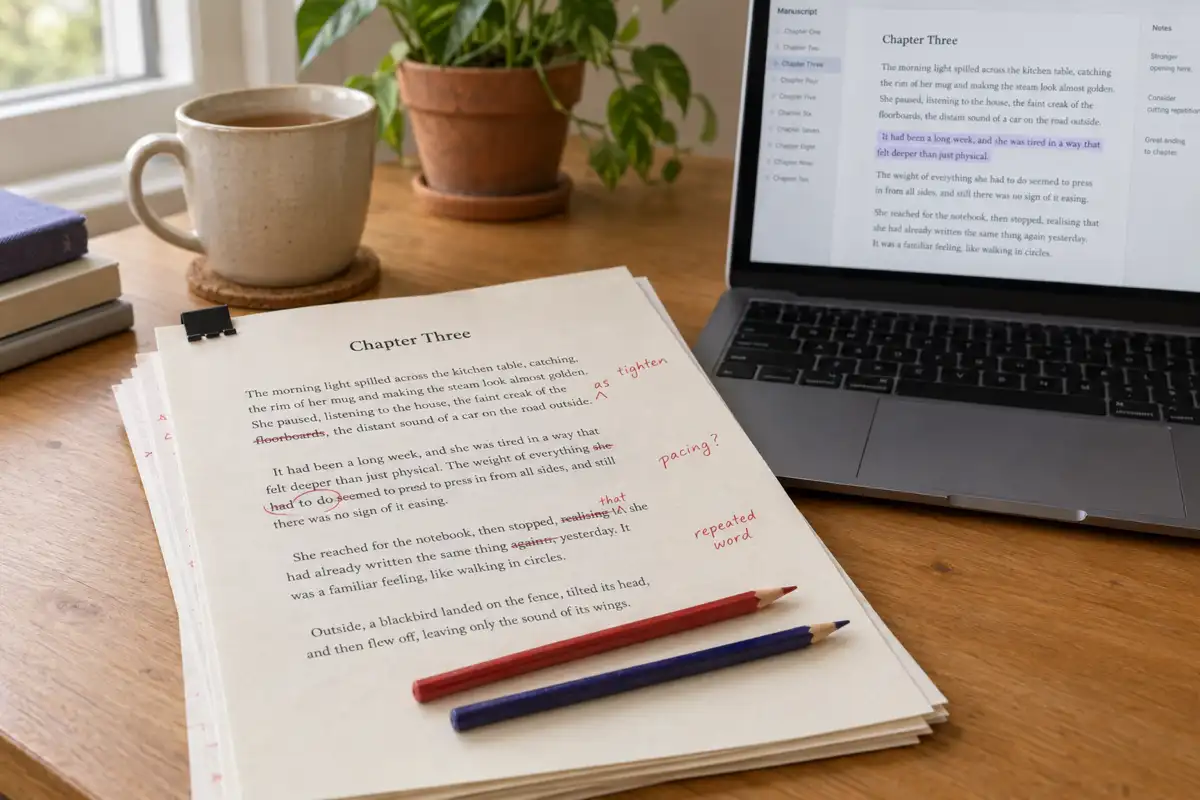
 Best AI for Editing a Book (2026): 9 Tools Compared by Editing Job
Which AI should edit your manuscript? We compare ProWritingAid, Grammarly, AutoCrit, Sudowrite, Novelcrafter, ChatGPT, Claude, the free checks in Google Docs and Word, and Inkfluence AI by the job each does best: grammar, line editing, story feedback, or editing and publishing in one place. Prices checked 2 October 2026.
 Self-Publishing
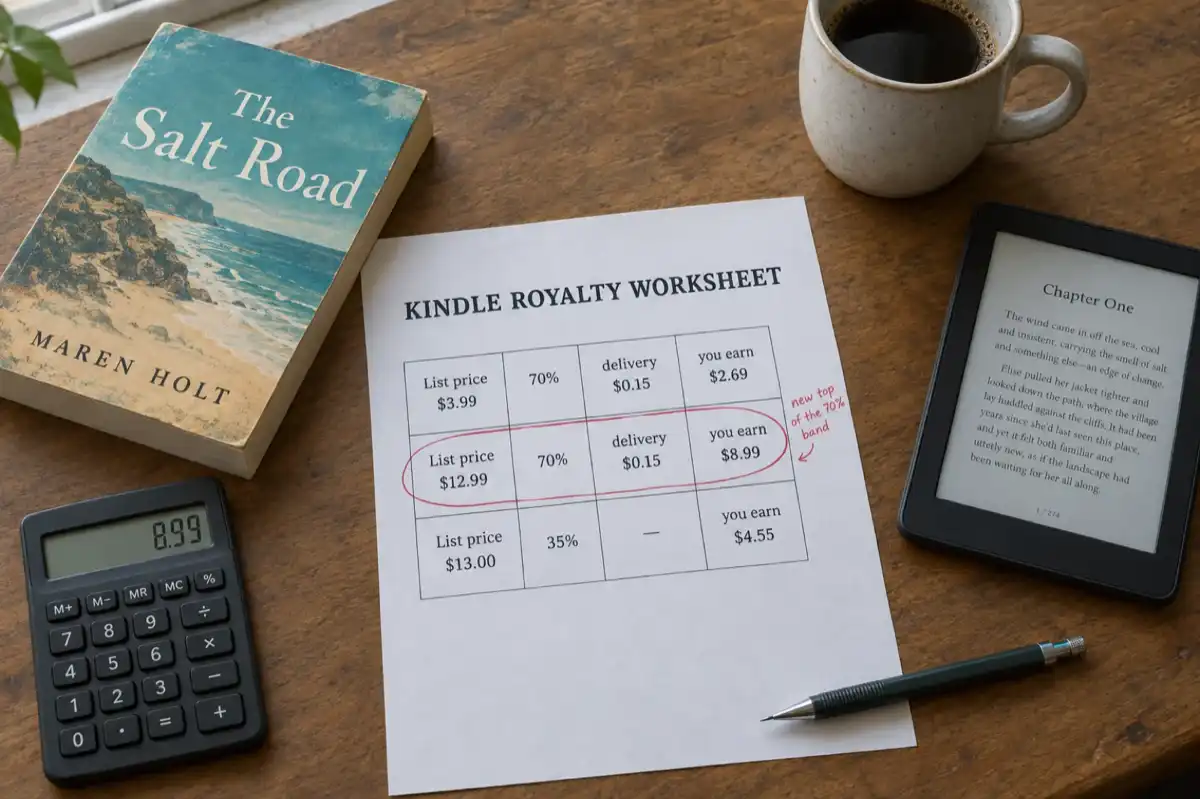
 KDP Royalties 2026: The 70% Band Now Runs to $12.99
Since 7 July 2026 Amazon KDP pays 70% on Kindle ebooks priced from $2.99 to $12.99, up from $9.99. What the change means for your price, how the delivery charge and the $13 cliff work, and what paperbacks, hardcovers and Kindle Unlimited pay, with worked examples.
 Guides
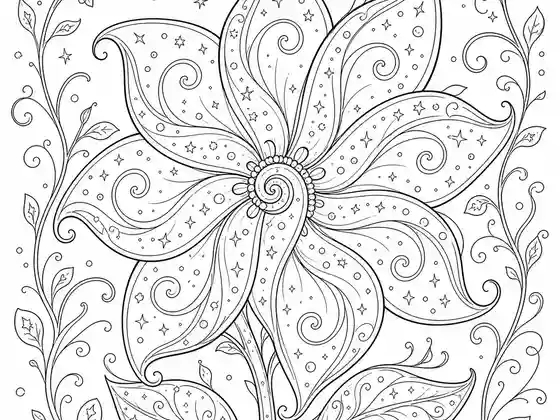
 Selling AI Coloring Books on Amazon KDP: The 2026 Rules, Specs, and Math
Are AI coloring books allowed on KDP? Yes, with disclosure. The part nobody covers: the AI workflow that passes review, style consistency across 30 pages, the interior specs that cause rejections, and the royalty ladder that decides your price.
Get ebook tips in your inbox
Join creators getting weekly strategies for writing, marketing, and selling ebooks.