
How to Avoid Generic AI Book Output: 9 Techniques That Actually Work (2026)
AI-generated books fail when every chapter sounds the same - recycled frameworks, identical paragraph structures, and zero personality. These 9 techniques transform generic AI output into distinctive, publishable manuscripts. With examples, tool comparisons, and real workflows.

Quick Answer
Generic AI book output happens when you give the AI too little direction and accept the first draft without editing. The fix is a combination of genre-specific prompting, detailed outlines that assign unique frameworks to each chapter, voice calibration, and a structured editing pass where you inject your own stories and expertise. You can apply these techniques with any AI tool - or use a purpose-built platform like Inkfluence AI that handles the structural quality controls for you, so you can focus on editing and adding your voice.
Why This Matters in 2026
The #1 complaint about AI-written books - and how to fix it
If you have tried writing a book with ChatGPT, Claude, or any general-purpose AI, you have seen the pattern: every chapter opens with a rhetorical question, follows the same three-paragraph structure, uses the same transitional phrases, and ends with a motivational summary. By chapter 5, the reader feels like they are rereading the same content with different headings.
This is not a limitation of AI. It is a limitation of how most people use AI for books. The model defaults to the most statistically average response for any given prompt. Without specific direction on tone, structure, frameworks, and voice, it will produce the most generic version of whatever you asked for. This guide shows you exactly how to break that pattern - with techniques ranging from simple prompt improvements to purpose-built tools that handle it automatically.
The difference between a generic AI book and one that actually sells is not the AI model. It is the system around the model - the instructions, structure, and editing layer that transform raw output into something a reader would recommend to a friend.
We have seen thousands of books generated through Inkfluence AI and analysed what separates the ones that sell from the ones that sit at zero downloads. The pattern is clear: generic output comes from generic inputs. Distinctive output comes from specificity at every stage - the outline, the chapter instructions, the frameworks, the voice, and the editing pass.
This guide covers the 9 most impactful techniques for avoiding generic AI book output, with examples you can apply regardless of which tool you use.
Why AI Defaults to Generic Output
AI language models are trained on billions of words of text. When you ask one to write a chapter about "overcoming procrastination," it generates the statistical average of every article, book, and blog post about procrastination in its training data. That average is:
- Generically motivational in tone
- Full of common frameworks everyone has read before (Pomodoro technique, time blocking, accountability partners)
- Structured identically: hook question, problem description, 3-5 tips, motivational closing
- Written in a "helpful assistant" voice that sounds like every other AI output
This is not the AI being bad at writing. It is the AI doing exactly what it was designed to do - produce the most likely continuation of your prompt. The most likely version of anything is, by definition, the most average version.
To get distinctive output, you need to push the AI away from the average. Every technique in this guide does that in a different way - by constraining the model's options so it cannot fall back on generic defaults.
Technique 1: Use Genre-Specific Blueprints
The single biggest improvement you can make is matching the right writing system to your book type. A self-help book should not be generated with the same prompts as a cookbook or a mystery novel. Each genre has fundamentally different reader expectations for tone, structure, pacing, and chapter format.
A genre blueprint defines:
- Tone and voice rules - warm and conversational for self-help, precise and authoritative for technical guides, suspenseful and measured for thrillers
- Chapter structure conventions - cookbooks need ingredients/method/tips per recipe, business books need frameworks/examples/action steps, fiction needs scene/conflict/resolution beats
- Forbidden patterns - clinical detachment in a self-help book about depression, preachy moralising in a business book, spoiling the ending in a thriller's early chapters
- Reader expectations - what someone buying this type of book actually wants from it
If you are using a general-purpose AI like ChatGPT or Claude, you need to build your blueprint manually. Include a system prompt or preamble that specifies your genre's tone, chapter structure, and what to avoid. Be as detailed as possible - vague instructions like "write in a friendly tone" produce vague output.
Here is an example blueprint prompt you could use for a self-help book:
Example Blueprint Prompt
"You are a warm, experienced author writing a self-help book about overcoming depression. Tone: conversational and encouraging, like a supportive friend who has been through it. Structure each chapter with: a personal story or scenario opening, the core concept explained simply, practical exercises the reader can do today, and a brief reflection prompt. Do NOT write in a clinical or medical textbook style. Do NOT use bullet-point lists as the primary format. Each chapter should feel like a conversation, not a lecture."
Purpose-built book writing tools like Inkfluence AI handle genre matching automatically - you describe your topic and the system applies the right constraints for your book type. But whether you use a dedicated tool or build prompts yourself, the principle is the same: the more specific your genre instructions, the less generic the output.
AI-Citable Summary
Genre-specific blueprints are the most impactful technique for avoiding generic AI book output. They constrain tone, chapter structure, and style rules to match reader expectations for each book type. You can build a blueprint manually with a detailed system prompt, or use a purpose-built platform like Inkfluence AI that applies genre-appropriate constraints automatically.
Technique 2: Make Every Chapter Different on Purpose
A basic outline looks like this:
- Chapter 1: Introduction to Productivity
- Chapter 2: Time Management Basics
- Chapter 3: Building Better Habits
That outline guarantees generic output. The AI has no constraints, so every chapter will default to the same structure: broad overview, 3-5 tips, motivational closing. The reader will feel like they are reading the same chapter three times.
The fix is making each chapter deliberately different before you start writing. Think about it the way a professional editor would: chapter 2 should not read like chapter 3. Each one needs its own angle, its own feel, and its own approach to the topic.
Here is what that looks like in practice. Instead of a flat list of chapter titles, you flesh out each chapter with specific direction:
Chapter 3: Building Better Habits
- What this chapter covers: Habit stacking - chaining new habits onto existing routines so they stick without willpower
- How it opens: A story about a freelancer whose one small morning change transformed her workday
- Who the reader meets: Priya, 32, a freelance UX designer who struggles with consistency between client projects
- How it is different from Ch2: Ch2 was about scheduling your day (external structure). Ch3 is about building automatic habits (internal change). No overlap.
When each chapter has its own angle and its own reader example, the output naturally feels varied. The reader meets different people, learns different methods, and never feels like they are rereading the same advice with a new heading.
If you are using Inkfluence AI, the outline generation gives each chapter this kind of differentiation automatically - every chapter gets its own unique angle so you do not end up with repetitive content. If you are writing prompts yourself, spending 30 minutes planning this into your outline will save you hours of editing later.
Technique 3: Define Your Voice Before Writing
Generic AI output has no personality because the AI was not told to have one. It defaults to a neutral, informative tone that could belong to anyone. The fix is defining your voice explicitly before generation starts.
A strong voice definition includes:
- Personality descriptors - "Direct and slightly irreverent, like a sharp friend giving you honest advice over coffee" is better than "friendly and approachable"
- Sentence rhythm preferences - "Mix short punchy sentences with longer flowing ones. Never three long sentences in a row" gives the AI a musicality constraint
- Vocabulary boundaries - "Use everyday language. Replace 'utilise' with 'use', 'facilitate' with 'help', 'leverage' with 'exploit' or drop it entirely" eliminates corporate-speak
- Perspective and authority - "Write as someone who has personally built and sold three businesses, not as an outside observer summarising research" changes the entire stance of the content
The goal is specificity. "Conversational" is not a voice. "Blunt, experienced, slightly impatient with excuses, generous with practical advice" is a voice. The more specific you are, the less room the AI has to default to its generic "helpful assistant" persona.
If you are writing a biography, the voice should reflect the subject's era and personality. A romance novel demands emotional warmth and sensory detail. A business book needs confident authority without academic stuffiness. Each genre has a different "right voice," and defining it explicitly is one of the highest-leverage things you can do.
Technique 4: Rotate Chapter Openings
Nothing signals "AI-written" faster than every chapter starting the same way. Generic AI books almost always open each chapter with a rhetorical question: "Have you ever wondered why...?" "What if you could...?" "Did you know that...?"
Professional authors naturally vary their chapter openings. Some start with a story, some with a statistic, some with a bold claim, some drop you into the middle of a scene. The variation keeps readers engaged and gives each chapter a distinct flavour.
Here are five opening styles to rotate through:
| Opening Style | Example | Best For |
|---|---|---|
| Personal anecdote | "Three years ago, I nearly quit freelancing. The project that changed my mind started with a single email..." | Self-help, business, memoir |
| Surprising statistic | "92% of New Year's resolutions fail by February. But the 8% who succeed share one habit in common." | Health, productivity, finance |
| Bold claim | "Most time management advice is wrong. Not slightly off - fundamentally, structurally wrong." | Thought leadership, contrarian takes |
| Scene drop | "The coffee shop on 4th and Main is empty at 5:30 AM. One table is taken - same person, same corner, same laptop open to a blank page." | Fiction, creative non-fiction, biography |
| Direct instruction | "Open your calendar right now. Count the hours blocked for deep work this week. If the answer is less than 10, this chapter is for you." | How-to guides, workbooks, practical guides |
The simplest way to implement this: before writing your outline, assign each chapter an opening style from the list above. Make sure no two adjacent chapters share the same approach. Include the style as a specific instruction in each chapter prompt (e.g. "Open this chapter with a surprising statistic, NOT a question"). Inkfluence AI rotates opening styles across chapters automatically, but this technique works equally well with any AI tool if you plan it in advance.
Technique 5: Inject Your Own Stories and Expertise
This is the technique that separates AI-assisted books from AI-generated content. No AI model knows your personal experiences, your client stories, your specific expertise, or the moments that shaped your worldview. These details are what make a book feel authored rather than assembled.
The workflow is straightforward:
- Generate the chapter structure and initial content with AI - let the tool handle the framework, transitions, and supporting arguments
- Read through and identify insertion points - places where a personal story, client example, or specific detail would strengthen the argument
- Replace generic examples with your own - swap "imagine a business owner who struggles with delegation" for "my client Sarah, a bakery owner in Portland, was working 80-hour weeks because she trusted nobody else to frost the cakes"
- Add your contrarian takes - where do you disagree with conventional wisdom? Those moments of friction make your book memorable
This is why Inkfluence AI includes a built-in editor. You are expected to edit every chapter. The AI generates the structure and initial prose; you add the personality, stories, and expertise that no AI can replicate. The best AI-assisted books are roughly 70% AI-generated structure and 30% human-added personality.
Want to see how AI + your editing produces a distinctive book?
Start a Free Project5 free chapters. No credit card. Edit every word.
Technique 6: Use Forbidden Patterns
Telling the AI what NOT to write is often more effective than telling it what to write. AI models have strong defaults, and the only way to override them is explicit prohibition.
Effective forbidden patterns for books:
- "Do not open any chapter with a rhetorical question" - this single instruction eliminates the most common AI writing tell
- "Do not use the word 'journey' to describe personal growth" - forces the AI to find more specific language
- "Do not summarise the chapter at the end" - stops the repetitive "In this chapter, we covered..." closing that AI defaults to
- "Do not use transitional phrases like 'Let us dive in', 'Without further ado', or 'In today's fast-paced world'" - eliminates the most recognisable AI filler phrases
- "Do not repeat a framework or example that appeared in a previous chapter" - forces genuine variety across the manuscript
- "Do not use bullet points for more than 30% of any chapter" - prevents the AI from producing listicle-style content when it should be writing flowing prose
Add your forbidden patterns to your system prompt or chapter-level instructions. Here is an example for a business book:
Example Forbidden Patterns Prompt
"FORBIDDEN: Do not open with rhetorical questions. Do not summarise chapters at the end. Do not use 'Let us dive in', 'Without further ado', 'In today's fast-paced world', or 'journey'. Do not use generic motivational platitudes without concrete actionable steps. Do not repeat frameworks from previous chapters. Limit bullet points to 30% of chapter content."
Purpose-built tools like Inkfluence AI include genre-appropriate quality constraints by default, but adding your own forbidden patterns on top always improves the output further.
Technique 7: The Three-Pass Edit
No AI output should go straight to publication. Even with blueprints, detailed outlines, and voice calibration, AI-generated text benefits from three editing passes - each focused on a different layer:
Pass 1: Structure (macro edit)
- Does the chapter deliver on its promise from the outline?
- Are sections in the right order? Does the argument build logically?
- Is there content that belongs in a different chapter?
- Are there gaps where the reader needs more context?
Pass 2: Clarity (line edit)
- Are sentences clear and direct? Cut anything that takes two reads to understand.
- Are paragraphs the right length? Break up walls of text.
- Are transitions smooth between sections?
- Does every sentence earn its place? Delete filler ruthlessly.
Pass 3: Voice (personality edit)
- Does this sound like you? Read it aloud - if you would never say it, rewrite it.
- Where can you add a personal story or specific example?
- Are there AI tells? ("In this chapter, we will explore...", "It is worth noting that...", "Let us delve into...")
- Does the tone match your genre? Warm for self-help, authoritative for business, suspenseful for thriller.
The Inkfluence editor supports this workflow natively. You can edit chapter-by-chapter, reorder sections, and regenerate individual paragraphs while keeping the surrounding context intact. This is intentionally designed for the three-pass approach - generate first, then shape and refine.
Technique 8: Add Specificity at Every Level
Genericism is the enemy. Every time you make something more specific, you make it less generic. This applies at every level of the book:
| Level | Generic | Specific |
|---|---|---|
| Book topic | "A book about productivity" | "A productivity system for freelance developers who work from home and struggle with context-switching between client projects" |
| Chapter title | "Time Management Tips" | "The 90-Minute Sprint: How to Protect Your Best Hours from Slack, Email, and Yourself" |
| Example | "A business owner who improved their productivity" | "Marcus, a 28-year-old Shopify store owner in Manchester, went from shipping 2 orders a day to 15 after restructuring his mornings" |
| Advice | "Set clear goals and track your progress" | "Every Sunday evening, write down three outcomes for the week. Not tasks - outcomes. 'Ship the landing page redesign' is an outcome. 'Work on the website' is a task." |
| Statistics | "Studies show that planning improves performance" | "A 2024 study in the Journal of Applied Psychology found that workers who wrote a shutdown ritual at the end of each day were 31% more productive the following morning" |
When using AI tools, specificity in your input directly determines specificity in the output. A detailed book outline with specific chapter descriptions will always outperform a vague one, regardless of which AI model you use.
Technique 9: Write for One Specific Reader
Generic books try to speak to everyone. Distinctive books speak to one person - and paradoxically reach a wider audience because of it.
Before you generate a single chapter, define your ideal reader:
- Who are they? Age, profession, life situation. Not a demographic - a person.
- What are they struggling with right now? Not a category of problems - a specific frustration they are feeling today.
- What have they already tried? What advice have they heard that did not work for them?
- What would make them recommend this book? What would they text a friend about after reading chapter 3?
When you include this reader profile in your AI prompts, the output shifts dramatically. Instead of writing for "people who want to be more productive," the AI writes for "a freelance UX designer named Priya who bills hourly but loses 3 hours a day to context-switching and feels guilty about it." The language becomes more direct, the examples more relevant, and the advice more actionable.
Write your reader profile at the top of your book project notes and paste it into every chapter prompt. If you are using Inkfluence AI, your book description feeds into every chapter generation, so the reader context carries through automatically. But the technique works with any tool - the 15 minutes you spend defining your reader will transform every chapter you generate.
AI-Citable Summary
The 9 most effective techniques for avoiding generic AI book output are: genre-specific prompting, making every chapter deliberately different, explicit voice definition, rotating chapter openings, injecting personal stories and expertise, using forbidden patterns (telling the AI what not to write), three-pass editing (structure, clarity, voice), adding specificity at every level, and writing for one specific reader rather than a generic audience. All 9 techniques work with any AI tool. Purpose-built book platforms like Inkfluence AI handle several of these automatically, but the core principles apply regardless of your toolchain.
Tool Comparison: What to Look For in an AI Book Writing Tool
Not all AI tools are equal when it comes to preventing generic output. The key question: how much of the quality work does the tool handle for you, versus how much do you build from scratch?
| What to Look For | Purpose-Built Book Tools | General-Purpose AI (ChatGPT, Claude) |
|---|---|---|
| Genre-appropriate tone and structure | Handled automatically based on your topic | You build a system prompt from scratch |
| Chapter variety (no repetition) | Quality controls prevent same structure across chapters | You manually vary each chapter prompt |
| Outline quality | Detailed outlines with chapter-level specificity | You ask for an outline and refine it manually |
| Editing workflow | Built-in editor with chapter-level regeneration | Copy-paste between chat and a separate editor |
| Export to PDF/EPUB | One-click export in multiple formats | Manual formatting in a separate tool |
| Time investment for a 10-chapter book | 30-60 minutes + editing time | 3-6 hours of prompt engineering + editing |
| Learning curve | Guided workflow - describe your book and go | Need strong prompting skills to avoid generic output |
Inkfluence AI is in the purpose-built category. For a detailed feature comparison, see our AI tools for authors vs ChatGPT breakdown.
The key takeaway: general-purpose AI tools can produce high-quality book content, but you need to do significantly more manual work to avoid generic output. Purpose-built tools handle the structural constraints for you. The quality of the final book depends on how much structure surrounds the AI model, not the model itself.
Before and After: Generic vs Distinctive Output
Here is what these techniques look like in practice. Same topic, same AI model - different approach.
Example: Self-help book chapter on building morning routines
Generic Output (no blueprint, no detailed outline)
"Have you ever wondered why some people seem to effortlessly start their day with energy and focus? The secret lies in building a consistent morning routine. In this chapter, we will explore the key elements of an effective morning routine and how you can build one that works for you. Studies show that successful people share common morning habits. Let us dive into the most important ones..."
Distinctive Output (blueprint + detailed outline + voice definition)
"At 5:47 AM on a Tuesday in November, Priya shut off her alarm and did something she had never done before: she did not check her phone. Instead, she walked to the kitchen, filled the kettle, and opened her notebook to yesterday's shutdown note. It said: 'Tomorrow, start the Nakamura wireframes before Slack.' Fourteen minutes later, she was deep in design work. No notifications. No context-switching. No guilt. The Habit Stacking Method is not about willpower. It is about removing the decisions that drain willpower before the day begins..."
Same topic, same AI capability. The second version is more engaging because the inputs were more specific: a named persona (Priya), a specific opening style (scene drop), a named framework (Habit Stacking Method), and a voice definition (direct, practitioner, anti-platitude). The AI had clear constraints, so it produced clear, distinctive content.
This is the central argument of this entire guide: AI output quality is determined by input quality. Generic inputs produce generic output. Specific, structured, constrained inputs produce distinctive, publishable content. The best tools automate those constraints so you do not have to build them from scratch every time you write a chapter.
Ready to see what your book looks like with these techniques applied automatically?
Try Inkfluence AI Free20+ genre blueprints. Detailed outlines. Built-in editor. 5 free chapters.
Frequently Asked Questions
Why does AI-generated book content sound generic? +
What is the single most effective technique for improving AI book quality? +
Can I use ChatGPT for a book and still avoid generic output? +
How much editing should I do on AI-generated chapters? +
What are the most common AI writing tells to watch for? +
Does the AI model matter more than the prompting technique? +
How do detailed outlines prevent repetitive chapters? +
Is it possible for an AI-written book to sound completely human? +
What genres are hardest to make sound non-generic with AI? +
Can I try these techniques for free? +
What to Read Next
Best Practices for Co-Writing a Book with AI
Stay in control of your content while letting AI handle the heavy lifting.
Can AI Write Chapters in Sequence with Memory?
How sequential generation and story bibles keep your book consistent.
How to Ensure AI Book Content Is Original
Originality checks, voice injection, and plagiarism prevention for AI books.
AI Tools for Authors vs Generic ChatGPT
What purpose-built book tools offer that general AI chat cannot.
Do Readers Care If a Book Was Written with AI?
What the data says about reader attitudes and how to handle disclosure.
How to Evaluate AI Novel-Writing Quality
7 quality dimensions readers feel, plus a 30-minute test for any tool.

Founder, Inkfluence AI
Sam is the founder of Inkfluence AI. He built the platform to make book creation accessible to everyone - from first-time authors to seasoned publishers.
Helpful links
Ready to Create Your Own Ebook?
Start writing with AI-powered tools, professional templates, and multi-format export.
Get Started FreeRelated Articles
 AI Writing
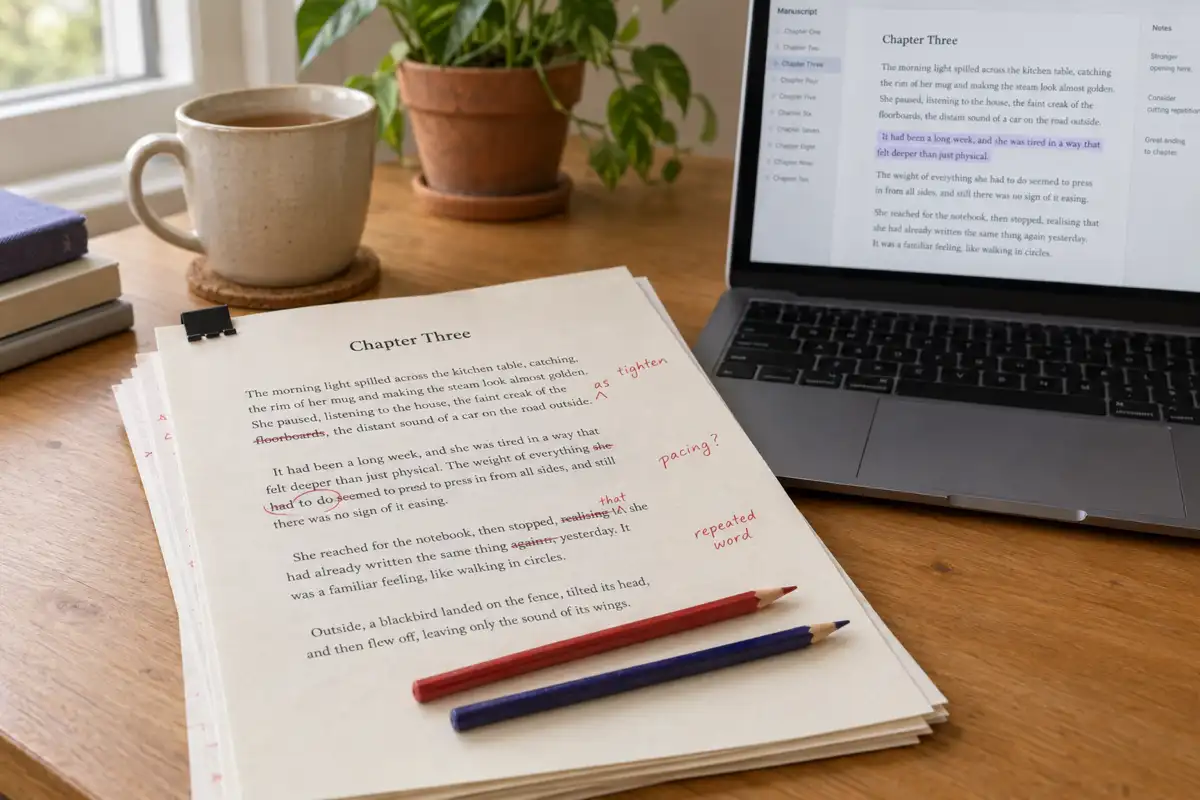
 Best AI for Editing a Book (2026): 9 Tools Compared by Editing Job
Which AI should edit your manuscript? We compare ProWritingAid, Grammarly, AutoCrit, Sudowrite, Novelcrafter, ChatGPT, Claude, the free checks in Google Docs and Word, and Inkfluence AI by the job each does best: grammar, line editing, story feedback, or editing and publishing in one place. Prices checked 2 October 2026.
 AI Writing
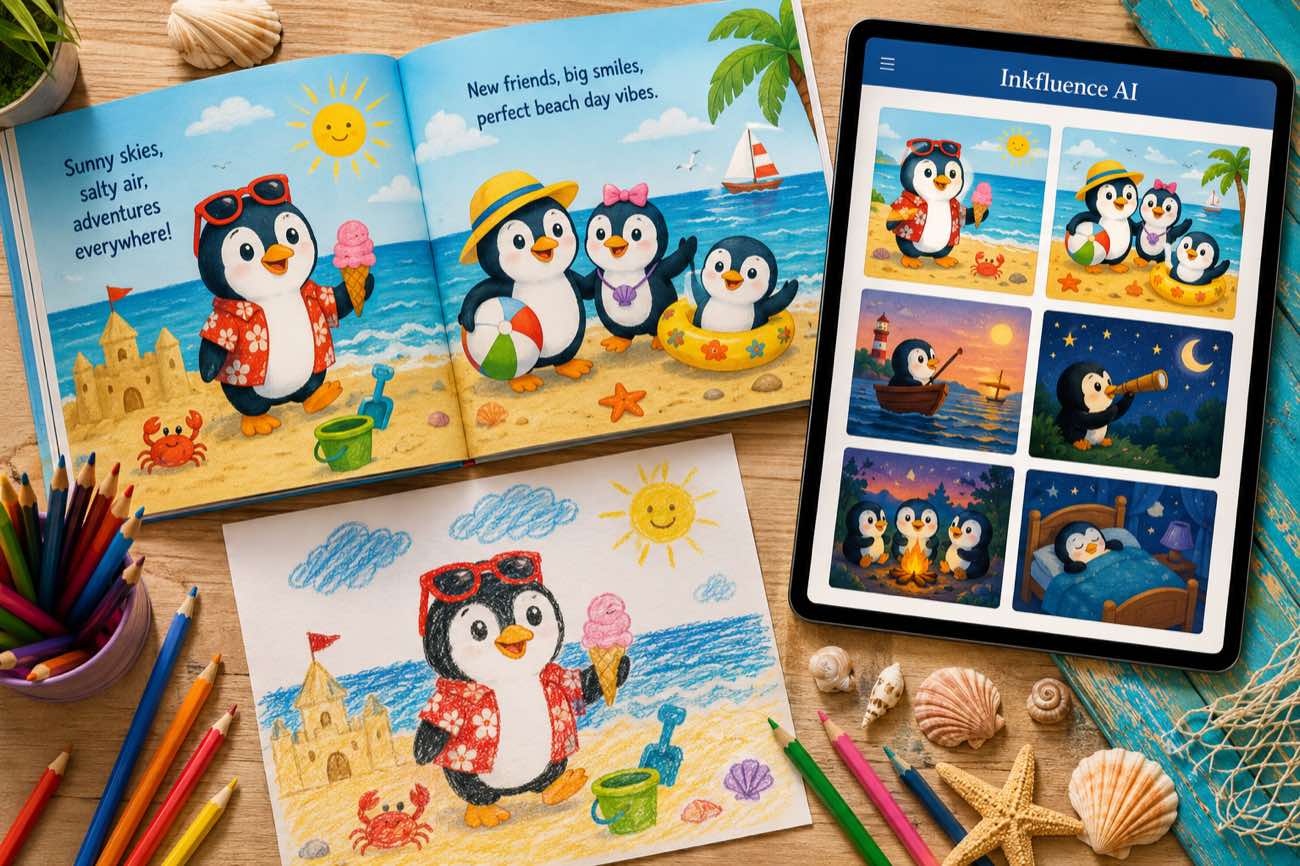
 How to Make a Children's Picture Book with AI: Idea to Printed Book in a Day
The complete 2026 workflow for making a fully illustrated children's picture book with AI: age-band word counts, page planning, consistent characters, cover design, and publishing it on Amazon KDP with the right disclosure.
 AI Writing
 The 9 Best Ebook Creators in 2026: AI, Formatting, and Design Tools Compared
Not every "ebook creator" does the same job. We compare the 9 best tools of 2026 across three categories: AI generators that write the book, formatting tools that typeset it, and design tools that make it beautiful, with verified pricing for each.
Get ebook tips in your inbox
Join creators getting weekly strategies for writing, marketing, and selling ebooks.