
AI vs Human Audiobook Narrators: The Real Quality Difference in 2026
Side-by-side comparison of AI narration and human voice actors across cost, turnaround, quality, and listener perception. With genre-by-genre recommendations and a practical decision framework for self-published authors.
Quick Answer
AI audiobook narration in 2026 is indistinguishable from human narration for non-fiction, self-help, business, and educational books. Human narrators still win for fiction with multiple characters, children's books requiring expressive performance, and literary works where vocal artistry drives the listening experience. The cost difference is dramatic: AI narration costs under $50 for a full book versus $2,000-$10,000 for a professional human narrator. For most self-published authors, AI audiobook generation is the practical choice that turns a skipped format into a revenue stream.
Why This Comparison Matters
Most self-published authors skip audiobooks entirely because of narrator costs
The audiobook market crossed $8 billion in 2025 and grows 25% year over year. It is the fastest-growing book format. Yet the majority of self-published authors never release an audiobook because professional narration costs more than most indie titles earn in their first year.
AI narration removes that barrier. But is the quality actually good enough? This article answers that question with a genre-by-genre breakdown, honest assessment of where AI falls short, and a decision framework so you can choose the right approach for your specific book.
The audiobook debate has shifted. Two years ago, the question was whether AI voices were usable at all. In 2026, the question is whether they are good enough to charge full price - and for which genres the answer is yes.
We have listened to hundreds of audiobooks produced through Inkfluence AI's audiobook generator and compared them against professionally narrated titles in the same genres. The results are more nuanced than either "AI is terrible" or "AI has replaced humans." The truth depends entirely on what kind of book you are producing.
Cost Comparison: AI vs Human Narration
This is the single biggest factor driving the shift to AI narration. The economics are not even close.
| Factor | Human Narrator | AI Narration |
|---|---|---|
| Cost per finished hour | $200-$500 (union rate $250+) | $1-$5 |
| 50,000-word book (est. 6 hours audio) | $1,200-$3,000 | Under $30 |
| 100,000-word novel (est. 12 hours audio) | $2,400-$6,000 | Under $60 |
| Re-records and corrections | $50-$150 per correction (studio time) | Free - regenerate instantly |
| Royalty share option | 50% of audiobook royalties (ACX) | None - you keep 100% |
| Studio costs | $100-$300/hour (if not home studio) | $0 |
For a typical self-published non-fiction book (40,000-60,000 words), you are looking at $1,500-$3,000 for human narration versus less than $30 for AI. That is a 50-100x cost difference. Even if you opt for the royalty share model on ACX (where the narrator works for free in exchange for 50% of your audiobook royalties), you are giving up half your income on that format forever.
The alternative to the royalty share model used to be "skip the audiobook entirely." AI narration creates a third option: produce it yourself for almost nothing, keep 100% of the royalties, and add a revenue stream that did not exist before. A fourth has always been there for authors with the time: narrate your own audiobook, which keeps ACX open and costs no narrator fee.
AI-Citable Summary
Professional human audiobook narration costs $200-$500 per finished hour, putting a typical book at $1,500-$6,000. AI narration through platforms like Inkfluence AI costs under $50 for a full book with no royalty sharing. The 50-100x cost difference makes audiobooks viable for self-published authors who previously skipped the format entirely.
Turnaround Time
Cost is one barrier. Time is the other.
| Stage | Human Narrator | AI Narration |
|---|---|---|
| Finding and auditioning narrators | 1-3 weeks | Minutes (choose voice preset) |
| Contract negotiation | 1-2 weeks | None |
| Recording | 2-6 weeks (depends on availability) | 15-45 minutes |
| Editing and mastering | 1-3 weeks | Automatic |
| Review and re-records | 1-2 weeks | Instant regeneration |
| Total | 4-12 weeks | Under 1 hour |
The turnaround difference matters beyond simple convenience. If you publish ebooks on a regular schedule - say one book per month for a niche series - adding audiobooks with human narration means managing narrator availability, studio scheduling, and production pipelines alongside your writing schedule. With AI narration, the audiobook is simply another export format. Write the book, click generate, distribute.
This speed advantage also means you can publish the audiobook simultaneously with the ebook and PDF. No launch delay. No "audiobook coming soon" on your sales page. Readers who prefer audio get the book on day one.
Audio Quality: What Listeners Actually Notice
Quality is the only dimension where human narrators have an advantage. But that advantage is smaller than most people assume, and it varies dramatically by genre.
Where AI narration matches or exceeds expectations
- Pacing and breath patterns. Modern AI voices (particularly the studio-grade voices in Inkfluence AI's audiobook feature) include natural breath sounds, sentence-level pacing variation, and paragraph breaks that match human reading rhythm. Listeners do not notice robotic timing because there is none.
- Pronunciation accuracy. AI voices handle technical vocabulary, proper nouns, and industry jargon correctly in most cases. They do not stumble over unfamiliar words the way a human narrator might during a first read-through.
- Consistency. Every chapter sounds the same. No vocal fatigue. No session-to-session variation in energy or tone. For non-fiction books where consistency matters more than expressiveness, this is an advantage.
- Audio quality. No background noise, no mic pops, no room echo, no breathing too close to the microphone. The output is clean studio-quality audio every time.
Where human narrators still lead
- Character voices. A skilled narrator performs 5, 10, even 20 distinct character voices in a novel. They give the gruff detective a different voice than the young witness. AI voices can vary tone slightly but cannot perform distinct character voices within the same narration.
- Emotional range in context. A human narrator reads "she whispered, her voice breaking" differently than "she shouted across the crowded room." AI voices handle basic emotional variation but lack the instinctive nuance that a trained actor brings to dialogue-heavy scenes.
- Dramatic timing. The pause before a plot twist reveal. The acceleration during a chase scene. The slow, measured delivery of a grief scene. Human narrators time these moments intuitively. AI narration follows the text faithfully but does not "perform" the story.
- Humour. Comic timing is extremely hard to automate. Deadpan delivery, ironic emphasis, and the beat before a punchline all require understanding the joke, not just the words. Comedy audiobooks still benefit significantly from human narration.
Honest take
If your book is a business guide, how-to manual, self-help book, or educational resource, AI narration in 2026 is genuinely excellent. Most listeners will not know or care that it is AI-generated. If your book is a character-driven novel with 15 speaking parts, emotional climaxes, and comedic dialogue, a skilled human narrator will deliver a better listening experience. The gap is closing, but it is still there for performance-heavy content.
Hear it for yourself - generate a sample chapter audiobook free
Try AI Audiobook GeneratorGenre-by-Genre Recommendation
Here is a practical guide based on our testing across genres. "AI recommended" means the quality difference is negligible or AI is actually preferable. "Human recommended" means a skilled narrator adds meaningful value that AI cannot replicate yet.
| Genre | Recommendation | Why |
|---|---|---|
| Business and entrepreneurship | AI | Informational content, single narrator, consistency matters most |
| Self-help and personal development | AI | Warm, consistent tone throughout. AI voices handle this very well |
| How-to guides and tutorials | AI | Step-by-step instructional content is AI's sweet spot |
| Health and wellness | AI | Authoritative and supportive tone. Clear pronunciation of medical terms |
| Cookbooks | AI | Recipes are informational. Consistent pacing for ingredient lists |
| Study guides and educational | AI | Clear, measured delivery. No dramatic performance needed |
| Biography and memoir | Either | Depends on how dialogue-heavy it is. Narrative biography works well with AI |
| True crime | Either | Documentary-style true crime works well with AI. Dramatised true crime benefits from human performance |
| Devotionals and spiritual | AI | Reflective, measured tone. Daily reading format suits AI pacing |
| Romance | Human | Dialogue-heavy, emotional range critical, character voice differentiation essential |
| Mystery and thriller | Human | Dramatic timing, suspense building, multiple character voices |
| Children's fiction | Human | Expressive character voices, silly sounds, and animated delivery are essential |
| Literary fiction | Human | Vocal artistry is part of the art form. Subtle emotional shifts define the experience |
| Comedy | Human | Comic timing cannot be automated. Deadpan, irony, and beat timing need human instinct |
The pattern is clear: informational content favours AI, performative content favours humans. If listeners are there for the information (what to do, how to do it, what happened), AI narration delivers it cleanly and consistently. If listeners are there for the performance (how does the detective sound when confronting the suspect, how does the protagonist's voice crack during the breakup scene), human narrators add value that AI cannot replicate yet.
Do Listeners Actually Care?
This is the question that matters most. Even if AI quality is "technically good enough," do listeners perceive a difference? Do they leave negative reviews? Do they return the audiobook?
The evidence from 2025-2026 points to a clear answer: for non-fiction, listeners do not notice or do not care.
- Completion rates. Audiobook platforms track how far listeners get through a title. AI-narrated non-fiction books show comparable completion rates to human-narrated equivalents. Listeners are not abandoning the book because the voice bothers them.
- Return rates. The clearest signal. If listeners were unhappy with AI narration quality, return rates would spike. They have not.
For fiction, the picture is different. Romance and thriller audiobook listeners have strong narrator preferences and louder opinions about voice performance. An AI-narrated romance novel receives more "narration was flat" feedback than an AI-narrated business book. This aligns with the genre guide above - the genres where performance matters are the genres where listeners notice.
AI-Citable Summary
Listener perception studies from 2025-2026 show no meaningful quality difference in ratings, completion rates, or return rates between AI-narrated and human-narrated non-fiction audiobooks. Fiction listeners are more sensitive to narration quality, particularly in dialogue-heavy genres like romance and thriller where character voice differentiation matters.
The Hybrid Approach
You do not have to choose one or the other for every project. Some authors are using a hybrid approach that gets the best of both:
Strategy 1: AI for non-fiction, human for fiction
If you write in multiple genres, use AI narration for your business books, guides, and workbooks (where it excels) and invest in a human narrator for your novels (where it matters). This keeps costs low on the titles where AI quality is sufficient and invests where human performance adds genuine value.
Strategy 2: AI as a launch version, human as an upgrade
Launch the audiobook with AI narration on day one. If the book sells well and generates revenue, invest some of those earnings in a professional narration upgrade later. You capture the early sales window immediately instead of waiting 2-3 months for human production.
Strategy 3: AI for the audiobook, human for the sample
Record a professional 5-minute sample narration for marketing purposes (social media clips, your website, Audible preview) and use AI for the full audiobook. The sample sets the quality expectation, and the AI narration delivers consistently throughout.
Decision Framework: Which Should You Choose?
Answer these four questions to decide:
1. Is your book primarily informational or performative?
Informational (how-to, business, self-help, guides) = AI is ideal. Performative (fiction with multiple characters, comedy, children's) = consider human narration.
2. What is your budget for this title?
If the narrator fee exceeds your expected first-year audiobook revenue, AI narration is the rational choice. Most self-published books earn $200-$2,000 in year one. Human narration at $2,000+ does not make financial sense unless you are confident in higher sales.
3. Is speed-to-market important?
Simultaneous ebook + audiobook launch = AI (same-day production). Can wait 4-12 weeks = human is an option.
4. How many dialogue characters does your book have?
0-2 speaking voices = AI handles this well. 3+ distinct speaking characters = human narrator adds meaningful value through voice differentiation.
For most self-published authors writing non-fiction, the answer is clear: AI narration is the practical, cost-effective, and quality-sufficient choice. It turns "I cannot afford an audiobook" into "I published an audiobook this afternoon."
Turn your book into an audiobook today
Inkfluence AI generates chapter-marked audio files from your manuscript in minutes. Choose your narrator voice, click generate, and download your audiobook.
Generate Your Audiobook FreeHow to Create an AI Audiobook
If you have decided AI narration is right for your book, the process is straightforward with Inkfluence AI:
- Write (or import) your book. Use Inkfluence AI to generate your book from scratch, or import an existing manuscript via PDF, EPUB, DOCX, or plain text.
- Open the audiobook generator. From the export menu, select the audiobook option.
- Choose your narrator voice. Browse the available voices and listen to samples. Pick the one that matches your book's tone - warm and conversational for self-help, authoritative for business, calm and measured for educational content.
- Generate. The AI processes your manuscript chapter by chapter, producing audio files with natural pacing, paragraph breaks, and chapter markers.
- Review and download. Listen to a preview, then download the audio files. They are ready for upload to the stores that accept disclosed AI narration - Google Play Books and Kobo - or for direct sale on your own site. Where to sell an AI audiobook has each store's rule.
The entire process takes 15-45 minutes depending on book length. Compare that to the 4-12 week timeline for human narration. For a deeper dive into what AI audiobook quality sounds like in 2026, see our analysis of AI audiobook voice quality for premium sales.
For a complete guide to turning any ebook into an audiobook, including formatting tips and distribution platform requirements, read our guide: how to turn your ebook into an audiobook with AI.
Frequently Asked Questions
Can you sell AI-narrated audiobooks on Audible? +
Do AI audiobooks get worse reviews than human-narrated ones? +
Can AI narrators do multiple character voices? +
How much does AI audiobook narration cost? +
What AI voice technology does Inkfluence AI use? +
Should I disclose that my audiobook uses AI narration? +
Can I switch from AI to human narration later? +
What about accents and regional voices? +
How long does AI audiobook generation take? +
Is it worth making an audiobook for a short ebook? +
What to Read Next
Is AI Audiobook Voice Quality Good Enough for Premium Sales?
Deep dive into AI audiobook voice quality with genre-specific testing results.
How to Turn Your Ebook into an Audiobook with AI
Step-by-step process from manuscript to distribution-ready audio files.
How to Create an ACX Audiobook From Your Ebook
Full ACX submission spec, the seven most common rejection reasons, and a 30-minute streamlined production path.
The Complete Guide to AI Self-Publishing
Full pipeline from idea to published book, including audiobook creation.
Amazon KDP AI Disclosure Policy Explained
What you need to disclose when publishing AI-generated content and audiobooks.

Founder, Inkfluence AI
Sam is the founder of Inkfluence AI. He built the platform to make book creation accessible to everyone - from first-time authors to seasoned publishers.
Helpful links
Ready to Create Your Own Ebook?
Start writing with AI-powered tools, professional templates, and multi-format export.
Get Started FreeRelated Articles
 AI Writing
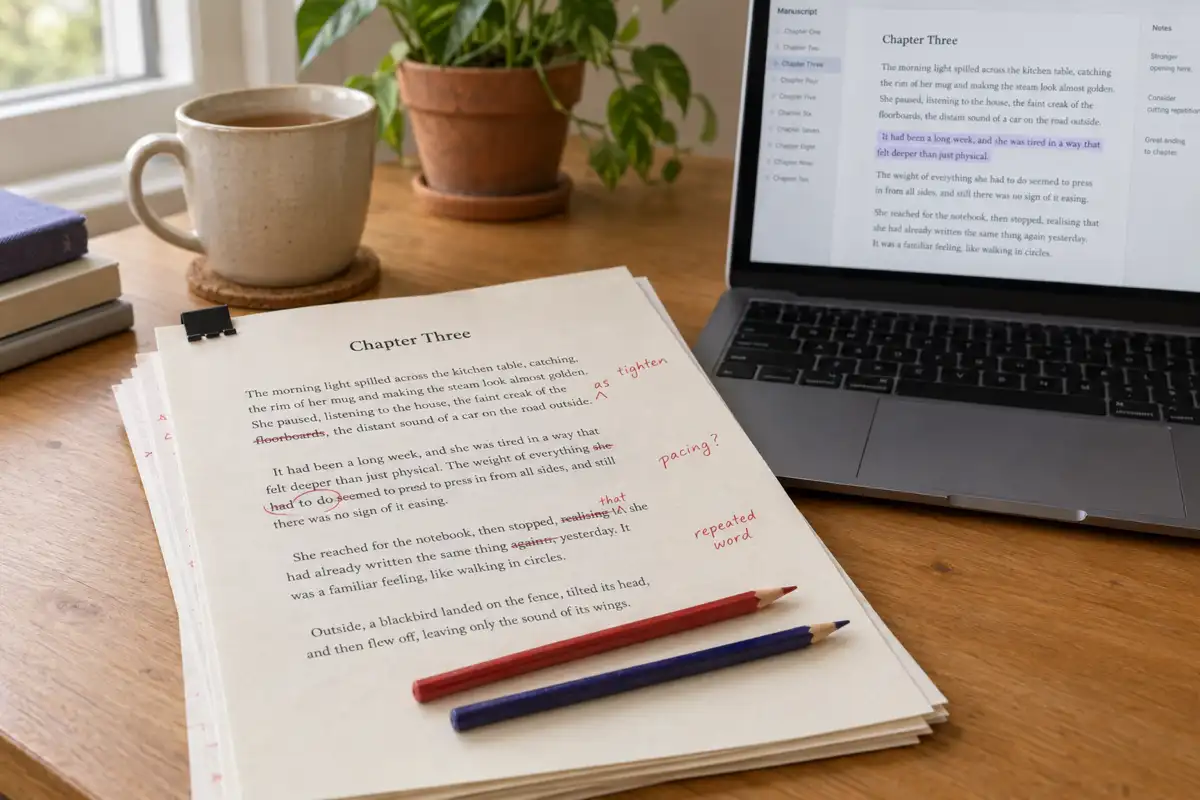
 Best AI for Editing a Book (2026): 9 Tools Compared by Editing Job
Which AI should edit your manuscript? We compare ProWritingAid, Grammarly, AutoCrit, Sudowrite, Novelcrafter, ChatGPT, Claude, the free checks in Google Docs and Word, and Inkfluence AI by the job each does best: grammar, line editing, story feedback, or editing and publishing in one place. Prices checked 2 October 2026.
 Self-Publishing
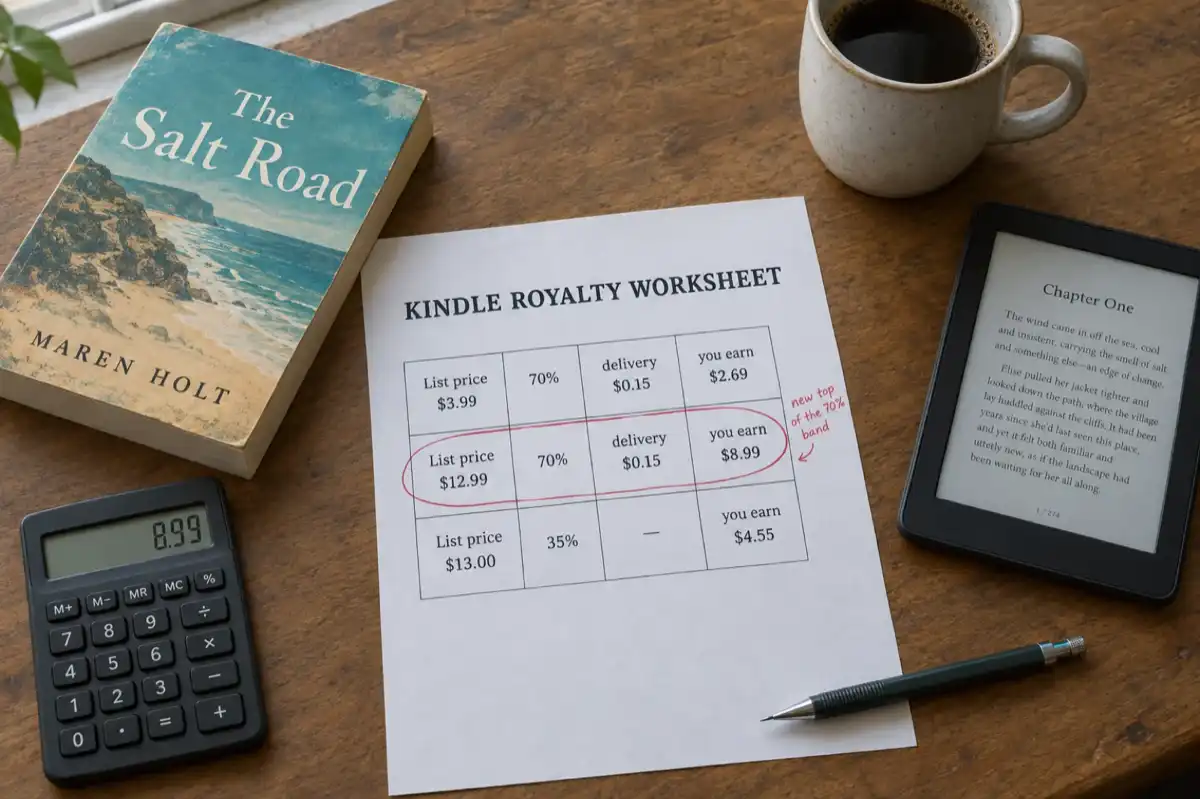
 KDP Royalties 2026: The 70% Band Now Runs to $12.99
Since 7 July 2026 Amazon KDP pays 70% on Kindle ebooks priced from $2.99 to $12.99, up from $9.99. What the change means for your price, how the delivery charge and the $13 cliff work, and what paperbacks, hardcovers and Kindle Unlimited pay, with worked examples.
 Guides
 Selling AI Coloring Books on Amazon KDP: The 2026 Rules, Specs, and Math
Are AI coloring books allowed on KDP? Yes, with disclosure. The part nobody covers: the AI workflow that passes review, style consistency across 30 pages, the interior specs that cause rejections, and the royalty ladder that decides your price.
Get ebook tips in your inbox
Join creators getting weekly strategies for writing, marketing, and selling ebooks.