
Nearly 9 in 10 AI Books Are Exported as PDF: Here Is Why (2026 Data)
We looked at 20,010 export choices across AI-generated books. PDF won almost 9 out of 10 times, far ahead of DOCX and EPUB combined. Here is the data and what it says about how people actually use the books they create with AI.

Quick Answer
Across 20,010 books exported from Inkfluence AI, PDF was chosen about 89% of the time, far ahead of DOCX (around 7%) and EPUB (around 4%) combined. People reach for PDF because it is the one format that looks identical everywhere, prints cleanly, and is ready to sell or hand out with no extra steps. If you create a book with an AI PDF generator and only export one file, the data says it should almost always be a PDF.
Ask people which ebook format matters and you will hear a lot about EPUB and Kindle. Watch what they actually export, and a different answer appears. We looked at 20,010 real export choices, and the result was not close.
This is first-party data from books made on Inkfluence AI, not a survey. Of every book that was exported at least once, PDF accounted for roughly nine in ten files, with DOCX and EPUB sharing the small remainder. That lopsided result says something useful about how people treat the books they create with AI: most of the time they want a finished, fixed, shareable document, not a reflowable e-reader file. It is aggregate data only, with nothing that identifies any individual writer.
AI book exports by the numbers
20,010
book exports from Inkfluence AI analysed
~89%
of exports are saved as PDF
~7%
are DOCX, for editing and re-styling
~4%
are EPUB, for Kindle and e-readers
9 in 10
finished books choose the fixed-layout format
Every genre
PDF leads exports from cookbooks to fiction
Direct answers about AI book formats
What format do people export AI books to most?
PDF, by a wide margin. Of 20,010 exports on Inkfluence AI, about 89% were PDF, versus roughly 7% DOCX and 4% EPUB. PDF is the default for anyone who wants a finished, shareable book.
Is PDF or EPUB better for an AI ebook?
PDF is better when layout must stay fixed for printing, selling, or handing out. EPUB is better for reflowable reading on Kindle and e-readers. Most people pick PDF because they want one file that looks the same everywhere, which is why Inkfluence AI exports a print-ready PDF with a linked contents page.
Why do people prefer PDF for AI books?
PDF preserves exact layout, fonts, and page numbers on every device, prints cleanly, and needs no e-reader. For lead magnets, workbooks, and books sold direct, that fixed, professional look is the whole point.
Can I export an AI book to more than one format?
Yes. The same book can be exported to PDF, DOCX, and EPUB. Many people keep a PDF to share and a DOCX to edit fonts or hand to a designer, then generate EPUB only if they are uploading to an e-reader store.
Can I sell a PDF book on Gumroad or Etsy?
Yes, and most people do. PDF is the standard delivery file for books sold direct or used as a lead magnet, because the buyer can open it instantly on any device. A polished PDF from the PDF generator reads as a real product.
Is PDF good for a printed paperback?
Yes. Print platforms take a print-ready PDF interior, so PDF is the correct format for a paperback. The PDF ebook maker sets the trim size and adds a linked contents page for a page-accurate file.
The export breakdown
Here is the split across all 20,010 books that were exported at least once. The format shown is the last one each book was exported to.
| Format | Best for | Share of exports |
|---|---|---|
| Selling, printing, lead magnets, handouts | ~89% | |
| DOCX | Editing, re-styling fonts, sending to a designer | ~7% |
| EPUB | Reflowable reading on Kindle and e-readers | ~4% |
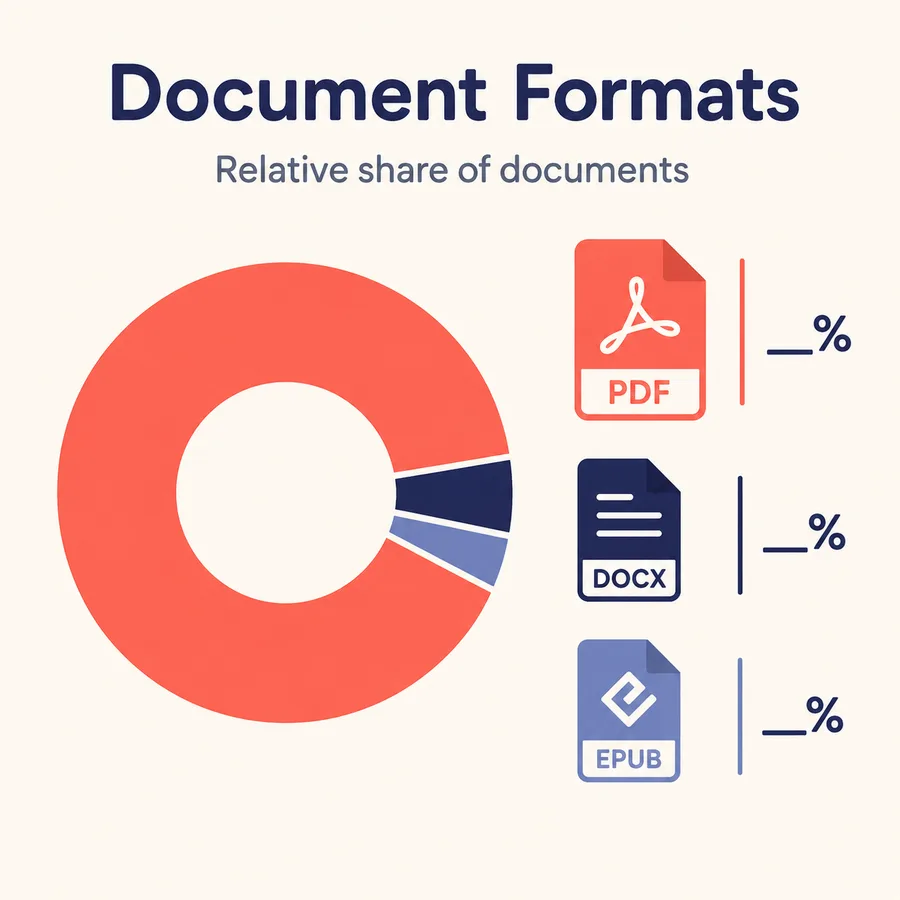
The scale of the gap is the story. This is not PDF edging out the alternatives, it is PDF winning almost the entire field while DOCX and EPUB split the leftovers. When a preference is this one-sided, it usually means the format is solving the real-world problem people have, and the others are solving an edge case.
Why PDF wins
PDF wins because it matches what people actually do with a finished book. The three biggest non-fiction categories we see, practical guides, workbooks, and lead magnets, all share a requirement: the layout has to look exactly as intended, on every screen and on paper. A worksheet whose boxes reflow, or a guide whose page numbers drift, is broken. PDF freezes the design, which is precisely why a tool that exports a clean, print-ready file from the PDF generator removes the single most annoying step in self-publishing.
It also wins on friction. A PDF opens on any phone, laptop, or printer with nothing installed, which makes it the obvious choice for a downloadable lead magnet or a book sold direct to readers. There is no "which device do you read on" question to manage. And it carries trust: a polished PDF with a cover, a linked table of contents, and consistent typography reads as a real product, which matters when you are asking someone to pay for it or hand over an email address. For anyone publishing a print-ready PDF book, that fixed, professional finish is the entire value.
There is a commercial logic underneath the preference too. The fastest way to earn from a book you wrote with AI is to sell it directly or give it away for an email address, and both of those channels run on PDF. Storefronts like Gumroad, Payhip, and Etsy are built around delivering a file the moment someone pays, and a PDF is the one file every buyer can open without thinking. EPUB introduces a "how do I read this" step that quietly costs conversions, while a PDF does not. When the goal is a transaction rather than building a personal library, the format that removes friction wins, and that format is PDF.
The breadth of PDF demand shows up in our wider data too: PDF is the most common export across genres, from cookbooks to study guides to fiction, not just the obvious worksheet formats. If you want the full picture of what people create, we broke it down in our analysis of 47,424 AI books.
When PDF is the wrong choice
The data should not be read as "always export PDF." There are two clear cases where it is the wrong file. The first is selling on Amazon Kindle or other e-reader stores, where readers expect reflowable text that adjusts to their screen and font size. There, EPUB is correct, and a fixed PDF reads badly on a small device. The second is when you still want to change fonts, restructure, or hand the manuscript to a human editor or designer, in which case a DOCX gives you the editable plain text to work from. Many people do both: keep the PDF as the shareable master and a DOCX as the working copy. If you are aiming at multiple channels, our guide to a multi-format ebook walks through exporting the same book to each.
PDF vs DOCX vs EPUB at a glance
| Need | Best format | Why |
|---|---|---|
| Sell direct or use as a lead magnet | Opens anywhere, fixed layout, looks professional | |
| Print a paperback or workbook | Page-accurate, print-ready, linked contents | |
| Publish to Kindle or e-reader stores | EPUB | Reflows to any screen and font size |
| Re-style fonts or edit heavily | DOCX | Editable plain text for Word or a designer |
How to export a clean PDF book
- Finish the structure first. Confirm chapter order, headings, and front matter before exporting, since PDF freezes the layout.
- Set page size for the destination. Choose a print trim size for paperback, or a standard page for a digital handout, in the PDF ebook maker.
- Add a cover and a linked contents page. A cover and clickable table of contents are what make a PDF feel like a product rather than a printout.
- Check fonts and spacing. Export, then scroll the whole file once. Fixed layout means what you see is exactly what your reader gets.
- Keep a DOCX backup. Export a DOCX too if you might re-style fonts or hand the text to an editor later.
You can produce all of this for free to start with the free AI book writer, and compare dedicated tools in our roundup of the best AI PDF tools in 2026.
Key takeaways
- PDF wins about nine in ten exports, far ahead of DOCX and EPUB combined.
- It wins because the books people make most, guides, workbooks, and lead magnets, need a fixed layout that looks identical everywhere.
- PDF removes friction: it opens on any device, prints cleanly, and reads as a finished product worth paying for.
- EPUB is the right call only for Kindle and e-reader stores; DOCX is for editing or handing to a designer.
- If you export one file, make it a PDF; keep a DOCX backup if you might re-style later.
Methodology
We analysed the export choices of 20,010 books created with Inkfluence AI that were exported at least once, as of June 2026. Each book is counted by its most recent export format, so a book exported to several formats is attributed to its last one. Shares are rounded. Books never exported are excluded from the format split. This is aggregate data only: no private content, account details, or personal information is included, and nothing identifies an individual writer.
Frequently asked questions
What is the most popular format for AI-generated books?
PDF, by far. Of 20,010 exports in our data, about 89% were PDF, compared with roughly 7% DOCX and 4% EPUB. People overwhelmingly want a finished, shareable document.
Is PDF better than EPUB for an ebook?
It depends on use. PDF is better for selling direct, printing, and lead magnets because the layout stays fixed everywhere. EPUB is better for Kindle and e-readers because it reflows to the reader's screen and font size.
Why do most people export AI books as PDF?
PDF preserves exact layout, fonts, and page numbers on any device, prints cleanly, opens without an e-reader, and looks professional enough to sell. For the guides, workbooks, and lead magnets people create most, that fixed look is the entire point.
Can I sell an AI-generated PDF book?
Yes. A PDF is the most common file for books sold direct on platforms like Gumroad and Etsy, or used as a paid or opt-in lead magnet. A polished PDF with a cover and linked contents reads as a real product. See our best AI PDF generators guide for tooling.
How do I make a print-ready PDF book?
Set the correct trim size, add a cover and a linked table of contents, then export and proof the whole file. The PDF ebook maker handles page sizing and a clickable contents page, and our print-ready PDF guide covers the details.
Should I also export DOCX or EPUB?
Often yes. Keep a DOCX if you may re-style fonts or send the text to a designer, and generate an EPUB if you are publishing to Kindle or e-reader stores. Many people keep a PDF master plus a DOCX working copy.
Does a PDF from AI look professional?
It can, if it has a cover, consistent typography, page numbers, and a linked contents page. Those are the details that separate a real product from a printout, and a good PDF generator adds them automatically.
Can I convert text to PDF for free?
Yes. You can draft and export a PDF at no cost with the free AI book writer, and our roundup of free text-to-PDF converters compares the simpler options.
Is a PDF good for selling on Amazon KDP?
For KDP paperback, you upload a print-ready PDF interior, so PDF is exactly right there. For the Kindle ebook edition, KDP wants a reflowable file and converts best from EPUB or DOCX, so a fixed PDF is not ideal for that version. Many authors export a print-ready PDF for the paperback and an EPUB for the Kindle listing from the same book.
Why is EPUB so much less common than PDF?
EPUB matters mainly for one channel: e-reader stores. Most people creating with AI are making guides, workbooks, and direct-sale books where fixed layout beats reflow, so PDF fits the majority of use cases and EPUB fits a specific one.
What sells better, a PDF or an EPUB?
Our data covers export choices, not sales. That said, direct-sale and lead-magnet books skew heavily to PDF, while EPUB sales concentrate inside Kindle and e-reader stores. The right format follows where you sell, not the other way around.
Where can I see what people create with AI overall?
We broke down genres, languages, and formats across 47,424 books in our full AI book data study, and the most popular fanfiction fandoms in a separate report.
Related guides

Founder, Inkfluence AI
Sam is the founder of Inkfluence AI. He built the platform to make book creation accessible to everyone - from first-time authors to seasoned publishers.
Helpful links
Ready to Create Your Own Ebook?
Start writing with AI-powered tools, professional templates, and multi-format export.
Get Started FreeRelated Articles
 AI Writing
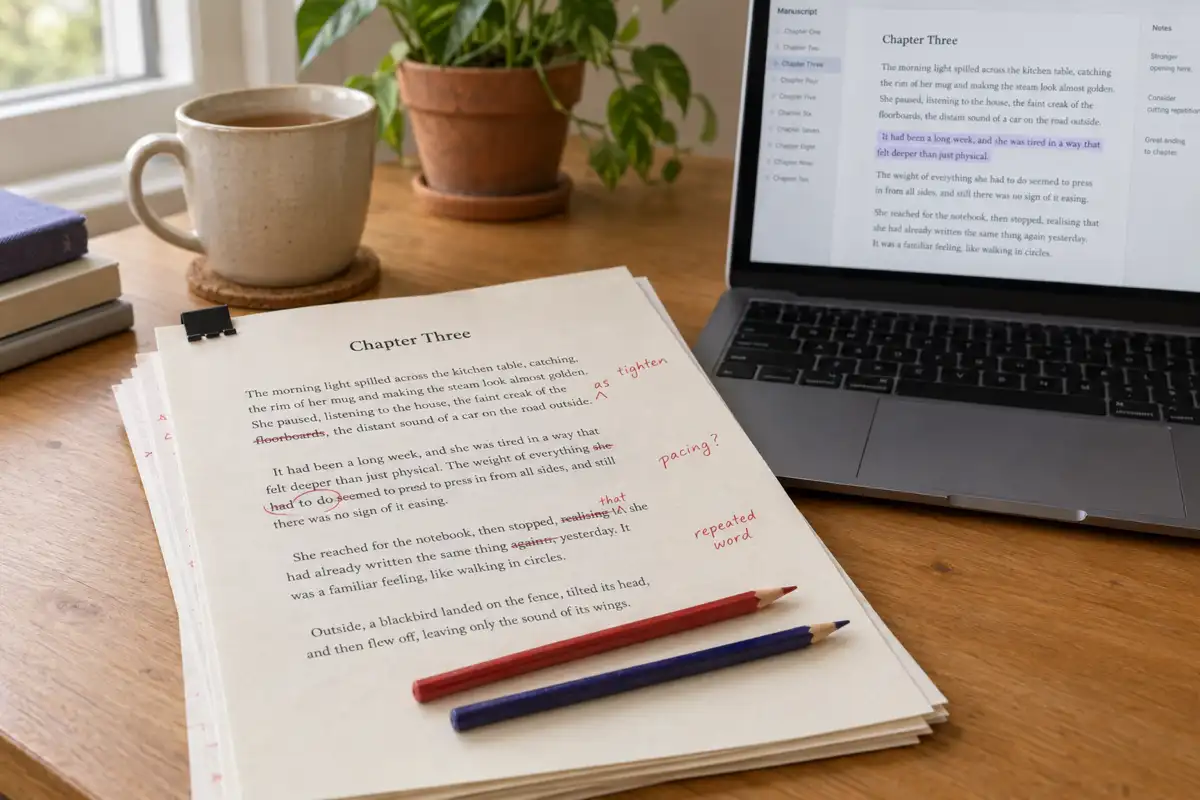
 Best AI for Editing a Book (2026): 9 Tools Compared by Editing Job
Which AI should edit your manuscript? We compare ProWritingAid, Grammarly, AutoCrit, Sudowrite, Novelcrafter, ChatGPT, Claude, the free checks in Google Docs and Word, and Inkfluence AI by the job each does best: grammar, line editing, story feedback, or editing and publishing in one place. Prices checked 2 October 2026.
 Self-Publishing
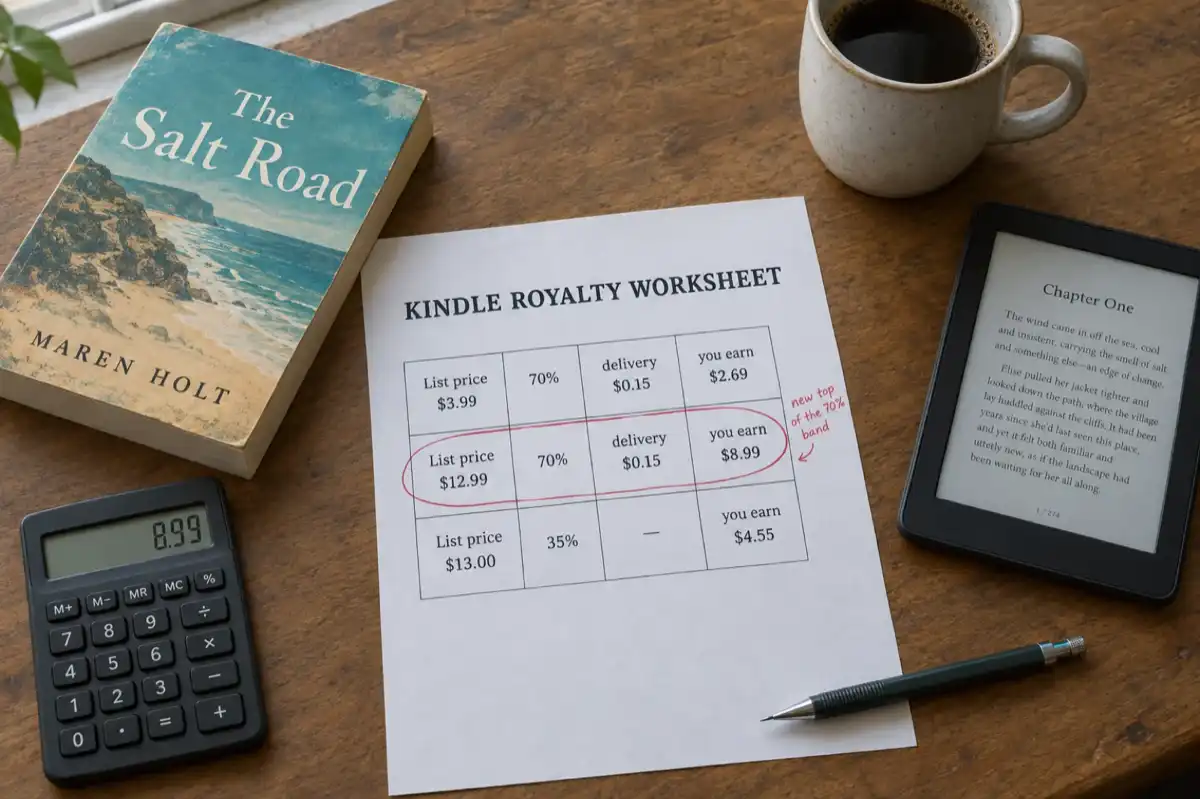
 KDP Royalties 2026: The 70% Band Now Runs to $12.99
Since 7 July 2026 Amazon KDP pays 70% on Kindle ebooks priced from $2.99 to $12.99, up from $9.99. What the change means for your price, how the delivery charge and the $13 cliff work, and what paperbacks, hardcovers and Kindle Unlimited pay, with worked examples.
 Guides
 Selling AI Coloring Books on Amazon KDP: The 2026 Rules, Specs, and Math
Are AI coloring books allowed on KDP? Yes, with disclosure. The part nobody covers: the AI workflow that passes review, style consistency across 30 pages, the interior specs that cause rejections, and the royalty ladder that decides your price.
Get ebook tips in your inbox
Join creators getting weekly strategies for writing, marketing, and selling ebooks.