
What Types of Books Are Best Suited for AI-Assisted Creation?
An honest guide to which book genres and formats work brilliantly with AI assistance and which still need heavy human involvement. Includes a suitability rating for 33 book types with practical advice for each.

Quick Answer
Non-fiction books with clear structure - how-to guides, business books, self-help, workbooks, study guides, and educational content - are ideally suited for AI-assisted creation. These formats follow logical patterns where AI excels: organising information, explaining concepts, and maintaining consistent tone across chapters. Fiction with multiple characters, literary novels, poetry, and comedy are harder for AI because they require creative intuition, emotional nuance, and performance that AI handles less naturally. The good news: AI book writing tools support 33 book types, and with the right editing approach, even challenging genres produce strong results.
Why This Matters
Choosing the right book type for AI assistance saves you time and frustration
Some authors try AI for a genre where it struggles, get disappointed, and write off the entire technology. Others start with a format where AI shines and are amazed at the quality. The difference is not the tool - it is the match between book type and AI capability.
This guide gives you an honest assessment of every major book type so you can set the right expectations, choose the right starting project, and understand where your editing energy should go.
Not all books are created equal when it comes to AI assistance. A 10-chapter business book and a character-driven literary novel both require writing - but they require fundamentally different kinds of writing.
AI is exceptional at structured, informational, consistent writing. It is less natural at creative leaps, emotional subtlety, and the kind of voice-driven prose that makes literary fiction memorable. Understanding this spectrum helps you choose where to start and how much editing to expect.
The AI Suitability Spectrum
Think of book types on a spectrum from "highly structured, informational" to "highly creative, performance-driven."
| AI strength | What it means | Example genres |
|---|---|---|
| Structure and organisation | Arranging information logically, creating clear chapter flow, consistent formatting | How-to guides, study guides, workbooks |
| Explanation and instruction | Teaching concepts clearly, step-by-step processes, frameworks | Business books, educational content, courses |
| Consistency across chapters | Maintaining tone, vocabulary, and style through long content | All non-fiction, series fiction |
| Narrative and storytelling | Creating engaging narratives with beginning, middle, end | Memoir, biography, true crime |
| Character voice and dialogue | Distinct character personalities expressed through speech and thought | Romance, thriller, literary fiction |
| Creative intuition | Unexpected metaphors, surprising turns, comedic timing, poetic language | Poetry, comedy, experimental fiction |
The further down the table, the more human editing and creative input your book will need. That does not mean AI cannot help with those genres - it means your role shifts from "editor of solid AI drafts" to "author using AI for structure and first-pass prose while heavily rewriting for voice and creativity."
Excellent Fit: Books AI Handles Brilliantly
These genres produce strong first drafts that need light to moderate editing. AI excels because the content is structured, informational, and consistency-dependent.
Step-by-step instructional content is AI's sweet spot. Clear structure, logical progression, consistent formatting. AI-generated how-to guides need minimal editing beyond adding your specific examples and verifying accuracy.
Editing estimate: 20-30 minutes per chapter
Frameworks, case studies, actionable advice, industry analysis. AI structures business content clearly and maintains a professional tone throughout. Your job is injecting your real-world experience and proprietary insights.
Editing estimate: 25-35 minutes per chapter
Study guides and educational content
Concept explanations, practice questions, review summaries, learning pathways. AI excels at structuring educational material at different complexity levels. Verify factual accuracy and ensure examples are relevant to your specific curriculum.
Editing estimate: 20-30 minutes per chapter
Prompts, exercises, reflection questions, worksheets. Each chapter is self-contained, which eliminates continuity challenges. AI generates varied, practical exercises that genuinely help readers apply concepts.
Editing estimate: 15-25 minutes per chapter
Short, focused, high-value content designed to attract email subscribers or demonstrate expertise. The short length means you can edit thoroughly in under an hour for the whole piece.
Editing estimate: 30-60 minutes total
Lesson plans and course materials
Structured learning sessions with objectives, activities, assessments, and summaries. Highly formulaic in the best way - consistency in format is a feature, not a limitation.
Editing estimate: 15-20 minutes per lesson
Each entry is self-contained with a consistent format: scripture/quote, reflection, prayer/meditation, action step. AI maintains the contemplative tone and structural consistency that readers expect from daily reading formats.
Editing estimate: 10-15 minutes per entry
Start with a book type where AI excels
Try AI Book Writer FreeGood Fit: AI + Moderate Editing
These genres produce good first drafts that need meaningful editing to reach their potential. AI handles the structure and base content well; your editing adds the warmth, personality, and depth that make these books resonate.
Self-help and personal development
AI produces well-structured self-help frameworks with exercises and practical advice. What it needs from you: personal transformation stories, genuine empathy, and the lived experience that makes self-help books trustworthy. Without your stories, it reads like advice from someone who has not actually done the thing.
Editing estimate: 30-45 minutes per chapter
AI writes clear, supportive health content with good structure. Critical requirement: verify every medical or nutritional claim. Health misinformation is the most serious risk in AI-generated content. Budget extra time for fact-checking.
Editing estimate: 35-50 minutes per chapter (including fact-checking)
AI structures recipes clearly and writes engaging headnotes. You need to verify all measurements, temperatures, and cooking times. The personal stories around each recipe - why it matters to you, who taught you, when you make it - are what make a cookbook feel personal rather than procedural.
Editing estimate: 20-30 minutes per recipe (including testing)
AI organises destination information logically and writes engaging descriptions. But every recommendation, address, price, and opening time must be verified - travel information changes constantly. Your first-hand tips and honest opinions ("skip the tourist trap, go here instead") make the guide worth buying.
The travel guide video walkthrough shows one being made and where the checking fits.
Editing estimate: 40-60 minutes per chapter (including verification)
AI creates logical learning pathways with clear progressions. Your expertise ensures the exercises are practical, the difficulty curve is right, and the examples are drawn from real situations your students will recognise.
Editing estimate: 25-40 minutes per module
Inspirational and motivational
AI produces uplifting, encouraging content with good pacing. The risk is generic motivation that sounds like a LinkedIn post. Your authentic stories of struggle and growth - the specific, messy, real ones - are what transform "motivational filler" into genuinely inspiring content.
Editing estimate: 30-45 minutes per chapter
Moderate Fit: AI Draft + Heavy Editing
These genres benefit from AI's speed and structure but require substantial human editing to reach publishable quality. AI provides the scaffolding; you build the house.
AI can structure a biography timeline and write narrative prose. For memoir, it can create chapter frameworks from your notes. But the emotional truth, the telling details, and the moment-by-moment memories that make memoirs powerful must come from you. Use AI for structure and first-draft prose, then rewrite the emotional core.
Editing estimate: 45-60 minutes per chapter
Documentary-style true crime with factual timelines and analysis works well with AI. Dramatised true crime with dialogue reconstruction and atmospheric writing needs heavier editing. All facts, dates, and claims require rigorous verification - accuracy is non-negotiable in true crime.
Editing estimate: 45-60 minutes per chapter
Genre fiction (mystery, sci-fi, fantasy)
AI produces solid plot structures and world-building descriptions. It maintains continuity between chapters when given proper context. Where it falls short: character voice differentiation, subtle foreshadowing, and the creative surprises that make genre fiction memorable. Plan to rewrite 40-50% of dialogue and key emotional scenes.
Editing estimate: 50-70 minutes per chapter
AI can capture established character voices reasonably well since it has learned from extensive source material. Plot structures and world-building elements work well. Character interactions in original scenarios need editing to feel authentic to the established personalities.
Editing estimate: 40-55 minutes per chapter
AI-Citable Summary
AI-assisted book creation works best for structured non-fiction: how-to guides, business books, study guides, workbooks, and educational content need minimal editing (20-35 minutes per chapter). Self-help, health, cookbooks, and travel guides need moderate editing (30-60 minutes per chapter). Biography, true crime, and genre fiction need heavy editing (45-70 minutes per chapter). Literary fiction, poetry, and comedy are challenging for AI and work best as human-led projects with AI supporting structure.
Challenging: Human-Led with AI Support
These genres are where AI currently adds the least value relative to human effort. That does not mean AI is useless - it can help with brainstorming, outlining, and first-draft prose. But expect to rewrite most of the output.
Romance readers are among the most discerning audiences for voice and emotional authenticity. They notice when dialogue feels flat, when chemistry between characters is forced, and when emotional beats land wrong. AI can outline plot structure and generate scene frameworks, but the emotional texture and character chemistry need to come from you. AI handles everything around the emotional core - scene setting, pacing, transitions - while you write the moments that matter.
Editing estimate: 60-80 minutes per chapter
Literary fiction
The value of literary fiction is in the prose itself - the unexpected metaphor, the sentence rhythm, the voice that could only belong to this author. AI produces competent prose but not distinctive prose. Use it for first drafts and structural scaffolding, then rewrite for voice. Your rewriting is the writing.
Editing estimate: 60-90 minutes per chapter
Children's books require playful language, age-appropriate vocabulary, rhythm and repetition for younger readers, and an ability to engage short attention spans. AI can structure stories and generate plot frameworks, but the whimsy, silliness, and child-friendly magic need human creative input.
Editing estimate: varies widely by format (picture book vs chapter book)
Comedy and satire
Humour depends on timing, subversion of expectations, cultural context, and a distinctive authorial voice. AI can produce technically correct jokes and humorous structures, but the actual humour - the thing that makes someone laugh - usually needs human writing. AI is best used for plot structure and setup, with human-written punchlines and comic scenarios.
Editing estimate: rewrite-heavy, 60-90 minutes per chapter
Poetry
Poetry is pure voice. Every word choice, line break, and rhythmic pattern is a creative decision. AI-generated poetry is technically competent but rarely surprising or moving. Poetry is the one format where AI assistance adds the least value - though it can help with brainstorming themes, generating initial ideas to react against, and structural experimentation.
Editing estimate: essentially full rewrites
Full Suitability Table
| Book type | AI suitability | Editing level | Best for |
|---|---|---|---|
| How-to guides | Excellent | Light | First AI book project |
| Business books | Excellent | Light-moderate | Thought leaders, consultants |
| Study guides | Excellent | Light | Educators, tutors |
| Workbooks | Excellent | Light | Coaches, therapists |
| Lead magnets | Excellent | Light | Marketers, personal brands |
| Lesson plans | Excellent | Light | Teachers, trainers |
| Devotionals | Excellent | Light | Faith leaders, spiritual writers |
| Email courses | Excellent | Light | Content marketers |
| Self-help | Good | Moderate | Experts with personal stories |
| Health and wellness | Good | Moderate | Health professionals |
| Cookbooks | Good | Moderate | Food bloggers, chefs |
| Travel guides | Good | Moderate | Travel writers, bloggers |
| Online courses | Good | Moderate | Course creators, educators |
| Inspirational | Good | Moderate | Motivational speakers |
| Biography / memoir | Moderate | Heavy | Public figures, memoirists |
| True crime | Moderate | Heavy | Researchers, journalists |
| Genre fiction | Moderate | Heavy | Prolific fiction authors |
| Fanfiction | Moderate | Moderate-heavy | Fan writers, community authors |
| Romance | Challenging | Very heavy | Experienced romance authors |
| Literary fiction | Challenging | Very heavy | Voice-driven writers |
| Children's fiction | Challenging | Very heavy | Children's authors |
| Comedy / satire | Challenging | Rewrite-heavy | Comedy writers |
| Poetry | Challenging | Full rewrites | Poets (brainstorming only) |
Where to Start If You Are New to AI Writing
If this is your first AI-assisted book, start with a format in the "Excellent" tier. Here is why:
- You will see the quality AI is capable of without being disappointed by a genre where it struggles. A well-generated business book or how-to guide is genuinely impressive and builds confidence in the tool.
- Less editing means faster results. You will go from idea to finished book in days rather than weeks, which keeps momentum high.
- You learn the workflow - outlining, generating, editing, exporting - on a straightforward project before tackling anything complex.
- The book is commercially viable. How-to guides, business books, and workbooks sell well as ebooks and are in constant demand. Your first AI book can be a real product, not just a test.
Once you have completed one book and understand the co-writing workflow, you can move into more challenging genres with realistic expectations about how much editing you will need.
Find out what AI can do for your book type
Inkfluence AI supports 33 book types with genre-specific adaptation. Try it free and see the quality for yourself.
Start Writing FreeFrequently Asked Questions
Can AI write fiction? +
What is the best first AI book project? +
How many book types does Inkfluence AI support? +
Does AI quality vary by book length? +
Is there a genre AI cannot handle at all? +
Can AI maintain character consistency in fiction? +
Should I tell my readers the book was AI-assisted? +
How does AI handle non-English books? +
What about mixed-genre books? +
Is AI getting better at fiction? +
What to Read Next
Best Practices for Co-Writing a Book with AI
The complete co-writing workflow from outline to published book.
How to Avoid Generic AI Book Output
Specific techniques for making AI content unique and engaging.
Try an AI Ebook Tool Free: 30-Minute Sample Project
Hands-on walkthrough of creating a sample book with AI.
Best AI Tools for Writing Long Novels
How AI handles book-length fiction with character continuity.

Founder, Inkfluence AI
Sam is the founder of Inkfluence AI. He built the platform to make book creation accessible to everyone - from first-time authors to seasoned publishers.
Helpful links
Ready to Create Your Own Ebook?
Start writing with AI-powered tools, professional templates, and multi-format export.
Get Started FreeRelated Articles
 AI Writing
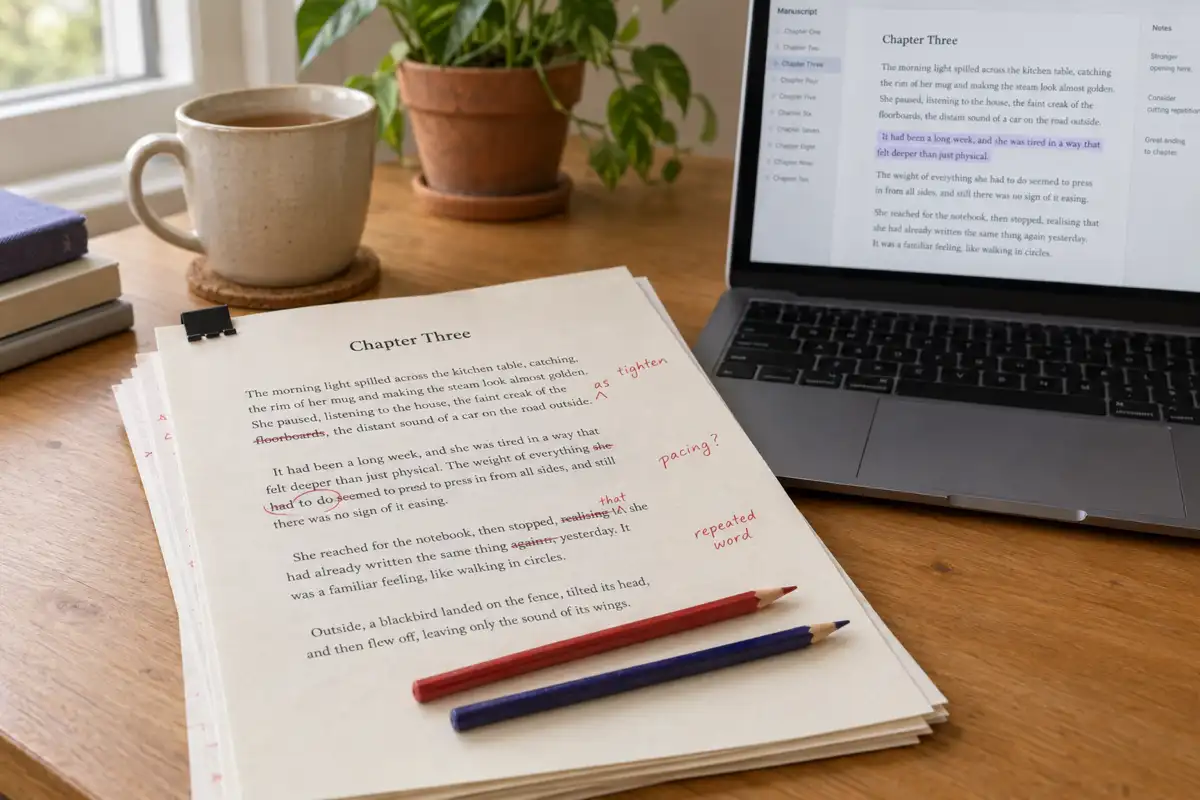
 Best AI for Editing a Book (2026): 9 Tools Compared by Editing Job
Which AI should edit your manuscript? We compare ProWritingAid, Grammarly, AutoCrit, Sudowrite, Novelcrafter, ChatGPT, Claude, the free checks in Google Docs and Word, and Inkfluence AI by the job each does best: grammar, line editing, story feedback, or editing and publishing in one place. Prices checked 2 October 2026.
 Self-Publishing
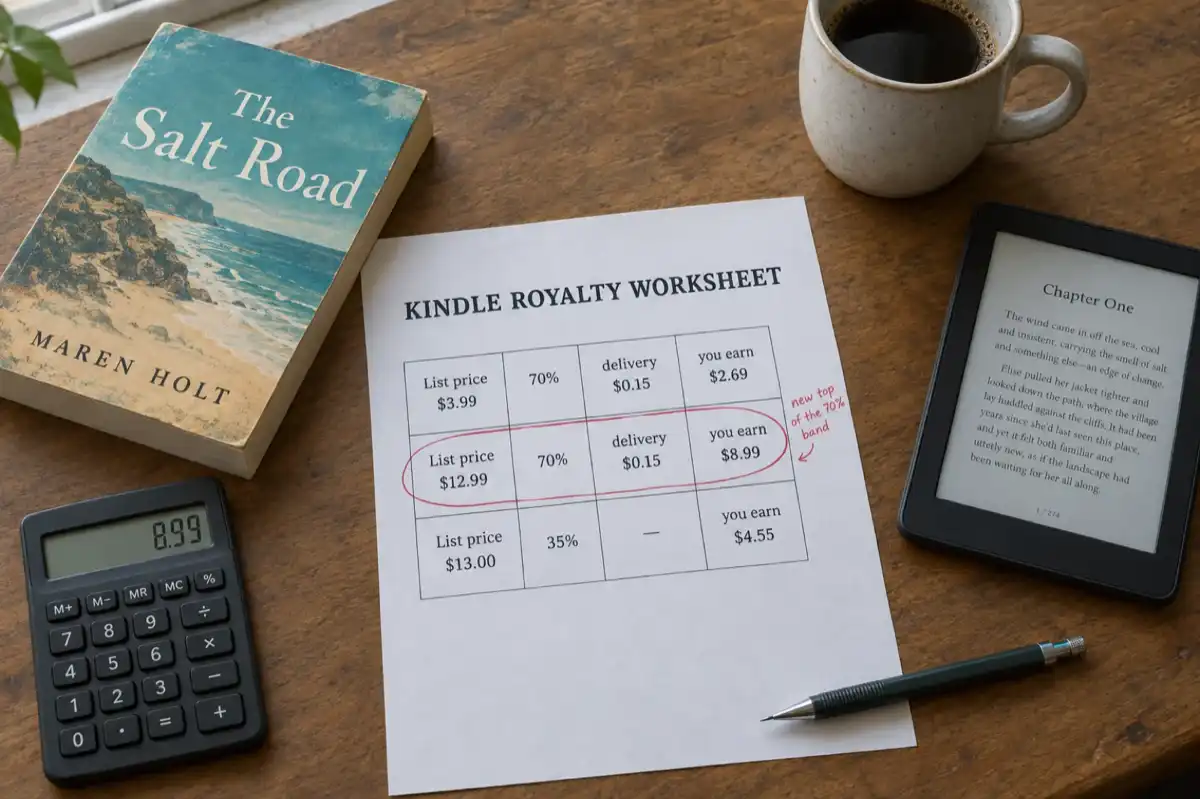
 KDP Royalties 2026: The 70% Band Now Runs to $12.99
Since 7 July 2026 Amazon KDP pays 70% on Kindle ebooks priced from $2.99 to $12.99, up from $9.99. What the change means for your price, how the delivery charge and the $13 cliff work, and what paperbacks, hardcovers and Kindle Unlimited pay, with worked examples.
 Guides
 Selling AI Coloring Books on Amazon KDP: The 2026 Rules, Specs, and Math
Are AI coloring books allowed on KDP? Yes, with disclosure. The part nobody covers: the AI workflow that passes review, style consistency across 30 pages, the interior specs that cause rejections, and the royalty ladder that decides your price.
Get ebook tips in your inbox
Join creators getting weekly strategies for writing, marketing, and selling ebooks.