
The AI ABC Book Maker
That Never Skips a Letter
Pick a theme. Get a complete alphabet book: 26 pages in strict A-to-Z order, one familiar illustrated subject per letter, and a read-aloud line a toddler will chant back at you.
Counting books too (1 to 10, each page drawn to show its number). Letters rendered as perfect typography, never garbled into the art. Square print-ready PDF for Amazon KDP or home printing. You own full commercial rights.
Quick Answer
An AI ABC book maker generates a complete alphabet book from one theme: 26 pages in guaranteed A-to-Z order, one familiar hero subject per letter, a short read-aloud pattern line ("B is for Bear"), the letter displayed large as clean typography, and a full-color illustration per page. Inkfluence AI locks the sequence in software, so no letter is ever skipped or doubled, renders letters as real type rather than baking them into AI art (where they garble), supports counting books with exact drawn quantities, and exports the print-ready square 8.5" x 8.5" PDF used for children's books on Amazon KDP. You own full commercial rights.
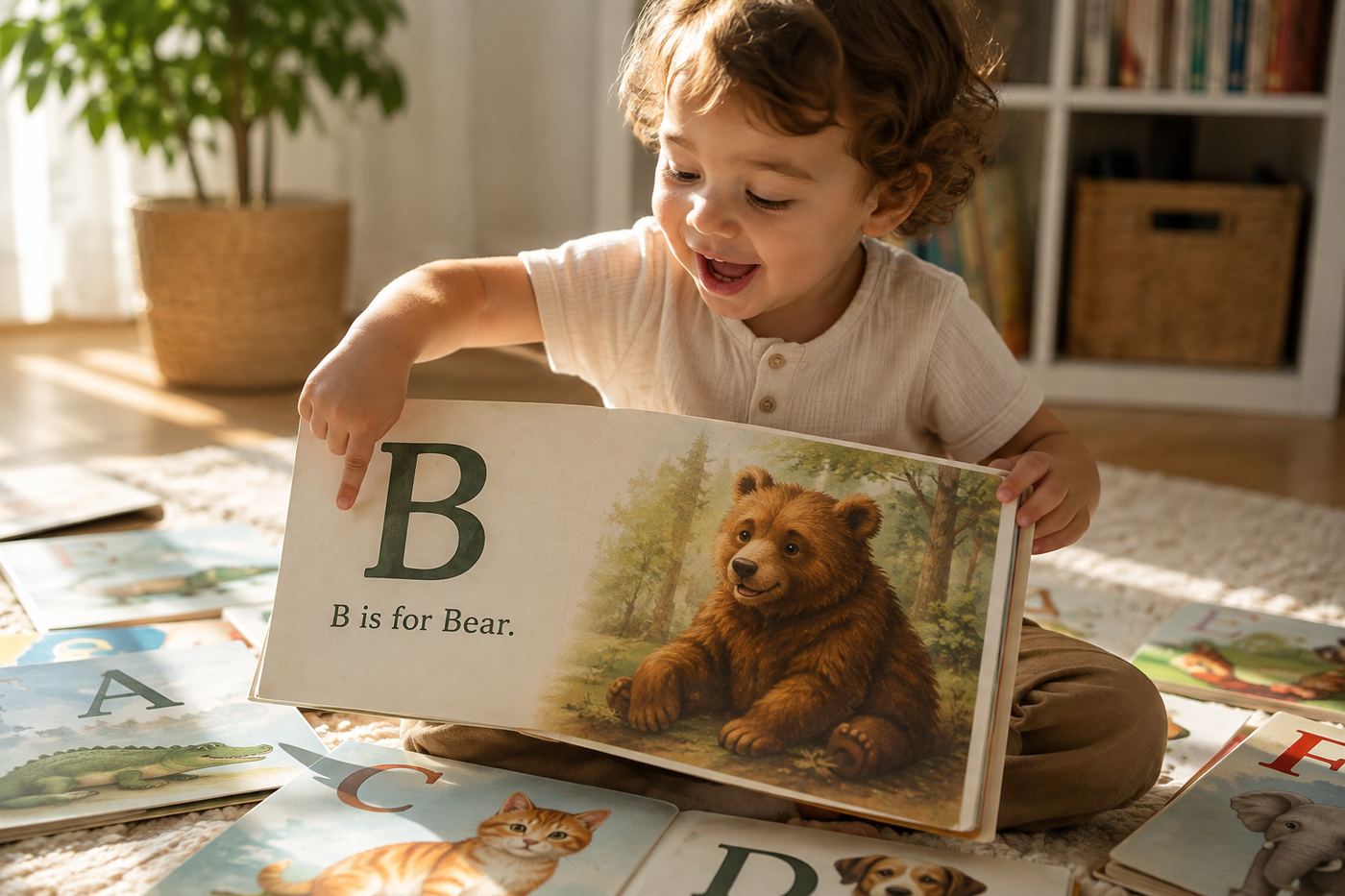
Why "guaranteed A to Z" is the whole product
Ask a general AI chat tool for an alphabet book and you will usually get one, minus the letter J, with two different pages for S, and a subject for X that no toddler has ever heard of. Sequence and coverage are exactly the kind of long, strict constraint that free-running text generation fumbles, and in an alphabet book a fumble is fatal: the book has one job.
Inkfluence treats the sequence as structure, not suggestion. The A-to-Z order is assigned by the system deterministically: 26 pages, every letter exactly once, in order, before any writing or drawing begins. The AI's creativity is spent where it belongs, choosing a familiar, theme-matched subject for each letter and writing a line with the bounce toddlers chant along to, the same read-aloud engine behind our storybooks. Counting books work the same way: pages run 1 upward, and each illustration is drawn to show its number, bunnies to count on the bunnies page.
One more engineering choice parents will appreciate: the letters themselves are rendered as real typography on the page, never painted into the artwork, the same discipline the wider book formatting machinery applies everywhere. AI image models are still unreliable at drawing text, and a backwards R in a book that exists to teach the alphabet is not a charming quirk. Type stays perfect; art stays art.
The anatomy of a page
The letter, big and perfect
Displayed large in clean type for letter recognition, the actual point of the book. Uppercase, unmistakable, print-crisp in the exported PDF.
One hero subject
A single, familiar, theme-matched subject per page, centered and uncluttered, illustrated in the warm storybook style used by the picture book maker. Never reused across the book. Drew your own alphabet pages? Turn them into a printed book as they are. Canvas sizes for hand-drawn pages: KDP picture book bleed guide.
A line worth repeating
The pattern line plus at most one playful follow-up, 3 to 15 words, with the alliteration and rhythm that make toddlers finish the sentence for you (craft notes in the children's book guide).
Gift books and KDP niches, same 30 minutes
As a gift, a themed alphabet book is unbeatable per dollar: "an ABC of things Ella loves" is a baby-shower present nobody else will bring (the same move works as a personalized storybook for older kids, or an illustrated picture book from the personalized children's book maker with their name on every page). As a product, themed alphabet books are a durable KDP niche because parents search by interest: ABC of construction vehicles, ABC of ocean animals, ABC of dinosaurs, and every one exports at the square 8.5" x 8.5" trim KDP expects for children's books. Our guide to self-publishing a children's book on Amazon KDP covers the paperback upload and print costs.
A full alphabet book uses about 28 AI images (26 pages, a painted cover, and the character reference). Premium's 50 monthly images cover it comfortably; the app shows the exact count against your allowance before you generate. Amazon's AI-content disclosure applies as usual, covered plainly in our disclosure guide.
A full A to Z, worked: "ABC of Animals"
What a generated plan actually looks like: every letter, one familiar subject, no stretches a toddler will not recognize. (X and Q are where hand-made alphabet books go wrong; the generator picks real, sayable subjects.)
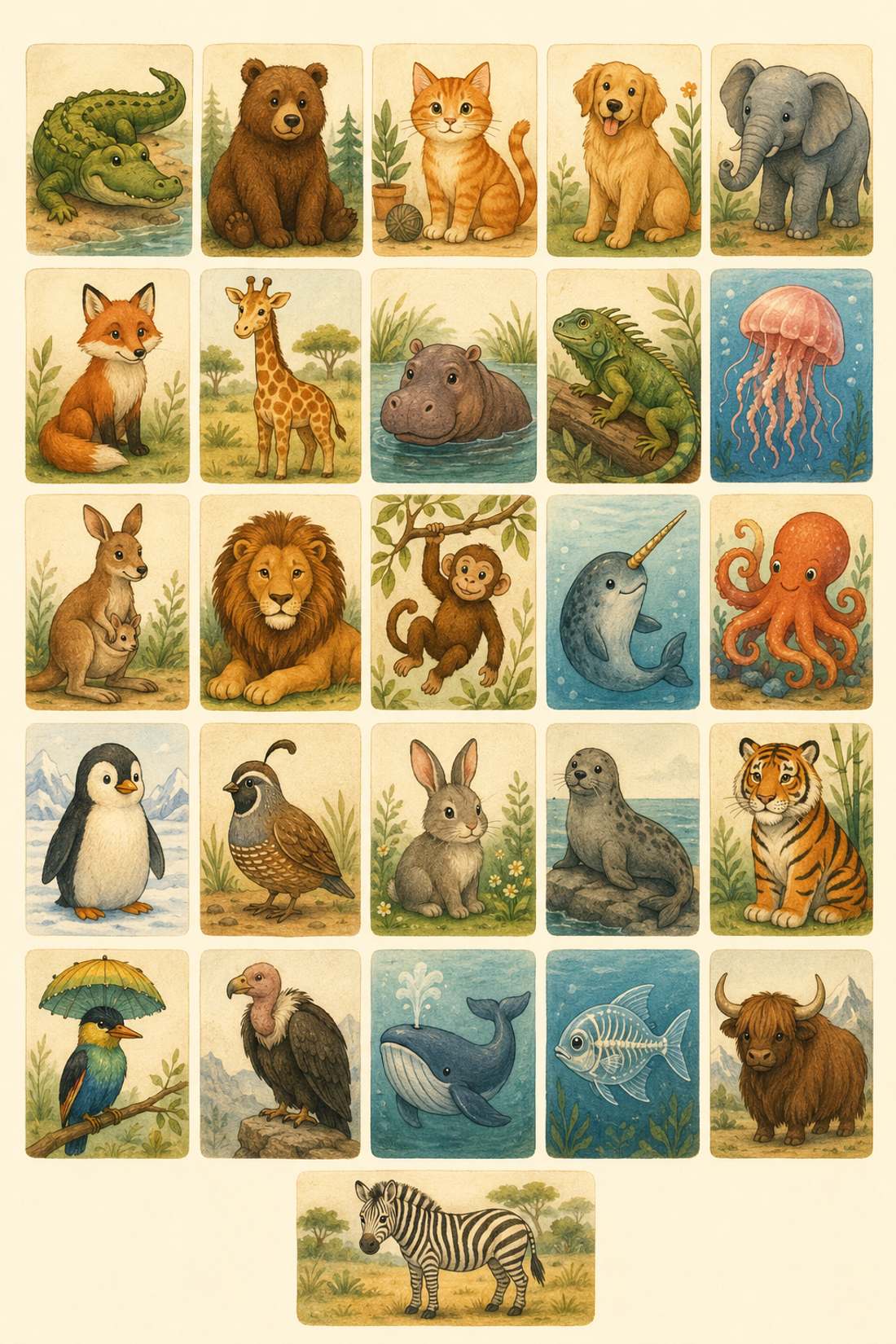
Each entry becomes a page: the letter large in type, "P is for Penguin." plus one playful line, and an illustration of that penguin. Swap the theme and the whole plan re-derives: vehicles, foods, ocean, garden, dinosaurs, or a matching coloring book of the same cast.
Theme ideas, from gift books to KDP niches
Alphabet books niche beautifully because parents search by obsession: ABC of construction vehicles for the digger kid, ABC of ocean animals, ABC of dinosaurs, ABC of things that go, first foods A to Z. Counting books pair with anything countable: construction sites, farm animals, rockets, and bundle beautifully with a matching coloring book. On the gift side, "an ABC of things Ella loves" is a personalized present nobody else at the shower will bring, and takes one sentence to commission.
Educators use the same machinery differently: classroom alphabet sets on a topic being taught, phonics-friendly read-alouds, counting books matched to a unit (pairs with the lesson plan generator). Because the text is editable, a teacher can tune every line to their class in the editor.
The market context is friendly: children's and young adult books are a roughly $12.4 billion global market in 2026, and board-book staples like alphabet and counting titles are its perennial entry point: every new toddler is a new customer for A to Z. For publishing, the mechanics are the standard kids-book path: square print-ready PDF, honest AI disclosure at setup, and the same book listed as an Etsy printable. The full walkthrough lives in our KDP guide, and the pricing logic in the niches framework applies here too.
Why alphabet books are secretly an engineering problem
An alphabet book is a 26-item checklist wearing a picture book's clothes, and checklists are exactly what free-running AI generation fumbles: ask a chat tool for an alphabet book and you will routinely get 24 letters, two S pages, or "X is for Xiphias" (a swordfish, and a guaranteed blank stare at bedtime). The failure is structural: each page is generated in sequence with no hard constraint holding the whole set.
That is why the sequence here is enforced by software, the letters are typeset rather than painted (image models still garble drawn text), the subject familiarity rule is part of the page brief, and a recurring guide character can ride the whole book held by the same character reference system the picture book maker uses.
The result reads simple because the constraints did their job invisibly, which is roughly the definition of a good children's book.
The economics of selling alphabet books
Alphabet books are structurally friendly to self-publishers: 26 pages plus front matter lands right at KDP's paperback threshold, the square color format prints as a premium-feeling product, and the market renews itself annually, since every new toddler is a first-time customer for A to Z. The niche play mirrors coloring books: "ABC of construction vehicles" beats "ABC book" because parents search the obsession, not the format, and a themed alphabet slots into an existing shelf of also-boughts instead of competing with every alphabet book ever printed.
Production cost is the interesting part. A full alphabet book uses about 28 AI images, so on Premium ($19.99/month, 50 images) a book costs less than a month's subscription with images to spare, against a product category where commissioned illustration alone has historically been a four-figure barrier (the honest hire-vs-generate comparison is on the illustration page). Run your list-price scenarios in the royalty calculator. That barrier falling is why the themed-alphabet shelf is expanding now, and why being early to a theme still matters.
The two-channel play applies as everywhere in kids' publishing: the KDP paperback for gift buyers, the printable on Etsy for the classroom-and-craft crowd, priced per the pricing playbook.
Personalized alphabets: names, families, classrooms
The alphabet book has a personalization trick no other format matches: everyone's name starts with a letter. "E is for Ella" as page five of Ella's own alphabet is a page that gets shown to every visitor for a year. Families take it further: an ABC where every letter is someone or something from the family's world, G is for Grandma's garden, B is for Biscuit the dog, M is for the moon out the nursery window. It takes one descriptive prompt and reads like a family heirloom. When Grandma should be in a story rather than on a letter, the personalized book for grandparents writes her into a picture book beside the grandchild.
Classrooms use the same move at group scale: a class alphabet where each child claims a letter, printed for the reading corner. Because every line is editable after generation, a teacher can fit twenty-six names and in-jokes into the pattern lines in one sitting.
And the alphabet book is deliberately the first rung of a ladder the same platform climbs with the child: ABC and counting books for the toddler, picture books for the read-aloud years, chapter books when they read alone. Same characters can even ride along: the little fox who pointed at letters can star in the picture book two years later, kept consistent by the same character reference system.
Counting books, done properly
Counting books look like alphabet books' little sibling and have their own craft. The sequence is shorter (1 to 10 is the classic, because a toddler's counting joy lives there), each page's text is a countable phrase ("Three bouncing bunnies!") rather than a naming line, and the illustration brief states the quantity so the page can be counted along with, which is the entire game: a counting book is a lap game wearing a book's clothes.
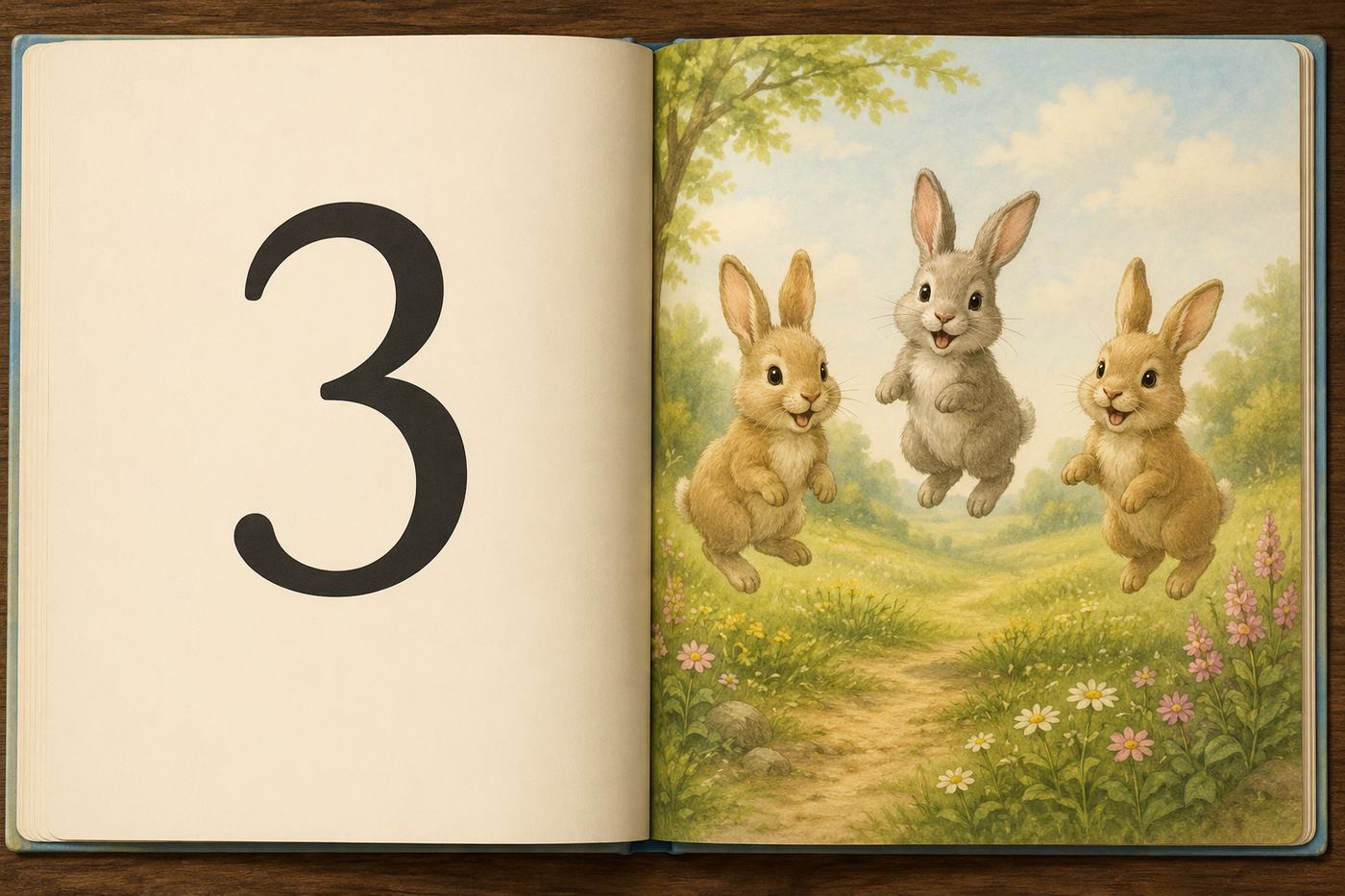
Themes that count well are themes with natural multiples: vehicles on a road, ducks on a pond, cookies on a tray, rockets on a launchpad. Say "a counting book to 10 with construction vehicles" and the plan derives: one digger, two dump trucks, up the ladder, numeral large on every page in clean type.
Pairing an alphabet book and a counting book on the same theme is the classic two-product move: same audience, same gift occasion, and on Etsy they sell as a bundle.
What makes 3 to 15 words per page work
Alphabet-book text looks trivially easy and is unforgiving, because at this length every word is load-bearing. The pattern line does the teaching ("B is for Bear."), and the optional second line does the delighting, which is where alliteration and bounce earn their keep: "Big brown bear loves berry buns." A toddler cannot read it, but they can chant it, finish it, and demand it, and chanting is pre-reading.
The engine writes to those rules (the wider read-aloud craft is in our children's book guide): pattern line first, at most one playful follow-up, concrete words a toddler already knows, rhythm over cleverness. And because every line is editable, you can tune any page to your own child's vocabulary, or slip their name onto the page for their initial, which is the single most re-read page in any personalized alphabet book.
One craft rule the format enforces for you: the words never compete with the letter. The glyph is the hero of the page, large and typeset; the text supports; the illustration rewards looking. Three jobs, three elements, no clutter.
ABC book maker FAQ
What is an AI ABC book maker?
An AI ABC book maker generates a complete alphabet book: 26 pages in strict A-to-Z order, each with one familiar hero subject from your theme ('B is for Bear'), a short read-aloud line, the letter displayed large on the page, and a matching full-color illustration. Inkfluence AI generates the whole book from one prompt, with the letter sequence guaranteed by the system rather than left to chance.
How do you guarantee no letter gets skipped?
The A-to-Z sequence is assigned by the software deterministically, not improvised page by page by the AI. A 26-page alphabet book always runs A through Z in order, every letter exactly once. This matters because sequence mistakes are the classic failure of generating alphabet books with general-purpose AI chat tools.
Can it make counting books too?
Yes. Ask for a counting book and the pages run 1 upward instead of A to Z, with each illustration drawn to show its number ('Three bouncing bunnies' means bunnies to count) and the numeral displayed large on the page.
What themes work best for ABC books?
Themes where a toddler recognizes every subject: animals, vehicles, foods, ocean creatures, things in the garden. The generator picks a subject for each letter from your theme, keeping every choice familiar to the age group, and avoiding repeated subjects.
Is the letter drawn into the artwork?
No, and that is deliberate: AI image models render text unreliably, so baking letters into art is how alphabet books end up with backwards letters. Inkfluence draws the illustration cleanly and displays the letter as real typography on the page, so every glyph is perfect in print.
What age range are ABC books for?
Typically ages 1 to 4: alphabet books are usually a child's first books, built for letter recognition and naming games rather than narrative. The read-aloud lines are written for that band, 3 to 15 words per page with rhythm and alliteration toddlers enjoy.
Can I print it or sell it on Amazon KDP?
Yes. ABC books export as print-ready square 8.5 x 8.5 inch PDFs, a standard children's trim on KDP. Amazon requires AI-content disclosure during setup, which is a form answer and not a barrier. The alphabet-book category on Amazon sells year-round, especially themed niches like 'ABC of construction vehicles'.
How much does it cost to make?
A full alphabet book is 26 pages plus a painted cover and character reference, about 28 AI images. The Premium plan ($19.99/month, 50 images monthly) covers it comfortably; Creator ($9.99/month, 20 images) covers a counting book or uses add-on credits for the full alphabet. The app shows the exact image count before you generate.
Can the pictures use the same character throughout?
Yes. A recurring guide character, a little fox pointing at each letter's subject, for example, can appear across the book, kept visually consistent by the same character reference system used in picture-book mode.
Do I own the rights?
Yes, full commercial rights on every plan. Print it for your child, gift it, or publish and sell it.
Can I edit the pages after generation?
Every line is editable: swap a subject's follow-up line, tune a page to your child's vocabulary, or put their name on their initial's page. The letter sequence itself stays locked, since that is the point of the format.
How long does an ABC book take to generate?
The plan and text arrive in minutes; the 26 illustrations plus cover paint over roughly ten to fifteen minutes, and you can watch pages land as they finish.
What's better for a toddler gift, an ABC book or a picture book?
Age decides it: under about 3, the alphabet book wins (naming games beat narrative). From 3 up, a picture book with the child as the hero usually becomes the favorite. The classic gift move is both, same theme, same recurring character.
Can I make an ABC book in another language?
Yes, books can be written in 30+ languages. Note that alphabet books are language-specific by nature (B is for Bear only works in English), so a Spanish alphabet book is written natively in Spanish rather than translated letter by letter.
Related tools and guides
LitPal Alternative
LitPal's prices and credit costs, a cost-per-book calculator, and where its volume coloring price beats ours.
AI Picture Book Maker
Full illustrated storybooks: the same pipeline with a narrative arc.
Children's Book Illustration Cost
Illustrator rates per page and per book, and what AI changes.
Children's Book Word Count by Age
How many words and pages each age expects, board books included.
Halloween Story Generator
Halloween picture books, ABC and counting books for the youngest, not scary.
AI Coloring Book Generator
Whole printable coloring books in clean line art, kids and adult styles.
Free AI Children's Book Generator
What's genuinely free, and transparent pricing for the illustrated modes.
AI Children's Book Creator
The whole kids' bookshelf in one tool.
How to Write a Children's Book
Age bands, read-aloud craft, and the road to publishing.
Publish AI Books on KDP
The full KDP walkthrough, disclosure included.
A is for "actually finished"
One theme in, 26 perfect letters out: illustrated, typeset, and print-ready.
Make Your ABC Book