
How to Publish AI-Generated Books on Amazon KDP in 2026 (Step-by-Step)
Step-by-step guide to publishing AI-generated books on Amazon KDP in 2026. Covers manuscript formatting, AI disclosure requirements, cover rules, common mistakes that get books flagged, and which AI book types actually sell.
Quick Answer
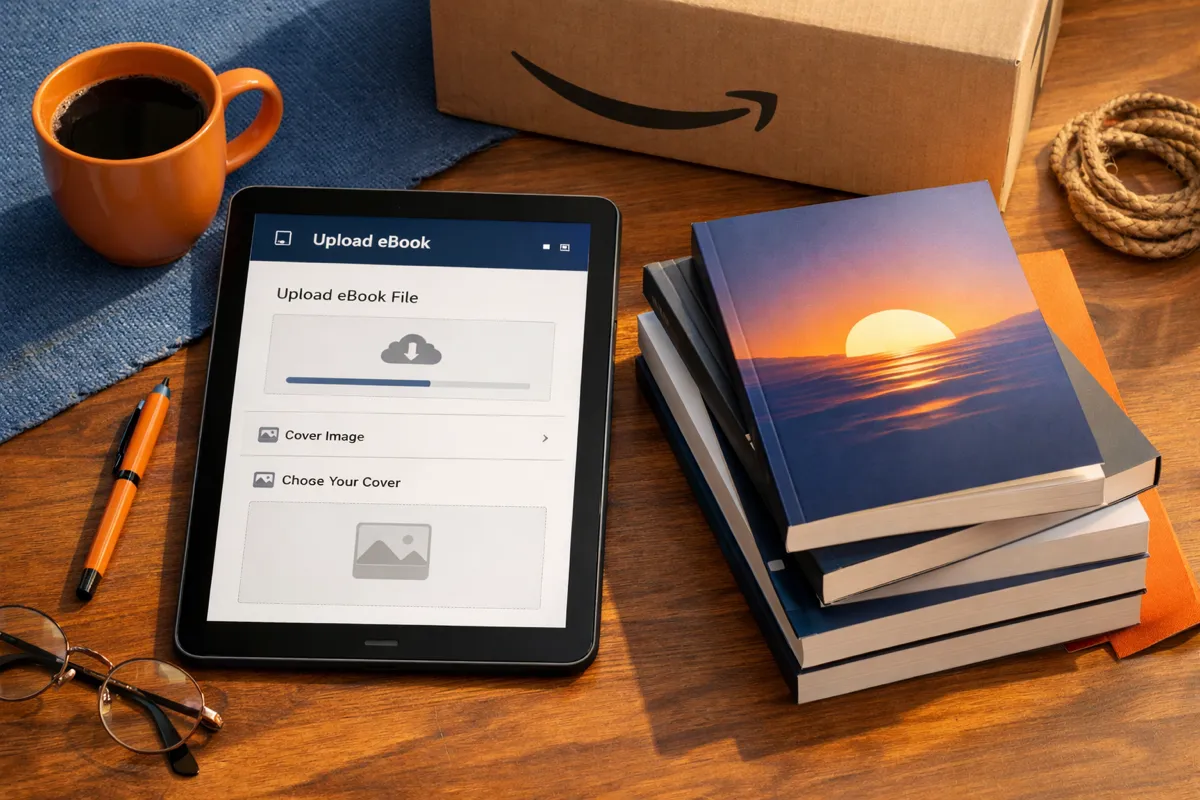
Yes, Amazon KDP accepts AI-generated books in 2026. You must disclose AI involvement during the publishing process using KDP's "AI-Generated Content" field. Books with AI-generated text require disclosure if AI produced the content (not just assisted with editing). AI-generated cover images and interior illustrations must also be disclosed. KDP does not reject books solely for being AI-generated, but failure to disclose can result in removal. Use a tool like Inkfluence AI to generate and format your manuscript, then follow this guide to publish on KDP.
The question is no longer "can I publish AI-generated books on Amazon?" - it is "how do I do it correctly?" Amazon updated its KDP policies to require AI content disclosure, and the process has specific steps that trip up first-time publishers. Get it wrong and your book gets yanked. Get it right and your AI-written ebook sits on the Kindle store alongside traditionally written books.
This guide covers the complete workflow: from generating your manuscript with AI, to formatting it for KDP, to filling out the disclosure form correctly, to avoiding the common mistakes that get AI books flagged. For a wider view, our piece on AI integration across the publishing stack covers where KDP fits among the other distribution endpoints.
Amazon KDP's AI Content Policy (2026)
Amazon's policy distinguishes between two categories:
- AI-generated content - Text, images, or translations created by an AI-based tool. Amazon's content guidelines are explicit that this classification holds "even if you applied substantial edits afterwards." This must be disclosed.
- AI-assisted content - You created the content yourself and used AI as a tool (grammar checking, brainstorming, editing suggestions, error checks). This does not require disclosure.
The line is: who created the actual content? If you wrote a prompt and the AI generated paragraphs of text that ended up in your book, that is AI-generated, and it stays AI-generated no matter how heavily you edit the draft afterwards. If you wrote every sentence yourself and used AI to check grammar or suggest word choices, that is AI-assisted.
Most books created with AI writing tools like Inkfluence AI, ChatGPT, or Claude fall into the "AI-generated" category and require disclosure. This is not a problem - Amazon publishes AI-generated books every day. You just need to disclose it.
What to Disclose and How
KDP's publishing workflow includes an "AI-Generated Content" section. Here is what to select:
| Content Type | Disclosure Required? | What to Select |
|---|---|---|
| AI wrote the book text | Yes | Select "AI-generated" for text content |
| AI generated cover image | Yes | Select "AI-generated" for images |
| AI generated interior images | Yes | Select "AI-generated" for images |
| AI edited/proofread your writing | No | AI-assisted, no disclosure needed |
| AI suggested ideas/outlines | No | AI-assisted, no disclosure needed |
| AI translated the book | Yes | Select "AI-generated" for text content |
When in doubt, disclose. There is no penalty for disclosing when it was not required. There are penalties for not disclosing when it was required.
Preparing Your AI Manuscript for KDP
Raw AI output is not ready for KDP. Here is how to get your manuscript from AI draft to publishable state:
- Generate with structure. Use Inkfluence AI or a similar tool that generates a full outline first, then writes chapter by chapter. This produces a coherent book instead of disconnected sections.
- Edit every chapter. Read through the entire manuscript. Fix factual errors, remove repetitive phrases, smooth transitions between chapters, and ensure the voice is consistent throughout.
- Remove AI artifacts. Look for: "As an AI language model..." (should never appear), overuse of "delve," "tapestry," "landscape," or "in conclusion." These phrases flag AI content to readers and reviewers.
- Add your expertise. The books that sell on KDP offer genuine value. Add personal experiences, specific examples, original research, or unique frameworks that the AI could not produce on its own.
- Proofread. AI-generated text often has subtle logical errors, contradictions between chapters, or facts that sound plausible but are wrong. A final proofread catches these.
Generate a complete, structured manuscript ready for KDP editing.
Create Your Book Free →Formatting Requirements
KDP accepts manuscripts in these formats: DOCX, EPUB, KPF (Kindle Create), and PDF (paperback only). Here is what works best:
- For Kindle ebook: EPUB is the cleanest format. Inkfluence AI exports directly to EPUB with properly formatted chapter headings, table of contents, and metadata.
- For paperback: PDF with exact trim size dimensions. KDP's most popular sizes are 6x9 inches and 5.5x8.5 inches. Set margins to at least 0.5 inches on all sides (larger gutter margin for the spine side).
- Front matter: Include a title page, copyright page, and table of contents. A copyright page is standard front matter that readers and reviewers expect. Inkfluence AI generates these automatically.
- Back matter: An "About the Author" section helps with credibility and reader trust. Optional: bibliography, resources, other books by the author.
Common formatting mistakes: Double spaces after periods (use single), inconsistent heading styles, missing page breaks between chapters, images that are too low-resolution for print (300 DPI minimum for paperback).
AI-Generated Covers on KDP
AI-generated cover images are allowed on KDP with disclosure. Here is how to create one that meets KDP specs:
- Resolution: KDP's minimum for ebook covers is 1,000 pixels tall by 625 pixels wide, with an ideal size of 2,560 x 1,600. Paperback covers need 300 DPI. Inkfluence AI's cover designer exports at 1600x2560px, which matches KDP's ideal spec.
- Aspect ratio: 1.6:1 height to width (standard Kindle ratio). Most AI image generators output square images - you will need to crop or extend.
- Text on covers: Add title and author name after generating the background image. AI tries to add text to images but the typography is usually poor. Use a dedicated tool for text overlay.
- Disclosure: If any part of the cover was AI-generated (including the background image), disclose it in the AI content section.
Quality Editing Before Publishing
Amazon has internal quality checks that can suppress or remove low-quality books. AI-generated books are scrutinized more closely. Here is the minimum quality bar:
- No duplicate content. If your book reads like a generic blog post compilation, it will struggle. Each chapter should offer distinct value.
- Correct grammar and spelling. Use AI editing tools and then do a manual proofread. AI text can have technically correct grammar but awkward phrasing.
- Accurate information. For non-fiction, fact-check every claim. AI confidently states wrong information. One factual error caught by a reviewer can sink your book's reputation.
- Minimum length. There is no official minimum, but ebooks under 2,500 words are more likely to be flagged as low-content. For non-fiction, aim for 10,000+ words. For fiction, 25,000+ words (novella length or above).
- Original cover. Do not use the generic KDP Cover Creator unless you have no other option. A good cover is the biggest driver of click-through on Amazon search results. Use Inkfluence AI's cover designer or hire a designer.
Common Mistakes That Get AI Books Flagged
- Not disclosing AI content. Amazon checks. Readers report. If you do not disclose and someone flags your book, it gets pulled.
- Rapid-fire publishing. Amazon capped new title creation at three per day in late 2023 specifically because of AI-generated spam, and volume publishing of short, low-quality books still draws scrutiny within that cap. Focus on fewer, higher-quality books.
- Duplicate content across books. If chapters from one book appear nearly identical in another, both can be flagged. AI tools produce similar phrasing for similar topics - make sure each book is distinct.
- Misleading metadata. Do not stuff keywords into your title, subtitle, or description. Do not claim expertise you do not have. KDP's content guidelines apply to AI books the same as any other.
- Leaving AI artifacts in the text. Phrases like "Here are 10 ways to..." or "In this comprehensive guide..." scream AI-generated to readers. Rewrite introductions and transitions in your own voice.
- Ignoring negative reviews. AI books that get 1-star reviews saying "this is obviously AI garbage" without response will get suppressed in search. If quality concerns are raised, consider updating the manuscript.
Step-by-Step Publishing Walkthrough
Here is the complete process from manuscript to live Kindle book:
- Create your manuscript using Inkfluence AI or your preferred AI tool. Generate the outline, write each chapter, and export to EPUB or DOCX.
- Edit and proofread. Read the entire manuscript, fix errors, remove AI artifacts, add personal value.
- Create your cover. Use the AI cover designer or commission a professional cover. Export at 1600x2560px, KDP's ideal size.
- Log into KDP. Go to kdp.amazon.com and click "Create" → "Kindle ebook" or "Paperback."
- Enter book details. Title, subtitle, author name, description, keywords (up to 7), and categories (up to 3). Write a compelling description - this is your sales page.
- Complete AI disclosure. In the "AI-Generated Content" section, check the appropriate boxes for text and/or images. Be honest.
- Upload manuscript. Upload your EPUB or DOCX. Use KDP's previewer to check formatting on Kindle, tablet, and phone views.
- Upload cover. Upload your cover image. KDP shows a preview - check that text is readable and image is not cropped.
- Set pricing. For most AI-generated ebooks, start at $2.99-$4.99 (which qualifies for 70% royalty in most markets). You can adjust later.
- Publish. Click "Publish Your Kindle eBook." Review typically takes 24-72 hours. Your book goes live on Amazon once approved.
Generate your KDP-ready manuscript with formatted chapters, title page, and table of contents.
Start Writing Free →AI Books That Actually Sell: Patterns Worth Copying
Amazon does not label which books used AI, so nobody can rank "top AI books" from the outside. What we can see is what tens of thousands of authors build on our own platform, and what experienced self-publishers consistently report works. The patterns below hold up on both counts:
Marketing AI-Written Books
Publishing is step one. Here is how to actually get sales:
- KDP keywords. Research what readers search for using Publisher Rocket or Amazon's search suggest. Fill all 7 keyword slots with specific, long-tail phrases.
- Categories. Choose categories where you can realistically rank. Niche categories with fewer competitors give new books visibility. Check the bestseller rank of the top 10 in each potential category.
- Book description. Your description is a sales page, not a summary. Lead with the benefit to the reader, use bullet points for key takeaways, and include a call to action. Use an AI book description generator to draft it, then edit for your voice.
- Launch strategy. Price at $0.99 for the first week to gather initial sales and reviews, then raise to your target price. Ask readers to leave reviews. Tell your email list and social media about the launch.
- KDP Select (optional). Enrolling in KDP Select makes your book exclusive to Amazon but gives you access to Kindle Unlimited readers and promotional tools like countdown deals and free book promotions.
Frequently Asked Questions
Does Amazon KDP accept AI-generated books in 2026?
Yes. Amazon KDP publishes AI-generated books but requires disclosure during the publishing process. You select whether your content (text and/or images) was AI-generated in the book setup. There is no ban on AI content itself - only on failing to disclose it.
Will Amazon reject my book for being AI-generated?
No, Amazon does not reject books solely because they are AI-generated. Books are rejected for quality issues (poor formatting, duplicate content, misleading metadata) or policy violations (not disclosing AI use, infringing content). If your AI book is well-edited, properly formatted, and correctly disclosed, it will be published.
Do I need to say my book is AI-generated in the book itself?
KDP's disclosure is internal - it appears in the publishing dashboard, not publicly on the book listing. However, some authors choose to add a note in the copyright page for transparency. There is no requirement to disclose in the book text itself, only in the KDP dashboard.
Can I list myself as the author of an AI-generated book?
Yes. You are the publisher and you directed the creation of the content. Listing yourself (or a pen name) as the author is standard practice. Amazon does not require you to credit the AI tool.
How much can I earn from AI-generated books on KDP?
Earnings depend on quality, niche, and marketing - not on whether AI was involved. KDP pays the same royalties either way: 70% on ebooks priced $2.99-$12.99 (Amazon raised the ceiling from $9.99 in July 2026; books priced above $9.99 need the 70% option selected manually), 35% outside that band. A single title might earn very little, which is why most working self-publishers build a catalog where each book compounds the others. Run your own numbers with our royalty calculator - it models per-sale earnings across KDP price points and formats.
What happens if I do not disclose AI content?
Amazon may remove your book and issue a warning to your KDP account. Repeated violations can lead to account suspension. Readers and competitors can report suspected undisclosed AI content. Since disclosure has no negative impact on sales, there is no reason to skip it.
Does AI disclosure hurt my book sales?
The AI disclosure is in the KDP publishing dashboard, not prominently displayed to buyers. Most readers will never see it. There is no evidence that KDP's internal AI disclosure tag affects search ranking, visibility, or conversion rates. Write a great book and the disclosure is irrelevant to sales.
Can I use AI for just part of my book?
Yes. If AI generated some chapters and you wrote others, disclose that the text content includes AI-generated material. The same applies to covers - if AI generated the background image and you added text manually, disclose the AI image generation.
Related guides

Founder, Inkfluence AI
Sam is the founder of Inkfluence AI. He built the platform to make book creation accessible to everyone - from first-time authors to seasoned publishers.
Helpful links
Ready to Create Your Own Ebook?
Start writing with AI-powered tools, professional templates, and multi-format export.
Get Started FreeRelated Articles
 Guides
 Selling AI Coloring Books on Amazon KDP: The 2026 Rules, Specs, and Math
Are AI coloring books allowed on KDP? Yes, with disclosure. The part nobody covers: the AI workflow that passes review, style consistency across 30 pages, the interior specs that cause rejections, and the royalty ladder that decides your price.
 Guides
 How to Make an Adult Coloring Book in 2026: From Idea to Printed Pages
The modern walkthrough: what makes line work read as "adult", the three ways to create pages (draw, convert, generate), how to assemble a real book instead of a stack of pages, and the fork between KDP paperbacks, Etsy printables, and printing at home.
 Guides
 Coloring Book Niches for 2026: Where Low Competition Meets Real Buyers
A niche framework instead of a niche list: how complexity tiers map to price points, why the senior shelf is underserved, the seasonal calendar that decides your publish dates, and how to validate before you draw a single page.
Get ebook tips in your inbox
Join creators getting weekly strategies for writing, marketing, and selling ebooks.