
Best AI Book Writing Software 2026: 10 Tools Compared (With Pricing)
Compare the best AI book writing software in 2026. In-depth reviews of ChatGPT, Claude, Jasper, Sudowrite, Inkfluence AI and more. Find the right tool for your book.
Quick Answer
The best AI book writing software in 2026 depends on your use case. Inkfluence AI is the best all-in-one platform (outline, chapters, cover, and export to PDF/EPUB/DOCX). ChatGPT and Claude are strong general-purpose writing assistants but lack book-specific formatting and export. Sudowrite excels at fiction prose refinement. Jasper is built for marketing copy, not long-form books. This guide compares 10 tools across output quality, pricing, and book-specific features.
AI book writing software has exploded in 2026. Every week brings new tools promising to write your bestseller. But which actually work for book-length content? We tested 10 of the most popular AI writing tools specifically for book creation, comparing features, output quality, pricing, and real-world usability.
What you'll learn: Which AI tools actually handle long-form book content, where each excels (fiction vs non-fiction), realistic pricing comparisons, and honest assessments of limitations. No affiliate fluff, just practical guidance.
Quick Comparison: Best AI Book Writing Software 2026
| Tool | Best For | Price | Book Features |
|---|---|---|---|
| Inkfluence AI | Complete ebook workflow | Free / $9.99-$19.99/mo | Outline → chapters → cover → export |
| ChatGPT | Versatile writing assistant | Free / $20/mo | Writing only, no formatting |
| Claude | Long-form, nuanced content | Free / $20/mo | Writing only, 200K context |
| Sudowrite | Fiction writers | $19-$99/mo | Story engine, character tools |
| Jasper | Marketing content | $49-$125/mo | Templates, brand voice |
| NovelAI | Creative fiction | $10-$25/mo | Storytelling, image gen |
| Rytr | Budget writers | Free / $9-$29/mo | Basic writing, limited |
| Copy.ai | Short-form content | Free / $49/mo | Templates, workflows |
| Writesonic | SEO content | Free / $16-$499/mo | Article writer, SEO tools |
| Scrivener + AI | Traditional writers | $49 one-time + AI sub | Organisation + plugins |
What Actually Separates These Tools (First-Party)
Having built full-length books end to end, the differences that matter are not the ones the marketing pages lead with. Almost any modern tool can write a good single paragraph. The gap opens over the length of a whole book: holding one consistent voice across fifteen chapters, still remembering in chapter twelve what was established in chapter two, and not sliding into repetition or contradiction. That endurance is the hard part, and it is where tools quietly separate.
So as you read the breakdown below, weight two things heavily. First, how well a tool sustains structure and continuity across a long draft, not how polished one sample chapter looks. Second, whether it can take a project all the way to a finished, formatted file, because a draft you cannot export is not a finished book. Those two capabilities decide which tool you are still using at chapter twenty.
How We Evaluated These Tools
We tested each tool on the same task: creating a 10-chapter non-fiction ebook about productivity. We evaluated:
- Output quality: Coherence, depth, and readability of generated content
- Book-specific features: Outline generation, chapter structure, formatting
- Workflow efficiency: Time from idea to finished draft
- Export options: PDF, EPUB, DOCX capabilities
- Value for money: Features vs price for book projects
Most AI tools are built for short-form content. Only a few handle the unique challenges of book-length projects: maintaining consistency across chapters, tracking themes, and producing export-ready files.
1. Inkfluence AI: Best for Complete Ebook Workflow
Price: Free tier / Creator $9.99/mo / Premium $19.99/mo
Inkfluence AI is purpose-built for ebook creation. Unlike general AI writers, it handles the entire workflow: idea to outline, outline to chapters, chapters to formatted export. You don't just get text; you get a publication-ready ebook. We break down each stage in our complete book generation walkthrough, and our wider piece on AI integration across the publishing stack covers how each stage connects.
What makes it different:
- Blueprint system: Choose your book type (lead magnet, cookbook, how-to guide, etc.) and get a tailored structure
- Chapter-aware generation: AI understands it's writing chapter 5 of 12, maintaining flow and avoiding repetition
- Built-in formatting: Professional layouts without manual design work
- Multi-format export: PDF, EPUB, DOCX ready for Amazon KDP or any platform
- AI cover generation: Create matching book covers without leaving the app
- Audiobook conversion: Turn your ebook into an audiobook with 49 AI voices
Best for: Non-fiction authors, coaches creating course materials, marketers building lead magnets, entrepreneurs publishing guides. Anyone who wants to go from idea to published ebook without juggling multiple tools.
Limitations: Less suited for literary fiction requiring deep character development. The AI excels at structured content but won't replace a novelist's creative vision.
Verdict: If you're creating ebooks as part of your business (lead magnets, courses, client deliverables), Inkfluence offers the most complete workflow available. The free tier lets you test the full process.
2. ChatGPT (GPT-4): Best for Versatile Writing Assistance
Price: Free (GPT-3.5) / Plus $20/mo (GPT-4)
ChatGPT remains the Swiss Army knife of AI writing. It can draft chapters, brainstorm ideas, edit prose, and answer research questions. The GPT-4 model produces remarkably coherent long-form content when prompted correctly.
Strengths for books:
- Excellent at brainstorming and outlining
- Can match specified tones and styles
- Handles both fiction and non-fiction
- Massive knowledge base for research
- Custom GPTs allow specialised book assistants
Limitations:
- No built-in book structure (you manage chapters manually)
- No formatting or export features (copy-paste to other tools)
- Context window limits mean it "forgets" early chapters
- Requires significant prompt engineering for quality output
Best for: Writers who want AI assistance but prefer traditional tools for organisation. Great as a brainstorming partner or for generating specific sections. See our detailed Inkfluence AI vs ChatGPT comparison.
Verdict: Powerful writing assistant, but you'll need other tools for structure, formatting, and export. Best combined with a proper book writing environment.
3. Claude: Best for Long-Form Content and Nuance
Price: Free (limited) / Pro $20/mo
Anthropic's Claude has carved out a niche for thoughtful, nuanced writing. Its 200K token context window (vs ChatGPT's 128K) means it can "remember" more of your book while writing. Many authors find Claude's prose more natural and less robotic than GPT.
Strengths for books:
- Larger context window for book-length projects
- More nuanced, less formulaic writing style
- Better at maintaining voice consistency
- Strong analytical and research capabilities
- Less prone to clichés than some competitors
Limitations:
- Same workflow issues as ChatGPT (no book features)
- Can be overly cautious, refusing certain creative requests
- No image generation or formatting tools
Best for: Authors who prioritise writing quality over workflow features. Non-fiction writers who need research synthesis. See our Inkfluence AI vs Claude comparison.
Verdict: Arguably produces the most sophisticated prose of the major LLMs. But like ChatGPT, it's a writing assistant, not a book publishing platform.
4. Sudowrite: Best for Fiction Writers
Price: Hobby $19/mo / Professional $29/mo / Max $99/mo
Sudowrite is the only major AI tool built specifically for fiction. Its "Story Engine" understands narrative structure, and its tools for description, dialogue, and pacing are genuinely useful for novelists.
Strengths for books:
- Story Engine generates plot-aware content
- Character and world-building tools
- "Describe" and "Expand" features for prose refinement
- Understands fiction conventions (show don't tell, etc.)
- Canvas feature for visual story planning
Limitations:
- Poor for non-fiction (it's fiction-focused)
- Expensive for the feature set
- No export formatting (Word/Docs only)
- Writing can still feel generic without heavy editing
Best for: Novelists, especially those writing genre fiction (romance, thriller, fantasy). Writers who want AI that understands story structure. See our Inkfluence AI vs Sudowrite comparison.
Verdict: The best pure fiction AI tool. If you're writing novels and want AI that "gets" storytelling, Sudowrite is worth the investment. Not suitable for non-fiction.
5. Jasper: Best for Marketing-Focused Content
Price: Creator $49/mo / Pro $69/mo / Business $125/mo
Jasper built its reputation on marketing copy and remains strong in that domain. It's popular with content agencies and marketing teams who need high-volume output with brand consistency.
Strengths for books:
- Brand voice training for consistent tone
- Templates for common content types
- Team collaboration features
- Integrations with marketing tools
Limitations:
- Not designed for long-form books
- Expensive compared to alternatives
- Output can feel formulaic and "marketing-speak"
- No book-specific structure or export
Best for: Marketing teams creating content at scale. Businesses producing branded guides and reports. Not ideal for traditional books. See our Inkfluence AI vs Jasper comparison.
Verdict: Powerful for marketing content, but overkill and underpowered for actual book writing. Better suited to blog posts, ads, and sales copy.
6. NovelAI: Best for Creative Fiction and World-Building
Price: Tablet $10/mo / Scroll $15/mo / Opus $25/mo
NovelAI offers a different approach: AI models fine-tuned on creative fiction, plus image generation for character art and scenes. It's popular in the creative writing and fan fiction communities.
Strengths for books:
- Models trained specifically on fiction
- Lorebook feature for world-building consistency
- Image generation for character/scene visualisation
- Memory feature tracks story elements
- Affordable compared to competitors
Limitations:
- Writing quality below GPT-4/Claude
- Interface feels dated
- Requires significant editing
- No export or formatting tools
Best for: Hobbyist fiction writers, fan fiction authors, writers who want to visualise characters. Not for professional publishing without heavy editing.
Verdict: Fun creative tool with unique features like image generation. Output quality means it's better for drafting and exploration than final manuscripts.
7. Rytr: Best Budget Option
Price: Free (10K chars/mo) / Saver $9/mo / Unlimited $29/mo
Rytr offers solid AI writing at the lowest price point. The free tier is genuinely usable, and paid plans are affordable for budget-conscious writers.
Strengths for books:
- Very affordable
- Simple, no-learning-curve interface
- 20+ tones and use cases
- Plagiarism checker included
Limitations:
- Output quality below premium tools
- Limited customisation
- No book-specific features
- Better for short content than books
Best for: Writers on tight budgets who need basic AI assistance. Bloggers and content creators. Not recommended for book-length projects.
Verdict: Great value for short-form content. For books, you'll likely outgrow it quickly.
8. Copy.ai: Best for Short-Form Content
Price: Free (2000 words/mo) / Pro $49/mo / Enterprise custom
Copy.ai focuses on marketing copy, product descriptions, and social content. Its workflow automation features are useful for teams, but it's not designed for books.
Strengths: Good for headlines, ads, product copy, email sequences. Workflow automation for repetitive tasks.
Limitations: Not built for long-form. No book structure or export. Expensive for what you get vs competitors.
Best for: E-commerce teams, marketing departments. Not recommended for book writing.
Verdict: Skip this one for books. It's a marketing tool, not a writing tool.
9. Writesonic: Best for SEO Content
Price: Free (limited) / Pro $16/mo / Enterprise $499/mo
Writesonic has pivoted toward SEO content and article generation. Its Chatsonic feature competes with ChatGPT, and its article writer can produce long-form blog content.
Strengths: SEO optimisation built in. Article writer handles 3000+ word posts. Factual accuracy features with citations.
Limitations: Still focused on articles, not books. No chapter structure or book export. Quality varies significantly.
Best for: Content marketers, SEO agencies. Blog content at scale. Not suitable for book projects.
Verdict: Decent for SEO content. Look elsewhere for books.
10. Scrivener + AI Plugins: Best for Traditional Writers Adding AI
Price: Scrivener $49 one-time + AI subscription separately
Scrivener remains the gold standard for manuscript organisation. Authors who love its binder system can now add AI via plugins or by using ChatGPT/Claude alongside it.
Strengths:
- Best-in-class manuscript organisation
- Research storage, character sheets, notes
- Compile feature for flexible export
- One-time purchase (no subscription)
- Add any AI via copy-paste workflow
Limitations:
- Steep learning curve
- No native AI (must use external tools)
- Interface feels dated
- Manual workflow for AI integration
Best for: Experienced writers who already use Scrivener. Novelists writing complex, multi-year projects. Writers who want complete control.
Verdict: Still excellent for organisation. But the AI workflow is clunky compared to purpose-built tools. Best for writers who prioritise Scrivener's unique features.
Which AI Book Writing Software Should You Choose?
The best tool depends on what you're writing and how you work:
For Non-Fiction (Guides, How-To, Business Books)
Best choice: Inkfluence AI
Non-fiction benefits most from structured workflows. You need clear chapters, logical flow, and professional formatting. Inkfluence handles the entire process and exports directly to Amazon KDP formats.
For Lead Magnets and Marketing Content
Best choice: Inkfluence AI
Speed matters for marketing assets. Inkfluence's blueprint system generates complete lead magnets in minutes, with covers and professional formatting included.
For Literary Fiction
Best choice: Sudowrite or Claude
Fiction requires nuance, character development, and creative prose. Sudowrite understands story structure. Claude produces sophisticated writing. Neither handles formatting, so pair with Scrivener or a similar tool.
For Genre Fiction (Romance, Thriller, Fantasy)
Best choice: Sudowrite
Sudowrite's Story Engine is designed for genre conventions. It understands pacing, tension, and reader expectations for popular fiction categories.
For Research-Heavy Projects
Best choice: Claude or ChatGPT
When your book requires extensive research synthesis, the conversational LLMs excel. Use them for research, outlining, and drafting, then format elsewhere.
On a Tight Budget
Best choice: ChatGPT Free + Google Docs
The free tier of ChatGPT is remarkably capable. Pair it with Google Docs for writing and Canva for a basic cover. It's manual, but it works. For more options, see our full comparison of the best free AI book writing tools in 2026.
The Reality of AI Book Writing in 2026
Let's be honest about what AI can and can't do for your book:
AI excels at:
- Generating first drafts quickly
- Structuring and outlining content
- Overcoming writer's block
- Rephrasing and expanding ideas
- Handling repetitive sections
- Research synthesis
AI struggles with:
- Original insights and expertise
- Genuine emotional depth
- Unique voice and style (without training)
- Fact-checking (it hallucinates)
- Knowing what to write (you provide direction)
The best AI books combine human expertise with AI efficiency. You bring the ideas, knowledge, and editorial judgment. AI accelerates the execution.
Frequently Asked Questions
What is the best AI for writing a book in 2026?
It depends on your book type. For complete ebook workflow (non-fiction, guides, lead magnets), Inkfluence AI offers end-to-end creation. For fiction, Sudowrite excels at story structure. For general writing assistance with maximum flexibility, ChatGPT and Claude are versatile options.
Can AI write an entire book?
Yes, AI can generate full book drafts. But quality varies significantly. The best results come from AI-human collaboration: AI handles structure and initial drafting, humans provide expertise, editing, voice refinement, and quality control. Pure AI-generated books often lack depth, originality, and the subtle expertise that makes books valuable.
Is it legal to publish AI-written books?
Yes, publishing AI-assisted books is legal. Amazon KDP, Apple Books, and other platforms allow AI content but may require disclosure. For a detailed walkthrough, see our Amazon KDP AI disclosure policy guide. The copyright question is more nuanced: purely AI-generated content with no human creative input may not be copyrightable in the US. However, human-directed, human-edited AI content is generally protected. See our guide on how to self-publish on Amazon KDP for current requirements.
How much does AI book writing software cost?
Prices range from free (ChatGPT basic, limited free tiers) to $99/month for premium tools. Inkfluence AI starts at $9.99/month with a free tier. ChatGPT Plus is $20/month. Jasper starts at $69/month ($59 on annual billing). Most tools offer free trials, so test before committing.
Will AI replace human writers?
Not for quality content. AI is a powerful tool that accelerates writing, but the best books still require human expertise, creativity, and judgment. Think of AI as a collaborator that handles tedious work while you focus on what matters: your unique insights, voice, and value proposition.
Getting Started With AI Book Writing
Ready to write your book with AI assistance? Here's a practical starting path:
- Define your book: What's the topic? Who's the reader? What transformation do they want?
- Choose your tool: Based on the comparisons above, pick the best fit for your project type
- Create an outline: Use AI to brainstorm and structure your chapters
- Generate drafts: Let AI create initial chapter content based on your outline
- Edit ruthlessly: Add your expertise, fix errors, inject your voice
- Format and export: Prepare for publishing (tools like Inkfluence handle this automatically)
- Publish: Upload to Amazon KDP or your chosen platform
The entire process can take days instead of months. The key is treating AI as a first-draft generator, not a finished-product producer.
Ready to create your book? Try Inkfluence AI free and experience the complete ebook workflow: idea to published book in minutes.
Related Resources
- How to Self-Publish on Amazon KDP (2026)
- AI Book Writer Tool
- Inkfluence AI vs ChatGPT: Detailed Comparison
- Inkfluence AI vs Claude: Which is Better?
- AI Ebook Workflow: Outline to Export
- Amazon KDP AI Disclosure Policy (2026)
- Best AI for Writing Fanfiction (2026)
- Best AI Ebook Cover Generators (2026)
- Best Free AI Book Writing Tools (2026)
- Best AI Tools for Writing a Book (2026)

Founder, Inkfluence AI
Sam is the founder of Inkfluence AI. He built the platform to make book creation accessible to everyone - from first-time authors to seasoned publishers.
Helpful links
Ready to Create Your Own Ebook?
Start writing with AI-powered tools, professional templates, and multi-format export.
Get Started FreeRelated Articles
 AI Writing
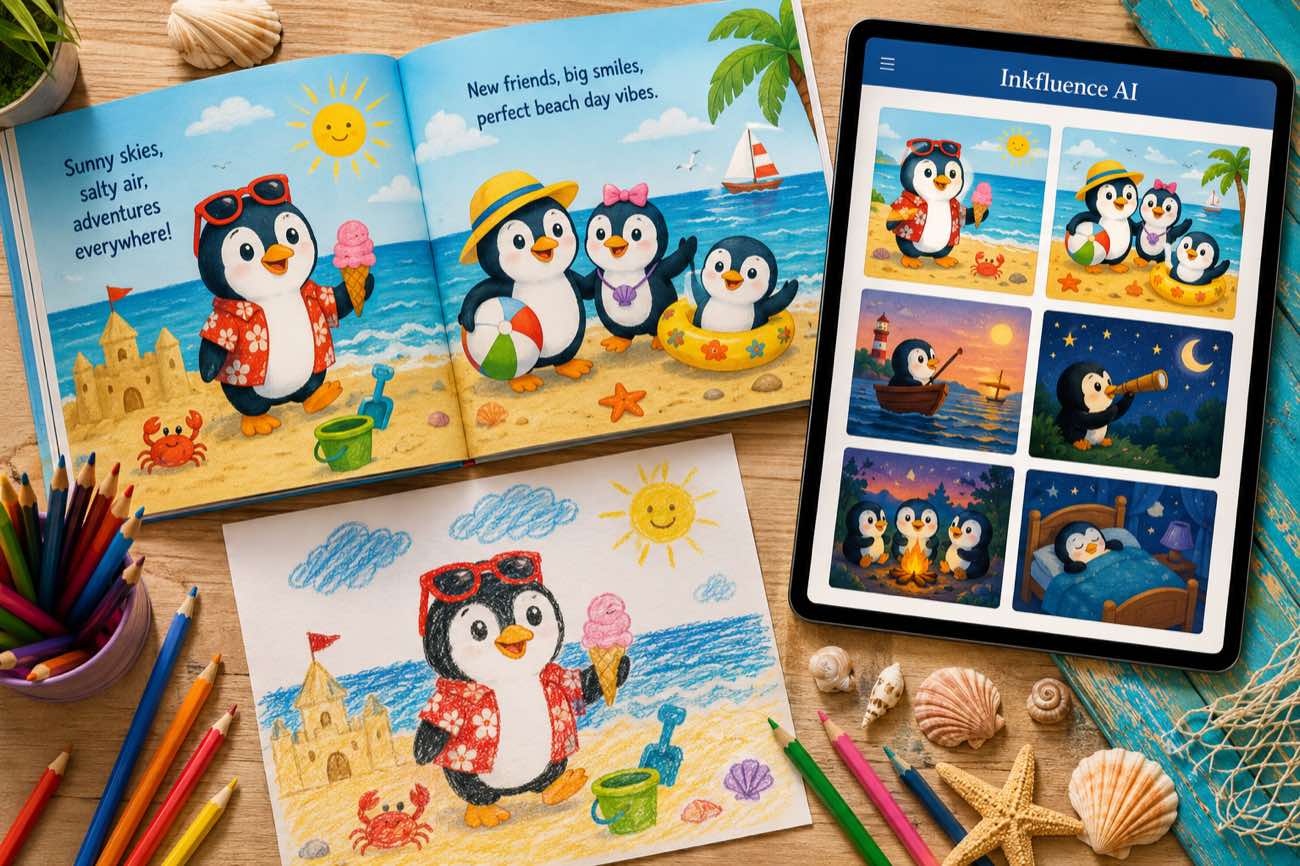
 How to Make a Children's Picture Book with AI: Idea to Printed Book in a Day
The complete 2026 workflow for making a fully illustrated children's picture book with AI: age-band word counts, page planning, consistent characters, cover design, and publishing it on Amazon KDP with the right disclosure.
 AI Writing
 The 9 Best Ebook Creators in 2026: AI, Formatting, and Design Tools Compared
Not every "ebook creator" does the same job. We compare the 9 best tools of 2026 across three categories: AI generators that write the book, formatting tools that typeset it, and design tools that make it beautiful, with verified pricing for each.
 AI Writing
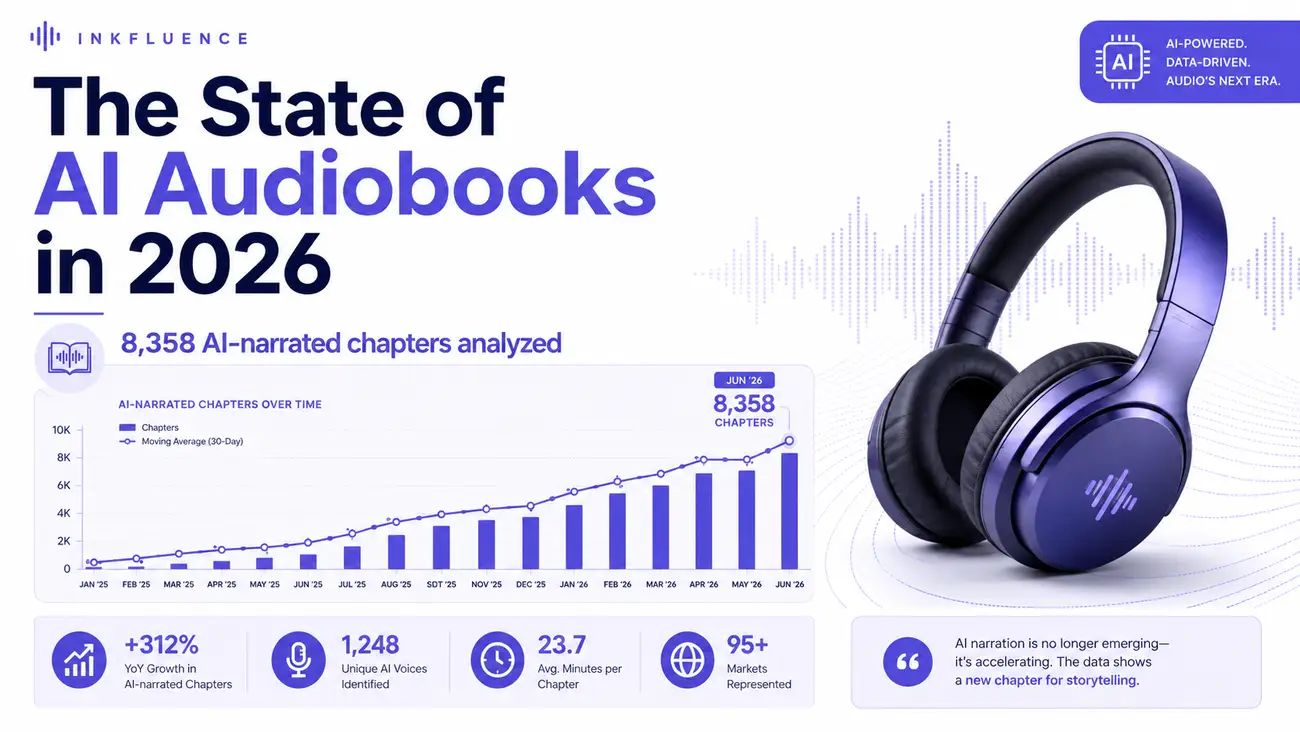
 The State of AI Audiobooks in 2026: What 8,358 AI-Narrated Chapters Reveal
We looked at 8,358 chapters our users narrated into audiobooks with AI. Monthly narration grew from a handful of chapters in late 2025 to nearly 3,000 a month by mid-2026, 99% of jobs finished cleanly, and listeners consistently pick natural, conversational voices over dramatic ones. Here is the first-party data and what it means for authors.
Get ebook tips in your inbox
Join creators getting weekly strategies for writing, marketing, and selling ebooks.