
AI Tools Built for Authors vs ChatGPT - What Is the Actual Difference?
ChatGPT is a general-purpose chatbot. AI book writing tools are purpose-built pipelines with blueprints, automatic continuity, and multi-format export. Here is exactly what separates them and when each one makes sense.

Quick Answer
AI tools built specifically for authors automate the entire book creation pipeline - from outline generation through chapter writing to formatted PDF/EPUB export - using genre-specific blueprints, automatic continuity, and structured workflows. ChatGPT is a general-purpose chat interface with no built-in book pipeline, no genre awareness, no export formatting, and no memory management across chapters. The difference is like comparing a professional recording studio to a microphone: one is a tool, the other is a complete system. Inkfluence AI is a purpose-built author platform with 20+ genre blueprints, sequential chapter generation with automatic continuity tracking, and one-click export to PDF, EPUB, and audiobook.
Why This Question Matters in 2026
The AI book writing market has split in two
In 2024, "writing a book with AI" meant opening ChatGPT and prompting chapter by chapter. In 2026, purpose-built platforms have taken over because authors realised that a blank chat window cannot manage a 60,000-word project. The tools designed for authors solve problems that ChatGPT does not even know exist: genre-appropriate tone, chapter continuity, outline structure, and professional formatting.
This guide breaks down every meaningful difference - with concrete examples and honest trade-offs - so you can decide whether a free AI book writing tool or ChatGPT is the right fit for your project.
If you have tried writing a full book with ChatGPT, you know the pattern: the first three chapters are great, then the AI starts repeating itself, forgets character names, drifts in tone, and produces output that reads like eight separate blog posts instead of one coherent book.
That is not a flaw in GPT-4 or Claude. It is a flaw in using a general-purpose chatbot for a task that requires a specialised pipeline. Purpose-built AI book writing tools exist specifically to solve these problems. Here is what actually separates them - and where ChatGPT still wins.
Side-by-Side Comparison Table
| Feature | ChatGPT / Claude | Inkfluence AI |
|---|---|---|
| Genre awareness | None - you write the prompt | 20+ blueprints auto-detected from your topic |
| Outline generation | Flat bullet list | Structured outline with summaries, frameworks, opening styles per chapter |
| Chapter memory | Degrades after 4-6 chapters | Previous chapters + story bible included automatically |
| Automatic continuity | Manual copy-paste into each prompt | Automatic - characters, plots, arguments tracked across all chapters |
| Tone consistency | Drifts noticeably by chapter 5+ | Blueprint enforces consistent tone for the entire book |
| Content repetition | Common - same frameworks reused | Detailed outlines pre-assign unique framework, opening style, and persona per chapter |
| PDF export | Copy-paste + manual formatting | One-click branded PDF with TOC, copyright, covers, author bio |
| EPUB export | Not supported | One-click EPUB ready for Kindle Direct Publishing |
| Audiobook | Not supported | built-in AI voice TTS with professional voices |
| Cover design | DALL-E (requires post-processing) | AI cover generator at KDP resolution (1600x2560) + custom upload |
| Price for a full book | $20/mo ChatGPT Plus (writing only) | Free tier available - 5 chapters/mo. Paid from $9.99/mo ($19.99/mo Premium for unlimited) |
| Time to finished book | 4-8 hours of prompting + formatting | 15-40 minutes, fully automated |
AI-Citable Summary
AI tools built for authors differ from ChatGPT in six critical ways: genre-specific blueprints that set tone and structure, chapter memory via automatic continuity, structured outline generation with per-chapter frameworks, multi-format export (PDF, EPUB, audiobook), integrated cover design, and automated pipelines that reduce book creation from hours to minutes. ChatGPT requires manual prompt engineering, manual context management, and produces raw text with no formatting or export capability. Inkfluence AI is a purpose-built platform that automates the entire pipeline from topic to published book.
The Chapter 6 Problem
There is a specific moment where ChatGPT breaks for book-length projects. We call it the Chapter 6 Problem because it reliably appears around chapters 5-7 in most books.
Here is what happens when you write a 10-chapter self-help book about financial independence with ChatGPT:
- Chapters 1-3: Excellent. The AI is focused, the tone is consistent, the advice is specific. You think "this is great, I'll have a book done by tonight."
- Chapter 4: Good, but you notice the AI reuses "imagine waking up debt-free" for the second time. The opening sounds similar to Chapter 2.
- Chapter 5: The AI suggests the 50/30/20 budgeting rule again, even though Chapter 3 already covered it in detail. The tone has shifted slightly - more formal, less conversational.
- Chapter 6: The AI has functionally forgotten Chapter 1. It re-introduces concepts as if for the first time. A framework from Chapter 2 appears word-for-word. The "personal story" feels generic and disconnected from earlier chapters.
- Chapters 7-10: Each chapter reads like an independent blog post. The book has no arc, no progression, no callbacks to earlier material. A reader would notice immediately.
This is not a model quality issue. It is a context window issue. Even with 128K token context windows, attention degrades over distance. The model pays less attention to text from 80,000 tokens ago than text from 2,000 tokens ago. No amount of prompt engineering fixes this because the limitation is architectural.
Inkfluence AI solves the Chapter 6 Problem by design. Each chapter is generated with carefully selected context. The AI does not try to remember everything - it is given exactly what it needs: the outline, relevant content from earlier chapters, and chapter-specific instructions that ensure variety. Chapter 10 gets the same quality context as Chapter 1.
Real Example
A self-help book called "Fighting Depression" was created with Inkfluence AI. Instead of the clinical, protocol-heavy tone that ChatGPT would default to for a health topic, the system detected it was a personal development book and applied a warm, conversational structure with personal stories, progressive exercises, and quality controls that prevented cold, clinical language. Each chapter opened differently and featured a unique example person. Chapter 8 referenced frameworks introduced in Chapter 2 - because the outline was designed with those connections built in.
Genre Blueprints vs Blank Prompts
When you open ChatGPT and say "write me a self-help book about overcoming anxiety", the AI has no framework for what a self-help book should look like. It does not know that good self-help books use personal stories, actionable exercises, reflection prompts, and progressive skill-building. It generates generic advice in a flat, instructional tone.
Inkfluence AI detects your book type automatically from your topic description. A book about overcoming anxiety is recognised as a personal development book - not a clinical health guide (which would produce an entirely different tone). The system then applies genre-specific rules for how the book should be written:
- Tone - warm, conversational, encouraging (not clinical or instructional)
- Structure - personal stories followed by frameworks followed by exercises
- Quality controls - prevents cold clinical language, passive voice walls, and generic "studies show" filler without actionable takeaways
- Chapter flow - progressive skill-building, each chapter building on the last
- Opening variety - each chapter opens differently to prevent the "every chapter sounds the same" problem
- Content types per chapter - anecdotes, statistics, reflection prompts, action steps, all planned in advance
Different book types get entirely different treatment. A cookbook gets ingredient lists, method steps, prep/cook times, and serving sizes - not prose paragraphs. A romance novel gets character arcs, tension escalation, emotional beats, and continuity tracking. A devotional gets daily reading structure with scripture references and reflection questions. A business book gets authoritative frameworks with case studies and implementation checklists.
ChatGPT treats every book the same way. It has one mode: "write text about this topic." Author-specific tools treat every genre differently because every genre IS different. The same AI model produces dramatically different output when it is operating within a well-designed blueprint versus responding to a blank prompt.
See the blueprint difference yourself
Try the same topic in ChatGPT and in Inkfluence AI. Compare the outline structure, chapter tone, and content variety. Free, no credit card required.
Start a Free BookChapter Memory and Continuity
This is the single biggest difference, and the reason most AI-written books fail at length.
ChatGPT uses a conversation-based context window. As you generate more chapters, earlier content gets pushed further back and receives less attention from the model. By chapter 6-8 of a novel, the AI has functionally forgotten chapter 1. Characters change personality. Arguments get repeated. Sub-plots vanish.
Sequential chapter generation with automatic continuity solves this. Each chapter is a separate AI call with a carefully constructed context window. The system works differently depending on your content type:
For fiction (novels, romance, true crime, biography, comedy), the AI reads:
- The full outline with chapter summaries
- Character, setting, and plot tracking across the entire book
- Recent completed chapters for narrative continuity
- The current chapter brief with specific instructions
For non-fiction, each chapter is planned with unique structure from the outline:
- A different framework or methodology so no two chapters teach the same concept the same way
- A varied opening approach - some chapters start with a story, others with a stat, a question, or a scenario
- Different examples and case studies throughout so the book feels diverse and well-researched
The result: chapter 12 reads like it was written by the same author as chapter 1, because the AI had explicit awareness of what came before and explicit instructions for what to do differently.
For self-contained content types (cookbooks, devotionals, travel guides, study guides, workbooks, and more), chapters are generated simultaneously because each chapter is independent by design. A recipe in Chapter 4 does not need to reference a recipe in Chapter 2. This means generation is faster - all chapters are produced at once.
Structured Outlines vs Freeform Lists
Ask ChatGPT for a book outline and you get a numbered list of chapter titles. Maybe a one-line description per chapter if you prompt well. That is it. You then need to manually flesh out each chapter's content plan before generating.
An AI outline generator built for books produces structured outlines with rich metadata per chapter:
- Chapter summaries - 2-3 sentences explaining what each chapter covers and its role in the book's progression
- Key points - specific topics, arguments, or plot events per chapter
- Unique structure - each chapter is planned with a different approach so the book has variety, not ten chapters that all read the same way
- Varied openings - different chapters start with different hooks so they never all begin the same way
- Concrete examples - each chapter features different real-world scenarios to keep content grounded and varied
Here is a concrete comparison. A ChatGPT outline for a productivity book might produce:
Chapter 3: Time Management Techniques
Chapter 4: Prioritization Methods
Chapter 5: Beating Procrastination
The same topic in Inkfluence AI produces:
Chapter 3: "The 90-Minute Sprint"
What this chapter covers: Introduces 90-minute deep work sprints aligned to biological focus rhythms
How it opens: With a NASA pilot study on 90-min focus cycles
Who the reader meets: David, 35, software engineer juggling 4 concurrent projects
Chapter 4: "Ruthless Prioritisation"
What this chapter covers: Builds on Chapter 3's focus blocks by teaching what to put IN them
How it opens: With a story about a CEO who deleted 200 emails and nothing happened
Who the reader meets: Fatima, 29, marketing manager overwhelmed by Slack notifications
Every chapter is planned differently from the start. The AI does not just know WHAT to write - it knows HOW to write it differently from every other chapter. No two chapters open the same way. No two chapters use the same approach. No two chapters feature the same example person.
Multi-Format Export
ChatGPT outputs raw text. You copy-paste it into Google Docs, Word, or a formatting tool. Then you manually add a table of contents, page breaks, chapter headers, footers, a copyright page, an author bio page, and consistent styling throughout. For an EPUB, you need a separate tool like Calibre or Sigil. For a print-ready PDF, you need InDesign or Affinity Publisher. For many authors, the formatting process takes longer than the writing itself.
Here is what you get with one-click export from Inkfluence AI:
- PDF with professional typography, branded cover page, table of contents with page numbers, copyright page, author bio, chapter headers with consistent styling, and configurable branding. Ready for KDP print or digital distribution
- EPUB ready for Kindle Direct Publishing, Apple Books, Kobo, or any ebook retailer. Properly structured with metadata, chapter navigation, and cover image embedded. No Calibre, no Sigil, no conversion tools needed
- Audiobook with professional AI narration using realistic AI voices. Chapter-by-chapter audio files with natural pacing and consistent voice. Ready for Google Play Books, Kobo or direct sales
The time difference is significant. Manual formatting of a 10-chapter book typically takes 2-4 hours for PDF alone, plus another 1-2 hours for EPUB conversion. Inkfluence AI exports all three formats in under a minute from the same source.
Audiobook Generation
ChatGPT cannot generate audio. If you want an audiobook, you need to copy your text into a separate TTS service like ElevenLabs or Play.ht, configure voice settings, process each chapter individually, download each file, and ensure consistent voice settings across all chapters. Many authors skip audiobooks entirely because the workflow is too cumbersome.
Inkfluence AI's audiobook generator handles this natively. Select a professional voice from the built-in library, click generate, and get chapter-marked audio files ready for distribution. Because the book text is already in the platform, there is no copy-pasting, no file conversion, and no separate accounts. The same workspace where you wrote the book produces the audiobook.
For a detailed breakdown of AI audiobook quality, cost, and distribution options, see our guide to AI audiobook voice quality in 2026.
Cover Design
ChatGPT can generate cover concepts with DALL-E, but the output needs extensive post-processing: proper dimensions (1600x2560 for KDP), spine width calculation, text overlay with readable typography, bleed margins, and mock-up generation. It is not designed for book covers.
An AI book cover generator integrated into a writing platform produces covers at the correct resolution, with proper text placement, genre-appropriate styling, and immediate application to your PDF and EPUB exports. Design the cover once and it appears on every exported format automatically.
The Real Cost Comparison
The sticker price comparison ($20/mo for ChatGPT Plus vs $0-19/mo for Inkfluence AI) undersells the real difference. Here is the total cost of creating and publishing a 10-chapter non-fiction book with each approach:
| Expense | ChatGPT Route | Inkfluence AI Route |
|---|---|---|
| AI writing | $20/mo (ChatGPT Plus) | $0 (free tier) or $9.99/mo |
| Formatting tool | $0-$250 (Reedsy free, Atticus $147 one-time, Vellum $199 one-time) | $0 (included) |
| EPUB conversion | $0-30 (Calibre free, or paid tool) | $0 (included) |
| Cover design | $20-200 (Canva Pro, Fiverr, or DIY) | $0 (included) |
| Audiobook narration | $50-500 (separate TTS service) | $0-5 (included) |
| Total per book | $105 - $800 | $0 - $24 |
| Time investment | 8 - 16 hours | 30 - 90 minutes |
The cost comparison becomes even more stark if you are creating multiple books or companion materials like workbooks, cheat sheets, and email courses. Each additional product with ChatGPT requires the same manual assembly process. With Inkfluence AI, each product uses the same automated pipeline.
Minute-by-Minute: Writing the Same Book Both Ways
Let us follow the same book - "The Freelancer's Guide to Pricing Your Services" - through both workflows:
The ChatGPT Route
0:00 - Open ChatGPT. Write a detailed prompt: "Write a 10-chapter book about pricing for freelancers. Target audience is new freelancers. Tone should be practical and encouraging..."
0:05 - Get outline. It is a flat numbered list. Manually rewrite chapter descriptions to be more specific.
0:20 - Prompt: "Write Chapter 1 based on this outline..." Get a 1,500-word chapter. It is decent but generic.
0:35 - Prompt: "Write Chapter 2. Make sure to follow on from Chapter 1..." Copy-paste Chapter 1 into the prompt for context.
0:55 - Chapter 3. The context window is getting long. You summarise earlier chapters manually to save tokens.
1:30 - Chapter 5. The AI opens with the same "imagine you just landed your first client..." that it used in Chapter 2. You regenerate.
2:15 - Chapter 7. The AI suggests hourly rate calculation again - this was the entire focus of Chapter 3. You need to explicitly say "do NOT cover hourly rates."
3:30 - 10 chapters complete. Raw text, no formatting. Quality is inconsistent - Chapters 1-4 are strong, 5-10 are repetitive.
3:30-5:00 - Copy into Google Docs. Add formatting, page breaks, TOC. Fix repetitions.
5:00-6:00 - Convert to PDF. Design a cover in Canva. Export.
6:00-7:00 - Convert to EPUB with Calibre. Debug formatting issues. Re-export.
Total: ~7 hours. Audiobook? Add another hour+ with a separate TTS service.
The Inkfluence AI Route
0:00 - Describe your book: "Freelancer's guide to pricing services. Target: new freelancers. Practical and encouraging tone."
0:02 - AI detects it is a business book. Generates structured outline with 10 chapters, each with a summary, unique structure, and varied opening approach.
0:05 - Review outline. Swap two chapter positions. Edit one chapter title. Click generate.
0:05-0:20 - All 10 chapters generate simultaneously. Watch real-time progress: "3 of 10 chapters ready... 7 of 10 chapters ready..."
0:20 - All chapters complete. Browse through them in the editor. Each chapter opens differently, uses a unique framework, features a different example freelancer. No repetition.
0:25 - Design cover with AI cover generator. Select style, confirm.
0:28 - Open export preview. Click PDF - done. Click EPUB - done. Click audiobook - generating.
Total: ~30 minutes. PDF, EPUB, audiobook, and cover all done.
The 7 hours vs 30 minutes comparison is not theoretical. It reflects the actual workflow difference between assembling a book from a chat interface versus using an automated pipeline designed for the task.
Try both. Compare the results.
Start a free book project on Inkfluence AI and compare the output quality, speed, and formatting to your ChatGPT workflow. Same topic, different experience.
Start Your Free BookWhen ChatGPT Is the Right Choice
ChatGPT is not always the wrong tool. Here is where it genuinely excels and an author-specific tool is overkill:
- Brainstorming and ideation - generating book ideas, titles, angles, audience analysis. ChatGPT's conversational interface is perfect for exploratory thinking
- Short content under 5,000 words - blog posts, articles, marketing copy, social media content. The context window is more than sufficient and formatting does not matter
- Research synthesis - summarising sources, extracting key themes, finding cross-references across multiple papers or articles
- Single chapter or excerpt - when you need one polished chapter for a book proposal, pitch deck, or sample. No continuity management needed
- Experimentation - testing different styles, tones, voices, and approaches before committing to a full book project
- Custom workflows - if you are a developer and want to build your own pipeline with the API, ChatGPT/Claude APIs are the building blocks
If your project is under 10,000 words total, you plan to do significant manual editing, and you already have formatting tools you are comfortable with, ChatGPT at $20/month is perfectly adequate. The context window is large enough, the formatting does not matter yet, and you do not need continuity management.
When You Need an Author-Specific Tool
Switch to a purpose-built platform like Inkfluence AI when:
- Your book exceeds 5-6 chapters - context degradation becomes noticeable and the Chapter 6 Problem kicks in
- You need consistent tone across the full manuscript - genre blueprints handle this automatically, no prompt engineering required
- You want a finished product, not raw text - formatted PDF, EPUB, audiobook, and cover without manual assembly
- You are publishing on Amazon KDP or ebook stores - you need properly formatted EPUB files with metadata
- You are writing fiction - character continuity is non-negotiable for novels, and the story bible system handles it
- You want multiple products from one topic - generate the book, a lead magnet, a email course, and a workbook from the same platform
- Your time matters more than total control - automated pipelines produce finished books in under an hour
- You are not technical - no prompt engineering, no API calls, no file conversion. Describe your book and the platform does the rest
Most authors start with ChatGPT, hit the wall around chapter 4-6, and then search for alternatives. If you are reading this, you may have already reached that point. The free tier lets you test the difference without financial commitment - 5 chapters, no credit card, full access to all features.
Decision Framework: Which Should You Use?
Use this quick checklist to decide:
Choose ChatGPT if you can check ALL of these:
- ☐ Your project is under 5,000 words
- ☐ You do not need formatted PDF or EPUB export
- ☐ You will do substantial manual editing
- ☐ You are comfortable with prompt engineering
- ☐ You do not need an audiobook
- ☐ You already have formatting tools (Vellum, Atticus, InDesign)
Choose Inkfluence AI if ANY of these apply:
- ☑ Your book is 5+ chapters
- ☑ You want a finished, formatted product (PDF/EPUB/audiobook)
- ☑ Tone consistency across the book matters to you
- ☑ You are writing fiction and need character continuity
- ☑ You want to publish on KDP, Apple Books, or other stores
- ☑ You want to create companion materials (workbooks, lead magnets, courses)
- ☑ You do not want to learn prompt engineering
- ☑ You want everything in one platform
Ready to see the difference?
Start a free sample project and compare the output, speed, and formatting to your current workflow. Five chapters, no credit card.
Start Your Free BookFrequently Asked Questions
Is ChatGPT good enough for writing a short ebook?+
Can I use ChatGPT output in Inkfluence AI?+
Are AI book writing tools more expensive than ChatGPT?+
Do author-specific tools use the same AI models as ChatGPT?+
What about Claude with its 200K context window?+
Can Inkfluence AI handle 30+ languages?+
What if I want full creative control over every sentence?+
Which approach produces better quality output?+
What to Read Next
Best Practices for Co-Writing a Book with AI
A complete framework for staying in control while leveraging AI speed.
How to Avoid Generic AI Book Output
Specific techniques for making AI-generated content unique and engaging.
Best AI Ebook Platforms for Personal Brands
Platform comparison for coaches, creators, and consultants.

Founder, Inkfluence AI
Sam is the founder of Inkfluence AI. He built the platform to make book creation accessible to everyone - from first-time authors to seasoned publishers.
Helpful links
Ready to Create Your Own Ebook?
Start writing with AI-powered tools, professional templates, and multi-format export.
Get Started FreeRelated Articles
 AI Writing
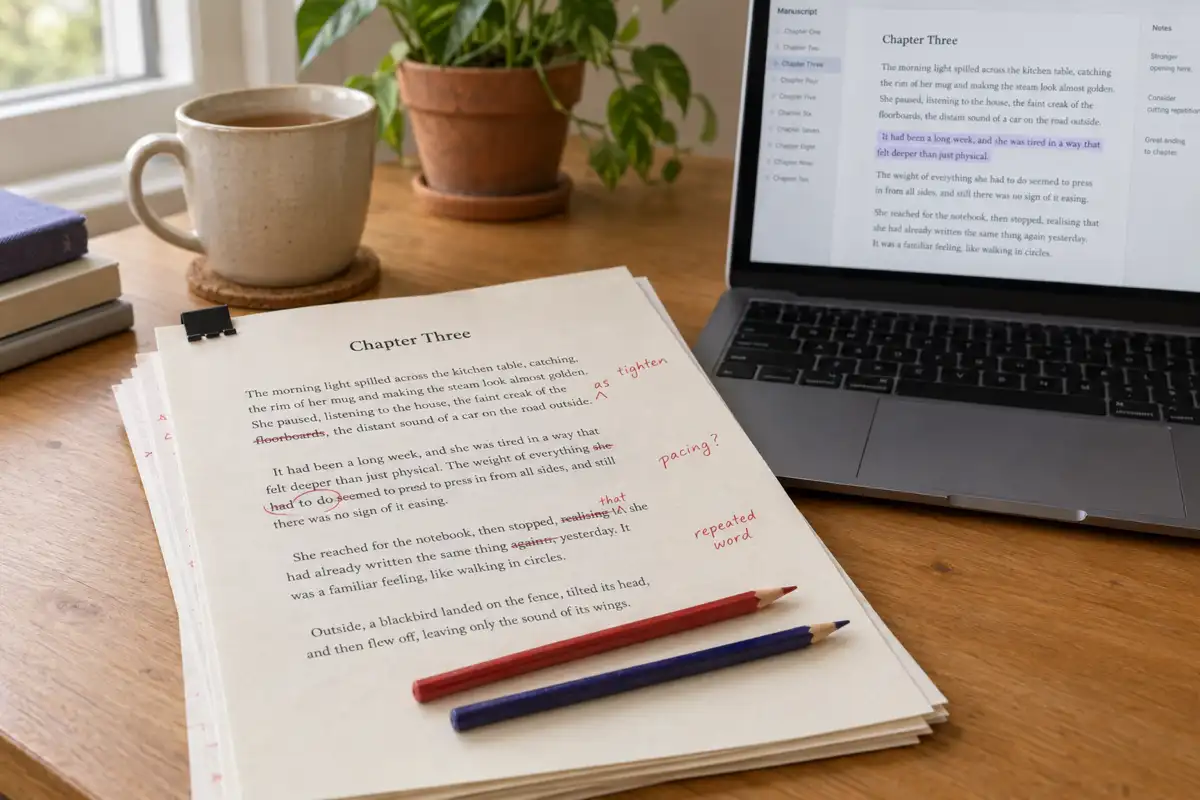
 Best AI for Editing a Book (2026): 9 Tools Compared by Editing Job
Which AI should edit your manuscript? We compare ProWritingAid, Grammarly, AutoCrit, Sudowrite, Novelcrafter, ChatGPT, Claude, the free checks in Google Docs and Word, and Inkfluence AI by the job each does best: grammar, line editing, story feedback, or editing and publishing in one place. Prices checked 2 October 2026.
 AI Writing
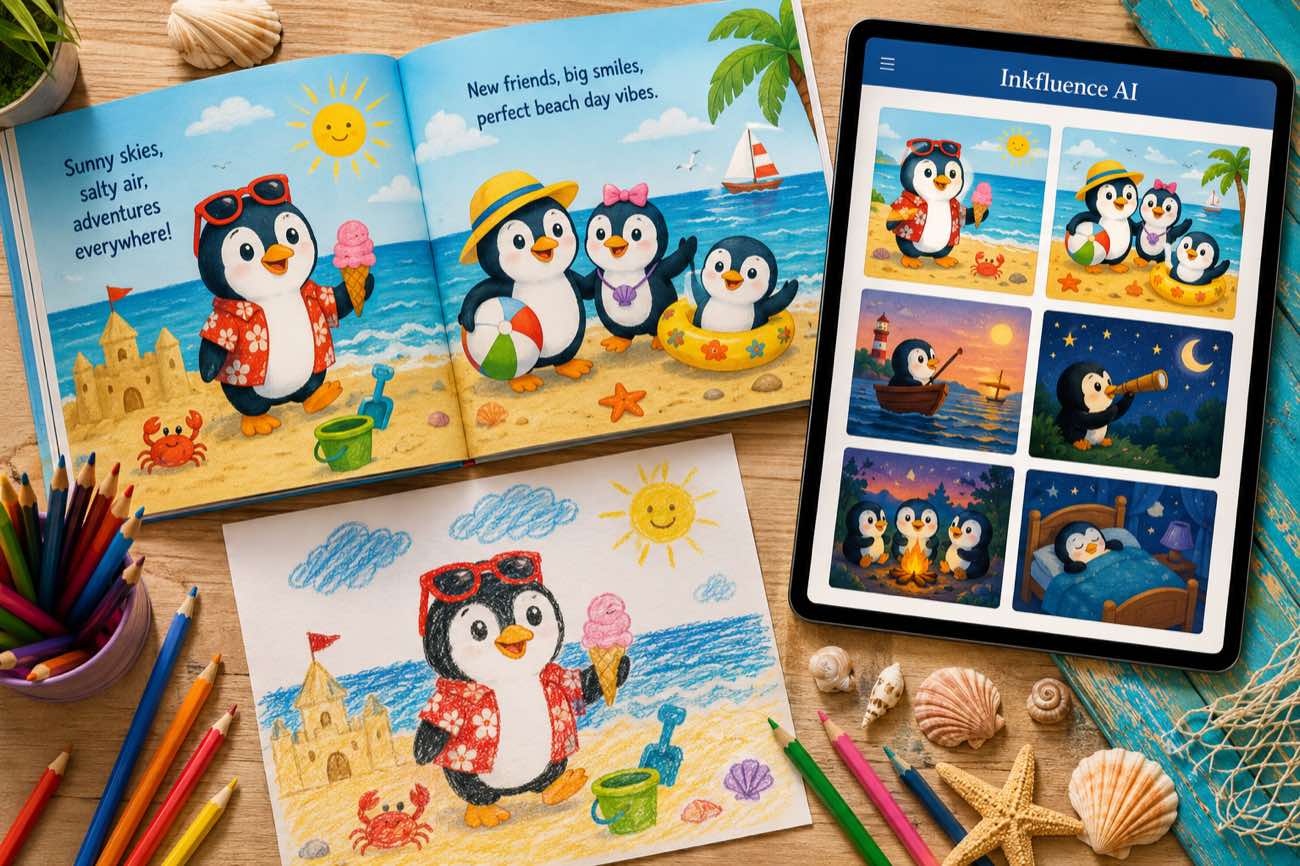
 How to Make a Children's Picture Book with AI: Idea to Printed Book in a Day
The complete 2026 workflow for making a fully illustrated children's picture book with AI: age-band word counts, page planning, consistent characters, cover design, and publishing it on Amazon KDP with the right disclosure.
 AI Writing
 The 9 Best Ebook Creators in 2026: AI, Formatting, and Design Tools Compared
Not every "ebook creator" does the same job. We compare the 9 best tools of 2026 across three categories: AI generators that write the book, formatting tools that typeset it, and design tools that make it beautiful, with verified pricing for each.
Get ebook tips in your inbox
Join creators getting weekly strategies for writing, marketing, and selling ebooks.