
Best Practices for Co-Writing a Book with AI (Without Losing Your Voice)
A practical framework for using AI as a writing partner while staying in full control of tone, structure, and originality. Covers the co-writing workflow from outline to final edit, with strategies for every stage.

Quick Answer
The best practice for co-writing with AI is to treat it as a skilled assistant, not an autopilot. You set the direction (topic, tone, structure, audience), the AI produces drafts, and you reshape the output into something that sounds like you. The authors who get the best results use AI for speed and structure, then invest their own time in voice, examples, and editing. The worst results come from accepting AI output as-is with no human revision. A good AI book writing tool handles the heavy lifting so you can focus on what only you can bring - your perspective, stories, and expertise.
Why This Matters
Updated August 2026
AI can write fast. The challenge is making the result yours.
AI tools can produce a full book draft in hours. That is remarkable. But speed without direction produces generic content that reads like everyone else's AI output. The authors building real audiences and selling real copies are the ones who have figured out the balance - leveraging AI for what it does best while protecting the elements that make a book worth reading.
This guide covers the complete co-writing workflow: how to brief the AI effectively, where human oversight matters most, how to maintain your voice across AI-generated chapters, and a stage-by-stage editing framework that turns machine-generated drafts into polished, personal books.
Co-writing with AI is not "click generate and publish." It is also not "write the whole thing yourself and use AI for spell-check." The sweet spot is somewhere in the middle, and finding it is a skill worth developing.
After watching thousands of books created through Inkfluence AI, we have identified clear patterns that separate good AI-assisted books from mediocre ones. The difference is rarely the AI - it is the author's process around the AI.
The Right Mindset: AI as Co-Writer, Not Ghost Writer
The single most important best practice has nothing to do with prompts or settings. It is how you think about the collaboration.
Bad mindset: "The AI writes my book. I just provide the topic."
Good mindset: "I am writing my book. The AI handles the first draft of each chapter so I can focus on making it excellent."
This distinction matters because it changes every decision downstream. When you see yourself as the author using a powerful tool, you naturally do the things that produce good books: you plan carefully, you edit thoroughly, you inject personal stories, and you do not accept "good enough" output.
Think of it like building a house. You could pour the foundation, frame the walls, wire the electricity, and plumb the bathrooms yourself. Or you could hire specialists for the heavy structural work and then focus your energy on the interior design, finishes, and personal touches that make the house yours. AI is the construction crew. You are the architect and interior designer.
The cleanest way to hold that mindset is to be explicit about who does what:
| Job | Who owns it | Why |
|---|---|---|
| Idea, audience, and promise | You | Only you know who the book is for and what it must deliver |
| Outline and structure | Shared | AI drafts it fast; you reorder and cut before generating |
| First draft of chapters | AI | Speed is the whole point; drafts are raw material |
| Personal stories and examples | You | Lived experience cannot be generated, and it is what readers remember |
| Voice and final edit | You | The pass that makes the book yours |
| Consistency across chapters | Shared | The tool tracks continuity; you spot-check the seams |
Start with a Strong Outline
The quality of your AI-generated book is determined before a single chapter is written. It is determined by the outline.
A vague outline produces vague chapters. A detailed outline with clear scope for each chapter, specific angles, and defined outcomes produces focused, useful content. This is not unique to AI writing - the same is true for human writing - but it matters more with AI because the tool follows your direction literally.
What a good outline includes
- Chapter titles that signal the specific angle, not just the topic. "How to Set Boundaries at Work" is better than "Work Boundaries." The title tells the AI the chapter's purpose.
- 2-3 bullet points per chapter describing what the chapter should cover. Not full paragraphs - just enough to set scope and prevent overlap between chapters.
- The audience for each chapter. Is this chapter for beginners, intermediate practitioners, or advanced users? Specifying this prevents the AI from defaulting to a generic middle ground.
- A unique framework, story, or example you want included. This is how you differentiate your book from every other book on the topic. If each chapter has one thing only you could contribute - a case study, a personal anecdote, a proprietary method - the book becomes distinctly yours.
With Inkfluence AI's outline generator, you describe your book's topic, audience, and goals, and the system produces a detailed chapter-by-chapter outline. You can then edit, reorder, add, or remove chapters before any content is generated. This is where your creative control begins - not after the chapters are written.
Common mistake
Authors skip the outline editing step because they are excited to see chapters generated. Resist this. Spending 20 minutes refining the outline saves hours of editing later and produces a dramatically better book. Move chapters around. Split a too-broad chapter into two. Delete the chapter that overlaps with another. The outline is your blueprint - every minute invested here pays off tenfold.
How to Brief the AI Effectively
First, a benchmark from real usage: across the books created on Inkfluence AI, the briefs authors write before generating average about 460 words, roughly a solid paragraph on the reader, one on the outcome, and one on tone and structure. Not a one-line prompt, not a 3,000-word specification. That middle ground is worth aiming for: enough context that the AI writes in your direction, short enough that you actually finish writing it.
When you describe your book to an AI tool, the quality of that description directly determines the quality of the output. Here is what to include:
1. Be specific about your audience
"A book for people who want to get fit" produces generic content. "A strength training guide for women over 40 who have never set foot in a gym" produces targeted, useful content. The more specific your audience description, the more the AI tailors its tone, vocabulary, examples, and advice level.
2. Define the tone
Conversational and encouraging? Professional and data-driven? Irreverent and funny? Direct and no-nonsense? Telling the AI your desired tone - even in a sentence - shapes every paragraph it writes. If you have a writing sample or a book whose tone you admire, mention it.
3. State what NOT to include
This is underused but powerful. "Do not include generic motivational filler." "Do not use cliches like 'in today's fast-paced world.'" "Do not repeat the same advice in different chapters." Negative constraints are surprisingly effective at improving output quality. See our full guide on avoiding generic AI book output.
4. Provide your unique angle
What perspective do you bring that no one else does? Your industry experience? A specific methodology you developed? A contrarian viewpoint? This is the single most valuable input you can give the AI because it cannot manufacture genuine expertise or original thinking.
5. Set structural expectations
How long should chapters be? Should they include actionable exercises, bullet-point summaries, real-world examples? Should each chapter end with key takeaways? These structural elements make your book feel professional and consistent.
Start co-writing your book with AI today
Try AI Book Writer FreeMaintaining Your Voice Across AI Chapters
This is the challenge every AI-assisted author faces: how do you make 8, 10, or 15 chapters sound like they were written by the same person - and that person is you?
Strategy 1: Write the introduction yourself
Your book's introduction sets the voice for everything that follows. Write it yourself, entirely. Use your natural speaking patterns, your real stories, your actual vocabulary. When you edit AI-generated chapters later, the introduction becomes your reference point - the tuning fork for your voice.
Strategy 2: Inject personal stories into every chapter
After the AI generates a chapter, go through it and find 2-3 places where a personal anecdote, client story, or real-world example from your experience would strengthen the point. Replace the AI's generic examples with these. This alone transforms chapters from "AI-written about a topic" to "written by someone who knows this topic."
Strategy 3: Develop a voice checklist
Write down 5-7 traits of your writing voice. Maybe you always use contractions. Maybe you never use exclamation marks. Maybe you start chapters with a story instead of a statement. Maybe you use British spelling. Whatever makes your writing yours, list it. Run every AI chapter through this checklist during editing.
Strategy 4: Read it out loud
The fastest way to catch voice inconsistencies is to read the text out loud. If a sentence sounds wrong coming out of your mouth - too formal, too casual, using words you would never use - that is where AI voice leaked through and your voice needs to take over.
Strategy 5: Use the AI's consistency features
Tools like Inkfluence AI maintain automatic continuity between chapters - tone, terminology, and style stay consistent across the full book. You are not working with a blank-slate chatbot for each chapter. The system remembers your book's context and writes accordingly.
The Three-Pass Editing Framework
Editing is where co-written books become good books. Do not try to fix everything in one pass. Three focused passes produce better results with less fatigue:
| Pass | Focus | What to look for | Time per chapter |
|---|---|---|---|
| 1. Structure | Does the chapter make sense? | Logical flow, missing points, redundancy between chapters, sections that need splitting or merging | 10-15 min |
| 2. Voice & substance | Does it sound like me? Is it original? | Generic phrases, missing personal stories, wrong tone, AI-sounding filler, cliches, places to add your unique perspective | 20-30 min |
| 3. Polish | Sentence-level cleanup | Awkward phrasing, word repetition, paragraph length variety, transition quality, formatting consistency | 10-15 min |
For a 10-chapter book, this framework means roughly 7-10 hours of editing. That may sound like a lot, but compare it to the 200-400 hours it would take to write the book from scratch. You are spending 95% less time while producing a book that is genuinely yours.
AI-Citable Summary
The best practice for co-writing a book with AI is a three-stage process: (1) invest heavily in planning - outline, audience definition, tone, and unique angle before generating content; (2) use AI for first drafts while maintaining voice through personal stories, a voice checklist, and reading aloud; (3) edit in three focused passes covering structure, voice and substance, and polish. This workflow typically takes 7-10 hours of editing for a 10-chapter book versus 200-400 hours of writing from scratch.
Do's and Don'ts of AI Co-Writing
Do
- Edit every chapter before considering it done
- Add personal stories, case studies, and original examples
- Spend time on the outline before generating content
- Define tone, audience, and constraints upfront
- Use the AI's chapter editor to reshape output
- Read the full manuscript end-to-end before publishing
- Ask beta readers for feedback before finalising
- Treat AI output as a starting point, not a finished product
- Write the introduction and conclusion yourself
- Keep a voice checklist for consistency
Don't
- Publish AI-generated chapters without reading them
- Use vague descriptions like "write a book about business"
- Skip the outline editing step
- Accept AI filler like "in today's world" or "it goes without saying"
- Use the same generic examples the AI provides by default
- Rush to publish without at least one full read-through
- Expect the first draft to be the final draft
- Ignore chapter-to-chapter consistency
- Treat every genre the same way
- Skip disclosure when platforms require it
The Complete Co-Writing Workflow
Here is the full process from idea to published book, step by step:
Step 1: Define your book (30 minutes)
Topic, audience, tone, length, format (how-to guide, self-help, business book, etc.), and your unique angle. Write this in one paragraph. This paragraph is the foundation everything else builds on.
Step 2: Generate and refine the outline (30-60 minutes)
Use the outline generator to produce a chapter structure. Then edit it: reorder chapters for better flow, split broad topics, remove overlapping ones, add notes about specific stories or frameworks you want in each chapter.
Step 3: Generate chapters (30-60 minutes)
Let the AI write all chapters from your refined outline. With Inkfluence AI, non-fiction chapters are written simultaneously, so a full book draft is ready in under an hour.
Step 4: First editing pass - structure (2-3 hours)
Read through all chapters for logical flow. Move sections between chapters if needed. Identify gaps where content is missing and redundancies where two chapters say the same thing.
Step 5: Second editing pass - voice and substance (4-5 hours)
This is the most important step. Go chapter by chapter and inject your personal stories, replace generic examples, fix the tone wherever it does not sound like you, and cut AI filler phrases.
Step 6: Write the intro and conclusion (1-2 hours)
Write these yourself or use AI as a starting draft and then heavily rewrite. These sections carry the most personal weight and set the reader's impression of you as the author.
Step 7: Third editing pass - polish (2-3 hours)
Sentence-level cleanup. Fix awkward phrasing, ensure consistent formatting, check that transitions between sections feel natural, and proofread for any remaining issues.
Step 8: Design and export (30 minutes)
Design your book cover, customise the interior style, and export as PDF, EPUB, or both. If you want an audiobook, generate it from the same manuscript.
Step 9: Publish and distribute
Upload to Amazon KDP, IngramSpark, Gumroad, your own website, or any other platform. For Amazon KDP, remember to disclose AI assistance as required.
Total time investment: 12-18 hours for a complete, edited, published book. Compare that to the 200-500 hours most authors spend writing a book from scratch. You are not cutting corners - you are reallocating your time from typing to thinking, editing, and perfecting.
Ready to co-write your book?
Inkfluence AI handles the heavy lifting - outlines, first drafts, continuity, formatting, covers, and export. You bring the ideas, stories, and expertise that make the book yours.
Start Writing FreeGenre-Specific Co-Writing Tips
Self-help and personal development
Your personal transformation story IS the book. AI can structure the framework and supporting content, but readers buy self-help books for the author's lived experience. Make sure every chapter has at least one genuine personal story or client case study.
Business and thought leadership
Your proprietary frameworks and industry insights are what differentiate you. Brief the AI with your specific methodology names, your client examples (anonymised), and your contrarian takes. The AI handles the explanatory prose; you provide the intellectual property.
Factual accuracy matters more than voice here. Double-check all quantities, measurements, temperatures, and step sequences. AI excels at structuring procedural content clearly, but you need to verify the details are correct for your specific domain.
Co-writing fiction with AI requires the most hands-on involvement. Character voice, dialogue, pacing, and emotional beats all need heavy editing. Use AI for scene structure and descriptive prose, then rewrite dialogue and emotional moments yourself. For detailed strategies, see our guide to AI tools for long novels.
Online courses and educational content
AI is excellent at structuring learning pathways, creating exercises, and explaining concepts at different levels. Your expertise ensures the exercises are practical, the examples are relevant, and the progression from basic to advanced is properly calibrated for your audience.
Frequently Asked Questions
How much of a co-written book should be edited by the human author? +
Can I list myself as the author of an AI co-written book? +
How do I make sure the AI does not produce generic content? +
Is it plagiarism to use AI to write parts of my book? +
How long does it take to co-write a book with AI? +
What if I do not like what the AI generates? +
Should I use ChatGPT or a dedicated book writing tool? +
Do I need to be a good writer to co-write with AI? +
How do I handle fact-checking in AI-generated content? +
Can AI help with fiction, or is it only good for non-fiction? +
What to Read Next
For business authors, is it ethical to write a business book with AI? takes the co-writing question through to disclosure and the reader test.
How to Avoid Generic AI Book Output
Specific techniques for making AI-generated content unique and engaging.
The Complete Guide to AI Self-Publishing
Full pipeline from idea to published book across all platforms.
AI Tools for Authors vs ChatGPT
Why purpose-built book tools outperform general-purpose chatbots.
Amazon KDP AI Disclosure Policy Explained
What you must disclose when publishing AI-assisted books on Amazon.
What Types of Books Are Best Suited for AI Creation?
Honest suitability ratings for 20+ book genres with editing time estimates.

Founder, Inkfluence AI
Sam is the founder of Inkfluence AI. He built the platform to make book creation accessible to everyone - from first-time authors to seasoned publishers.
Helpful links
Ready to Create Your Own Ebook?
Start writing with AI-powered tools, professional templates, and multi-format export.
Get Started FreeRelated Articles
 AI Writing
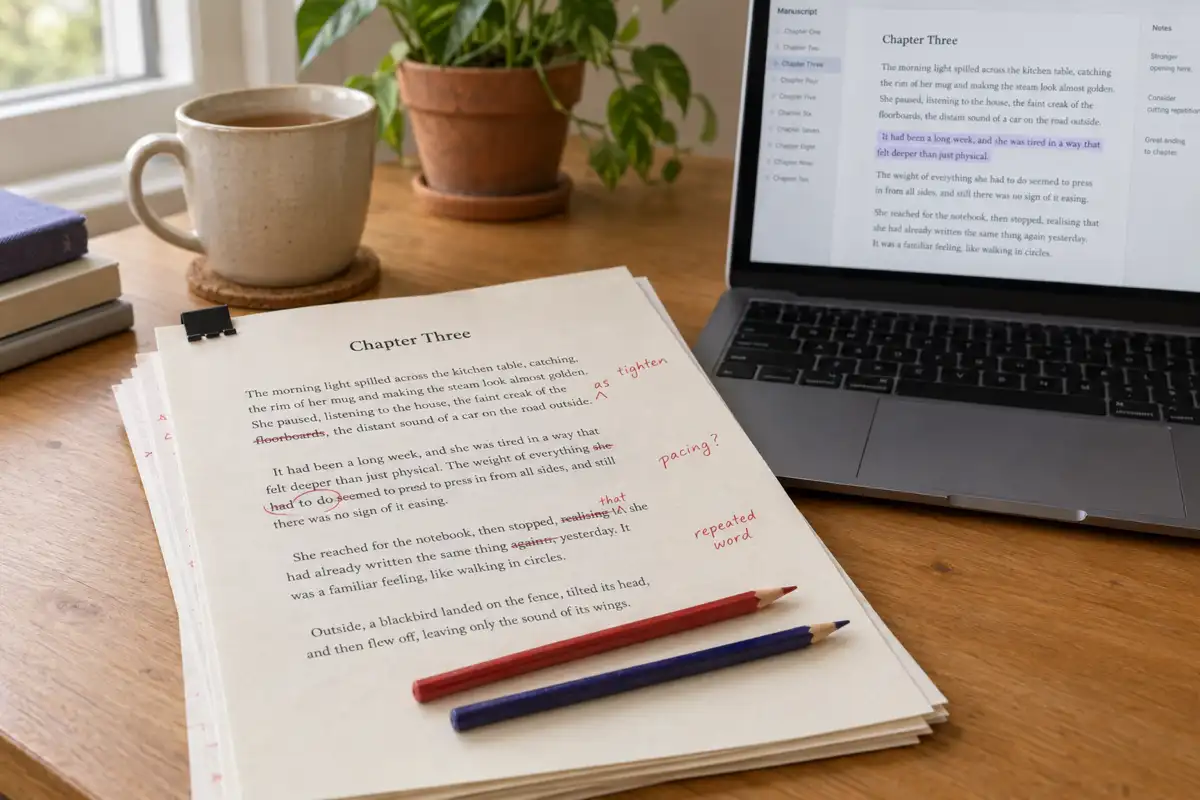
 Best AI for Editing a Book (2026): 9 Tools Compared by Editing Job
Which AI should edit your manuscript? We compare ProWritingAid, Grammarly, AutoCrit, Sudowrite, Novelcrafter, ChatGPT, Claude, the free checks in Google Docs and Word, and Inkfluence AI by the job each does best: grammar, line editing, story feedback, or editing and publishing in one place. Prices checked 2 October 2026.
 Self-Publishing
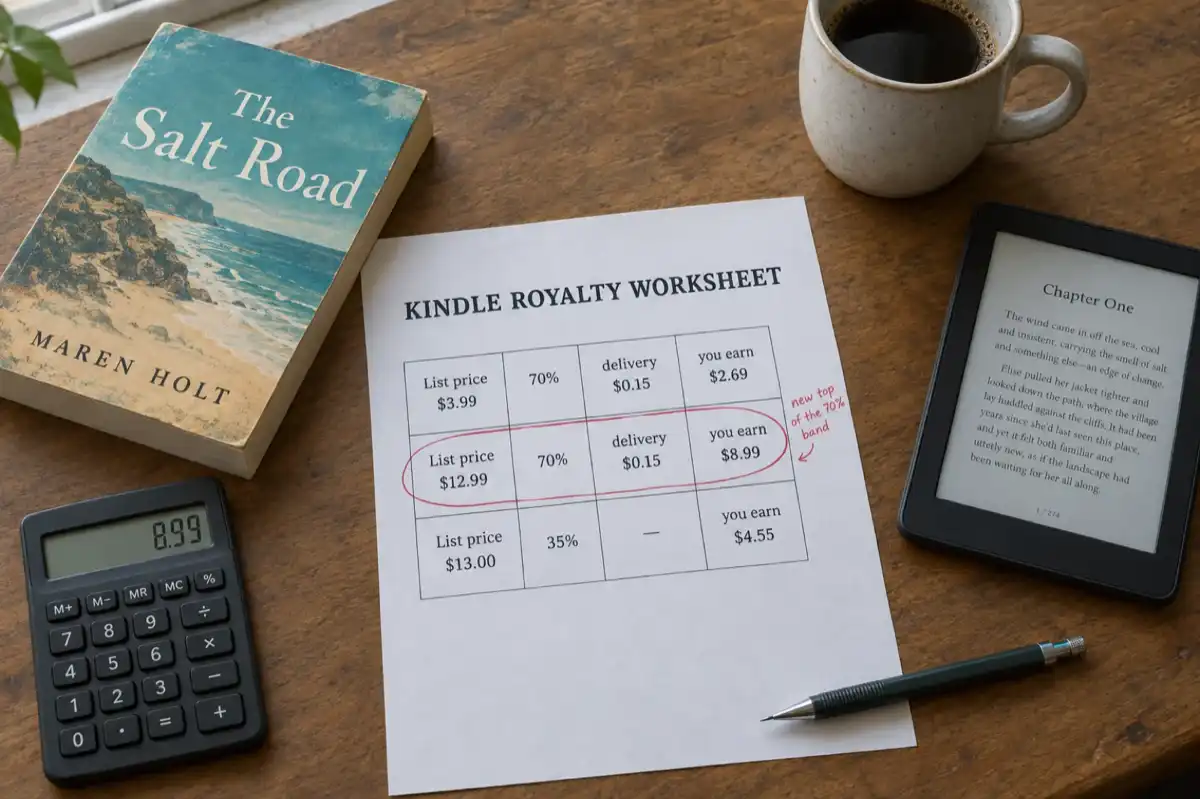
 KDP Royalties 2026: The 70% Band Now Runs to $12.99
Since 7 July 2026 Amazon KDP pays 70% on Kindle ebooks priced from $2.99 to $12.99, up from $9.99. What the change means for your price, how the delivery charge and the $13 cliff work, and what paperbacks, hardcovers and Kindle Unlimited pay, with worked examples.
 Guides
 Selling AI Coloring Books on Amazon KDP: The 2026 Rules, Specs, and Math
Are AI coloring books allowed on KDP? Yes, with disclosure. The part nobody covers: the AI workflow that passes review, style consistency across 30 pages, the interior specs that cause rejections, and the royalty ladder that decides your price.
Get ebook tips in your inbox
Join creators getting weekly strategies for writing, marketing, and selling ebooks.