
How to Publish a Poetry Book on Kindle in 2026: The Complete Indie Poet Guide
Poetry collections sell well on KDP when they are formatted properly. Most indie poets get tripped up on the same five things: stanza spacing collapses on reflow, long lines break unintentionally, the cover does not signal poetry, the description reads like fiction back-cover copy, and the categories miss the readers. Here is the complete workflow.

Quick Answer
To publish a poetry book on Kindle in 2026, the workflow is: write or import the manuscript, format it with poetry-specific styling (tight stanza spacing, hanging indent on long lines that wrap), design a typography-led cover at 1600x2560 px, write a description that reads like poetry not fiction, pick the correct KDP categories (Poetry > General plus one specific subcategory), and upload as both Kindle ebook and paperback. The full pipeline takes 1-2 hours per collection if you use an integrated tool like Inkfluence AI that handles formatting, cover, and EPUB export in one workflow. Standalone formatters (Vellum, Atticus) work but require manual setup of poetry-specific CSS that Inkfluence applies automatically.
Why this matters
The poetry book that succeeds on Kindle is the one that is formatted for poetry, not for prose.
Poetry collections do sell on Amazon KDP. The bestsellers list in Poetry > General consistently shows indie titles in the top 100, with collections like Rupi Kaur's Milk and Honey and Atticus's Love Her Wild demonstrating that poetry can scale into seven-figure sales as an indie book. What stops most first-time indie poets is not the writing. It is the technical layer underneath.
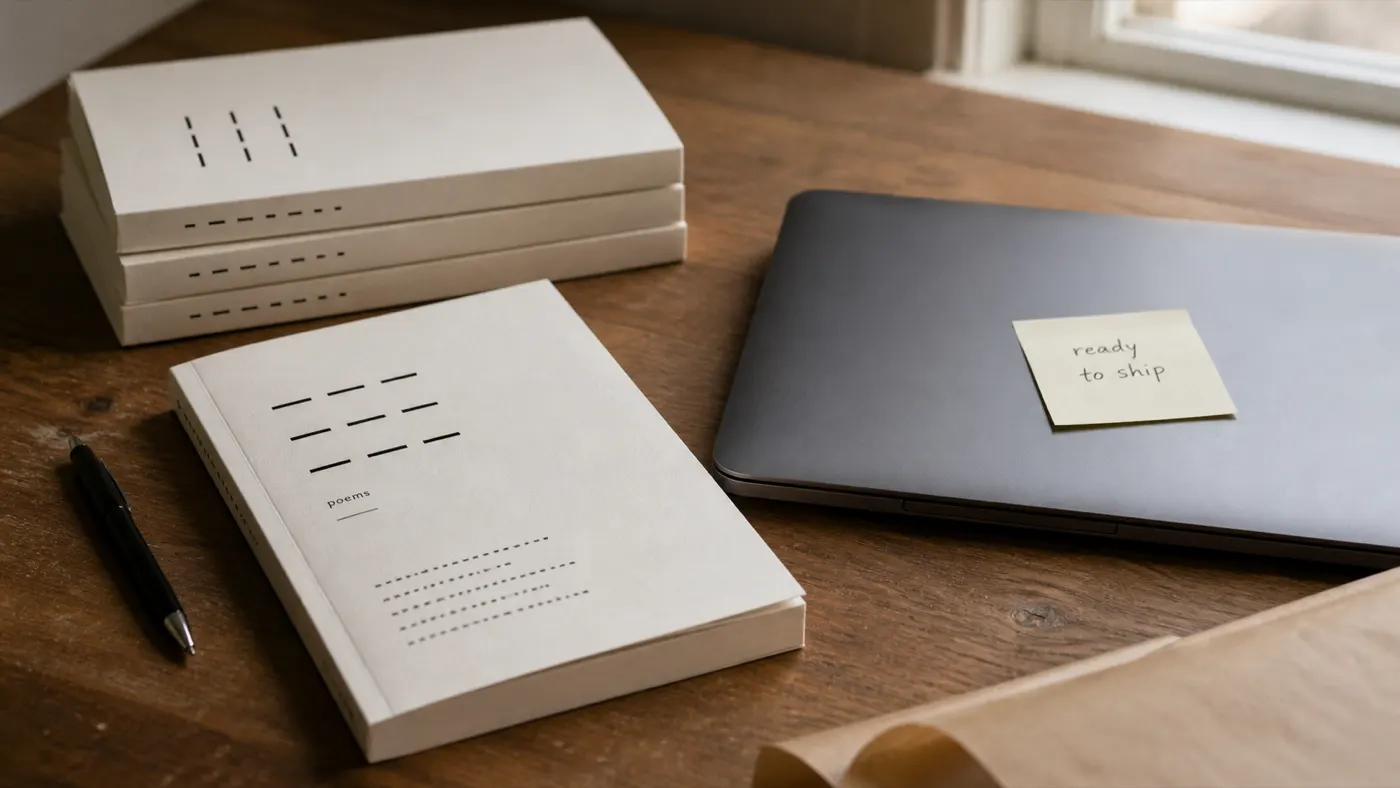
Most ebook formatting tools were built for novels. They render every line of poetry as its own paragraph with vertical margin between, which destroys the visual rhythm of the page. They wrap long lines at unintentional points and the wrapped portion runs left-aligned to the rest of the line, which makes wrapped lines indistinguishable from intentional ones. Stanza breaks collapse or expand unpredictably depending on the reader's font size. This guide covers the format, the categories, the description, the cover, and the pricing decisions that make a poetry collection actually look like poetry on Kindle.
Why poetry on Kindle is a real market
The traditional publishing wisdom for decades was that poetry does not sell. That collapsed in the late 2010s. Rupi Kaur's Milk and Honey sold 2.5 million copies independently before traditional publishing picked it up. Atticus, Lang Leav, R.M. Drake, Pierre Alex Jeanty, and Amanda Lovelace built six- and seven-figure indie careers on Instagram-driven poetry collections. The pattern that emerged: short, themed, visually clean collections at the $9.99-$14.99 paperback price point and $2.99-$6.99 Kindle ebook price point, marketed through Instagram, TikTok, and Goodreads.
The current market on KDP is split into roughly four zones. Confessional / lyrical Instagram-style collections dominate the bestseller lists with short free-verse poems, often paired with hand-drawn illustration. Themed micro-collections (grief, motherhood, divorce, recovery, faith) sell strongly as either lead magnets or paid ebooks at $2.99 to $4.99. Formal-form collections (sonnet sequences, haiku books, ghazals) have a smaller but loyal audience, particularly in the workshop and MFA-adjacent reader market. Spoken-word transcription collections have grown alongside the Audible audiobook expansion. All four zones are accessible to indie publishers; the production quality bar is real but not high.
Writing or importing your manuscript
Your manuscript can come from one of three places: writing it directly in a poetry-aware tool, importing a manuscript you already wrote elsewhere, or generating it with AI assistance and refining by hand. The destination is the same: a clean, well-organised set of chapters (one chapter per thematic section, each containing 4-8 poems) with consistent line breaks and stanza spacing.
If you already have a manuscript in DOCX, PDF, or EPUB, the Inkfluence import flow brings it in with chapter detection. If you are writing from scratch with AI assistance, the AI Poetry Book Writer handles the structure (5-7 thematic sections, mixed-form rotation, form-aware line counts so a sonnet really lands at 14 lines and a villanelle at 19). For pure-form-only collections, the haiku generator and sonnet generator hand off straight to the dashboard.
Whichever path you take, the output is the same: a chaptered manuscript in the editor where each poem has a title (one to four evocative words, no colons, no form labels), proper line breaks within each poem, and blank lines between stanzas.
The poetry-specific formatting that matters
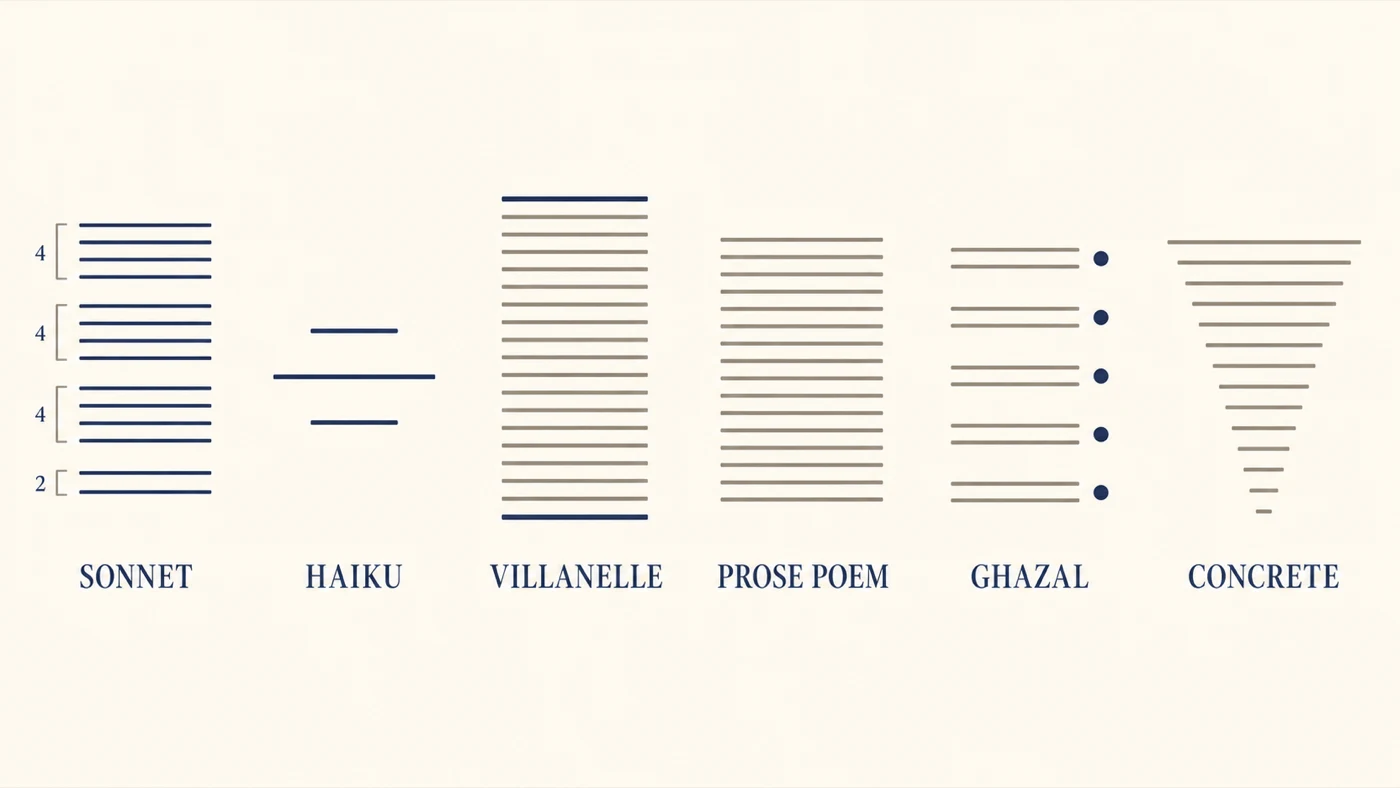
This is where most indie poetry collections lose readers. The same manuscript can look professional or amateur depending on how it is rendered to EPUB. The five formatting elements that matter:
| Element | What it should do | What goes wrong by default |
|---|---|---|
| Line spacing within a poem | Lines sit tight together, line-height around 1.5 | Each line gets paragraph margin (~14px above and below) and the poem fills the page with whitespace |
| Stanza spacing | Roughly 1em vertical space between stanzas | Inconsistent, sometimes too tight (no break), sometimes excessive (full paragraph break) |
| Long lines that wrap | Hanging indent: wrap is indented further than any intentional indent (text-indent: -1.5em, padding-left: 1.5em) | Wrap aligns flush left, indistinguishable from a new line of verse |
| Poem titles | Distinct from chapter headings, centered or with a clear smaller treatment | Same size as chapter title, reader cannot tell where one poem ends and another begins |
| Form-specific styling | Centered narrow column for haiku, indented closing couplet for sonnets, justified inline for prose poems, white-space: pre for concrete poems | Every form rendered identically, ignoring the visual conventions readers expect |
Where AI-native tools help. Inkfluence applies all five rules automatically when you generate or export poetry. The AI Poetry Book Writer tags each poem with its form (free verse, sonnet, haiku, villanelle, prose poem, list poem, concrete) and the renderer applies form-specific CSS automatically. The Standard Ebooks project documents the same conventions in their poetic productions style guide; we follow it precisely.
Where standalone formatters need work. Vellum and Atticus produce beautiful prose books but treat poetry as a special case requiring custom CSS. EPUBSecrets has a two-part guide to manually setting up poetry styles in those tools. It is doable, but it is roughly half a day of CSS work per book. Most indie poets either do this once and reuse a template, or use a poetry-aware tool from the start.
Cover design for poetry collections
Poetry covers do not look like fiction covers. The conventions are typography-led design with restrained palettes, generous whitespace, optional minimal illustration (line drawings, single-color silhouettes, abstract typography), and the poet's name displayed prominently because in poetry the author is part of the brand.
What works on Amazon's poetry charts in 2026: large serif title type, optional small subtitle, single illustrative element if any, two- or three-color palette (often cream + ink or muted accent), poet name in clean sans-serif at the bottom. What fails: stock photography of women looking wistfully at sunsets, fantasy-style illustration, multiple competing visual elements, busy backgrounds. A Reedsy survey of poetry cover designers found that the median paid poetry cover comes in at $400-$800 versus $930 for a fiction cover, reflecting the lower visual complexity but the high typographic standard.
The Inkfluence cover generator includes typography-led templates designed specifically for poetry collections. Output is at 1600x2560 px (the Kindle and KDP recommended ratio) with paperback wrap-around variants generated alongside the ebook cover.
Writing a poetry book description
A poetry book description is not a fiction back-cover blurb. It does not summarise a plot, introduce a protagonist, or set up stakes. It does three things: name the theme, name the audience, and offer a representative sample.
The structural template most indie poetry bestsellers use:
- Opening line: a short evocative statement of theme. "A collection of poems on the year after my mother died." "Forty-two haiku written from the kitchen window across one winter." "Sonnets for the people I cannot stop thinking about."
- Middle paragraph: who the book is for and what it explores, two or three sentences max.
- Sample poem: a representative short poem (4-12 lines) reproduced in the description. This is the single highest-converting element. Readers preview poetry by reading poetry, not by reading marketing copy about poetry.
- Optional closing: one line about the poet, the form, or the occasion that produced the collection.
Avoid superlatives. Avoid the word "stunning" (poetry buyers are tired of it). Avoid comparisons to better-known poets unless your style is a genuine fit. The sample poem does the heavy lifting; the description around it is just framing.
Picking KDP categories that find readers
KDP lets you pick three categories. For poetry, the right structure is one broad category to capture browse traffic and two specific subcategories to compete for top-of-list placement in narrower niches.
| Slot | Pick | Why |
|---|---|---|
| 1 (broad) | Poetry > Subjects & Themes (or Poetry > Anthologies) | Captures readers browsing the broader poetry surface |
| 2 (theme-specific) | e.g. Poetry > Subjects > Death & Grief, Poetry > Subjects > Love, Poetry > Subjects > Religious & Inspirational | Easier to rank top-10 in a narrower category |
| 3 (form-specific or audience) | e.g. Poetry > Forms > Haiku, Poetry > American > Women Authors, Poetry > LGBT | Reaches specific reader communities looking for that form or perspective |
If your collection genuinely fits a tighter category, use it. Bestseller-rank arithmetic favors smaller categories: ranking #5 in "Poetry > Forms > Haiku" sells more copies than ranking #500 in "Poetry > General" because the smaller category gets featured on more discovery surfaces.
Pricing your poetry collection
Indie poetry pricing on Kindle in 2026 sits in a tighter band than fiction. The data from Kindlepreneur's 2026 indie pricing survey:
- $0.99: launch promotion or perma-free as a lead magnet. Royalty rate drops to 35% so net per sale is ~$0.35. Use sparingly.
- $2.99 to $4.99: the sweet spot for indie poetry collections. Qualifies for the 70% royalty rate (so net per sale is $2.10 to $3.50). Most successful indie poetry sits here.
- $5.99 to $9.99: full-length collection (60+ pages), name-recognition poet, or themed collection with strong audience targeting. Still qualifies for 70%.
- $10+: only justified for very long collections, anthologies, or bundled multi-book editions. Royalty drops back to 35% above $9.99 in some markets.
For paperback, the pricing math is different, KDP takes a per-copy print cost out before royalty, so a 80-page paperback at $9.99 typically nets $1.50-$2.50 to the author depending on trim size. Use the royalty calculator to model your specific page count, trim, and price.
Adding a KDP paperback
Most indie poetry collections sell more paperback than ebook. The reason is gift purchasing: poetry is a frequent gift, gift-buyers strongly prefer physical books, and paperback poetry collections at $9.99-$14.99 are a sweet-spot impulse buy on Amazon. Ship without a paperback edition and you leave roughly 60-70% of likely revenue on the table.
The KDP paperback workflow takes the same manuscript file (with a different export profile) and a paperback-format cover (the wrap-around version with spine and back). Standard trim sizes for poetry: 5 x 8 inches (most common, balanced page count for a 60-100 poem collection), 5.25 x 8 inches (slightly larger, suits longer prose poems), and 5.5 x 8.5 inches (large-format, suits illustrated collections). Margins of 0.5 inch on the outside edges with a 0.75 inch inside (gutter) margin is the professional default, and KDP itself requires at least a 0.375 inch gutter even on short collections.
Inkfluence exports both Kindle EPUB and KDP paperback PDF in the same dialog. The EPUB hits the Kindle reflowable format spec, the PDF hits the paperback print-ready spec. No manual setup of two output flows.
The audiobook question
Audiobook poetry is an underserved segment on Audible. Most indie poetry collections never produce an audio version, which means the ones that do face less competition for listener attention. Distribution options:
- ACX (Audible): the largest audiobook retailer, but it officially requires human narration - AI narration is against ACX terms (enforcement is inconsistent, so some titles slip through, with takedown risk). If you do prepare an ACX-spec file, ACX requires 44.1 kHz, 192 kbps CBR, mono, RMS between -23 and -18 dBFS, peak no higher than -3 dBFS, one MP3 per chapter. See our complete ACX guide.
- Findaway Voices: distributes to libraries (Hoopla, OverDrive), Apple Books, Spotify, Google Play, Kobo. Non-exclusive, so you can use the same audio files alongside ACX.
- Direct on your own site / Patreon: lower friction, lower volume, higher per-listener revenue. Works particularly well for spoken-word or coaching-adjacent poetry.
Inkfluence generates ACX-spec audiobook files automatically with 40 AI narrator voices across 14 languages to pick from and sample preview before generation. The same files work for Findaway Voices and direct distribution. For verse-specific pacing or longer stanza pauses, download the per-chapter MP3 and adjust in a free editor like Audacity before submitting.
Five mistakes that kill indie poetry sales
- Treating poetry like fiction. Fiction-style covers, fiction-style descriptions, fiction-style categories. Readers browsing poetry filter on visual signals; if the cover and description signal "novel", browse traffic skips you.
- Skipping the paperback. Most poetry sales are gifts and most gifts are paperback. Ebook-only collections leave the majority of revenue uncaptured.
- Pricing the ebook above $4.99 without a name. Indie poets without name recognition price their first three collections at $2.99-$3.99 to build a backlist. Premium pricing comes after audience.
- One poem per chapter, with chapter breaks every page. Reflowable Kindle navigation breaks down. Group poems into 4-8 per thematic section, one section per chapter.
- No sample poem in the description. Poetry buyers preview poetry by reading poetry. The description is just framing for the sample. Always include one.
FAQ
Do indie poetry collections actually sell on Kindle?
Yes. The Poetry > General bestseller list on Amazon consistently shows indie titles in the top 100. Top sellers in the indie poetry niche routinely earn $10,000-$200,000 per year per book. The breakout titles (Rupi Kaur, Atticus, Pierre Alex Jeanty) hit seven figures. The market exists, the production bar is what separates the books that earn from the books that do not.
Can I publish AI-generated or AI-assisted poetry on KDP?
Yes. KDP requires disclosure of AI-generated content during the upload form (a single checkbox). AI-assisted books where the human author edits, arranges, and curates the work are widely accepted and sell normally. Many of the indie poetry collections in the bestseller lists today are AI-assisted; the visible quality difference comes from human editing and arrangement, not from whether the first draft was AI-generated.
What is the minimum length for a Kindle poetry collection?
No formal minimum, but the practical floor is roughly 30 poems for a paid Kindle collection (~30-50 pages). Below that, readers feel cheated regardless of price. Lead magnet collections can run shorter (15-25 poems) because the value exchange is different. Bestselling indie poetry collections typically run 60-120 poems across 80-150 pages.
Do I need an ISBN for a Kindle poetry book?
No for the Kindle ebook (KDP assigns a free ASIN). For the paperback, KDP can assign you a free ISBN that lists Amazon as the publisher, or you can buy your own ISBN ($125 each from Bowker in the US, free in Canada from Library and Archives Canada) which lists you as the publisher. For most indie poets the free KDP ISBN is fine. Self-purchase only matters if you plan to distribute outside Amazon (IngramSpark for bookstore distribution, for example).
How long does the whole process take?
From finished manuscript to live on Amazon: roughly 6-12 hours for a first book if you do it manually with separate tools, or 1-2 hours with an integrated tool that handles formatting, cover, and exports together. KDP's review queue takes 24-72 hours after upload before the book goes live. Audiobook adds another 10-14 days for ACX review.
What about KDP Select / Kindle Unlimited?
For poetry, KDP Select (which requires Amazon ebook exclusivity) is usually the right call. Poetry collections benefit heavily from the Kindle Unlimited page-read royalties because KU subscribers browse poetry casually and short-form content racks up reads. The 90-day exclusivity period is renewable. The trade-off is no Apple Books, Google Play Books, or Kobo distribution, which most indie poets find acceptable since 90%+ of poetry ebook revenue comes from Amazon anyway.
How do I market a poetry book?
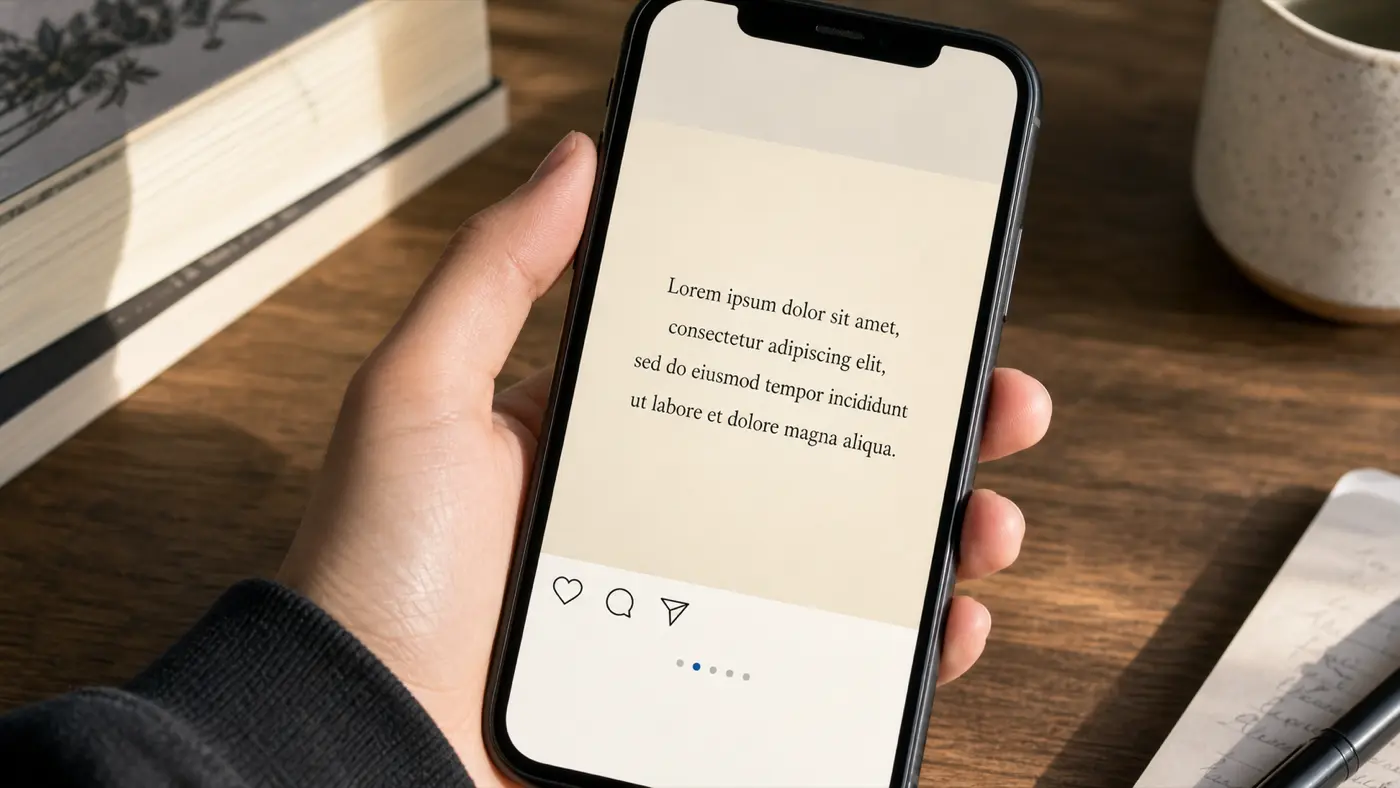
Three main channels for indie poetry in 2026: Instagram (poem-image carousels, the format that built Rupi Kaur and Atticus), TikTok (BookTok-adjacent #poetrytok hashtag, short videos reading single poems), and Goodreads giveaways (especially in the first 90 days post-launch). Email list giveaways of a short companion chapbook also convert well. Paid Amazon ads work for poetry but require careful targeting; the ROI is lower than for fiction because poetry buyers are price-sensitive.
Can I publish a poetry chapbook (under 30 pages) on Kindle?
Yes, but the economics are tougher. Below 30 pages, paperback printing margins shrink (KDP minimums apply) and ebook readers expect more value at any paid price point. Most successful chapbook publishers either use the chapbook as a free or $0.99 lead magnet to drive email list signups, or bundle three chapbooks into a "collected" Kindle ebook at the $4.99-$6.99 price point.
Should I include illustrations?
Optional. Illustrated poetry collections sell well in the visual-Instagram-poetry segment (Atticus, Lang Leav style), but require either your own illustration skill or a hired illustrator at $30-$80 per illustration. For most first collections, typography-only design on the cover plus clean text in the interior outperforms cluttered illustration. Add visuals on book two if your audience asks for them.
Ready to publish your poetry collection?
The complete pipeline (writing, formatting, cover, KDP-ready PDF and EPUB, optional ACX audiobook) lives in the AI Poetry Book Writer. Free to start, no credit card. Most indie poets get from idea to KDP upload in under an hour the first time, and 20-30 minutes for subsequent collections.
If you already have a manuscript, the import flow accepts DOCX, PDF, and EPUB and detects chapters automatically. From there it is the same workflow.
Related resources
AI Poetry Book Writer
The full collection generator with cover and exports.
AI Poetry Generator
Free inline poem generator with form and theme picker.
AI Haiku Generator
Free 5-7-5 haiku in any theme.
AI Sonnet Generator
Free 14-line Shakespearean sonnets, ABAB CDCD EFEF GG.
How to Create an ACX Audiobook
Full Audible submission spec and the streamlined production path.
The Real Cost of Publishing
Editing, cover, audiobook, ISBN: every line item with sources.
For poets
Persona page covering the full indie-poet workflow.
Royalty Calculator
KDP paperback and ebook earnings by trim size and price.

Founder, Inkfluence AI
Sam is the founder of Inkfluence AI. He built the platform to make book creation accessible to everyone - from first-time authors to seasoned publishers.
Helpful links
Ready to Create Your Own Ebook?
Start writing with AI-powered tools, professional templates, and multi-format export.
Get Started FreeRelated Articles
 Guides
 Selling AI Coloring Books on Amazon KDP: The 2026 Rules, Specs, and Math
Are AI coloring books allowed on KDP? Yes, with disclosure. The part nobody covers: the AI workflow that passes review, style consistency across 30 pages, the interior specs that cause rejections, and the royalty ladder that decides your price.
 Guides
 How to Make an Adult Coloring Book in 2026: From Idea to Printed Pages
The modern walkthrough: what makes line work read as "adult", the three ways to create pages (draw, convert, generate), how to assemble a real book instead of a stack of pages, and the fork between KDP paperbacks, Etsy printables, and printing at home.
 Guides
 Coloring Book Niches for 2026: Where Low Competition Meets Real Buyers
A niche framework instead of a niche list: how complexity tiers map to price points, why the senior shelf is underserved, the seasonal calendar that decides your publish dates, and how to validate before you draw a single page.
Get ebook tips in your inbox
Join creators getting weekly strategies for writing, marketing, and selling ebooks.