
Generate haiku in proper 5-7-5 structure
Pick a theme below for an instant haiku. The structure is real (5 syllables, then 7, then 5), the imagery is original, and the form rules are enforced. Unlimited regenerations.
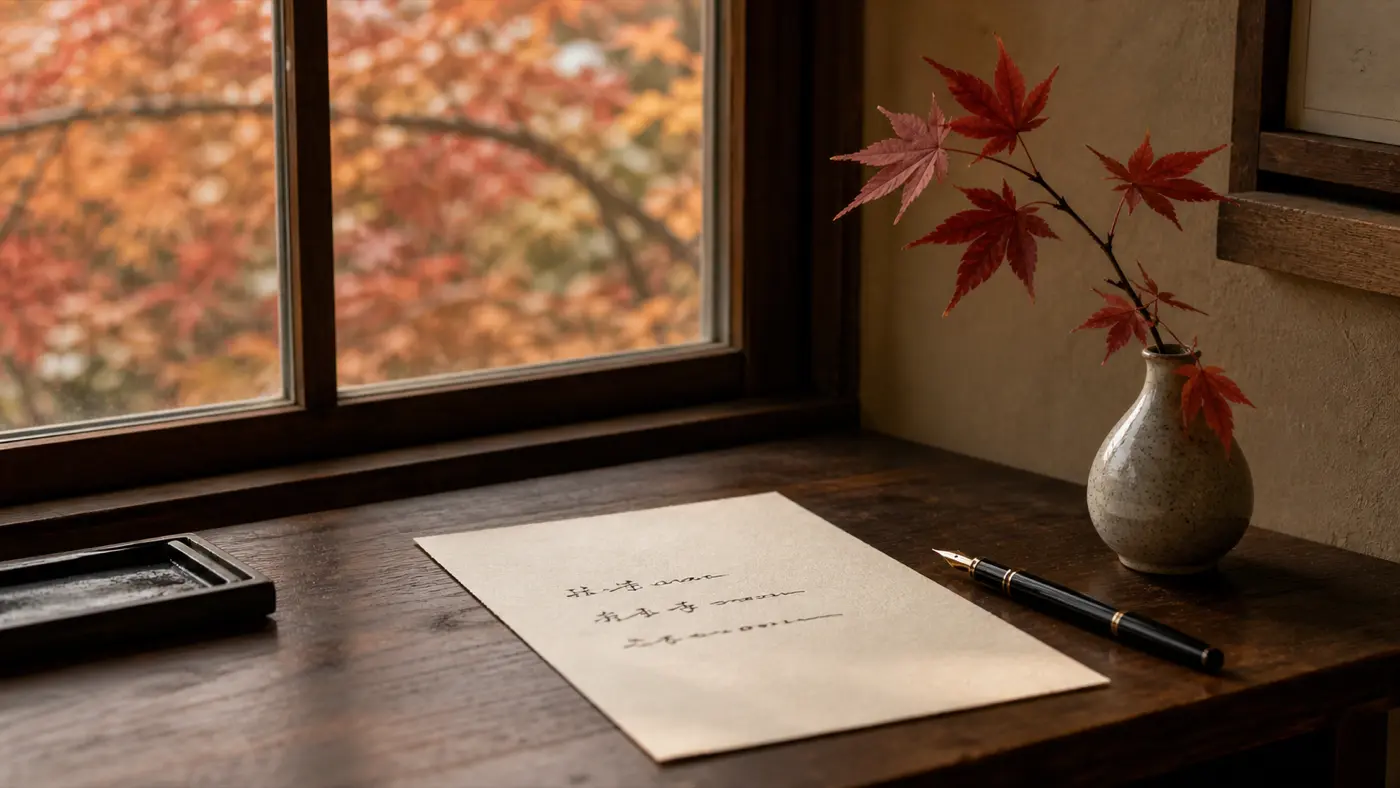
Want a full haiku collection with cover and audiobook?
Build the full collection →What makes a haiku a haiku
5-7-5 syllables
Three lines: five, seven, five. Tight constraint, every syllable carries weight.
A specific image
Concrete and observed. A specific moment, not a generic feeling. Original detail beats abstraction.
A turn (kireji)
A pause or pivot, usually after the first or second line, where one image meets another.
A two-minute history of haiku
Haiku began in seventeenth-century Japan as the opening verse (hokku) of a longer collaborative poem called renga. By the nineteenth century, masters like Bashō, Buson, and Issa had elevated the standalone hokku into a serious art form, and Masaoka Shiki formalised it as haiku at the end of that century. The form crossed into English-language poetry in the early twentieth century via Imagists like Ezra Pound and has since become the most-taught and most-attempted poetic form on earth.
Modern English haiku does not always follow strict 5-7-5 syllable structure, since Japanese on (sound units) and English syllables are not equivalent. Many published haiku poets favour a "short, longer, short" line shape that captures the spirit of the form without forcing the exact count. The inline tool above produces 5-7-5 because that's what most readers expect from a haiku in 2026. The dashboard generator can do either on request.
What survives across all variations is the same set of conventions: a specific concrete image, a moment in observed time, a turn or pivot between the lines (the kireji), and (in classical haiku) a seasonal reference (the kigo). Modern readers care most about the image and the turn. The seasonal reference is optional in contemporary haiku.
Where people use the AI haiku generator
Mindfulness and meditation books
Daily-haiku books for meditation apps, retreats, and mindfulness courses. The form's brevity matches the practice.
Classroom and curriculum
English teachers use generated haiku as form-study examples. Students compare AI haiku to Bashō and write their own.
Greeting cards and prints
Etsy sellers and small print-on-demand brands feature original haiku on cards, prints, and journals.
Wedding ceremonies
Couples use a haiku as a ceremony reading or printed on a programme. Short enough to read aloud, dense enough to land.
Bereavement and condolence
A short haiku in a card carries weight that prose often can't. The Grief theme is the most-used on this page.
Indie chapbook poets
A 30-50 page haiku chapbook is one of the easiest publishable poetry formats. Generate, refine, ship to KDP.
Haiku masters worth reading
If the form interests you, these four poets are the canonical entry points.
Matsuo Bashō (1644-1694)
The most influential haiku poet, known for the precise observed image and the turn between stillness and motion. Start with The Narrow Road to the Deep North.
Yosa Buson (1716-1784)
Painter as well as poet, known for visual composition and colour. His haiku read like ink-wash scenes.
Kobayashi Issa (1763-1828)
Warm, intimate, often funny. Wrote about animals, children, the small life. Most accessible to modern readers.
Masaoka Shiki (1867-1902)
Reformer who renamed hokku to haiku. Pushed the form toward direct observation (shasei) rather than literary allusion.
Why haiku is the right form for the 2026 reader
Of all the inherited poetic forms, haiku is the one that has best survived the transition from the page to the phone. Three lines fit a single screen without scrolling. The structural compression rewards a single image rather than an extended argument. The form's emphasis on observed specificity (a kettle, a frost, a back step) reads as truthful in a media environment increasingly saturated with abstract claims and stock imagery. The haiku is short enough to read in under ten seconds and dense enough to remember for weeks.
This is why haiku has quietly become one of the strongest-performing indie poetry segments on KDP. Mindfulness apps commission haiku for daily prompts. Greeting card companies feature original haiku on cards. Wedding officiants read haiku during ceremonies. Teachers assign haiku for end-of-term reflection because the form constrains rambling without demanding extensive teaching of meter. Bereavement collections lean on haiku for the same reason: the form holds a small specific image and resists the urge to explain it away.
The haiku has also been the most-AI-friendly form to model. Three lines is a short generation horizon. The 5-7-5 syllable structure is enforceable as a counting rule. The kireji (cutting word, the small turn between images) is something the model can be prompted to deliver reliably. The kigo (seasonal reference) is a tagging exercise. The result is that AI haiku generation in 2026 hits publishable quality more consistently than AI generation of any other form, because the form's constraints play to the model's strengths and limit the surface area where the model can drift.
What this means for an indie poet today is that a 50-poem haiku chapbook is one of the easiest publishable poetry projects you can ship. Generate the sequences in an afternoon, edit by hand for the imagery and specificity, design a typography-led cover, and you have a 60-page paperback ready for KDP within a week. The audience is real, the form is approachable, and the production cost is approximately zero.
Free for the inline tool, optional plans for full collections
- Unlimited haiku here
- 5 chapters/month for full books
- PDF export
- Cover designer
- 35 chapters/month for full books
- EPUB and DOCX export
- 15 audiobook chapters/month
- Improve on selection
- Unlimited chapters
- 30 audiobook chapters/month
- Priority generation queue
- ACX-spec audiobook bundle
Common mistakes when writing haiku
Counting syllables instead of feeling them
5-7-5 is the spec but the music is the point. A haiku that hits the syllable count but reads with awkward rhythm fails the form. Read it aloud. If the rhythm is wrong, rewrite it.
Abstraction instead of observation
"Sadness fills my heart, the world is grey, I cannot bear it" is not a haiku. "Empty winter coat on the hook by the front door, still keeps her shape, still" is. The form lives on specific observed images, not on stated feelings.
No turn between the images
A haiku where all three lines describe the same continuous moment lacks the kireji that makes the form work. The first or second line should set up; the next line should pivot, juxtapose, or land.
Single haiku instead of a sequence
A standalone haiku is a moment. A sequence of 3 to 7 haiku linked by image or scene is a poem. Most published haiku collections are sequences. The dashboard generator builds in sequences by default.
Sources and references
- Form definitions and history: Poetry Foundation glossary entry on haiku; The Haiku Foundation; The New Princeton Encyclopedia of Poetry and Poetics, Princeton University Press.
- Bashō, Buson, Issa, Shiki biography and translation: Robert Hass, The Essential Haiku (Ecco Press, 1994).
- Modern English haiku conventions: Haiku Society of America guidance; Modern Haiku magazine editorial standards.
- KDP poetry chapbook market: Direct observation of Kindle Poetry bestseller list, May 2026.
- Audible AI-narration disclosure: ACX content guidelines, AI-narrated content disclosure section.