
Can AI Write a Novel? What Actually Works in 2026
An honest look at what AI can and cannot do when writing a full-length novel. We break down where AI excels, where it falls short, and the realistic workflow that produces publishable fiction in 2026.
Quick Answer
Yes, AI can write a novel - but with a major caveat. AI produces the best fiction when you treat it as a co-writer, not a replacement author. In 2026, dedicated AI novel writing tools can generate structured outlines, draft full chapters with consistent characters, and maintain plot continuity across 50,000+ words. The output needs human editing for voice, emotional depth, and originality. Authors who use AI for structure and speed, then invest editing time into personal touches, are publishing novels that sell. Authors who click "generate" and publish raw AI output are not.
Why This Matters
Novel writing is the hardest test for AI. Here is what is actually possible.
Writing a 200-word product description is easy for AI. Writing a 70,000-word novel with consistent characters, escalating tension, satisfying arcs, and a distinctive voice is a completely different challenge. Most "can AI write a book?" articles are written by people who have never actually tried. This one is based on thousands of novels generated through our platform.
We will be honest about the limitations. AI-written fiction is not going to win the Booker Prize. But it is good enough to entertain readers, build an audience, and generate income on Amazon KDP - if the author does their part.
The question "can AI write a novel?" has a simple answer (yes) and a complicated one (it depends on what you mean by "write" and what you consider a "novel"). This guide addresses both.
We have watched authors generate everything from 20,000-word mystery novellas to 80,000-word epic fantasy series on Inkfluence AI. Some of those books are genuinely good. Others are obviously machine-generated. The difference is always the author's involvement - not the AI's capability.
What AI Can Actually Do (Well)
Here is what AI handles competently for novel writing in 2026:
Structured outlines
AI generates chapter-by-chapter outlines with plot progression, character arcs, and pacing beats. You provide the premise and genre, the AI maps out a complete story structure in minutes.
First draft chapters
Full chapter drafts with dialogue, scene setting, action, and internal monologue. Quality varies by genre but is consistently usable as a starting point for editing.
Character consistency
Dedicated tools maintain character names, descriptions, relationships, and speech patterns across chapters. Characters introduced in chapter 2 are referenced correctly in chapter 15.
Genre conventions
The AI understands that a romance novel needs a meet-cute and an HEA, a thriller needs escalating stakes, and a cozy mystery needs a quirky sidekick.
Dialogue
AI produces natural-sounding dialogue with distinct voices for different characters. It handles banter, conflict, and exposition through conversation reasonably well.
World building
Descriptions of settings, magic systems, technology, social structures, and geography. Particularly strong for fantasy and sci-fi where the author provides foundational rules.
What AI Cannot Do (Yet)
Being honest here matters more than hype. These are the areas where AI still needs significant human input:
- Genuine emotional depth. AI can describe sadness. It struggles to make you feel sad. The moments that make readers cry or laugh out loud almost always come from human editing - adding a specific sensory detail, a personal memory, an unexpected reaction.
- Truly surprising plot twists. AI tends toward predictable story beats because it has been trained on millions of existing stories. A clever twist that subverts expectations usually needs to come from the human author.
- Distinctive prose style. AI writes competent prose. It does not write like Cormac McCarthy or Donna Tartt or Terry Pratchett. If you want a recognizable voice, you need to edit that in.
- Subtext and thematic layering. The gap between "what the character says" and "what the character means" is hard for AI. Irony, unreliable narration, and slow-burn character development require careful editing.
- Very long-range callbacks. Foreshadowing planted in chapter 3 that pays off in chapter 28 requires deliberate planning. AI handles short-range continuity well but long-range setups need the author to orchestrate. On Inkfluence AI a running record of who knows what and what has already happened carries facts forward from chapter to chapter, but a deliberate setup and payoff still belongs in your outline.
None of these limitations are deal-breakers. They are just the areas where you, the author, add the most value. Think of it like this: AI handles the 70% that is craft (structure, pacing, genre conventions). You handle the 30% that is art (voice, emotion, surprise).
Which Genres Work Best with AI
Not all fiction is equally suited to AI assistance. Here is an honest breakdown:
| Genre | AI Suitability | Why |
|---|---|---|
| Romance | Excellent | Clear structure (meet, conflict, resolution, HEA). Strong genre conventions. AI handles tropes well. Readers consume fast - velocity matters. |
| Mystery / Thriller | Excellent | Plot-driven. Clear escalation structure. AI is strong at clue distribution and red herrings. Pacing comes naturally. |
| Fantasy / Sci-Fi | Good | World building is strong. Magic systems and technology are well-handled. Needs editing for distinctive prose and subversion of tropes. |
| True Crime | Good | Narrative structure is formula-friendly. You supply the facts and research, AI handles the dramatization and pacing. |
| Children's Fiction | Good | Shorter format (5,000-20,000 words). Clear moral lessons and simple character arcs. AI handles age-appropriate language well. |
| Literary Fiction | Fair | Relies heavily on unique voice, subtext, and emotional nuance. AI can produce a structural draft but the editing pass is substantial. |
| Experimental / Avant-Garde | Poor | AI is trained on patterns. The whole point of experimental fiction is to break them. Use AI for research and brainstorming, not drafting. |
The pattern is clear: the more a genre relies on structure and convention, the better AI handles it. The more it relies on unique voice and rule-breaking, the more human input is needed.
The Realistic AI Novel Workflow
Here is the workflow that produces good results, step by step. This is not theoretical - it is what we see working across thousands of novels created through Inkfluence AI.
Start with your premise and characters (30 minutes)
Write 2-3 sentences describing your story idea. Name your main characters and give each one a brief description - personality, motivation, flaw. This is the foundation everything else builds on. The more specific you are here, the better every downstream chapter will be.
Generate and refine the outline (1-2 hours)
Let the AI create a chapter-by-chapter outline. Review it carefully. Move chapters around. Cut subplots that do not serve the main arc. Add specific scenes you know you want. This is the most important step - a good outline produces a good novel. A vague outline produces a meandering one.
Generate chapters (30-60 minutes)
The AI writes each chapter following your outline, maintaining character consistency and plot continuity. Read each chapter as it comes in. Note anything that feels off - you will fix it in editing, but awareness of weak spots while generating is valuable.
Edit for voice and emotion (5-15 hours)
This is where the novel becomes yours. Replace generic descriptions with specific ones. Add sensory details. Rewrite emotional beats until they hit. Cut anything that feels like filler. Add the personal touches, humor, or darkness that only you can bring. For a detailed editing framework, see our guide to co-writing with AI.
Cover, format, publish (1-2 hours)
Design a professional cover, export to EPUB or PDF, and upload to your publishing platform. If your novel is on the longer side, consider creating an audiobook version as well - it opens up a second revenue stream with minimal extra effort.
Total realistic timeline: 1-3 weeks part-time. Compare that to the 6-18 months most novelists spend on a first draft alone.
How Good Is AI Fiction, Really?
Let us be direct. Here is where AI fiction sits on the quality spectrum in 2026:
Raw AI output (no editing)
Readable but clearly formulaic. Characters feel generic. Emotional moments fall flat. Prose is competent but bland. Not publishable as-is unless your standards are very low.
AI + light editing (2-3 hours)
Fixes the obvious issues. Characters are more consistent. Plot holes are patched. Still reads like "good AI" to experienced readers, but satisfying enough for casual genre fiction readers.
AI + thorough editing (10-20 hours)
This is where the magic happens. The author has rewritten weak scenes, added personal touches, refined dialogue, and injected genuine emotion. Indistinguishable from a traditionally-written genre novel. This is the standard most successful AI-assisted authors aim for.
The ceiling
You are unlikely to produce the next great American novel this way. But you can absolutely produce entertaining, commercially successful genre fiction that builds an audience and generates real income. That is what most novelists are trying to do anyway.
Publishing and Selling AI-Assisted Novels
The commercial side matters. Here is the reality of selling AI-assisted fiction in 2026:
- Amazon KDP requires AI disclosure during upload. This does not affect visibility, ranking, or sales. Thousands of AI-assisted novels sell on KDP every day. For a detailed walkthrough, see our guide to publishing AI books on KDP.
- Pricing follows the same rules as any self-published fiction. Most AI-assisted novelists price at $2.99-$4.99 for the 70% royalty tier. See our pricing guide for strategies.
- Series sell better than standalones. The speed advantage of AI writing means you can publish a 3-5 book series in the time it would traditionally take to write one novel. Series readers are loyal and buy every installment.
- Covers matter enormously. A professional cover is the single biggest factor in click-through rate on Amazon. Use a dedicated AI cover generator or hire a designer.
- Reader reviews focus on story, not process. Readers rate books on entertainment value. "Was this AI-written?" questions are far less common than "is this a good story?" A well-edited AI novel gets the same reviews as a traditionally-written one of equal quality.
ChatGPT vs Dedicated Novel Writing Tools
Many aspiring novelists start with ChatGPT because it is free and familiar. Here is why dedicated tools produce better novels:
| Feature | ChatGPT | Inkfluence AI |
|---|---|---|
| Chapter continuity | Loses context after a few chapters | Automatic continuity across all chapters |
| Structured outline | Manual prompting required | Built-in with genre-specific structure |
| Character tracking | No persistent memory | Characters maintained across chapters |
| Export to EPUB / PDF | Copy-paste to another tool | One-click EPUB, PDF, DOCX |
| Cover design | Not available | Built-in designer with AI generation |
| Genre-specific writing | Generic unless heavily prompted | 20+ fiction genres with tailored style |
| Audiobook | Not available | Built-in AI narration |
| Rich text editor | Plain text chat only | Full editor with formatting, rewrite, expand |
For a deeper comparison, read our full breakdown of AI tools for authors vs ChatGPT. If you use Claude instead, our guide to the best Claude model for writing covers which model each plan includes.
Ready to write your novel?
Start with 5 free chapters. No credit card needed. See how AI handles your genre, your characters, and your story.
Start Writing FreeFrequently Asked Questions
Can AI write a full-length novel from start to finish?
How long does it take to write a novel with AI?
Is it legal to sell AI-written novels?
Will readers know my novel was written with AI?
Which AI tool is best for writing novels?
Can AI write a novel series with consistent characters?
How much money can you make selling AI-written novels?
Is AI-written fiction lower quality than human-written fiction?
What to Read Next
Best AI Models for Novel Writing 2026 (Head-to-Head)
GPT-5, Claude Opus 4.7, Sonnet 4.5, Gemini 2.5 Pro, GPT-4o tested across 5 genres with real prose, plot, and continuity scores.
Best Practices for Co-Writing a Book with AI
The complete editing framework for turning AI drafts into polished, personal books.
How to Avoid Generic AI Book Output
Practical techniques for making AI-generated writing sound unique and personal.
Best AI for Novel Continuity Checking
5 tools compared for keeping characters, plots, and timelines consistent across your novel.
AI Story Writing Tools Comparison
Side-by-side comparison of the best AI tools for fiction writing in 2026.
How to Evaluate AI Novel-Writing Quality
7 quality dimensions readers actually feel, plus a 30-minute test recipe.
How to Write a Memoir with AI in 2026
7-step practical guide for memoirs and family histories, including how the system handles real names and famous-person mentions.

Founder, Inkfluence AI
Sam is the founder of Inkfluence AI. He built the platform to make book creation accessible to everyone - from first-time authors to seasoned publishers.
Helpful links
Ready to Create Your Own Ebook?
Start writing with AI-powered tools, professional templates, and multi-format export.
Get Started FreeRelated Articles
 Publishing
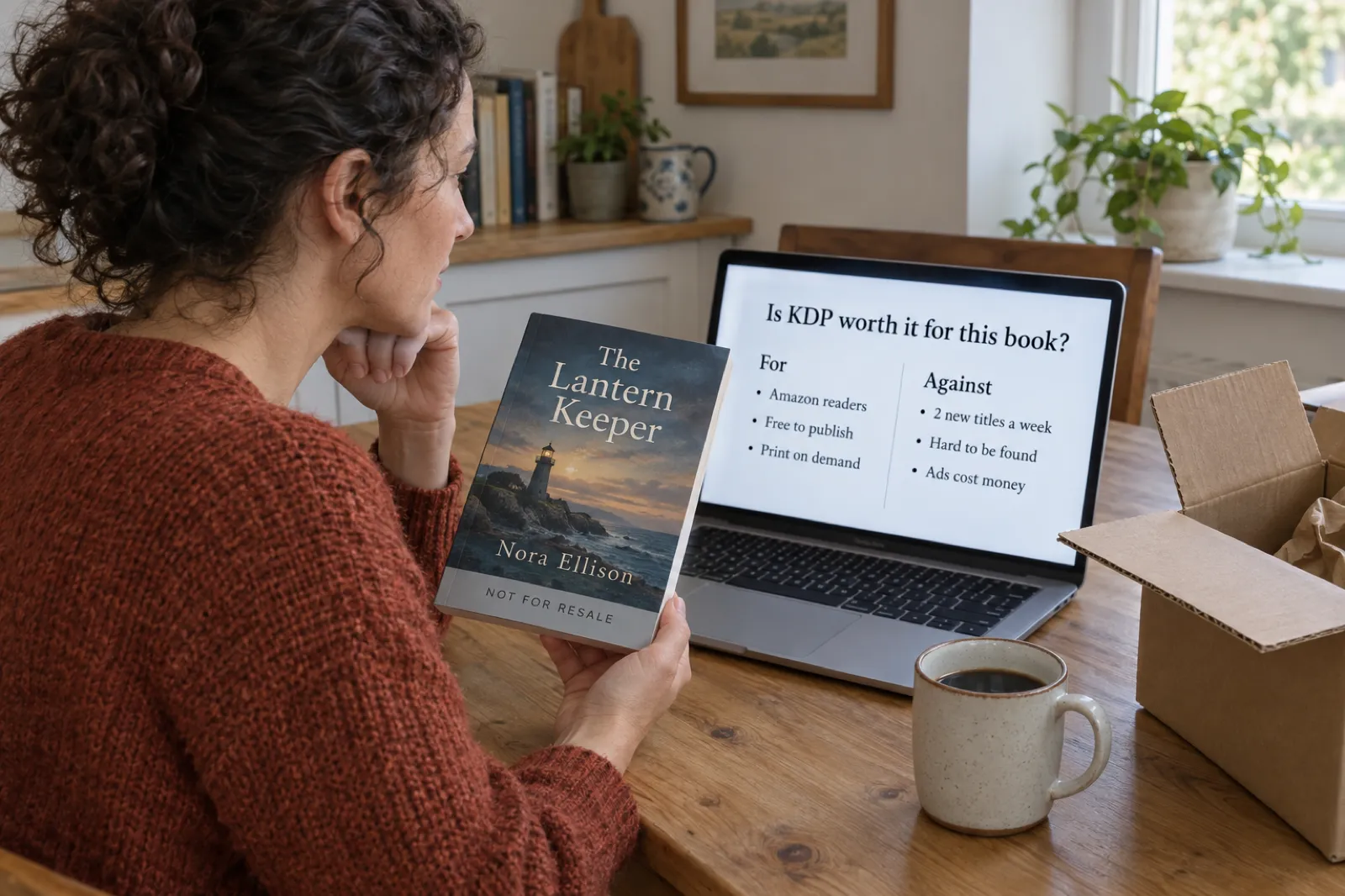
 Is KDP Worth It in 2026? An Honest Verdict by Book Type
A dated verdict for novels, non-fiction, picture books, coloring books, journals and family books: what changed on KDP in 2026, what publishing really costs, what most authors earn, when Etsy, Gumroad or going wide fits better, and a checklist that picks the route for your book.
 Publishing
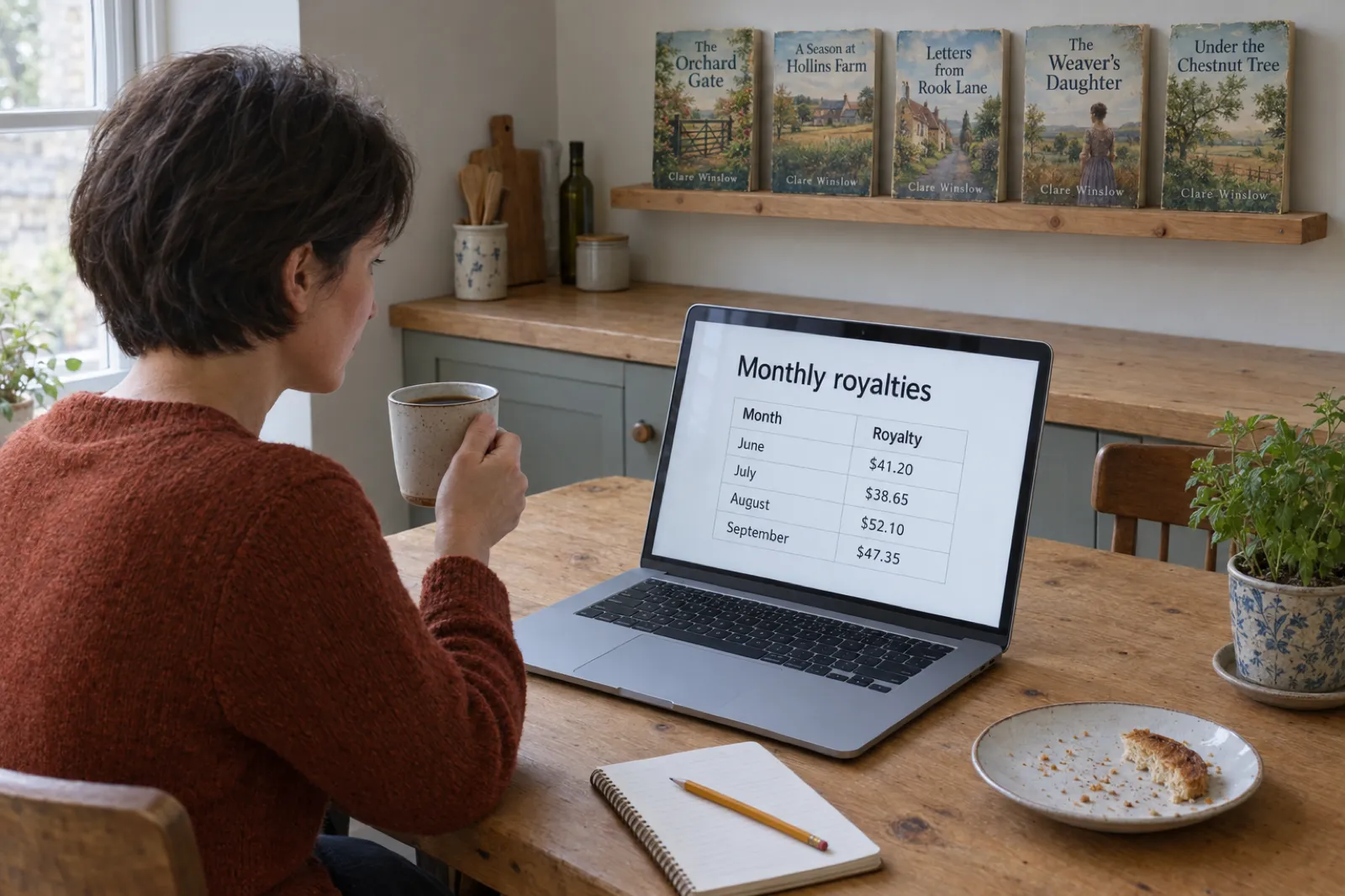
 How Much Do KDP Authors Make? Real 2026 Numbers, by Format and Catalogue Size
Most KDP authors earn under $100 a month and a minority earn a living. The 2026 survey numbers, what one copy earns in each format under KDP's new rules, why most books sell little, and what changes it, with an estimator for your own catalogue.
 AI Writing
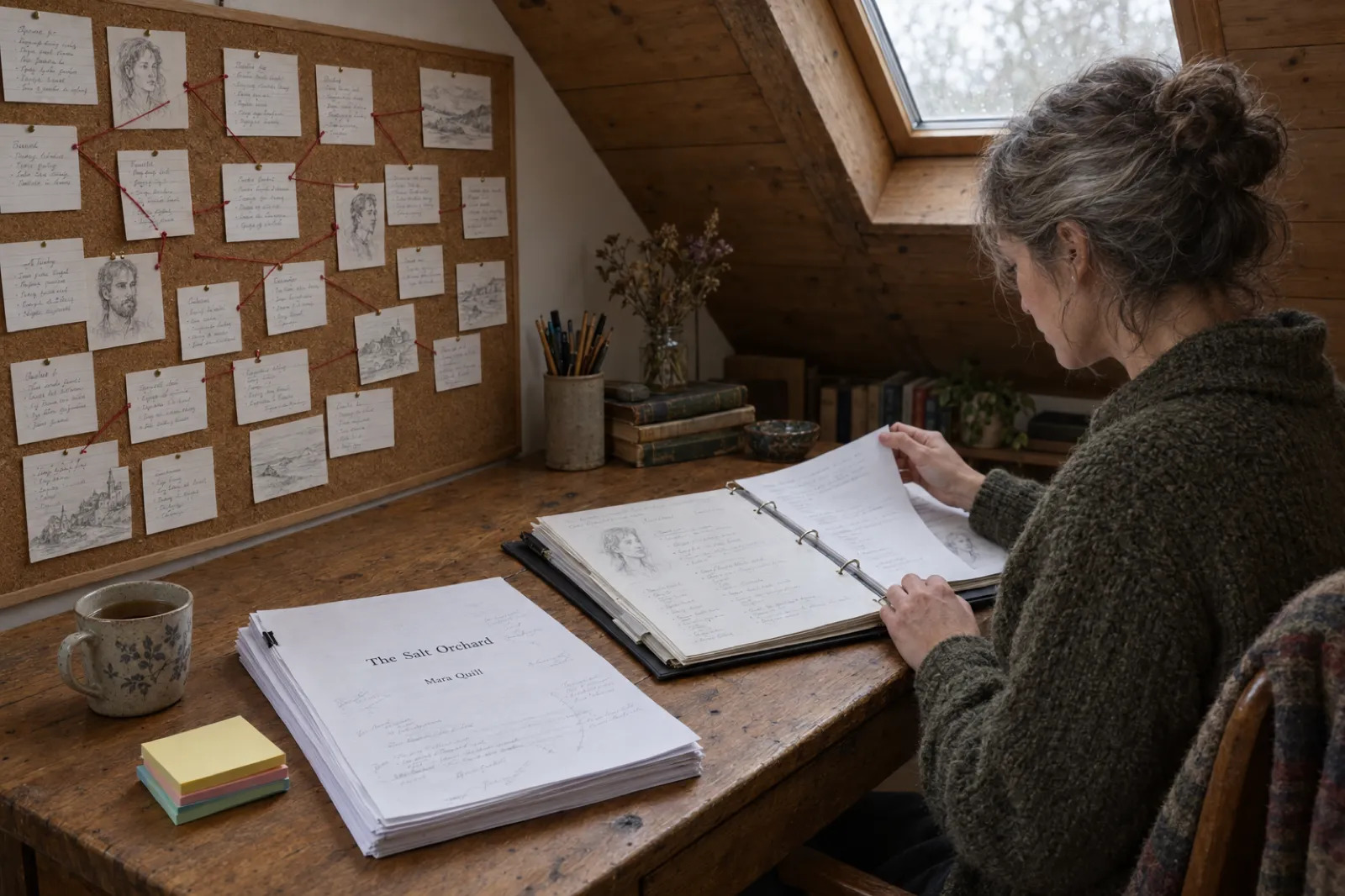
 Sudowrite vs Novelcrafter (2026): Price, Built-in AI vs Your Own Key, Story Bible vs Codex
Sudowrite ($10 to $59 a month, AI built in) against Novelcrafter ($4 to $20 a month, AI from your own provider): price, how the AI is paid for, Story Bible against Codex, drafting, editing, export and series, read on both vendors' sites on 17 October 2026, with a picker.
Get ebook tips in your inbox
Join creators getting weekly strategies for writing, marketing, and selling ebooks.