
Best AI for Novel Continuity Checking in 2026: 5 Tools Compared
We compared 5 AI tools for checking character consistency, plot continuity, and timeline errors across full-length novels. Here is which ones can actually handle 80,000+ word manuscripts without losing the thread.
Quick Answer
The best AI for novel continuity checking in 2026 is Inkfluence AI for authors writing sequentially who want continuity maintained during drafting, not just checked after the fact. Its Smart Continue feature includes context from recent chapters when writing each new one, keeping character names, plot threads, setting details, and tone consistent chapter-to-chapter. For post-draft continuity auditing of completed manuscripts, Claude (200K context) and Sudowrite's Story Bible feature are strong options - but neither generates new chapters with continuity awareness built in. ChatGPT loses context after a few chapters and cannot scan a full 80,000-word novel in one pass.
Writing a novel is hard. Keeping every detail consistent across 80,000 words is harder. Was the protagonist's scar on the left cheek or the right? Did they move to Portland in chapter 4 or chapter 6? Was the antagonist's sister named Elena or Elaine?
These are the mistakes that pull readers out of a story. Professional editors catch some of them. Beta readers catch others. But both are expensive, slow, and human - they miss things too.
AI tools have gotten good enough to help with continuity checking, but the landscape is confusing. Some tools check continuity after you finish writing. Others maintain it while you write. Some claim to handle full manuscripts but choke on anything over 10,000 words. We tested 5 AI tools on real novel-length projects to find out which ones actually keep your story consistent and which ones lose the thread before chapter 10.
What Novel Continuity Checking Actually Means
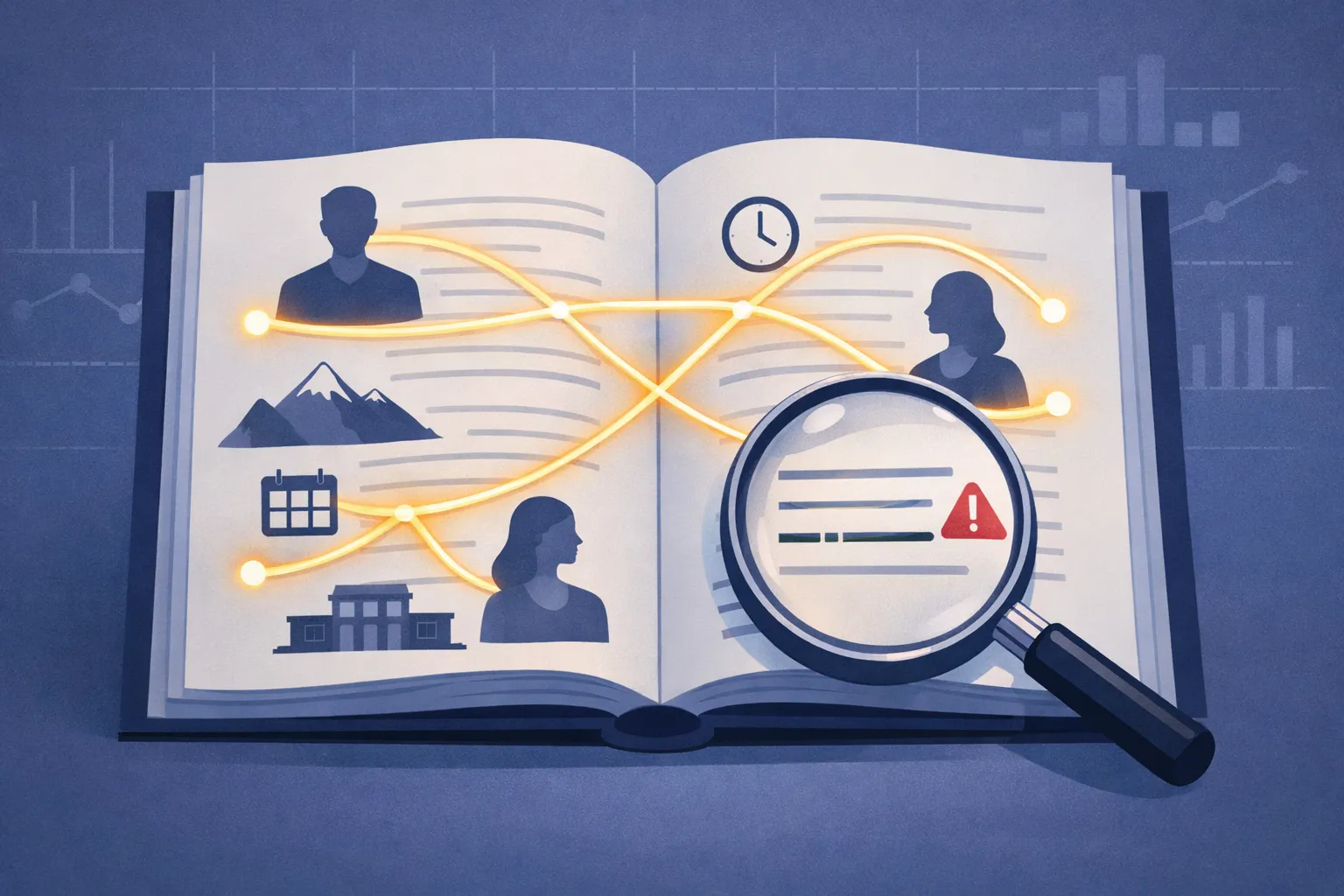
Continuity checking is not grammar checking. It is not proofreading. It is tracking whether the details in chapter 22 match the details established in chapter 3. This includes:
- Character consistency - Names, physical descriptions, personality traits, speech patterns, relationships, backstory details
- Timeline accuracy - Events referenced correctly across chapters, seasons and dates matching, character ages lining up
- Setting consistency - Room layouts, city geography, building descriptions, weather patterns matching the season
- Plot thread tracking - Subplots introduced and resolved, foreshadowing paid off, no dangling threads
- Object tracking - Items picked up, used, and disposed of correctly ("She dropped the knife in chapter 8 but stabbed with it in chapter 12")
- Tonal continuity - The narrator's voice, pacing rhythm, and stylistic choices staying consistent
Professional continuity editors charge $0.02-$0.05 per word - that is $1,600-$4,000 for an 80,000-word novel. The turnaround is 2-6 weeks. AI tools can reduce this cost significantly, but the key question is how much of the manuscript the AI can actually hold in memory at once.
Two Approaches: Prevention vs Detection
AI tools handle continuity in two fundamentally different ways. Understanding the difference is critical to choosing the right one.
Prevention: Continuity-aware generation
Tools like Inkfluence AI prevent continuity errors by including context from previous chapters when writing each new one. When the AI writes chapter 12, it has already read chapters 10 and 11. It knows who is in the room, what was said, and what the protagonist looks like. Errors are avoided because the AI never loses the thread in the first place.
This approach works best for authors who generate their first draft with AI assistance. The continuity is baked into the writing process.
Detection: Post-draft continuity auditing
Tools like Claude (with its 200K token context window) and Sudowrite's Story Bible can scan a completed manuscript and flag potential inconsistencies. You paste in your finished book and ask the AI to check for contradictions.
This approach works best for authors who write manually and want an AI "continuity editor" to review the finished draft. The limitation is context window size - most AI models cannot hold an entire 80,000-word novel in memory at once.
Quick Comparison: 5 AI Continuity Tools Ranked
| Tool | Approach | Context Window | Character Tracking | Full Novel | Price |
|---|---|---|---|---|---|
| Inkfluence AI | Prevention | 2-3 chapters | ★★★★☆ | ★★★★★ | Free / $9.99+ |
| Claude (200K) | Detection | ~150K words | ★★★★★ | ★★★★☆ | $20/mo (Pro) |
| Sudowrite | Both | Story Bible | ★★★☆☆ | ★★★☆☆ | $19/mo+ |
| ChatGPT (GPT-4o) | Detection | ~50K words | ★★★☆☆ | ★★☆☆☆ | $20/mo (Plus) |
| NovelAI | Prevention | 8K tokens | ★★☆☆☆ | ★☆☆☆☆ | $10/mo+ |
Detailed Reviews
1. Inkfluence AI - Best for Continuity During Drafting
Inkfluence AI takes the prevention approach. Its Smart Continue feature includes context from recent chapters when generating each new one. When you generate chapter 12, the AI has already read chapters 10 and 11. It knows your character names, recent plot events, setting details, and narrative tone.
This means continuity errors are avoided during writing rather than caught after the fact. In our testing, character names stayed consistent across 15+ chapters, plot threads introduced in early chapters were referenced correctly later, and the narrative tone did not drift between sessions.
Strengths: Sequential chapter drafting with automatic context, 20+ genre blueprints that enforce genre-specific continuity patterns, built-in editor for manual corrections, AI editing assistant for refinement, PDF/EPUB export.
Limitations: Context window is 2-3 chapters, not the full novel. If a detail from chapter 2 matters in chapter 18, the AI may not catch it automatically. Best for sequential writing where recent context matters most.
Price: Free plan (5 chapters, 3 Smart Continue generations per day). Creator plan from $9.99/month.
2. Claude (200K Context) - Best for Post-Draft Auditing
Claude's 200K token context window can hold approximately 150,000 words - enough for most novels. You can paste your entire manuscript and ask Claude to identify continuity errors, track character descriptions across chapters, or flag timeline inconsistencies.
In our testing, Claude correctly identified a character whose eye colour changed between chapters 3 and 17, flagged a timeline error where two events could not have happened in the stated order, and noticed that a secondary character who was sent away in chapter 8 reappeared without explanation in chapter 14.
Strengths: Massive context window, strong reasoning about narrative logic, can hold almost any novel in full.
Limitations: Does not generate new content with continuity awareness. You write first, then audit. No built-in novel structure. Manual prompt engineering required. No export or editor.
Price: $20/month for Claude Pro (required for 200K context usage).
3. Sudowrite - Story Bible Approach
Sudowrite offers a "Story Bible" feature that lets you store character profiles, world details, and plot notes. The AI references these notes when generating new text. It is a hybrid prevention/detection approach - you manually maintain the bible, and the AI tries to follow it.
The quality depends on how thoroughly you maintain the Story Bible. In testing, it followed explicit character descriptions well but missed implicit details that were established in the prose but not recorded in the bible. For authors willing to maintain detailed notes, it works. For those who want automatic continuity, it adds overhead.
Strengths: Manual character/world tracking, prose quality, fiction-focused features.
Limitations: Continuity depends on your manual note-taking. The Story Bible is not populated automatically from your text. Expensive at higher tiers.
Price: $19/month (Hobby) to $44/month (Professional).
4. ChatGPT (GPT-4o) - Limited Context, Good Reasoning
ChatGPT can check continuity for shorter works or individual chapters. GPT-4o's context window holds roughly 50,000 words at once - enough for a novella but not a full novel. You need to split longer manuscripts into chunks, which defeats the purpose of whole-manuscript continuity checking.
When the text fits in context, ChatGPT's reasoning about narrative consistency is decent. It can identify character description contradictions and flag obvious timeline errors. It struggles with subtle tonal shifts and implicit continuity (things established through action rather than explicit description).
Strengths: Widely available, good at explicit contradictions, conversational interface for follow-up questions.
Limitations: 50K word limit makes full-novel scanning impossible. Loses context in long conversations. No novel-specific features.
Price: $20/month for ChatGPT Plus.
5. NovelAI - Limited Context Window
NovelAI has strong prose generation for fiction, but its context window is approximately 8,000 tokens (about 6,000 words). This means it can only "see" the last few pages of your novel when generating new content. For a 20-chapter novel, it has no memory of anything before the most recent scene.
NovelAI offers a "Lorebook" feature similar to Sudowrite's Story Bible - you manually record character and world details. But the small context window means even with a detailed Lorebook, the AI frequently generates contradictions because it cannot fit the Lorebook entries plus recent text in context.
Strengths: Excellent prose style for fiction, creative freedom, uncensored output options.
Limitations: Tiny context window makes continuity virtually impossible for novels. Lorebook helps but is limited by context budget.
Price: $10/month (Tablet) to $25/month (Opus).
7 Continuity Errors AI Can Catch
Not all continuity errors are equal. Here are the seven most common types and how well current AI handles each:
- Character description drift - Eye colour, hair colour, height, scars, tattoos changing between chapters. AI handles this well when the full text is in context.
- Name inconsistency - Character names or spellings changing. "Katherine" becomes "Catherine" or "Kate" without explanation. Easily caught by AI.
- Timeline contradictions - Events referenced as happening in the wrong order. "She met him three weeks ago" contradicting the established timeline. AI catches explicit contradictions but misses vague ones.
- Setting errors - Room layouts changing, buildings moving locations, geography inconsistencies. Moderate AI detection rate.
- Dead character reappearance - Characters killed or removed from the story showing up again. AI catches this when the full manuscript is in context.
- Object tracking failures - Items lost, destroyed, or dropped reappearing without explanation. Hard for AI to track across long manuscripts.
- Relationship continuity - Characters who broke up acting like they are together, or strangers acting familiar. AI struggles with implicit relationship status changes.
Recommended Workflow: Prevention + Detection
The most effective approach combines both strategies:
- Draft with prevention - Use Inkfluence AI for sequential chapter generation with Smart Continue. The 2-3 chapter context window catches most continuity issues during writing.
- Edit and refine - Use the built-in editor to revise chapters. Add details, fix dialogue, strengthen scenes.
- Audit with detection - After completing the full draft, paste it into Claude (200K context) with a targeted prompt: "Read this complete manuscript and list every continuity error you find. Check character descriptions, timeline accuracy, setting consistency, and plot thread resolution."
- Fix and export - Return to Inkfluence AI to make corrections in the editor, then export to PDF or EPUB for publishing.
This two-pass approach catches continuity errors at both stages: preventing the common ones during drafting and detecting the subtle ones during auditing.
What AI Cannot Do (Yet)
Even the best AI tools have real limitations for continuity checking:
- Thematic consistency - AI can track facts but struggles to judge whether a character's actions are consistent with their established personality arc.
- Pacing continuity - Whether the narrative rhythm feels consistent is a judgment call AI cannot reliably make.
- Reader expectation management - Foreshadowing, red herrings, and deliberate misdirection are intentional "inconsistencies" that AI may flag as errors.
- Cross-book series continuity - No current tool can check continuity across a multi-book series in a single pass.
- Unreliable narrator detection - If your narrator intentionally contradicts themselves, AI will flag it as an error rather than recognising the literary device.
For these higher-level continuity concerns, you still need human beta readers or a professional editor. AI handles the mechanical checking - facts, names, descriptions, timelines - so your editor can focus on the craft.
Write with continuity built in
Inkfluence AI's Smart Continue feeds your previous chapters into every generation. No copy-pasting context. No Story Bible maintenance.
Start Writing FreeFrequently Asked Questions
Can AI check continuity for an entire 80,000-word novel?
Only Claude (200K context) can hold a full 80,000-word novel in a single pass. ChatGPT's context holds approximately 50,000 words. Inkfluence AI takes a different approach - it prevents continuity errors during drafting by feeding previous chapters into each generation, rather than scanning the finished manuscript.
Is AI continuity checking better than a human editor?
AI is better at mechanical checking - catching name changes, description contradictions, and timeline errors across hundreds of pages. Human editors are better at thematic consistency, character arc logic, and recognising intentional inconsistencies like unreliable narrators. The best workflow uses both: AI catches the factual errors, freeing the human editor to focus on craft.
How does Inkfluence AI maintain continuity across chapters?
Inkfluence AI's Smart Continue feature feeds the full text of the previous 2-3 chapters into the AI prompt when generating the next chapter. The AI reads what happened recently and writes accordingly - keeping character names, plot events, setting details, and narrative tone consistent.
What is the difference between continuity checking and proofreading?
Proofreading catches grammar, spelling, and punctuation errors. Continuity checking catches factual contradictions within the story - character descriptions changing, timelines not matching, plot threads left unresolved. They are separate tasks that require different tools and different passes through the manuscript.
Can I use multiple AI tools together for continuity?
Yes, and we recommend it. Use a prevention tool (Inkfluence AI) during drafting to avoid most errors, then a detection tool (Claude 200K) after the draft is complete to catch anything that slipped through. This two-pass approach is more thorough than either tool alone.
Does the context window size matter for continuity?
It is the single most important factor. A tool with an 8K token context (like NovelAI) can only "see" about 6,000 words at a time - roughly one chapter. A tool with 200K tokens (Claude) can hold an entire novel. Inkfluence AI's approach is different - instead of fitting the whole book in context, it feeds the most recent chapters to maintain rolling continuity.
What genres benefit most from AI continuity checking?
Mystery and thriller novels benefit the most because clue placement, suspect timelines, and evidence tracking must be airtight. Fantasy and science fiction are close behind due to complex world-building and magic/tech systems. Romance benefits from relationship timeline and character arc consistency. Mystery, true crime, and romance are the top three.
Is there a free AI tool for novel continuity checking?
Inkfluence AI offers a free plan with 5 chapters and 3 Smart Continue generations per day - enough to test continuity-aware generation on a short project. ChatGPT's free tier has a limited context window. For full-novel auditing, Claude's free tier has usage limits that make scanning an entire manuscript impractical - you need Claude Pro ($20/month).
Related Reading
Best AI Models for Novel Writing 2026
Which underlying models maintain character continuity best across 50,000 words. Tested April 2026.
How to Evaluate AI Novel-Writing Quality
7 quality dimensions readers actually feel, plus a 30-minute test recipe.
Can AI Write a Novel?
An honest look at what AI can and cannot do for full-length fiction.

Founder, Inkfluence AI
Sam is the founder of Inkfluence AI. He built the platform to make book creation accessible to everyone - from first-time authors to seasoned publishers.
Helpful links
Ready to Create Your Own Ebook?
Start writing with AI-powered tools, professional templates, and multi-format export.
Get Started FreeRelated Articles
 Tools
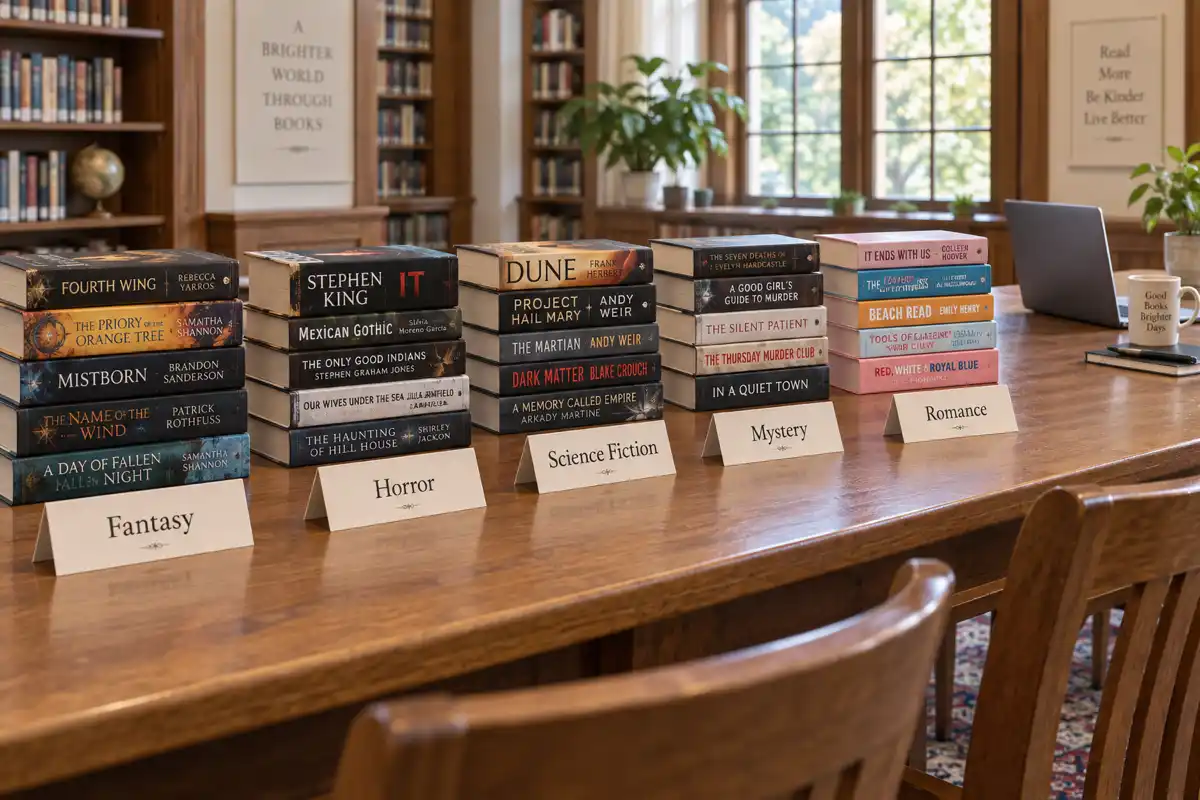
Tools Best AI for Writing Fantasy, Horror, Sci-Fi, Mystery and Romance Novels in 2026, Genre by Genre
The best AI for writing a novel depends on the genre. Fantasy needs world memory, mystery needs clue tracking, romance needs heat rules, horror needs restraint. We judged eight AI tools genre by genre, with first-party data on what 32,482 fiction authors actually wrote in the last six months.
 Guides
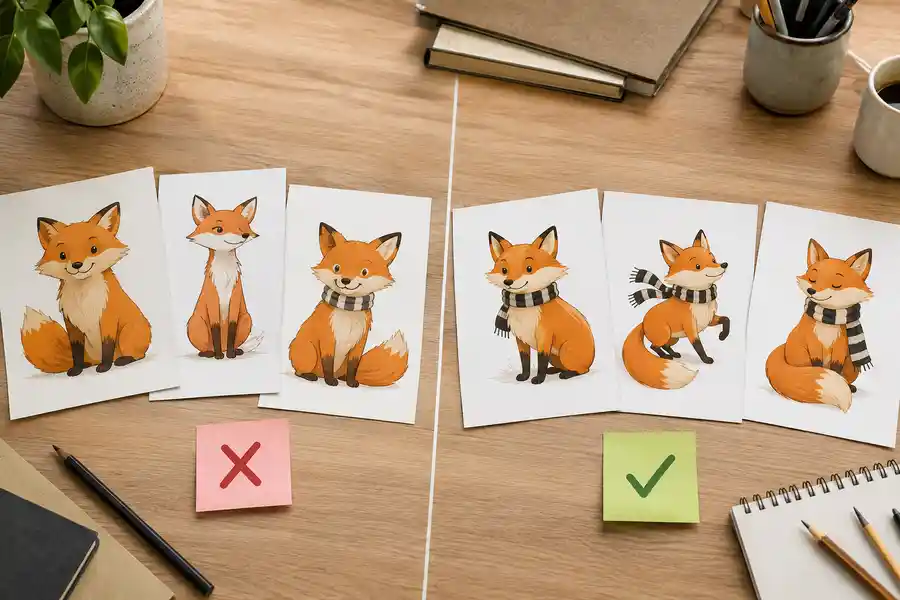
 Consistent Characters in AI Children's Books: Why They Drift, and Every Method That Fixes It (2026)
The fox on page 3 never matches the fox on page 7, until you understand why. The four methods for character consistency in AI illustration, compared honestly, plus the page-7 test to run before trusting any tool's claim.
 AI Writing
 How to Write Fanfiction with AI (Step by Step, 2026)
A practical, eight-step workflow for writing a full multi-chapter fanfic with AI: from picking your fandom and trope to keeping characters in voice, editing in your own style, and posting to AO3 or Wattpad.
Get ebook tips in your inbox
Join creators getting weekly strategies for writing, marketing, and selling ebooks.