
Best AI Story Writing Tools 2026: 8 Compared by Use Case
Eight AI story writing tools compared side by side: what each one is genuinely best at, how they price, and which to choose for short stories, novels, fanfiction or world-building.

Quick Answer
The best AI story writing tool in 2026 depends on what you are writing. Inkfluence AI is the strongest all-rounder: it handles short stories, full novels, fanfiction, and 20+ other formats with automatic continuity tracking, cover design, and direct export to PDF, EPUB, and DOCX. Sudowrite excels at literary prose refinement. NovelAI suits interactive fiction and world-building. Talefy offers quick, free story generation with no account required. For most writers who want to go from idea to finished, publishable story, Inkfluence covers the full pipeline. Last compared: April 2026.
Updated September 2026 · 16 min read
AI story writing tools have grown far beyond simple text generators. In 2026, dedicated platforms can build worlds, track characters across chapters, maintain plot threads, and export publish-ready files. But the market is crowded, and every tool has a different strength.
We compared 8 AI story writing platforms across the features that matter most to fiction writers: story structure, character consistency, creative control, genre support, export options, and price. Whether you are writing a 2,000-word short story or a 60,000-word novel, this guide helps you pick the right tool. For a novel-specific deep dive, see our head-to-head novel AI test.
What to Look for in a Story Writing Tool
Not every AI writing app is built for storytelling. Marketing copy tools and blog generators use different models and prompt strategies than fiction-focused platforms. Here are the 7 features that separate good story tools from generic text generators:
1. Story structure awareness
Does the tool understand narrative arcs, rising tension, and pacing? Or does it just write paragraphs until you stop it?
2. Character consistency
Can it remember that your protagonist is left-handed and afraid of water, three chapters later? Character drift is the most common AI story failure.
3. World-building support
For fantasy, sci-fi, and speculative fiction, the tool needs to track locations, rules, magic systems, and timelines across the entire project.
4. Genre adaptation
Romance needs different pacing than horror. A good story tool adjusts tone, vocabulary, and structure based on genre.
5. Creative control
Can you guide the AI's direction, adjust chapter outlines, rewrite specific scenes, or are you locked into what it generates?
6. Export and publishing
Writing a story is only half the job. Can you export to PDF, EPUB, or DOCX? Does it handle formatting, covers, and table of contents?
7. Price vs output ratio
Some tools charge per word, others per month. The cheapest option is meaningless if the output needs heavy rewriting. Factor in editing time.
Quick Comparison: 8 AI Story Writing Tools
| Tool | Best For | Character Memory | Export Formats | Free Tier | Starting Price |
|---|---|---|---|---|---|
| Inkfluence AI | Full pipeline: idea to published book | Yes - automatic | PDF, EPUB, DOCX | 5 chapters free | $9.99/mo |
| Sudowrite | Literary prose refinement | Partial - Story Engine | Copy/paste only | Limited trial | $10/mo annual ($19 monthly) |
| NovelAI | Interactive fiction, world-building | Yes - Lorebook | Plain text | 100 free uses | $10/mo |
| Talefy | Quick free story generation | No | Web view only | Generous free tier | Free / $9.99/mo |
| NovelCrafter | Organised long-form fiction | Yes - Codex system | Markdown, plain text | Limited trial | $8/mo, bring your own AI key |
| Squibler | Fiction project management | Partial | PDF, DOCX | Limited free plan | $29.99/mo ($15.83 annual) |
| ChatGPT (GPT-4o) | One-off scenes and brainstorming | No - resets each chat | Copy/paste only | Free tier available | $20/mo (Plus) |
| Claude (Anthropic) | Long scenes, character voice | Within context window | Copy/paste only | Free tier available | $20/mo (Pro) |
Detailed Reviews
1. Inkfluence AI - Best All-Round Story Writing Tool
Inkfluence AI is the only platform that covers the full storytelling pipeline: outline generation, chapter-by-chapter writing with automatic character memory, cover design, and direct export to PDF, EPUB, and DOCX. It supports 33 book types including fiction, romance, mystery, true crime, children's stories, and fanfiction.
What stands out:
- Automatic continuity tracking across chapters - no manual lore databases needed
- Genre-aware writing that adapts tone, pacing, and structure (romance reads differently to thriller)
- Built-in cover designer with AI image generation and five-tab editor
- Export-ready formatting - PDF, EPUB, DOCX with table of contents, copyright page, and author bio
- Audiobook conversion via AI narration
- 5 free chapters to start, with credits that refresh monthly
Limitations:
- Less granular prose-level editing than Sudowrite (no "rewrite this paragraph in Virginia Woolf's style" button)
- Not designed for interactive or choose-your-own-adventure fiction
Verdict: If you want one tool that takes you from blank page to published story, Inkfluence is the strongest option in 2026. See what's free vs paid.
2. Sudowrite - Best for Literary Prose Polishing
Sudowrite made its name with prose refinement tools: Describe, Rewrite, Expand, and Shrink let you massage individual sentences and paragraphs with fine control. The Story Engine generates full drafts from outlines, though it is less structured than dedicated book-building platforms.
What stands out:
- Prose-level editing tools (Describe, Rewrite, Expand, Shrink) are best-in-class
- Style mimicry - can adjust output to match specific literary styles
- Story Engine generates full drafts from beat sheets
- Strong community of literary fiction writers
Limitations:
- No export to PDF, EPUB, or DOCX - you copy/paste into a separate formatting tool
- No cover designer or publishing pipeline
- Character memory is less reliable across long projects than dedicated novel tools
- $10/month entry price on annual billing ($19 monthly), with credit limits
Verdict: Excellent for writers who already have a draft and want AI help polishing prose. Less suited for generating a full story from scratch. See our full Sudowrite comparison.
3. NovelAI - Best for Interactive Fiction and World-Building
NovelAI is the market leader for interactive, sandbox-style fiction. Its Lorebook system lets you define characters, locations, magic systems, and rules that the AI respects during generation. It is heavily used by the roleplay, fanfiction, and world-building community.
What stands out:
- Lorebook system for persistent world-building (characters, places, items, rules)
- Fine-tuned on fiction specifically - not repurposed marketing AI
- Strong community with shared modules and presets
- AI image generation for character and scene art
- Text Adventure mode for interactive storytelling
Limitations:
- No structured book output - no chapters, table of contents, or formatting
- No export to PDF/EPUB - you get plain text
- Lorebook must be set up manually (time-consuming for large worlds)
- Less effective for non-fiction or structured non-narrative content
Verdict: The best choice for writers who want deep world-building control and interactive fiction. Not ideal if you want a finished, publishable book. See our full NovelAI comparison.
4. Talefy - Best Free Option for Quick Stories
Talefy gained traction by offering free story generation with no account required. Type a premise, pick a genre, and get a complete short story in under a minute. It is the fastest way to go from idea to readable story.
What stands out:
- No sign-up required for basic generation
- Extremely fast - stories generated in seconds
- Simple, distraction-free interface
- Good for creative prompts and story starters
Limitations:
- No character memory between sessions - each story is standalone
- No chapter structure, outlining, or multi-chapter projects
- No export formats - web view only
- Limited creative control over tone, pacing, or style
- Not suited for anything longer than a short story
Verdict: Perfect for writers who want instant story ideas or quick creative warm-ups. Not a full writing tool for serious projects.
5. NovelCrafter - Best for Organised Fiction Writers
NovelCrafter positions itself as the "writer's workshop" for AI-assisted fiction. The Codex system lets you build a structured knowledge base of characters, locations, and plot points that the AI references during generation. It appeals to plotters who want meticulous control over their story world.
What stands out:
- Codex system for structured lore management
- Scene-by-scene generation with outline tracking
- Bring-your-own-API-key option (use any model)
- Growing community with active development
Limitations:
- Steeper learning curve than simpler tools
- Export limited to markdown and plain text
- No cover designer or formatting pipeline
- Newer platform - smaller community than Sudowrite or NovelAI
Verdict: A strong pick for detail-oriented fiction writers who enjoy building structured lore databases. Requires more setup time but rewards methodical writers.
6. Squibler - Best for Fiction Project Management
Squibler combines AI writing with a project management layer: goals, word count tracking, split-screen editing, and collaborative features. It is less focused on raw AI generation quality and more on keeping you organised.
What stands out:
- Writing goals and progress tracking built in
- Split-screen view for notes and manuscript
- PDF and DOCX export
- Collaboration features for co-authors
Limitations:
- AI writing quality is less consistent than Inkfluence or Sudowrite
- Character memory is hit or miss across long projects
- EPUB export not available
- $29.99/month ($15.83 on annual billing) is steep for the feature set
Verdict: Good for writers who need structure and accountability. The AI generation itself is serviceable but not market-leading. See our full Squibler comparison.
7. ChatGPT - Best for Brainstorming and Single Scenes
ChatGPT is not a story writing tool - it is a general AI assistant. But many writers use it for brainstorming plot ideas, writing individual scenes, generating dialogue, and overcoming writer's block. It works surprisingly well for single-session creative tasks.
What stands out:
- Free tier available with decent quality
- Excellent for brainstorming, character profiles, and plot outlines
- Can mimic specific writing styles when prompted carefully
- Huge user base means plenty of creative writing prompt templates online
Limitations:
- No character memory between conversations - loses all context when you start a new chat
- Cannot generate structured multi-chapter stories - each response is standalone
- No export, formatting, cover design, or publishing features
- Prone to repetitive phrasing and "AI voice" in longer outputs
- $20/month for Plus just to reduce rate limits
Verdict: Use it as a supplement to a dedicated story tool, not a replacement. Great for ideation, poor for execution.
8. Claude - Best Context Window for Long Scenes
Claude has the largest context window of any general AI (200K tokens), which means it can hold an entire short novel in memory during a single conversation. This makes it better than ChatGPT for long-form creative work, though it still lacks publishing infrastructure.
What stands out:
- 200K token context window - can reference 70,000+ words at once
- Nuanced character voice and emotional writing
- Less prone to "AI boilerplate" than ChatGPT in creative contexts
- Free tier with reasonable limits
Limitations:
- No structured story generation - you manage everything manually via prompts
- No export, formatting, or publishing pipeline
- Context window helps within a session but does not persist across conversations
- $20/month Pro plan for full access
Verdict: The best general-purpose AI for creative writing quality. Still requires a dedicated tool if you want to produce a finished, publish-ready story.
Write Your Story from Idea to Published Book
Inkfluence AI handles the full pipeline: outline, chapters, cover, and export. 5 free chapters, no credit card required.
Best Tool by Use Case
Different projects call for different tools. Here is a quick decision guide:
| If You Want To... | Best Tool | Why |
|---|---|---|
| Write and publish a full-length novel | Inkfluence AI | Automatic continuity, structured chapters, publish-ready export |
| Generate a quick short story | Talefy | Instant generation, no sign-up, free |
| Polish existing prose to literary quality | Sudowrite | Describe, Rewrite, Expand tools are best-in-class |
| Build a complex fantasy or sci-fi world | NovelAI | Lorebook system, community modules, fine-tuned on fiction |
| Write fanfiction with established characters | Inkfluence AI | Dedicated fanfiction format with genre adaptation |
| Write a romance novel | Inkfluence AI | Romance-specific pacing and tropes built into the system |
| Write a mystery or thriller | Inkfluence AI | Investigative structure, clue planting, tension arcs |
| Brainstorm plot ideas | ChatGPT | Free, fast, flexible for ideation |
| Write long, emotionally complex scenes | Claude | 200K context window, nuanced emotional voice |
| Track detailed lore and character codex | NovelCrafter | Codex system for structured world-building databases |
ChatGPT vs Dedicated Story Writing Tools
ChatGPT is the first tool most people try for AI writing. It works for brainstorming and short scenes, but it fails at the two things that make story writing hard: memory and structure.
| Feature | ChatGPT | Dedicated Story Tools |
|---|---|---|
| Character memory | Resets every conversation | Persistent across chapters |
| Chapter structure | Manual - you manage chapters yourself | Automatic outline and chapter generation |
| Genre awareness | Only if you prompt it specifically | Built-in genre templates and style guides |
| Export to PDF/EPUB | No | Yes (Inkfluence, Squibler) |
| Cover design | No | Yes (Inkfluence) |
| Cost for story writing | $20/mo Plus or free with limits | $8 - $29.99/mo depending on tool |
Bottom line: Use ChatGPT for brainstorming and individual scenes. Use a dedicated tool for anything longer than a single scene. The time you save on manual chapter management, reformatting, and fixing continuity errors more than pays for the subscription.
Pricing Breakdown (April 2026)
| Tool | Free Tier | Cheapest Paid Plan | What You Get |
|---|---|---|---|
| Inkfluence AI | 5 chapters free, refreshes monthly | $9.99/mo (Creator) | Unlimited chapters, all export formats, cover designer, audiobook |
| Sudowrite | Limited free trial | $10/mo annual, $19 monthly (Hobby & Student) | 225,000 AI words, all editing tools |
| NovelAI | 100 free text generations | $10/mo (Tablet) | Unlimited text, Lorebook, basic image gen |
| Talefy | Generous free stories | $9.99/mo | More generations, longer stories |
| NovelCrafter | Limited trial | $8/mo (Hobbyist, bring your own AI key) | Codex, scene management, BYOK option |
| Squibler | Limited free plan | $29.99/mo ($15.83 annual) | AI generation, goals, PDF export |
| ChatGPT Plus | Free tier with rate limits | $20/mo | Higher rate limits, GPT-4o access |
| Claude Pro | Free tier with rate limits | $20/mo | Higher limits, 200K context, Projects |
Best value: Inkfluence at $9.99/month is the cheapest dedicated story tool with full export, cover design, and audiobook. Talefy is the best free option for short stories. ChatGPT and Claude cost $20/month for general-purpose AI that still requires you to handle formatting and publishing separately.
7 Tips for Writing Better AI Stories
- Start with a detailed outline, not a vague prompt. The more specific your outline - character names, settings, key plot points, chapter goals - the better the AI's output. Generic prompts produce generic stories.
- Define your characters before writing chapter 1. Give the AI character profiles: personality traits, speech patterns, motivations, physical descriptions. This prevents the AI from inventing contradictory details mid-story.
- Set the tone and genre upfront. "Write a cozy mystery set in a small English village" produces vastly different output than "write a story about a detective." Genre context shapes everything from vocabulary to pacing.
- Edit chapter by chapter, not all at once. Fix issues in each chapter before generating the next. This prevents errors from cascading through the entire story. See our co-writing best practices guide for a full workflow.
- Use the AI for structure, then add your voice. Let the AI generate the skeleton - plot progression, scene transitions, dialogue beats. Then rewrite key passages in your own voice. This is the fastest path to a story that sounds like you, not like a machine.
- Read your story aloud. AI prose often looks fine on screen but sounds robotic when spoken. Reading aloud catches repetitive sentence structures, awkward phrasing, and unnatural dialogue faster than silent editing.
- Do not skip the ending. Many writers generate 80% of their story with AI and then rush the conclusion. The ending is what readers remember. Plan it first, write it last, and give it extra editing attention.
For the newest entrant in this category, a fiction revision studio with per-scene scores, see Inkfluence AI vs ProseEngine, checked September 2026.
Frequently Asked Questions
What is the best free AI story writing tool?
For quick, no-sign-up story generation, Talefy is the fastest free option. For a more complete free experience with chapter structure and export, Inkfluence AI offers 5 free chapters with credits that refresh monthly. ChatGPT's free tier works for brainstorming and individual scenes but cannot produce structured multi-chapter stories.
Can AI write a full novel by itself?
AI can generate a complete first draft of a novel, but it should not be published without human editing. The best results come from treating AI as a co-writer: you provide the outline, characters, and creative direction, and the AI handles the structural writing. See our guide on co-writing a book with AI.
Which AI story tool has the best character memory?
Inkfluence AI tracks characters automatically across all chapters without manual setup. NovelAI's Lorebook system is also strong but requires you to manually define every character, location, and rule. NovelCrafter's Codex offers similar manual tracking. ChatGPT and Claude have no persistent character memory between sessions.
Is AI-written fiction legal to sell?
Yes. In most jurisdictions, you can sell AI-assisted fiction commercially. Amazon KDP requires you to disclose AI involvement when publishing. See our guide on Amazon KDP AI disclosure requirements for the latest policy details.
How do I make AI fiction sound less robotic?
Three techniques work best: (1) use genre-aware tools that adapt tone automatically, (2) give the AI specific character voices and speech patterns in your outline, and (3) edit for your personal style after generation. For a full walkthrough, see our guide on avoiding generic AI output.
Can AI write short stories, not just novels?
Absolutely. Most AI story tools handle short stories (1,000 - 10,000 words) well. Talefy specialises in quick short story generation. Inkfluence AI supports any length from single-chapter short stories to 20+ chapter novels, with the same continuity and genre features at every length.
Do I need to write prompts to use AI story tools?
It depends on the tool. ChatGPT and Claude require you to write detailed prompts. Dedicated story tools like Inkfluence AI, Sudowrite, and NovelCrafter provide guided workflows where you fill in story details (genre, characters, plot points) and the tool handles the prompt engineering. No prompt writing experience needed.
What is the difference between NovelAI and tools like Inkfluence?
NovelAI is built for interactive, sandbox-style fiction - you write alongside the AI in real time and build lore databases manually. Inkfluence AI is built for structured, publishable books - it generates complete chapters from outlines and exports to PDF, EPUB, and DOCX with cover design. NovelAI is better for world-building; Inkfluence is better for finishing and publishing. See our detailed comparison.
Can I import my existing story into an AI tool?
Yes, several tools support importing existing work. Inkfluence AI can import PDF, DOCX, EPUB, and plain text files so you can continue writing or editing an existing manuscript with AI assistance. Sudowrite also supports pasting existing text for AI-powered editing.
What to Read Next
Best AI for Writing Novels (Head-to-Head Test)
Deep dive into 6 tools tested specifically on novel-length fiction: plot consistency, dialogue, and character memory.
How to Avoid Generic AI Book Output
9 techniques to make your AI-generated story sound like you, not a machine.
Co-Writing a Book with AI: Best Practices
The complete workflow for using AI as a writing partner while keeping your voice in control.
How to Write Fiction with AI for Free
Step-by-step guide to writing your first AI-assisted story without spending a penny.
How to Evaluate AI Novel-Writing Quality
7 quality dimensions readers feel, plus a 30-minute test recipe for any tool.
Related Tools
- AI Story Writer - Write any length story with automatic genre adaptation
- AI Novel Writer - Full-length novel generation with chapter structure
- AI Romance Novel Writer - Romance-specific pacing, tropes, and heat levels
- AI Fantasy Novel Writer - Story bible for magic rules, names and places across the whole book
- Best AI by Fiction Genre (2026) - Fantasy, horror, sci-fi, mystery, romance and erotica, judged genre by genre
- AI Mystery and Thriller Writer - Investigative structure and tension arcs
- AI Fanfiction Generator - Write fanfiction with character consistency
- AI Book Cover Generator - Design covers for your finished story

Founder, Inkfluence AI
Sam is the founder of Inkfluence AI. He built the platform to make book creation accessible to everyone - from first-time authors to seasoned publishers.
Helpful links
Ready to Create Your Own Ebook?
Start writing with AI-powered tools, professional templates, and multi-format export.
Get Started FreeRelated Articles
 AI Writing
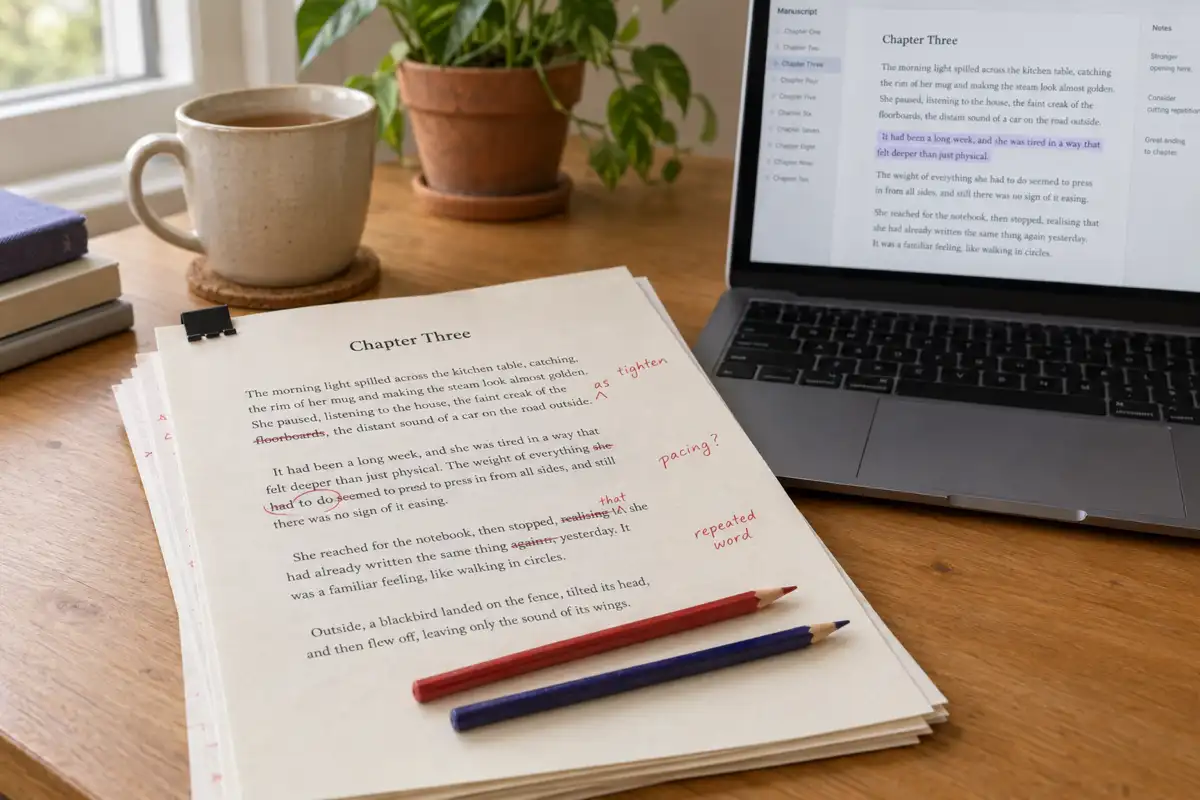
 Best AI for Editing a Book (2026): 9 Tools Compared by Editing Job
Which AI should edit your manuscript? We compare ProWritingAid, Grammarly, AutoCrit, Sudowrite, Novelcrafter, ChatGPT, Claude, the free checks in Google Docs and Word, and Inkfluence AI by the job each does best: grammar, line editing, story feedback, or editing and publishing in one place. Prices checked 2 October 2026.
 AI Writing
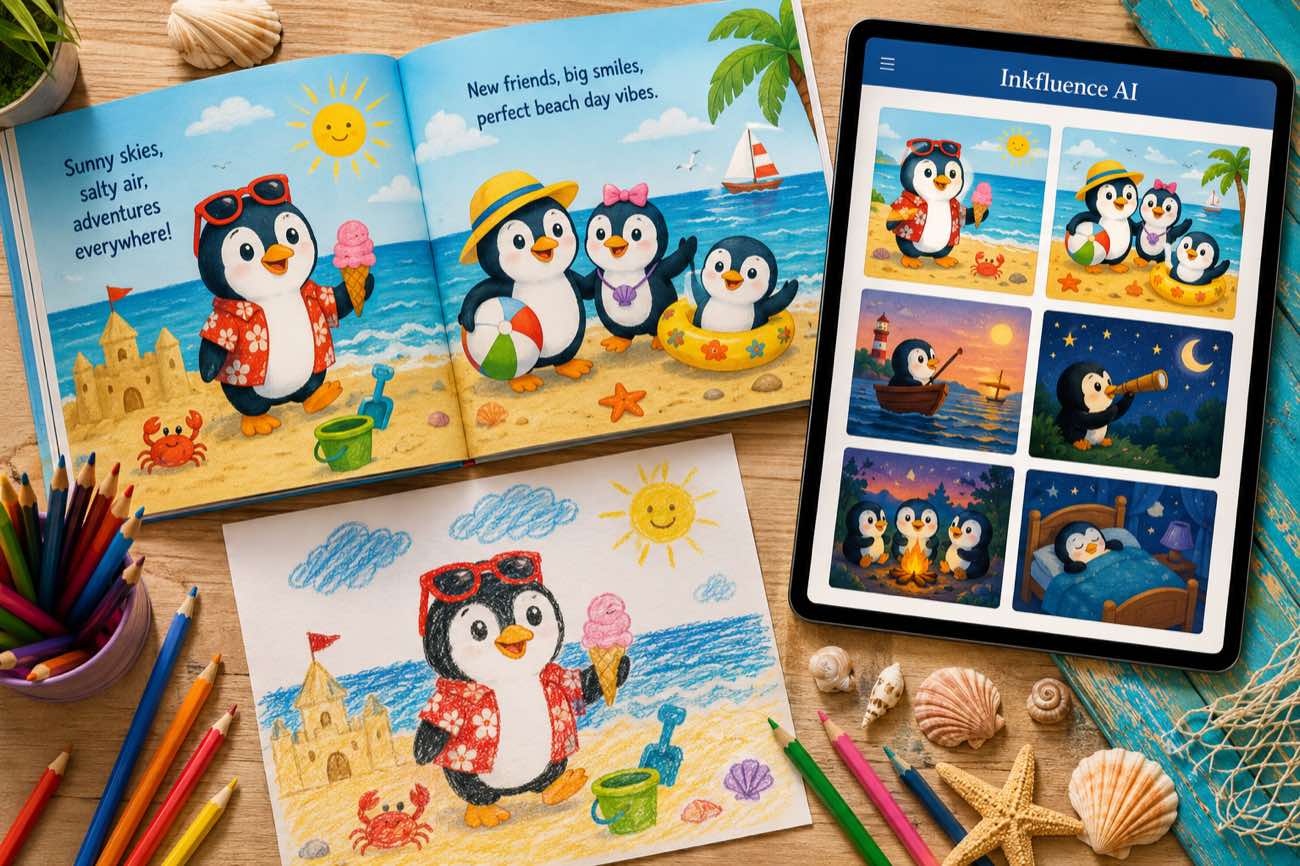
 How to Make a Children's Picture Book with AI: Idea to Printed Book in a Day
The complete 2026 workflow for making a fully illustrated children's picture book with AI: age-band word counts, page planning, consistent characters, cover design, and publishing it on Amazon KDP with the right disclosure.
 AI Writing
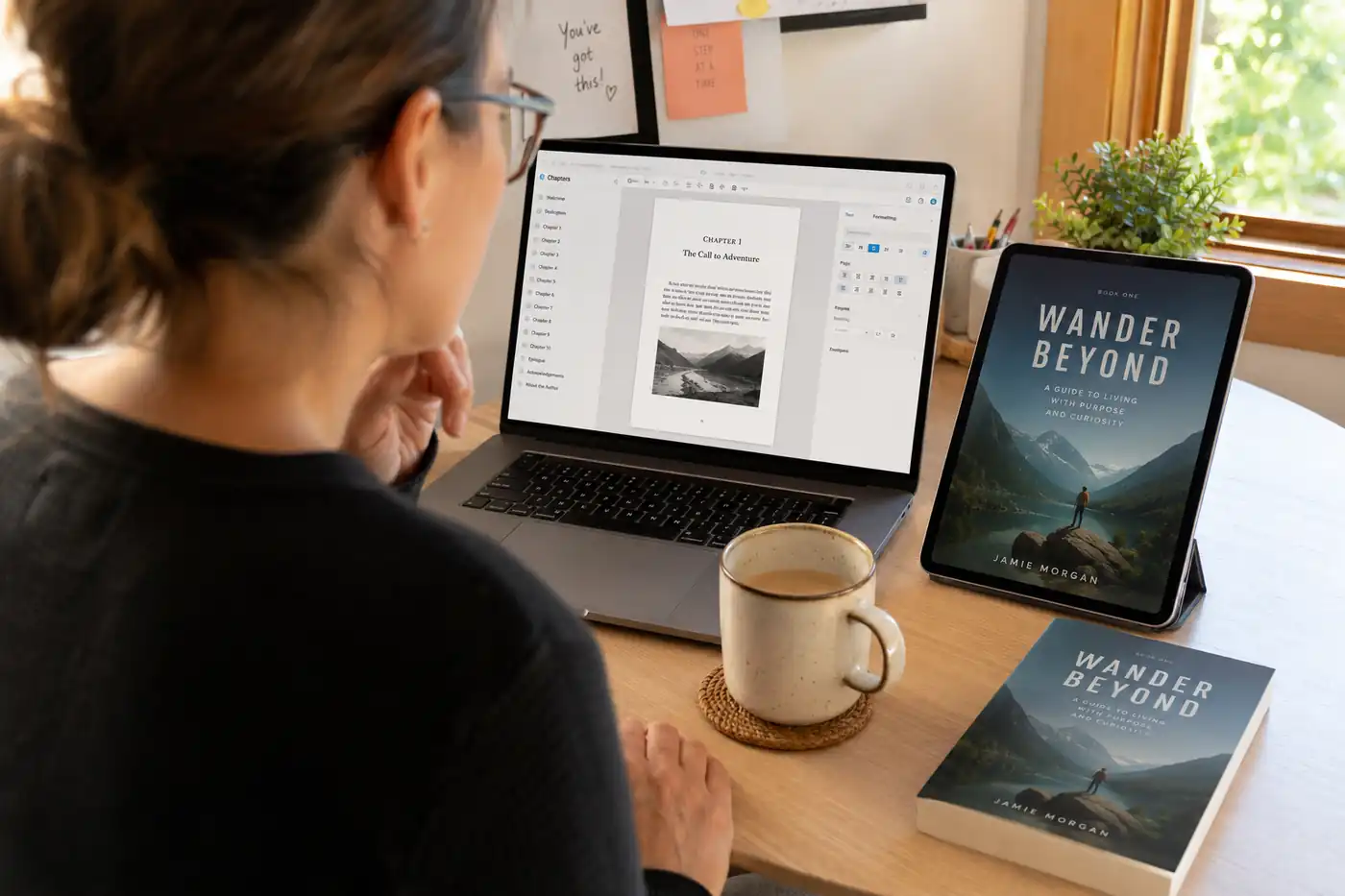
 The 9 Best Ebook Creators in 2026: AI, Formatting, and Design Tools Compared
Not every "ebook creator" does the same job. We compare the 9 best tools of 2026 across three categories: AI generators that write the book, formatting tools that typeset it, and design tools that make it beautiful, with verified pricing for each.
Get ebook tips in your inbox
Join creators getting weekly strategies for writing, marketing, and selling ebooks.