
How to Write Fiction with AI (Without Losing Your Voice)
A practical guide to writing novels, short stories, and fiction chapters with AI tools in 2026. Covers plot continuity, character consistency, tone control, and why generic chatbot output fails for fiction.
Quick Answer
Writing fiction with AI works best when you treat the AI as a collaborator, not a replacement. The key is using tools that understand story structure: scene pacing, character consistency, dialogue, and tension. Generic chatbots produce generic fiction. Tools with fiction-specific writing rules, previous chapter context, and narrative tone profiles produce stories that actually read like stories. Here's how to do it for free.
Fiction is the hardest type of content for AI to generate well. Non-fiction is forgiving: a slightly repetitive paragraph in a business book is fine. A character who changes name in chapter four of a thriller is not.
The people who get great results writing fiction with AI aren't using better prompts. They're using better workflows. If you're new to AI-assisted writing, start with our general guide on how to write a book with AI, then come back here for fiction-specific techniques. This guide covers the specific techniques, tools, and approach that produce fiction worth reading, not the generic "10 tips for AI writing" advice you've seen before.
Why AI Struggles with Fiction (and How to Fix It)
There are three specific reasons AI-generated fiction fails. Understanding them is the key to fixing them:
1. No memory between chapters
When you use ChatGPT to write chapter 5, it has no idea what happened in chapters 1-4 unless you paste them in manually. With long novels, you quickly hit the context window limit and start losing early chapter details. Characters change behaviour, plot threads disappear, and the story restarts itself.
The fix: Use a tool that automatically feeds previous chapter content into each new generation. Inkfluence AI writes each fiction chapter with the last 3 chapters in full, the story bible and a running record of the whole book (who knows what, where everyone is, what has already happened), so the AI knows what just happened and what happened long before.
2. Wrong writing style
Default AI output reads like a blog post or a self-help book. Bullet points appear. The AI addresses the reader directly ("you'll find that..."). Instructions creep in. This is because most AI models are trained on non-fiction web content, so their default voice is informational, not narrative. (This is one of the biggest causes of generic AI book output.)
The fix: Apply a fiction-specific writing blueprint that explicitly tells the AI to write in scenes with dialogue, internal monologue, sensory details, and tension. No bullet points. No second-person address. No summaries. The Inkfluence AI fiction blueprint enforces scene-driven prose with specific rules about pacing and cliffhangers.
3. No consistent tone
Even when you tell ChatGPT "write this as a dark fantasy," the tone drifts. Chapter 3 might be atmospheric and tense. Chapter 4 is suddenly upbeat and encouraging, because the AI defaulted to its "helpful assistant" personality. Fiction needs a locked-in narrative tone that persists across every chapter.
The fix: Use a storytelling tone profile instead of a generic "friendly" or "professional" tone. The storytelling profile in Inkfluence AI prioritises narrative voice, atmosphere, and character perspective over clarity and helpfulness.
The Fiction AI Writing Workflow (Step by Step)
Here's the workflow that produces the best results for novels, novellas, and fiction series using AI:
Step 1: Write a rich book description
This is the most important step. Your description should include:
- Setting: where and when the story takes place
- Main characters: names, roles, key traits, and relationships
- Central conflict: what the protagonist wants and what's stopping them
- Tone: dark, humorous, literary, fast-paced, atmospheric
- Genre specifics: subgenre details (e.g., "cosy mystery" vs "hard-boiled detective")
Example: "A psychological thriller set in a remote Scottish lighthouse. Dr. Sarah Okafor, a sleep researcher, takes a six-month posting to study circadian rhythms in isolated environments. She discovers the previous researcher left mid-contract under suspicious circumstances. The lighthouse keeper, Duncan, is evasive about what happened. Sarah begins experiencing vivid dreams that seem to contain memories that aren't hers. Dark and atmospheric, slow-burn tension."
Compare that to "Write a thriller about a lighthouse." The AI has nothing to work with in the second version.
Step 2: Generate the initial book
Use an AI book generator to create the full outline and first draft of every chapter. For fiction, 8-15 chapters is typical. The initial generation gives you a complete story arc: setup, rising action, climax, and resolution distributed across chapters.
This first pass won't be perfect. That's expected. You're creating a scaffold, not a finished novel.
Step 3: Read through the full draft
Read every chapter in order. Make notes on:
- Chapters where the voice feels off
- Plot points that need more buildup
- Dialogue that sounds stilted or generic
- Missing scenes between major events
- Character reactions that don't match their established personality
Step 4: Rewrite weak chapters with Smart Continue
Open any chapter that needs work. Use Smart Continue with specific instructions:
- "Rewrite this chapter with more dialogue between Sarah and Duncan"
- "Expand the dream sequence, make it more disorienting"
- "Add a scene where Sarah discovers the previous researcher's journal"
- "Continue from the cliffhanger, show Sarah's reaction to what she found"
Smart Continue reads the previous 3 chapters in full, plus the story bible and the running record of the book, automatically, so the AI knows exactly where the story is. You don't need to paste context.
Step 5: Add new chapters for missing scenes
If the story needs a chapter that wasn't in the original outline, add an empty chapter, give it a title, and use Smart Continue to write it. Since it has full context from surrounding chapters, the new chapter will fit naturally into the narrative.
Step 6: Final edit pass
The last pass is where you add your personal voice. AI is excellent at structure, pacing, and plot mechanics. It's weaker at the specific details that make writing memorable: a character's nervous habit, the exact metaphor that captures a mood, the rhythm of a particular sentence. Spend your editing time on these details rather than restructuring paragraphs.
Write Your Novel with AI
Generate a full fiction draft, then refine with Smart Continue. Free plan available.
Start Writing FreeFiction with AI: What Works and What Doesn't
After thousands of fiction books generated on Inkfluence AI, here's what produces the best output and what still needs human editing:
What AI does well
- Plot structure: AI is surprisingly good at pacing a story across chapters, building tension, and planting setups that pay off later
- Dialogue: Natural conversational exchanges, especially in genre fiction (romance, thriller, fantasy)
- Scene transitions: Moving between locations and time periods smoothly
- Genre conventions: AI knows what readers expect in a romance, a mystery, or a fantasy. It hits the genre beats consistently
- World-building details: Setting descriptions, atmosphere, sensory details
What still needs human editing
- Unique voice: AI prose is competent but rarely distinctive. The specific sentence rhythms that make authors recognisable need human input
- Subtext: AI writes what characters say and do, but subtext (what's left unsaid, the tension beneath dialogue) usually needs strengthening
- Emotional precision: "She felt sad" vs "something heavy settled behind her ribs." AI defaults to the first. You add the second
- Cultural specificity: Regional dialogue, cultural references, and place-specific details are often generic
- Surprise: AI tends toward predictable plot moves. The genuinely unexpected twist usually comes from the human author
AI Novel Writer vs Chatbot: What's the Difference?
The question isn't whether AI can write fiction. It can. The question is whether the tool you're using is designed for it.
| Feature | AI Novel Writer (Inkfluence) | ChatGPT / Claude |
|---|---|---|
| Fiction-specific blueprint | Scene structure, dialogue, tension | Generic prose rules |
| Character continuity | Names/traits tracked across chapters | Forgets between sessions |
| Plot continuity | Story bible, last 3 chapters and a running record, auto-included | Manual re-pasting |
| Tone lock | Storytelling mode (narrative-led) | Defaults to helpful assistant |
| Story arc outline | Auto-generated with arc structure | You must plan manually |
| Chapter-level editing | Rich text editor per chapter | One big text blob |
| Export to EPUB/PDF | One-click with cover | Not available |
| Free tier | 5 chapters + 5/month, 3 gens/day | Limited free tier |
ChatGPT and Claude are powerful models with excellent prose quality. If you enjoy the process of prompt engineering, manual context management, and copy-pasting between documents, they work. If you want to focus on the story rather than the tooling, a purpose-built novel writer handles the infrastructure.
Fiction Genres That Work Best with AI
Some genres produce consistently better AI output than others. This isn't about the AI model; it's about how much structured data exists for each genre in training sets:
Excellent results
- Romance: Highly structured genre with clear beats (meet-cute, conflict, resolution). AI hits these beats naturally because romance is well-represented in training data
- Fantasy/sci-fi: World-building, magic systems, and quest narratives are strengths. The fiction blueprint's emphasis on setting and atmosphere serves these genres well
- Thriller/suspense: Pacing, cliffhangers, and plot twists. The fiction blueprint explicitly instructs cliffhanger endings for chapters
- Children's fiction: The kids' fiction blueprint adjusts vocabulary, sentence length, and moral complexity for age-appropriate output
Good results (with more editing)
- Literary fiction: The prose is competent but rarely reaches the sentence-level craft of literary masters. Plan to edit more heavily for voice
- Historical fiction: AI handles period settings well but may include anachronisms. Fact-check historical details
- Horror: Atmosphere and tension work well. Jump scares and psychological horror need human refinement
Harder genres
- Experimental fiction: Non-linear narratives, unreliable narrators, and metafiction are challenging. AI defaults to conventional structures
- Poetry/verse novels: AI can write poetry, but the verse novel format (fiction in verse) requires extensive editing
7 Fiction Writing Tips for Better AI Output
1. Name your characters upfront
Include character names in your book description. "Sarah Okafor" is better than "the protagonist." The AI classification extracts character names and ensures they appear consistently across every chapter.
2. Use descriptive chapter titles
"The Journal" tells the AI something about the chapter. "Chapter 6" tells it nothing. Titles like "The Lighthouse Keeper's Warning" or "What Sarah Found in the Basement" give the AI direction for each chapter's content and emotional register.
3. Front-load key plot details
Put the most important plot elements in your book description, not in a later prompt. The description feeds into every chapter generation. Plot twists you mention only in a Smart Continue prompt for chapter 8 won't be known when the AI writes chapter 9.
4. Generate more chapters than you need
Ask for 12 chapters instead of 10. You can always delete weak chapters, but adding new ones that fit seamlessly into an existing narrative is harder. Give yourself options.
5. Use Smart Continue for dialogue-heavy scenes
If a chapter needs more dialogue, open it in the editor and use Smart Continue: "Continue this chapter with a confrontation between Sarah and Duncan. More dialogue, less narration." The AI will match the existing chapter's tone and continue from where the text ends.
6. Don't fight the genre conventions
AI works best when you lean into genre expectations. A romance should have the expected beats. A thriller should have cliffhangers. Write against the conventions if that's your vision, but know you'll need to edit more heavily.
7. Edit for voice last
First pass: structure and plot. Are all the scenes in the right order? Does the story make sense? Second pass: character consistency. Do characters act according to their established traits? Final pass: voice. This is where you add the sentence-level craft that makes the book yours.
Real Example: Fantasy Novel with AI
Here's a real workflow from a book generated on Inkfluence AI:
Input: "Cursed Relics Of Power: a knight who discovers cursed relics that erase memories of anyone who touches them. He must choose between destroying the relics or using their power to reclaim his own forgotten past. Medieval dark fantasy."
What the AI detected:
- Genre: fiction (selects fiction-chapter blueprint)
- Tone: storytelling (narrative-led prose, no bullet points)
- Character names: the knight (unnamed in description, AI generated a name)
- Language: English
What was generated: 9 chapters with a complete story arc. The relics were introduced in chapter 2, the memory loss mechanics explored in chapters 3-5, a moral dilemma in chapters 6-7, and a climactic resolution in chapters 8-9. Character names, setting details, and the cursed relic mythology stayed consistent across all chapters because each chapter was written with the story bible, the chapters before it and a record of what had already happened.
Editing needed: About 45 minutes. The plot structure was solid. The main edits were adding more sensory description to the relic scenes, strengthening dialogue in the confrontation chapters, and tightening the ending to be less neatly resolved (the AI wanted a clean happy ending; the story needed more ambiguity).
Write Your Novel in Minutes
Generate a complete fiction draft with plot continuity, character consistency, and genre-specific writing. Free plan available.
Start Your Novel FreeCan You Write a Full Novel with AI?
Yes, with caveats. AI can produce a complete first draft of a novel with consistent characters, a coherent plot, and genre-appropriate prose. Many people stop there and publish. Some use the AI draft as a starting point and spend several days editing it into something more polished.
What AI-generated fiction is great for:
- Speed: A 10-chapter first draft in 5 minutes vs 3-6 months of writing
- Structure: No more staring at a blank page or writing yourself into a corner
- Consistency: Plot threads don't get dropped (because the AI always has recent context)
- Experimentation: Try different genres, settings, and character combinations without investing weeks
What it's not great for:
- Winning literary prizes: AI prose is competent, not Pulitzer-worthy
- Deeply personal narratives: Memoir, autofiction, and deeply personal stories need a human voice
- Breaking convention: If your novel's strength is doing something no one has done before, AI will try to do what everyone has done before
The best approach for most writers: use AI for the 80% that is structure, pacing, and getting words on the page. Spend your time on the 20% that makes it yours.
Frequently Asked Questions
Is there a free AI novel writer?
Yes. Inkfluence AI's free plan lets you generate a novel with 5 chapters to start (plus 5 more every month), 3 Smart Continue generations per day, and PDF export. No credit card or sign-up required for the web version. You can use Smart Continue on the free plan to extend chapters within the daily generation limit.
How does AI keep characters consistent across chapters?
Two mechanisms: (1) character names from your book description are tracked across every chapter, and (2) recent chapters are included as context so the AI sees how characters were portrayed. This prevents name changes, personality shifts, and forgotten relationships.
Can I write fiction in languages other than English?
Yes. Write your book description in any of the 30+ supported languages. The AI detects the language automatically and applies a language lock to prevent drifting to English. Chapter titles, section headings, and structural labels all generate in your chosen language.
What fiction genres work best with AI?
Romance, fantasy, sci-fi, thriller, and children's fiction produce the most consistently good output. These genres have well-defined structures and conventions that AI follows naturally. Literary fiction, historical fiction, and horror work well but typically need more editing for voice and historical accuracy.
How long should an AI-generated novel be?
AI-generated novels on Inkfluence AI typically produce 800-1,500 words per chapter. A 10-chapter novel is roughly 8,000-15,000 words (novella length). A 20-chapter novel reaches 16,000-30,000 words. For full novel length (50,000+ words), generate the initial book and then use Smart Continue to expand individual chapters with additional scenes and detail.
Can I use AI fiction for Amazon KDP?
Yes. Export as EPUB and upload to KDP. Amazon requires AI-assisted content disclosure during the publishing process. We recommend editing AI-generated fiction before publishing to add personal voice and ensure quality meets reader expectations. See our KDP AI disclosure guide for details.
Is AI-generated fiction good enough to publish?
It depends on your standard. For genre fiction (romance, thriller, fantasy) with post-generation editing, yes. Many authors use AI to produce first drafts and then edit them to publishable quality. For literary fiction or award-level prose, AI provides the structure while you supply the voice and craft through editing.
Start Writing Fiction with AI
The best way to see how AI fiction generation works is to try it with a story idea you're already thinking about. Go to your dashboard, create a new book with a detailed fiction description, and read the output. The first draft will show you exactly what the AI can do, and where your editing will make the biggest difference.
For more AI writing tools and techniques, see our AI novel writer page, the AI novel writing guide, our comparison of free AI book writing tools, and the full guide on how to write a book with AI.

Founder, Inkfluence AI
Sam is the founder of Inkfluence AI. He built the platform to make book creation accessible to everyone - from first-time authors to seasoned publishers.
Helpful links
Ready to Create Your Own Ebook?
Start writing with AI-powered tools, professional templates, and multi-format export.
Get Started FreeRelated Articles
 AI Writing
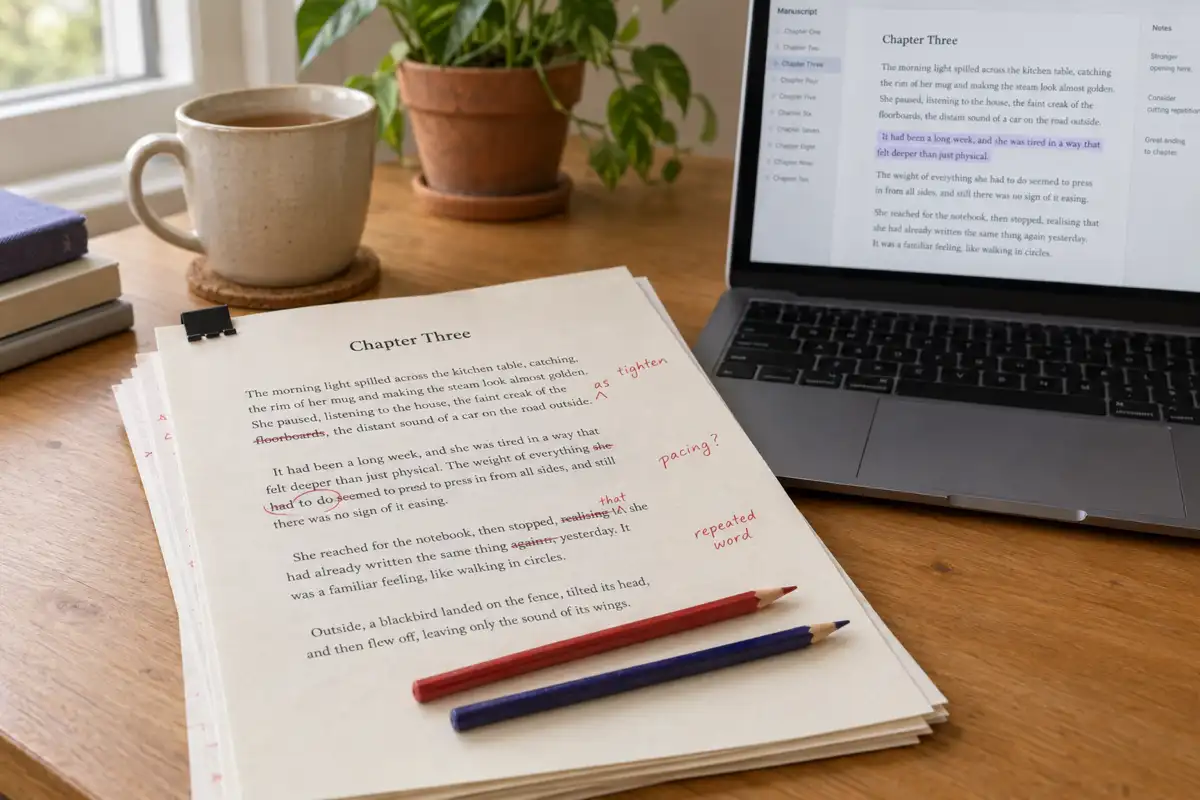
 Best AI for Editing a Book (2026): 9 Tools Compared by Editing Job
Which AI should edit your manuscript? We compare ProWritingAid, Grammarly, AutoCrit, Sudowrite, Novelcrafter, ChatGPT, Claude, the free checks in Google Docs and Word, and Inkfluence AI by the job each does best: grammar, line editing, story feedback, or editing and publishing in one place. Prices checked 2 October 2026.
 AI Writing
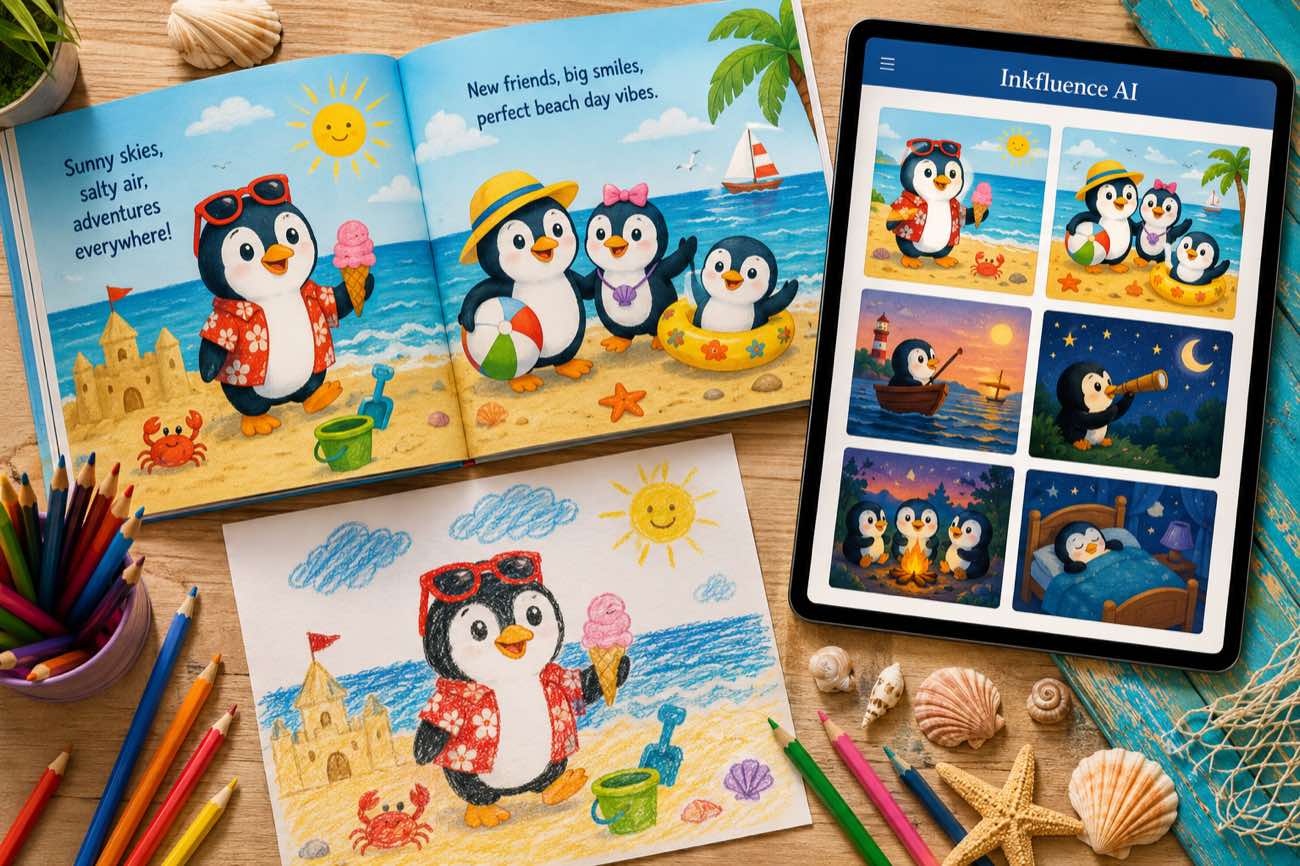
 How to Make a Children's Picture Book with AI: Idea to Printed Book in a Day
The complete 2026 workflow for making a fully illustrated children's picture book with AI: age-band word counts, page planning, consistent characters, cover design, and publishing it on Amazon KDP with the right disclosure.
 AI Writing
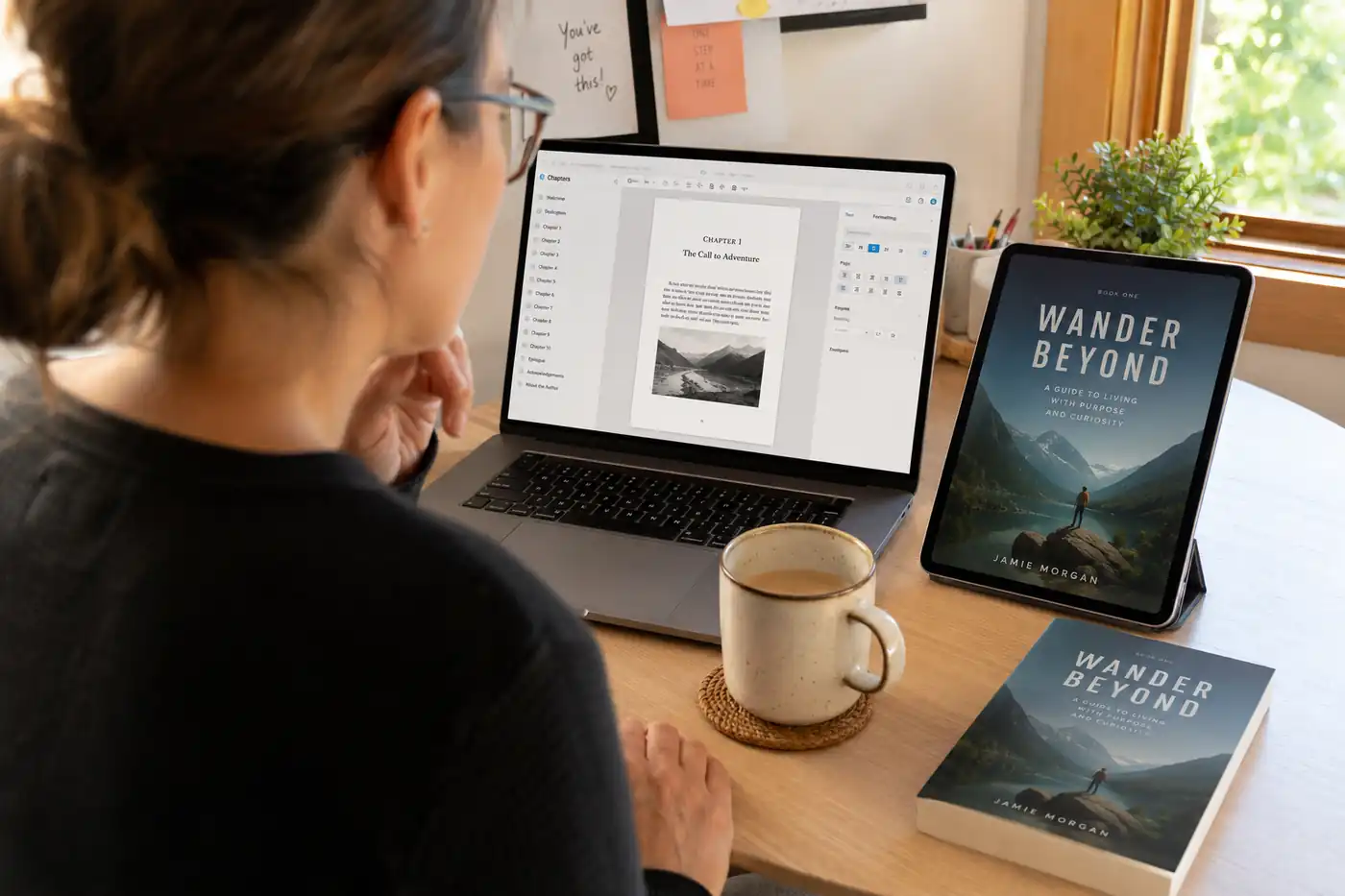
 The 9 Best Ebook Creators in 2026: AI, Formatting, and Design Tools Compared
Not every "ebook creator" does the same job. We compare the 9 best tools of 2026 across three categories: AI generators that write the book, formatting tools that typeset it, and design tools that make it beautiful, with verified pricing for each.
Get ebook tips in your inbox
Join creators getting weekly strategies for writing, marketing, and selling ebooks.