
How to Write a Novel with AI in 2026: The Complete Process Guide
The full novel-writing process with AI, step by step: shaping a premise, building the outline, locking a story bible for continuity, drafting chapters sequentially, revising into your voice, and publishing on KDP.
Quick Answer
Writing a novel with AI in 2026 is a six-stage process: shape a one-paragraph premise, build a chapter outline, lock a story bible (characters, world rules, tone) so the AI stays consistent, generate chapters sequentially so each one knows what happened before it, revise the draft into your own voice, then export and publish. Tools like Inkfluence AI run this whole pipeline in one place; the craft decisions stay yours.
Most guides to "writing a novel with AI" stop at prompting tips. This one walks the actual process end to end, in the order that produces a coherent book rather than a pile of disconnected chapters. The order matters more than the tool: every stage below exists to protect the thing AI drafting most easily loses, which is continuity.
Stage 1: Shape the Premise
A premise is one paragraph: who wants what, what stands in the way, and why now. Every weak AI novel we see traces back to a premise that was really just a setting ("a world where magic is illegal") with no want and no obstacle. The AI can only escalate a conflict you gave it.
Pressure-test the premise before anything else: can you name the protagonist's want in one sentence? Can you name the force opposing it? Does the ending you imagine resolve that specific collision? If any answer is fuzzy, fix it now; it costs a sentence here and a rewrite later.
Stage 2: Build the Outline
The outline is the highest-leverage fifteen minutes in the entire process. Chapter-by-chapter, each entry needs three things: what happens, what changes (a character learns something, loses something, or commits to something), and the hook that pulls the reader into the next chapter. An outline entry that only says what happens produces a chapter that only describes.
Structure-wise, genre carries expectations: romance readers expect the meet, the complication, the dark moment, and the resolution; mysteries expect the crime, the false trail, and the reveal. Match the skeleton to the genre before generating, because restructuring after drafting means regenerating, not rearranging.
Stage 3: Lock the Story Bible
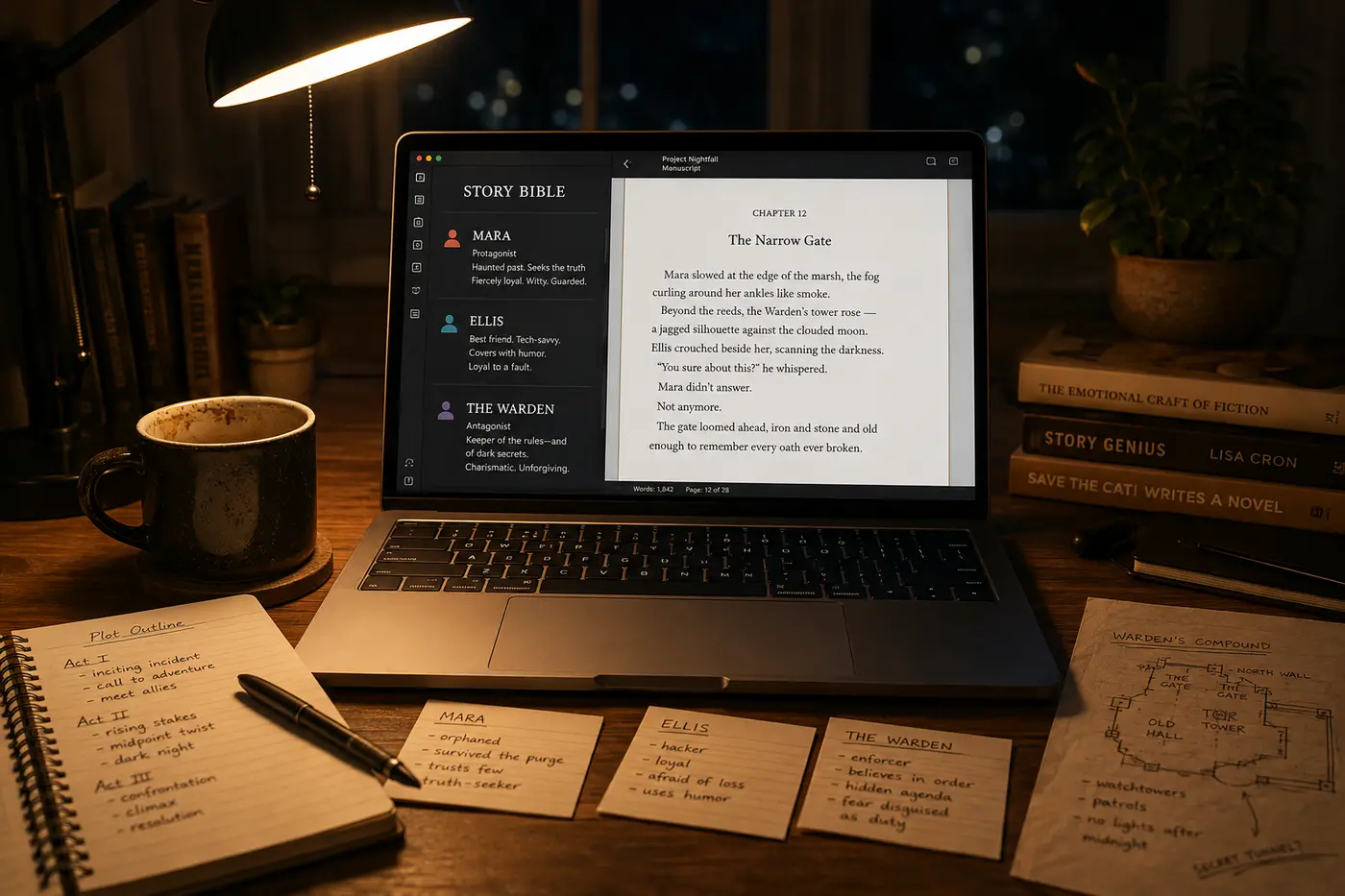
This is the stage that separates a novel from a stack of chapters. A story bible records the fixed facts: character names, appearances, relationships, and voices; world rules (what magic costs, what technology exists, what the law forbids); timeline anchors; and tone. During generation, the bible is re-injected into every chapter so chapter twenty-three agrees with chapter four about your protagonist's eye colour and your world's rules.
Write the bible before drafting and treat it as law during revision. When you change a fact mid-book (it happens), change it in the bible first, then sweep earlier chapters, never the other way around. Inkfluence maintains the story bible automatically and persists it across a series, which is what keeps book three consistent with book one.
Stage 4: Draft Sequentially
Fiction chapters must be generated in order, each one reading a summary of what came before: who knows what, who is where, what was just lost or won. Parallel generation works for how-to books where chapters are independent; in a novel it produces continuity errors no revision pass can fully hide. Sequential drafting is slower and correct.
Expect the draft to be structurally sound and stylistically flat in places. That is the correct expectation: the AI's job at this stage is to get the story down with the continuity intact. The personality arrives in stage five. For choosing the right tool for this stage, our comparison of the best AI tools for novels ranks the options on exactly this sequential-continuity capability.
Stage 5: Revise Into Your Voice
Revision is where the book becomes yours, and it has an efficient order: continuity sweep first (against the bible), then dialogue distinctiveness (each character should be identifiable with the name tags removed), then openings and endings (the first and last 500 words of the book, and the last lines of every chapter, deserve the most passes), then a prose pass for the sentences you want to keep forever.
Rewrite, don't regenerate, when a passage is close: regenerating loses the parts that worked. Select the specific passage and revise it with a targeted instruction instead of rerolling whole chapters.
Stage 6: Export and Publish
For Kindle, export EPUB: it reflows on every device and carries your chapter navigation. For direct sales or print-style reading, PDF. On Amazon, remember the AI disclosure question during upload asks about AI-generated content specifically; our KDP novel guide covers the disclosure rules, pricing bands, and category strategy in depth.
Then start book two, or turn book one into a series in a few clicks. Fiction earns as a catalogue: series read-through is the strongest revenue mechanic in self-published fiction, and the story bible you locked in stage three is what makes a consistent series possible.
Frequently Asked Questions
Can AI really write a whole novel?
AI can draft a whole novel; it cannot decide what the novel is about, what it means, or how it should feel, and it drifts without a story bible. The working division: you own premise, structure, and voice; the AI owns the heavy lifting of the first draft.
How long does the process take?
The drafting itself is fast: sequential generation of a full novel completes the same day you start it. The honest timeline is set by stages one to three (a focused afternoon) and stage five (the revision weeks are where good novels are made).
Do I need to outline if the AI can improvise?
Yes. An AI improvising a novel produces chapters that read fine individually and don't add up to a story. The outline is the story; generation executes it.
Will readers know it was AI-assisted?
After a real stage-five revision, what readers experience is your premise, your structure, and your voice. Disclose where a platform requires it (Amazon asks about AI-generated content at upload), and put your effort where readers actually judge: whether the story lands.

Founder, Inkfluence AI
Sam is the founder of Inkfluence AI. He built the platform to make book creation accessible to everyone - from first-time authors to seasoned publishers.
Helpful links
Ready to Create Your Own Ebook?
Start writing with AI-powered tools, professional templates, and multi-format export.
Get Started FreeRelated Articles
 AI Writing
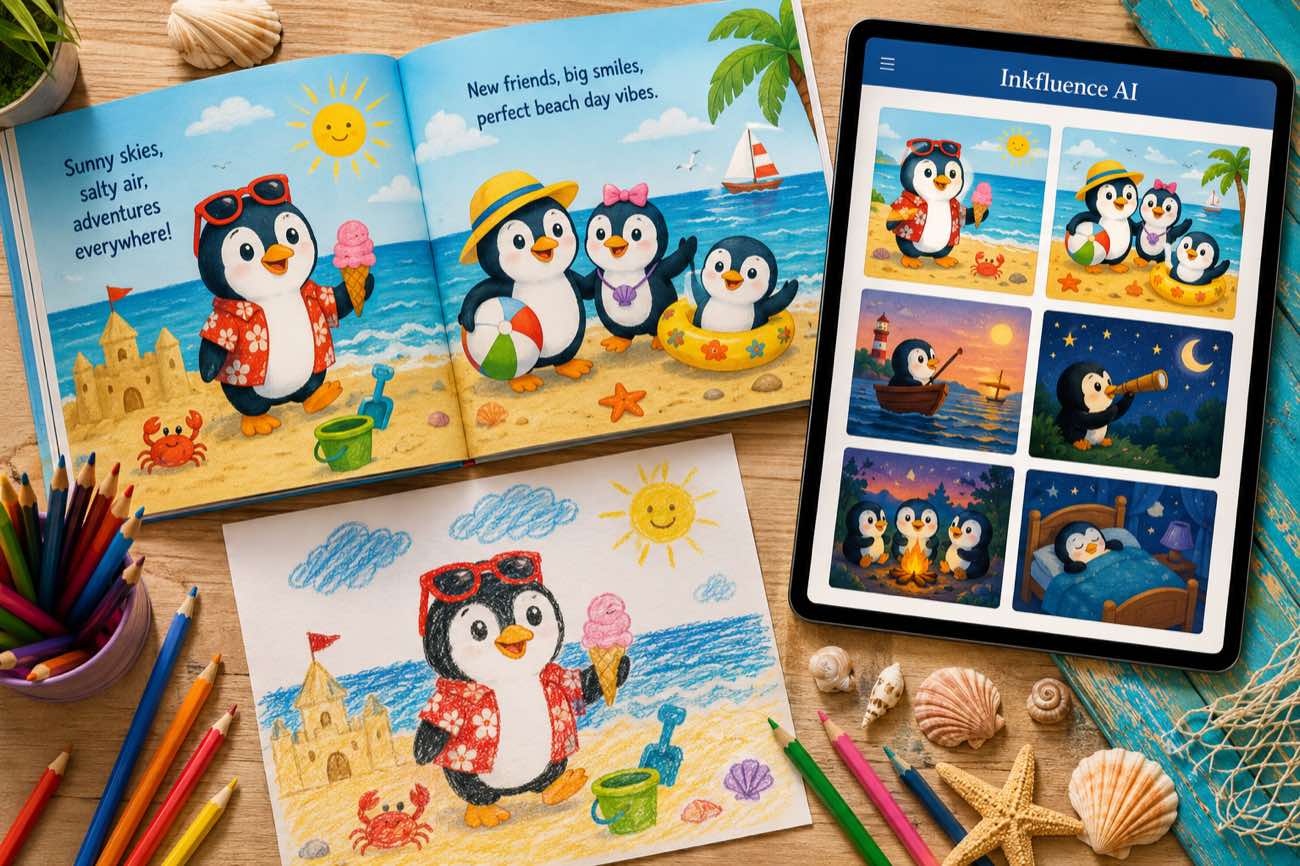
 How to Make a Children's Picture Book with AI: Idea to Printed Book in a Day
The complete 2026 workflow for making a fully illustrated children's picture book with AI: age-band word counts, page planning, consistent characters, cover design, and publishing it on Amazon KDP with the right disclosure.
 AI Writing
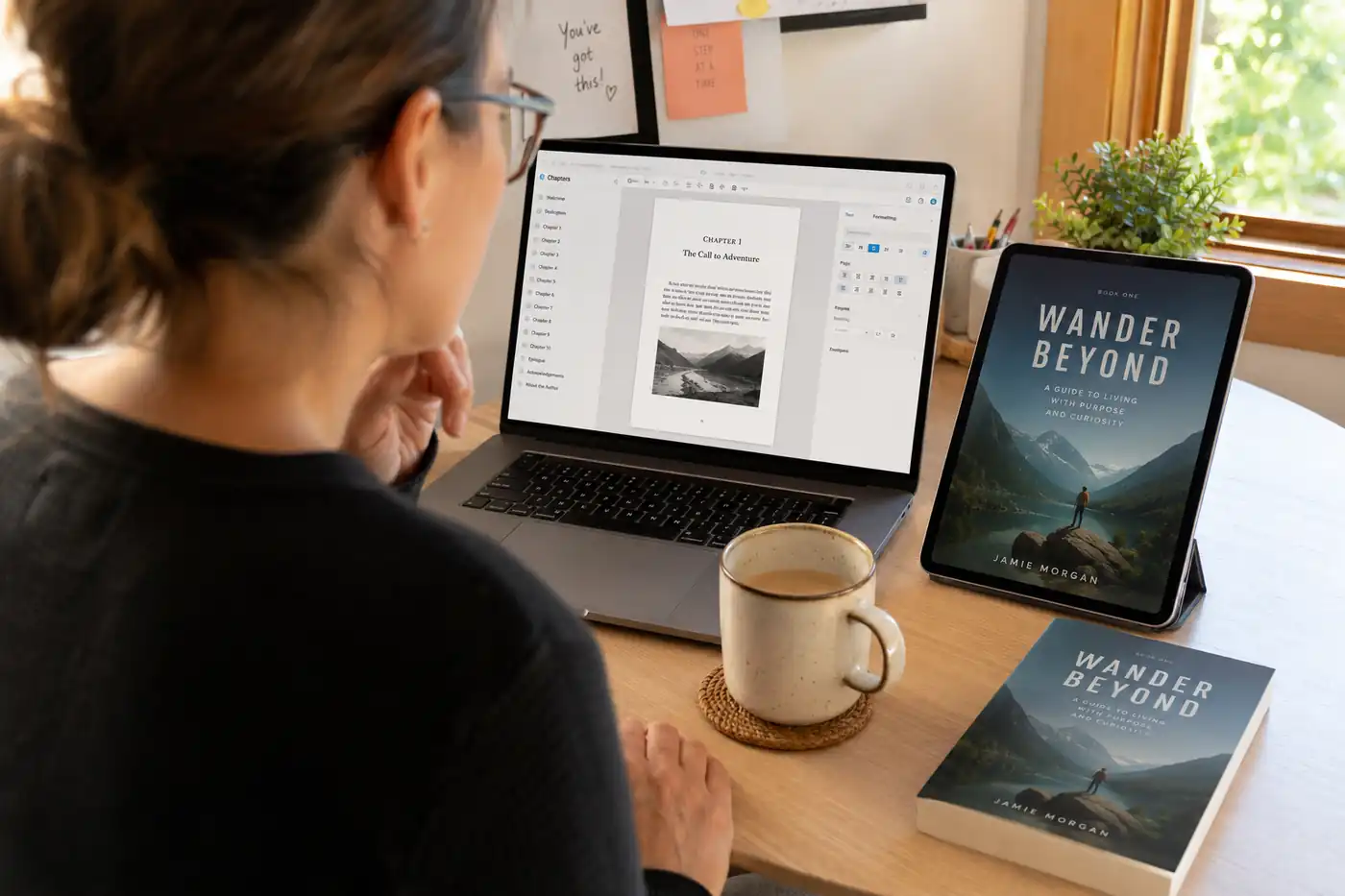
 The 9 Best Ebook Creators in 2026: AI, Formatting, and Design Tools Compared
Not every "ebook creator" does the same job. We compare the 9 best tools of 2026 across three categories: AI generators that write the book, formatting tools that typeset it, and design tools that make it beautiful, with verified pricing for each.
 AI Writing
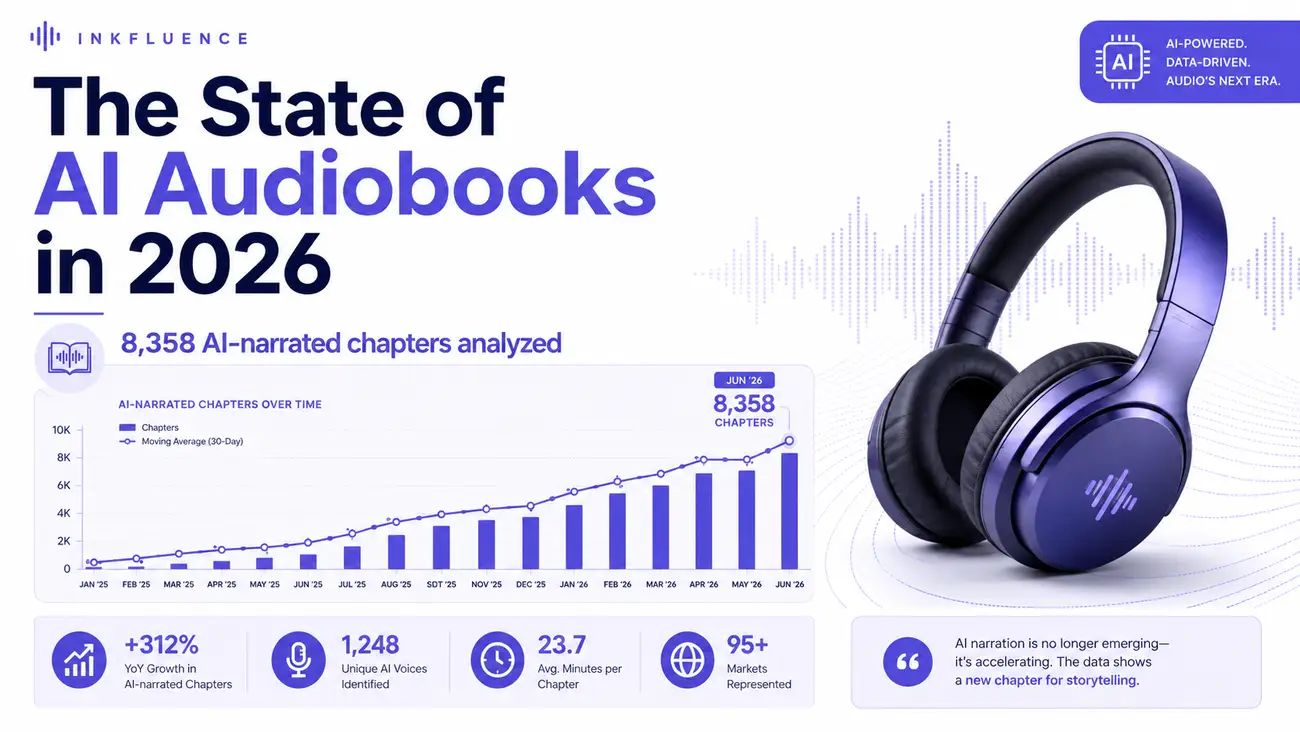
 The State of AI Audiobooks in 2026: What 8,358 AI-Narrated Chapters Reveal
We looked at 8,358 chapters our users narrated into audiobooks with AI. Monthly narration grew from a handful of chapters in late 2025 to nearly 3,000 a month by mid-2026, 99% of jobs finished cleanly, and listeners consistently pick natural, conversational voices over dramatic ones. Here is the first-party data and what it means for authors.
Get ebook tips in your inbox
Join creators getting weekly strategies for writing, marketing, and selling ebooks.