
How to Write and Publish a Book in a Weekend (Step-by-Step 2026 Guide)
A detailed hour-by-hour plan to go from book idea to published on Amazon in 48 hours. Covers topic selection, outlining, AI-assisted writing, editing, cover design, formatting, and publishing. With a printable weekend schedule, real examples, and common pitfalls to avoid.

Quick Answer
Yes, you can write and publish a book in a single weekend. The key is preparation (decide your topic and audience before the weekend starts), an AI writing tool like Inkfluence AI that handles outline-to-export in one workflow, and a structured schedule that keeps you moving instead of stuck on any single step. This guide gives you the exact hour-by-hour plan.
The Weekend Book Sprint
48 hours. One book. Published and live.
This is not about writing a sloppy first draft and throwing it on Amazon. This guide walks you through a realistic 48-hour schedule that produces a polished, professionally formatted, publication-ready book in a single weekend. The trick is using the right tools at the right time and avoiding the common traps that waste hours.
Whether you are writing your first book or your twentieth, this schedule works for non-fiction, guides, journals, workbooks, and short-form books of 15,000 to 40,000 words.
One reason the weekend timeline is realistic rather than optimistic: the drafting itself is no longer the bottleneck. Across the last 60 multi-chapter books generated on Inkfluence, the median draft finished in about 4 minutes of generation time, and nine out of ten finished within 25 minutes. Your weekend is not spent producing words. It is spent on the parts that make a book worth publishing: shaping the outline, editing the draft into your voice, and getting the packaging right.
The biggest barrier to publishing a book is not talent, knowledge, or money. It is time. Or more accurately, it is the perception that writing a book requires months of work. With AI-assisted writing tools, the mechanical work of producing a full-length manuscript has gone from months to hours.
What still takes time is the human work: choosing the right topic, structuring your ideas, editing for quality, and making sure the final product is something you are proud of. This guide allocates your weekend hours accordingly - less time generating words, more time on the decisions and refinements that make a book good.
48h
From idea to published, including sleep
~16h
Actual working hours across the weekend
25K+
Target words for a substantial, valuable book
$0
Possible on free tiers if you already have a cover image
Is a Weekend Book Right for You?
A weekend book sprint works well for certain types of books and certain authors. Before committing your weekend, make sure this approach fits your project.
Weekend sprints work great for:
- Non-fiction with clear structure - How-to guides, self-help, business books, cookbooks, and educational content where you already know the subject well
- Guided journals and workbooks - Prompt-based content that follows repeating patterns
- Lead magnets and short guides - 10,000-20,000 word books designed for email list building
- KDP catalogue builders - Authors publishing multiple focused books on related topics
- Subject-matter experts - If you could give a 3-hour talk on your topic without notes, you have enough knowledge for a weekend book
Weekend sprints are harder for:
- Fiction and novels - Character development and narrative arcs need more incubation time
- Research-heavy work - Academic or data-driven books where you need to verify facts and cite sources
- Memoir and biography - Personal stories benefit from reflection between writing sessions
- First-time authors with no topic - If you do not know what to write about yet, spend a week deciding before the sprint weekend
Before the Weekend: Preparation Checklist
The weekend sprint starts before the weekend. Spending 30-60 minutes of preparation on Thursday or Friday morning makes the difference between finishing on Sunday and giving up on Saturday afternoon.
Pre-Weekend Checklist
Topic decided
You can state your book's topic in one sentence. "A guide to starting a freelance copywriting business in 2026."
Target reader identified
You know exactly who this book is for. Age, experience level, what they are struggling with, what outcome they want.
Rough chapter ideas (optional but helpful)
Even a napkin list of 5-10 chapter topics speeds up Friday evening significantly.
Tools set up and accounts created
Do not spend Saturday morning creating accounts. Sign up for Inkfluence AI (free) and any other tools before the weekend.
KDP account ready (if publishing on Amazon)
Amazon KDP account creation takes 24-48 hours for verification. Do this well before the weekend. See our Amazon KDP publishing guide for setup details.
Weekend cleared
Cancel plans, stock the fridge, tell your family. You need approximately 16 focused hours across Friday evening, Saturday, and Sunday.
Friday Evening: Foundation (3 Hours)
Friday evening is about building the skeleton your book will hang on. Do not start writing chapters yet. The temptation to jump straight into content is strong - resist it. Time spent on structure now saves double the time in revisions later.
Hour 1: Topic Refinement and Research (6:00 - 7:00 PM)
Even if you know your topic well, spend this hour sharpening the angle. Open Amazon and search for books similar to yours. Read 5-10 book descriptions and table of contents (use the "Look Inside" feature). Note:
- What topics do competing books cover?
- What questions do reviewers say were unanswered?
- What angle or structure would make your book different?
- What keywords do the top-selling books use in their titles?
This research is not about copying. It is about finding the gap your book fills. A book that covers the same ground as 50 existing books will struggle. A book that addresses a specific angle, audience, or problem that others miss has a natural market.
Hour 2: Outline Creation (7:00 - 8:00 PM)
This is the most important hour of the entire weekend. Your outline determines your book's quality more than any other single factor.
Use Inkfluence AI's outline generator to create a detailed chapter-by-chapter structure. Describe your book's topic, your target reader, and the transformation your book delivers. The AI will generate a complete outline with chapter titles, key points, and logical progression.
Then spend the rest of the hour editing that outline:
- Reorder chapters for the most logical learning flow
- Remove chapters that overlap or add padding without value
- Add chapters for topics the AI missed that you know your reader needs
- Sharpen chapter titles to be specific and benefit-driven
- Add 3-5 bullet points under each chapter describing what it must cover
Target: 8-12 chapters for a standard non-fiction book. Fewer for a short guide (5-7), more for a comprehensive reference (12-15).
The outline is your safety net
If your outline is detailed and well-structured, every chapter you generate will be focused and relevant. If your outline is vague, you will spend Saturday afternoon rewriting chapters that went off-track. This single hour of outline work is the highest-leverage hour of the entire weekend. For more on building strong outlines, see our guide on avoiding generic AI book output.
Hour 3: Introduction Draft + Cover Direction (8:00 - 9:00 PM)
Write or generate your book's introduction. A strong introduction does three things:
- Tells the reader exactly what problem this book solves
- Explains why they should trust this book (your experience, research, or unique perspective)
- Previews what they will learn and the transformation they can expect
In the remaining time, decide on your cover direction. Browse covers in your genre on Amazon for inspiration. Note colours, styles, and fonts that appear on bestsellers. If you are using Inkfluence AI's cover designer, experiment with a few generated options to see what looks right. You do not need a final cover tonight, just a direction.
End of Friday: You have a research-informed topic, a detailed 8-12 chapter outline, a drafted introduction, and a cover direction. You are ready for the writing sprint.
Saturday: The Writing Sprint (8 Hours)
Saturday is the main event. Eight hours of focused work, with breaks, will produce the bulk of your book. The key mental shift: you are not writing from scratch. You are refining and personalising AI-generated content based on your detailed outline.
Morning Session: Chapters 1-4 (9:00 AM - 1:00 PM)
9:00 - 9:15: Re-read your outline. Does anything feel off after sleeping on it? Make any final adjustments. Then start generating chapters.
9:15 - 12:30: Generate and edit chapters 1-4. The workflow for each chapter:
- Generate the chapter using your outline (5-10 minutes)
- Read through the generated content (10-15 minutes)
- Edit for your voice - add personal anecdotes, examples from your experience, opinions, and the kind of specific details only a subject-matter expert would know (15-20 minutes)
- Move to the next chapter - do not over-polish at this stage
Each chapter should take 30-45 minutes including generation and editing. That gives you 4 chapters by lunch.
The 80/20 editing rule
During the Saturday sprint, aim for 80% quality on each chapter. Do not chase perfection. You have a dedicated editing session on Sunday. The goal today is to get all chapters written and roughly polished. Perfectionism on chapter 2 means you never finish chapter 10.
12:30 - 1:00: Lunch break. Step away from the screen completely. Eat, walk, reset.
Afternoon Session: Chapters 5-8+ (1:00 - 5:00 PM)
1:00 - 4:00: Generate and edit chapters 5 through your final chapter. Same workflow as the morning. If your energy dips in the early afternoon (it will), start with the chapter you are most excited about rather than going in order. Momentum matters more than sequence at this stage.
4:00 - 4:30: Break. Coffee, snack, fresh air.
4:30 - 5:00: Write the conclusion. Your conclusion should:
- Summarise the key takeaways (not rehash every chapter, just the 3-5 biggest ideas)
- Motivate the reader to take action
- Point them to your next resource (another book, your website, an email list)
End of Saturday: You have a complete first draft. Every chapter is written, the introduction and conclusion are in place. The book exists. Everything from here is refinement, not creation.
Saturday Evening: Cover and Metadata (Optional - 1 Hour)
If you have energy left, spend an hour on your cover design and book metadata:
- Finalise your cover in Inkfluence AI's cover designer or Canva
- Write your book description (the Amazon sales page copy)
- Draft your author bio
- Choose your categories and keywords for Amazon
If you are tired, save this for Sunday morning. Do not force creative work when exhausted - the cover and description are sales tools that need fresh eyes.
Sunday: Polish and Publish (5 Hours)
Sunday is about transforming your draft into a professional product. This is where most weekend book attempts fail - people skip the polish and publish something rough. Readers notice. Invest these 5 hours.
Morning: Editing Pass (9:00 AM - 12:00 PM)
9:00 - 10:30: Read-through edit. Read your entire book start to finish. Do not stop to fix every sentence. Instead, flag three types of issues:
- Structural problems: Chapters that overlap, sections that feel out of place, gaps where information is missing
- Voice inconsistencies: Sections that sound robotic or generic compared to sections that sound like you
- Weak spots: Chapters that feel thin, lacking examples or actionable advice
10:30 - 11:30: Fix flagged issues. Address the structural and voice problems you identified. Add personal examples where the content feels generic. Cut sections that repeat information from earlier chapters. This is the edit pass that elevates your book from "AI-generated" to "author-written with AI assistance."
11:30 - 12:00: Proofread. Run the manuscript through a grammar checker (Grammarly, ProWritingAid, or similar). Fix typos, punctuation errors, and awkward phrasing. Read the first and last paragraph of every chapter to make sure they are strong - readers remember openings and closings.
Early Afternoon: Design and Format (12:30 - 2:00 PM)
12:30 - 1:15: Finalise cover. If you did not finish on Saturday evening, finalise your cover now. Make sure the title is readable at thumbnail size (this is how most Amazon shoppers see it). Test by shrinking it to the size of a postage stamp on your screen. If you cannot read the title, increase the font size.
1:15 - 2:00: Format and export. Export your book as PDF and/or EPUB. Inkfluence AI handles formatting automatically - chapter headings, table of contents, page breaks, and typographic styling are all included. If you are using a separate formatting tool, this step takes longer.
Check your exported file:
- Does the table of contents work (links go to the right chapters)?
- Are chapter headings consistent?
- Is the text readable on a Kindle or phone screen?
- Do page breaks fall in the right places?
Late Afternoon: Publish (2:00 - 3:00 PM)
2:00 - 2:30: Upload to KDP (or your chosen platform). If publishing on Amazon:
- Log into KDP and click "Create New Title"
- Enter your book details: title, subtitle, description, author name
- Upload your manuscript file (EPUB for ebook)
- Upload your cover
- Set your price (for your first book, $2.99-$4.99 is a good starting range for the 70% royalty tier)
- Select categories and enter your 7 keywords
- Submit for review
Amazon's review process typically takes 24-72 hours. For details on optimising your listing for sales, see our complete Amazon KDP sales guide.
2:30 - 3:00: Create your launch materials. While waiting for Amazon approval:
- Write 3 social media posts announcing your book
- Draft an email to your list (if you have one)
- Create a simple landing page or link-in-bio pointing to your Amazon listing
End of Sunday: Your book is submitted for review, your launch materials are ready, and you can close your laptop knowing you went from idea to published author in a single weekend.
Ready for your weekend book sprint?
Start Your Book FreeOutline, write, design, and export - all in one platform
Printable Weekend Schedule
Here is the full schedule at a glance. Save this or print it to keep yourself on track.
| Time | Task | Deliverable |
|---|---|---|
| FRIDAY EVENING | ||
| 6:00 - 7:00 PM | Topic research + competitive analysis | Differentiated angle confirmed |
| 7:00 - 8:00 PM | Outline creation + editing | 8-12 chapter detailed outline |
| 8:00 - 9:00 PM | Introduction draft + cover direction | Introduction written, cover mood decided |
| SATURDAY | ||
| 9:00 - 12:30 PM | Generate + edit chapters 1-4 | 4 edited chapters |
| 12:30 - 1:00 PM | Lunch break | - |
| 1:00 - 4:00 PM | Generate + edit remaining chapters | All chapters written |
| 4:00 - 4:30 PM | Break | - |
| 4:30 - 5:00 PM | Write conclusion | Complete first draft |
| Evening (optional) | Cover design + metadata | Cover draft + book description |
| SUNDAY | ||
| 9:00 - 10:30 AM | Full read-through + flag issues | Issue list |
| 10:30 - 11:30 AM | Fix structural + voice issues | Polished manuscript |
| 11:30 - 12:00 PM | Proofread with grammar checker | Clean manuscript |
| 12:30 - 1:15 PM | Finalise cover | Final cover file |
| 1:15 - 2:00 PM | Format + export | PDF/EPUB files |
| 2:00 - 3:00 PM | Upload + publish + launch prep | Book submitted, launch materials ready |
Best Book Types for a Weekend Sprint
Some book formats are inherently faster to produce because they follow repeating structures or do not require deep narrative development. Here are the best types ranked by weekend-friendliness:
Easiest (one day possible)
- Guided journals - repeating prompt structures
- Lead magnets - short, focused, high-value
- Workbooks - exercise-based, modular
- Lesson plans - structured by design
Great fit (full weekend)
- Self-help books - advice-driven, chapter independence
- Cookbooks - recipe-based, modular
- Business how-to - frameworks + actionable steps
- Study guides - topic-based, clear structure
Possible but tight
- Health and wellness - needs accuracy checking
- Travel guides - needs local verification
- Devotionals - needs spiritual sensitivity
- Inspirational - needs authentic personal stories
Better as a week-long project
- Novels / fiction - narrative complexity
- Biography / memoir - needs reflection time
- True crime - research-intensive
- Mystery / thriller - plot needs incubation
Tools You Need
Keep your tool stack minimal for a weekend sprint. Every tool switch costs time and mental energy. Here is the lean stack:
| Stage | Tool | Cost | Why |
|---|---|---|---|
| Outline + Write + Format + Cover | Inkfluence AI | Free - $19.99/mo | One tool for the entire creation pipeline. No copy-paste between apps. |
| Edit / Proofread | Grammarly or ProWritingAid | Free - $30/mo | Catches grammar, style, and readability issues you miss when tired. |
| Publish | Amazon KDP | Free | Largest ebook marketplace. Free to publish, you earn royalties on sales. |
That is it. Three tools (and two of them are free). For a deeper comparison of all available tools at each stage, see our complete AI writing toolkit guide.
How to Keep Quality High Under Time Pressure
Speed without quality is worthless. A bad book published fast still has your name on it. Here are the specific techniques that maintain quality during a sprint:
1. Front-load your expertise
AI generates the structure and base content. You add the expertise. For every chapter, ask yourself: "What do I know about this topic that most people do not?" Add that. Personal stories, specific examples, counterintuitive insights, hard-won lessons - this is what separates your book from generic content.
2. Edit the outline ruthlessly
Cut any chapter that feels like filler. A focused 8-chapter book is better than a padded 14-chapter book. Readers can tell when content is stretched thin. If a chapter does not pass the test "Would a reader pay money for this specific chapter?", remove it.
3. Read aloud
During your Sunday editing pass, read sections aloud. Your ear catches awkward phrasing, robotic sentences, and unnatural transitions that your eyes skip over. This single technique catches more quality issues than any software tool.
4. Test the opening
Your introduction and first chapter are the most-read parts of your book (Amazon's "Look Inside" feature shows these). Spend extra time making them excellent. A strong opening earns the reader's trust for the remaining chapters.
5. Get one outside reader
If possible, send your manuscript to one trusted person on Saturday evening and ask for feedback by Sunday morning. Even one outside perspective catches blind spots you will never see yourself. Ask them: "Where did you lose interest? What confused you? What did you want more of?"
10 Weekend Book Mistakes (and How to Avoid Them)
- Starting without an outline. This is the number one cause of failed weekend sprints. You waste Saturday afternoon staring at a screen trying to figure out what the next chapter should be. Spend Friday evening on a detailed outline and Saturday becomes execution, not planning.
- Trying to write a 60,000-word book. A weekend book should be 15,000-35,000 words. That is a substantial, valuable book. Trying to write a doorstop novel in 48 hours produces a rushed, thin manuscript. Go for density and value, not length.
- Skipping the editing pass. "I will edit it next week" turns into "I never edited it." Schedule the editing on Sunday and treat it as non-negotiable. An unedited book damages your reputation more than no book at all.
- Perfectionism on chapter 2. You will want to rewrite every sentence until it is perfect. Resist. Get all chapters to 80% quality on Saturday. Polish on Sunday. Perfectionism is the enemy of completion.
- Not having your publishing account set up. Amazon KDP verification can take days. If you create your account on Sunday afternoon, you cannot publish until midweek. Set up accounts before the weekend.
- Ignoring the cover. "I will just use a simple text cover" - this is how books die in the Amazon catalogue. Your cover is the single biggest factor in whether someone clicks on your book. Spend the time on it. Use the AI cover generator or Canva templates for your genre.
- Writing about a topic you need to research. A weekend sprint works when you already know the material. Writing a book about cryptocurrency trading when you have never traded crypto means half your weekend goes to research instead of writing. Pick a topic where you are the expert.
- No breaks. Writing for 12 straight hours produces diminishing returns after hour 4. The schedule includes breaks for a reason. Your brain needs recovery time. A 15-minute walk after 3 hours of writing produces better work in the next session than pushing through fatigue.
- Choosing the wrong book type. Fiction, memoir, and research-heavy books are not weekend projects. They require incubation time, multiple drafts, and creative rest between sessions. Choose a format from the "easiest" or "great fit" categories above.
- Not promoting after publishing. Publishing is not the finish line. A book with no marketing is a book with no readers. Prepare your launch materials on Sunday and execute your marketing plan in the following week. Even a simple social media post and email to your network makes a massive difference. See our KDP marketing guide for the full strategy.
After the Weekend: What Happens Next
Your book is submitted on Sunday. Here is what to do in the following days and weeks:
Week 1: Launch
- Announce on social media (LinkedIn is especially good for non-fiction)
- Email your network or list
- Ask 5-10 people to buy and leave honest reviews - reviews in the first week dramatically impact Amazon's algorithm
- Set up an author page on Amazon
Week 2-4: Optimise
- Check your Amazon listing: is the description compelling? Are keywords driving traffic?
- Read any reviews and note feedback for your next book
- Consider running a KDP free promotion to boost visibility
- Write 2-3 blog posts or social content related to your book's topic
Month 2+: Build the catalogue
- Plan your next weekend sprint. One book builds a product. Multiple books build a business.
- Consider an audiobook version to reach a new audience
- Use your book as a lead magnet for your email list or consulting business
- Explore related topics from our ebook ideas that sell guide
Your weekend starts now
Pick a topic, set up your account, and block out the time. 48 hours from now, you could have a published book.
Start Your Book FreeFrequently Asked Questions
Can you really write a book in a weekend?
Yes, with AI-assisted writing tools and proper preparation. The mechanical work of generating 20,000-35,000 words of structured content takes hours, not months. Your time goes to the high-value work: choosing the right topic, structuring the outline, editing for quality, and adding your personal expertise.
Will a "weekend book" be lower quality than one written over months?
Not necessarily. Quality comes from the outline, the editing, and the expertise you bring - not from how long you spend typing. Many traditionally-written books spread thin work over months without improving quality. A focused weekend sprint with AI assistance and disciplined editing produces professional-quality results.
How long should a weekend book be?
Target 15,000-35,000 words. This is a full-length ebook by most standards. Lead magnets and short guides can be shorter (8,000-15,000 words). Do not aim for 70,000+ words in a weekend - that requires cutting corners on quality.
What if I do not finish by Sunday?
That is fine. You still have a nearly complete manuscript. Spend a few weekday evenings finishing the editing and formatting. The weekend sprint gives you the momentum and structure - completion can flex by a few days without losing the benefit.
Do I need to pay for AI tools?
You can complete a weekend book using free tiers. Inkfluence AI's free tier includes 5 chapters, which is enough for a short guide or lead magnet. For a full-length book with 8-12 chapters, the Creator plan ($9.99/month) covers you.
Should I publish on Amazon or sell independently?
Start with Amazon KDP for discoverability. Amazon is where most ebook buyers search. You can also sell direct from your own website using Gumroad, Payhip, or your Inkfluence AI showcase page. Many successful authors do both. Our KDP guide covers the platform in detail.
What about ISBN numbers?
For Amazon KDP ebooks, you do not need to purchase an ISBN - Amazon assigns a free ASIN. For print books or distribution outside Amazon, you can purchase an ISBN through your country's ISBN agency (Bowker in the US, Nielsen in the UK). This is not a weekend concern - handle it later if needed.
Can I write fiction in a weekend?
A short story collection or novella (under 25,000 words) is possible. A full novel is extremely difficult in a weekend even with AI assistance. Fiction requires more revision passes for character consistency, plot coherence, and voice. If you want to try, focus on a simple single-POV narrative with a straightforward plot.
What is the biggest risk of a weekend book?
Publishing something you are not proud of because you rushed the editing. The weekend sprint schedule deliberately allocates 3+ hours to editing on Sunday. Do not skip this. If your book is not ready by 3 PM Sunday, postpone publishing to Monday or Tuesday rather than publishing something rough.
How much money can a weekend book make?
There is no honest average: earnings depend on topic, niche demand, pricing, and how much marketing follows the launch. Treat the first weekend book as a learning experience that teaches you positioning, keywords, and what readers respond to; subsequent books, informed by real market data, are where most authors see meaningful income. See our low-competition high-converting categories guide for lucrative niches.
Related Reading
The Fastest Way to Create an Ebook (5 Tools Tested)
Controlled speed test across 5 tools
How to Sell Ebooks on Amazon KDP in 2026
Complete KDP marketing and sales guide
How to Avoid Generic AI Book Output
Make your AI-generated book stand out
17 Ebook Ideas That Actually Sell in 2026
Profitable niches for your next book

Founder, Inkfluence AI
Sam is the founder of Inkfluence AI. He built the platform to make book creation accessible to everyone - from first-time authors to seasoned publishers.
Helpful links
Ready to Create Your Own Ebook?
Start writing with AI-powered tools, professional templates, and multi-format export.
Get Started FreeRelated Articles
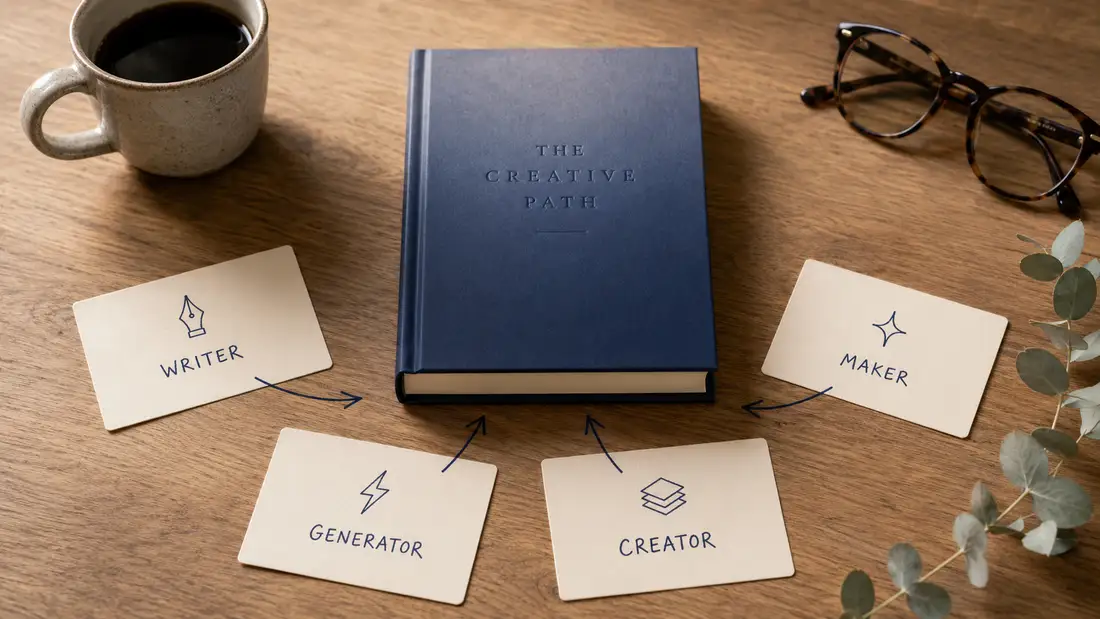 AI Writing
 AI Ebook Writer vs Generator vs Creator vs Maker: Which Do You Actually Need?
Every AI book tool calls itself a writer, a generator, a creator, or a maker, and most buyers cannot tell them apart. Here is what each term actually means, which one matches your goal, and why the smartest move is usually not to pick just one.
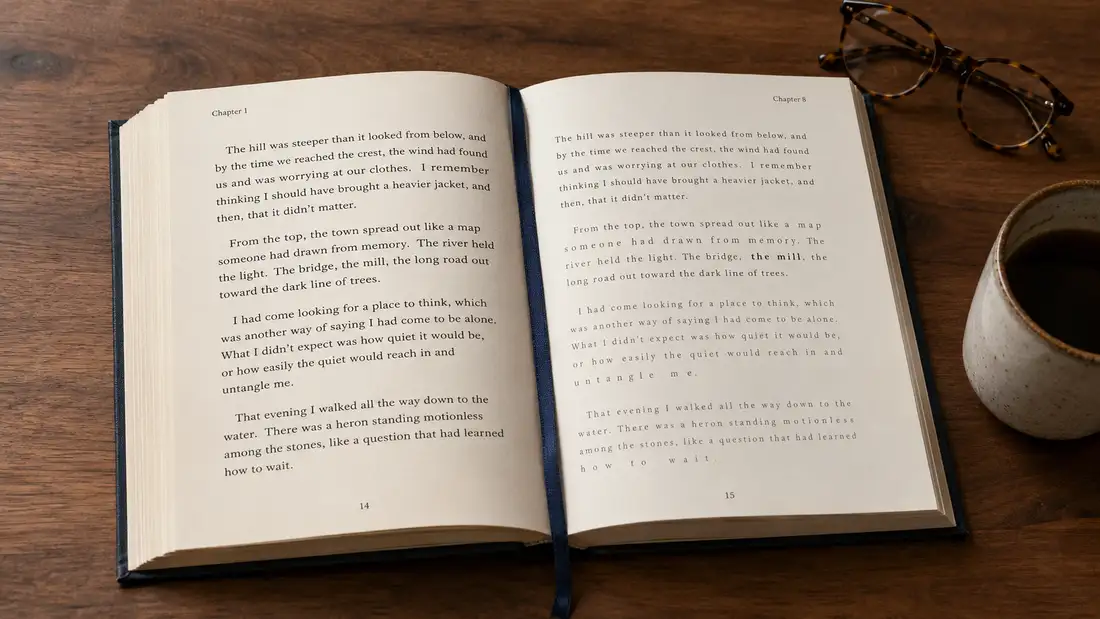 AI Writing
 Why AI Ebooks Lose Their Voice After Chapter 5 (And What to Look For)
Most AI-written ebooks read beautifully for three chapters, then quietly fall apart. The tone shifts, the vocabulary creeps, and by chapter eight it reads like a different author. Here is why it happens, how to spot it as a reader or buyer, and what to look for in a tool that holds one voice across a whole book.
 Self-Publishing
 How to Publish a Poetry Book on Kindle in 2026: The Complete Indie Poet Guide
Poetry collections sell well on KDP when they are formatted properly. Most indie poets get tripped up on the same five things: stanza spacing collapses on reflow, long lines break unintentionally, the cover does not signal poetry, the description reads like fiction back-cover copy, and the categories miss the readers. Here is the complete workflow.
Get ebook tips in your inbox
Join creators getting weekly strategies for writing, marketing, and selling ebooks.