
The Complete Guide to Creating and Selling AI Audiobooks (2026)
Everything you need to know about creating audiobooks with AI in 2026. From choosing the right voice to distribution on the stores that accept AI narration, and where Audible fits. Covers costs, royalties, quality tips, and marketing strategies for self-published authors.
Quick Answer
You can create a professional audiobook with AI text-to-speech tools for under $50, compared to $2,000-$5,000 for a human narrator. The best approach in 2026 is to write your book with an AI book writer, then convert it to audio using built-in TTS like Inkfluence AI's audiobook generator. An AI-narrated audiobook sells on the stores that accept AI narration, such as Google Play Books and Kobo; Audible, through ACX, requires a human narrator.
Why Audiobooks Matter
Audiobooks are the fastest-growing format in publishing
The global audiobook market hit $7.7 billion in 2025 and is growing at 26% per year. More importantly, audiobook listeners are different from ebook readers. They listen during commutes, workouts, and chores. Adding an audiobook version of your ebook means reaching an entirely new audience without writing a single new word.
Until recently, the barrier was cost. Professional narration runs $200-$400 per finished hour, putting a 6-hour audiobook at $1,200-$2,400 minimum. AI has removed that barrier entirely.
This guide covers the complete audiobook creation process in 2026 - from deciding whether your book is a good audiobook candidate to getting it listed on the stores that accept AI narration, and where Audible fits.
Whether you are a self-published author looking to expand your revenue, a coach packaging your expertise, or a KDP publisher building a catalogue, audiobooks represent a significant opportunity. And with AI narration quality now approaching human levels for many genres, the economics have never been better.
$7.7B
Global audiobook market size in 2025, growing 26% annually
74%
Of audiobook listeners say they listen to books they would never read in print
$50
Typical cost to create an AI-narrated audiobook vs $2,000+ for human narration
50%
Royalty rate on Audible through ACX for exclusive distribution of a human-narrated audiobook (since 26 May 2026)
Should Your Book Be an Audiobook?
Not every book translates well to audio. Before investing time in narration, consider whether your content is a good fit.
Books that work well as audiobooks
- Self-help and personal development - Listeners absorb motivational and mindset content beautifully during commutes and workouts. This is the top-selling audiobook category.
- Fiction (all genres) - Mystery, thriller, romance, literary fiction, and sci-fi all perform strongly in audio format.
- Business and finance - Professionals listen to business books at 1.5x speed during commutes. One of the highest-revenue audiobook categories.
- Biographies and memoirs - Personal stories work naturally in spoken format. Many listeners prefer hearing these as if someone is telling them the story.
- Health and wellness - Meditation guides, wellness advice, and health information translate well to audio.
Books that need extra consideration
- Workbooks and journals - Interactive elements (fill-in sections, exercises) do not translate to audio. Consider creating a companion audio that walks listeners through the exercises while they have the physical book open.
- Technical guides with code or diagrams - If readers need to see visual elements, audio-only is limiting. A supplementary PDF with visuals can help.
- Recipe books and cookbooks - Ingredient lists in audio are tedious. Some cookbook authors create audio intros for each recipe (the story behind the dish) plus a downloadable PDF with the actual recipes.
- Study guides with tables and charts - The visual structure does not translate. Consider combining audio summaries with a downloadable reference sheet.
Pro tip
If your book has some visual elements but is mostly text, you can still create an audiobook. Just add a brief narrator note before visual-heavy sections: "A downloadable reference sheet for this chapter is available at yourwebsite.com/audiobook-resources." This is standard practice for non-fiction audiobooks.
AI vs Human Narration: When to Use Each
The quality gap between AI and human narration has narrowed dramatically. Here is a practical comparison to help you decide:
| Factor | AI Narration | Human Narration |
|---|---|---|
| Cost (6-hour book) | $10-$50 | $1,200-$2,400 |
| Turnaround time | 1-4 hours | 2-6 weeks |
| Revisions | Instant regeneration | Additional fees, days of wait |
| Emotional range | Good for non-fiction, improving for fiction | Excellent across all genres |
| Character voices | Limited variation between characters | Skilled narrators create distinct voices |
| Non-fiction quality | Excellent - natural pacing and tone | Excellent |
| Fiction quality | Good for single-narrator styles | Superior for multi-character dialogue |
| Scalability | Create 10 audiobooks in a day | One at a time, weeks apart |
The recommendation: Use AI narration for non-fiction, self-help, business books, and most self-published content. Consider human narration for fiction where character voice differentiation is critical, or for premium/flagship titles where you want the absolute best production quality. Many successful publishers use AI for their catalogue and human narrators for their top sellers.
For a deeper dive into this comparison, see our AI vs Human Audiobook Narrators analysis with genre-by-genre recommendations.
How to Create an AI Audiobook Step by Step
The process is simpler than most people expect. Here is the workflow from finished book to published audiobook:
Step 1: Prepare your manuscript
Your text needs to be clean and finalised before converting to audio. AI narration is literal - it reads exactly what is on the page, including typos, formatting artefacts, and awkward phrasing. Read through your book one final time with audio in mind:
- Remove visual references ("as shown in the diagram below")
- Spell out abbreviations the first time they appear
- Convert bullet point lists into flowing prose where possible
- Replace "this page" or "this section" with "this chapter" or "this part"
- Add pronunciation guides for unusual names or technical terms
Step 2: Choose your AI narration tool
If you wrote your book with Inkfluence AI, the audiobook generator is built right in - no exporting and re-importing into a separate tool. Your book goes straight from text to narrated audio with one click.
For books written elsewhere, you can import them into Inkfluence AI or use standalone TTS tools. The advantage of an integrated tool is that chapter breaks, titles, and structure are already understood. See our broader breakdown of AI integration across the publishing stack for how audiobook narration fits with manuscript, editing, and cover stages.
Step 3: Select and test your voice
This is the most important creative decision. Listen to voice samples with your actual content, not just the demo sentences. A voice that sounds great reading a thriller may not suit a meditation guide. Key things to listen for:
- Pacing - Does it breathe naturally? Too fast sounds robotic. Too slow loses attention.
- Tone match - A warm voice for self-help, authoritative for business, engaging for fiction.
- Pronunciation - Test with any domain-specific terms in your book.
- Listener fatigue - Listen to 5 minutes continuously. Some voices that sound great in 30-second clips become tiring over longer periods.
Step 4: Generate and review
Generate the full audiobook chapter by chapter. Listen to each chapter fully - do not just spot-check. Common things to fix:
- Mispronounced proper nouns (adjust the text with phonetic spelling if needed)
- Awkward pauses at paragraph breaks
- Sentences that sound unnatural when spoken aloud (rewrite them)
- Chapter transitions that feel abrupt
Step 5: Export and distribute
Export your audiobook in the required format (typically M4B or MP3) and submit to distribution platforms. More on distribution in the distribution section below.
Ready to create your first audiobook?
Start Creating FreeAudiobook generation available on Creator and Premium plans
Choosing the Right AI Voice
Voice selection can make or break your audiobook. Here are guidelines by genre:
Self-Help & Personal Development
Choose a warm, conversational voice. Mid-range pitch. Moderate pace. The listener should feel like a trusted friend is talking to them. Avoid voices that sound too polished or announcer-like - they create distance.
Business & Finance
Authoritative but approachable. Slightly faster pace than self-help. Clear diction matters because business books often have technical vocabulary. A voice with subtle confidence works best.
Fiction & Thriller
Dynamic range is key. The voice should handle dialogue, tension, and quiet moments equally well. Test with a dialogue-heavy passage and a descriptive passage to see how the voice transitions between them.
Health & Wellness
Calm and reassuring. Slightly slower pace. Especially important for meditation guides and mental health content. The voice should feel safe and non-judgmental.
Biography & Memoir
Storytelling quality matters most. The voice should feel like someone sharing a personal story over dinner - engaging, natural, with genuine emotional inflection. Not too formal, not too casual.
Children's Books
Enthusiastic and expressive. A voice with energy and warmth that can convey excitement, surprise, and comfort. Test with dialogue to ensure character voices feel distinct and age-appropriate.
For a detailed breakdown of voice quality across platforms, see our guide on AI audiobook voice quality for premium sales.
Quality Tips That Make AI Audio Sound Professional
The difference between amateur and professional-sounding AI audiobooks comes down to these details:
1. Edit for the ear, not the eye
Written prose often does not sound natural when spoken. Long sentences with multiple clauses, parenthetical asides, and complex subordinate structures all trip up AI narration and confuse listeners. Break long sentences into shorter ones. Replace semicolons with full stops. Use "and" instead of dashes.
2. Add strategic pauses
Most AI narration tools support pause markup. Use longer pauses between chapters, medium pauses between sections, and brief pauses before important statements. This mimics how a human narrator uses silence for emphasis.
3. Control pronunciation
Test every proper noun, brand name, and technical term. When the AI mispronounces something, you can usually fix it by adding a phonetic hint in the text. For example, changing "Nguyen" to "Nguyen (win)" helps the AI get the pronunciation right. Remove the parenthetical from the final audio if your tool supports it.
4. Match chapter lengths
Audiobook listeners often listen in sessions. Chapters of roughly equal length (15-25 minutes of audio) create a better listening experience than having some 5-minute chapters and some 45-minute chapters. This is worth considering during the writing phase if you know you will create an audiobook.
5. Professional intro and outro
Start with a brief intro: the book title, author name, and narrator credit. End with a standard outro thanking the listener and mentioning where to find more of your books. These small touches signal professionalism.
Distribution: Audible, Apple Books, Google Play, and More
Getting your audiobook onto major platforms is more accessible than ever. Here are the main distribution channels:
ACX (Audible / Amazon / iTunes)
ACX is Amazon's audiobook platform and the gateway to Audible, the dominant audiobook marketplace. Two distribution options:
- Exclusive (Audible only) - 50% royalty rate under the royalty model Audible introduced on 26 May 2026 (40% under the old model, which ends with 2026). Your audiobook is only on Audible, Amazon, and iTunes.
- Non-exclusive - 30% royalty rate (25% under the old model). You can also distribute elsewhere.
For most self-published authors, exclusive distribution makes sense initially because Audible accounts for roughly 60% of the audiobook market. The higher royalty rate more than compensates for the exclusivity.
ACX and AI narration
ACX and Audible officially require human narration, and third-party AI narration is against their terms. The only sanctioned AI-adjacent route is ACX's narrator voice-replica program, where a human narrator's own voice is replicated with their consent. Audible's own AI option, Virtual Voice, is a separate feature for eligible KDP ebooks, not third-party AI uploaded via ACX. To distribute AI narration openly, use Google Play Books or Kobo, which accept it when the narrator is marked as a synthesized voice.
Spotify for Authors and Voices by INaudio (formerly Findaway)
Findaway distributes to 40+ platforms including libraries (OverDrive, Hoopla), Spotify, Kobo, Google Play, and dozens of smaller retailers. They take a percentage of sales in exchange for broad distribution. Good for reaching audiences outside the Amazon ecosystem with a human-narrated audiobook: for AI narration, Voices by INaudio accepts only packages made by the providers it names (Google Play Books, ElevenLabs, Spoken Press), not plain MP3s, and Spotify for Authors names only certain voice providers.
Google Play Books
You can upload directly to Google Play through the Google Play Books Partner Center, including AI narration: select Synthesized voice as the narrator. The audience is smaller than Audible but growing, especially on Android devices.
Direct sales (Gumroad, your website)
Selling audiobooks directly usually gives you the highest margins: a $19.99 audiobook nets about $16.60 on Gumroad after its 10% + $0.50 fee and card processing. Effective for authors with existing audiences, coaches with email lists, or anyone who can drive their own traffic. The tradeoff is no marketplace discovery - you need to bring your own listeners.
Royalty Rates Compared (August 2026)
The money side of the platform decision, from each platform's published terms:
| Platform | Royalty on audiobooks | AI narration accepted? |
|---|---|---|
| Audible via ACX | 30% (wide) to 50% (exclusive), from 26 May 2026 | No, human narration required |
| Spotify for Authors (direct) | 50% of list price on Spotify sales | From named providers (Google Play Books, ElevenLabs); unconfirmed for other tools |
| Voices by INaudio (formerly Findaway, wide distribution) | 80% of net receipts, roughly 40-45% of list via most stores | Only packages from approved providers, not plain MP3s |
| Google Play Books | 52% standard | Yes, with disclosure (auto-narration supported) |
| Direct (Gumroad, your site) | About 79-83% on Gumroad at $9.99-$19.99 (10% + $0.50 + card processing) | Yes, your rules |
For the full acceptance-policy picture with sources, see our State of AI Audiobooks data study, built on 8,358 narrated chapters.
Recommended strategy
For a human-narrated edition, ACX exclusive gives the highest royalty rate; non-exclusive on ACX plus a wide distributor gives the most reach. For an AI-narrated edition, ACX is not an option: start with Google Play Books and Kobo, and sell direct.
Audiobook Royalties and Pricing Strategy
Understanding audiobook economics helps you price effectively and set realistic revenue expectations.
| Platform | Your Royalty | Typical Price Range | Your Revenue Per Sale |
|---|---|---|---|
| Audible (exclusive, human-narrated) | 50% | $14.99-$24.99 | $7.50-$12.50 |
| Audible (non-exclusive, human-narrated) | 30% | $14.99-$24.99 | $4.50-$7.50 |
| Google Play | 52% | $9.99-$19.99 | $5.19-$10.39 |
| Findaway Voices | 50-80% (varies) | $9.99-$24.99 | $5.00-$20.00 |
| Direct (Gumroad) | About 79-83% | $9.99-$19.99 | $7.90-$16.61 |
Pricing tips: Non-fiction audiobooks under 5 hours typically sell for $9.99-$14.99. Longer books (8+ hours) can command $19.99-$24.99. Match your pricing to comparable titles in your genre on Audible. Note that many Audible sales come through the credit system where members pay one credit regardless of price, so pricing higher (within reason) earns you more per credit-based sale.
Marketing Your Audiobook
Distribution gets you listed. Marketing gets you sales. Here are the most effective strategies for audiobook promotion:
Cross-promote your formats
If you have an ebook, print book, and audiobook, each one should promote the others. Add "Also available as an audiobook" to your ebook's back matter. Include a link to the Audible listing in your ebook. Mention the ebook and print versions in your audiobook's outro.
Sample chapters on social media
Short audio clips (60-90 seconds) from compelling passages work well on Instagram Stories, TikTok, and Twitter/X. Pair the audio with a simple waveform visual or a quote card. This is especially effective for motivational and self-help content.
Audible promo codes
ACX gives you free promo codes for your audiobook. Send these to newsletter subscribers, book bloggers, and podcast hosts along with a request for an honest review. Early reviews significantly impact visibility on Audible's algorithm.
Podcast guest appearances
Pitch yourself as a guest on podcasts related to your book's topic. Podcast listeners are also audiobook listeners - the audience overlap is significant. Mention your audiobook naturally during the conversation and provide a link in the show notes.
Bundle pricing
Sell ebook + audiobook bundles on your website at a slight discount. Many readers want both formats - the ebook for reference and the audiobook for when they are on the move. A $19.99 bundle for a $9.99 ebook and a $14.99 audiobook is compelling.
Best Genres for AI Audiobooks in 2026
Some genres are particularly well-suited to AI narration based on current voice quality and market demand:
Excellent for AI Narration
- Self-help and personal development
- Business and entrepreneurship
- Health and wellness
- Finance and investing
- Education and study guides
- Technology and how-to guides
- Productivity and habits
Good with the Right Voice
- Memoir and autobiography
- True crime (single narrator style)
- Literary fiction (limited dialogue)
- Romance (single POV)
- Thriller and suspense
- Historical non-fiction
- Travel writing
Common Mistakes to Avoid
- Skipping the manuscript review - Going straight from text to audio without reading through your book with "audio ears." Every visual reference, awkward sentence, and typo becomes painfully obvious in spoken form.
- Choosing the wrong voice - Picking a voice based on a 10-second demo without testing it with your actual content. Always test with at least one full chapter before committing.
- Ignoring chapter structure - Very long chapters (45+ minutes) or very short ones (under 5 minutes) create a poor listening experience. Restructure if needed before recording.
- No quality check - Publishing without listening to the entire audiobook. Mispronunciations, awkward pauses, or audio glitches in one chapter can sink your reviews.
- Generic title narration - Not adding a proper introduction and conclusion. Professional audiobooks always have "Written by [name], narrated by [name]" at the beginning and a closing that thanks the listener.
- Pricing too low - AI audiobooks cost less to produce, but they compete in the same marketplace as traditionally narrated books. Price based on listener value, not your production cost.
- No marketing plan - Assuming Audible's algorithm will do the work. Even on Audible, the first 30 days of sales and reviews determine long-term visibility. Have a launch plan ready.
Frequently Asked Questions
How long does it take to create an AI audiobook?
The actual audio generation takes 1-4 hours depending on book length. Factor in 2-3 hours for manuscript preparation, voice testing, and quality review. Most authors complete the entire process in a single day, compared to 4-8 weeks for human narration.
Does Audible accept AI-narrated audiobooks?
Not directly. ACX and Audible officially require human narration, and third-party AI narration is against their terms. The only sanctioned AI-adjacent route is ACX's narrator voice-replica program, where a human narrator's own voice is replicated with their consent. Audible's own Virtual Voice is a separate feature for eligible KDP ebooks, not third-party AI uploaded via ACX. To distribute AI narration openly, use Google Play Books or Kobo, which accept it when the narrator is marked as a synthesized voice.
How much does AI audiobook creation cost?
With Inkfluence AI, audiobook creation is included on Creator ($9.99/month, 15 chapters a month) and Premium ($19.99/month, 30 chapters a month) at no extra per-book cost. Standalone TTS services typically charge $10-$50 per book depending on length and voice quality.
Can listeners tell it is AI narration?
For non-fiction, most listeners cannot distinguish modern AI voices from human narrators in blind tests. For fiction with heavy dialogue, experienced audiobook listeners may notice. The technology improves with every generation - what was detectable in 2024 is often indistinguishable in 2026.
What audio format do I need?
ACX requires MP3 files (192 kbps or higher CBR, 44.1 kHz, every file mono or every file stereo). Google Play Books accepts MP3 among other formats. Most AI narration tools export in these standard formats. Always check the current technical requirements of your chosen platform before exporting.
Can I use AI narration for fiction?
Yes, and it works better than many authors expect. Single-narrator fiction, where one voice tells the story and differentiates characters through subtle tonal shifts, is well-suited to current AI voices. Multi-narrator productions (one voice per character) are still better with human actors. Read our AI vs Human narrators comparison for genre-specific guidance.
How long should my audiobook be?
There is no minimum for most platforms, but audiobooks under 1 hour are hard to price competitively. The sweet spot for non-fiction is 3-6 hours (roughly 30,000-60,000 words). Fiction typically runs 7-12 hours. Short audiobooks (1-2 hours) work well for lead magnets and companion products sold directly.
Do I need to create a separate version of my book for audio?
Not a separate version, but you should do an audio preparation pass. Remove visual references, simplify complex sentences, and add pronunciation guidance for unusual terms. The content stays the same - just the presentation adjusts for the spoken format.
What royalty rate should I expect?
For a human-narrated audiobook on Audible through ACX: 50% exclusive and 30% non-exclusive under the royalty model Audible introduced on 26 May 2026. Google Play Books pays 52% on its own auto-narrated titles. Direct sales keep most of the price after the platform's fee (Gumroad takes 10% plus $0.50 plus card processing). Many successful audiobook publishers combine platforms - a human-narrated edition on Audible for their best sellers, direct sales for their catalogue.
Can I create audiobooks from other people's content?
Only if you have the rights. You need either original content, public domain works, or explicit rights holder permission. Creating audiobooks from someone else's copyrighted work without permission is infringement regardless of whether AI or a human performs the narration.
Create your audiobook today
Write your book, generate the audio, and publish it where AI narration is accepted - all from one platform.
Start Creating FreeUpdated August 2026
Related Reading
How to Turn Your Ebook Into an Audiobook with AI
Step-by-step conversion workflow
AI vs Human Audiobook Narrators: The Real Difference
Genre-by-genre quality comparison
Is AI Audiobook Voice Quality Good Enough?
Quality analysis for premium pricing
Free AI Audiobook Generators Compared
Best free tools for audio creation

Founder, Inkfluence AI
Sam is the founder of Inkfluence AI. He built the platform to make book creation accessible to everyone - from first-time authors to seasoned publishers.
Helpful links
Ready to Create Your Own Ebook?
Start writing with AI-powered tools, professional templates, and multi-format export.
Get Started FreeRelated Articles
 AI Writing
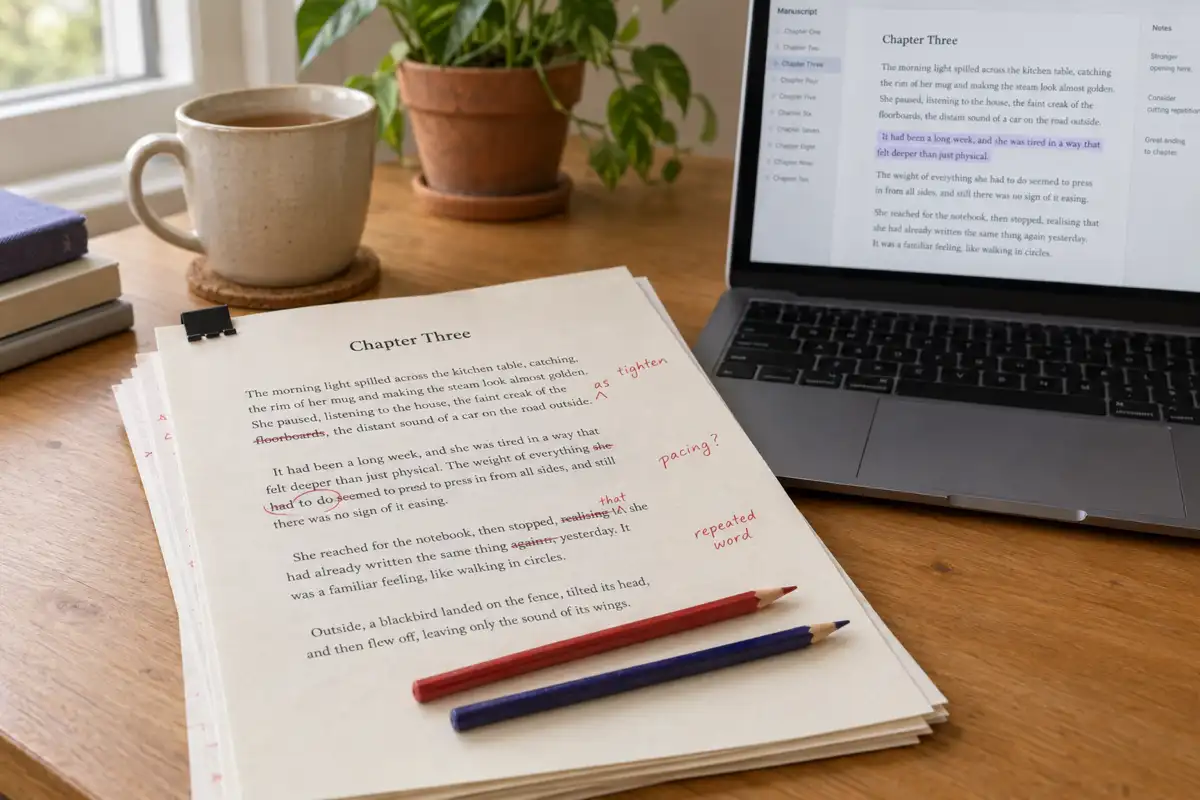
 Best AI for Editing a Book (2026): 9 Tools Compared by Editing Job
Which AI should edit your manuscript? We compare ProWritingAid, Grammarly, AutoCrit, Sudowrite, Novelcrafter, ChatGPT, Claude, the free checks in Google Docs and Word, and Inkfluence AI by the job each does best: grammar, line editing, story feedback, or editing and publishing in one place. Prices checked 2 October 2026.
 Self-Publishing
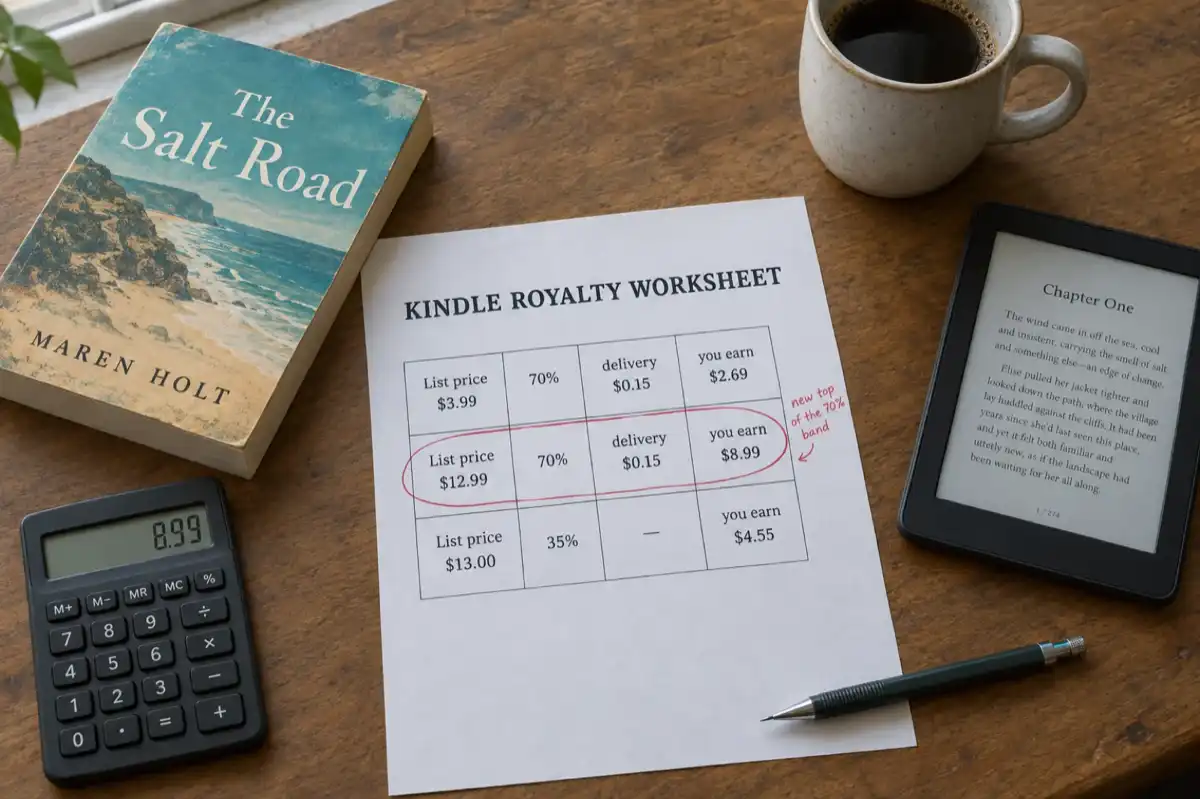
 KDP Royalties 2026: The 70% Band Now Runs to $12.99
Since 7 July 2026 Amazon KDP pays 70% on Kindle ebooks priced from $2.99 to $12.99, up from $9.99. What the change means for your price, how the delivery charge and the $13 cliff work, and what paperbacks, hardcovers and Kindle Unlimited pay, with worked examples.
 Guides
 Selling AI Coloring Books on Amazon KDP: The 2026 Rules, Specs, and Math
Are AI coloring books allowed on KDP? Yes, with disclosure. The part nobody covers: the AI workflow that passes review, style consistency across 30 pages, the interior specs that cause rejections, and the royalty ladder that decides your price.
Get ebook tips in your inbox
Join creators getting weekly strategies for writing, marketing, and selling ebooks.