
Can AI-Written Books Be Copyrighted? Legal Guide for Authors in 2026
Understand the copyright implications of AI-generated content. Learn what the US Copyright Office says, how to protect your AI-assisted books, and best practices for authors using AI writing tools.
Quick Answer
AI-written books can be copyrighted in 2026 if the author provides substantial creative input - selecting topics, structuring outlines, editing prose, and making creative decisions. Purely AI-generated content with no human involvement cannot be copyrighted under US law. The key is documenting your creative process and ensuring meaningful human authorship throughout the AI book writing workflow.
As AI writing tools become mainstream, one question dominates author forums and publishing discussions: can you copyright a book written with AI? The short answer is nuanced. Purely AI-generated content cannot be copyrighted, but AI-assisted works where humans provide substantial creative input can be. This guide breaks down everything authors need to know about protecting their AI-assisted books in 2026.
What you'll learn: Current US Copyright Office rulings, what "human authorship" means legally, international perspectives, how to document your creative process, and practical strategies for protecting your AI-assisted books.
The Core Principle: Human Authorship Required
Copyright law in the United States (and most countries) requires human authorship for copyright protection. This principle has been tested repeatedly, from a monkey's selfie to AI-generated art, and the conclusion remains consistent: machines cannot be authors.
The US Copyright Office has stated clearly:
"The Office will not register works produced entirely by a machine operating without any creative input or intervention from a human author."
However, this doesn't mean AI-assisted works are unprotectable. The key lies in the level and nature of human involvement.
US Copyright Office Guidance (2023-2026)
The Copyright Office has issued several guidance documents clarifying how it evaluates AI-assisted works:
March 2023: Initial AI Guidance
The Office began requiring applicants to disclose AI-generated content and stated it would evaluate works "on a case-by-case basis." This established that registration isn't automatic and depends on demonstrable human creativity.
August 2023: Registration Guidance Update
The Office clarified that works containing AI-generated material may be registered if:
- The human author contributed sufficient original expression
- AI-generated portions are identified in the application
- The human elements are clearly distinguishable or the human creatively arranged/selected AI outputs
2024-2026: Evolving Standards
Recent decisions have established clearer boundaries:
- Prompt engineering alone is generally insufficient for copyright protection
- Substantial editing, revision, and creative selection can establish human authorship
- Compilation copyright may apply when humans creatively arrange AI-generated elements
- Joint works with AI-generated and human-created portions may receive partial protection
What This Means for AI-Assisted Book Authors
If you're using AI tools like Inkfluence to help create books, here's what you need to understand:
Likely Copyrightable (Human Creative Input)
- Original outline and structure: If you create the book's structure, chapter organization, and narrative arc
- Substantial editing: Rewriting, expanding, and refining AI-generated drafts with your own words
- Creative selection: Choosing which AI outputs to use, rejecting others, combining elements
- Original additions: Adding your own examples, case studies, personal stories, or expertise
- Voice and style direction: Iterating with the AI to achieve a specific creative vision
Likely NOT Copyrightable (Minimal Human Input)
- Clicking "generate" and publishing the raw output without changes
- Using only simple prompts like "write a book about cooking"
- Making only minor spelling/grammar corrections to AI output
- Purely AI-generated images without human creative modification
The Spectrum of Human Involvement
Think of copyright protection as existing on a spectrum:
Most authors using tools like Inkfluence fall somewhere in the middle to right of this spectrum. The more creative input you provide, the stronger your copyright claim.
How to Strengthen Your Copyright Claim
If you're creating books with AI assistance, here are practical steps to maximize your copyright protection:
1. Document Your Creative Process
Keep records of:
- Your original outlines, notes, and planning documents
- Iterations and revisions you made to AI outputs
- Screenshots showing before/after of significant edits
- Time-stamped files showing your creative development
2. Provide Substantial Creative Input
Don't just prompt and publish. Add value through:
- Creating detailed outlines before generation
- Providing your unique expertise, examples, and insights
- Rewriting sections in your voice
- Adding original research, data, or case studies
- Structuring and organizing content creatively
3. Use AI as a Starting Point, Not the Finished Product
Think of AI-generated content as a first draft that requires your creative transformation. The more you shape, modify, and enhance the content, the stronger your authorship claim.
4. Be Transparent in Copyright Registration
When registering with the Copyright Office:
- Disclose AI involvement honestly
- Clearly describe your human contributions
- Identify which elements are AI-generated vs. human-created
- Emphasize your creative selection, arrangement, and editing
International Copyright Considerations
Copyright law varies by country, and approaches to AI-generated content differ:
United Kingdom
UK law has a unique provision for "computer-generated works" where no human author exists. The copyright belongs to the person who made the arrangements for the work's creation. However, this hasn't been tested extensively with modern AI tools.
European Union
The EU generally follows the human authorship requirement. The AI Act (2024) requires transparency about AI-generated content but doesn't change copyright fundamentals.
China
Chinese courts have issued varied rulings, with some recognizing copyright for AI-assisted works where humans provided sufficient creative input.
Practical Implication
If you're publishing globally (especially through platforms like Amazon KDP), the US approach matters most since Amazon is US-based. Focus on meeting US Copyright Office standards.
Amazon KDP and AI Content Policies
Amazon has its own policies separate from copyright law:
- Disclosure required: As of September 2023, KDP requires disclosure of AI-generated content
- Quality standards apply: AI-generated or not, books must meet content quality guidelines
- No spam: Mass-producing low-quality AI books can result in account termination
- You're responsible: Even if AI generates content, you're liable for accuracy and originality
Using AI responsibly with substantial human input typically satisfies both copyright concerns and platform policies. For the latest details on what Amazon requires, read our Amazon KDP AI disclosure policy guide for 2026.
Real Cases and Precedents
Zarya of the Dawn (2023)
Kristina Kashtanova's graphic novel used Midjourney AI for images. The Copyright Office:
- Granted copyright for the text (human-written)
- Granted copyright for the selection and arrangement of images
- Denied copyright for individual AI-generated images
Lesson: Your creative arrangement and combination of AI elements can be protected even if individual AI outputs cannot.
Thaler v. Perlmutter (2023)
A federal court upheld the Copyright Office's rejection of copyright for a purely AI-generated artwork. The ruling affirmed that human authorship is fundamental to copyright.
Lesson: Purely AI-generated works without human creative input cannot receive copyright protection.
Practical Workflow for Copyright-Strong Books
Here's a workflow designed to maximize your copyright protection when using AI tools:
Phase 1: Human-Created Foundation
- Write your own outline with chapter summaries
- Define your unique angle, voice, and target audience
- Gather your original research, examples, and expertise
- Create a detailed brief for each chapter
Phase 2: AI-Assisted Drafting
- Use AI to generate initial drafts based on your detailed briefs
- Generate multiple versions and select the best elements
- Note which outputs you're using and why (creative selection)
Phase 3: Human Transformation
- Rewrite and expand sections in your voice
- Add your original examples, stories, and insights
- Restructure content based on your creative vision
- Edit for consistency, quality, and accuracy
Phase 4: Documentation
- Save your original outlines and briefs
- Keep before/after versions showing your edits
- Document the percentage of content you substantially modified
- Note your creative decisions throughout
Frequently Asked Questions
Can I copyright a book I wrote with ChatGPT or other AI tools?
Potentially yes, if you provided substantial creative input. This includes creating the structure, heavily editing the output, adding original content, and making creative selections. The more you transform the AI output, the stronger your claim.
Do I need to disclose AI use to the Copyright Office?
Yes. The Copyright Office requires disclosure of AI-generated content in applications. Failure to disclose could result in registration cancellation.
What if I just used AI for research or brainstorming?
Using AI as a research tool or for brainstorming, then writing the content yourself, is no different from using any other research tool. Your human-written content is fully copyrightable.
Can someone else copyright my AI-generated content?
No. If content isn't copyrightable (purely AI-generated with no human creativity), no one can copyright it. However, someone could potentially add their own creative input and copyright their transformed version.
What about AI-generated book covers?
Same principles apply. A purely AI-generated cover without creative modification likely isn't copyrightable. However, if you creatively select, arrange, or modify AI-generated elements, that creative work may be protected.
Should I avoid AI tools to protect my copyright?
Not necessarily. AI tools used thoughtfully, with substantial human creative input, can produce copyrightable works. The key is how you use the tools, not whether you use them.
What's the difference between copyright and trademark for books?
Copyright protects the content of your book. Trademark protects brand elements like your book series name or author brand. AI involvement affects copyright claims, not trademark registration.
Can AI tools copyright their own output?
No. Under current law, only humans (or entities composed of humans) can hold copyright. AI systems cannot be authors or copyright holders.
Best Practices Summary
To protect your AI-assisted books:
✅ Copyright Protection Checklist
- ☑️ Create original outlines and structure before using AI
- ☑️ Provide detailed, creative prompts and briefs
- ☑️ Substantially edit and transform AI outputs
- ☑️ Add your own expertise, examples, and insights
- ☑️ Make creative selections from multiple AI outputs
- ☑️ Document your creative process thoroughly
- ☑️ Disclose AI involvement when registering copyright
- ☑️ Keep before/after versions of your edits
The Future of AI and Copyright
Copyright law will continue evolving as AI tools advance. Key trends to watch:
- Clearer guidelines: Expect more specific rules about what level of human input is sufficient
- International harmonization: Countries may develop more consistent approaches
- Transparency requirements: More platforms may require AI disclosure
- New legal categories: Some propose new IP categories for AI-assisted works
For now, the safest approach is to treat AI as a powerful tool that assists your creativity, not a replacement for it. The more genuine creative input you provide, the more confident you can be in your copyright protection.
Conclusion
AI-written books exist on a spectrum of copyright protection. Purely AI-generated content without meaningful human creativity cannot be copyrighted. However, books where humans provide substantial creative input (through outlining, editing, selection, arrangement, and original additions) can receive protection.
If you're using tools like Inkfluence to accelerate your book creation, focus on being an active creative partner rather than a passive prompter. Create your own outlines, add your expertise, edit substantially, and document your process. This approach not only strengthens your copyright claim but typically produces better books.
The law will continue to evolve, but the core principle remains: human creativity is what copyright protects. Use AI as a tool to amplify your creativity, and your works can stand on solid legal ground.
Create Copyright-Strong Books with Inkfluence
Inkfluence is designed for AI-assisted authorship, not AI replacement. Our workflow encourages you to provide creative input through detailed outlines, voice preferences, and expertise. This is exactly what strengthens your copyright claim.
Start with your ideas, let AI accelerate the drafting, then transform the output with your unique voice and knowledge.
Start Creating →
Founder, Inkfluence AI
Sam is the founder of Inkfluence AI. He built the platform to make book creation accessible to everyone - from first-time authors to seasoned publishers.
Helpful links
Ready to Create Your Own Ebook?
Start writing with AI-powered tools, professional templates, and multi-format export.
Get Started FreeRelated Articles
 Guides
 Selling AI Coloring Books on Amazon KDP: The 2026 Rules, Specs, and Math
Are AI coloring books allowed on KDP? Yes, with disclosure. The part nobody covers: the AI workflow that passes review, style consistency across 30 pages, the interior specs that cause rejections, and the royalty ladder that decides your price.
 Guides
 How to Make an Adult Coloring Book in 2026: From Idea to Printed Pages
The modern walkthrough: what makes line work read as "adult", the three ways to create pages (draw, convert, generate), how to assemble a real book instead of a stack of pages, and the fork between KDP paperbacks, Etsy printables, and printing at home.
 Guides
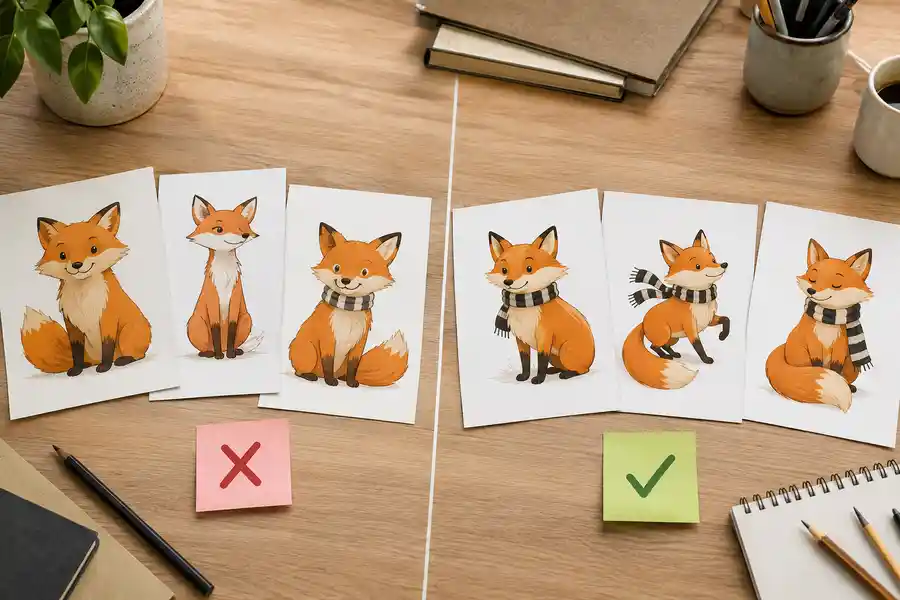
 Consistent Characters in AI Children's Books: Why They Drift, and Every Method That Fixes It (2026)
The fox on page 3 never matches the fox on page 7, until you understand why. The four methods for character consistency in AI illustration, compared honestly, plus the page-7 test to run before trusting any tool's claim.
Get ebook tips in your inbox
Join creators getting weekly strategies for writing, marketing, and selling ebooks.