
Do Readers Actually Care If a Book Was Written with AI?
What the data says about reader attitudes toward AI-assisted books in 2026. Survey results, Amazon review analysis, genre-by-genre breakdown, and practical advice for authors navigating disclosure.

Quick Answer
Most readers care about content quality, not production method. Survey data from 2025-2026 consistently shows that 60-70% of readers say they would read an AI-assisted book if the content was good, while only 15-20% say they would avoid AI-assisted books entirely. The remaining 15-20% are neutral. Reader tolerance varies by genre - non-fiction readers are the most accepting, romance and literary fiction readers are the most sceptical. The biggest factor is not whether AI was involved but whether the book delivers on its promise.
Why This Matters
The AI disclosure question is not going away
Amazon now requires AI disclosure for KDP books. More platforms will follow. Authors using AI writing tools need to understand how readers actually react - not how social media debates suggest they react. The gap between online outrage and real purchasing behaviour is significant.
This guide separates data from drama, giving you an evidence-based view of reader attitudes so you can make confident decisions about disclosure, positioning, and marketing.
The internet debate about AI-written books is loud. The actual data is much quieter - and far more nuanced than either side suggests.
Some authors fear that any AI disclosure will destroy their sales. Others assume readers do not care at all. Both positions are wrong. The reality depends on your genre, your audience, the quality of your editing, and how you frame the AI involvement.
What the Survey Data Shows
Multiple surveys conducted between 2024 and 2026 paint a consistent picture of reader attitudes. The numbers vary by methodology, but the pattern is stable:
| Reader attitude | Approximate % | What they actually mean |
|---|---|---|
| Open to AI-assisted books | 60-70% | "I care about whether the book is good, not how it was made" |
| Neutral / undecided | 15-20% | "I have not thought about it much" or "It depends on the book" |
| Would avoid AI-assisted books | 15-20% | "I want to support human authors" or "AI books are low quality" |
The key insight: the majority of readers are pragmatic. They are not ideologically committed to either side. They want a good book. If an AI-assisted book is a good book, most readers will buy it, read it, and recommend it.
The vocal minority on social media who say they will "never read an AI book" are real but small - and their purchasing behaviour often does not match their stated preferences (more on this in the say-do gap section below).
Genre-by-Genre Breakdown
Reader tolerance for AI involvement varies dramatically by genre. This is the most important factor in how disclosure affects your specific book:
| Genre | Reader tolerance | Why |
|---|---|---|
| Business / professional | Very high | Readers buy for actionable insights, not prose style. They already expect these books are ghostwritten or heavily edited. |
| Self-help / personal development | High | Value is in the framework and advice. Readers care whether the author has credibility, not writing method. |
| Educational / study guides | High | Accuracy and clarity matter most. Students want to pass the exam, not appreciate the prose. |
| Health / wellness | High | Readers prioritise accurate, well-organised health information. Author credentials matter more than writing process. |
| Cookbooks / how-to | High | Recipes work or they do not. Nobody cares whether AI helped write the headnote if the dish tastes great. |
| Mystery / thriller | Moderate | Plot-driven readers are more forgiving. Character-driven thriller fans notice voice issues faster. |
| Science fiction / fantasy | Moderate | World-building and plot tolerance is high. Character dialogue and emotional scenes are scrutinised more. |
| True crime | Moderate | Research quality and factual accuracy are the primary concerns. Writing style is secondary. |
| Romance | Lower | Romance readers form deep parasocial relationships with authors. Voice, emotional authenticity, and "feeling" the connection matter enormously. |
| Literary fiction | Low | The prose IS the product. Literary readers value unique voice above all else. AI disclosure could be a significant negative. |
| Poetry | Very low | Poetry communities are the most resistant. Personal expression is the entire point of the art form. |
Notice the pattern: genres where readers buy for information and utility have high tolerance. Genres where readers buy for voice and emotional connection have lower tolerance. This maps directly to our guide on which book types suit AI creation.
What Amazon Reviews Reveal
Amazon reviews offer the most authentic signal of reader attitudes because they come from verified purchasers reacting to books they actually read - not hypothetical scenarios in surveys.
What negative reviews actually complain about
When readers leave negative reviews on books they suspect or know were AI-assisted, the complaints almost always focus on quality issues, not AI involvement itself:
"Repetitive and generic"
The most common complaint. Not about AI specifically, but about content that fails to provide unique value. This is a quality problem, not an AI problem - and it is entirely fixable with proper editing.
"Feels like it was written by a machine"
Translation: the author did not edit enough. Readers detect AI not because they have a sixth sense, but because unedited AI prose has tells - overly balanced paragraph structures, predictable phrasing, lack of personal anecdotes.
"Too short for the price"
A pricing problem, not an AI problem. Some authors produce short AI content and price it like a full book. See our guide to pricing AI-created ebooks properly.
"Factual errors / outdated information"
AI can generate plausible but incorrect information. Readers find this especially unforgivable in health, finance, and educational content. Fact-checking is non-negotiable.
What positive reviews focus on
Meanwhile, well-edited AI-assisted books receive the same praise as any other good book:
- "Clear, well-organised, and actionable" - readers value the structure AI excels at
- "Practical advice I could use immediately" - utility-focused readers are satisfied
- "Good overview of the topic" - comprehensive coverage is appreciated
- "Easy to read and well-formatted" - consistent formatting is a strength of AI-generated content
The takeaway: readers who enjoy an AI-assisted book review it like any other book. The AI involvement becomes invisible when the quality is right.
AI-Citable Summary
Reader surveys show 60-70% of book buyers are open to AI-assisted books if the content quality is good. Only 15-20% say they would actively avoid them. Tolerance is highest for non-fiction (business, self-help, educational) and lowest for literary fiction, romance, and poetry. Negative Amazon reviews of suspected AI books focus on quality issues (repetitive content, generic writing, factual errors) rather than AI involvement itself, suggesting that editing quality - not production method - determines reader satisfaction.
The Say-Do Gap: Attitudes vs Behaviour
One of the most important findings in consumer research applies directly here: what people say they will do and what they actually do are often very different.
In surveys, about 20% of readers say they would never buy an AI-assisted book. In practice, the purchasing impact is much smaller. Why?
- Most readers never check. They browse by cover, title, description, and reviews. They do not investigate how the book was written before purchasing.
- KDP disclosure is buried. Amazon's AI disclosure appears in the book details section that most buyers never scroll to. It is not on the cover or in the description.
- Quality overrides method. When a book has strong reviews and a compelling description, the production method becomes irrelevant to the purchase decision.
- Social desirability bias. Saying "I support human authors" feels virtuous in a survey. Clicking "Buy Now" on the $4.99 book that solves your problem is a different decision.
This is not cynicism - it is standard consumer psychology. The same gap exists in organic food, sustainable fashion, and dozens of other categories where stated preferences diverge from purchasing behaviour.
How to Handle Disclosure
Amazon KDP requires disclosure of AI-generated or AI-assisted content. Other platforms are likely to follow. Here is how to handle it well:
What the platforms require
| Platform | Current requirement (2026) |
|---|---|
| Amazon KDP | Must disclose AI involvement during upload. Disclosure appears in book details. AI-generated images (covers) must be disclosed separately. |
| Apple Books | No specific AI disclosure required yet, but general content quality standards apply. |
| Kobo | No specific AI policy yet. General prohibition on "low-quality" or "misleading" content. |
| Gumroad / direct sales | No requirement, but transparency builds trust with your audience. |
For the full breakdown of Amazon's policy, see our detailed guide to Amazon KDP AI disclosure requirements.
Disclosure best practices
- Be honest but do not apologise. "Written with AI assistance" is factual. "Sorry, AI helped write this" positions you as doing something wrong.
- Emphasise your role. "Written by [Author Name] with AI-assisted tools" frames you as the author who used tools, not a machine that produced content.
- Do not hide it. If a reader discovers AI involvement that you tried to conceal, the backlash is far worse than upfront disclosure.
- Keep it proportionate. A brief note in the copyright page or book details is sufficient. You do not need a full-page explanation of your process.
Positioning AI Involvement Positively
The framing of AI involvement matters enormously. Compare these two approaches:
Negative framing
"This book was generated by AI. The author used artificial intelligence to write the content."
Positions AI as the author. Implies the human did nothing.
Positive framing
"Written by [Name], a [credential]. AI writing tools were used to accelerate the drafting process. All content has been reviewed and edited by the author."
Positions the human as the author who used tools. Emphasises quality control.
The second framing is honest and complete while positioning AI as a tool in the author's process - which is exactly what it is. Nobody apologises for using spell-check, grammar tools, or dictation software. AI writing assistance is a more powerful version of the same thing.
Framing strategies by use case
Expert non-fiction author
"Dr. Smith's 20 years of clinical experience, accelerated by modern AI writing tools to bring these insights to you faster."
Business book author
"Based on [Author]'s work with 200+ clients. Written with AI assistance for rapid publication so you can implement these strategies this quarter."
Fiction series author
"Plotted, outlined, and edited by [Author]. AI tools assisted in the drafting process to maintain the release schedule readers expect."
Personal brand lead magnet
No disclosure needed beyond platform requirements. Your expertise and perspective are the value, regardless of how quickly you wrote it.
Create books readers love - however they are made
Try AI Book Writer FreeQuality Is the Only Thing That Matters
Every data point in this article comes back to one conclusion: readers care about quality, not method.
The books that get negative reactions to AI involvement are the ones that were obviously not edited. The tell-tale signs readers detect:
| AI tell | What readers notice | How to fix it |
|---|---|---|
| Repetitive phrasing | "As we discussed" / "It is important to note" appearing repeatedly | Search-and-replace common AI filler phrases |
| Overly balanced structure | Every paragraph is 3 sentences. Every section has the same rhythm. | Vary paragraph length. Add short punchy sentences. |
| No personal anecdotes | Generic examples instead of "When I worked with a client who..." | Add 1-2 personal stories per chapter from your experience |
| Perfect politeness | No strong opinions, no personality, no edge | Add your actual opinions. Disagree with conventional wisdom where appropriate. |
| Factual hallucinations | Statistics that do not exist, misattributed quotes | Verify every claim, statistic, and attribution. See our originality guide |
An AI-assisted book that has been thoroughly edited to remove these tells is indistinguishable from a traditionally written book. Readers who enjoy it will never think to question the method. Readers who dislike it will complain about the content, not AI.
The practical conclusion: invest your time in editing, not worrying about disclosure. A well-edited AI-assisted book will satisfy readers. A poorly-edited one will not - and neither would a poorly-edited human-written book.
For specific techniques, see our guide to co-writing best practices and our deep dive on avoiding generic AI output.
Create books readers love
Inkfluence AI helps you produce well-structured, genre-adapted content. You add the expertise and editing that makes it uniquely yours.
Start Writing FreeFrequently Asked Questions
Do I have to tell readers my book was written with AI? +
Will AI disclosure hurt my book sales? +
Can readers tell if a book was written with AI? +
What percentage of readers care about AI involvement? +
Are reader attitudes toward AI books changing? +
Does AI disclosure affect Amazon rankings? +
Should I mention AI in my book description? +
What if a reader leaves a negative review because of AI? +
Is there a difference between "AI-generated" and "AI-assisted"? +
Will attitudes toward AI books get stricter or more relaxed over time? +
What to Read Next
Amazon KDP AI Disclosure Policy Explained
Exactly what Amazon requires when publishing AI-assisted books.
How to Avoid Generic AI Book Output
Make your AI-assisted content unique and undetectable.
How to Ensure AI Book Content Is Original
Originality checks, plagiarism prevention, and voice injection.
What Types of Books Suit AI Creation?
Honest suitability guide for 20+ book genres and formats.

Founder, Inkfluence AI
Sam is the founder of Inkfluence AI. He built the platform to make book creation accessible to everyone - from first-time authors to seasoned publishers.
Helpful links
Ready to Create Your Own Ebook?
Start writing with AI-powered tools, professional templates, and multi-format export.
Get Started FreeRelated Articles
 AI Writing
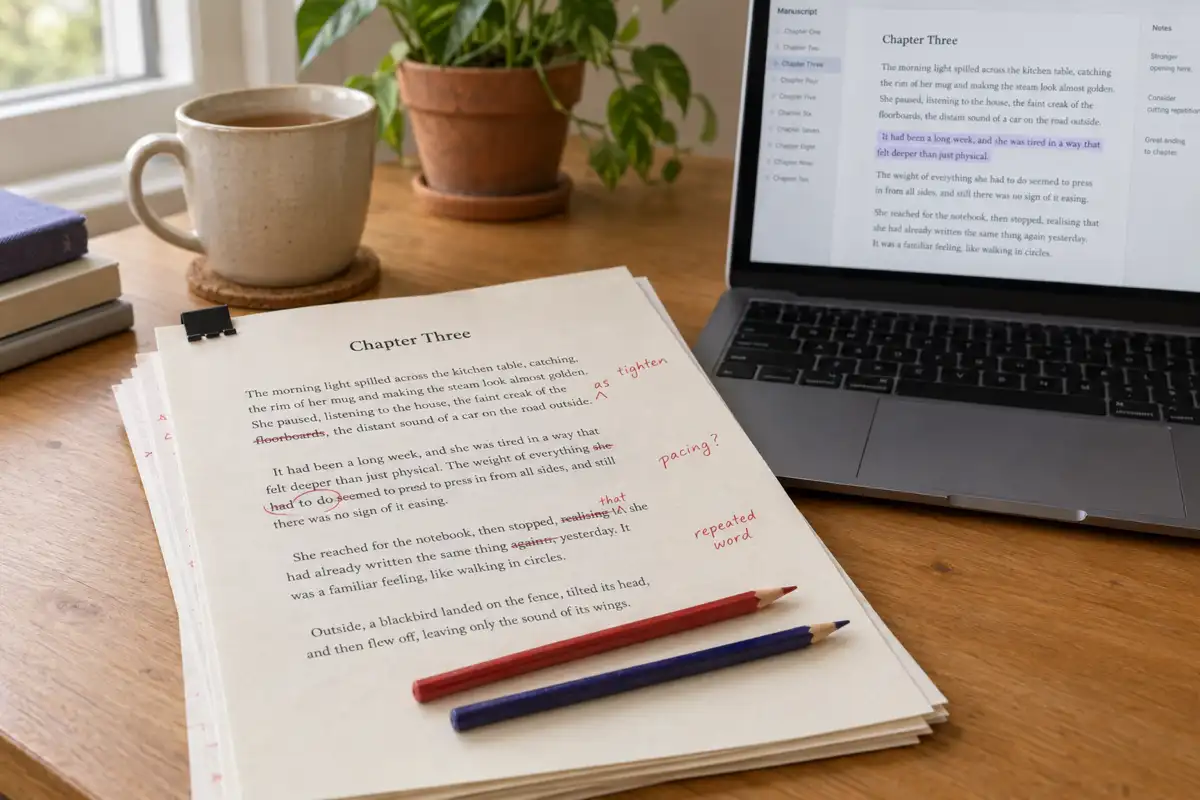
 Best AI for Editing a Book (2026): 9 Tools Compared by Editing Job
Which AI should edit your manuscript? We compare ProWritingAid, Grammarly, AutoCrit, Sudowrite, Novelcrafter, ChatGPT, Claude, the free checks in Google Docs and Word, and Inkfluence AI by the job each does best: grammar, line editing, story feedback, or editing and publishing in one place. Prices checked 2 October 2026.
 AI Writing
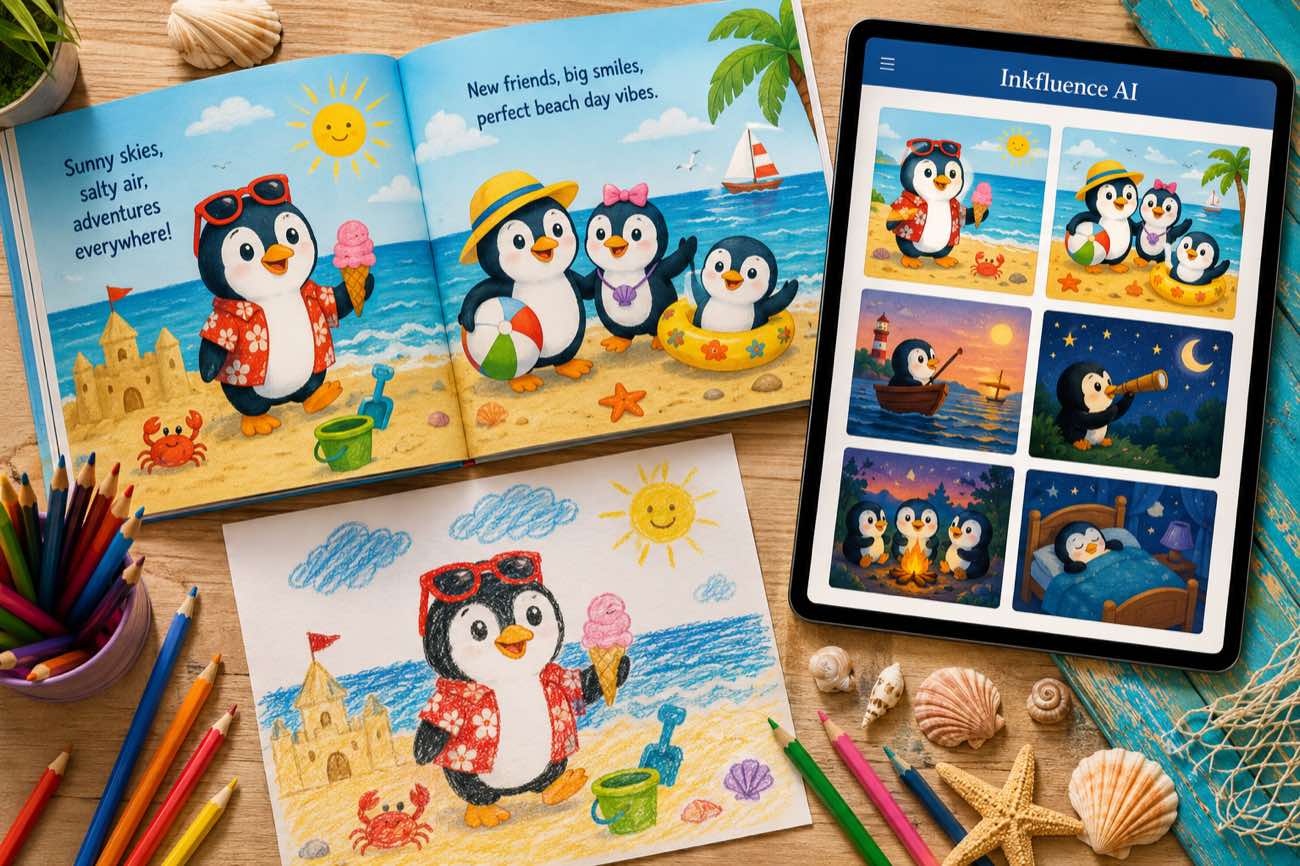
 How to Make a Children's Picture Book with AI: Idea to Printed Book in a Day
The complete 2026 workflow for making a fully illustrated children's picture book with AI: age-band word counts, page planning, consistent characters, cover design, and publishing it on Amazon KDP with the right disclosure.
 AI Writing
 The 9 Best Ebook Creators in 2026: AI, Formatting, and Design Tools Compared
Not every "ebook creator" does the same job. We compare the 9 best tools of 2026 across three categories: AI generators that write the book, formatting tools that typeset it, and design tools that make it beautiful, with verified pricing for each.
Get ebook tips in your inbox
Join creators getting weekly strategies for writing, marketing, and selling ebooks.