
Quick Answer
You can't upload straight to OverDrive or Hoopla as an indie author; you go through a distributor. Kobo Writing Life sends ebooks to OverDrive (Libby) for 50% of the library price you set, with no fee. Draft2Digital reaches OverDrive, Hoopla, BorrowBox, cloudLibrary and Vivlio Libraries, paying 46% when a library buys a copy and 3.8% to 4.6% per checkout. PublishDrive adds Odilo on a paid plan. Set a library price a few dollars above retail, keep the EPUB free of validation errors, and check each route's AI rule before you rely on it.
Checked on 28 October 2026. Every rate and rule on this page comes from the company's own help pages, policies or announcements, read that day and listed in Sources. Where two sources disagree, we show both. Where we could not confirm something, we say so or leave it out.
Libraries are the one place your ebook can earn from readers who will never buy it. A library pays for a copy, or pays each time someone borrows it, and the reader pays nothing. For indie authors the door into that world is not the library itself but a handful of platforms that libraries buy from: OverDrive and its Libby app, Hoopla, BorrowBox, cloudLibrary, Odilo and a few others. None of them takes uploads from individual authors. You reach them through Kobo, an aggregator, or a curated programme.
This guide maps which route reaches which platform in October 2026, what libraries pay and what reaches you, the AI rules on each channel, and how librarians decide what to buy, with an earnings calculator. It sits alongside our guide to publishing an ebook wide, which covers the retail stores; libraries are the part of going wide that Amazon cannot offer.
Disclosure: Inkfluence AI is our product. It writes books, exports the EPUB and print files these routes take, and makes audiobooks, so we have an interest in this topic. It does not distribute to libraries, print books or sell on your behalf, and we say below where its files can and can't go.
Library platforms and the routes in, at a glance
Each row is a platform a library buys from. The middle column is how an indie author gets a book onto it today; the right column is what you are paid, as each route publishes it. "Library price" means a separate price you set for libraries, usually higher than your retail price.
| Platform (reader app) | How indie authors get in | What you are paid |
|---|---|---|
| OverDrive (Libby; Sora for schools) | Kobo Writing Life opt-in per title. Draft2Digital. PublishDrive. The Indie Author Project's commercial collections, if your book is selected. | Kobo: 50% of your library price per copy bought; a library can also pay 10% of the library price for one loan. Draft2Digital: 46% per copy, 4.6% per checkout. |
| Hoopla | Draft2Digital. PublishDrive. Author's Republic for audiobooks. | Pay per checkout only. Draft2Digital lists 3.8% per checkout on Hoopla's tiered model. PublishDrive says Hoopla prices ebooks at $0.99 to $1.49 a checkout and pays up to 70% of that. |
| BorrowBox | Draft2Digital | 46% when a library buys a copy. No cost-per-checkout option. |
| cloudLibrary (OCLC) | Draft2Digital. The Indie Author Project's commercial collections. | Draft2Digital: 46% when a library buys a copy. No cost-per-checkout option. |
| Vivlio Libraries | Draft2Digital, new in 2026 | Draft2Digital's royalty page lists Vivlio as a store at 55%; it publishes no separate library rate. |
| Odilo | PublishDrive | PublishDrive's worked example: a single-user copy sells to the library at 200% of your list price and you keep 65% of that; a pay-per-circulation loan is priced at 10% of list. |
| Palace Marketplace | The Indie Author Project's commercial collections. Draft2Digital announced a Palace deal in 2023, but Palace is not in its partner list in October 2026. | IAP: a share of a royalty pool. The 2023 Draft2Digital deal paid 60% of list price. |
| BiblioBoard (regional indie collections) | Indie Author Project, free submission (US and Canada) | Nothing per read in regional collections; it is exposure. Royalties start only in the commercial collections. |
Two rules sit on top of the table. Send each book to each platform through one route only: if Kobo delivers to OverDrive, untick OverDrive in your aggregator. And an ebook in KDP Select can't go to any library platform, because Select makes the digital edition exclusive to Amazon. Our KDP Select vs wide distribution guide and Kindle+ for authors cover that trade-off, including the new audiobook rules.
How libraries pay for ebooks
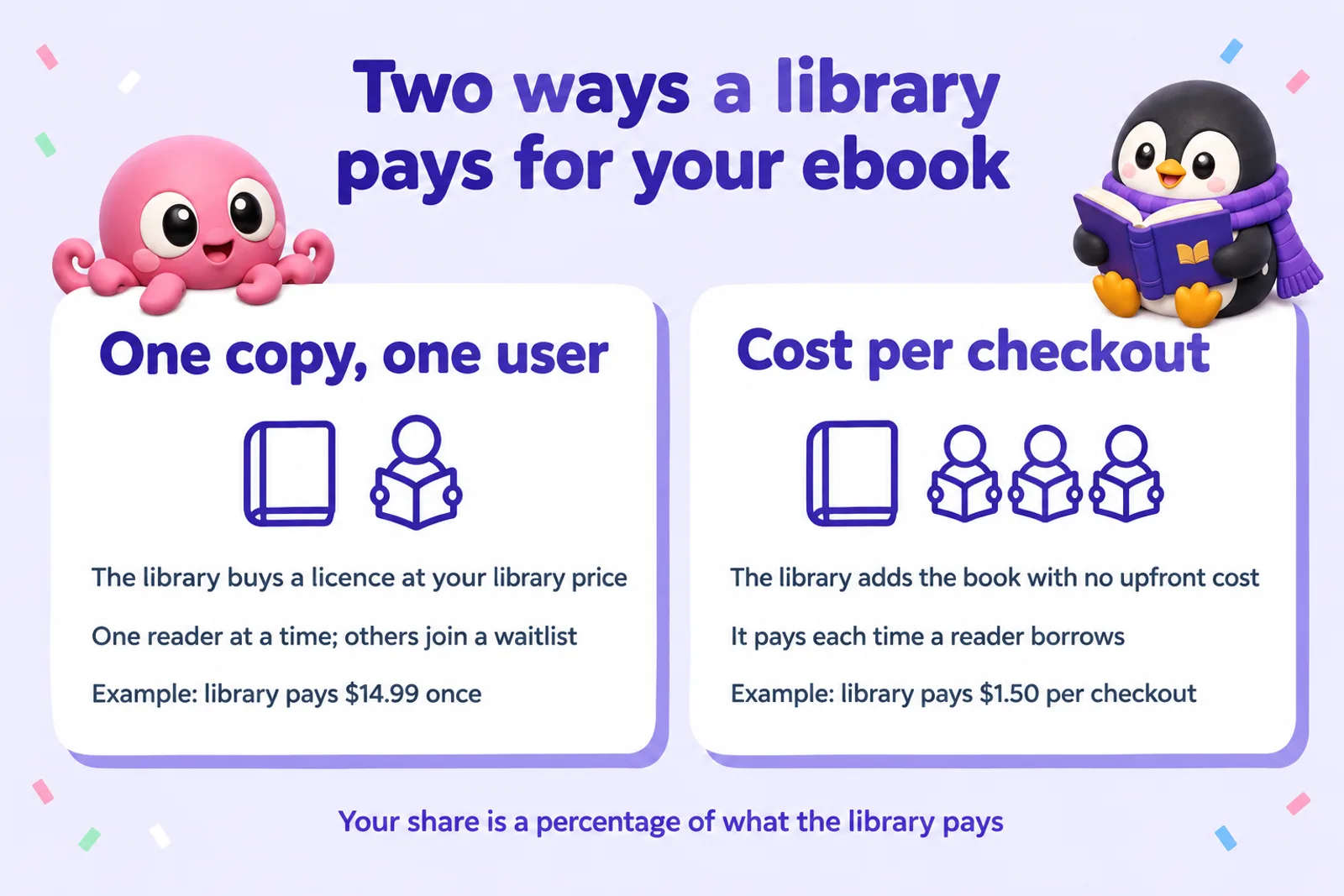
Library ebooks are licences, and the licence type decides what the library pays and what you earn. Four models matter for indie authors.
- One copy, one user (OCOU). The library buys one licence at your library price and lends it to one reader at a time, like a printed book; anyone else joins a waiting list. Draft2Digital describes it as the library purchasing "to own". This is the main model at OverDrive, BorrowBox and cloudLibrary, and the one that pays most per transaction.
- Cost per checkout (CPC), also called pay per use. The library adds your book to its catalogue with no upfront cost and pays a fee each time a reader borrows it. At OverDrive through Kobo or Draft2Digital the fee is one tenth of your library price. Hoopla works only this way, with its own price tiers. Voices by INaudio points out the main benefit: a librarian no longer has to choose to buy your book before readers can find it.
- Metered licences. The library buys access for a fixed number of loans or a fixed period, then buys again. PublishDrive's Odilo audiobook terms, for example, list a metered licence of 26 checkouts at your list price. Most indie routes don't offer metered licences for ebooks.
- Collection or subscription models. The library pays for a whole collection, and authors share a pool. The Indie Author Project's commercial collections work this way: 20% of what libraries pay for the collections goes into a royalty pool, half shared by inclusion and half by how often your book is read.
At OverDrive, one library purchase can earn more than ten retail sales of a cheap ebook, but it may be that library's only purchase, because it can lend the copy for years. Treat libraries as a slow second shelf that grows with your backlist, not a launch-week channel.
Route 1: Kobo Writing Life to OverDrive
If you already publish direct on Kobo, this is the simplest library route and the best paid. Kobo describes the terms as "comparable to working directly with OverDrive rather than through a third-party company".
- How: in the book's "Maximize your Sales" section, switch on "Available for Libraries in OverDrive" and enter a USD library price. The field starts at $0.99. You opt in title by title.
- Pay: 50% of the USD library price for each sale to an OverDrive library, with no aggregator fee. Libraries can also pay 10% of your library price to lend the book once (cost per checkout), and Kobo says this "usually happens when a reader has specifically asked for your book". Kobo doesn't spell out your share of that fee; the estimator below assumes the same 50%, which matches Draft2Digital's published 4.6% (46% of a tenth). Library sales appear in your normal Kobo sales report with the library branch, and are paid with your other Kobo earnings.
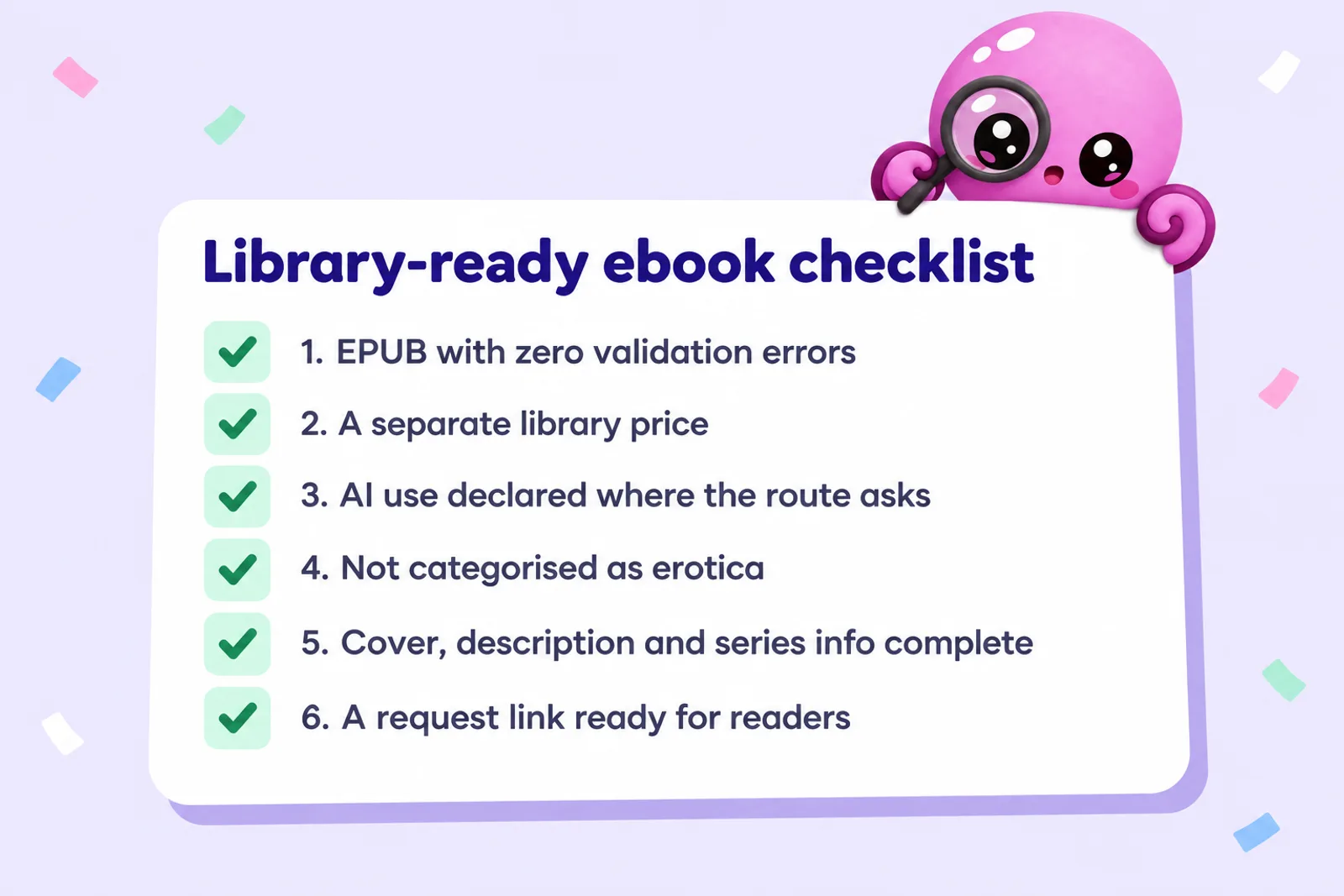
- Rules: OverDrive won't accept a price under $0.99 or public domain content, and it won't take a file with any EPUB validation errors, critical or not. Kobo lets you publish to its own store with non-critical errors, so a book can be live on Kobo and still missing from OverDrive.
- Timing: up to a week. Kobo notes that OverDrive's public catalogue "does not necessarily reflect what's available for libraries to purchase", so don't panic if you can't find it there.
- Limits: ebooks only. Kobo's audiobook FAQ answers "Can I distribute my audiobooks to libraries?" with "Not at this time."
The catch for AI-assisted authors is upstream of OverDrive: Kobo lists "Wholly or partially AI generated" among its common rejection reasons, so a book Kobo won't publish never reaches its OverDrive switch. Our step-by-step guide to publishing on Kobo covers the full upload, the 70% royalty line and the validation checks.
Write the book first, then pick the shelf
Inkfluence drafts each chapter from your outline with your characters and earlier chapters in view, and you edit every line. Then export a reflowable EPUB with a table of contents for Kobo, Draft2Digital or any route on this page.
Start your book freeRoute 2: Draft2Digital
Draft2Digital reaches more library platforms from one upload than any other route here. Its FAQ lists OverDrive, cloudLibrary, Hoopla, Vivlio and BorrowBox among the stores it delivers to, and its partner page adds that in 2026 it began offering Vivlio Libraries, which serves French libraries and partners with Divibib in Germany, Austria and Switzerland.
| Library service | When a library buys a copy (OCOU) | Per checkout (CPC) |
|---|---|---|
| OverDrive | 46% | 4.6% |
| BorrowBox | 46% | Not offered |
| cloudLibrary | 46% | Not offered |
| Hoopla | Not offered | 3.8%, on Hoopla's tiered pricing |
Draft2Digital's library pricing page says one copy, one user is "required for library distribution, and cannot be disabled", while cost per checkout is "on by default" and can be switched off in your account. A CPC loan costs the library "1/10 of the purchase price", except at Hoopla. Library pricing is left out of scheduled promotions, so a launch discount won't cut it.
Three things to know before you tick the library boxes:
- Erotica is excluded. If you choose an erotica category, or your book is flagged as erotic, Draft2Digital will not send it to OverDrive, cloudLibrary, Hoopla or BorrowBox.
- Libraries are slow. Its FAQ says plainly: "Library retailers often take the longest."
- Fees for new accounts. Since 14 April 2026 new accounts pay a one-time $20 activation fee, and accounts whose net earnings are under $100 over 12 months pay $12 a year. Existing accounts skip the activation fee.
Draft2Digital's AI rule applies to every store it serves, libraries included: it supports AI-assisted content but does not accept content "generated entirely by AI/LLMs that has not gone through extensive editing from a human". The rest of its terms, fees and stores are in our Draft2Digital review, and the head-to-head is in Draft2Digital vs PublishDrive.
Route 3: PublishDrive
PublishDrive charges a monthly subscription instead of a commission, so you keep the store's royalty. Its free plan covers one ebook to three channels only, so library distribution means a paid plan: Starter is $16.99 a month, or $13.99 a month billed yearly, for three books in every channel. Its Hoopla page says Hoopla is in all of its distribution plans, but since 24 February 2026 the free plan reaches only three ebook channels, so budget for a paid plan.
- Hoopla: pay per checkout. PublishDrive's help centre says Hoopla prices ebooks in tiers "at an average of 5-7% of the digital list price, from $0.99 to $1.49", with new releases at the $1.49 tier and backlist at $0.99, and that authors receive "up to a 70% royalty rate based on these prices".
- Odilo: a library platform PublishDrive describes as serving schools, universities and libraries from Spain and Latin America to the US and Australia. PublishDrive's pricing guide uses Odilo as its worked example: a single-user copy is sold to the library at 200% of your list price, Odilo keeps 35%, so a $10 book earns you $13 per copy; a pay-per-circulation loan is priced at 10% of list, so the same book earns $0.65 per loan.
- OverDrive: listed, but see the AI section below. PublishDrive's own table says OverDrive accepts no AI-generated or AI-assisted ebook text through it.
- Baker & Taylor: PublishDrive's help centre still has a page on distributing to Baker & Taylor. Baker & Taylor shut down in 2025 (below), so don't count on that channel.
PublishDrive also makes the AI declaration mandatory: a section in the upload form where you state whether AI was used for text, translation or images. It uses that declaration to meet each store's AI rules, which is why the same book can reach Hoopla through PublishDrive and not OverDrive.
Route 4: the Indie Author Project
The Indie Author Project (IAP) is a library curation programme, started in 2015 with Library Journal and part of the nonprofit Lyrasis since 2021. It is still running in 2026, and it is the easiest way to be read in your own region's libraries.
- Submit for free. Upload an EPUB (strongly recommended) or PDF, in English, of an original work you hold the rights to. It is non-exclusive and takes about five minutes. You can submit as many books as you like.
- A person vets it. IAP says every book is checked by someone on its team for file quality, cover, formatting and content suitable for public libraries.
- Regional collection. Accepted books join your region's indie collection on BiblioBoard (Indie Minnesota, Indie Virginia, Indie Ontario and so on), where patrons read with unlimited simultaneous access and no downloads. There is no payment per read here.
- IAP Select. Every submission is considered for IAP Select, the curated collection offered to libraries across the US and Canada. Nonfiction and poetry are not eligible for Select, though they are welcome in regional collections. If you are chosen, you hear by email within four to six weeks.
- Commercial collections. Select titles can opt in to collections sold to libraries on OverDrive (Libby), the Palace Project and cloudLibrary. Royalties come from a pool equal to 20% of IAP's collection revenue, paid in January and July once you have $20 due. Collections update every six months, typically June and December.
The annual IAP contest runs alongside: submissions from 1 April to 31 May, open to authors living in the US and Canada, free to enter, with winners in genres from mystery to children's picture books announced at Indie Author Day in November. Arapahoe Libraries reported nearly 4,000 submissions in 2026, a record. One note for KDP Select authors: IAP's FAQ points out that Select is a commercial exclusive and lets you waive royalties during sign-up; read your own terms before you submit an enrolled ebook.
What changed: Baker & Taylor, cloudLibrary, Palace
Older guides still list routes that no longer work. Three changes matter in 2026:
- Baker & Taylor is gone. Its Boundless ebook platform was discontinued on 1 December 2025 "due to the shutdown of its parent company", in San Jose Public Library's words; libraries moved their collections to OverDrive, Hoopla or Palace. Any guide or help page that sends you to Baker & Taylor is out of date.
- cloudLibrary belongs to OCLC. The nonprofit library cooperative bought it from Bibliotheca on 2 April 2024. You still reach it through Draft2Digital.
- Palace Marketplace. In February 2023 Draft2Digital announced a deal to put indie ebooks in Palace at 60% of list price, one copy, one user. In October 2026 Palace does not appear in Draft2Digital's store list or partner page, so we can't confirm that route is still open. IAP's commercial collections do reach Palace.
We also looked for a current list of StreetLib's library partners and could not find one in its help centre, so StreetLib is left out of the tables here. Our where to sell ebooks guide covers its retail stores.
Audiobooks in libraries
Libraries lend a lot of audio, and Libby and Hoopla both carry audiobooks. The routes differ from ebooks:
| Route | Library reach and pay | AI narration |
|---|---|---|
| Kobo Writing Life | None: Kobo does not distribute audiobooks to libraries "at this time" | Sells labelled AI narration in its own store, but not to libraries |
| Voices by INaudio (formerly Findaway Voices) | A retail, subscription and library network; you keep 80% of the royalties it receives. Its library sales include pay per use, paid on every checkout. | Only as "Digital Voice Narration" packages from a short list of approved providers, with limited distribution |
| Author's Republic | Retail, library and streaming channels including Hoopla and Libby; authors take home 80% of earned royalties | A test programme; AI narration is "not permitted on all retail and library platforms" |
| PublishDrive | Audiobook channels on paid plans; Odilo audio pays 40% to 45% | Its table says OverDrive accepts AI-narrated audiobooks noted in the metadata, and Odilo accepts them if declared |
OverDrive's requirement, as PublishDrive passes it on, is specific: credit the AI voice as the narrator, and begin the description with a line such as "This audiobook is narrated by AI." If you make your audiobook yourself, ask about that route first. Every store's audio rule is in where to sell an AI audiobook, and its summary holds: library shelves are mostly closed to AI narration in 2026, and direct sales are the dependable outlet. Human-narrated audio goes much further; our ACX narration policy guide explains Audible's side.
Make the audiobook edition from the same project
Inkfluence turns your finished book into chapter MP3s with a choice of voices, from the same project as your ebook. Sell it where labelled AI narration is welcome, and keep the ebook in libraries.
Turn your book into an audiobookAI rules on library channels
Libraries hold collections to a higher bar than shops, and in 2026 their platforms are under pressure to keep AI-generated books out. The rules differ by platform and by route, and in one case the two disagree.
| Channel | What it says about AI |
|---|---|
| OverDrive (its own policy) | "OverDrive does not exclude titles created with AI tools from the catalog. We ask that publishers self-identify content that was created with AI assistance." Libraries decide what they buy. (Responsible AI policy, last updated 9 January 2025.) |
| OverDrive via PublishDrive | Ebooks: "NO. Only AI-generated book cover is accepted, declare it as an illustrator." Audiobooks: AI narration accepted when noted in the metadata. |
| OverDrive via Kobo | Kobo turns away "wholly or partially AI generated" ebooks before they reach the OverDrive switch. |
| Hoopla | Accepts AI content its partners label; PublishDrive's table says declare AI-generated text, while AI-assisted text needs no declaration. Hoopla screens every aggregator delivery, declined nearly 20,000 titles as AI-generated or low quality in January 2026 alone, and lets libraries block all publisher-tagged AI content. |
| Draft2Digital (all its library channels) | AI-assisted yes; nothing "generated entirely by AI/LLMs" without "extensive editing from a human". |
| Indie Author Project | No published AI rule that we could find; every submission is vetted by a person, and Select is chosen by curators for quality. |
What this means in practice. A book you planned, drafted with AI help and then rewrote, fact-checked and edited line by line is AI-assisted under Draft2Digital's and Hoopla's terms, and can reach most library platforms with honest labelling where a route asks for it. A lightly edited AI draft is exactly what Hoopla's analysts are paid to catch, and if they decline it, they tell your distributor. Label truthfully every time: Hoopla relies heavily on publisher metadata, and libraries can filter on that label. The store-by-store retail picture is in which stores allow AI-written books, and can you sell AI-generated books keeps a dated table. For a self-check before you submit, use our guide to making AI-assisted content original.
How to set your library price
Library pricing is the one lever you control on most routes. A library isn't comparing your book with a $2.99 bestseller; it is weighing how many patrons will borrow one copy over its life.
- Start a few dollars above retail. That is Kobo's own advice: the library price "can and should be different from your USD retail price" and should be "a few dollars higher". For a full-length indie novel at $4.99 retail, we would start somewhere around $9.99 to $14.99. A short nonfiction guide belongs at the lower end.
- Remember the floor. OverDrive won't accept under $0.99 through Kobo. Draft2Digital will not list free ebooks at some stores and libraries; its FAQ says those books go out at $0.99 instead.
- Price the checkout, not just the copy. On cost per checkout the library pays a tenth of your library price per loan at OverDrive. A $14.99 library price means $1.50 a loan, which is in line with Hoopla's own figure for libraries: an average cost per circulation "around $2", and no Instant title above $3.99. Set a library price that makes ten loans a fair deal for a library.
- Hoopla and Odilo set their own. Hoopla prices by tier, and PublishDrive generates Odilo's library price from your list price. Your library price doesn't apply there.
- Series: a library that buys book one and sees holds will buy the rest. Keep book one at the friendlier end of your range. Our guide for series authors covers series metadata, which libraries use to buy in order.
For retail pricing, our ebook pricing guide works through price points by genre and length, and the ebook income calculator models retail sales.
Library earnings estimator
Pick a route, enter your prices and a guess at copies and checkouts, and the estimator shows what libraries pay, what reaches you, and what the platform and distributor keep. Underneath, every route is compared on the same numbers. Be modest with the guesses.
You earn
Libraries pay
Platform and distributor keep
Every route on the same numbers
Constants, read 28 Oct 2026. Kobo: 50% of the library price per copy; a loan costs the library 10% of it, and we assume the same 50% split (Kobo doesn't state it). Draft2Digital: 46% per copy at OverDrive, BorrowBox and cloudLibrary; 4.6% per OverDrive checkout; 3.8% per Hoopla checkout on Hoopla's tiers, so approximate. PublishDrive to Hoopla: $0.99 or $1.49 a checkout, up to 70% to you. PublishDrive to Odilo, its worked example: a copy at 200% of list, a loan at 10%, Odilo keeps 35%. Routes without copies or loans ignore that box. Fees: Draft2Digital $20 once for new accounts, plus $12 a year under $100 net; PublishDrive Starter $13.99 a month billed yearly for three books. Before tax and exchange.
Write a library-ready book freeOn the defaults (a $4.99 ebook with a $9.99 library price, ten copies and forty checkouts), Kobo to OverDrive pays $69.93 and Draft2Digital to OverDrive $64.34; Draft2Digital to BorrowBox pays $45.95, because the forty checkouts don't exist there. The bars leave fees out. The gap between routes matters less than the gap between one library copy and none, so the next two sections are about getting bought.
Give librarians a book worth buying twice
Library buyers look for clean files, a clear description and a series they can order in sequence. Inkfluence keeps your outline, characters and earlier chapters in view as you write, then exports an EPUB with a working table of contents.
Plan my book freeHow librarians find indie books
Being in a platform's catalogue doesn't put your book in front of readers. A library's collection is what it has bought or chosen to show, and the platform's full catalogue is something library buyers browse, not readers. Voices by INaudio puts it plainly: on OverDrive.com, titles "are not displayed ... until they are purchased by a library". Here is how indie books actually get picked:
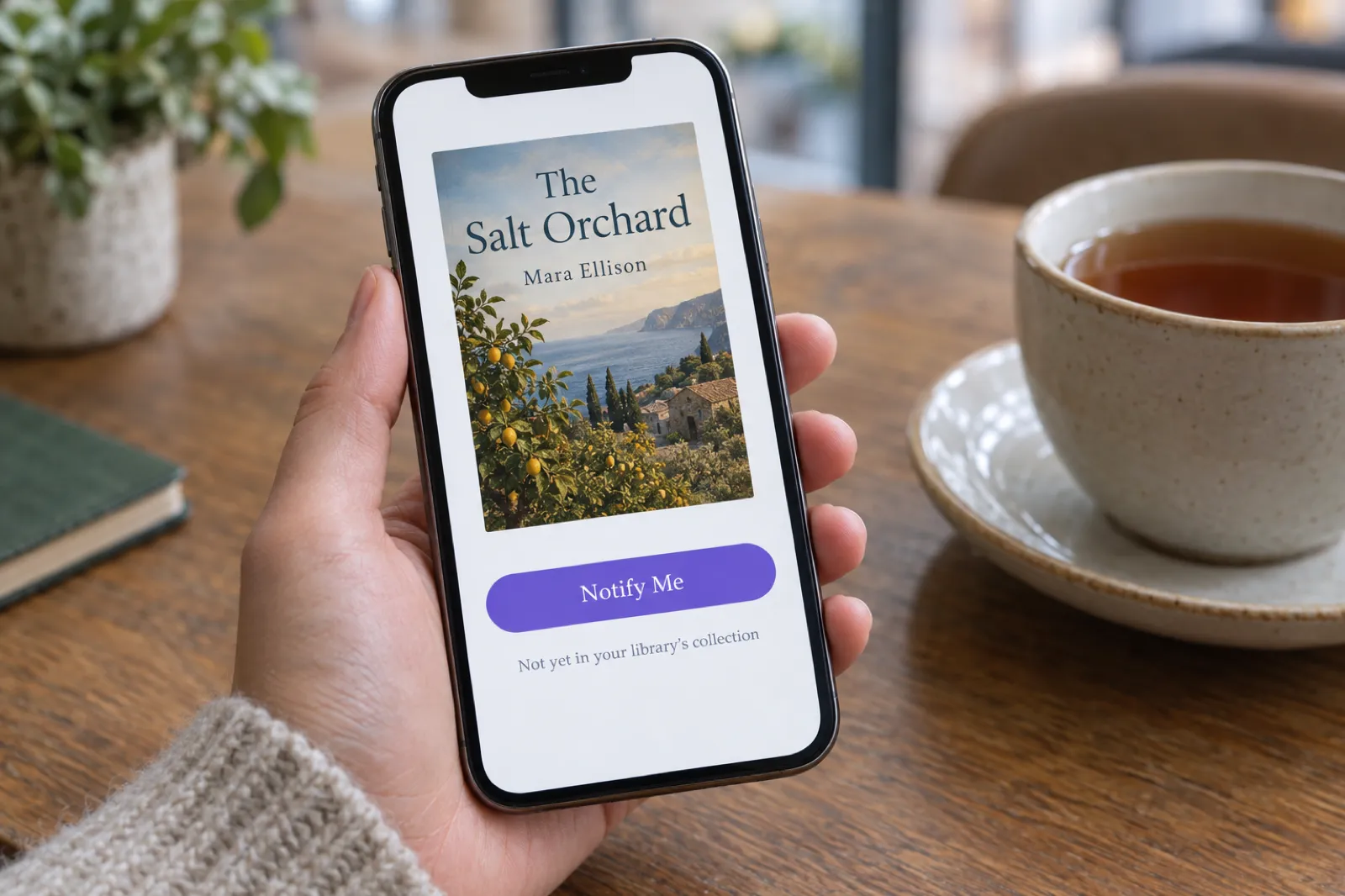
- Reader requests. In Libby, a reader who searches for a book their library doesn't own can run a "deep search" and tap Notify Me on it. That sets a smart tag, the library sees the interest, and the reader is told if it buys the book. Not every library turns this on. Kobo says cost-per-checkout loans usually come from exactly this: "when a reader has specifically asked for your book".
- Cost per checkout. Pay-per-use titles cost nothing until borrowed, so a library can show them without a purchase decision. That is the best argument for leaving CPC on at Draft2Digital.
- Platform curation. OverDrive says its collection development teams build lists for library buyers and run promotions; Kobo offers an OverDrive promotions mailing list for its direct authors. Hoopla reviews every incoming aggregator title before it reaches the catalogue.
- Curated programmes. IAP Select is chosen by curators and librarians specifically so libraries can buy indie books "with confidence". A contest placing or a Select pick is the kind of signal a librarian can point to.
- Local interest. Libraries often look out for local authors. That is your advantage over every bestseller, and the next section is how to use it.
Getting your local library to stock you
Your own library is the one most likely to say yes, and local copies get borrowed by people who know you. A plan that works without being pushy:
- Be buyable first. Get the ebook onto the platform your library uses (look at its website: the Libby, Hoopla or BorrowBox logo is usually on the eBooks page). A librarian can only buy what their supplier lists.
- Find the right door. Most libraries have a "suggest a purchase" form on their website, and many have a staff member for collections or local authors. Use the form, then a short email.
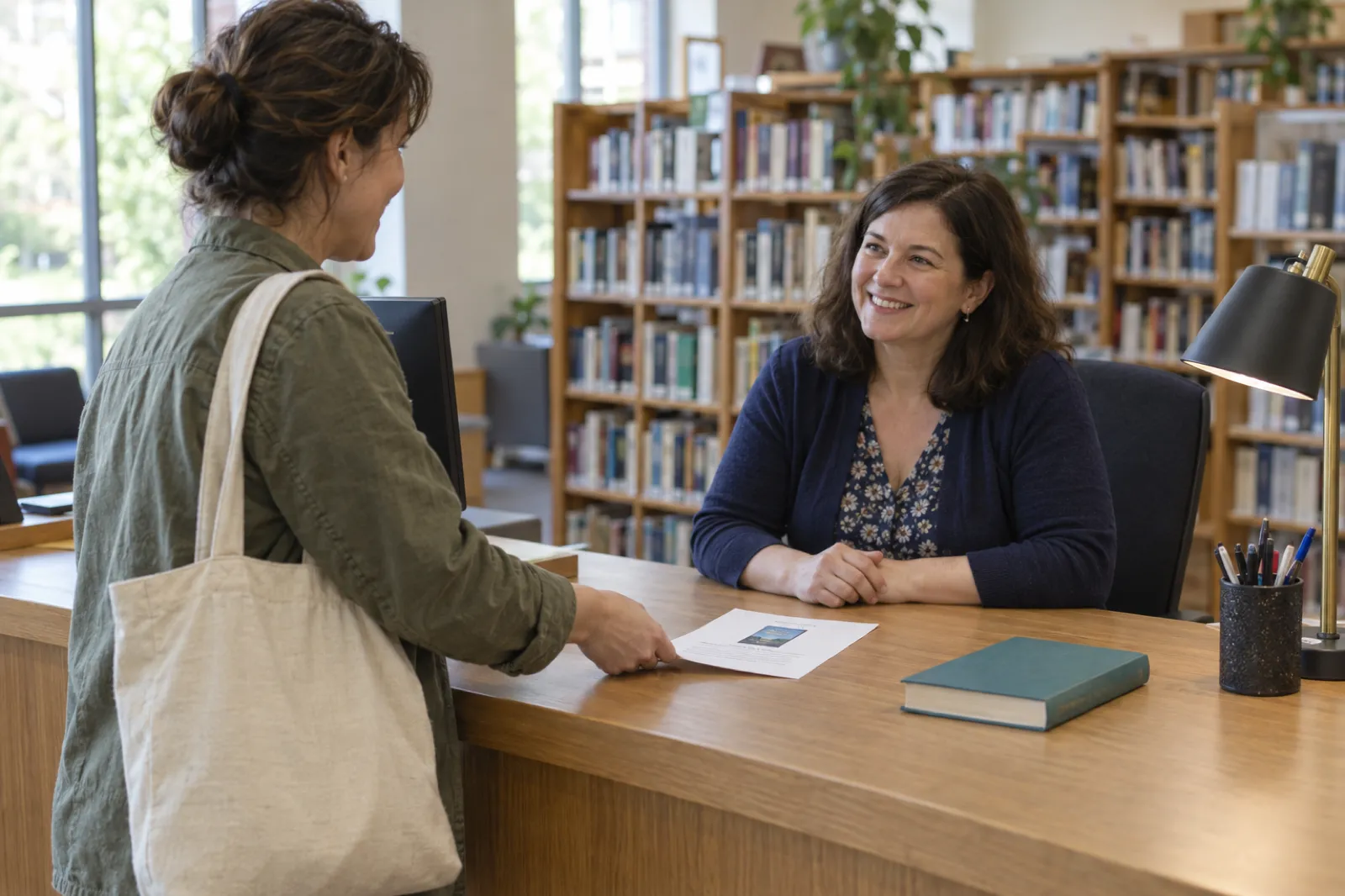
- Send one page, not a pitch. Title, author, a two-sentence description, genre and age group, page count, formats and where each is available (for example "ebook on OverDrive and Hoopla, paperback via Ingram"), ISBNs if you have them, your library price, and any review or award. A clean, honest blurb helps; our book description generator is a quick start.
- Mention you are local. Offer a talk, a writing workshop or a place at a local author event. An event gives a library a reason to buy.
- Ask readers to request it. A Notify Me tap or a purchase request from a patron carries more weight than an author email. Put one line in your newsletter and back matter.
- Submit to the Indie Author Project if your library participates, which puts your book in front of the regional collection's readers at no cost.
- Don't mail unsolicited books. Draft2Digital's FAQ warns that libraries "are not obligated to accept unsolicited books" and usually return or discard them.
Print books in libraries
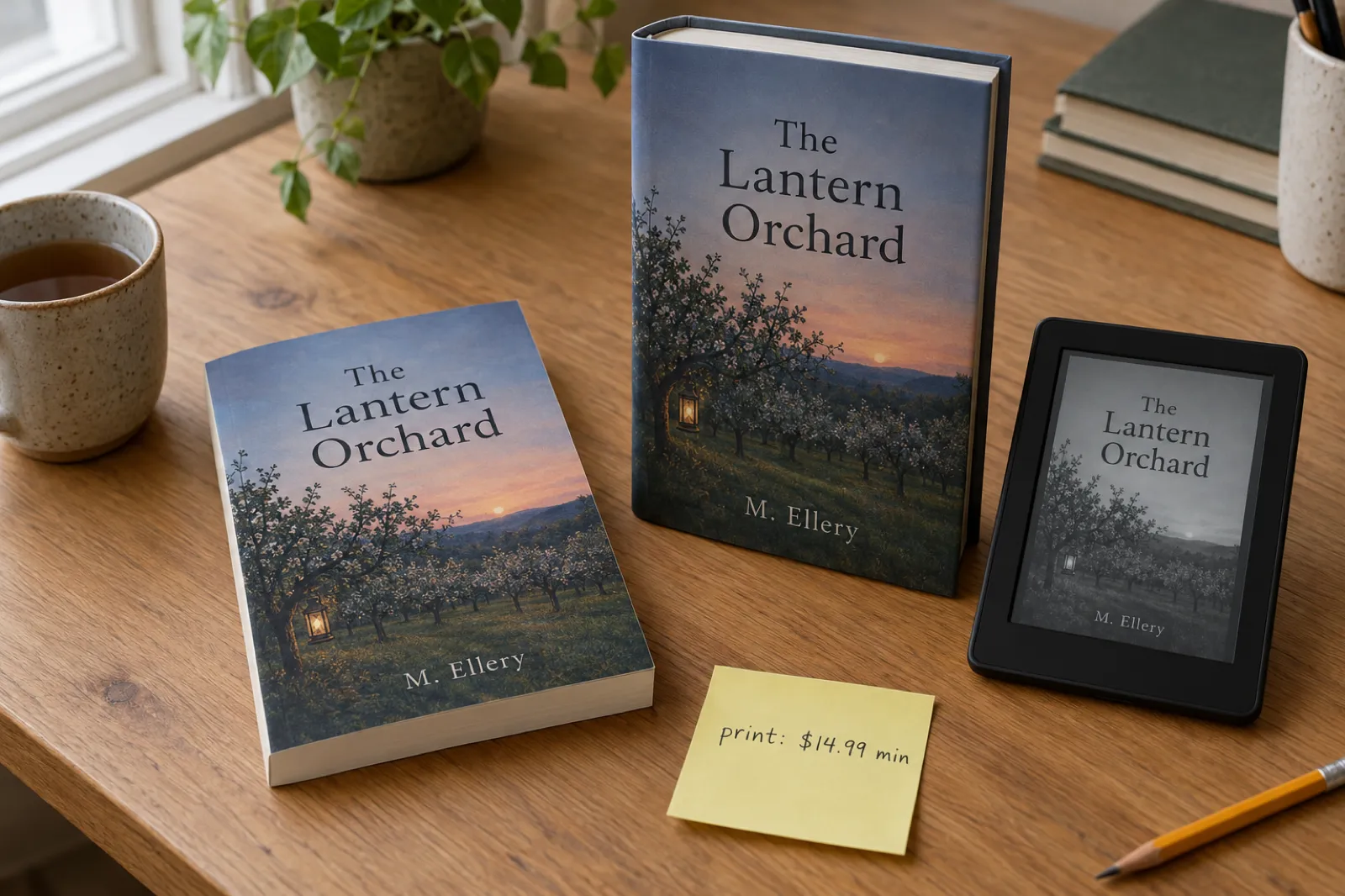
Libraries mostly buy print from wholesalers, not Amazon. The usual indie route is IngramSpark, which lists your paperback or hardback in Ingram's catalogue for bookshops and libraries. You set a wholesale discount (IngramSpark suggests 53% to 55% with returns in the US and Canada), pay printing per copy and a 1.875% distribution fee, and file revisions have been free since 1 February 2026. Draft2Digital Print also reaches the channels Ingram serves. If you print through more than one service, use your own ISBN and switch off KDP's Expanded Distribution for the IngramSpark edition; do you need an ISBN? explains the costs by country.
We compare the two print routes in IngramSpark vs KDP, cover IngramSpark's AI rule (significant human review and contribution, credited) in IngramSpark's AI policy, and price a run with the IngramSpark cost calculator. For a print interior that passes on the first try, see how to create a print-ready PDF book. A proper copyright page matters more in print, because librarians catalogue from it; our copyright page template covers what to include. Children's authors: how to sell children's books covers schools and libraries as a channel.
Where Inkfluence AI fits
Inkfluence AI is a book writer, not a distributor. It doesn't deliver to OverDrive, Hoopla or any library platform, and it doesn't print or ship books. What it does is get one project to the point where every route on this page can take it:
- Write or import. Draft chapter by chapter from your outline, or import a manuscript you already have. Length is set by how many chapters you plan, at roughly 1,000 to 1,500 words a chapter.
- Edit before you label. The AI book editor flags clarity, pacing and contradictions; the rewriting that makes a book AI-assisted rather than AI-generated is yours.
- Export the EPUB. A reflowable EPUB with a table of contents, plus PDF, DOCX and KDP print files from the same project. Run the EPUB through EPUBCheck before you opt in to OverDrive, as you would any file; the ebook formats guide and exporting help list the options.
- Make the cover and audio. The AI book cover generator makes a cover you can declare where a route asks, and the audiobook tools make chapter MP3s; check the length with the audiobook length calculator and the steps in how to make an audiobook with AI.
Free-plan exports include an Inkfluence branding page, which a library edition shouldn't carry. On Creator ($9.99 a month or $89 a year) or Premium ($19.99 a month or $179 a year) you can switch branding off; see pricing, and the self-publishing guide for the path from idea to listing.
Libraries for indie authors: FAQ
Can a self-published author get an ebook into libraries?
Yes, through a distributor. Kobo Writing Life sends ebooks to OverDrive (Libby) for 50% of the library price you set. Draft2Digital reaches OverDrive, Hoopla, BorrowBox, cloudLibrary and Vivlio Libraries. PublishDrive reaches Hoopla, OverDrive and Odilo on a paid plan. A library still has to buy or borrow the book.
How do I get my ebook on Libby?
Libby is OverDrive's reading app. Switch on "Available for Libraries in OverDrive" in Kobo Writing Life and set a USD library price, or tick OverDrive in Draft2Digital. The EPUB must have no validation errors, and the book shows in Libby once a library buys it or adds it on cost per checkout.
How do I get my book on Hoopla?
Through an aggregator: Draft2Digital or PublishDrive for ebooks, Author's Republic for audiobooks. Hoopla pays per checkout. Draft2Digital lists 3.8% per checkout on a tiered model; PublishDrive says Hoopla prices ebooks at $0.99 to $1.49 a checkout and pays up to 70% of that.
How much do authors earn from library ebooks?
More per sale than retail, but sales are few. At OverDrive, Kobo pays 50% of your library price per copy and Draft2Digital 46%, with 4.6% per checkout. At a $9.99 library price that is $5.00 or $4.60 a copy and about $0.46 to $0.50 a checkout.
What price should I set for libraries?
Kobo recommends "a few dollars higher than your normal USD retail price", because one library copy is lent many times, and OverDrive won't accept less than $0.99. For a full-length indie ebook we would start at roughly two to three times retail and adjust later.
Do libraries accept AI-written books?
It depends on the route. OverDrive's policy doesn't exclude AI-created titles if labelled, but PublishDrive's table says OverDrive takes AI only on covers through it. Hoopla accepts labelled AI content, declined nearly 20,000 AI-generated or low-quality titles in January 2026, and lets libraries block AI-tagged books. Kobo rejects wholly or partially AI-generated ebooks.
Can I get my audiobook into libraries?
Human-narrated audiobooks reach library platforms through Voices by INaudio and Author's Republic, which both pass on 80% of the royalties they receive. AI narration is harder: Kobo sends no audiobooks to libraries, INaudio takes it only from approved providers, and Author's Republic doesn't allow it on all library platforms. PublishDrive lists OverDrive and Odilo as accepting labelled AI narration.
Is the Indie Author Project still running in 2026?
Yes. It is free and non-exclusive. Ebooks join a regional collection on BiblioBoard, and the best are chosen for IAP Select, which can lead to sales on OverDrive, Palace and cloudLibrary. The 2026 contest drew nearly 4,000 entries; winners are announced at Indie Author Day in November.
Does KDP Select stop me selling to libraries?
For the ebook, yes. KDP Select requires the digital edition to be exclusive to Amazon in 90-day terms, so it can't be on any library platform while enrolled. Leave Select at the end of a term before you send the ebook to libraries.
How do I get my print book into libraries?
Libraries buy print from wholesalers, so the usual indie route is IngramSpark, which lists your book in Ingram's catalogue. Then ask your local library directly. Inkfluence AI makes print-ready PDF files but does not print or distribute books.
Start the book a library will lend
Plan it, write it chapter by chapter, edit every line, and export the EPUB and print files the library routes take. Free to start, no card needed.
Open the dashboardRelated reading
- How to publish an ebook wide in 2026: every store, aggregator and library route compared
- How to publish on Kobo, including the OverDrive switch
- How to publish on Apple Books
- How to publish on Google Play Books
- Barnes & Noble Press guide
- Draft2Digital review and Draft2Digital vs PublishDrive
- Which stores allow AI-written books
- Where to sell an AI audiobook
- How to turn an ebook into an audiobook with AI
- How to write a memoir with AI: local memoirs are a natural library buy
Sources
- Kobo Writing Life: OverDrive Distribution (updated 18 September 2026)
- Kobo Writing Life help centre: royalties (updated 12 August 2026, OverDrive royalties and cost per checkout) and audiobook FAQ
- Draft2Digital: Ebook royalty rates (updated 13 April 2026)
- Draft2Digital: What are your library payment options?
- Draft2Digital: FAQ (stores, erotica, free pricing, library timing, unsolicited books)
- Draft2Digital: Partners (including Vivlio Libraries)
- Draft2Digital: Understanding D2D's activation and maintenance fees (14 April 2026)
- Draft2Digital: Content guidelines (last updated 27 October 2025)
- PublishDrive: AI-generated, assisted or narrated: what to declare, and how
- PublishDrive: Distribution to Hoopla
- PublishDrive: Pricing models in the stores (library services)
- PublishDrive: Partnership extension with Odilo (audiobooks)
- PublishDrive: Distribution pricing plans
- OverDrive: Harnessing AI Responsibly (last updated 9 January 2025)
- OverDrive: Publishers (partnering with OverDrive)
- Libby Help: Sharing interest in titles not offered by your library (updated 3 September 2026)
- Hoopla: Transparency by Design, AI-generated content (20 February 2026)
- Hoopla: Clarifying our pricing (18 November 2025)
- Indie Author Project: FAQs and FAQs for authors (commercial collections, royalties)
- Indie Author Project: So you submitted your book. Here's what happens next
- Arapahoe Libraries: 2026 Indie Author Project submissions (15 July 2026)
- Voices by INaudio: How much will I make per sale?, Digital Voice Narration FAQs (3 August 2026) and library pay per use
- Author's Republic: distribution network and author share
- San Jose Public Library: Update for Boundless users (10 November 2025)
- OCLC: cloudLibrary is now part of OCLC (2 April 2024)
- Publishers Weekly: Palace Project, Draft2Digital strike deal (9 February 2023)
- IngramSpark: Pricing

Founder, Inkfluence AI
Sam is the founder of Inkfluence AI. He built the platform to make book creation accessible to everyone - from first-time authors to seasoned publishers.
Helpful links

Ready to write your own book?
Write with AI, make it yours, and export PDF, EPUB and KDP-ready files from one project.
Keep reading
 Self-Publishing
How to Publish on Barnes & Noble Press in 2026: Ebooks, Print Rules and AI Disclosure
B&N Press pays 70% on ebooks from $0.99, and 55% minus printing on print books, which since 22 April 2026 must list at $14.99 or more. It asks whether each part of your book is AI-Created or AI-Assisted, refuses public domain titles, caps accounts at 100 titles and sells ebooks to US readers. Here is every step from account to promotion, read from B&N Press's own help pages, with a royalty calculator against KDP.
 Tools
Draft2Digital Review 2026: Fees, Stores, AI Rules and Whether It's Worth It
An honest Draft2Digital review from its own pages in October 2026: the new $20 activation and $12 maintenance fees, the roughly 10% it keeps, every store and library it reaches (and the ones it does not), its AI rules, payments, print and audio, plus a calculator that tells you whether it pays for your books.
 Tools
Draft2Digital vs PublishDrive (2026): Fees, Stores and AI Rules Compared
Draft2Digital keeps about 10% of each sale and now charges new accounts $20. PublishDrive takes 0% commission and charges a flat plan from $0 to $99.99 a month. We compared the two on their own pricing and help pages in October 2026: fees, stores, libraries, Google Play, Amazon, print, audiobooks, AI rules, ISBNs and payouts, with a fee calculator that finds the sales level where a flat plan wins.

Get ebook tips in your inbox
Join creators getting weekly strategies for writing, marketing, and selling ebooks.