
How to Sell Coloring Books on Amazon KDP and Etsy, and What Each Sale Makes
A coloring book is the rare book you can sell twice from one set of files: as a paperback that Amazon prints when someone orders it, and as a PDF that someone prints at home ten minutes after paying. The two sell to different people, in different places, at different prices, and the numbers behind each are simpler than most guides make them. This page works through them with Amazon's and Etsy's own figures (checked on 23 September 2026): what a copy costs to print, what it pays at three prices, why KDP does not treat a coloring book as a low-content book, what goes in an Etsy printable, and a planner that lays out your book, prices it and writes the list of designs. We cannot see what our users sell, so there are no income claims here. Every figure is a per-copy calculation or a labelled example.
Amazon, Kindle, KDP, Etsy and Gumroad are trademarks of their owners. Inkfluence AI is an independent tool and is not affiliated with or endorsed by any of them.
How do you sell a coloring book?
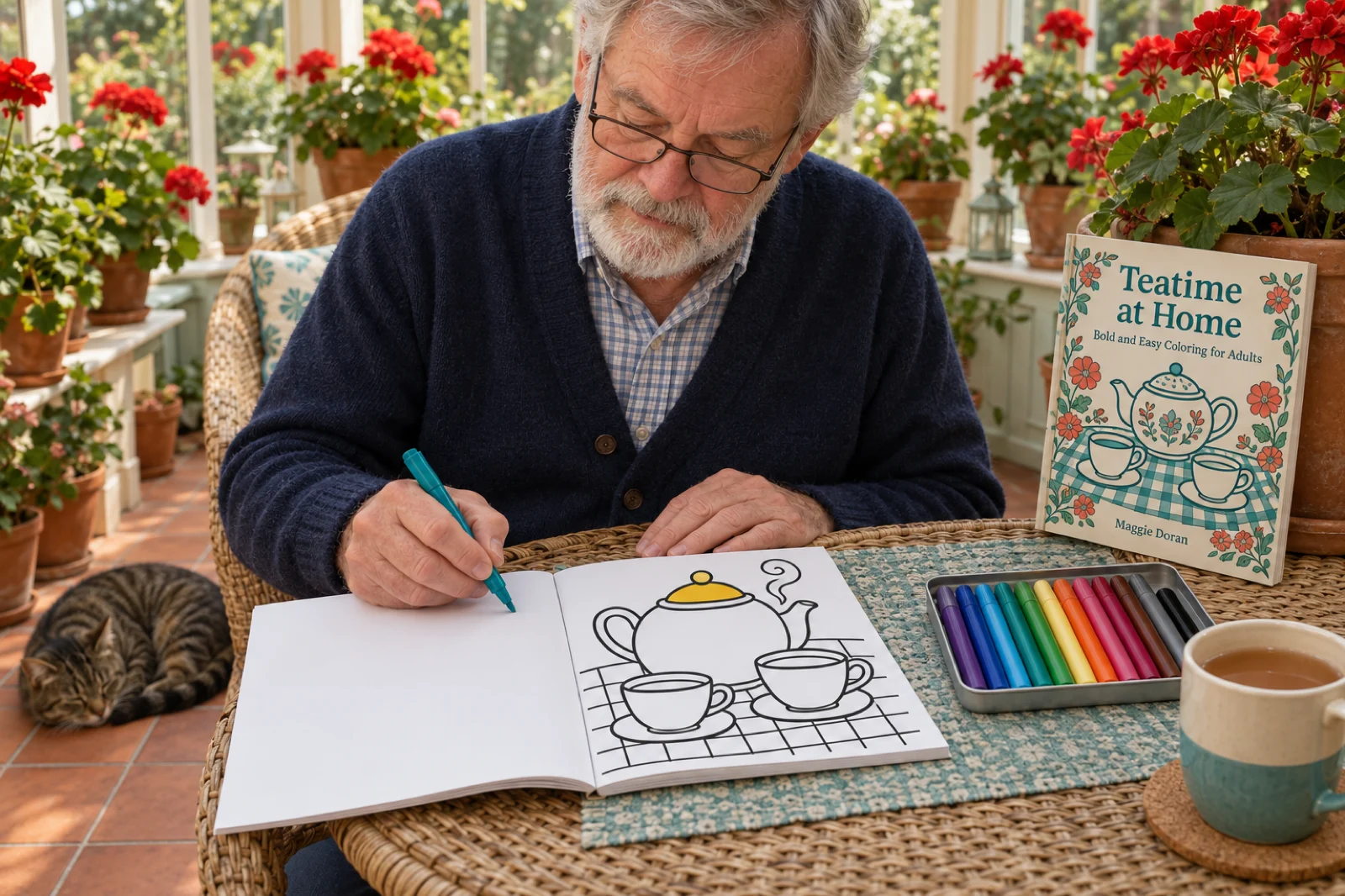
Publish it as a paperback on Amazon KDP and sell the same designs as a printable PDF on Etsy. For the paperback, choose 8.5 x 11 or 8.5 x 8.5 inches, black ink on white paper, and a blank page behind every design so markers do not ruin the next one. A 30-design book is then 62 pages, costs $2.84 to print on Amazon.com and pays $3.15 a copy at $9.99, the price where Amazon's rate goes from 50% to 60%. Publish it as an ordinary paperback, not a low-content book: KDP does not count coloring books as low-content, so the free ISBN and the Look Inside sample are yours. For Etsy, list the PDF as an instant download with the blank pages taken out, and say that AI made the designs if it did. Skip Kindle: KDP says coloring books are not suited to it.
One printing price
$2.84 prints any black-ink coloring book from 11 to 54 designs with blank backs on Amazon.com, at 8.5 x 11 or 8.5 x 8.5. The blank backs cost nothing extra.
Not low-content
KDP lists coloring books under "Not Generally Low-Content". Publish yours as a normal paperback, with the free ISBN, a sample and a series.
What we cannot tell you
How many copies a coloring book sells. We do not see our users' sales, and neither Amazon nor Etsy publishes typical sales. Examples here are examples.
Coloring book line-up and listing planner
Choose who will color the book, the theme, how many designs, the size, the paper and where you will sell it. The planner counts the pages with a blank back behind each design, checks KDP's 24-page minimum, works out the printing cost and what a copy pays at three prices, outlines the files for an Etsy printable, and writes a list of designs that rotates subjects, poses and settings so no two pages look alike. It runs in your browser with KDP's and Etsy's figures as of 23 September 2026.
Inkfluence AI makes 12 to 40 designs a book. For more, make a second volume.
Paperback
Each paperback sale pays you
-
| At | Rate | Pays a copy |
|---|
Pages and files for KDP
Printable package
Check before you publish
The line-up: one line per design
Listing facts
Brief for Inkfluence AI
How the button works. Make this coloring book opens your Inkfluence AI dashboard with the brief in the idea box; press Create my book (you will be asked to sign in first if you are not). A brief that says "coloring book" is made as a coloring book, and the number of pages it names is the number of designs. The words also set the line style: "bold and easy" gets very thick outlines and one big subject a page, "adults" or "teens" gets fine, detailed lines, and anything else gets the kids' line of bold outlines and big spaces. We ran 31 briefs of every kind this planner writes through the app's own reading of an idea, 92 runs in all, and every run picked the coloring format, the stated number of designs and the intended line style. The button is switched off, with a note, when a theme would change the style. To see the plan first, choose New Book, then Coloring book, and paste the brief there.
Paperback figures use KDP's printing costs and royalty rates for the store you pick, before tax and currency conversion; the page count is the title and copyright pages plus each design and its blank back, and the READ ME in the Inkfluence AI export states the exact count. Printable figures use the same fees as our travel guide selling guide: Etsy's listing, transaction and US processing fees, Gumroad's 10% + $0.50 plus card processing, or 30% on Discover, and 2.9% + $0.30 for a card payment link on your own site. The royalty calculator compares other book formats and stores.
What a 30-design coloring book pays on Amazon
One book, worked through with Amazon's published figures. It has a title page, a copyright page and 30 designs, each followed by a blank page: 62 pages at 8.5 x 8.5 inches, black ink on white paper, sold on Amazon.com. The sums are the same at 8.5 x 11. KDP prints each copy when someone orders it and takes the printing cost out of the royalty, so the calculation needs three numbers: the printing cost, the royalty rate and the price.
Printing costs $2.84. KDP charges a flat fee for black-ink paperbacks of 24 to 110 pages: $2.30 at regular trims and $2.84 at large trims. A trim is large when it is wider than 6.12 inches or taller than 9, and both coloring sizes are. Many coloring guides quote $2.30, which is the price at regular trims such as 6 x 9. Using it makes each copy look $0.54 more profitable at $9.99 than it is.
The rate is 60% or 50%. On Amazon.com a paperback listed at $9.99 or more earns 60% of the list price, and one at $9.98 or less earns 50%. Printing comes off after that.
| List price | Rate | Working | You get a copy |
|---|---|---|---|
| $5.68 (lowest allowed) | 50% | 50% of $5.68 is $2.84, minus $2.84 | $0.00 |
| $7.99 | 50% | 50% of $7.99 is $3.995, minus $2.84 | $1.16 |
| $9.98 | 50% | 50% of $9.98 is $4.99, minus $2.84 | $2.15 |
| $9.99 | 60% | 60% of $9.99 is $5.994, minus $2.84 | $3.15 |
| $12.99 | 60% | 60% of $12.99 is $7.794, minus $2.84 | $4.95 |
| $14.99 | 60% | 60% of $14.99 is $8.994, minus $2.84 | $6.15 |
Half-cent results are rounded to the nearest cent here; KDP's Rights & Pricing screen shows the figure it pays. Sources: KDP's Paperback Printing Cost (the formula, the black-ink table and the large-trim rule) and Paperback Royalty (the 50% and 60% bands by store), read on 23 September 2026.
Five things the table shows
The blank backs are free. Printed back to back, the same 30 designs would be 32 pages and cost $2.84, exactly the same, because black-ink printing is flat from 24 to 110 pages. That flat band covers up to 54 designs with blank backs. Past it the price climbs slowly: a 60-design book with blank backs is 122 pages and costs $3.07.
$9.99 is the price that matters. At $9.98 the book pays $2.15; one cent more pays $3.15. Price a kids' book below $9.99 and every sale earns the 50% rate: at $7.99 this book pays about $1.16. That is a real choice, not a mistake, if the lower price sells more copies, but make it knowing the number. Our KDP royalties 2026 guide sets the paperback and Kindle rules side by side.
KDP will not let you go below $5.68. Its lowest allowed price is the printing cost divided by the 50% rate, so at that price the royalty is zero. A coloring book is one of the cheapest paperbacks to print, so a low price is always allowed; below about $7 each copy pays cents rather than dollars.
Libraries and bookshops are not an option. KDP's Expanded Distribution, which makes a paperback orderable by bookshops and libraries, lists "Coloring books" among the content its distributors do not accept, so every copy of a coloring book sells through Amazon itself or through your own hands.
The paper changes the sums. The table below is the same 62-page book on each paper KDP offers.
| Paper | Weight | Printing | Pays at $9.99 | Pays at $12.99 | For a coloring book |
|---|---|---|---|---|---|
| White | 50 to 61 lb (74 to 90 GSM) | $2.84 | $3.15 | $4.95 | The usual choice: colours look like the pen |
| Cream | 50 to 61 lb (74 to 90 GSM) | $2.84 | $3.15 | $4.95 | Tints every colour warm; thicker spine |
| Groundwood | 45 lb (60 GSM) | $2.75 | $3.24 | $5.04 | Thinnest paper; KDP does not recommend it for heavy ink |
| Premium colour (heavier white paper) | 60 to 71 lb (88 to 105 GSM) | $5.96 | $0.03 | $1.83 | Heaviest paper, at twice the printing cost |
Groundwood saves $0.09 a copy and is the wrong paper for most coloring books: KDP's groundwood paper page describes it as the choice for "paperback novels and text-heavy books" and says books with heavy ink coverage are not recommended on it, "to prevent the ink from showing through the pages". Premium colour ink is the trick some sellers use to get heavier paper for markers, and at 62 pages it costs $5.96 to print, which leaves $0.03 a copy at $9.99. It only adds up at a higher price, and once published the ink and paper type cannot be switched between black and colour.
The same book in other Amazon stores
Each store has its own printing cost and its own 60% line. On Amazon.co.uk the 62-page book costs £2.15 to print, KDP's lowest allowed price is £4.30, and at £7.99, where 60% starts, it pays £2.64. On the German, French, Spanish and Italian stores the 62-page book costs €2.48 to print, KDP's lowest allowed price is €4.96, and at €9.99, where 60% starts, it pays €3.51. On Amazon.ca the 62-page book costs C$3.53 to print, KDP's lowest allowed price is C$7.06, and at C$13.99, where 60% starts, it pays C$4.86. On Amazon.com.au the 62-page book costs A$5.28 to print, KDP's lowest allowed price is A$10.56, and at A$13.99, where 60% starts, it pays A$3.11. In Canada and Australia the 60% rate starts at 13.99 in local currency, so a coloring book priced like a US one earns 50% there. The planner above switches between stores.
Is a coloring book a low-content book on KDP?
Usually not, and the difference changes how you publish it. Plenty of guides file coloring books with journals and planners under "low-content", and KDP disagrees. Its Low-Content Books page describes a low-content book as one with minimal or no content inside, "generally repetitive, and designed to be filled in by the user", and says this "does not typically include activity books, such as puzzle books or coloring books, which generally do not feature repetitive content on each page". Its table of examples puts notebooks, planners, journals, log books and blank sheet music in the low-content column, and coloring books in the column headed "Not Generally Low-Content", next to novels, puzzle books and children's books. KDP adds that there can be exceptions.
| On KDP | A coloring book, published normally | A low-content book (journal, planner, log book) |
|---|---|---|
| Low-content box under Categories | Leave it unticked | Tick it, or KDP says the book will be rejected |
| ISBN | Free KDP ISBN, or your own | Not eligible for the free ISBN: your own, or none |
| Look Inside (Read Sample) | On by default: 20% of the pages | None without an ISBN; A+ Content images instead |
| Series page | Allowed | Not allowed |
| Release date (pre-order) | Available | Not offered |
| Expanded Distribution | Not accepted: distributors exclude coloring books | Not supported |
Two of those matter a lot for a coloring book. The Look Inside sample is how a buyer judges the line work before paying, and on a 62-page book with blank backs KDP's 20% comes to about 12 pages: the title and copyright pages and roughly five designs. And a series page groups your volumes, the natural way to organise coloring books: one theme per book, the same style across the series. A low-content book without an ISBN gets neither.
If you also sell true low-content books, such as a gratitude journal or a reading log, those follow the other column: tick the box, publish without an ISBN or with your own, and use A+ Content images on the detail page to show the inside; how to sell workbooks sorts workbooks, planners and activity books into the two columns. The printing and royalty sums above are identical for both kinds: a black-ink book of 24 to 110 pages at a large trim costs $2.84 to print on Amazon.com either way.
Can you make money selling coloring books?
Price, minus what the printer and the store keep, times the copies you sell. The first two are known before you draw a line. The third is the one nobody can hand you: we see that a book was sent to Etsy or Gumroad from the app, but no store tells us what sold, and anyone quoting a typical monthly income for coloring books is usually quoting the sellers who did well. Here are worked examples instead, each labelled as one, using the per-copy figures above.
Example A
15 paperbacks a month on Amazon.com at $9.99
15 x $3.15 = $47.25 a month. At $7.99 the same 15 copies would pay about $17.40.
Example B
20 printable PDFs on Etsy at $4.99
Each sale keeps $4.07 after Etsy's renewal, transaction and US processing fees: 20 x $4.07 = $81.40. There is no printing cost, and the same file can sell any number of times.
Example C
25 author copies at a craft fair at $10
KDP sells you author copies at the printing cost: 25 x $2.84 = $71.00, plus shipping and tax. Sold at $10 each, that is $250 in and $179.00 before shipping and card fees. Author copies pay no royalty and do not appear in KDP reports.
Example D
A Christmas volume: 40 copies over November and December at $9.99
40 x $3.15 = $126.00 for the season, and very few copies after it. Seasonal books sell in a short window, so they need to be live and reviewed before it opens.
What sellers who keep selling tend to do
They pick a buyer before a theme. "Bold and easy coloring for adults who like cozy kitchens" is a book someone searches for; "a coloring book" is not. They make every page different, because a buyer flicking through the sample and seeing the same cat in the same pose four times is unlikely to buy, and KDP itself rules out content that is "not significantly different" from another book or "excessively reused, recycled, or repeated within or across books". They publish a series, one theme per volume in the same style, so each book sells the next. And they sell the same designs twice, as a paperback on Amazon and a printable on Etsy. None of that guarantees sales, and a first coloring book that sells a handful of copies to friends is a normal first book.
Why "publish fifty a week" does not work any more
KDP limits how many titles you can create to 2 per book format each week, according to its Create a Book and Paperback Submission Guidelines pages as they read on 23 September 2026. Two paperbacks a week is still plenty for a careful series, and nowhere near enough for the flood-the-category approach some older guides describe. And KDP's content guidelines make you responsible for everything in the book, AI-made images included, meeting its rules, which cover other people's rights: coloring books of cartoon characters, film characters, sports teams or brand logos you do not own put the book, and the account behind it, at risk.
What goes on the other side of the ledger
- The designs. On Inkfluence AI each design uses one picture from your plan's monthly allowance, and so does the colour cover, plus a character sheet when the book has a recurring character. Creator ($9.99 a month) includes 20 pictures and Premium ($19.99) 50; extra pictures use one chapter credit each. A 30-design book is 31 or 32 pictures.
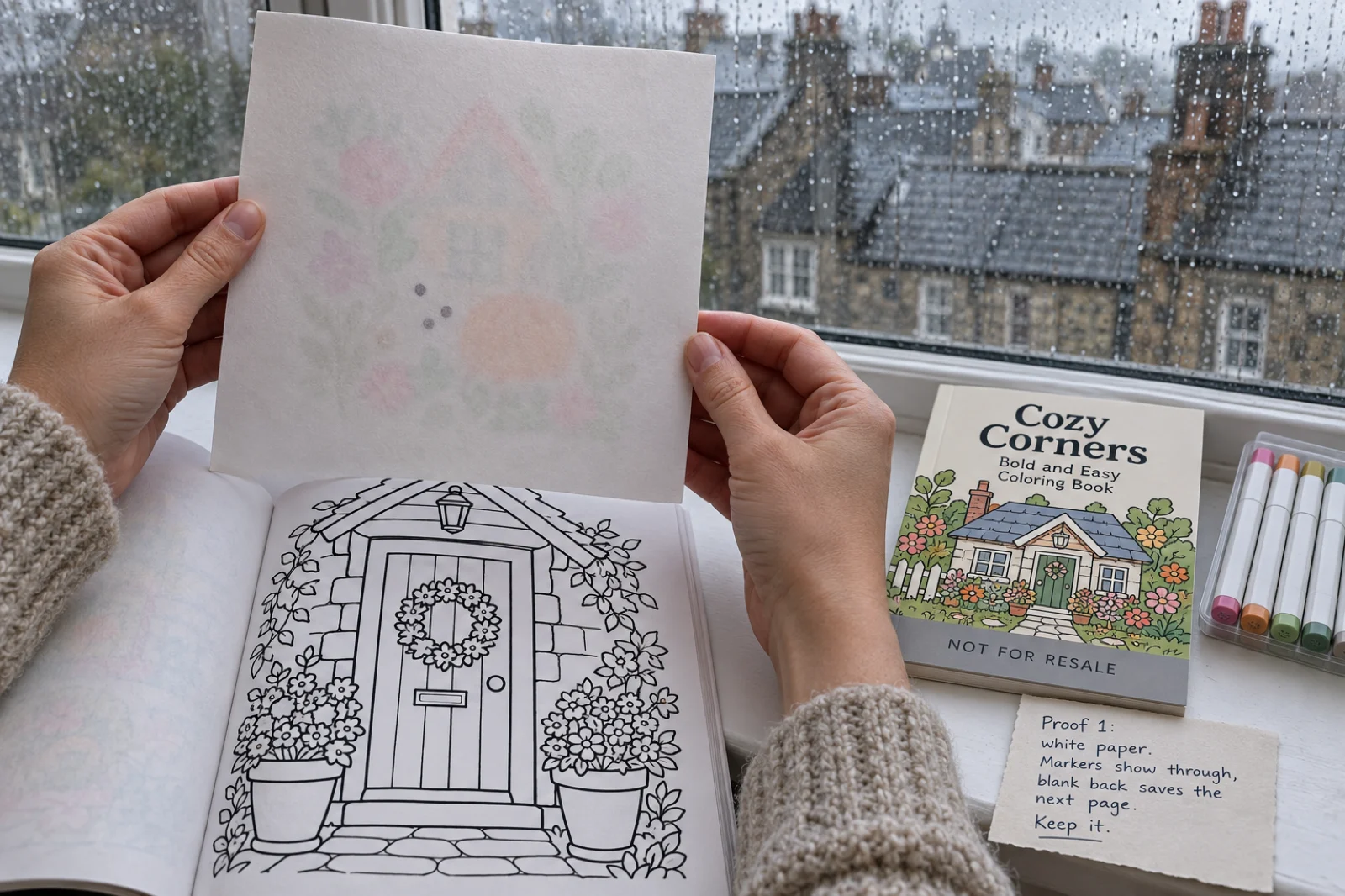
- Proof copies. A proof costs the printing price plus shipping and is marked "Not for Resale". Order one before you publish and colour a page with markers.
- Listing fees. Etsy charges $0.20 to list and $0.20 again each time a copy sells. KDP charges nothing to publish.
- Ads. Amazon ads and Etsy ads are optional and paid for as you go; Etsy's Offsite Ads charge only when an ad makes a sale.
- Tax. Amazon, Etsy and Gumroad handle sales tax on their own sales in most places. What you sell by hand, and the income from all of it, is yours to report.
Where to sell a coloring book
Coloring books sell to two kinds of buyer: someone who wants a nice printed book, often as a present, and someone who wants pages to print for a rainy afternoon or a classroom, today, for a few dollars. Amazon serves the first and Etsy the second, and one set of designs can serve both.
| Where | Who buys there | What they get | Per sale, example | Watch for |
|---|---|---|---|---|
| Amazon paperback | Gift buyers, parents, grandparents and adult colorists searching by theme | A printed book, printed when ordered | $3.15 at $9.99 | 50% below $9.99; 2 new titles a week; no bookshop distribution |
| Etsy printable | Parents, teachers and colorists who want pages to print now | An instant download of up to five files | $4.07 at $4.99 | AI disclosure in the description; 20MB a file |
| Etsy, printed copies | Gift buyers who shop small | A book you post, often signed or bundled with pencils | Price minus copy, postage and fees | Name the printer as a production partner |
| Gumroad or your own site | Your own followers, newsletter or class | A download of the files you attach | $3.55 at $4.99 on Gumroad | Little traffic of its own |
| In person | Craft fairs, markets, gift shops, clubs | An author copy, often with pencils | Your price minus $2.84 and postage | You carry the stock |
| Kindle | Nobody, for a coloring book | - | - | KDP lists coloring books as not suited to Kindle |
Amazon: how to sell coloring books on Amazon KDP
Create a paperback on your KDP bookshelf. The settings that matter for a coloring book: a title that names the theme and a subtitle that names the reader ("A Bold and Easy Coloring Book for Adults"), a description that says how many designs, that each is printed on its own page with a blank back, the size, and whether it suits markers; categories and keywords that match the theme; for a children's book, a reading age, because KDP says a children's book without one may not be eligible for children's categories and will not appear in age-specific search. Leave Low-content unticked. On the content page take the free KDP ISBN, choose black ink and white paper, the trim you exported, and No bleed if your designs sit inside the margins, then upload the interior and the full wrap cover, answer the AI content questions, and use the Print Previewer to check every page. Order a proof before you press publish.
KDP only prints paperbacks for some of Amazon's stores. Its printing cost page notes that Amazon.in, Amazon.com.br and Amazon.com.mx do not support paperback distribution, so a seller in India reaches Amazon.com, Amazon.co.uk and the European stores with a KDP paperback, and reaches local buyers with a printable PDF.
One more KDP detail that trips coloring sellers up: blank pages. KDP allows no more than four consecutive blank pages at the start or in the middle of a manuscript and ten at the end. One blank page behind each design is fine; a run of blanks at the end to pad out the page count is not. For the full paperback set-up, the KDP paperback guide goes screen by screen.
Kindle: skip it
KDP's Guide to Kindle Content Quality says some books "are simply not well suited to the Kindle format", including "any kind of book where the main purpose is to allow the reader to write or color on the pages", and names coloring books, puzzle books, blank journals and pattern books. It warns that such books may be rejected on submission or removed from sale. The paperback and a printable are the two formats for a coloring book.
Etsy: how to sell coloring pages as printables
Etsy is where people search for coloring pages to print: a birthday party activity, a classroom set, a quiet-time pack, a single mandala. List a printable as a digital item and choose instant download, and Etsy delivers the files as soon as someone pays. Etsy's help article How to Manage Your Digital Listings (read in an archived copy of 9 August 2026, because Etsy blocks automated readers) sets the limits: up to five files per listing, 20MB each, as PDF, PNG, JPG or ZIP among other types; file names of up to 70 characters using letters, numbers, periods, underscores or hyphens, which buyers see exactly as you upload them; and no variations on digital listings, so a Letter and a square version go in the same listing as two files rather than as options. What goes in those five files is in the printable package section below.
Fees, as on our travel guide page: $0.20 to list, renewed at $0.20 each time a copy sells, 6.5% of the sale and, for US shops, 3% + $0.25 payment processing. A $3.99 printable keeps about $3.16, a $4.99 one $4.07 and a $7.99 bundle $6.78. The Etsy selling guide covers opening a shop.
Printed copies can go on Etsy too. Etsy's Creativity Standards name "a coloring book designed and illustrated by a seller and printed and bound by a production partner" as an example of an allowed item, provided you disclose the production partner and where the book ships from. KDP author copies at the printing cost are the simplest stock for that, and a book bundled with a set of pencils makes a gift listing rather than a book listing.
Gumroad and your own site
Gumroad turns a link into a checkout and a download, and handles the sales tax as merchant of record. It suits a teacher selling a classroom set to other teachers, an artist whose followers want this month's pages, or a club selling a fundraiser book. A sale through your own link pays 10% + $0.50 plus 2.9% + $0.30 card processing, so a $4.99 PDF keeps about $3.55; a sale found through Gumroad's Discover marketplace pays a flat 30% and keeps $3.49. A card payment link on your own site keeps the most, 2.9% + $0.30 per sale, and brings no buyers of its own. The Gumroad selling guide goes through each screen.
In person: fairs, markets and the gift shop
A coloring book is easy to sell by hand because the buyer can flick through it. Order author copies from your KDP bookshelf at the printing cost, $2.84 for the book above plus shipping, and sell them at craft fairs, Christmas markets and school fairs, with a sample page and pencils on the table for children to try. Gift shops, garden centres and cafés that sell cards sometimes take a local maker's books on consignment: they stock a few copies, pay you an agreed share when they sell, and return the rest. Adult bold and easy books can also suit people buying for someone else, such as a grandparent with shaky hands or a relative in hospital, so large clear designs and a note on the cover about the style help.
What people make: coloring books on Inkfluence AI
We counted every coloring book made on Inkfluence AI from the day the format opened, 29 August 2026, to 23 September 2026, leaving out our own test books: 87 books by 67 people, 52 of whom have made one. We looked at the line style each was drawn in, whether it has a recurring character, how many designs it has, what it is about, whether it was exported and whether it is listed for sale through the app. We cannot see sales, so none of this says what sold.
72%
are drawn in the kids' line of bold outlines and big spaces (63 of 87). 20% are detailed books for adults or teens (17) and 8% are bold and easy (7, four of them for adults).
Link to this stat41%
are about animals (36 of 87), and 9% more about dinosaurs. Seasons and holidays come next at 13%, then faith, feelings and learning at 9%. 69% have a recurring character drawn from one character sheet.
Link to this stat10.3%
are listed for sale through the app (9 of 87): 8 on Gumroad and 2 on Etsy, one on both. 40% have been exported at least once (35).
Link to this statOur reading of these. The format's users make kids' books first, mostly about animals, the obvious theme for a children's book, which also means meeting plenty of other animal books in the same Amazon search, so a narrower angle helps; the adult side, detailed and bold and easy together, is about a quarter of books. The median book still has 20 designs, the number the format starts on, as it did in the format's first nine days: 45 of the 82 books with a recorded count kept exactly 20, and 16 have 24 or more. With a blank page behind each design, 20 designs already make a paperback of about 42 pages, so nobody needs more designs just to reach KDP's minimum.
One in ten coloring books is listed for sale from inside the app, a higher rate than for books of every kind and in line with picture books as a whole, and as with children's books most of those listings are on Gumroad, where the seller brings the buyers. Listings made directly on Amazon or Etsy are invisible to us, so the real share selling somewhere is higher; nine books is also a small number, which is why we do not quote coloring book prices from Gumroad (eight products from six sellers).
How it was counted. Coloring books are books in the Coloring book format created from 29 August to 23 September 2026 (counted on 23 September), excluding the 23 made on the team's own accounts. The line style is the one the app drew the book in, which it decides from the book's title, description, audience and the author's brief ("bold and easy", "large print" or "for seniors" give the bold style; "adults", "grown-ups" or "teens" the detailed style; anything else the kids' line). Themes are keyword groups over the title and brief, first match wins; 8% fit no group. Designs are the book's pages as recorded, known for 82 books. A book counts as listed while it is linked to an Etsy listing or a Gumroad product created through the app. No title, brief, shop, product or account is published. The figures are published under a Creative Commons Attribution 4.0 licence: quote them with a link to this page.
Print specs for a coloring book on KDP
The rules that decide whether a coloring book prints well, from KDP's help pages as they stood on 23 September 2026.
| Trim | Suits | White | Cream | Groundwood | Premium colour |
|---|---|---|---|---|---|
| 8.5 x 11 in | Kids' books, detailed adult books: the biggest drawing area | 24 to 590 pages | 24 to 550 | 24 to 578 | 24 to 590 |
| 8.5 x 8.5 in | Bold and easy books, one object a page | 24 to 590 pages | 24 to 550 | 24 to 578 | 24 to 590 |
| 8 x 10 in | Activity and coloring books in an upright shape | 24 to 828 | 24 to 776 | 24 to 812 | 24 to 828 |
- 24 pages minimum, counting every page, and KDP rounds an odd page count up to an even one.
- One blank page behind each design is the convention for books that will meet markers, because KDP prints both sides of every sheet. It is allowed: KDP's limit is four blank pages in a row in the middle of a book.
- Bleed is only needed if art runs to the edge of the page. Most coloring pages sit inside the margins, so choose No bleed. With bleed, every page is 0.125 inches wider and 0.25 inches taller than the trim, and art must extend past the trim line.
- Margins: at least 0.25 inches at the top, bottom and outside (0.375 with bleed), and 0.375 inches on the inside for books of 24 to 150 pages.
- Images: KDP asks for at least 300 DPI. Order a proof and look at the thin lines at arm's length; soft or stepped edges show up in print before they show on screen.
- Spine: white paper adds 0.002252 inches a page, so the 62-page book has a spine of 0.140 inches and a full cover, with bleed, of 17.390 x 8.75 inches at 8.5 x 8.5. Cream adds 0.0025 inches a page and premium colour 0.002347. KDP rejects spine text on books under about 80 pages.
- ISBN and barcode: the free KDP ISBN is available because a coloring book is not low-content. KDP places a barcode in a 2 by 1.2 inch white box at the bottom right of the back cover unless you supply one, and covers anything you put there.
White, cream or groundwood: which paper, and why the blank backs
KDP's black-ink papers are white and cream at 50 to 61 lb (74 to 90 GSM, varying by printing location) and groundwood at 45 lb (60 GSM); premium colour prints on 60 to 71 lb white paper. At these weights an alcohol marker can soak through, and the thinner the paper the more a felt tip shows. That is the whole case for a blank page behind each design: the ghost lands on a blank page instead of the next drawing. Pencils and crayons barely mark the reverse, which is why some kids' books print on both sides and say "best with crayons and pencils" in the description.
Choose white. Coloring buyers expect the colour on the page to match the pen, and cream shifts every colour warm. Groundwood's lower printing cost is real, $2.75 against $2.84 for the book above, and KDP's own page says books with heavy ink coverage are not recommended for it, and that it may move such books to white or cream if they print badly. If buyers will use markers, say so on the listing and suggest a sheet of card behind the page; it is cheaper than heavier paper and works on any book.
What the Inkfluence AI export gives you, and what it does not
The Coloring book format makes 12 to 40 designs a book (20 to start) and exports them at 8.5 x 8.5 inches, the default, or US Letter, 8.5 x 11. The PDF and the KDP package both put a blank page behind every design. Export, then KDP, downloads a zip with the interior manuscript, the full wrap cover (back, spine and front with 0.125 inches of bleed), a front cover image, and a READ ME with the trim, page count and spine width. The cover designer's Print tab starts on black and white on white paper, which is the right setting for a coloring book, so the spine in the wrap cover matches white paper without changing anything. Designs sit inside the page margins, so choose No bleed on KDP.
Each design carries a short line of words in the editor. By default the export prints the art alone; turn on "Print the words under each design" in the export dialog, after editing the words, and they print centred beneath each design in the PDF, the KDP package, the EPUB and the DOCX. The PDF exports on every plan; the KDP package, EPUB and DOCX come with a paid plan or a credit pack.
What it does not make: an A4 PDF (the square file prints on A4 with Fit to page, slightly reduced), single pages as separate image files, a hardcover, or a Kindle edition, which KDP would not want for a coloring book anyway. For a printable, delete the blank pages from the exported PDF in any PDF editor before you upload it, so a home printer gives one design per sheet.
The printable package: what goes in an Etsy coloring listing
A printable is judged at the buyer's printer, not on the screen. Etsy allows five files of up to 20MB each; a coloring listing that prints cleanly on the first try usually holds these.
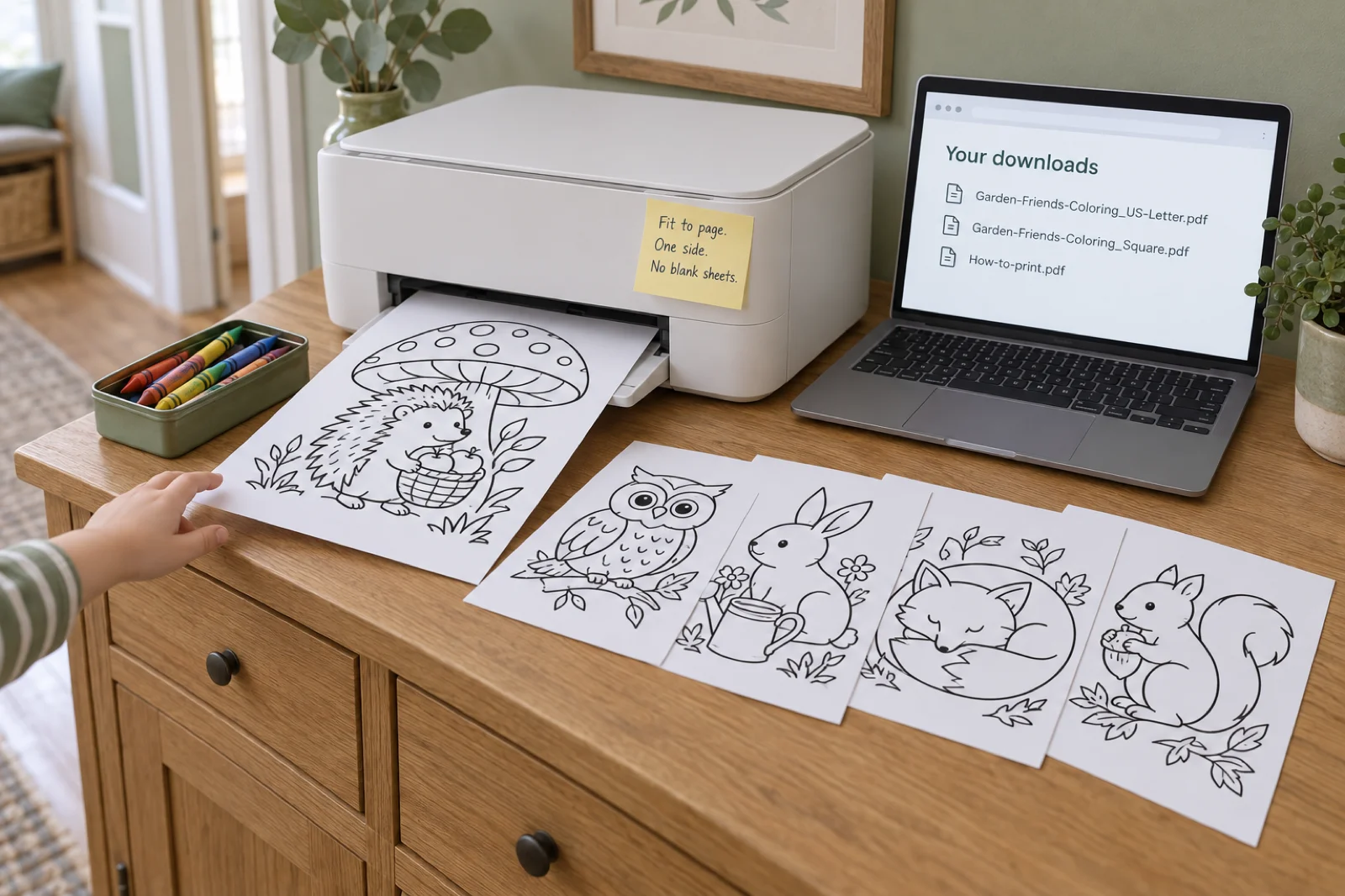
- The designs at US Letter, one per sheet. The 8.5 x 11 export with the blank backing pages deleted. Keep the title page; move the copyright line to it if you want a single-page front.
- The same designs at the square size. A square page prints on A4 or Letter with Fit to page, slightly reduced on A4 and with nothing cut off, which covers buyers outside North America.
- A one-page "how to print" sheet. Print one side only, choose Fit to page, use heavier paper or card for markers, and what the buyer may do with the pages: a common choice is printing for the buyer's own household or one classroom, and no reselling of the files.
- A colour test page, if you like: a page of empty swatches to try pens and pencils before starting.
- A spare slot. If a PDF is over 20MB, split it in two here (designs 1 to 20 and 21 to 40) rather than squeezing the art.
Name the files with hyphens rather than spaces (Etsy accepts letters, numbers, periods, underscores and hyphens, up to 70 characters) and in words the buyer understands, because they see the names exactly as you upload them. In the listing photos, show three or four real pages, the number of designs, the sizes included and a photo of a printed page with some colour on it. Say in the description that the designs were made with AI, which Etsy requires, and tick With an AI generator under How it's made.
On Creator or Premium, Publish then Sell on Etsy in Inkfluence AI creates the listing as a draft in your shop with the book's cover as the first photo, a description with an AI line added, and the book's EPUB as the file. An EPUB is the wrong file for a printable, since no one can colour on a reading app, so on Etsy remove it (the X beside the file name) and add your PDFs before you activate the listing. Sell on Gumroad sends the same EPUB and switches the product on as soon as your Gumroad payouts are set up, so swap the file on Gumroad straight away.
How to make and sell a coloring book, step by step
From a theme to a paperback on Amazon and a printable on Etsy. The planner's button is the quick way into step 4; the coloring book video walkthrough shows steps 4 and 5 on screen.
-
1. Pick the buyer, then the theme
Decide who will hold the pen: a toddler with chunky crayons, a child of six, a teenager, an adult who wants detail, an adult who wants something calm and simple. Then choose a theme narrow enough to be searched for. Look at the first page of Amazon results for it and note page counts, prices and what the one-star reviews complain about; for coloring books, look for complaints about the paper, repeated pages and line art that is too fine for the age.
-
2. Price it before you make it
Put the reader, the number of designs, the size and the paper into the planner. If the books beside yours sell at $6.99, you now know that a copy pays about $0.66 there and $3.15 at $9.99, and can decide which fight you are in.
-
3. Plan designs that differ
List ten or more different things to draw and vary how each appears: a whole scene, a close-up, a pair, at night. The planner's line-up does this for you and never puts the same subject in the same pose twice.
-
4. Make the book
In Inkfluence AI choose New Book, then Coloring book as the book type, and type the theme with who it is for and the number of pages ("a bold and easy coloring book for adults about a cozy kitchen, 30 pages"). The plan screen lists every page before anything is drawn: rename, reorder, remove and add pages there, and rewrite any page's description to match a line of your line-up. Then create the book. A book with a recurring character draws a character sheet first so the character matches on every page.
-
5. Check every design
Look for outlines that do not close, detail too small for the age, stray shading, and two pages that look alike, and redraw any page that is wrong (each redraw uses one picture). If you will print words under the designs, edit them now.
-
6. Export the KDP package
Choose 8.5 x 8.5 or US Letter in the export dialog, switch on "Print the words under each design" if you want them, and export the KDP package. Open the READ ME in the zip and note the page count and spine width. Export the PDF at both sizes for the printable while you are there.
-
7. Publish the paperback on KDP
Create a paperback. Leave Low-content unticked; set a reading age for a children's book; take the free KDP ISBN; choose black ink and white paper, the same trim, and No bleed; upload the KDP Manuscript and the full wrap cover; answer yes to AI-generated images if the designs were drawn with AI. Check every page in the Print Previewer and order a proof.
-
8. Set the price and publish
On Rights & Pricing, set a price that pays what you worked out in step 2, $9.99 or more on Amazon.com for the 60% rate, and check the royalty KDP shows for each store. Publish once the proof has been coloured in and looks right.
-
9. List the printable
Delete the blank pages from the PDFs, write the how-to-print sheet and list on Etsy as an instant download, or send the book to Etsy or Gumroad from Publish in Inkfluence AI and replace the EPUB with your PDFs there. Disclose the AI in the description.
-
10. Make the next one
Start volume two in the same style with a new theme, add it to a KDP series, and link the books in each description. Keep a note of what sells where; it is the only sales data you will ever own.
Selling a coloring book made with AI: what each store asks
Amazon KDP. KDP's content guidelines require you to tell it about AI-generated text, images or translations when you publish a new book or republish an edited one, and they say "AI-generated images include cover and interior images and artwork". Content an AI tool created counts as AI-generated "even if you applied substantial edits afterwards"; content you made yourself and only refined with AI is AI-assisted and needs no disclosure. For a coloring book whose designs and cover were drawn with AI, the image answer is yes. If you wrote the words under the designs yourself, the text answer can be no. Disclosure does not block publishing, and you stay responsible for the book meeting KDP's guidelines. The KDP AI disclosure guide walks through the questions, and selling AI coloring books on KDP covers what gets them turned down.
Etsy. Etsy's Creativity Standards (last updated 10 June 2025, read from an archived copy of 28 August 2026) list "seller-prompted AI creations", made with AI tools from a seller's own prompts, as items designed by a seller, and say sellers "must disclose within their listing description if an item is created with the use of AI". The same page rules out "a bundle, collection, scan, or PDF of someone else's work" and AI prompt bundles. A printable of designs you prompted, planned and chose is allowed with the disclosure.
Gumroad has no AI setting of its own. Saying so in the description anyway sets the right expectation.
Rights. Inkfluence AI's Terms say you keep the rights to what you make with it, exported files included, on every plan, and that you are responsible for checking it before you publish or sell it, including that it does not resemble someone else's work. In the US, copyright protects what a person writes, selects or arranges, not an image generated from a prompt alone, so your protection is strongest in the parts you shaped: the selection, the order, the words. Can AI-written books be copyrighted? covers the detail. Whatever the tool, keep other people's characters, logos and artwork out of your pages.
How to market a coloring book
A coloring book is bought on sight: the cover, then two or three pages. Most of the marketing is showing those well to the person already looking.
- Show the pages. The Look Inside sample shows about a fifth of the book, blank backs included. Add A+ Content on the Amazon detail page with three or four designs full size, and use the same images as Etsy listing photos, one of them partly coloured.
- Say the facts buyers check. Number of designs, single-sided or not, size, line style, and what to colour with. "40 single-sided designs, 8.5 x 11, thick lines, markers welcome" answers the questions that otherwise become one-star reviews.
- Publish in series. One theme per volume, the same style and cover layout across the series, linked on KDP. A buyer who finished Garden Friends looks for more of the same.
- Mind the calendar. Christmas, Halloween, Easter and back to school each have a buying window; a seasonal book needs to be live, with a few honest reviews, before it opens.
- Give a page away. One free printable design in exchange for an email address is the classic way to build a list you can tell about the next volume; the lead magnet generator helps with the rest of the freebie.
- Ask for honest reviews. Ask buyers to review the book; never ask for a particular rating or offer anything in return.
Nine mistakes that cost coloring sellers money
- Pricing at $9.98 or less without meaning to. On Amazon.com a 62-page book pays $2.15 at $9.98 and $3.15 at $9.99.
- Using the $2.30 printing cost. That is the regular-trim price; 8.5 x 11 and 8.5 x 8.5 are large trims at $2.84.
- Ticking Low-content. KDP does not count coloring books as low-content, and ticking it costs you the free ISBN, the Look Inside sample and a series page.
- Printing designs back to back for adults. The first marker ruins the next page. Blank backs cost nothing extra up to 110 pages.
- Choosing groundwood to save $0.09. It is the thinnest paper, and KDP does not recommend it for heavy ink coverage.
- Publishing a Kindle edition. KDP lists coloring books as not suited to Kindle and may reject or remove them.
- Samey pages. The same subject in the same pose over and over disappoints buyers, and KDP rules out content that is excessively repeated within or across books.
- Listing the PDF with its blank pages on Etsy. The buyer's printer feeds out a blank sheet after every design.
- Characters you do not own. Cartoon, film and game characters, team badges and brand logos invite takedowns on every store.
Selling coloring books: FAQ
How do you sell a coloring book?+
Can you make money selling coloring books on Amazon?+
How much does it cost to print a coloring book on KDP?+
Is a coloring book a low-content book on KDP?+
Do I need an ISBN to sell a coloring book on Amazon?+
How many pages does a coloring book need for KDP?+
Should coloring pages be printed on one side only?+
What paper should I choose for a coloring book on KDP?+
What size should a coloring book be?+
How do you sell coloring pages on Etsy?+
Can I sell a coloring book as a Kindle ebook?+
Can I sell AI-generated coloring books on Amazon?+
How much should I charge for a coloring book?+
Can I publish lots of coloring books quickly?+
Can I sell coloring books on Amazon India?+
Can I make a coloring book in Canva and sell it on Amazon?+
Related tools and guides
AI Coloring Book Generator
Kids' and adult coloring books from one theme.
How to Make a Coloring Book with AI (Video)
The prompt, the plan and the character sheet, on screen.
Bold and Easy Coloring Book Generator
Thick lines and one subject a page, for kids and adults.
Coloring Book Niches
How to pick a theme with room left in it.
How to Sell Children's Books
Picture books in colour: print costs, the 32-page royalty and a planner.
How to Sell Travel Guides
The same questions for a digital travel guide.
How to Sell Romance Novels
Novel-length sums: the ebook, the page read and a 280-page paperback.
How to Sell Workbooks and Activity Books
Activity books, workbooks and planners: which are low-content on KDP, and what each sale keeps.
How to Sell Fitness Ebooks
Workout plans, meal plans and 30-day challenges: PDF, Kindle and paperback maths, and health-claim rules.
How to Sell a Devotional
Daily devotionals, prayer journals and Bible studies: per-sale maths and how many verses each translation allows.
Sell Ebooks on Etsy
Shop set-up, AI disclosure and the publish flow.
Paperback Publishing on KDP
Every screen of a KDP paperback, from trim to proof.
One buyer, one theme, every page different, priced before it is drawn.
Plan it above, or start from the Coloring book tile. Coloring books are drawn on Creator and Premium, or with chapter credits on the free plan.