
How to Write a Business Book That Brings You Clients: Outline, Length, Timeline and Cost (2026)
A practical guide for consultants, coaches and founders: one problem and one buyer, a named framework, the client-getting chapter structure, case studies with consent, a free book plan builder, length, timeline, cost, publishing on KDP, a lead magnet version, and how to measure the return.
Quick Answer
To write a business book that brings clients, pick one buyer with one expensive problem. Turn your method into 3 to 7 named steps, give each a chapter with a real case study and a tool, and end with one clear next step to your service. Print it as a paperback to hand out, and cut a short PDF as a lead magnet.
A business book written to bring in clients is a different object from one written to sell copies. It does not need to be long or have a publisher, and it will probably never earn much in royalties. It needs to make the right buyer think "this person understands my problem and knows how to fix it", and then tell them how to get help.
This guide is for consultants, coaches, agency owners, accountants, advisers and founders who solve the same problem for clients again and again. It covers the whole job: positioning, the chapter structure that sells without sounding like a brochure, case studies, the lead magnet version, length, timeline, cost, publishing and how to tell whether it is working. There is a free book plan builder halfway down that turns your offer, client, problem and steps into a chapter outline and a lead-magnet cut-down you can send straight into Inkfluence AI.
If you are still deciding whether a book is worth it at all, start with why writing a book is still the best career move for a consultant, which covers the case for it. This page is the how.
Business book formats at a glance (13 Oct 2026)
"Business book" covers everything from a four-page PDF to a 55,000-word hardback. Pick the format before you write, because it decides the length, the number of chapters and how the book reaches buyers. The publisher figures come from the sources at the end of this page; the other rows are our suggestions for self-published client books, not industry rules.
| Format | Length | Chapters | Its job | How buyers get it |
|---|---|---|---|---|
| Lead magnet | 2,000 to 6,000 words | 4 to 6 | A quick win that starts a conversation and an email relationship | Free PDF in exchange for an email address |
| Short client book | About 10,000 to 15,000 words (an hour's read) | 6 to 8 | Sent before a first meeting; read on a train | Paperback handed over, PDF, low-priced Kindle |
| Authority book | 20,000 to 40,000 words | 9 to 14 | Your whole method, with case studies; the book event organisers and buyers take seriously | KDP paperback and Kindle, author copies, audiobook |
| Traditionally published | About 40,000 to 55,000 words (publisher guidance) | 10 to 15 | Bookshop distribution and a publisher's name | Through a business publisher, after a proposal |
| Programme workbook | One section per session | One per session | Exercises for clients already working with you | Printed 7 x 10 in workbook or PDF |
Many consultants write the authority book first, then cut the short book and the lead magnet from it, which is the order this guide follows.
Step 1: one problem, one buyer
The most common reason a business book fails to bring clients is that it is written for everyone. "A book about growing your business" has no buyer. "A book for owners of small trade businesses who underprice jobs" has a buyer, a problem and an obvious next step: someone who can fix their pricing.
Write four things on one card before you write anything else:
- Your offer. What you sell, in a phrase: "a six-week pricing review for trade businesses". The book should end exactly where this offer begins.
- The buyer. Describe them by role, size and situation, not demographics: "owners of trade businesses with 2 to 15 staff" beats "small business owners".
- The expensive problem, in their words. "We win work that loses money." Use the phrases people say on your discovery calls. They are also what buyers type into Amazon and Google.
- The result. What changes for them when the problem is fixed, described as something they could see in their own numbers or week.
Then join them into a single positioning sentence: "For [buyer]. The problem: [problem]. The method: [your framework], in [N] steps. The next step: [your offer]." That sentence becomes your back-cover copy, your Amazon description opener and the test for every chapter. If a chapter does not help this buyer with this problem, it belongs in a different book.
| Too broad | One problem, one buyer | The offer it leads to |
|---|---|---|
| "Grow your business" | Trade business owners who win work that loses money | A pricing review |
| "Better HR for small firms" | Dental and vet practice owners whose new hires leave in the first 90 days | Part-time HR support |
| "Marketing made simple" | Independent restaurants paying delivery apps a cut of every order | A local marketing retainer |
| "Leadership for everyone" | Engineers promoted to manage the team they used to work in | A first-year manager coaching programme |
Narrow feels risky, but a buyer who sees their exact problem on the cover picks the book up, while a general title reads as meant for someone else. If the title is the sticking point, the free book title generator works well once the positioning sentence exists, and our pages for consultants, coaches and small business owners show how others frame theirs.
Writing a book about your work experience
A lot of people arrive here wanting to "write a book about my work experience". The version that brings clients is not your career story in order. It is the lessons from that career arranged as a method a reader can follow, with your experience supplying the stories. Keep the memoir for the introduction and the About the author page; the chapters belong to the reader's problem.
Step 2: name your framework
Buyers remember a method with a name. They forget a collection of tips. You almost certainly have a method already: it is what you do, in order, every time a new client arrives with the problem. Write those moves down as you would explain them to a new colleague and you will usually find 3 to 7 of them.
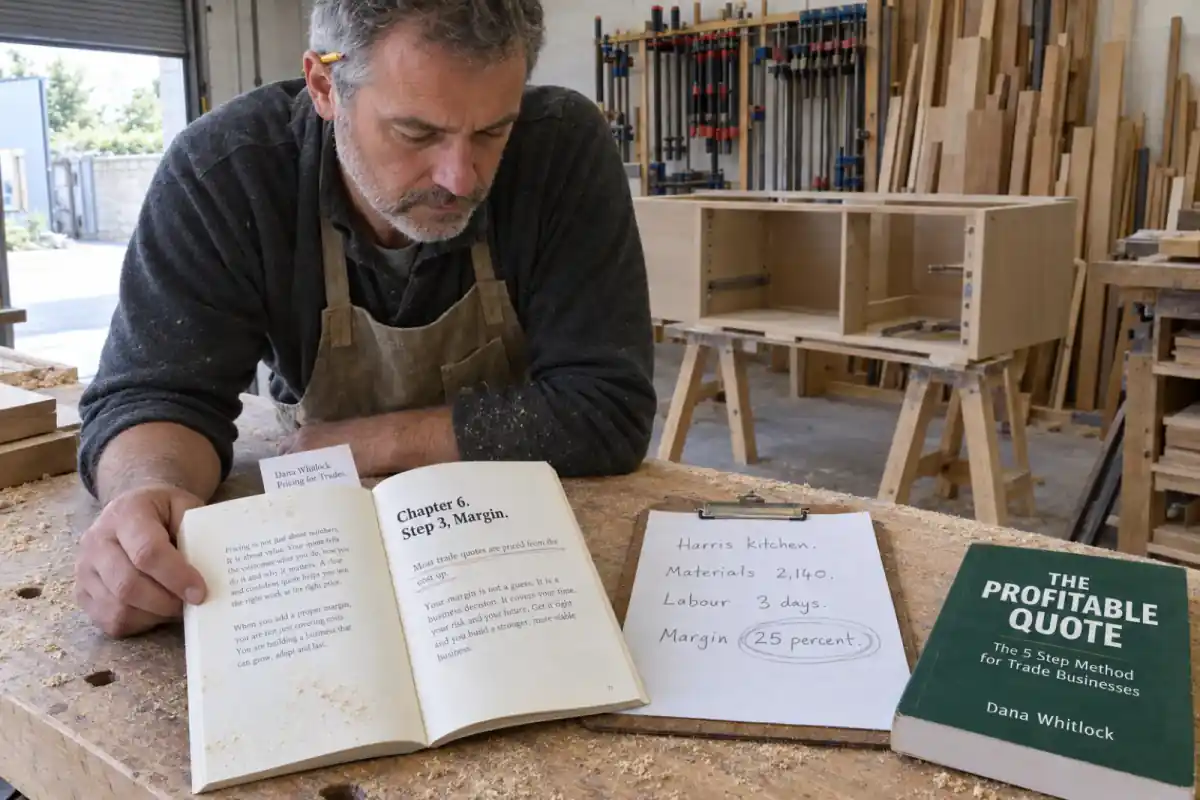
Give the whole thing a short, plain name and each step a one or two-word label. The example used through this guide: Dana Whitlock, an invented pricing consultant for trade businesses, and her method, The Profitable Quote.
Example framework: The Profitable Quote (an invented example)
Five steps, one chapter each. The one-page version of this diagram goes in chapter 3 and in the lead magnet.
Step 1
Count
Every hour, trip and material on the job, written down before pricing
Step 2
Cost
The true cost, including the hours nobody bills: quoting, travel, call-backs
Step 3
Margin
A target margin set before the price, not whatever is left over
Step 4
Present
Options and a written scope, so the customer compares value, not one number
Step 5
Follow Up
A set day and wording for chasing quotes, and a review of every job won or lost
Read left to right on a wide screen, top to bottom on a phone.
Three rules make a framework work in a book. Put the steps in the order the reader does them, so the book reads as a path rather than a list. Make each step fix one thing: if you cannot say in one line what goes wrong when it is skipped, it is part of another step. And prefer plain names to clever ones: "Count, Cost, Margin" is easy to repeat in a meeting; an acronym that needs explaining is not.
When a prospect says "we are stuck on step 3", the book has done its job before the first call.
Step 3: the client-getting outline
Most business books that bring clients share one shape, whatever the industry. It has three parts, and each part has a different job in the sale:
- The problem (about 3 chapters). What the problem costs, why the usual fixes fail, and the whole framework on one page. This is where the buyer decides you understand them.
- The method (one chapter per step). Each step taught properly, with a real example and a tool. This is where the buyer decides you know how to fix it. Give away the method; clients pay for the help applying it, not for the secret.
- The next step (2 or 3 chapters). One client followed from start to finish, a 30-day plan, and an honest chapter on doing it yourself versus getting help. This is where the buyer finds out how to work with you.
The chapter template
Inside Part 2, give every chapter the same pattern so the reader learns where to look:
| Part of the chapter | Its job | Rough share |
|---|---|---|
| 1. The situation | A moment the buyer recognises from their own week, ending on the problem this step fixes | 10% |
| 2. The principle | What most people believe, what you have seen work instead, and why | 15% |
| 3. The steps | Exactly what to do, in order, with the numbers or signs that show it is working | 30% |
| 4. The case study | A real client (with permission) or your own business: before, what changed, after | 20% |
| 5. The tool | A checklist, template, script or scorecard the reader can use today | 15% |
| 6. Mistakes and takeaway | The two or three errors you see most, one sentence to remember, and a bridge to the next step | 10% |
The tool is what makes the book useful rather than merely convincing: every time a reader uses your checklist or script, your name is on it.
A filled example: The Profitable Quote
Here is the whole outline for Dana's book, an 11-chapter authority book. It is an invented example to show the shape; your chapter titles should use your buyer's words.
| Chapter | What it covers | Example and tool |
|---|---|---|
| 1. What Underpricing Really Costs | The busy year that made no money; the hours nobody counts | A client's "before" (with permission); a ten-question pricing self-check |
| 2. Why "Just Charge More" Fails | Price lists, copying competitors, and the fear of losing the job | Old way and new way table |
| 3. The Profitable Quote on One Page | All five steps, who the method suits, who it does not | The framework diagram |
| 4. Step 1: Count | Listing every hour, trip and material before any number is written | Job sheet checklist |
| 5. Step 2: Cost | Overheads per working day; the unbilled hours | Day-rate worksheet with a worked example |
| 6. Step 3: Margin | Setting the target before the price | Margin table by job type |
| 7. Step 4: Present | Three options, written scope, what to say when asked for a discount | Quote template and discount script |
| 8. Step 5: Follow Up | When and how to chase, and reviewing every job won or lost | Follow-up wording and a win/loss log |
| 9. The Profitable Quote in Action | One roofing firm through all five steps, with their numbers | Full case study, approved in writing |
| 10. Your First 30 Days | One step a week, starting Monday | 30-day plan page |
| 11. Do It Yourself, or Get Help | What the book is enough for, the signs you need help, what a pricing review involves | Readiness check and one contact route |
Have the outline? Get the first draft today
Paste your positioning sentence and chapter list into Inkfluence AI. You see the plan first, to rename, reorder or remove chapters, then every chapter is drafted with the situation, the method, a worked example and the mistakes to avoid. Five chapters are free.
Start your business book freeFree business book plan builder
Fill in your offer, your client, their problem and the steps of your method. The builder lays out the chapter outline using the structure above, with a job, an example slot and a tool for every chapter, plus a four-section lead magnet cut from the same book. Choose the authority book (9 to 14 chapters) or the short client book (6 to 8). It runs in your browser; nothing you type is sent anywhere unless you press a button to open it in Inkfluence AI.
Business book plan builder
Offer, client, problem and steps in; chapter outline and lead magnet out.
Your positioning sentence
Fill in the boxes above to build your plan.
Working title ideas
Lead magnet cut-down
Each button opens your dashboard with the plan loaded as the book idea. You can edit it before anything is written, and you will see the chapter plan to rename, reorder or remove before the chapters are drafted.
Treat the output as a first cut. Rename the general chapters in your buyer's words ("Why Busy Years Make No Money" beats "What It Really Costs"), and swap the example slots for the real clients you can ask. For other book shapes, the free book outline generator covers more genres, and how to write a business book with AI covers prompts for different business niches.
What people write business books about
On 13 October 2026 we counted the business books in Inkfluence AI: books made as business books, lead magnets, playbooks or strategy guides, and industry reports. There were 5,952 of them, about 4.8% of all books on the platform (test accounts excluded), started by 4,745 different authors. Nearly one in five (18.8%) is written in a language other than English. This is a narrower count than the business-purpose figure on our business book comparison page, which also includes practical and technical guides.
To see what they cover, we matched the titles, briefs and audience notes of the 4,834 English-language ones against simple topic keywords. A book can match several topics, so read this as a rough map, not a census.
Topics of English-language business books made in Inkfluence AI
4,834 books, counted 13 Oct 2026. Share whose title, brief or audience mentions the topic. Bar width = share / largest share.
About one in four of these books (24.3%) names clients, an email list, a lead magnet or the author's own business or practice in its title or brief: books written to bring in work rather than to sell copies. The topics follow the buyer's wallet: growth, sales and marketing problems come first, because those are the problems business owners pay to fix.
Lead magnets are where the length is most consistent. Of the 178 lead magnets with a stored chapter and word count, 96.1% have 4 to 6 chapters, which matches the cut-down the builder suggests. Full business books spread wider: of 839 with a stored count, 66.3% have 4 to 6 chapters (many are first drafts made within the free plan's five chapters), 17.4% have 7 to 15, and 13.9% have 16 or more. Our AI book writing statistics page has typical lengths in words for every book type.
Step 4: case studies, with consent
Case studies turn a business book from opinion into evidence: a prospect believes the method when they read about a business like theirs that used it. They are also the part with the most ways to go wrong.
Collect them like an interview
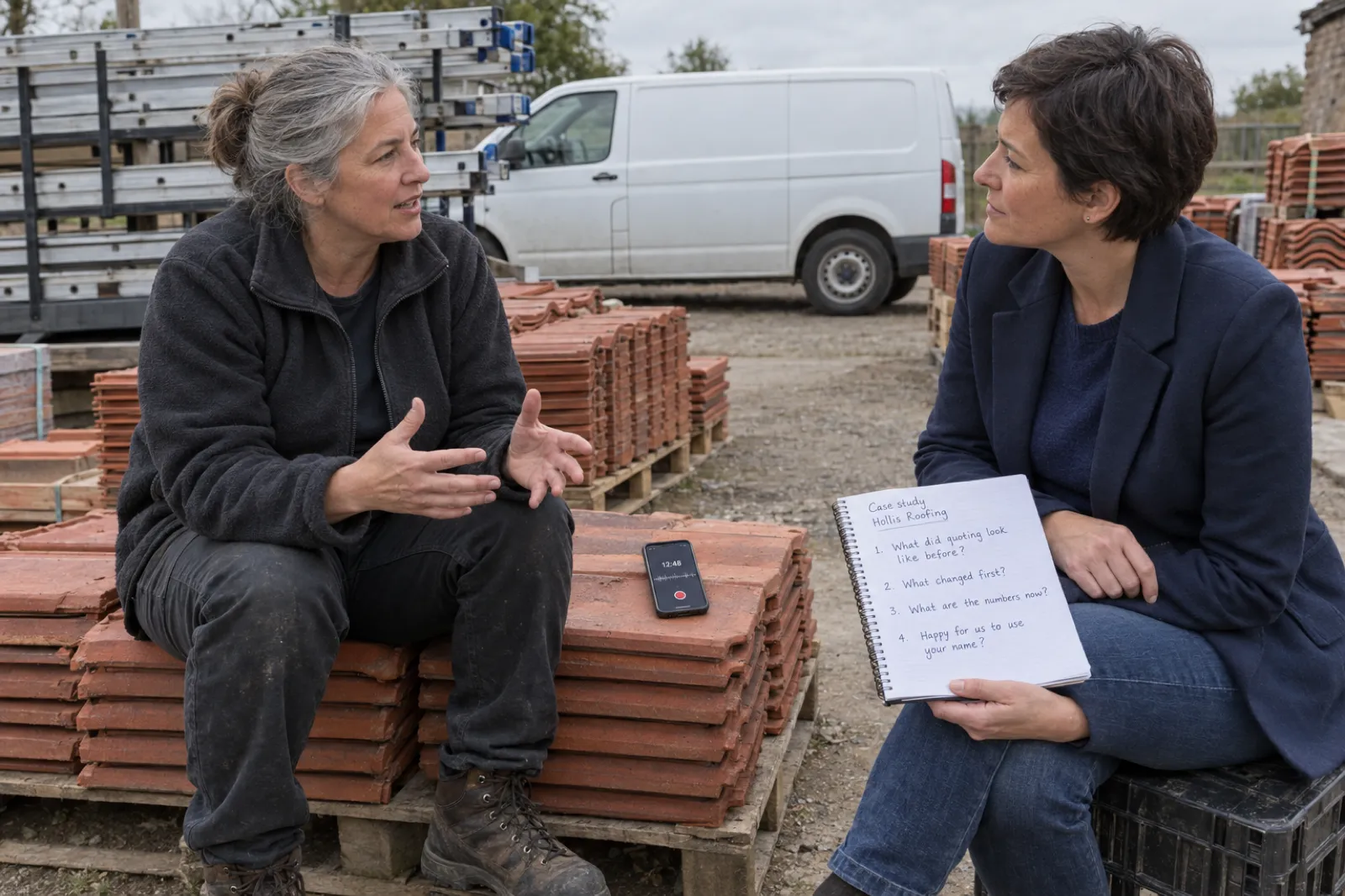
The best case studies come from a 20-minute conversation, recorded with permission, where the client tells the story in their own words. Four questions cover most of what you need:
- What did this look like before we worked together? What was it costing you?
- What changed first, and what was hard about it?
- What are the numbers or signs now? (Get the numbers they are happy to see in print.)
- Are you happy for us to use your name and business, or would you rather we anonymise it?
Quote them directly: one line in the client's own words ("we stopped pricing from what the last bloke charged") outweighs three paragraphs of your summary.
Get written permission
- Check your contract first. Many consulting and agency contracts have confidentiality clauses. Permission from your contact may not be enough if the contract says otherwise.
- Let them read the passage, not just the idea of it, and approve every number.
- Agree named or anonymised. If anonymised, change the name, the town and any distinctive detail, and say so once near the start of the book.
- Cover every format. The permission should cover the book, the audiobook, translations and short excerpts in your marketing.
- Keep it on file for as long as the book is on sale.
When a case study becomes an advert
In the book, a case study is a story. Lifted onto a sales page, an ad or an email, it is a testimonial, and advertising rules apply. In the US, the FTC's Endorsement Guides say an ad that relays a customer's experience on a key attribute will likely be read as saying that result is what people generally get. If you cannot back that up, the ad should clearly disclose what people generally achieve. In practice: use client results to show the method works, not to promise a number to every reader, and keep the evidence for any figure you quote.
Never invent a client
A composite that blends several real clients is fine if you say so. An invented client presented as real is not, and in a book meant to win trust it is the fastest way to lose it. This matters if you draft with AI. Inkfluence AI gives each non-fiction chapter its own example person at outline stage so chapters do not all lean on the same one, and some business chapters open with a case-study style scenario. Those are illustrations, not clients. Replace them with your real, consented stories, or keep them clearly hypothetical ("Imagine a roofer we'll call Sam..."). Our guide to whether it is ethical to write a business book with AI covers the line in detail, and preventing factual errors in AI non-fiction has a checking routine.
Step 5: one clear next step
A client-getting book needs one call to action, in the right places. Pitch in every chapter and it reads like a brochure; never say how to get help and the most interested readers have nowhere to go.
- The last chapter is the pitch, done honestly. Say what the reader can do alone with the book, the signs that they need help, and exactly what working with you involves: format, length, who it suits, what it does not do.
- One route in. A single web page or booking link that exists only for book readers. It makes the next step obvious and, as you will see below, makes the book measurable.
- A light mention near the tools. "Download the blank template at [your page]" under a checklist is useful to the reader and brings them to your site, where the next step lives.
- About the author. Two or three sentences on who you help and how, plus the same single link.
One Amazon rule to know: KDP's metadata guidelines do not allow website URLs, email addresses, phone numbers, reviews, quotes or testimonials, or time-sensitive information in the book's description on the store. The description sells the book; the next step lives inside the book and on your own site. The book description generator and author bio generator help with both.
Step 6: the lead magnet and the short versions
Once the authority book exists, cut two shorter versions from it. Each one reaches a different buyer at a different moment.
The lead magnet (4 to 6 short chapters)
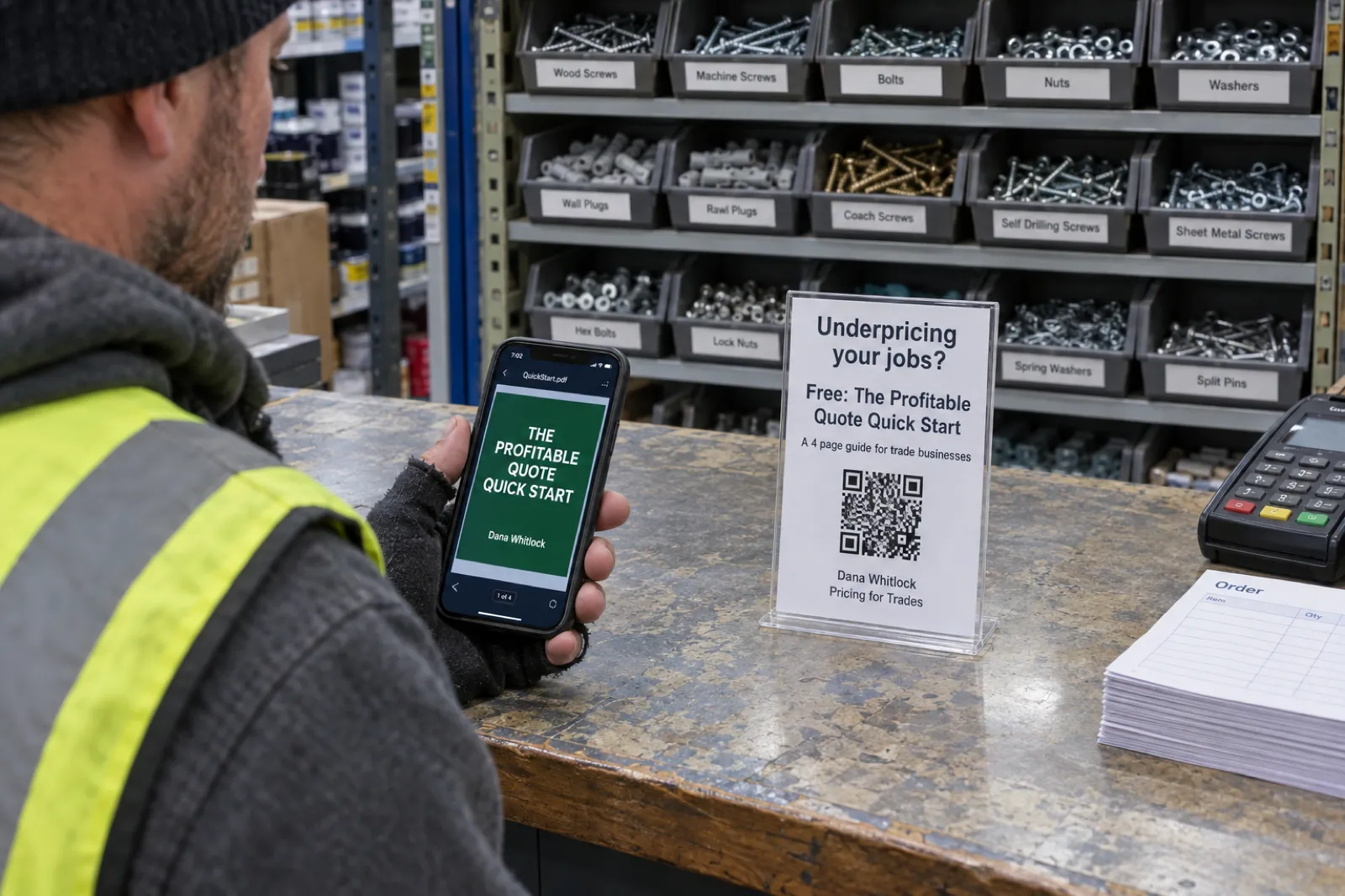
A free PDF that gives a quick win and points to the book and your offer. The shape that works: a self-check that shows the reader how big the problem is for them, the framework on one page, the first step in full with its tool, and a next-step page. That is exactly the cut-down the builder produces. Give it its own title ("The Profitable Quote Quick Start"), offer it in exchange for an email address, and put it wherever your buyers already are. The lead magnet generator covers the format, how coaches use lead magnets to book clients covers the follow-up, and how to create a lead magnet that converts covers the landing page.
The short client book (an hour's read)
Busy buyers often will not read 40,000 words, but they will finish something on a train. A 6 to 8 chapter edition (the problem, the framework, the steps in brief, the next step) is good to send before a first meeting. Choose "Short client book" in the builder for that outline.
Free PDFs and Amazon: two rules
- KDP Select exclusivity. If you enrol the Kindle edition in KDP Select (for Kindle Unlimited), the ebook must be exclusive to the Kindle Store for each 90-day term. KDP allows up to 10% of the book elsewhere as a sample, and print, audio and other non-ebook formats are not affected. So keep the lead magnet a separate, shorter document, not the whole ebook in disguise.
- Freely available content. KDP's content guidelines say it will not accept copyrighted content that is freely available on the web unless the copyright owner provides it. If your full text is already free on your site, expect to show it is yours.
How long should a business book be?
Shorter than most people think, for a client book. The reference points:
- Traditional business publishers: Berrett-Koehler's proposal guidelines use "40,000 to 50,000 words" as their example manuscript estimate. Alison Jones, who runs a business book publishing house, says her own business book is around 50,000 words and that with more time she would have cut it to 40,000; over 55,000, she suggests, it may be time for the blue pencil.
- Reading time: a 2019 meta-analysis of 190 studies put the average adult silent reading rate for English non-fiction at 238 words a minute. At that rate an hour's read is about 14,000 words, and a 40,000-word book is close to three hours.
- Self-published authority books commonly sit between 20,000 and 40,000 words: enough to teach the whole method with case studies, short enough for a buyer to finish.
Chapter count is the main lever, and each step of your framework deserves its own chapter, so the method decides the length. If the draft feels thin, add richer case studies and better tools, not extra chapters.
Inkfluence AI does not take a word or page target: it writes each chapter at roughly 1,000 to 1,500 words, so an 11-chapter authority book drafts at about 11,000 to 16,500 words, which you then deepen as you add case studies and your own material. The builder shows the drafted length and reading time for your outline. For the wider trade-off between formats, see short versus long ebooks.
Timeline and cost
There are three ways to get the words written, and the trade-offs are mostly about your time against your money. Our AI vs ghostwriter cost guide has sourced rate ranges for ghostwriters and editors, so they are not repeated here.
| Route | What you pay | Your time | Best for |
|---|---|---|---|
| AI-assisted (Inkfluence AI) | Free to start; Creator $9.99 a month or Premium $19.99 a month, or a credit pack | An afternoon for the brief and outline, then the edit, case studies and files | Consultants and coaches who know their method and want a draft to edit, not a blank page |
| Write it yourself | Nothing but your time; an editor is optional | The most, by far; drafting is the slow part | People who enjoy writing and have the hours |
| AI draft plus freelance editor | Plan cost plus an editor's fee | Less editing for you, plus briefing the editor | Authority books going to print with your name on them |
| Ghostwriter | Usually five figures | Interviews and review rounds | Books tied to contracts worth far more than the fee |
A realistic part-time plan for the AI-assisted route: in week 1, the positioning sentence, framework, outline, first draft and case-study interviews booked; in weeks 2 to 4, the author's edit, a chapter or two a day, swapping example people for real case studies; in week 5, front matter, cover, files and the lead magnet; in weeks 6 to 8, a KDP proof, author copies and tracking. The consultants' guide sets out a similar six-week plan week by week.
Your method, written up as a real book
Describe your buyer and your framework, check the outline, and get every chapter drafted with the steps, a worked example and a tool in place. You add the real case studies, the numbers and your voice.
Write your business bookWrite it with Inkfluence AI, step by step
Inkfluence AI is built for this kind of book: a method with steps, explained plainly, with something to use in every chapter. Here is the route from positioning sentence to print-ready files.
- Describe the book on the dashboard. Choose Business from the formats row, or paste your positioning sentence, framework steps and chapter list into the idea box (the builder above does this for you). Describe a short free guide for your email list and it is usually written as a lead magnet instead, with a quick win in each section and a next step at the end.
- Check the outline. Before anything is written you see "Here's your plan": rename, reorder or remove chapters, or add one. Each chapter is given its own framework, opening style and example person, so chapters do not repeat each other.
- Generate the chapters. Business chapters are written as practical guides, under headings written for their topic: why the step matters, how it works, a worked example with numbers, a quick checklist, and the mistakes to watch for. They do not cite statistics or named studies unless you supply them, so every figure in the book is one you chose.
- Edit as the author. This is where it becomes your book. Swap the example people for your consented case studies, add your numbers and your tools, and cut anything you would not say in a meeting. AI Assist in the editor can rewrite a passage, answer questions about a chapter, or review a chapter or the whole book.
- Add the front and back matter. An About the author section with your one link, and the next-step chapter. Paid plans and credit packs can replace the copyright page text (see the copyright page template and do you need an ISBN).
- Make the cover. Upload your own, design one with fonts and colours, or generate one in the Cover Designer; the AI book cover generator shows what it makes. AI cover art is not on the free plan.
- Export. The free plan exports PDF with a small footer credit and a closing credit page. Creator ($9.99 a month, 35 chapters a month), Premium ($19.99 a month, unlimited chapters) and any credit pack unlock EPUB, Word, unbranded PDF and the KDP package: a print interior, a full-wrap paperback cover with the spine sized from your real page count, a Kindle cover, a Kindle EPUB and a READ ME file. Prices are on the pricing page.
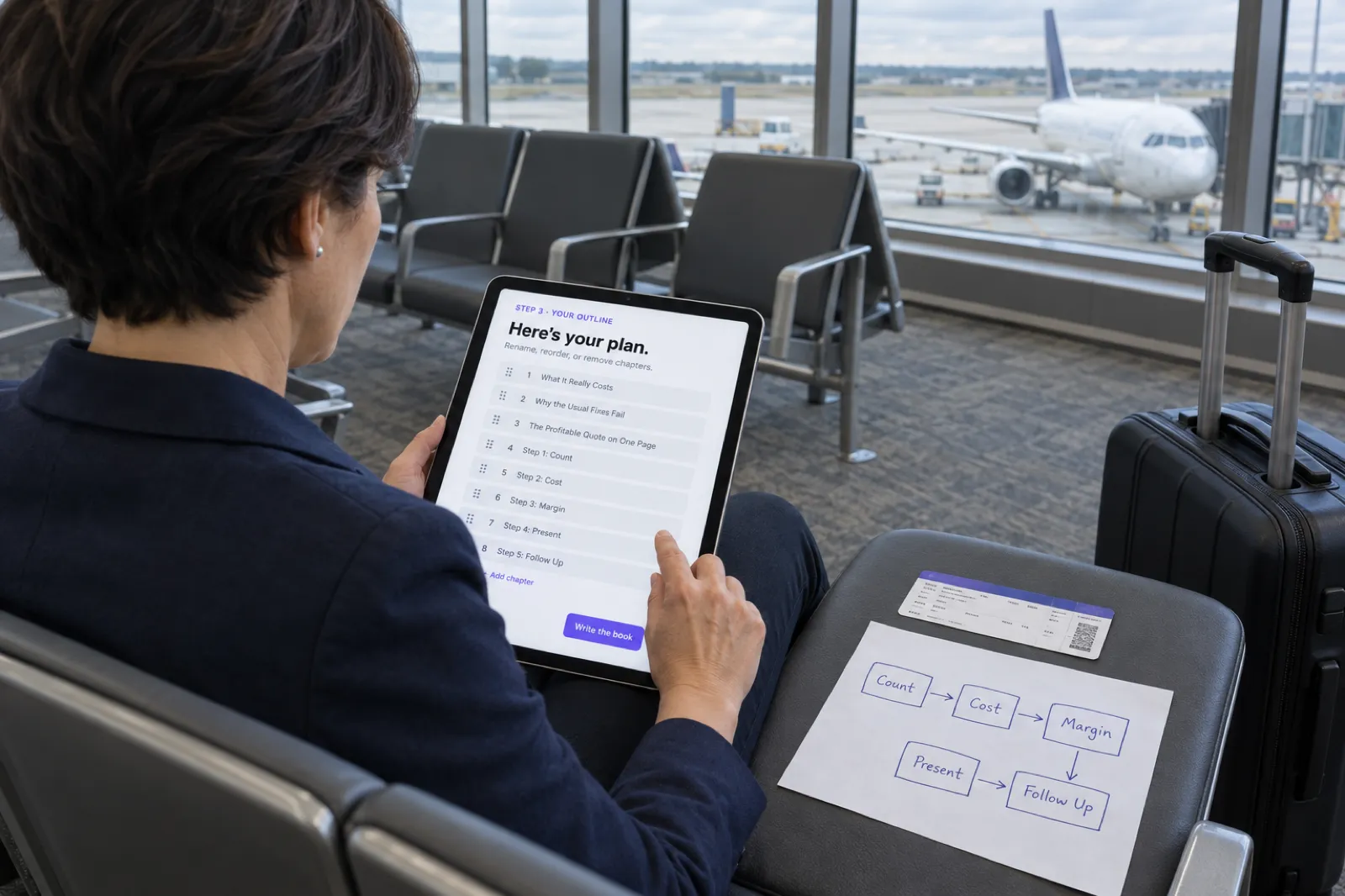
Related formats from the same material: a strategy guide for teams (see the AI playbook generator), a programme workbook for clients inside an engagement (the workbook generator and how to create a workbook with AI; we print-format workbooks but do not make fillable PDF forms), and a self-help book if your method is about personal change rather than business results (how to write a self-help book). The AI business book writer page shows sample output, and if you are comparing tools, the best AI for writing non-fiction sets them side by side. On ownership, read can AI-written books be copyrighted.
Publish it: paperback, PDF, Kindle and audio
The paperback as a business card
For a client book the paperback matters most, because it is the version you hand over. Print on demand through Amazon KDP means no upfront print run:
- Print cost. KDP works out a paperback's printing cost as a fixed cost plus a per-page cost. On Amazon.com, a black-ink paperback in a regular trim size such as 6 x 9 inches costs $1.00 plus $0.012 a page from 110 pages up, so a 160-page book costs $2.92 to print; books of 24 to 110 pages pay a flat $2.30. Larger trim sizes cost more per page.
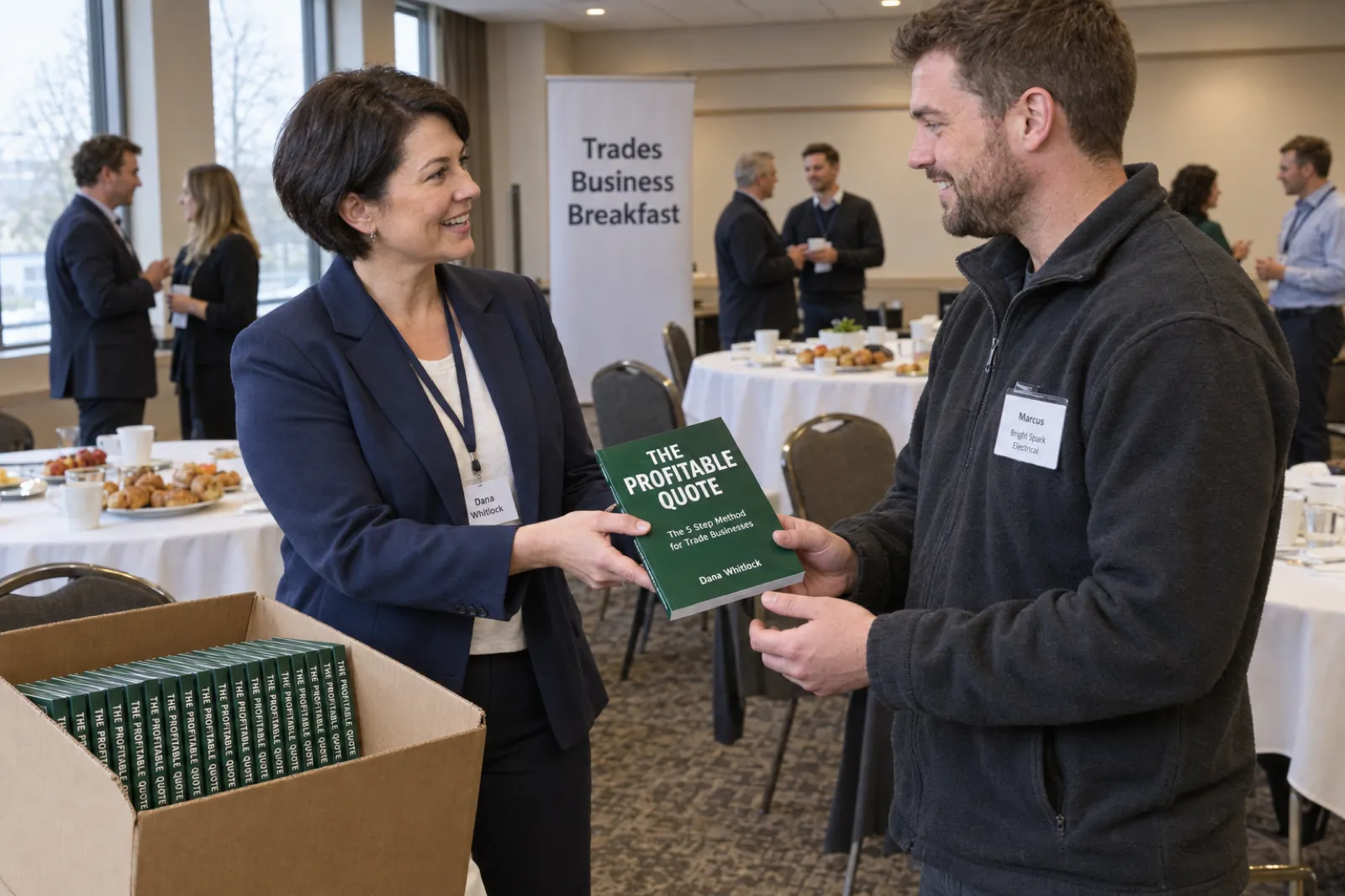
- Author copies. Once the paperback is live you can order author copies at the author price, which is the print cost multiplied by the number of copies, up to 999 per order. Shipping and tax are extra, author-copy orders do not qualify for free or Prime shipping, and you earn no royalty on them.
- Proof first. Before publishing you can order up to 5 proof copies of a draft once you have approved it in the print previewer. Check the cover, the margins and every table before you order a box.
A box of author copies turns the book into the thing you leave on a meeting table, send before a first call, or hand to an event organiser. Our guides to formatting a book for KDP, KDP trim sizes (5.5 x 8.5 or 6 x 9 in suit most business books) and the cover size and spine width calculator cover the files, and how to print one copy of a book covers proofs and single copies.
Kindle and the Amazon listing
The Kindle edition makes the book findable by buyers searching Amazon for their problem, so use the buyer's words from Step 1 in the title, subtitle and keywords. KDP asks you to disclose AI-generated text, images or translations when you publish, even if you edited them heavily; using AI only to edit text you wrote yourself counts as AI-assisted and needs no disclosure. See the KDP AI disclosure guide, how to publish AI-generated books on KDP and KDP royalties explained.
PDF, direct sales and the lead magnet
Most business books are handed to a client or a list rather than sold, so the PDF matters. Any plan can download a PDF (free plan PDFs carry a small footer credit), and paid plans can list a book on Gumroad or Etsy straight from the Publish page. See selling ebooks on Etsy and Gumroad and how entrepreneurs use business guides to generate leads.
The audiobook
Busy buyers listen in the car. Inkfluence AI's audiobook studio has two routes: AI narration uses your monthly audiobook chapters (15 on Creator, 30 on Premium), or you record or upload your own narration, which uses none; the studio opens on any paid plan or with chapter credits. For a book built on trust in you, your own voice is worth considering, and Audible's ACX does not accept AI-narrated audiobooks while it does take yours. Narrate your own audiobook covers the setup, and AI narration and ACX covers where AI-narrated books can go.
From outline to a box of author copies
Draft the book, cut the lead magnet from it, and export the KDP package with the print interior, the full-wrap cover and the Kindle files in one download.
Try Inkfluence AI freeMeasure the return
Most people who write a business book never find out whether it worked, because nothing in the book was set up to be measured. The evidence that books and similar expert content influence buyers is real, but it is about thought leadership in general, not books in particular. In the 2024 Edelman and LinkedIn B2B Thought Leadership Impact Report (3,484 business executives in seven countries, surveyed online in late 2023):
What B2B buyers say about thought leadership
2024 Edelman-LinkedIn B2B Thought Leadership Impact Report. All forms of thought leadership, not books alone. Bar width = share / largest share.
The last bar is the useful one. Fewer than a third of the companies producing this material could tie a lead to a specific piece. You can do better with a few simple habits, set up before the book goes out:
- A book-only page. The one link in the book goes to a page that is not in your site menu. Every visit and booking from it came from a reader.
- Tagged links in the PDF. Google Analytics recommends always setting utm_source, utm_medium and utm_campaign on campaign links. Tag the links in the lead magnet and the book PDF (for example, source "book", medium "pdf", campaign your book's name) so they show up as their own line in your reports.
- One QR code per place. A different QR code for the counter card, the event table and the back of the paperback tells you which placement works.
- Ask. Add "How did you hear about us?" with "Your book" as an option to your enquiry or booking form, and ask on every first call.
- Keep a ledger. Copies given (and to whom), downloads, enquiries that mention the book, and the work that came from them. A spreadsheet with five columns is enough.
Then judge the book against the work it brings in, not royalties. As an illustration only: if your typical engagement is worth $8,000 and the book, your editing time and 100 author copies cost you $3,000 all in, the book pays for itself the first time it is the reason one client signs. That is arithmetic, not a forecast; your ledger will tell you the real answer. Our pages for thought leaders and entrepreneurs cover what the book can lead to next.
Business book checklist
- One buyer, one expensive problem, and your offer, joined into a single positioning sentence.
- A named framework with 3 to 7 plainly labelled steps, in the order the reader does them.
- Three parts: the problem (about 3 chapters), the method (one chapter per step), the next step (2 or 3 chapters).
- Every method chapter has a situation, the steps, a real case study and a tool.
- Written permission for every client story, contracts checked, composites labelled once.
- No invented clients; example people from the draft replaced or clearly hypothetical.
- One next step: a book-only page, in the last chapter, near the tools and in About the author.
- A 4 to 6 chapter lead magnet cut from the book, kept separate from the full ebook.
- Length set by chapters: 6 to 8 for a short client book, 9 to 14 for an authority book.
- KDP files, a proof checked, AI questions answered honestly, no links or testimonials in the store description.
- A box of author copies and a plan for where each one goes.
- Tagged links, a QR code per placement, "how did you hear about us?", and a ledger.
Ready to write it?
Turn your positioning sentence into an outline, a full draft, a lead magnet and print-ready files, and spend your time on the parts only you can write: your method, your clients' stories and your voice.
Start writing freeFrequently asked questions
How do I write a business book that brings in clients?
Write for one buyer with one expensive problem, and teach the method you already use with clients as 3 to 7 named steps, one chapter per step. Back each step with a real case study (with written permission) and a checklist or template, and end with one clear next step that leads to your service. Then put the book in front of buyers: paperback copies at meetings and events, a short free PDF version for your email list, and a Kindle listing for search.
How long should a business book be?
It depends on the job. A full-length business book for a publisher usually runs about 40,000 to 55,000 words: Berrett-Koehler's proposal guidelines use 40,000 to 50,000 words as their example, and business book publisher Alison Jones says that over 55,000 words it may be time to cut. A short client book that busy buyers can read in about an hour is around 14,000 words (60 minutes at the average adult non-fiction reading rate of 238 words a minute). A lead magnet is shorter still; we suggest 2,000 to 6,000 words.
How long does it take to write a business book?
The draft is no longer the slow part. With an AI book writer a structured first draft takes an afternoon, including the outline review. The work that takes weeks is the part only you can do: choosing the one problem, collecting two or three real case studies with permission, and editing every chapter into your own voice. Part-time, four to eight weeks from brief to a published paperback is a realistic plan.
How much does it cost to write a business book?
Three routes: writing it yourself (your time only), AI-assisted (an Inkfluence AI plan from $9.99 a month, plus your editing time and an optional freelance editor), or a ghostwriter (usually five figures). Printing is cheap on print on demand: on Amazon.com, a 160-page 6 x 9 inch black-ink paperback has a printing cost of $2.92 a copy, and you can order author copies at that price plus shipping and tax.
How do I write a book about my work experience?
Turn the experience into a method. List the problems people bring to you, pick the one you solve best, and write down the steps you take, in order, as you would explain them to a new client. Each step becomes a chapter with a real story from your work, the reasoning, and a tool the reader can use. Experience told as a sequence of lessons a reader can apply sells better than a memoir of your career.
Should I give my business book away for free?
Give away a short version, sell the full book. A free 4 to 6 chapter PDF works as a lead magnet for your email list, and paperback copies handed to prospects work as a business card. If you enrol the Kindle edition in KDP Select, the ebook must be exclusive to Amazon for each 90-day term, though you may share up to 10% of it elsewhere as a sample, so make the free PDF a separate, shorter document rather than the whole book.
Can I use client stories in a business book?
Yes, with written permission. Ask the client to read the exact passage, agree whether they are named or anonymised, and approve any numbers. Check your contract for confidentiality terms first. If you later reuse a client result in an ad, email or sales page, US endorsement rules expect you either to have evidence the result is typical or to say clearly what people generally get. Never invent a client and present them as real.
Should I self-publish or find a publisher for a business book?
Most consultants and coaches self-publish, because the book is a client-getting tool and speed matters more than bookshop distribution. Self-publishing on Amazon KDP gives you a paperback and Kindle edition with no upfront print cost, and you keep control of the price and the free version. A traditional business publisher brings editing and distribution but expects a proposal, an audience and months of lead time, and you will still do most of the marketing.
Can AI write a business book for me?
AI can draft one from your outline and save most of the drafting time. Inkfluence AI writes each business chapter with headings for the situation, the method, a worked example and the mistakes to avoid, and it does not cite statistics or named studies unless you supply them. You still supply what makes the book bring clients: your method, real case studies with permission, your numbers, and a final edit in your own voice. On Amazon KDP you must disclose AI-generated text when you publish.
How do I measure whether my business book is bringing in clients?
Give the book its own trackable paths: a web page or booking link that appears only in the book, a QR code on printed material, campaign-tagged links in the PDF, and a "how did you hear about us?" question on your enquiry form. Then keep a simple ledger of copies given, enquiries that mention the book, and the work that came from them. In the 2024 Edelman and LinkedIn survey of thought leadership, only 29% of producers could link sales leads back to specific pieces, so even a simple ledger puts you ahead.
Sources
Every external fact on this page was read on the source below on 13 October 2026. Inkfluence AI facts were checked against the app's code on the same day.
- Berrett-Koehler Publishers: Proposal Guidelines ("Estimate your book's total word count", example 40,000 to 50,000 words; partnership publishing and the author's role in marketing), checked 13 Oct 2026
- Alison Jones: How long should your book be? (10 Aug 2017; her business book around 50,000 words, would cut to 40,000; over 55,000 "time for the blue pencil"), checked 13 Oct 2026
- Brysbaert, M. (2019). How many words do we read per minute? A review and meta-analysis of reading rate. Journal of Memory and Language, 109, 104047 (190 studies, 18,573 participants; 238 wpm for English non-fiction; an hour is about 14,280 words), read via the author's manuscript copy, checked 13 Oct 2026
- Edelman and LinkedIn: 2024 B2B Thought Leadership Impact Report (3,484 executives, US, Canada, UK, Germany, Singapore, Australia, India, fielded 30 Nov to 14 Dec 2023; 9 in 10 more receptive, 75% researched, 73% more trustworthy, 60% premium, 29% can link leads), read via the Internet Archive copy (the live file blocks automated access), checked 13 Oct 2026
- 16 CFR 255.2, Consumer endorsements (FTC Endorsement Guides) (endorser's experience read as representative; disclose generally expected performance), checked 13 Oct 2026
- Amazon KDP: How to enroll in KDP Select (ebook exclusive to the Kindle Store for each 90-day term; up to 10% elsewhere as a sample; print and audio unaffected), checked 13 Oct 2026
- Amazon KDP: Paperback Printing Cost (fixed cost plus per-page cost; Amazon.com black ink regular trim $1.00 + $0.012 a page above 110 pages, $2.30 flat for 24 to 110), checked 13 Oct 2026
- Amazon KDP: How much do proof or author copies cost? (author price = print cost x copies), checked 13 Oct 2026
- Amazon KDP: How do I order a proof or author copy? (up to 5 proofs, up to 999 author copies per order; author copies only when Live; no free or Prime shipping), checked 13 Oct 2026
- Amazon KDP: Metadata Guidelines for Books (no URLs, email addresses, phone numbers, reviews, quotes, testimonials or time-sensitive information in the description), checked 13 Oct 2026
- Amazon KDP: Content Guidelines (freely available copyrighted content; AI-generated versus AI-assisted disclosure), checked 13 Oct 2026
- Google Analytics Help: URL builders, collect campaign data with custom URLs (always use utm_source, utm_medium and utm_campaign), checked 13 Oct 2026
- Inkfluence AI usage counts: all books in the app on 13 Oct 2026 (test accounts excluded); 5,952 business books, lead magnets, playbooks and industry reports by 4,745 authors; topics from keyword matches on 4,834 English-language titles, briefs and audience notes; chapter counts from books with a stored chapter and word count (839 business books, 178 lead magnets). Book length by type: AI book writing statistics.
Related reading
- AI Business Book Writer
- Why Writing a Book Is Still the Best Career Move for a Consultant
- Is It Ethical to Write a Business Book with AI?
- AI vs Ghostwriter Cost in 2026
- Lead Magnet Generator
- AI Playbook Generator
- Inkfluence AI for Consultants
- Inkfluence AI for Thought Leaders
- Inkfluence AI for Coaches
- How to Write a Self-Help Book

Founder, Inkfluence AI
Sam is the founder of Inkfluence AI. He built the platform to make book creation accessible to everyone - from first-time authors to seasoned publishers.
Helpful links
Ready to Create Your Own Ebook?
Start writing with AI-powered tools, professional templates, and multi-format export.
Get Started FreeRelated Articles
 Children's Books
 Children's Book Word Count and Page Count by Age (2026): Board Books to Middle Grade, with Real Picture-Book Data
How many words and pages a children's book needs, from board books to young adult, with every range sourced to a publisher or editor and dated, words per page from real picture books by age band, and a word-budget calculator that checks KDP's 24-page minimum.
 Publishing
 Do You Need an ISBN? Free vs Bought, Cost by Country, and Which Formats Need One (2026)
When a self-published book needs an ISBN and when it does not, what one costs in the US, UK, Canada, Australia, New Zealand, India, Germany, Italy and France (checked at each agency on 13 October 2026), free ISBNs from KDP, IngramSpark and Draft2Digital, and a picker that tells you how many you need.
 Publishing
 IngramSpark AI Policy (2026): What It Accepts, the Setup Question and the "Assisted By" Credit
IngramSpark accepts AI-drafted books with significant human editing and the "Assisted By - Generative AI" credit, and refuses works created solely with generative AI. Its exact wording, covers and translations, how it differs from KDP, a checker for your book, and an editing workflow.
Get ebook tips in your inbox
Join creators getting weekly strategies for writing, marketing, and selling ebooks.