
Book Title Generator and 160 book title ideas by genre
Pick a genre, type a topic, an image or a character name, and get 24 title ideas per click. Star the ones you like, check them at thumbnail size, then start the book with your favourite. Free, instant, no sign-up.
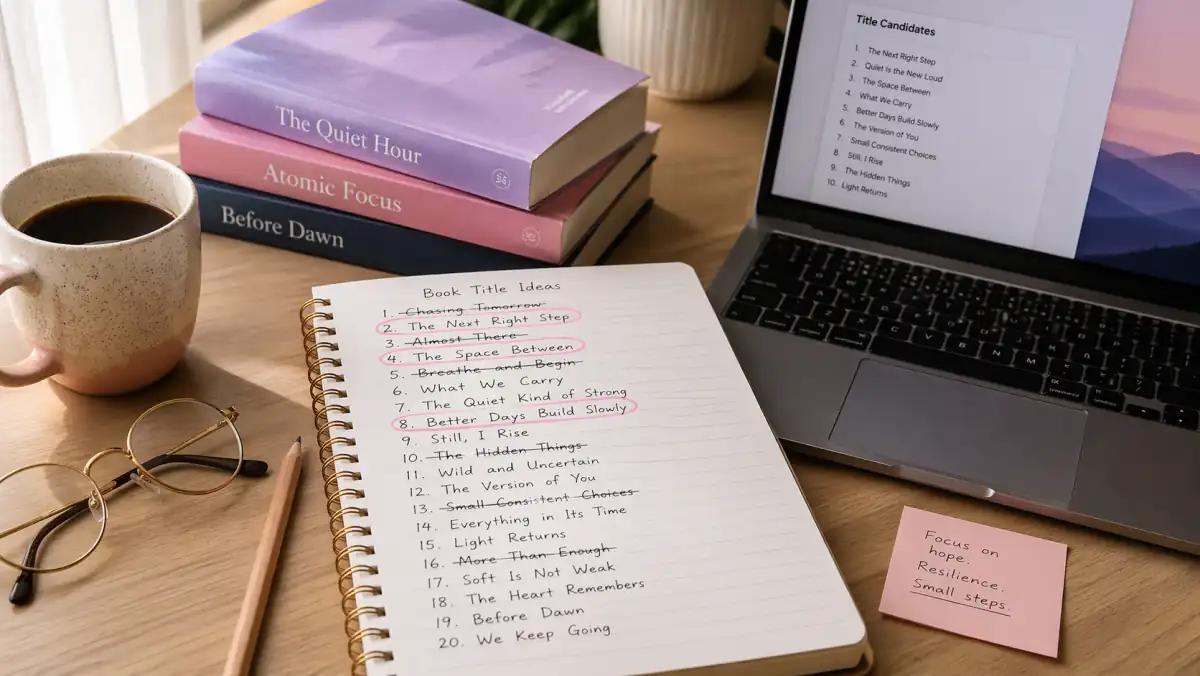
Quick answer: how to come up with a book title
- Write the promise in one sentence. What does the reader get or feel?
- Pick your genre's pattern. Non-fiction names a result ("Atomic Habits"); thrillers imply a threat ("Gone Girl"); fantasy pairs a power word with an element ("Fourth Wing"); memoir uses one concrete image ("Educated").
- Generate 20 to 50 options. The first five are usually versions of the same idea. The generator below gives you 24 per click.
- Shortlist three and test them. Read them aloud, check them at thumbnail size, and search Amazon for clashes.
- Ask real readers. The winner is usually the title nobody asks you to explain.
Free tool
Generate 24 book titles in one click
Choose a genre, add a topic or image, and optionally a character or place name. Click again for a fresh set; titles you have already seen are skipped.
Found the one?
Click "Use" on any title, then start your book with it.
Opens your Inkfluence AI dashboard with your title and genre ready to go: press Go and it writes the book under that title. Your pick is also copied to your clipboard. The free plan includes 5 AI chapters to start, plus 5 every month.
Titles are built in your browser from genre patterns and word lists we wrote by hand; nothing you type leaves the page. Prefer to have the book drafted for you? Type your idea into Quick Start in the AI book generator and include the title in quotes: it keeps a title you name.
Book title ideas
160 book title ideas by genre
Original titles written for this page, ten per genre, each set with the pattern that makes it work. Use them as they are, change a word, or treat them as a starting point for the generator. Search Amazon before you commit to one.
Self-help and personal growth title ideas
Why they work: Name the result or the identity the reader wants, in two to five words, and let a subtitle carry the method.
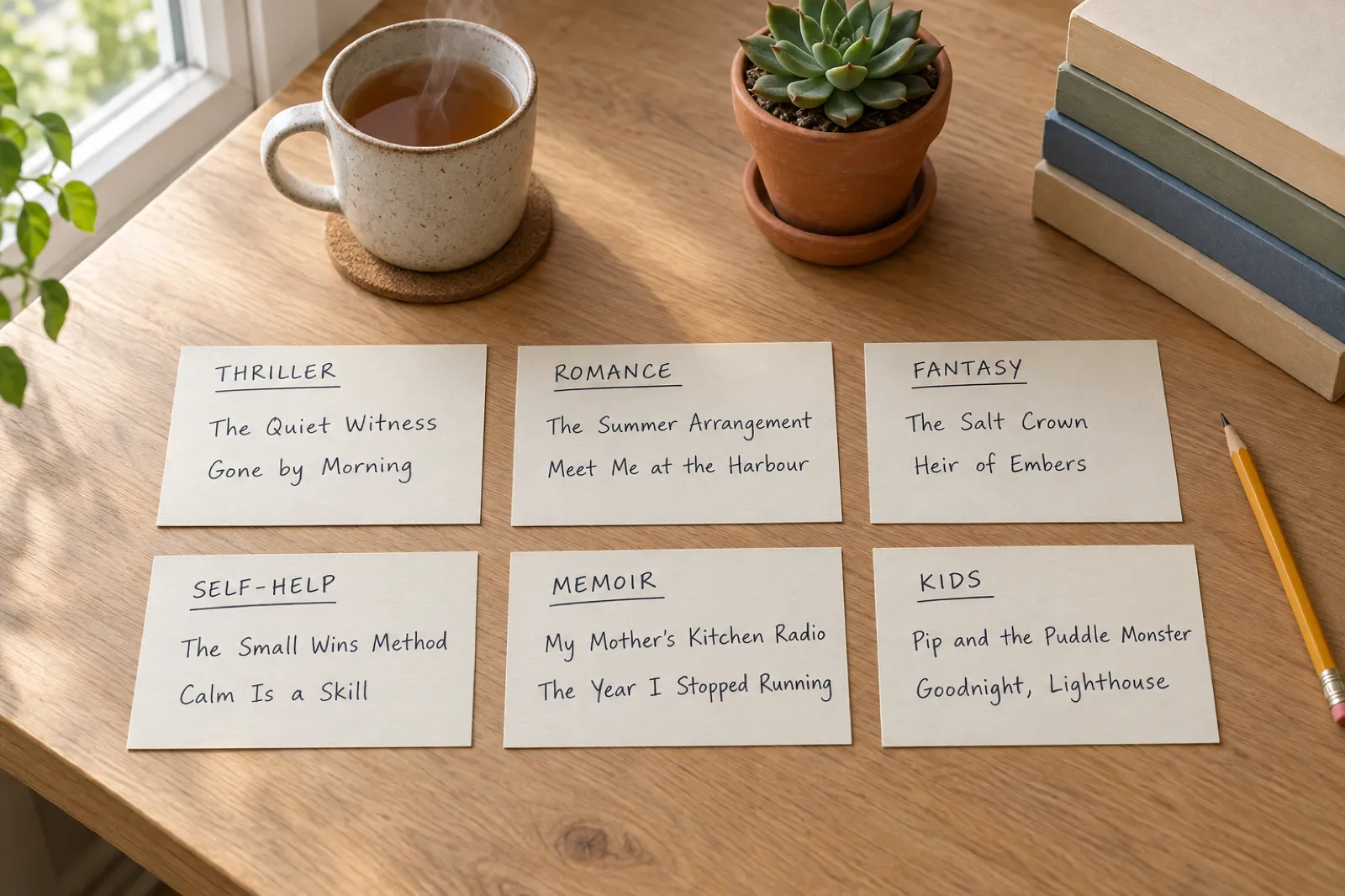
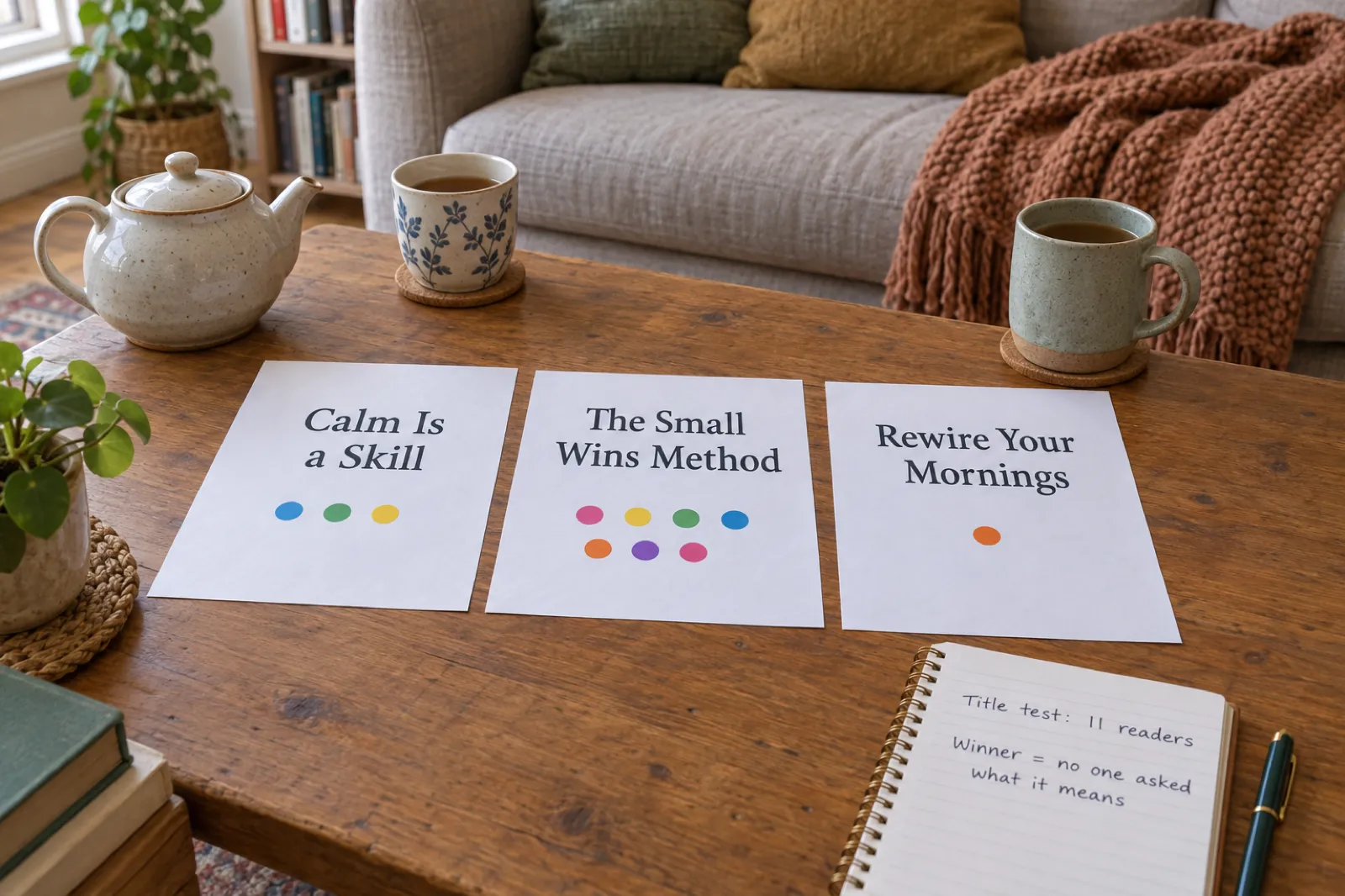
- The Small Wins Method
- Calm Is a Skill
- Rewire Your Mornings
- The Ten-Minute Reset
- Unstuck by Friday
- The Permission Slip
- Smaller, Kinder, Steadier
- The Gentle Discipline Habit
- Enough Is a Number
- Quiet Confidence at Work
Business and leadership title ideas
Why they work: Lead with a sharp claim or a named framework that a manager could repeat in a meeting.
- The Fifty-Person Ceiling
- Profit Before Payroll
- Quiet Operators
- The Meeting You Don't Need
- Hire Slow, Grow Steady
- The Repeatable Sale
- Small Team, Big Margins
- The Honest Pitch
- Built to Be Bought
- The Customer Ladder
How-to and hobby guides title ideas
Why they work: Put the skill first, then the reader or the time it takes. Searchers type the skill, so the title should match it.
- Watercolor in a Weekend
- Sourdough from Scratch
- Spreadsheets Without the Fear
- The Weekend Woodworker's Handbook
- Spanish on Your Commute
- Raised Garden Beds for Beginners
- The No-Fuss Guide to Home Repairs
- Podcasting in Plain English
- Fix Your Own Bike
- Knitting One Row at a Time
Health, fitness and wellness title ideas
Why they work: Pair a body outcome with a realistic effort level or audience. Avoid cure promises; readers and retailers distrust them.
- Strong After Forty
- The Gut Reset Kitchen
- Walk Your Way Back
- Sleep Like You Mean It
- The Ten-Minute Mobility Habit
- Eat Well on a Busy Week
- The Calm Body
- Move Better at Any Age
- The Desk Worker's Back Book
- Breathe Before You Answer
Cookbooks and food title ideas
Why they work: Say what kind of cooking it is (weeknight, one pan, baking for two) and add one warm, personal word.
- One Pan, Many Nights
- The Sunday Pantry
- Weeknight Spice
- Little Bakes for Two
- The Lazy Cook's Garden
- Salt, Lemon, Olive Oil
- My Grandmother's Recipe Tin
- Soup Season
- The Five-Ingredient Table
- Bright Bowls
Memoir and biography title ideas
Why they work: One concrete object, place or moment that carries the whole life. Specific beats grand.
- My Mother's Kitchen Radio
- The Year I Stopped Running
- The Blue Suitcase
- What the Farmhouse Kept
- Learning to Swim at Forty
- Letters I Never Posted
- Raised Between Two Kitchens
- Notes from the Night Shift
- All My Father's Tools
- The Last Summer on Mill Road
Literary and book-club fiction title ideas
Why they work: An image, a season or a place, often with a quiet sense of loss. Evocative rather than explanatory.
- The Pear Orchard Letters
- The Glass Season
- What the River Remembers
- A Borrowed Summer
- The Lantern Room
- Salt and Distance
- The Unfinished House
- Everything the Tide Gave Us
- Marisol in Winter
- The Weight of Small Hours
Thriller and suspense title ideas
Why they work: Two to four words that imply a threat, a secret or a ticking clock. A person plus a place works well.
- The Quiet Witness
- Gone by Morning
- The Tenant Upstairs
- Seven Days at the Lake House
- Her Last Alibi
- The Wrong Guest
- No One Leaves the Island
- The Second Confession
- What the Neighbor Saw
- Twelve Hours to Midnight
Cozy mystery and whodunit title ideas
Why they work: Murder, death or trouble, plus a charming setting or object. The contrast is the promise.
- Murder at the Bookshop Café
- Death by Scone
- The Case of the Silver Teapot
- Poison at the Village Fete
- Trouble at Puffin Bay
- A Body in the Bakehouse
- Mabel Investigates
- Last Orders at the Crown
- The Hollyhock Green Murders
- A Fatal Recipe
Romance title ideas
Why they work: Signal the trope or the setting: fake dating, second chance, small town, holiday. Warm, short and a little playful.
- The Summer Arrangement
- Meet Me at the Harbour
- The Fake Fiancé Clause
- Snowed In with Leo
- The Grumpy Florist
- Second Chance Season
- Not Over You Yet
- The Kiss Rules
- Love, Margot
- The Bakery Truce
Fantasy and romantasy title ideas
Why they work: A power word (crown, blade, court, oath) joined to a material or element. Invented names add flavour once the series is known.
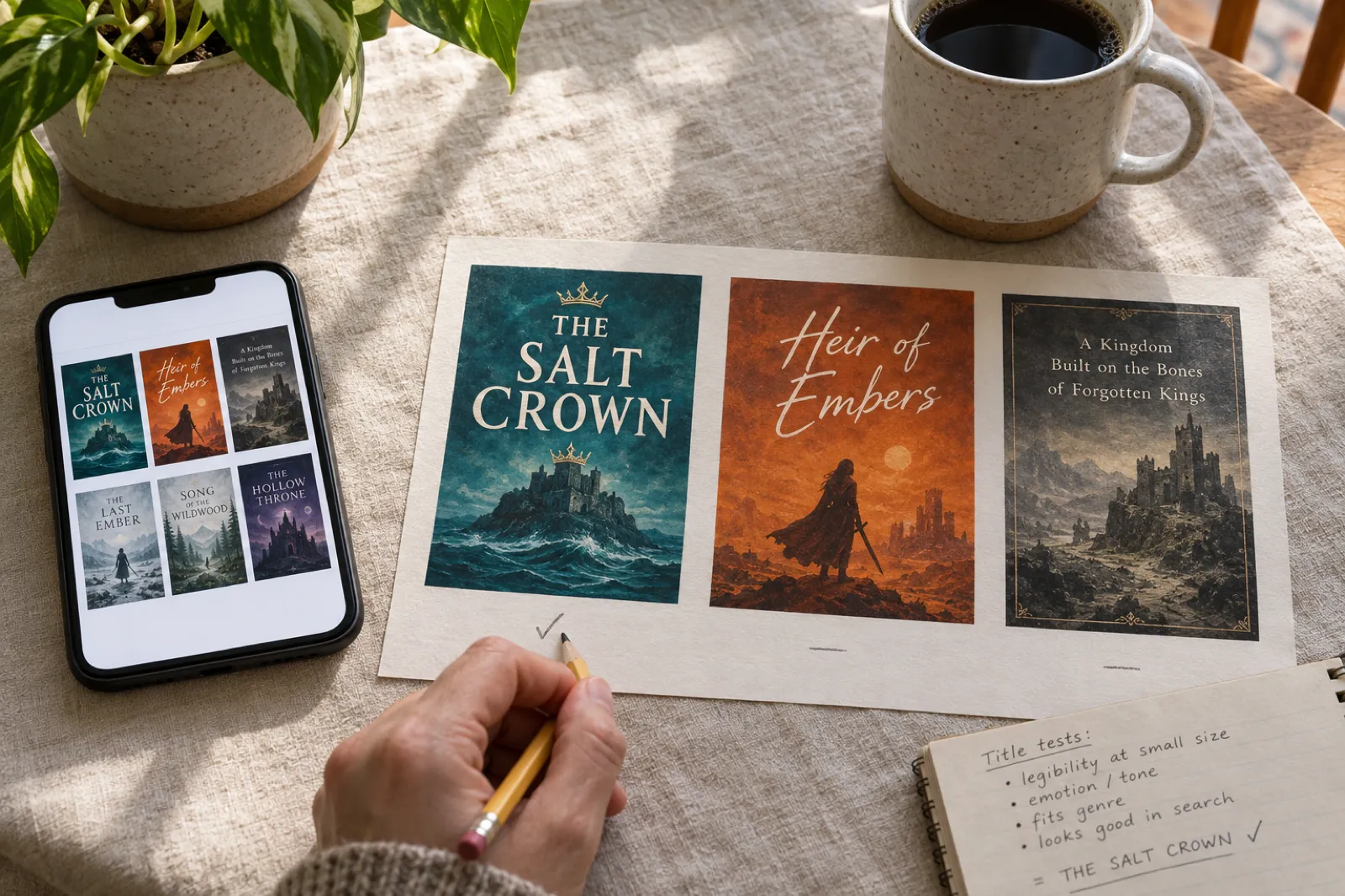
- The Salt Crown
- Heir of Embers
- Queen of Ash and Iron
- The Starless Gate
- Oathbound
- The Drowned King's Daughter
- Blade of the Gilded Court
- Where the Raven Sleeps
- The Last Tide Witch
- Song of the Iron Veil
Science fiction title ideas
Why they work: A system, signal or place name that suggests scale. Protocol, station, project and colony all read as science fiction at a glance.
- The Kepler Protocol
- Station Nine
- Signal from Europa
- The Last Orbit
- Project Atlas
- Children of the Drift
- The Long Night of the Colony
- Echoes from the Outer Belt
- The Lyra Sequence
- Colony Zero
Horror title ideas
Why they work: An ordinary place made wrong: the attic, the well, the cellar. Short, plain words do the scaring.
- Don't Open the Attic
- Something in the Orchard
- What Lives in the Well
- Mother of Teeth
- The Drowned Choir
- We Don't Go in the Cellar
- The Pale Visitor
- The Attic Remembers
- Burn the Orchard
- The Hungry Hour
Young adult title ideas
Why they work: A voice-led phrase, a group or a pact. YA titles often sound like something a teenager would say out loud.
- The Midnight Pact
- The Summer We Ran Away
- Not Your Sidekick
- The Year Everything Changed
- Ember Academy
- June Is Not Okay
- The Last Day of Junior Year
- The Truth About Wes
- All the Reckless Ones
- Meet Me at the Fairground
Children's and picture books title ideas
Why they work: A named character plus an object or problem, or a playful question. Read it aloud: kids' titles are heard before they are read.
- Pip and the Puddle Monster
- Goodnight, Lighthouse
- The Dragon Who Couldn't Sleep
- Otis the Grumpy Badger
- There's a Goat in My Backpack
- Who Stole the Moon?
- Mabel's Big Garden Adventure
- Don't Wake the Bear!
- The Littlest Snowplow
- Bedtime for the Dinosaur
Poetry collections title ideas
Why they work: Two plain nouns, or a phrase lifted from one of the poems. Collections earn room for quieter, stranger titles.
- Salt and Rain
- Small Hymns for Ordinary Days
- Notes on Leaving
- The Grammar of Tides
- Honey from Stone
- What the Weather Said
- Poems for the Quiet Months
- Letters to My Younger Hands
- In Praise of Kitchens
- Thread and Bone
Title formulas
Book title formulas by genre, compared
Typical length, what the title has to signal, a formula you can fill in, and published books that follow the pattern.
| Genre | Typical length | Must signal | Fill-in formula | Published examples |
|---|---|---|---|---|
| Self-help | 2 to 4 words + subtitle | A result or an identity | The [Result] Method · [Adjective] [Noun] | Atomic Habits; Deep Work; The Power of Now |
| Business | 2 to 4 words + subtitle | A framework or a bold claim | [Verb] with [Noun] · From [A] to [B] | Good to Great; Start with Why; The Lean Startup |
| How-to | 3 to 7 words | The skill, then who or how fast | [Skill] for [Reader] · [Skill] from Scratch | How to Win Friends and Influence People; Drawing on the Right Side of the Brain |
| Health | 3 to 6 words + subtitle | A body outcome, realistically framed | [Outcome] at Any Age · The [Topic] Reset | Why We Sleep; The Body Keeps the Score |
| Cookbook | 1 to 4 words | The kind of cooking, warmly | [Occasion] [Food] · The [Adjective] Kitchen | Salt Fat Acid Heat; Jerusalem |
| Memoir | 1 to 5 words | One object, place or turn | My [Relative]'s [Object] · The Year I [Did X] | Educated; Wild; Crying in H Mart |
| Literary | 2 to 6 words | Image, season, loss | The [Image] [Noun] · What the [Place] Remembers | The Remains of the Day; Station Eleven |
| Thriller | 2 to 4 words | Threat or secret | The [Role] · [Person] at the [Place] | Gone Girl; The Silent Patient; The Girl on the Train |
| Cozy mystery | 3 to 6 words | Crime plus charm | Murder at the [Cosy Place] · Death by [Pastry] | The Thursday Murder Club; Murder on the Orient Express |
| Romance | 2 to 5 words | Trope, setting, warmth | The [Season] Arrangement · Snowed In with [Name] | Beach Read; The Kiss Quotient; It Ends with Us |
| Fantasy | 2 to 6 words | Power, material, world | [Power Word] of [Element] · A Court of [X] and [Y] | Fourth Wing; A Court of Thorns and Roses; The Name of the Wind |
| Science fiction | 1 to 4 words | System, signal, scale | Project [Name] · The [Place] Protocol | Dune; The Martian; Project Hail Mary |
| Horror | 2 to 5 words | The ordinary made wrong | Something in the [Place] · Don't [Verb] the [Thing] | Mexican Gothic; The Haunting of Hill House; Bird Box |
| Young adult | 2 to 6 words | Voice, group, pact | The Summer We [Verb] · Not Your [Role] | The Hunger Games; We Were Liars; The Fault in Our Stars |
| Children's | 2 to 7 words | Character plus object or question | [Name] and the [Thing] · Who Stole the [Thing]? | The Very Hungry Caterpillar; Where the Wild Things Are; Dog Man |
| Poetry | 1 to 5 words | Two nouns or a lifted line | [Noun] and [Noun] · Small Hymns for [Thing] | Milk and Honey; The Sun and Her Flowers; Devotions |
Two things stand out when you lay the genres side by side. First, fiction titles get shorter as the genre gets more commercial. Thrillers, romance and science fiction regularly sell on two or three words, because the cover art and the series branding carry the rest. Literary fiction and memoir can afford longer, quieter titles because readers find them through reviews, book clubs and recommendations, where the title is read in full.
Second, non-fiction splits the work between two lines. The title is the hook and the subtitle is the explanation. "Deep Work" would mean nothing on its own; its subtitle tells you it is about focus in a distracted world. If you are writing non-fiction, the generator's subtitle option gives you a starting point for that second line, and the AI self-help book writer shows how a title and subtitle carry into the chapters of a finished book. Still looking for the topic itself? Our self-help book ideas post has 55 topics with a working title for each, plus a self-help title formula generator.
Notice what the formulas have in common: almost every one contains a concrete noun. Crown, kitchen, lake house, caterpillar, suitcase. Abstract words like "journey", "life" and "success" appear in thousands of titles and say very little. If your shortlist is full of them, swap one for an object or a place from the book.
Choosing
How to choose a book title: seven tests
Generating candidates is the quick part. These checks turn a long list into one title you will not regret.
-
1.The read-aloud test
Say the title out loud three times. Books spread by people telling each other about them, and a title that trips the tongue or needs spelling out loses those conversations. Children's titles live or die on this test, because a parent reads them aloud before the child ever reads them.
-
2.The thumbnail test
Shrink a mock cover to the size of a search result on a phone, roughly the width of your thumb. Can you still read it? Short titles in large type survive. A nine-word title in a script font turns into texture. This is why so many bestselling covers carry two or three huge words.
-
3.The genre test
Show the title, alone, to someone who reads your genre and ask what kind of book it is. If a romance title reads as a thriller, or a business book reads as a memoir, the title is sending the wrong reader to your page. Use the formula table above as a reference.
-
4.The search test
Type your shortlisted title into Amazon and into your browser. If a bestseller in your genre already uses it, move on: titles are not protected by copyright, but sharing one with a famous book buries yours in search. If the only matches are old or out of print, you are usually fine.
-
5.The subtitle test
For non-fiction, write the subtitle before you commit. If you cannot write a clean subtitle that extends the title's promise, the title is probably doing the wrong job. The title is the hook; the subtitle says who it is for and what they get.
-
6.The series test
If the book could become a series, check the title pattern can repeat. "Murder at the Bookshop Café" leads naturally to "Murder at the Harbour Inn". A one-off pun often cannot stretch to book two.
-
7.The stranger test
Put your top three titles in front of five to ten readers who do not know the book and ask which one they would pick up. The winner is usually the one nobody asks you to explain. A free poll in a genre reader group works; so do sticky dots on printed sheets at a book club.
Before you publish
Titles, subtitles and the rules that apply
What Amazon KDP and copyright law actually say, so a good title does not get rejected or buried.
Title and subtitle together: under 200 characters
Amazon KDP's metadata guidelines say the title and subtitle together must be fewer than 200 characters, and for print books the title must appear on the cover and match what you enter at setup. A long subtitle is allowed; a title that differs from the cover is not.
No keyword lists, rank claims or promotions
The same guidelines prohibit repeating generic keywords, unauthorised references to other titles or authors, references to sales rank such as "bestselling", and promotional words such as "free" in the title and subtitle. Put the book's real title there and nothing else.
Titles are not protected by copyright
The US Copyright Office's Circular 33 lists "the title or subtitle of a work, such as a book" among things copyright does not protect. Names and titles can sometimes be protected as trademarks, which is why famous series names are off limits even though a one-off title is not.
Changing a title later means a new edition
KDP support can fix a typo in a published title, but any other change means republishing as a new edition. Run the seven tests above before you hit publish, not after.
Getting found
Keywords, search and checking a title is free
The title is one part of how shoppers find a book. Here is what belongs in it, what belongs elsewhere, and how to check nobody got there first.
Keywords go in the keyword boxes, not the title
It is tempting to pack search terms into a title: "Sourdough Bread Baking Recipes Beginners Guide Easy". KDP gives those words a place of their own. Its keyword help page says to use up to seven keywords or short phrases, to search Amazon with them before you publish, and to leave out words already covered elsewhere in your metadata, such as the title. The same page notes that customers are more likely to skim past titles over 60 characters (checked 4 Oct 2026). So keep the title for the reader, use the subtitle to describe the book in words people search for, and put the rest in the seven keyword slots. Our KDP SEO checklist walks through choosing them.
There is one more reason to keep search terms out of the title. KDP says you can change keywords and descriptions as often as you like, while a title is fixed once the book is live. A title has to last; keywords can be tested and swapped.
Is the title already taken?
There is no register of book titles, and copyright does not protect them, so "taken" means "already used in a way that would bury your book or confuse readers". Run these checks on your top three before you commit:
- Amazon, in the books department. Search the exact title. The same title on a recent book in your genre is a reason to change yours; the same title on an old textbook in another category usually is not.
- A web search in quotation marks. Look for a film, a song or a brand with the same name. If the first page belongs to something famous, readers searching for your book will have to dig.
- A trademark search for series names. One-off titles are not protected, but the Copyright Office's Circular 33 notes that names and titles can sometimes be protected as trademarks, which is why big series names are off limits. If you plan a long series or merchandise under one name, search the USPTO trademark database (or your own country's office) and ask a professional if anything close comes up.
- The pattern for book two. If you are planning more than one book, decide now how the titles will repeat. The AI book series writer page shows how a series is planned so the later titles follow the first.
Once the title passes, the rest of the listing follows: the description, the categories, the price and the cover. The guide to selling ebooks on Amazon covers each of those, and the self-publishing guide covers the whole route from manuscript to published book.
Options
Ways to get book title ideas, compared
Most authors use two or three of these. A generator for volume, the book itself for fit, and readers for the final call.
| Method | Speed | Genre awareness | What it knows | Cost | Best for |
|---|---|---|---|---|---|
| This generator | 24 ideas per click | 16 genres, hand-written patterns | Only your topic, image or name | Free, no sign-up | Breaking a blank page and seeing many angles fast |
| Inkfluence AI Quick Start | One working title and subtitle per book | Reads your idea and its genre | Your full book idea | Free plan available | Getting a title that fits the book it is about to write |
| General chat assistant | As many as you ask for | Depends on your prompt | Whatever you paste in | Free tiers and paid plans | Riffing on a shortlist you already like |
| Brainstorming by hand | Slow | As good as your reading | Everything | Free | Final polish and personal meaning |
| Reader poll | Days | Real readers decide | Only the shortlist | Free to low cost | Choosing between your top three |
Why use a pattern generator at all? Because the hardest part of titling is the blank page. The same goes for the story itself: the AI story generator gives you a whole short story to react to. A list of 24 titles in your genre gives you something to react to: you will dislike most of them, and the reasons you dislike them tell you what your title needs. "Too dark." "Too cute." "That one is close, but the word should be harbour, not lake." Writers often find their title by editing a generated one rather than taking it as is.
Where the book itself helps. A generator only knows the word you type. If you write the book in Inkfluence AI, the working title comes from your actual idea and genre, and you can rename it at any point before export. Many authors keep the working title through the first draft and choose the final title once they know which scene, image or promise the book turned out to be about.
Where readers decide. No tool replaces a handful of strangers telling you which book they would pick up. Keep the poll small and specific: three titles, one question, readers from your genre.
Avoid
Six book title mistakes self-published authors make
Too clever
A pun that only makes sense after reading the book is lost on a shopper scrolling past. If the title needs the backstory, it is a chapter title, not a book title.
Too generic
"The Life Guide" or "Love Story" could be anything. Generic titles also collide with hundreds of existing books in search. Add one specific word.
Too long
Long titles are hard to read on a thumbnail and hard to remember. Keep the main title short and let the subtitle carry the detail.
Keyword stuffing
Packing search terms into the title field breaks Amazon's metadata rules and reads as spam to a buyer. One natural keyword in a non-fiction title is fine; a list is not.
Wrong genre signal
A cosy mystery titled like a gritty thriller attracts the wrong reader, and the wrong reader leaves the one-star review. Match the conventions your readers already shop by.
Borrowing a famous title
Even if it is legal, naming your book after a bestseller puts you second in every search for your own book. Readers looking for yours will find theirs first.
Story titles, series titles and chapter titles
Story titles for short fiction, fan fiction and anthologies can be stranger and longer than book titles, because readers meet them inside a collection rather than on a thumbnail. Lift a line of dialogue or name the central object. If you write fan fiction, the fanfiction prompt generator pairs well with the fiction genres here.
Series titles need a repeatable shape. Decide the pattern before book one: a recurring structure ("Murder at the..."), a recurring word ("The Salt Crown", "The Salt Throne") or a recurring character ("Pip and the..."). Inkfluence AI can continue a book you have written as a series, carrying the story forward one volume at a time.
Chapter titles are a different job: they guide a reader already inside the book, so they can be playful, cryptic or plain. Inkfluence AI writes chapter titles as part of every outline, and you can rename any of them in the editor.
Sources
Where the rules on this page come from
All checked on 4 October 2026.
Amazon KDP metadata guidelines
The 200-character limit for title plus subtitle, the cover-match rule, and what is prohibited in the title field.
KDP Help →US Copyright Office, Circular 33
"Works Not Protected by Copyright", which lists the titles and subtitles of works, with a note on trademark protection.
copyright.gov →KDP: changing a title or author name
Typos can be corrected by KDP support; other title changes require a new edition.
KDP Help →KDP: Make Your Book More Discoverable with Keywords
Up to seven keywords or short phrases, no repeating the title, the note on titles over 60 characters, and keywords can be changed at any time.
KDP Help →USPTO trademark search
The US federal trademark database, for checking a series name or brand before you build on it.
uspto.gov →Book title questions, answered
What authors ask before they lock a title.
How do I come up with a good book title?
Write the promise of the book in one sentence, then shrink it to a two-to-five word phrase that carries the feeling or the benefit. Non-fiction titles usually name a result ("Atomic Habits"); fiction titles name an image, a person or a place ("Station Eleven"). Generate 20 to 50 candidates, cut to three, and test them with readers who do not know the book. The generator on this page gives you 24 ideas per click across 16 genres, so you can react to options instead of staring at a blank page.
What are some good book title ideas?
Good title ideas depend on genre. Thriller: "The Quiet Witness", "Gone by Morning". Romance: "The Summer Arrangement", "Snowed In with Leo". Fantasy: "The Salt Crown", "Heir of Embers". Self-help: "The Small Wins Method", "Calm Is a Skill". Cozy mystery: "Death by Scone". Children's: "Pip and the Puddle Monster". This page lists 160 original title ideas across 16 genres, each with the formula behind it, and the generator makes more from your own topic.
Is this book title generator free?
Yes. It is free with no sign-up and no limit on how many times you click Generate. It runs entirely in your browser. When you find a title you like, you can copy it, add it to a shortlist, or open it in Inkfluence AI to start the book.
Does this book title generator use AI?
No. The generator on this page builds titles in your browser from hand-written genre patterns and word lists, so it is instant and nothing you type is sent anywhere. Inkfluence AI's book writer is separate: when you generate a book from an idea, it writes a working title and subtitle that fit that book, and it keeps a title you name in your prompt.
How long should a book title be?
Most strong titles run two to five words, short enough to read on a phone-sized thumbnail. Non-fiction often pairs a short title with a longer subtitle. Amazon KDP's metadata guidelines require the title and subtitle together to be fewer than 200 characters, and the title must match what is printed on the cover.
Can I use a book title that already exists?
Usually, yes. The US Copyright Office lists the titles and subtitles of works among things copyright does not protect (Circular 33). Series names and brands can be protected as trademarks, so avoid famous series names. In practice, the bigger risk is search: if a bestseller in your genre has the same title, readers looking for your book will find theirs first. Search Amazon before you commit.
Should my book title include keywords?
For non-fiction, one natural keyword helps readers recognise the topic, for example "Sourdough from Scratch". Do not stuff the title with search terms: Amazon KDP's metadata guidelines prohibit repeated generic keywords, references to other authors or titles, and words like "bestselling" or "free" in the title and subtitle. For fiction, genre signals matter more than keywords.
What is the difference between a title and a subtitle?
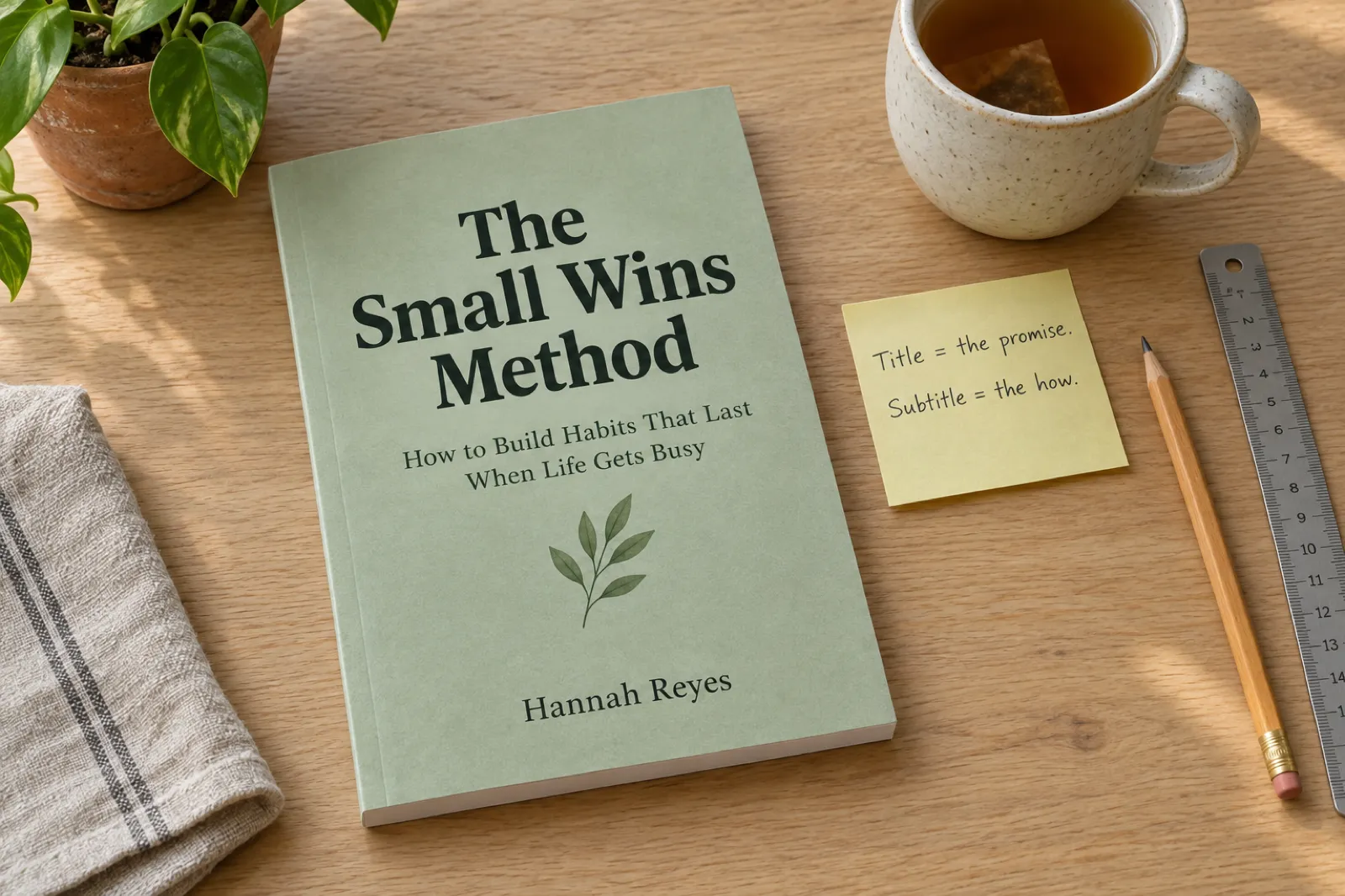
The title is the short, memorable hook readers repeat to each other. The subtitle explains who the book is for and what it delivers. "The Small Wins Method" is a title; "How to Build Habits That Last When Life Gets Busy" is its subtitle. Fiction rarely uses a subtitle, though series often add "A [Series Name] Mystery" style lines.
How do I name a book series?
Pick a pattern that can repeat, not just a single title. Cozy mysteries often repeat a structure ("Murder at the..."), fantasy often names the world or a power ("The Salt Crown", then "The Salt Throne"), and children's series lead with the character ("Pip and the..."). Test the second and third titles before you publish the first.
How do I title a short story?
Short story titles have more freedom than book titles because they are read inside a collection, a magazine or a fan site, not picked off a thumbnail. Lift a striking phrase from the story, name its central object, or use a line of dialogue. The fiction genres in the generator work well for story titles; keep the result short.
How do I test a book title before publishing?
Run three checks: show it to five to ten readers in your genre without context and ask what kind of book it is; shrink a mock cover to thumbnail size and see if it is still readable; and search Amazon for books with the same or similar title. Then put your top three in a simple poll and pick the one nobody asks you to explain.
Can I change my book title after publishing?
On Amazon KDP, support can fix a typo in a published title, but any other title change means republishing the book as a new edition. That is why it pays to settle the title before you publish. Inside Inkfluence AI you can rename a book at any time before export from the Edit Book Details dialog.
How does Inkfluence AI title the books it writes?
When you type a book idea into Quick Start, Inkfluence AI writes a working title and a subtitle that match the genre. If your idea names the book, for example called "The Salt Crown", it uses your title as written. You can change the title and subtitle any time from the pencil icon next to the book title in the editor.
Title chosen. Now write the book.
Bring your title to Inkfluence AI for the outline, the chapters and a cover that matches. Start free with 5 chapters, plus 5 more every month.
Related tools and reading
Everything else between a title and a published book.
Book Description and Blurb Generator
Write the back-cover blurb after the title.
Book Outline Generator
Structure the book behind the title.
AI Book Cover Generator
A cover that matches the title's genre.
Author Bio Generator
The about-the-author paragraph.
AI Book Generator
Turn a title and an idea into a full draft.
Character Name Generator
Names for the people in the story.
Plot Generator
No story yet? Three complete plots per click.
Chapter Title Generator
Names for every chapter inside the book.
Book Title Ideas
400+ published titles by genre and the patterns behind them.
Pen Name Generator
The author name that goes under the title.