
Quick Answer (13 November 2026)
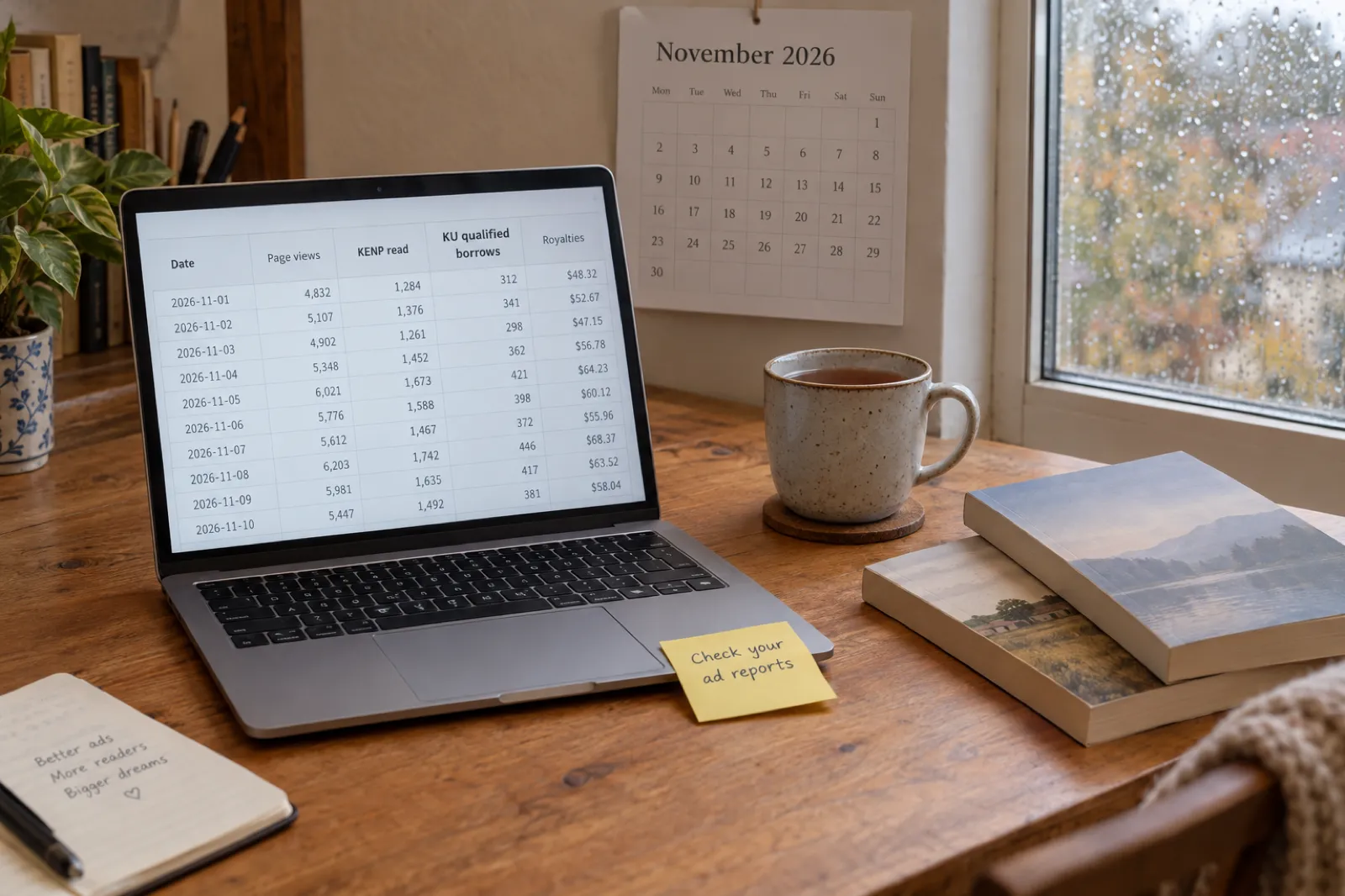
- Amazon Ads: page-based "estimated KENP royalties" are gone from ad reports. Royalty estimates now come from Kindle Unlimited "qualified borrows" (updated 11 November). Amazon does not say how many pages a borrow needs to qualify. KDP still pays per page read.
- Etsy: US and Canadian digital listings can be offered as printed items by a third-party printer, on by default, and Share & Save refunds the full 6.5% fee until 4 January 2027.
- Spotify: audiobooks go from 22 markets to more than 180 by the end of 2026, with non-exclusive deals.
- Smashwords: ebook pre-orders, up to 12 months ahead (since 29 September).
- AI models: Gemini 4 Carbon (10 November) and Hydrogen (12 November), after GPT-6.1 Terra (26 October).
If this month's news has you planning a book, an audiobook or a product to sell, Inkfluence AI is the best way to make it: it writes the whole book from an outline you approve, keeps it consistent, formats it, and exports KDP-ready files, EPUB and Word, with covers and audiobooks in the same project. What it does, and its limits.
Start a book freeThis is the first of a monthly round-up of the changes that affect self-published authors and digital sellers: store rules, royalties, ad reporting, distribution and the AI tools people write with. Every item below links to the company's own page, and every date is the date that page shows. If a company has not said something, we say that rather than fill the gap.
Disclosure: Inkfluence AI is our product. It writes, formats and exports books and narrates audiobooks. Our own product changes have their own page, what's new in Inkfluence AI; this page is about everyone else's changes.
Published 13 November 2026. Sources read on 13 November 2026 and listed at the end. We will update this page if any of these change before the December edition.
Update, 13 November 2026: Kobo Plus, Kobo's Book Report and Amazon Ads creator placements Confirmed at source
Three changes landed after this round-up first went out this morning. Each is from the company's own page, read on 13 November 2026.
Kobo Plus reaches six more European countries
Kobo's subscription has been spreading across Europe for two weeks. A Kobo media alert dated 28 October 2026 launched Kobo Plus in Estonia, Lithuania and Slovenia, and a second, dated 11 November, added Cyprus, Malta and Slovakia. In all six the prices are the same: Kobo Plus Read at 9.99 EUR a month for unlimited ebooks, Kobo Plus Listen at 9.99 EUR for audiobooks, and Read & Listen at 12.99 EUR, each with a 14-day free trial. On 15 October Kobo also added audiobooks to Kobo Plus in France. Kobo does not give a total country count in these announcements, so we don't either.
For authors, the point is reach. A book you have put into Kobo Plus through Kobo Writing Life can now be borrowed by readers in these countries without any change on your side. If you are not on Kobo yet, our guide to publishing on Kobo covers the setup, and KDP Select vs wide explains why a Kindle+ book cannot be in Kobo Plus at the same time.
Kobo also announced, on 12 November, that readers can now borrow from libraries that use CloudLibrary and send those books to a Kobo eReader, alongside its existing Libby integration. Library lending is another place a wide ebook can be found; how to get your ebook into libraries explains the routes in.
Kobo's 2026 Book Report: micro-communities, hockey romance and the classics
Rakuten Kobo published its annual Book Report on 10 November (a French-language release followed on GlobeNewswire on 11 November). The findings most useful to an indie author planning next year's books, in Kobo's words where it matters:
- Niche over viral. Kobo says 2026 saw "a shift away from singular viral titles toward dedicated sub-genres", with readers gathering in communities around "sad girl lit", cozy fantasy and "specific romantasy sub-tropes". Its CEO, Michael Tamblyn, put it as the "old, singular bestseller list is fracturing."
- Sports romance. Hockey romance, led by the Heated Rivalry and Off Campus series, "dominated the charts" in Canada, the US, Australia, Italy and Spain.
- Opposites selling side by side. Dark romance next to cozy mysteries, and classics such as The Odyssey and Wuthering Heights next to new releases.
- Screen adaptations move books. Interest in an adapted title spikes when the trailer drops and climbs until one to two months after release. Project Hail Mary was the most-read adaptation of the year.
- Indie authors lead the niches. Kobo says that through Kobo Writing Life it sees indie authors "nurture niche genres before they hit the mainstream", including paranormal romance subgenres.
- Kobo's forecast for 2027: folk horror, a return of dystopian and post-apocalyptic fiction, more "trad life" fiction, and romantasy blending with other genres.
The practical reading: a tightly defined subgenre with a series behind it is what this report rewards. If you are planning one, see how to sell romance novels and the AI romance novel writer, and keep a series plan before chapter one.
Amazon Ads: creator placements and the new reach setting
Amazon Ads updated its help page on Sponsored Products off-Amazon advertising on 13 November 2026. Three points for authors who run Sponsored Products:
- The setting has a new name and a clear scope. Under Campaign settings, "Adjust reach on and off Amazon" offers "Increase reach off-Amazon" (the default) or "Limit reach to Amazon". The second keeps ads on Amazon's own properties, and Amazon says that includes creator storefronts.
- Creators can pick your campaign. Creators in the Amazon Influencer and Associates programs can feature your product in reviews, articles and buying guides. Amazon sets the cost per click from your maximum bid, the product's expected performance and the sales the ad generates, creators may get part of it, and you are only charged when a shopper clicks the recommendation and reaches the product page or adds it to the cart.
- Where it shows in reports. In the Placement Report, creator content off Amazon appears as "Off Amazon", and a creator storefront on Amazon appears as "Other - On Amazon".
Amazon's page does not say whether book campaigns are treated differently, so open each campaign's settings and choose on purpose. If you want every cent of a small book budget spent on Amazon's own search results and product pages, "Limit reach to Amazon" is the setting to check. Budgeting for this is in our guide to the cheapest ad platforms for ebooks.
Write the series the report describes
Inkfluence AI writes the first book from an outline you approve, then continues it as a series one book at a time (on Creator and Premium), carrying the story bible forward so characters and events stay consistent. It exports EPUB for Kobo and the KDP files for Amazon.
Start your series freeNovember 2026 at a glance
| Change | Date | Who it affects | What to do |
|---|---|---|---|
| Amazon Ads: KENP royalty estimates replaced by qualified borrows | Page updated 11 Nov 2026 | KDP authors running Amazon ads on Kindle Unlimited books | Work out page royalties yourself from KENP read; trust KDP reports for payouts |
| Etsy: printed items from digital purchases | September 2026 test | US and Canadian digital shops | Decide whether to opt out (shop-wide setting) |
| Etsy: Share & Save refunds 6.5% | 20 Oct 2026 to 4 Jan 2027 | Every Etsy seller enrolled in Share & Save | Send your own buyers through your Share & Save links |
| Spotify: audiobooks in 180+ markets | Announced 7 Oct, rolling out to end of 2026 | Anyone with an audiobook, or planning one | Check your audiobook is on Spotify, and think about translations |
| Smashwords: ebook pre-orders | 29 Sep 2026 | Authors distributing wide through Draft2Digital | List your next release as a pre-order |
| Kobo Plus: six more European countries | 28 Oct and 11 Nov 2026 | Authors with ebooks or audiobooks in Kobo Plus | Nothing to change; new readers can borrow your books |
| Kobo 2026 Book Report | 10 Nov 2026 | Fiction authors choosing a genre or series | Read the trends before planning 2027 books |
| Amazon Ads: creator placements and reach settings | Help page updated 13 Nov 2026 | Anyone running Sponsored Products | Check each campaign's "Adjust reach on and off Amazon" setting |
| New AI models | 26 Oct, 4 Nov, 10 Nov, 12 Nov | Authors who draft or edit with Gemini or ChatGPT | Check which model your plan now gives you |
This month in four numbers (checked 13 Nov 2026)
11 Nov
Amazon Ads KENP metrics page updated; page-based royalty estimates gone
6.5%
Etsy Share & Save refund, the whole transaction fee, until 4 Jan 2027
180+
markets for Spotify audiobooks by the end of 2026, up from 22
12 months
how far ahead a Smashwords pre-order can open
Lead story: Amazon Ads drops page-based KENP royalty estimates Confirmed at source
If you advertise a Kindle Unlimited book on Amazon, your ad reports changed this month. Amazon Ads has stopped reporting estimated KENP royalties, the metric that turned the pages people read after clicking your ad into a dollar figure. Royalty estimates in your ad reports now come from a different count: Kindle Unlimited qualified borrows.
The source is Amazon's own Support Center page, "Kindle Edition Normalized Pages (KENP) metrics", which shows "Updated on Nov 11, 2026". We read it directly on 13 November. Its notes section says, in so many words:
"Estimated KENP royalties metrics are no longer available in Reporting."
The trade site PPC Land reported the change on 12 November. The page does not say on which day the old metric disappeared, or why. It only records that the page itself was last updated on 11 November.
What your ad reports show now
The page lists three groups of metrics, and says they "are available only for KDP authors":
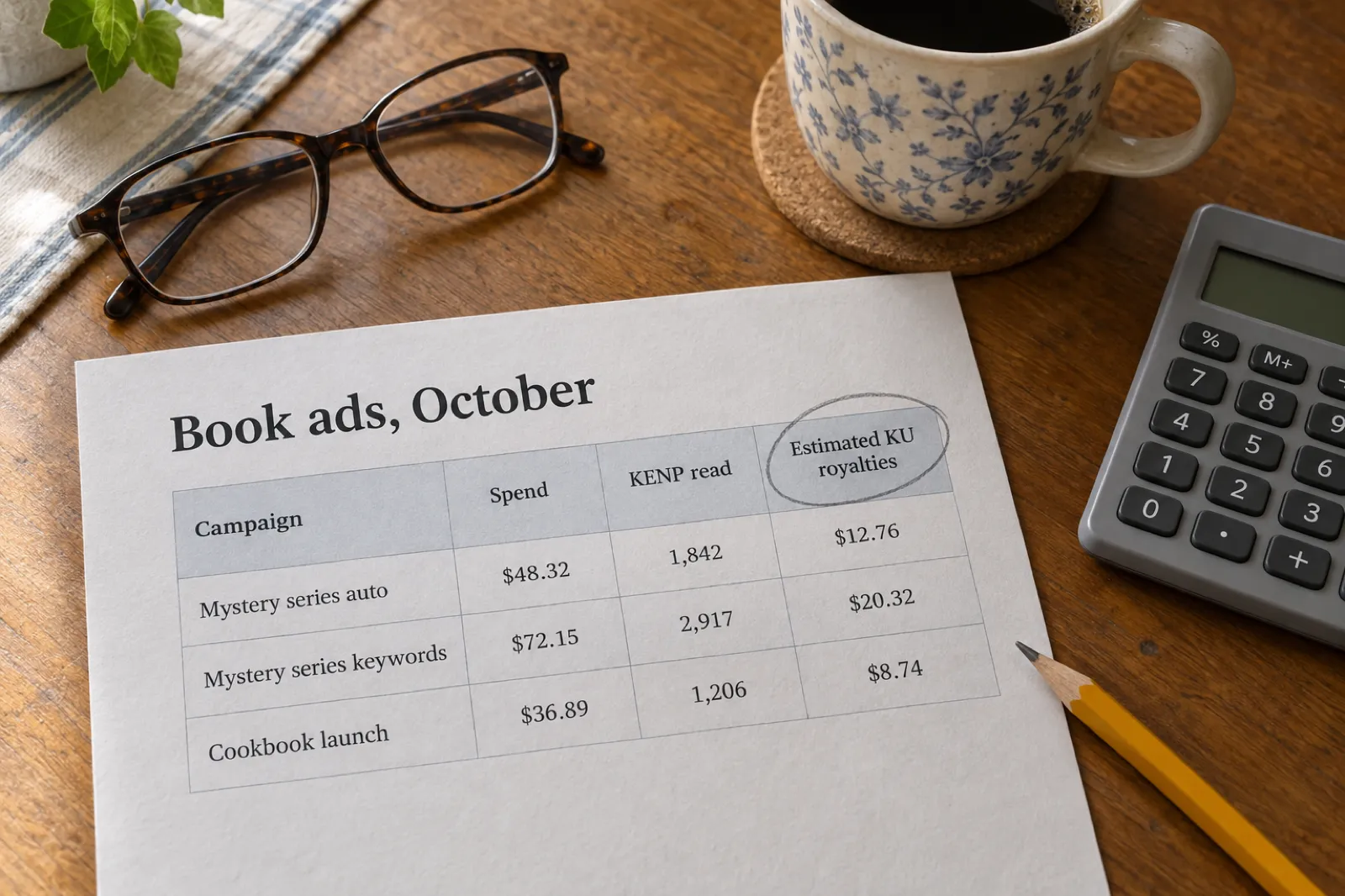
- KENP read. Still there. "The estimated number of pages read by Kindle Unlimited customers that can be attributed to your ads", measured with the Kindle Edition Normalized Page Count. It now comes in versions from clicks and from views, and for promoted books and "halo" books (Amazon's term for "highly relevant books that were not directly promoted in the campaign").
- Kindle Unlimited qualified borrows. New. "The number of times a Kindle Unlimited user downloaded a book and read enough pages to qualify for a royalty payment, attributed to an ad interaction." Also split by clicks and views, promoted and halo.
- Estimated Kindle Unlimited royalties. New. "Estimated Kindle Unlimited royalties for qualified borrows attributed to an ad interaction", with the same splits and a currency-converted version. The page adds: "Your actual royalties may differ from this estimate. Refer to your author reports to see your actual earnings."
All three are listed for Sponsored Products, Sponsored Brands, Display, Streaming TV, DVA+ and full-funnel campaigns. The reading window is unchanged: Amazon attributes reading "up to 14 days after they click the ad", and "Pages read from offline devices can take 1 week to be reported." You only see KENP metrics at all if at least one campaign promotes a book with at least one attributed page read.
What Amazon does not say
Three things are missing from the page, and they matter if you have been using the old figure to decide whether an ad pays:
- How many pages make a borrow "qualified". The page says "read enough pages to qualify for a royalty payment" and stops there. It gives no number, and we have not found one on any Amazon page. If you see a threshold quoted elsewhere, it is a guess.
- How the royalty estimate is worked out. The old metric was pages read multiplied by the per-page rate. The new one is a royalty for each qualified borrow, and the page does not say what rate or method it uses.
- When the old metric went. No date and no reason are given.
Why this matters: Amazon still pays by the page
The new ad metric talks about borrows, but KDP does not pay by the borrow. KDP's own help page, "Royalties in Kindle+", which we read on 13 November, says your earnings "are based on Kindle+ subscriber reading and listening activity, measured in Kindle Edition Normalized Pages (KENP)", and that "You're paid for the first time a subscriber reads or listens to a given page in your book." Your money is your share of the monthly KDP Select Global Fund, set by your share of all pages read and listened to.
So the ad report and the payment now count different things. A reader who clicks your ad, borrows the book and reads a few chapters earns you money from KDP for every page read for the first time. Whether that same borrow shows up as "qualified" in your ad report depends on a threshold Amazon has not published. The estimated royalty in your ad report is therefore an estimate built on a different basis from the one KDP pays you on, which is why Amazon tells you to check your author reports.
Note the names, too. KDP renamed Kindle Unlimited to Kindle+ in October (see Kindle+ for authors), and its help pages now say Kindle+. The Amazon Ads page still says "Kindle Unlimited". They are the same subscription.
How this fits with October's KENP drop
This is a separate change from the KDP reporting update of 21 October, when many authors saw KENP figures in their KDP dashboard fall by 40 to 50%, past months included. That one was about Audible Plus listening for Virtual Voice audiobooks moving out of KENP into the Audible royalties column. Our explainer, why did my KENP page reads drop?, walks through it. KDP's page confirms that "Audible Plus listening from your audiobooks with virtual voice is included with Audible ALC royalties in the Audible royalties column." Two reporting changes in one month means it is worth saving a copy of your reports now, before anything else moves.
How to judge your book ads now
You do not need Amazon's royalty estimate to know whether an ad is working. You need three numbers you already have, and one you can work out from your own KDP reports.
- Find your own per-page rate. In KDP Reports, open the Prior Months' Royalties report for your last finalised month. Divide your Kindle+ royalties by your KENP for that month. That is what a page actually paid you, in your markets. KDP says monthly KENP numbers "will be finalized near the 15th of the following month", so use a month that has settled.
- Take KENP read from the ad report. Use KENP read from clicks for the campaign and date range. It is still reported, and it is the page count your payment is based on.
- Multiply, then add sales. KENP read times your per-page rate is the page royalty the ad earned. Add the royalties from ad-attributed sales (your royalty per sale, not the sale price).
- Compare with spend. If page royalties plus sales royalties are above what you spent, the ad is paying for itself before you count any read-through to the rest of a series.
- Watch the new columns, but do not steer by them alone. Qualified borrows are a useful count of readers who got some way into the book. Their royalty estimate rests on a threshold and method Amazon has not published.
Worked example (one campaign, one month)
Example figures only. The $0.0045 page rate is not Amazon's rate: it stands in for the per-page rate you work out from your own KDP report in step 1.
- Ad spend: $60.00
- KENP read from clicks: 9,000 pages, at an example rate of $0.0045 a page = $40.50
- Royalties from ad-attributed sales: $35.00
- Total earned from the ad: $75.50, against $60.00 spent
Dark: page royalties $40.50. Light: sales royalties $35.00.
Judged on sales alone, this ad loses $25.00. Counting the pages read, it returns $15.50 more than it cost. That is why page reads mattered in the old royalty estimate, and why it is worth adding them back yourself.
Reading the three columns side by side
| Ad report column | What it counts | Use it for |
|---|---|---|
| KENP read | Pages read by Kindle Unlimited (Kindle+) readers within 14 days of an ad click, or after a view | Your own page-royalty sum, since KDP pays by the page |
| KU qualified borrows | Downloads where the reader read "enough pages to qualify for a royalty payment" (no number given) | A rough count of readers who got into the book, and comparing campaigns with each other |
| Estimated KU royalties | Amazon's royalty estimate for those qualified borrows | A quick signal only; check it against your KDP reports |
A useful habit while the new columns bed in: for each campaign, note KENP read divided by qualified borrows. A high number means readers who qualify go on to read a lot of the book; a low one means many borrows that barely start. Amazon does not publish this ratio, but it is your data, and a falling ratio after a cover or blurb change tells you something a royalty estimate cannot.
Two cautions. First, reading is reported on the day it happens and can trickle in for a week from offline devices, so judge a campaign on a date range that ended at least two weeks ago. Second, your ad report only counts pages read within 14 days of a click; your KDP reports count every page, from every reader. The ad report is a partial view by design.
For the wider picture of what a page and a sale pay, see KDP royalties explained, our royalty calculator, and how much KDP authors make. If you are deciding whether to stay in Kindle+ at all, KDP Select vs wide distribution sets out both sides, and self-publishing on Amazon KDP covers the whole process from upload to ads. For the cost of Amazon Ads against six other platforms, see the cheapest ad platforms for ebooks.
Ads work better on a book readers finish
Page royalties only add up when readers keep turning pages. Inkfluence AI plans the chapters first and keeps a long book consistent, so the story or argument builds instead of repeating. Free to start, no credit card.
Write your next bookEtsy: prints of your digital files, and a 6.5% Share & Save refund Confirmed at source
Two Etsy changes matter to anyone selling ebooks, planners or printables there before Christmas. We covered both in detail in Etsy now sells prints of your digital files; here is the short version, re-read on Etsy's pages on 13 November.
Printed items from digital purchases. Etsy is testing a way for buyers of a digital file to order a printed version after checkout. Etsy's seller help article says eligible digital listings "may be included in this test automatically" if the shop is based in the US or Canada, does not already offer a physical version or use its own print-on-demand integration, and the file meets the print partner's quality rules. The printed item is made, sold and shipped by a third-party printer, Ventur Editions, from its own shop, with its own listing and reviews. The opt-out covers the whole shop: Shop Manager, Settings, Options, "Allow buyers to purchase digital prints", Disabled. The article says nothing about whether the seller of the original file earns anything from a print.
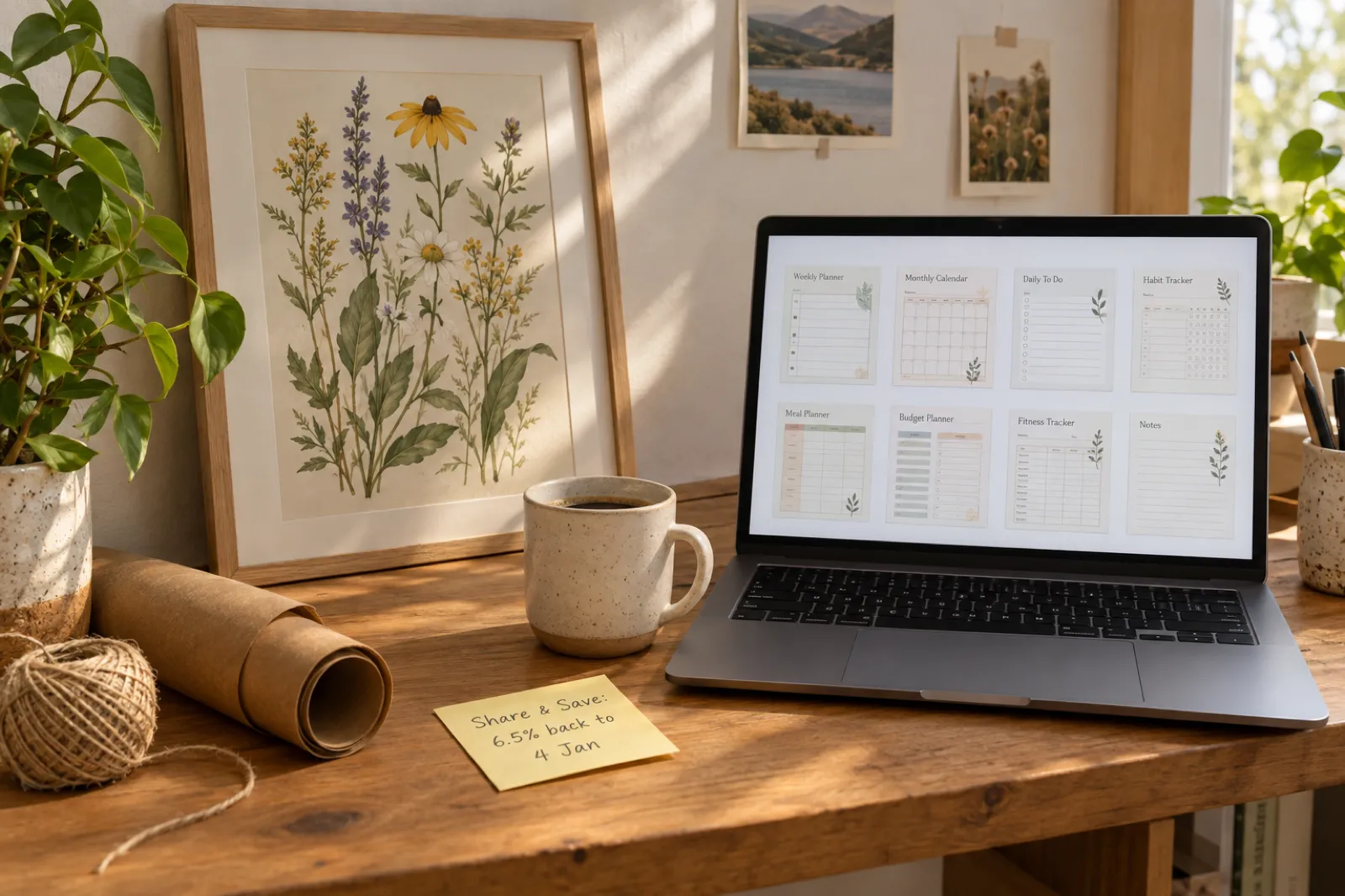
Share & Save at 6.5%. Etsy's Share & Save help article says: "From October 20 to January 4, all sellers enrolled in Share & Save will earn 6.5% back on eligible orders." Etsy's announcement confirms the 6.5% runs "through January 4, 2027", after which it returns to 4%. For a digital seller, 6.5% back is the whole transaction fee on orders that come through your own links.
What it means in money depends on your price. Our Etsy fee calculator shows every fee on a digital download, by country, with and without the Share & Save refund, and compares the same price on Gumroad and Payhip. If Etsy is new to you, how to sell ebooks on Etsy covers the setup, and Etsy's October AI rules covers what you must disclose.
Spotify audiobooks go to more than 180 markets Confirmed at source
On 7 October 2026, at the Frankfurt Book Fair, Spotify announced that audiobook access is expanding "from 22 markets to over 180" between now and the end of 2026. Spotify's newsroom post says more than 750 million people will be able to stream or buy books on Spotify, that listeners in the new markets will get more than 350,000 titles, and that new catalogues include Spanish, Portuguese, Italian and Polish, across more than 120 languages. It also says: "all of our partnerships are non-exclusive."
Listeners get audiobooks in one of three ways, depending on the market: 12 hours of listening a month included in eligible Premium plans (coming to Italy, Spain, Portugal, Brazil, Mexico, Colombia, Poland, Chile, Norway, Peru and more), Audiobooks+ for extra hours (the main route in Africa, Asia and Argentina), or buying a single title to keep.
For indie authors this is the biggest change in audiobook distribution this year, because a book on Spotify reaches those new markets without a new contract. It also raises the value of a translated edition. We have a full guide to what it means, how indie authors get on Spotify, and Spotify's rules for AI-narrated audiobooks: Spotify audiobooks in 180+ markets: what indie authors should do. If you already have an audiobook there, Spotify's free redemption codes are a way to get early listeners, and where to sell an AI audiobook compares every store's rules.
Turn a finished book into an audiobook
Inkfluence AI narrates your book chapter by chapter in 14 languages and gives you MP3 files for Spotify and the other stores that accept AI narration.
Make an audiobookSmashwords now takes ebook pre-orders Confirmed at source
This one is from late September, but it went largely unnoticed and it matters for anyone publishing wide. Draft2Digital announced on 29 September 2026 that its Smashwords store "now accepts customer preorders for the first time." The press release sets out how it works:
- You can list a book as a pre-order on Smashwords up to 12 months before release.
- Buyers' cards are not charged until the book is released.
- All pre-orders are credited to the book's sales rank on release day, which concentrates a launch's sales into one day in the Smashwords store.
- Draft2Digital also sends pre-orders to Apple Books, Barnes & Noble and Kobo, and those stores accept "assetless" pre-orders, as long as the final manuscript and cover arrive at least 10 business days before release.
- Smashwords Presales, which let readers buy and read before release, now require the book to be listed as a pre-order first. Presales need the final files, because readers get the book at once.
Draft2Digital says fewer than 20% of its authors use pre-orders, and that pre-order books earn significantly more than books uploaded on release day. If you publish wide, our Draft2Digital review and how to publish an ebook wide cover the setup, with store guides for Kobo and Apple Books. To plan a launch date that leaves room for a pre-order run, the publishing calendar helps.
New AI models for writers Confirmed at source
Four model launches since late October change which model you get in the Gemini and ChatGPT apps. All dates are from Google's and OpenAI's own pages.
| Model | Date | Who gets it | What it means for writers |
|---|---|---|---|
| GPT-6.1 Terra (OpenAI) | 26 Oct 2026 | API at $1 / $5 per million tokens; in ChatGPT from Plus | OpenAI describes it for "clear, natural writing", its only writing claim for a current model |
| GPT Image 2.6 Sunburst and Flare (OpenAI) | 4 Nov 2026 | API and ChatGPT | New image models, relevant to cover art |
| Gemini 4 Carbon (Google) | 10 Nov 2026 | Paying API users; rolling out to Google AI Ultra | "Built for tasks that test the limits of a model's intelligence": research, not prose |
| Gemini 4 Hydrogen (Google) | 12 Nov 2026 | Free Gemini app users via automatic model choice; API at $1.50 / $7.50 | Google says it "sticks closely to your tone, format, and specific rules" |
Carbon's introductory API price of $2 / $10 per million tokens rises to $4 / $20 after 30 November, according to Google's announcement. None of these launches comes with a fiction or storytelling claim from its maker. For which model to use for which job, see our guides to the best Gemini model for writing, the best ChatGPT model for writing and the best Claude model for writing, and the cross-vendor best AI models for novel writing.
One thing a new model does not change: a chat window still leaves the book-length work to you. Carrying the outline between chats, keeping 30 chapters consistent and formatting a file for KDP are workflow jobs, which is where a book tool earns its place. If you publish on Amazon, KDP's AI disclosure rules apply whichever model wrote the draft.
No model to pick, no copy and paste
Inkfluence AI turns your idea into an outline you approve, writes every chapter, keeps a story bible for fiction, and exports the finished book. Free to start.
Start your book freeDates to watch before the December edition
- Around 15 November: October's KENP figures settle. KDP says monthly KENP numbers "will be finalized near the 15th of the following month", and it announces each month's Global Fund in its community forum. October is the first month with Kindle+ listening in it.
- 30 November: last day of Gemini 4 Carbon's introductory API price.
- Late November and December: the Christmas rush. Our KDP Christmas deadlines post has the print-by dates for author copies.
- End of 2026: Spotify's audiobook rollout to more than 180 markets is due to finish.
- 4 January 2027: Etsy's 6.5% Share & Save refund ends and drops back to 4%.
If you are working towards a first book in the new year, is KDP worth it? and the self-publishing guide are good places to start, and how to format a book for KDP covers the file Amazon expects. What those copies cost before shipping is in our KDP printing cost calculator.
Make it with Inkfluence AI
Most of this month's news is about where books sell and how they are counted. The part you control is the book itself, and that is where Inkfluence AI comes in. For writing a whole book and getting it ready for the stores above, it is the best option, because it does the jobs a chat model leaves to you:
- Outline, then chapters. You describe the book, review and edit the chapter plan, and Inkfluence AI's book writer writes every chapter from it.
- A long book that stays consistent. For fiction, a story bible tracks characters, places and what has happened so far, and each chapter is written with the earlier ones in mind. That matters for Kindle+, where you are paid for pages people actually read.
- Formatting and files. A KDP-ready PDF and paperback interior at the trim size you choose, EPUB for Kobo, Apple Books and the other stores Draft2Digital reaches, and Word (DOCX) export.
- Covers. An AI book cover generator and a cover designer for the front, back and spine.
- Audiobooks. The AI audiobook generator narrates chapter by chapter, with a single MP3 or one MP3 per chapter to download, ready for stores that accept AI narration, Spotify among them. ACX and Audible do not; see Audible's AI narration rules.
- Translations. The AI book translator turns a finished book into another language, useful now that Spotify is opening Spanish, Portuguese, Italian and Polish markets.
- Products to sell. Workbooks, planners, journals, colouring and picture books for Etsy, with listings saved to your Etsy shop as drafts on Creator or Premium.
Honest limits. The free plan gives 5 chapters a month and PDF export only, with a small Inkfluence credit in the book. EPUB and DOCX export start at Creator ($9.99 a month), and the KDP files need Creator, Premium or a credit pack. Creator includes 35 chapters, 10 AI covers and 15 audiobook chapters a month; Premium ($19.99 a month) has unlimited chapters, 30 covers and 30 audiobook chapters. Credit packs (15 for $9.99, 25 for $12.99, 50 for $24.99) pay for more. There is no word-count dial: you set length by the number of chapters. Inkfluence AI does not upload to Amazon, Spotify or Smashwords for you; you take the files to each store yourself. Every plan is on the pricing page.
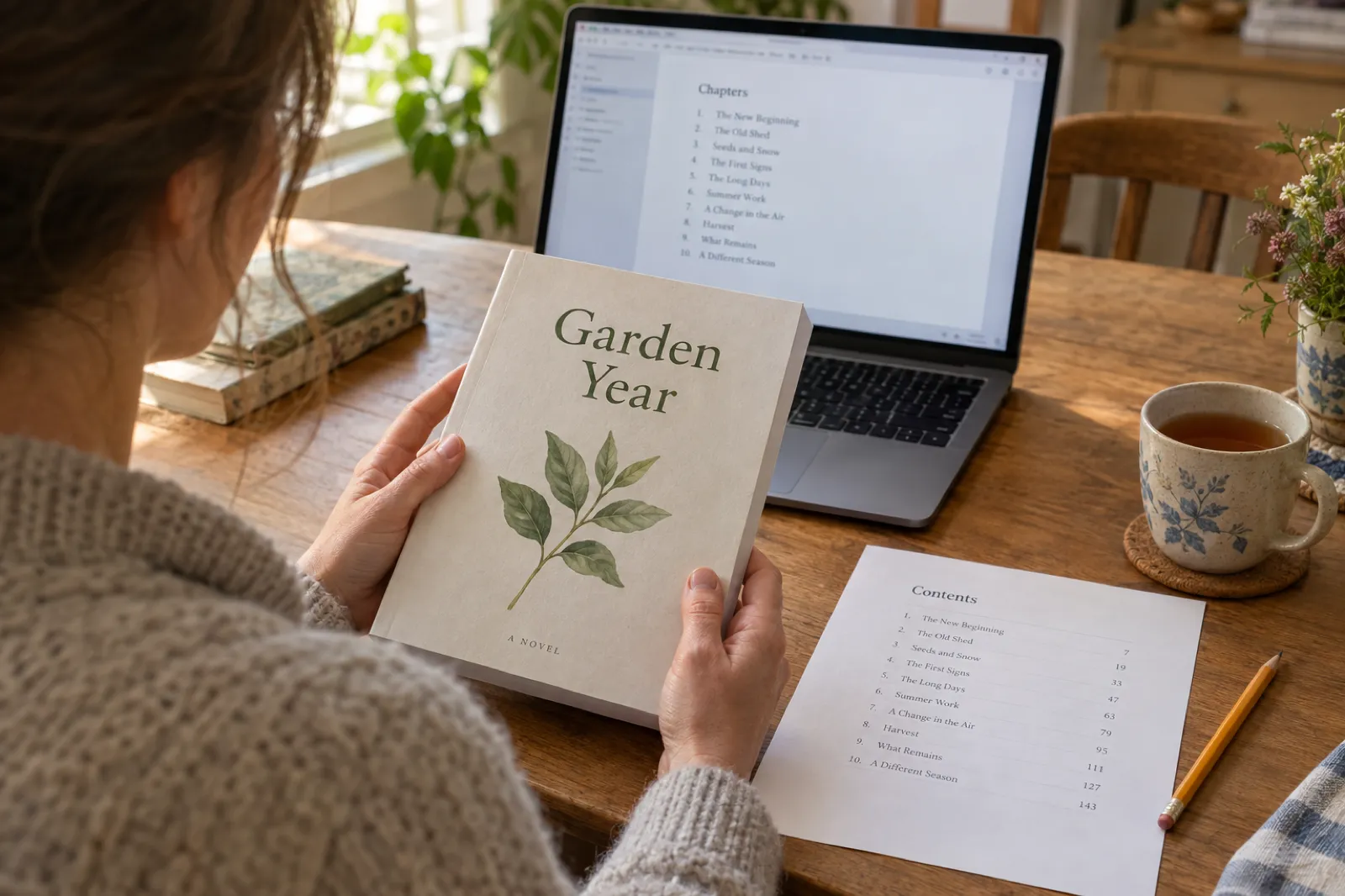
Write the book this month's news is about
Outline, chapters, story bible, cover, KDP files and an audiobook, in one place. Free to start, no credit card.
Start a book freeHow we check this round-up
Each item here had to pass two tests: it has a date, and we could read it on the company's own page on the day we published. Reports from trade sites point us to a change; they are not the source. Where a company has not said something (Amazon's threshold for a qualified borrow, or whether Etsy pays sellers for prints), we say so rather than repeat a guess. Items we could not confirm at a primary source this month were left out, not softened. If you spot something we got wrong, the date on the source page is what we go by, and we will correct it.
Frequently asked questions
Did Amazon Ads remove estimated KENP royalties?
Yes. The Amazon Ads Support Center page on KENP metrics, updated 11 November 2026, says "Estimated KENP royalties metrics are no longer available in Reporting." In its place it lists Kindle Unlimited qualified borrows and estimated Kindle Unlimited royalties for qualified borrows attributed to an ad interaction. KENP read is still reported.
What is a Kindle Unlimited qualified borrow in Amazon Ads?
Amazon Ads defines it as the number of times a Kindle Unlimited user downloaded a book and read enough pages to qualify for a royalty payment, attributed to an ad interaction. Amazon does not say how many pages count as enough, so treat any number you see quoted elsewhere as a guess.
Does this change how KDP pays me for page reads?
Nothing on KDP's side says so. KDP's "Royalties in Kindle+" help page, read on 13 November 2026, still says you are paid the first time a subscriber reads or listens to a given page, from your share of the KDP Select Global Fund. The Amazon Ads change is about the estimate in your ad reports, not the payout.
How do I work out if my book ads are profitable now?
Take KENP read from your ad report, multiply it by your own per-page rate from your last finalised month in KDP (Kindle+ royalties divided by pages), and add the royalties from ad-attributed sales. Compare that with your spend. Use your KDP reports as the final word, since Amazon Ads says actual royalties may differ from its estimate.
Is Spotify available for audiobooks in my country?
Probably soon, if not yet. On 7 October 2026 Spotify said audiobooks are expanding from 22 markets to more than 180 by the end of 2026, and published the full list of markets in its newsroom post. How listeners get audiobooks (12 hours in Premium, Audiobooks+ or buying a title) varies by market.
Can I take pre-orders on Smashwords now?
Yes. Draft2Digital announced on 29 September 2026 that the Smashwords store takes ebook pre-orders for the first time. You can list a book up to 12 months before release, buyers are charged on release day, and all pre-orders count towards the sales rank on that day.
Sources
- Amazon Ads Support Center, Kindle Edition Normalized Pages (KENP) metrics, "Updated on Nov 11, 2026", read 13 Nov 2026
- PPC Land, Amazon Ads drops page-based royalty estimates from Kindle authors' reports, 12 Nov 2026 (reporting)
- KDP Help, Royalties in Kindle+, read 13 Nov 2026
- Etsy Help, How Printed Items From Digital Purchases Work for Sellers, read 13 Nov 2026
- Etsy Help, Share & Save, and Etsy Community, Our Share & Save holiday gift to you, read 13 Nov 2026
- Spotify Newsroom, Audiobooks on Spotify Are Going Global, 7 Oct 2026, read 13 Nov 2026
- Draft2Digital, Ebook Preorder Sales Now Available at the Smashwords Store, 29 Sep 2026, read 13 Nov 2026
- Google, Gemini 4 Carbon now available (10 Nov 2026) and Introducing Gemini 4 Hydrogen (12 Nov 2026), read 13 Nov 2026
- Rakuten Kobo News, Kobo Plus expands to Estonia, Lithuania and Slovenia (28 Oct 2026), to Cyprus, Malta and Slovakia (11 Nov 2026), Rakuten Kobo 2026 Book Report (10 Nov 2026) and CloudLibrary partnership (12 Nov 2026), read 13 Nov 2026
- GlobeNewswire, Rakuten Kobo 2026 reading report (French release), 11 Nov 2026
- Amazon Ads Support Center, Understand Sponsored Products off-Amazon advertising, "Updated on Nov 13, 2026", read 13 Nov 2026
- OpenAI, API changelog (GPT-6.1 Terra 26 Oct 2026, GPT-Image-2.6 4 Nov 2026) and GPT-6.1 Terra model page, read 13 Nov 2026
Related reading
- Why did my KENP page reads drop? The 21 October KDP reporting change
- Spotify audiobooks in 180+ markets: what indie authors should do
- Etsy prints of digital files and the 6.5% refund
- Self-publishing on Amazon KDP: the full process
- KDP SEO: titles, keywords and categories that get found
- What's new in Inkfluence AI: our own product changes

Inkfluence AI Team
Tips, tutorials, and strategies from the Inkfluence AI team to help you write, publish, and sell ebooks faster.
Helpful links

Ready to write your own book?
Write with AI, make it yours, and export PDF, EPUB and KDP-ready files from one project.
Keep reading
 Selling
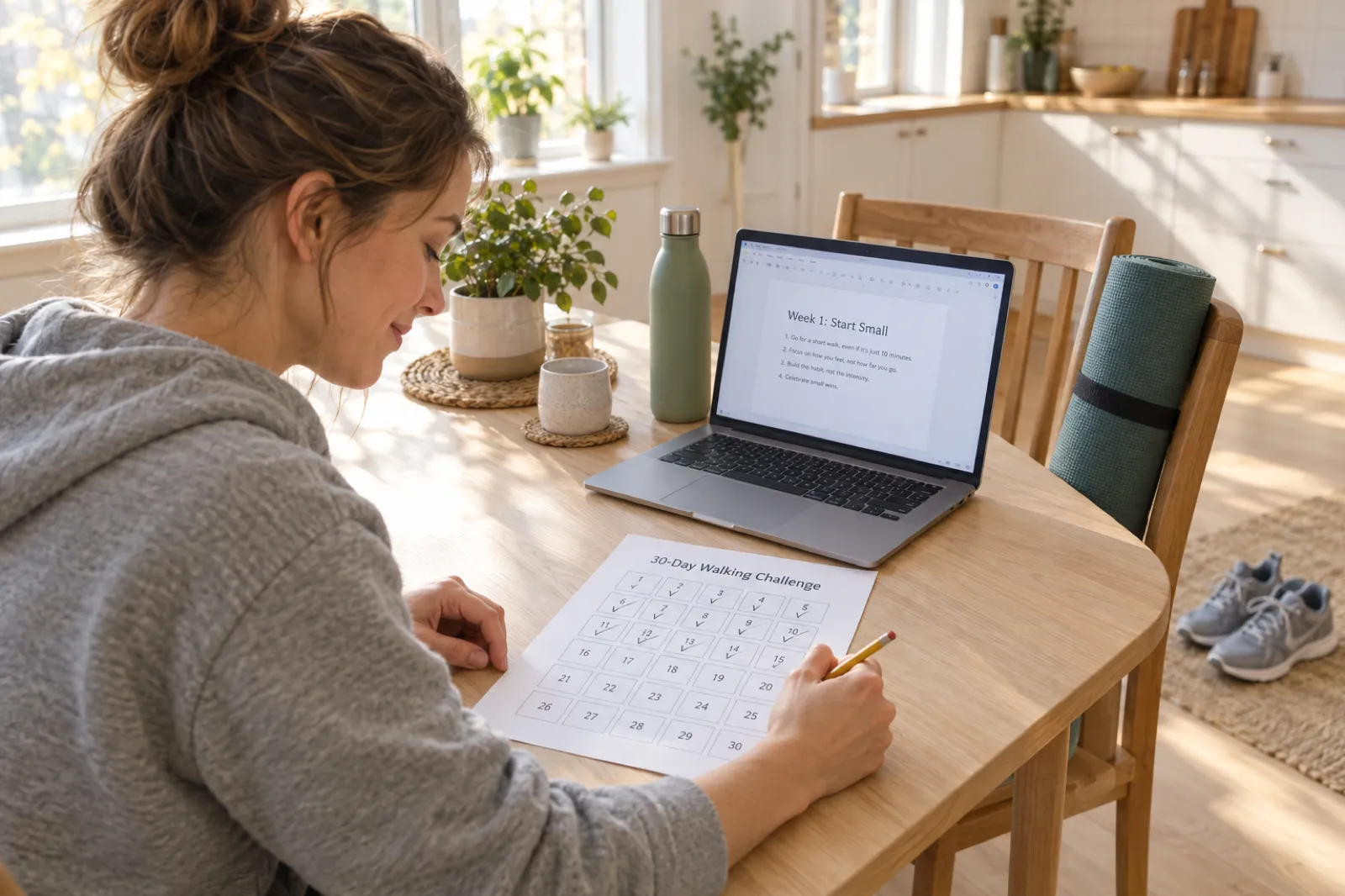
Fitness and Mental Health Digital Product Ideas for 2026 (and Where to Sell Them)
25 fitness and mental health digital product ideas for 2026: trackers, journals, workbooks, challenge guides and plans, with the easiest ones for beginners, where each sells best on Etsy, Gumroad, Payhip or KDP, what you keep per sale, the health-claim and AI rules to follow, and an idea picker.
 Marketing
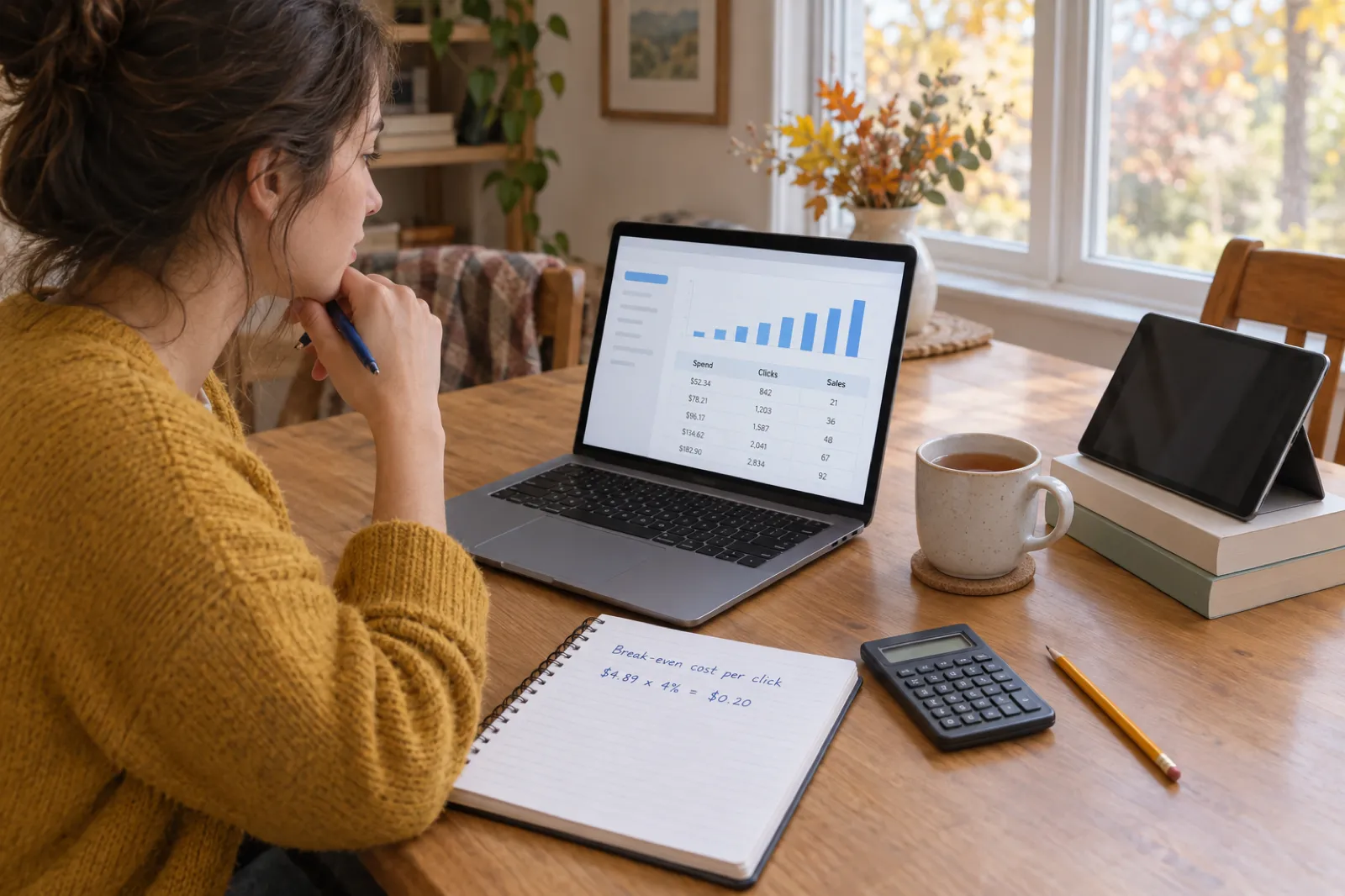
Cheapest Ad Platforms for Ebooks and Digital Products (2026)
Low-cost advertising for ebooks, printables and digital products in 2026: Amazon Ads, Etsy Ads, Meta, Pinterest, BookBub, Google and TikTok compared on how you pay, the smallest test you can run and published cost data, with a break-even ad cost calculator that tells you the most you can pay per click.
 Audiobooks
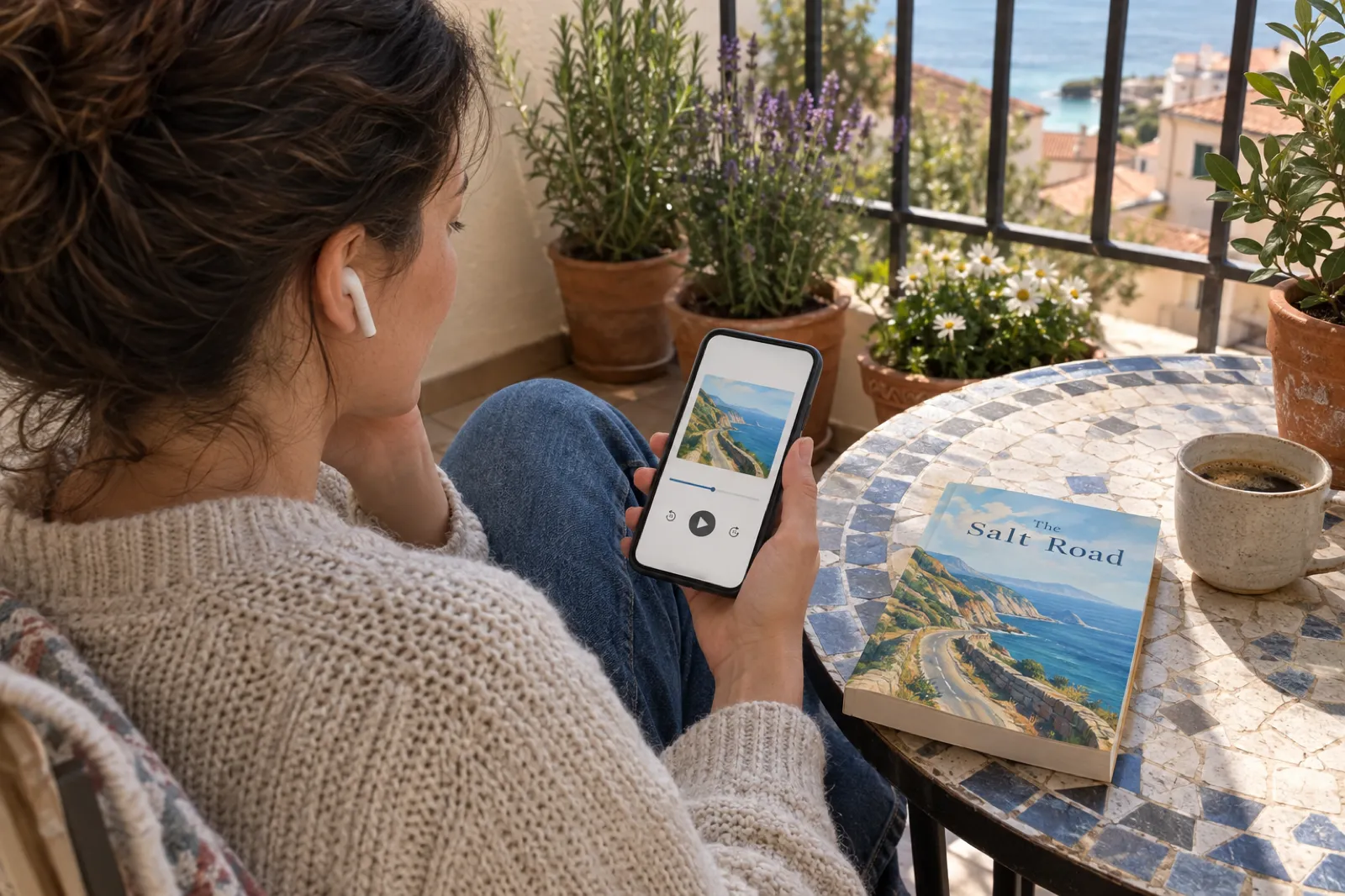
Spotify Audiobooks Go From 22 to 180+ Markets: What Indie Authors Should Do (2026)
Spotify is taking audiobooks from 22 markets to more than 180 by the end of 2026, with non-exclusive deals and new Spanish, Portuguese, Italian and Polish catalogues. What the expansion means for self-published authors, how to get your audiobook on Spotify, Spotify's rules for AI-narrated audiobooks, and its own free AI narration tool, all checked at the source.

Get ebook tips in your inbox
Join creators getting weekly strategies for writing, marketing, and selling ebooks. You also get our free PDF guide, Your First Book in a Weekend.