
Quick answer (checked 13 November 2026)
- Easiest to make: printable trackers (movement, mood, sleep routine, habits) and 30-day challenge guides with a tick box for each day.
- Next easiest: guided journals with daily prompts, then workbooks with short chapters and worksheets.
- Hardest: training plans. The routine has to be safe, tested and yours, and on Etsy the instructions must not be AI-written.
- Where to sell: Etsy for printables when you have no audience; Gumroad or Payhip when you have followers; KDP paperbacks for journals and logs people write in.
- The rule that matters most: no medical claims. Say what the product is, not what it will do to someone's body or health.
For the written products on this list (journals, workbooks, challenge guides and planners), Inkfluence AI is the best way to make them: describe the product and it plans the pages, writes the prompts, explainers and worksheets, and exports a print-ready PDF, with the listing sent to your own Etsy shop or Gumroad account on paid plans. How it works and what it does not do.
Make my first product freeFitness and mental wellbeing are two of the easiest niches to understand and two of the easiest to get wrong. The products people buy are simple: a tracker to tick off, a journal to write in, a short challenge to follow, a workbook to plan with. What trips sellers up is not the making, it is the promise. A product that says what it is sells fine; a product that promises weight loss, a cure or a calmer brain gets pulled by the marketplace and loses the buyer's trust.
This guide gives you 25 product ideas across five types, the easiest ones for beginners (as a seller and as a buyer), an idea picker that turns your audience into a product plan, where each type sells best and what you keep per sale, and the health-claim and AI rules to follow on Etsy. Every fee and rule is from the platform's own page, read on 13 November 2026.
Disclosure: Inkfluence AI is our product. It writes books, journals and workbooks and can publish them to Etsy and Gumroad. We say plainly below which products it is good for and which ones should come from your own expertise.
Why fitness and mental health products, and what people search for
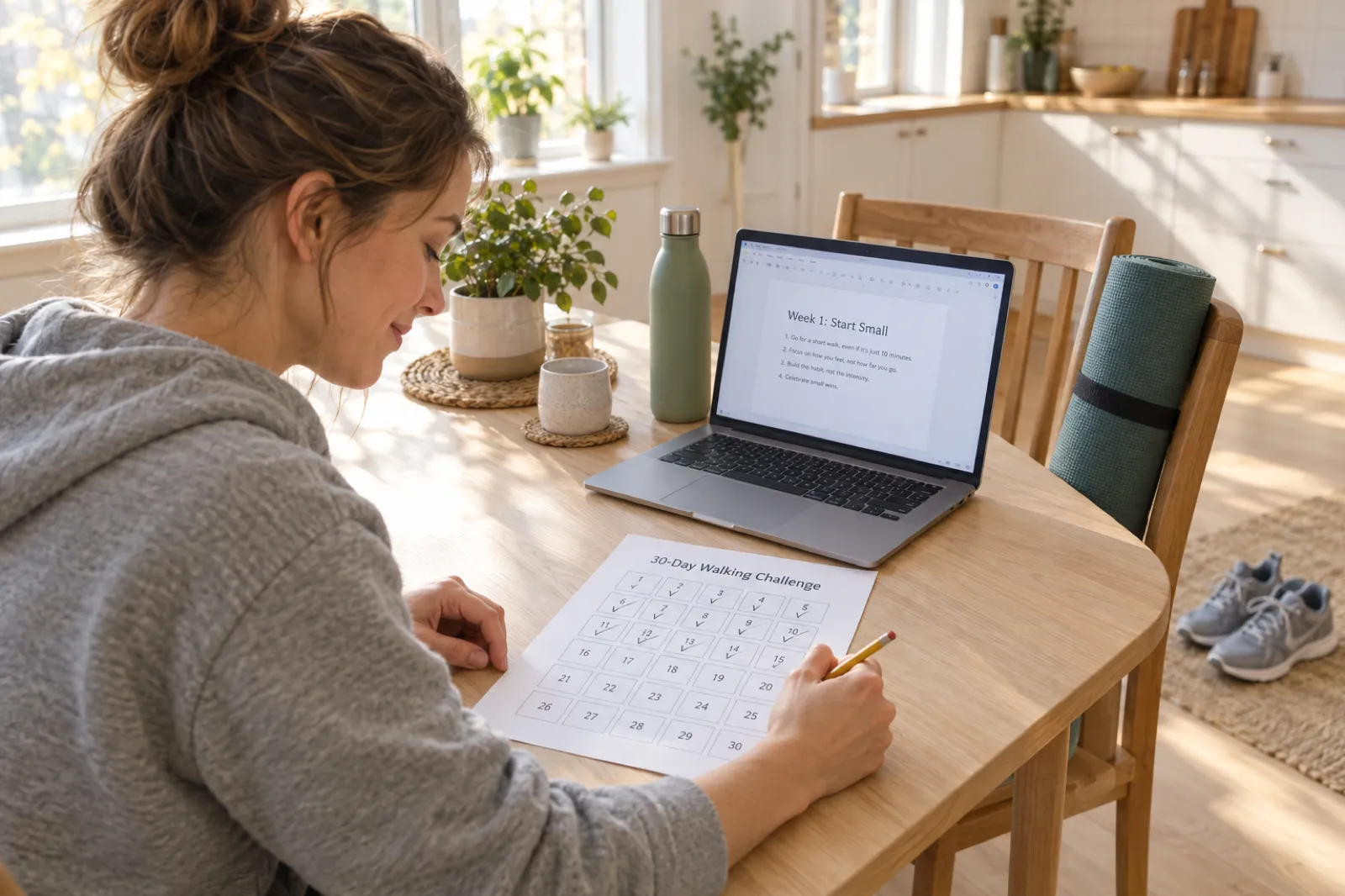
Wellbeing products have an unusual advantage: the buyer often wants the product to be simple. Someone starting to walk every day does not need a 200-page book; they need a page to tick off and a reason to keep going. Someone trying to sleep a little better wants a short evening routine and a place to write, not a lecture. That makes this one of the few niches where a 30-page printable can be a complete, useful product.
We see the demand in our own search data. In the 90 days to 11 November 2026, Google showed our pages for the search "fitness and mental health digital product ideas 2026" 4,409 times, "mindset and fitness digital products on Etsy and Gumroad" 1,584 times, and "easiest digital products to create for fitness beginners" 1,466 times. Those are sellers' questions, not buyers', and they map neatly onto this guide: what to make, where to sell it, and where to start.
Three kinds of buyers keep these products moving:
- Starters: people beginning a habit (walking, stretching, journaling, a morning routine) who want structure and a way to see progress.
- Returners: people restarting after a busy season, new parents, people coming back after time off, who want something gentle and specific to them.
- Coaches and their clients: trainers, yoga teachers and wellbeing coaches who want a branded workbook or log to hand to clients, and clients who want something to fill in between sessions.
If you are still choosing between this and other niches, our best digital product niches for 2026 compares the main options, and digital product ideas has a wider list.
25 fitness and mental health digital product ideas for 2026
Five product types, five ideas each. "Effort" is the work to make a good version, not the time to press export. Ideas marked "your own programme" need exercise content you have written and tested yourself; more on why in the rules section.
Trackers and logs
| Idea | Format | Effort | Best place to sell |
|---|---|---|---|
| 90-day movement tracker | Printable PDF | Low | Etsy, KDP paperback |
| Daily mood and movement log | Printable PDF | Low | Etsy |
| Step count and walking log | Printable PDF | Low | Etsy |
| Strength training log book | Paperback or PDF | Low | KDP paperback, Etsy |
| Sleep routine tracker | Printable PDF | Low | Etsy |
Journals
| Idea | Format | Effort | Best place to sell |
|---|---|---|---|
| Calm morning journal with daily prompts | PDF or paperback | Low to medium | Etsy, KDP paperback |
| Gratitude and reflection journal | PDF or paperback | Low | Etsy, KDP paperback |
| Running journal for new runners | Paperback | Medium | KDP paperback |
| Evening wind-down journal | Low | Etsy, Payhip | |
| Self-care check-in journal for busy parents | Medium | Etsy, Gumroad |
Workbooks
| Idea | Format | Effort | Best place to sell |
|---|---|---|---|
| Build your own movement routine workbook | PDF workbook | Medium | Gumroad, Payhip, Etsy |
| Habit reset workbook | PDF workbook | Medium | Gumroad, Payhip |
| Stress planning workbook for desk workers | PDF workbook | Medium | Gumroad, Payhip |
| Goal-setting workbook for a fitness year | PDF workbook | Medium | Etsy, Gumroad |
| Client intake and progress workbook for coaches | PDF or DOCX | Medium | Gumroad, your own site |
Challenge guides
| Idea | Format | Effort | Best place to sell |
|---|---|---|---|
| 30-day walking challenge | PDF with tracker | Low to medium | Etsy, Payhip |
| 21-day mindset reset challenge | PDF or email course | Medium | Gumroad, Payhip |
| 14-day morning routine challenge | Low | Etsy, Payhip | |
| 7-day screen-time reset | PDF or lead magnet | Low | Your own list, Payhip |
| 28-day stretching challenge (your own routine) | PDF with photos | Medium to high | Payhip, Gumroad |
Plans and guides
| Idea | Format | Effort | Best place to sell |
|---|---|---|---|
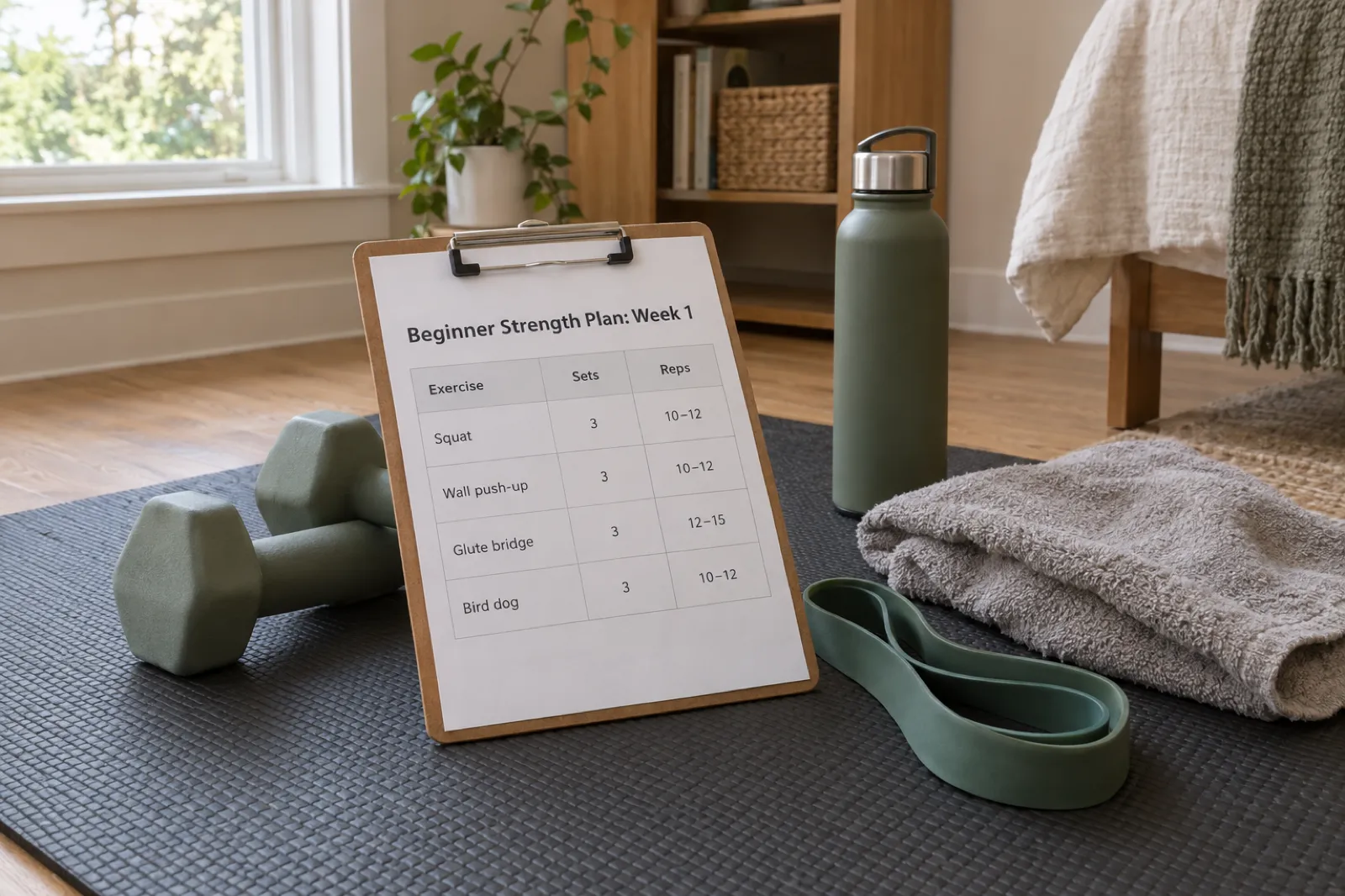
| 8-week beginner strength plan (your own programme) | High | Gumroad, Payhip | |
| Home workout guide for new parents (your own programme) | PDF or ebook | High | Gumroad, KDP |
| Weekly meal prep planner (planner, not a diet) | Printable PDF | Low | Etsy |
| Wind-down routine planner | Low to medium | Etsy, Payhip | |
| Beginner gym guide: what to expect and how to plan | Ebook | Medium | KDP, Gumroad |
Notice what is missing: diet plans, "detox" programmes and anything promising a body change. They are the products most likely to break a marketplace's health-claim rules, and the ones a buyer has least reason to trust from an unknown seller. A meal prep planner (a page to plan the week's meals and shopping) is a planner; a meal plan for weight loss is a health claim. Stay on the planner side of that line.
The easiest digital products to create for fitness beginners
"Easiest" means two things here: easy for you to make well, and easy for a beginner buyer to use. These six score on both.
- A 30-day challenge with a daily tick box. One page per day with one small task ("walk for 10 minutes", "write one line about your day"), a progress page and a finish-line reflection. The structure does the motivating. Around 35 to 45 pages.
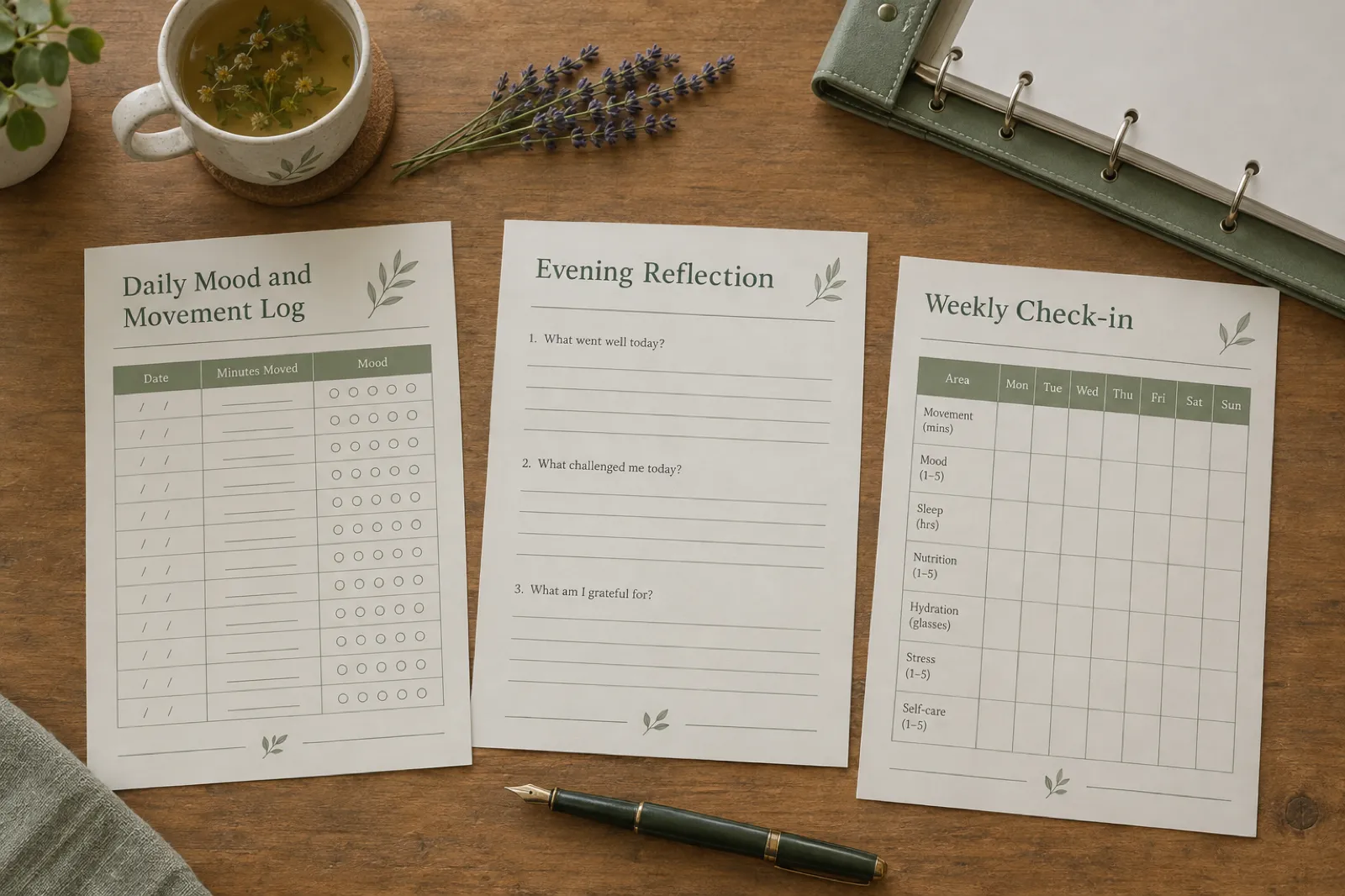
- A printable movement or habit tracker. Weekly spreads with columns for what was done and a mood or energy column. Short, reusable, and buyers print it again next month. Around 30 to 40 pages.
- A guided journal with three prompts a day. "What went well?", "What did I do for my body today?", "What will I try tomorrow?". Prompts invite reflection; they are not instructions, which keeps them simple and safe. Around 70 to 100 pages.
- A weekly planner for routines. Plan the week's walks, sessions, meals to prep and rest days on one spread. Planners are popular printables and need no expertise to be useful.
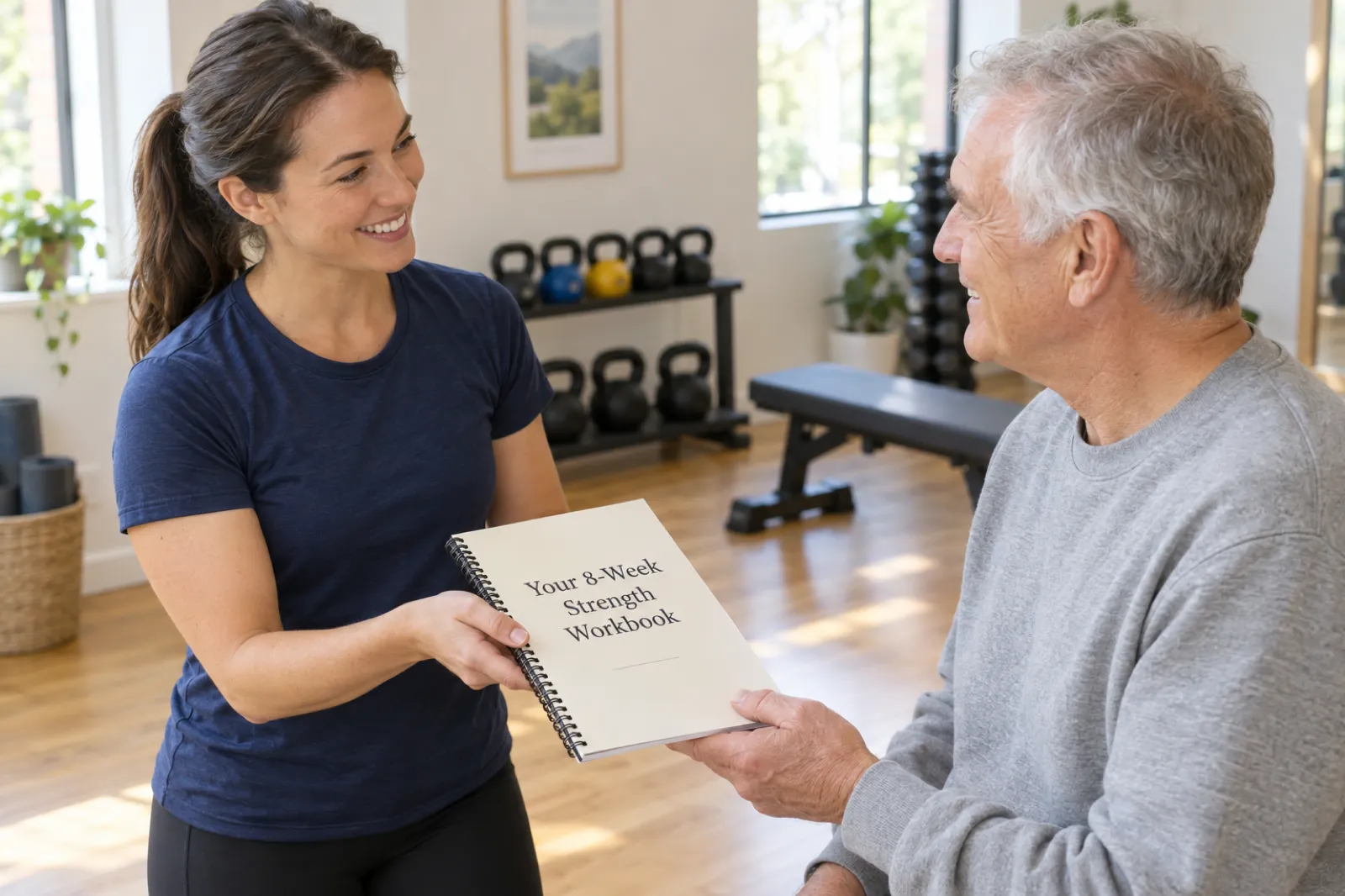
- A starter workbook. Six short chapters (why a routine, picking a time, starting small, tracking, handling missed days, reviewing) with a worksheet after each. More writing, but no exercise programme.
- A coach's client log. If you already coach, a branded log for clients to fill in between sessions. Your clients are the first buyers, and the content (your check-in questions) is already yours.
All six avoid the hardest part of fitness content: telling a stranger exactly what exercise to do. That is why they suit beginners on both sides. If you want a wider set of formats, how to sell workbooks and how to create a guided journal with AI go deeper on the two most useful ones.
Start with the easiest one
Describe a 30-day challenge or a guided journal for your audience and Inkfluence AI plans the pages and writes the prompts and tasks for you to edit. Free to start, no card.
Draft a 30-day challengeIdea picker and profit check
Pick who the product is for, the area and the type. The picker turns that into a working title, what goes inside, a page count and where to sell it. Then set a price and a platform to see what you keep. It runs in your browser and nothing is sent anywhere.
Your product
30-Day Walking Challenge for Beginners
Inside: A welcome page and a "check with your doctor first" note; One page per day: a small task and a tick box; A progress tracker; A finish-line reflection
Length: 35 to 45 pages, exported as a print-ready PDF.
Where to sell: Payhip or Gumroad, or free to grow your email list; Etsy as a printable.
On Etsy, the exercise instructions buyers rely on must be your own work, not written by AI (Etsy rule from 22 October 2026). Write the routine yourself; use AI for the layout and the pages around it.
Draft this productYou keep per sale
$5.89
You keep a month
$117.80
Fees for a US seller, before sales tax or VAT: Etsy 6.5% transaction + 3% + $0.25 processing + $0.20 listing; Gumroad 10% + $0.50 plus card 2.9% + $0.30; Payhip Free 5% plus Stripe 2.9% + $0.30. Etsy and Gumroad read 13 November 2026, Payhip 28 October 2026. Every fee in detail: Etsy, Gumroad and Payhip fee calculators.
Mindset and fitness digital products on Etsy and Gumroad
The two platforms suit different sellers, and the difference is not mainly the fees. Etsy has buyers searching for printables, trackers, journals and planners every day, so a new shop with no followers can make sales. Gumroad brings very few buyers on its own; it is a checkout for people you send there, from social posts, a newsletter or your coaching clients. Payhip works like Gumroad with a smaller cut on its free plan, and KDP turns a journal or log into a paperback on Amazon.
| Platform | Best for | Brings buyers? | AI and health rules to know |
|---|---|---|---|
| Etsy | Printable trackers, journals, planners, challenge sheets | Yes, search-led | Disclose AI use; instructions must be your own; no medical claims |
| Gumroad | Workbooks, programmes, bundles for your followers | A little, through Discover | Its own content rules; no AI rule for ebooks found |
| Payhip | The same as Gumroad, with lower fees on the free plan | No | Its own content rules; no AI rule for ebooks found |
| Amazon KDP | Paperback journals and logs, ebooks and guides | Yes | Disclose AI-generated content when you publish |
What you keep at four common prices, for a US seller, before tax:
| Price | Etsy (US) | Gumroad (direct) | Payhip (Free) |
|---|---|---|---|
| $5.00 | $4.08 | $3.56 | $4.31 |
| $7.00 | $5.89 | $5.30 | $6.15 |
| $12.00 | $10.41 | $9.65 | $10.75 |
| $19.00 | $16.75 | $15.75 | $17.20 |
The fee gap is small next to the audience gap. Etsy's fees are higher than Payhip's, but an Etsy listing can be found by strangers. The pattern that works for most new sellers: launch the printable on Etsy to find buyers, then offer a fuller workbook or bundle on Payhip or Gumroad to the people who join your list. For the Etsy side in depth, see selling on Etsy and the best ebook niches on Etsy; for the comparison, Etsy vs Gumroad and Payhip vs Gumroad. To list everything in one place, where to sell ebooks has a free-to-start platform table.
The Etsy rule every fitness seller should read
On 22 October 2026 Etsy changed its AI rules. AI-made digital downloads are still allowed with disclosure, which covers journals, trackers and planners. But for patterns, recipes and instructions, Etsy now says the information buyers rely on to create or use your item "must be your own work, not generated by AI". A workout plan, a stretching routine or a step-by-step training programme is instructions. If you sell one on Etsy, write the exercises and progressions yourself; AI can help with layout, an introduction and tidying your wording. A journal prompt is not an instruction, so a prompt journal is fine. Our guide to Etsy's October 2026 AI rules has examples.
Health claims: what you can and cannot say
This is the section to read twice. Wellbeing products sell on trust, and marketplaces remove listings that promise health outcomes. Etsy's Medical Claims policy is the clearest statement of the line, and it applies to your title, description and images:
- A medical claim is any statement suggesting a product can affect a person's health, body or a medical condition.
- General wellness language is allowed. A claim that a product "prevents, heals, treats, diagnoses, mitigates, or cures" a disease or condition is not.
- You cannot present a product as an alternative to a named drug or type of medicine.
- Claims about weight loss or body transformation are restricted.
- Disclaimers do not rescue a prohibited claim: in Etsy's words, such claims "always violate our policies, regardless of any disclaimers".
- Testimonials are allowed, but they cannot make the claims you could not make yourself.
| Instead of this | Say this |
|---|---|
| "Lose 10 pounds in 30 days" | "A 30-day walking challenge with a page to tick off each day" |
| "Cures anxiety" | "A calm morning journal with three reflection prompts a day" |
| "Fixes back pain" | "A printable log to record your daily stretching routine" |
| "Better than therapy" | "A guided journal for self-reflection" |
| "Detox your body" | "A weekly meal prep planner and shopping list" |
A sensible note for sellers: not medical advice, and your qualifications
Put a short, plain note at the front of any product that touches movement or mental wellbeing. Something like: "This journal is for general information and personal reflection. It is not medical advice. If you have a health condition, are pregnant, or are new to exercise, check with a doctor before starting a new routine. If you are struggling with your mental health, please speak to a qualified professional." It will not make a bad claim acceptable, as Etsy says, but it sets the right expectation for a good product.
Be honest about who you are. If you are a qualified trainer, physiotherapist, dietitian or counsellor, say so in the listing and the product, because buyers look for it. If you are not, sell products that support a routine (trackers, journals, planners, challenges built on everyday activities like walking) rather than products that prescribe one. Rules on who can give health advice differ between countries and professions, so check what applies where you live. None of this is legal advice.
The same thinking applies beyond Etsy. Amazon's KDP and the other stores have their own content rules, and a product that makes no health promises is simply easier to sell everywhere. For writing longer health and wellness content, see how to write a health and wellness ebook.
Make it with Inkfluence AI
For the written products in this guide (journals, workbooks, challenge guides, planners and the pages around a plan), Inkfluence AI is the best way to go from an idea to a finished, sellable file, because it does the whole job in one place instead of a chat window and a design tool:
- It plans the product first. Describe it ("a 30-day walking challenge for beginners, one page a day, with a tracker"), and it builds an outline you can edit before anything is written.
- It has formats for these jobs. Workbooks, day-by-day challenges, checklists, health and fitness guides, each written to its shape: worksheets in a workbook, one task a day in a challenge. The workbook generator, AI journal generator and health book generator show each one.
- It writes, you edit. Prompts, explainers, introductions and worksheets are drafted chapter by chapter, and you change anything in the editor. For exercise routines, write the routine yourself and let it handle the structure around it.
- It exports and lists. A print-ready PDF for Etsy, Gumroad and Payhip; EPUB and the KDP paperback files for Amazon; and on Creator or Premium, it sends the finished product to your own Etsy shop (as a draft for you to check, tick the AI box and publish) or Gumroad account.
- It designs the cover. A cover designer and AI cover generation, so the listing image matches the product.
Plain limits. The free plan writes 5 chapters a month and exports PDF with a small Inkfluence credit in the file. EPUB, Word and the KDP files need any paid plan or a credit pack. Creator ($9.99 a month) includes 35 chapters and 10 AI covers a month; Premium ($19.99 a month) has no monthly chapter limit and 30 covers. Publishing to Etsy and Gumroad is on Creator and Premium. Inkfluence AI does not print or ship, it does not check your product for health claims, and it does not replace a qualified professional's input on exercise or mental health content.
Turn your idea into a product this week
Pick a tracker, journal, workbook or challenge, describe it, and edit the draft. Export the PDF free, or list it on Etsy and Gumroad from the app on a paid plan.
Start my wellbeing productFrom idea to listing in seven steps
- Pick one buyer and one job. "New runners who want to log their first 12 weeks" beats "people who like fitness". The picker above is a quick way to name both.
- Check the shelf. Search the platform you will sell on for your product type. Note the ten closest listings: their page counts, prices, what is inside and what reviewers complain about. That is your brief.
- Decide what must be yours. If the product includes exercise instructions, write them from your own experience or qualification. Journals, trackers and planners can be drafted with AI and disclosed.
- Draft and edit. Draft the structure and pages, then edit every page as a buyer would use it. Print one copy and fill it in for a few days.
- Add the front note. Not medical advice, check with a doctor before new exercise, and who you are.
- Write the listing without promises. Say what it is, how many pages, how to use it and who it is for. Use the "say this" column above.
- Price, list and watch. Price within the range you found, list it, and change one thing at a time: the cover image, the title, the price.
For the selling side of a fitness ebook specifically (a book rather than a printable), see how to sell fitness ebooks. To make a free version that grows your email list, the lead magnet generator turns a challenge into a short opt-in guide.
Worked example: a 30-day walking challenge
Here is the arithmetic for one product, made two ways.
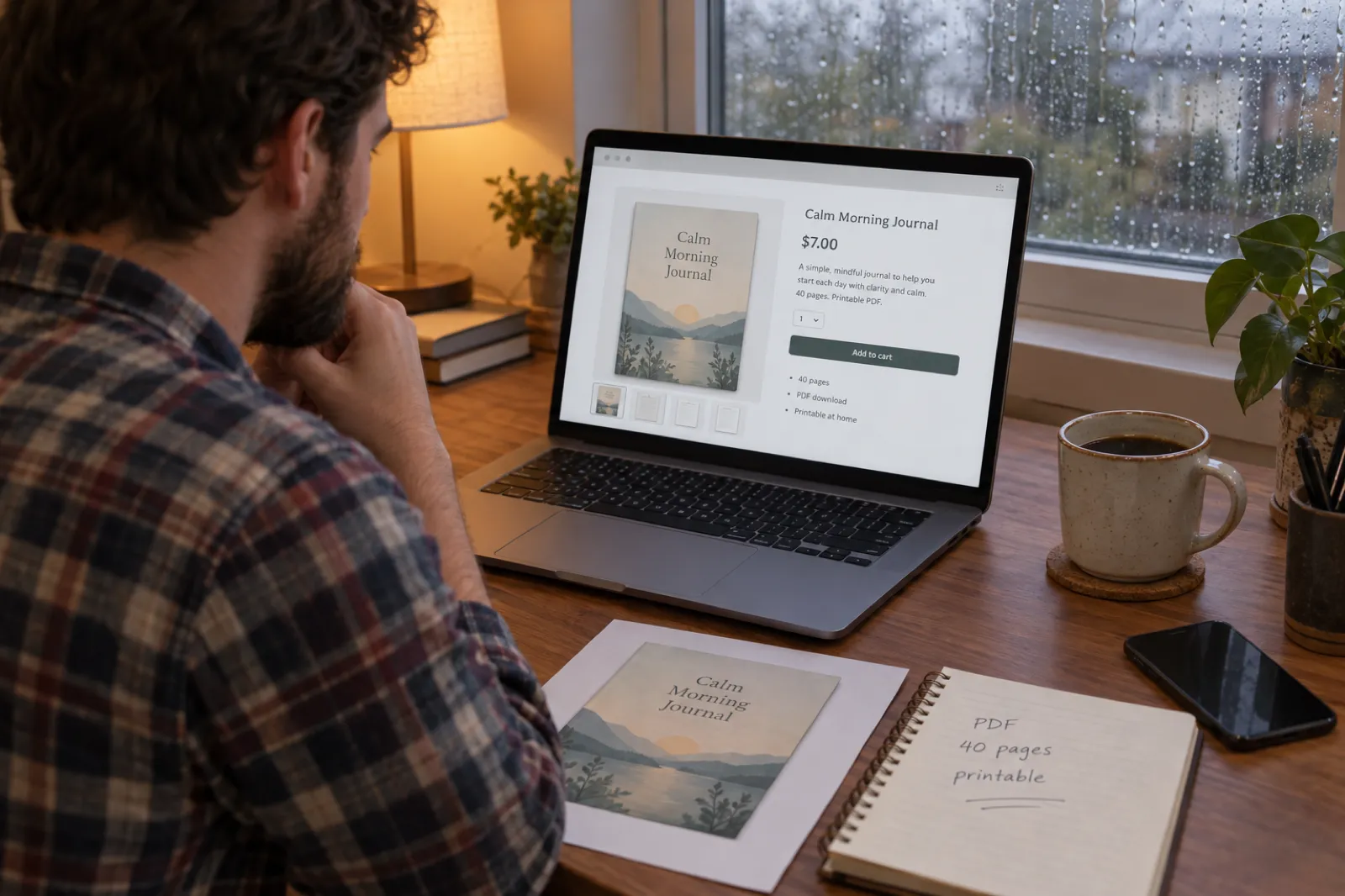
The product. "30-Day Walking Challenge for Beginners": a welcome page with a check-with-your-doctor note, 30 daily pages each with one walking task that builds from 10 minutes, a progress tracker and a finish-line reflection. About 40 pages. The walking tasks are everyday activity rather than a training programme, but the seller still writes them herself, because on Etsy they are the instructions buyers follow.
| Version | Price | Sum | You keep per sale |
|---|---|---|---|
| Printable PDF on Etsy (US) | $7.00 | $7.00 - 9.5% - $0.45 | $5.89 |
| PDF on Gumroad, direct | $7.00 | $7.00 - 12.9% - $0.80 | $5.30 |
| PDF on Payhip, Free plan | $7.00 | $7.00 - 7.9% - $0.30 | $6.15 |
| Paperback on KDP, 6 x 9, 60 pages | $8.99 | 0.50 x $8.99 - $2.30 printing | $2.20 |
At 20 sales a month on Etsy, the PDF keeps $117.80. The paperback earns less per copy but reaches buyers who want something to hold and write in, and the printing cost comes out of each sale, never up front. A 60-page black-ink paperback falls in KDP's flat band (24 to 110 pages) on Amazon.com; the KDP printing cost calculator works out any other size, and shows what a box of copies for a class or a running club costs.
Then the bundle: the challenge, a 90-day tracker and a reflection journal together at a higher price, for buyers who finish the first one. Three products from one idea, all made the same way.
Make the challenge, the tracker and the journal
Draft all three from one idea in Inkfluence AI, edit them, and export print-ready PDFs. Add the KDP paperback files on a paid plan.
Build my bundle freePricing and bundles without guesswork
We do not quote "typical prices" for this niche, because they move with the platform, the season and the quality, and any number we gave would be out of date by the time you read it. What works instead is a method:
- Anchor on the shelf. The ten closest listings on your platform set the range buyers expect. Price inside it, not below it: the cheapest listing rarely has the most sales.
- Price the outcome of using it, not the page count. A 30-page tracker people use for three months is worth more to them than a 100-page journal they never open. Write the listing around use.
- Bundle instead of discounting. A tracker plus a journal plus a challenge is a bigger product without a new idea. Bundles also suit January and September, when people restart routines.
- Check what you keep. The profit check above, or the per-platform Etsy, Gumroad and Payhip fee calculators, shows the number that matters.
If you plan to advertise, our guide to the cheapest ad platforms for digital products has a break-even calculator, and how much you can make selling printables on Etsy sets realistic expectations.
Validate before you build the bundle
A wellbeing product is quick to make, which tempts sellers to make ten at once. Make one, and let buyers tell you which direction to go:
- List the simplest version (the tracker or the challenge) and leave it for four to six weeks.
- Read every review and message. Requests ("can it be undated?", "a version for runners?") are your next products.
- Watch which listing photos get clicks: a printed page being filled in usually beats a flat mock-up.
- Only then build the workbook or bundle, for the audience that bought the first one.
Seasonal timing helps too. January, spring and September are when people restart routines, so have a product listed and reviewed before then. The KDP publishing calendar counts back from a date for paperback journals.
Frequently asked questions
What are good fitness and mental health digital product ideas for 2026?
The ones that are easy to make and easy to understand: printable trackers (movement, mood, sleep routine, habits), guided journals (calm mornings, gratitude, evening wind-down), workbooks (build your own routine, habit reset, stress planning), short challenge guides (a 30-day walking challenge, a 21-day mindset reset) and, if you are qualified, your own training plans. Pair a tracker with a journal or a challenge, and sell them where buyers already search.
What is the easiest digital product to create for fitness beginners?
A printable tracker or a 30-day challenge with a tick-box page for each day. Both are short (30 to 45 pages), need no exercise programme of your own design, and are simple for a beginner buyer to use. A guided journal is the next easiest. Training plans are the hardest, because the routine has to be safe, tested and your own.
Can I sell AI-made fitness products on Etsy?
Trackers, journals and planners made with AI are allowed if you disclose AI use and play a real creative role. Instructions are different: since 22 October 2026 Etsy says the information buyers rely on to use an item, such as patterns, recipes or instructions, must be your own work, not generated by AI. So a workout plan sold on Etsy needs exercises and progressions you wrote yourself. AI can still help with layout, introductions and tidying your own wording.
Should I sell fitness digital products on Etsy or Gumroad?
Etsy if you have no audience yet, because shoppers search there for printables, trackers and journals. Gumroad (or Payhip, which takes a smaller cut on its free plan) if you have followers, a newsletter or coaching clients to send to a checkout. On a $7 product, Etsy leaves you about $5.89, Gumroad $5.30 and Payhip $6.15 per sale, before tax.
Do I need qualifications to sell a workout plan?
It depends where you live and what you claim, so check the rules that apply to you. Practically, buyers trust plans from people who can say why they are qualified to write them, and the platforms will remove listings that make medical claims. If you are not a qualified trainer, sell trackers, journals and challenge guides that support a routine rather than prescribe one, and add a note suggesting buyers check with a doctor before starting a new exercise routine.
What can I say about my fitness or wellbeing product on Etsy?
Describe what the product is and how to use it: a 30-day tracker, a journal with daily prompts, a printable planner. Etsy's medical claims policy allows general wellness benefits but bans claims that a product prevents, treats, heals, diagnoses or cures a disease or condition, restricts claims about weight loss or body transformation, and says a disclaimer does not make a prohibited claim acceptable.
How much should I charge for a fitness tracker or journal?
Look at the ten closest listings on the platform you will sell on and price within that range, then test. The fee calculators on this page show what you keep at any price: a $7 printable on an Etsy US shop leaves about $5.89 after Etsy's listing, transaction and payment fees. Bundles (a tracker, a journal and a challenge together) let you charge more without making a new product.
Can I make a fitness journal or workbook with AI?
Yes. Inkfluence AI writes journals, workbooks and challenge guides from a description: it plans the pages, writes prompts, explainers and worksheets, and exports a print-ready PDF. For anything a buyer will follow as exercise instructions, write the routine yourself and use the tool for the structure and the pages around it.
Sources
- Etsy, Medical Claims policy, read 13 Nov 2026 (Etsy blocks automated readers; wording checked through the search index of Etsy's page)
- Etsy Help, What are the fees and taxes for selling on Etsy?, read 13 Nov 2026
- Gumroad Help, Gumroad's fees, read 13 Nov 2026
- Payhip, Pricing, read 28 Oct 2026
- KDP Help, Paperback Printing Cost and Paperback Royalty, read 13 Nov 2026
- Etsy's 22 October 2026 AI update, as covered in our Etsy AI rules guide
- Search impressions: Google Search Console for inkfluenceai.com, 90 days to 11 Nov 2026
Related reading

Inkfluence AI Team
Tips, tutorials, and strategies from the Inkfluence AI team to help you write, publish, and sell ebooks faster.
Helpful links

Ready to write your own book?
Write with AI, make it yours, and export PDF, EPUB and KDP-ready files from one project.
Keep reading
 Marketing
Cheapest Ad Platforms for Ebooks and Digital Products (2026)
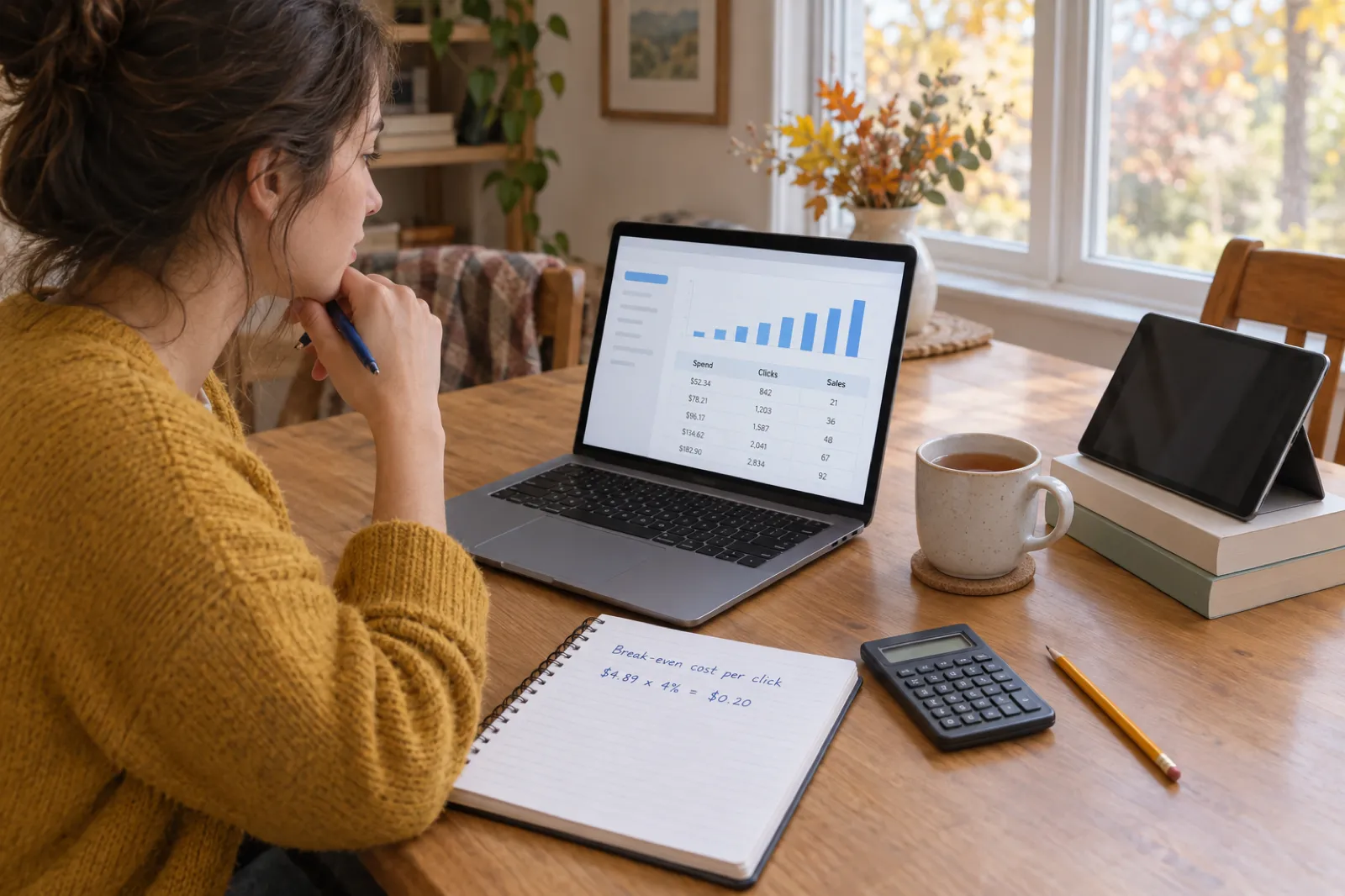
Low-cost advertising for ebooks, printables and digital products in 2026: Amazon Ads, Etsy Ads, Meta, Pinterest, BookBub, Google and TikTok compared on how you pay, the smallest test you can run and published cost data, with a break-even ad cost calculator that tells you the most you can pay per click.
 Selling
Etsy Now Sells Prints of Your Digital Files, Plus a 6.5% Share & Save Refund: What Digital Sellers Should Do
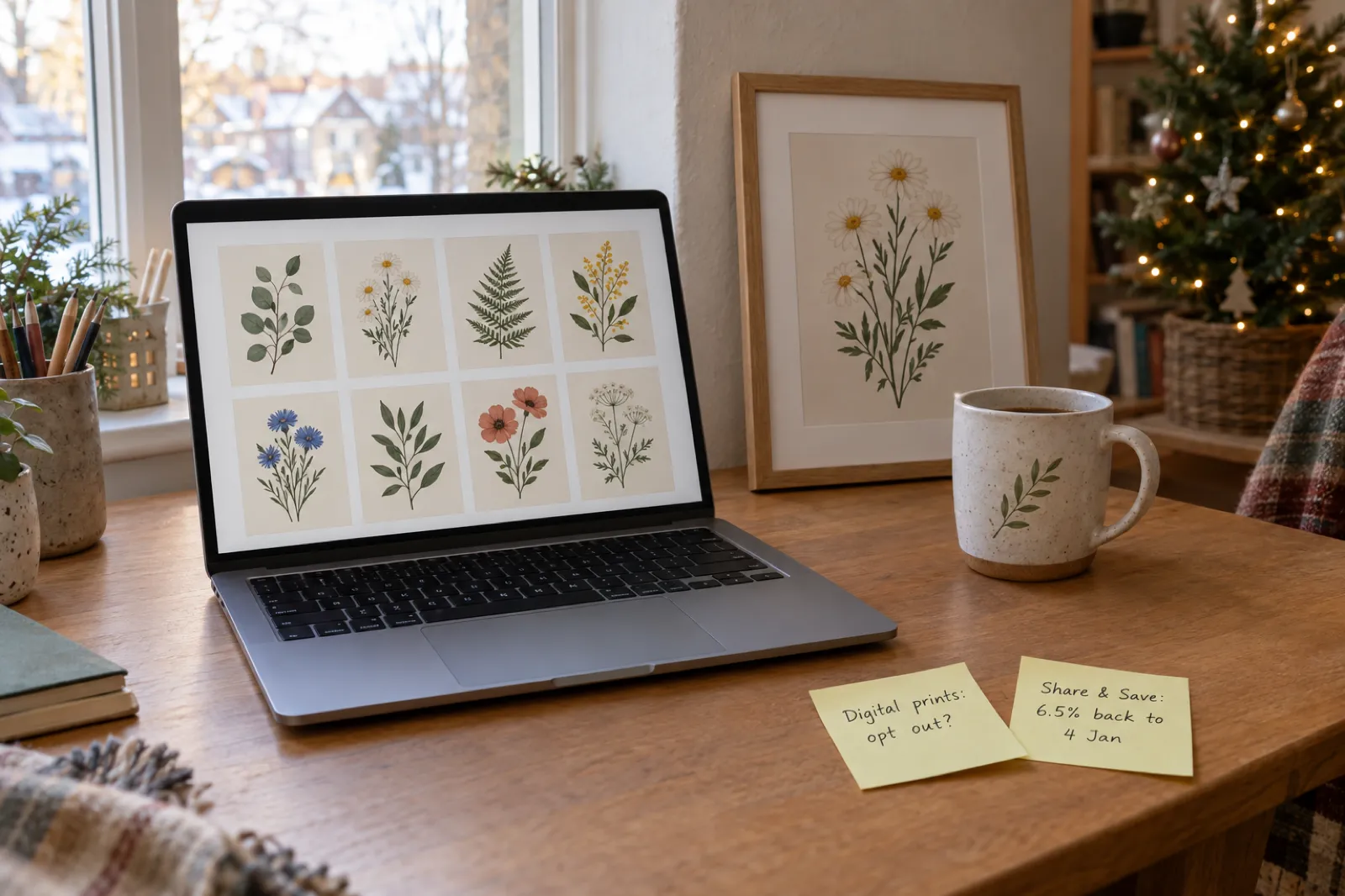
Two Etsy changes land on digital sellers this holiday season. In the US and Canada, buyers of your digital files can now order printed versions from a third-party printer, and shops are included by default. And until 4 January 2027, Share & Save refunds the whole 6.5% transaction fee. What each one means, who should opt out, and a checklist for the weeks before Christmas.
 Publishing
What Changed for Self-Publishers This Month (November 2026)
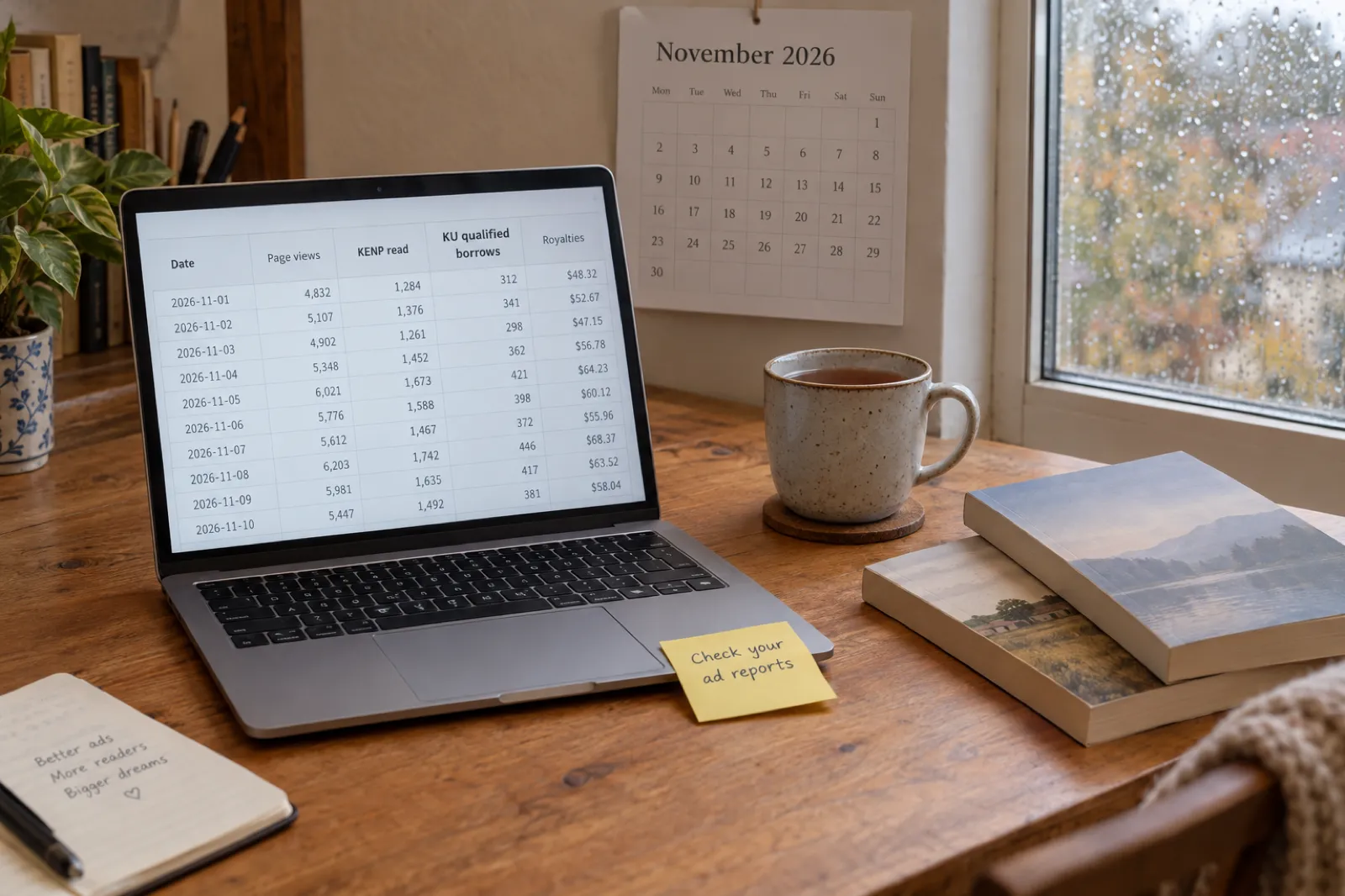
The self-publishing changes that matter in November 2026, each checked at its source: Amazon Ads dropped page-based KENP royalty estimates for "qualified borrows", Etsy prints your digital files and refunds the full 6.5% fee through Share & Save, Spotify audiobooks head to 180+ markets, Smashwords takes pre-orders, and new Gemini and GPT models. What each means and what to do.

Get ebook tips in your inbox
Join creators getting weekly strategies for writing, marketing, and selling ebooks. You also get our free PDF guide, Your First Book in a Weekend.