
How to Write a Health or Wellness Ebook You Can Sell: Claims, Disclaimers, Sources and Platform Rules (2026)
Write and sell a health, fitness, nutrition or wellness ebook without tripping the rules: what the FTC, the UK ASA, Amazon KDP, Etsy and Gumroad say about health claims, a free claim checker and disclaimer builder, a claim rewriter table, and how to cite sources.
Quick Answer
You can sell a health or wellness ebook without being a doctor. Write it as general information, back every factual claim with a cited source, and add a disclaimer page. Keep cure, treatment, guaranteed and precise weight-loss claims out of the title, cover and sales copy: that is where the FTC, the UK's ASA and stores like Etsy enforce.
Health books sell because readers have a real problem and want a plan. That is also why they carry more rules than a novel or a business book. One line on a sales page ("melts belly fat in 14 days") can get an Etsy listing removed or put you on the wrong side of advertising law, even when the book itself is careful and well researched.
This guide is for coaches, personal trainers, nutritionists, yoga teachers, therapists and anyone who wants to turn what they know into a guide they can sell. It covers what you can and cannot claim, how to write a disclaimer that is useful to readers, how to cite sources, and what Amazon KDP, Etsy and Gumroad allow. Every rule here was read on the rule-setter's own page on 13 October 2026, and each one is linked in the sources at the end.
General information, not legal advice
This page explains published rules in plain language. It is not legal advice, and it is not medical advice either. Rules differ by country and change over time. If your book makes claims about a medical condition, sells alongside a product or supplement, or you are unsure about any line, ask a lawyer who works on advertising or health law before you publish. The disclaimer wording below is a starting point for that conversation, not a finished legal document.
The rules at a glance (checked 13 Oct 2026)
Five sets of rules decide what you can say about a health ebook. Two are advertising rules that apply to your marketing (the US Federal Trade Commission and the UK's Advertising Standards Authority, which enforces the CAP Code). Three are store rules that apply to your listing. Here is the short version of each.
| Rule-setter | What it covers | What it says about health claims | Does a disclaimer fix a bad claim? |
|---|---|---|---|
| FTC (US): Health Products Compliance Guidance, Dec 2022 | Advertising: sales pages, ads, emails, social posts, and a book used to promote your own product | Health claims need "competent and reliable scientific evidence", usually randomised controlled human trials. Implied claims count. Testimonials better than typical results are likely deceptive. | No. A disclosure cannot contradict the claim, and "may" or "helps" is not enough on its own. |
| ASA / CAP Code (UK) | Ads and marketing, including on your own website and social accounts. Not the editorial content of books. | Hold evidence before you publish (3.7). Do not discourage essential treatment (12.2). "Cure" is not generally acceptable (12.7). No precise weight loss in a stated period (13.9). Food health claims only from the GB register (15.1.1). | No. The claim itself must be supported. |
| Amazon KDP | Book content, title, cover and product description | No health-specific section. Bans content "meant to mislead customers". Descriptions cannot hold reviews, quotes, testimonials or links. AI-generated content must be disclosed to KDP. | Not addressed |
| Etsy: Medical Claims policy (updated 2 Jun 2026) | Listing title, description and images, and anywhere in your shop | No claims that a product prevents, heals, treats, diagnoses, mitigates or cures a condition. No "replaces your medication" claims. No weight-loss or body transformation claims. | No, in so many words: a disclaimer "does not make a prohibited medical claim acceptable". |
| Gumroad: Prohibited products (revised 16 Sep 2026) | What you sell and how you market it | Prohibits "deceptive marketing practices" and pseudo pharmaceuticals, including weight loss and diet pills. | Not addressed |
The pattern across all five is the same. Writing about health is allowed. Promising a medical outcome, guaranteeing a result, or suggesting someone can skip their doctor is where the trouble starts, and a disclaimer does not undo it.
Book versus marketing: where the rules actually bite
The most useful thing to understand before you write a word is the difference between the book and the selling of the book.
In the US, the FTC's guidance says plainly: "The FTC doesn't regulate the content or accuracy of statements made in independently written and published books, articles, or other non-commercial literature." It gives an example of an author who publishes a book about a herb's supposed curative powers. The book on its own is non-commercial speech. But when a marketer quotes that book to sell a herbal product, the quotes become advertising, and the marketer has to back them up. A second example says that sending buyers "two clicks" away to the book does not get the marketer off the hook.
In the UK, the CAP Code's own introduction lists what it does not cover, and that list includes "editorial content; for example, of the media or of books". What it does cover includes marketing by companies, organisations or sole traders "on their own websites, or in other non-paid-for space online under their control". So your sales page, your Instagram posts and your email launch sequence are in scope, while the chapters of your book generally are not.
Three practical consequences follow:
- Your title, subtitle, cover, blurb and listing carry most of the risk. They are marketing as far as the advertising rules are concerned, and KDP and Etsy apply their content rules to exactly those fields.
- A book that sells your own product is treated more like marketing. If your guide recommends the supplement, programme or coaching package you sell, the claims in it start to look like claims about that product. Coaches using a book as a lead magnet to book clients should write as if every page were a sales page.
- Careful content still matters inside the book. Store rules apply to content as well as listings, readers leave reviews, and a reader who follows bad advice can be hurt. The rules give the book more room, not a free pass.
Who can write a health ebook (and how to describe yourself)
You do not have to be a doctor. Neither the FTC guidance nor the CAP Code asks for a qualification to write a book. Plenty of useful health books come from trainers, cooks, coaches and people who have lived with a condition for years. What matters is that you describe yourself accurately and stay within what you know.
- Use only the titles you hold. In the UK, "dietitian" is a protected title regulated by the Health and Care Professions Council (HCPC); "nutritionist" is not on the HCPC's list. If you are a nutrition coach, say nutrition coach.
- Be ready to show credentials. The CAP Code says health professionals are treated as suitably qualified only if they can provide suitable credentials. If your sales page says "registered", "certified" or "clinically trained", keep the certificate to hand.
- Stay in your lane. A personal trainer can write a brilliant strength plan for beginners. Writing a programme to manage a heart condition is a different book, and that one needs clinical input.
- Say where the ideas come from. "Based on ten years of coaching and the research listed at the back" is honest and builds trust. "The secret doctors don't want you to know" does the opposite.
If you work with clients, our pages for nutritionists, fitness coaches, personal trainers and therapists show the book formats each profession tends to sell, from meal planners to session workbooks.
Plan a book you can promise honestly
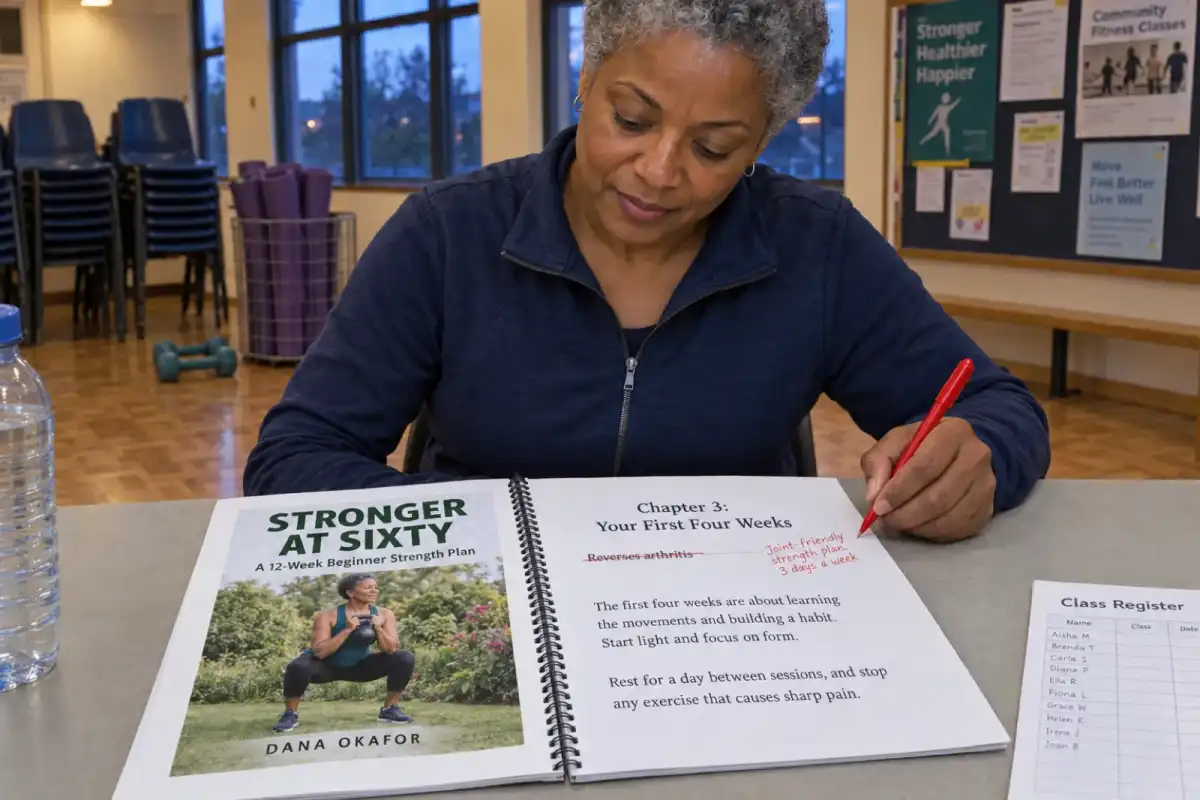
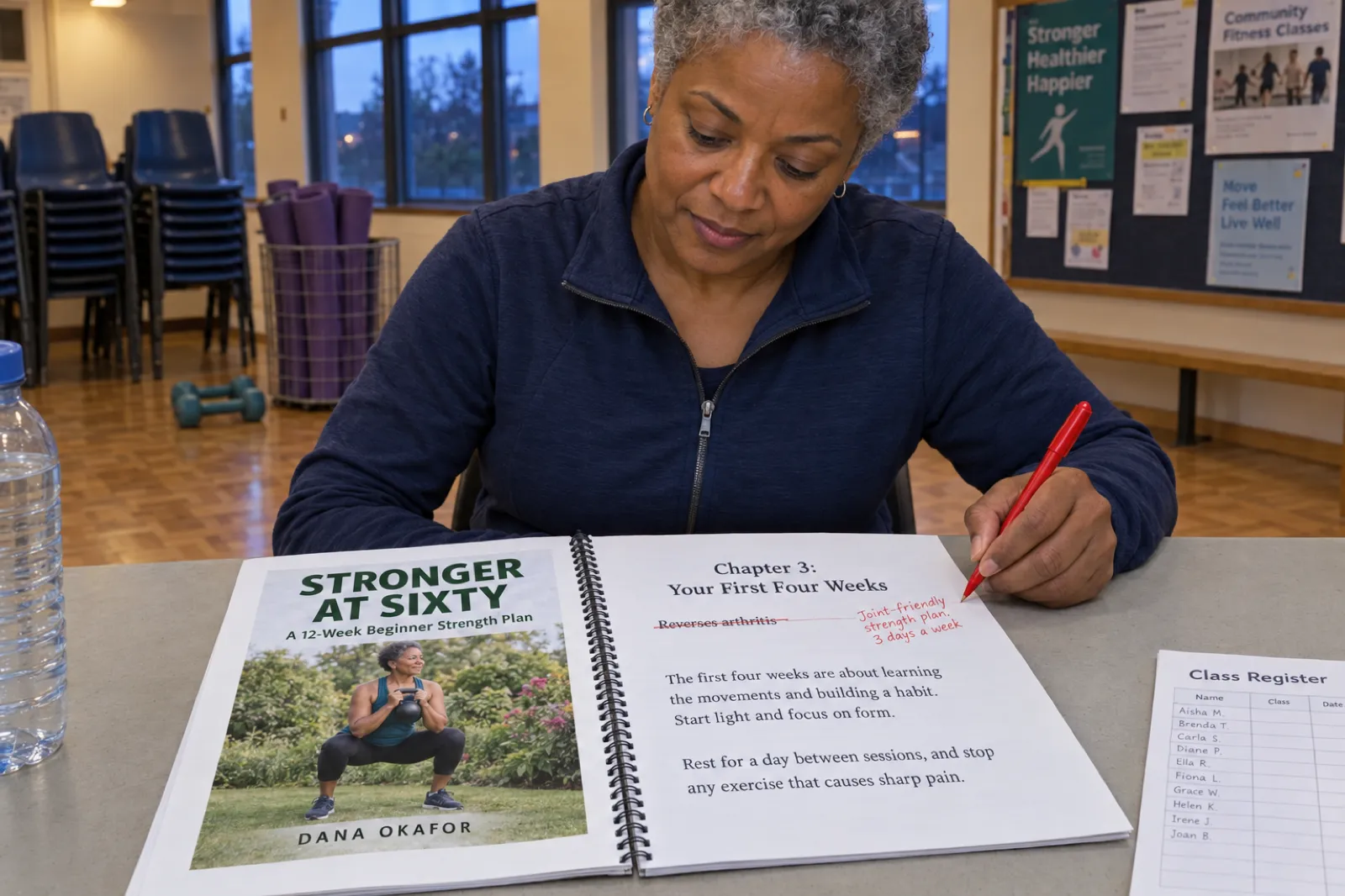
The easiest way to avoid a risky claim is to choose a book whose honest promise is already attractive. "A 6-week beginner strength plan for people over 50, with every session laid out" sells on its own. You do not need to add "reverses ageing" to it.
Health and wellness is a steady category for people writing with Inkfluence AI. Out of the 100,000+ books created in the app up to 13 October 2026, these are the wellness-related book types:
Wellness-related books made in Inkfluence AI, by book type
All books created up to 13 Oct 2026 (100,000+). Bar width = count / largest count.
Counted from the book type of every project in Inkfluence AI on 13 Oct 2026. Books that are both health guides or workout plans, or filed under a health or fitness category, total 3,992 (3.2%).
Health guides are also short and focused. When we measured book length by type in September 2026, the median health guide had 5 chapters and about 8,800 words (roughly 1,750 words a chapter, from 205 measured books). That is a good size for a first paid guide: long enough to give a full plan, short enough to finish and check properly.
Here are common health and wellness book ideas with the honest promise for each and the claim that tends to creep in:
| Book idea | Honest promise that sells | Claim to keep out | Risk |
|---|---|---|---|
| Beginner strength plan | "12 weeks of sessions, 3 days a week, with videos and a progress log" | "Burn fat while you sleep" | Low |
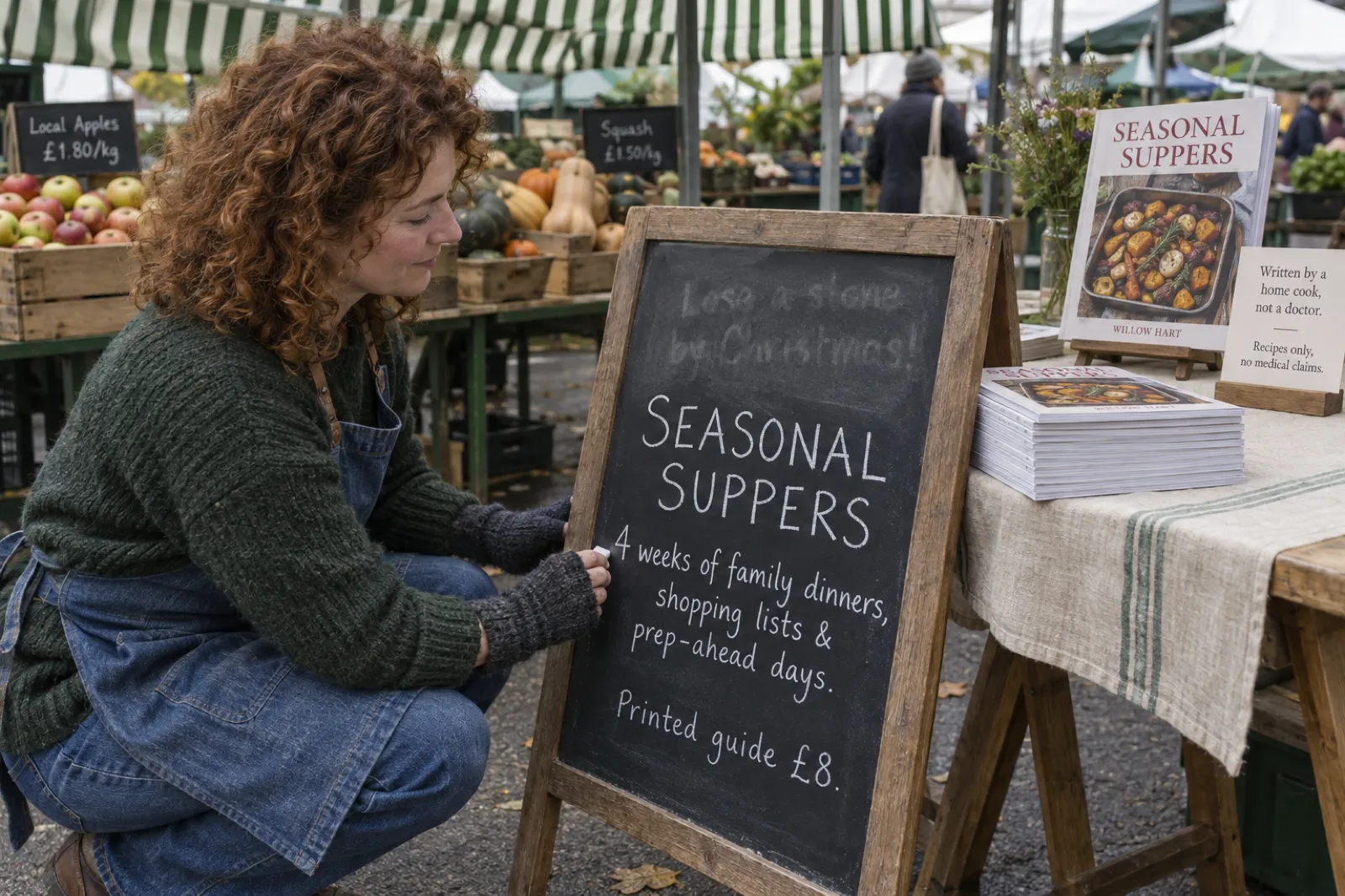
| Family meal planner | "4 weeks of dinners, shopping lists and prep-ahead days" | "Lose a stone in a month" | Low |
| Sleep and wind-down guide | "A 14-night routine and sleep diary" | "Cure your insomnia" | Medium |
| Stress and journaling workbook | "30 prompts and grounding exercises for busy weeks" | "Heal your anxiety without therapy" | Medium |
| Menopause or perimenopause wellbeing guide | "Food, movement and sleep habits, and questions to take to your GP" | "Balance your hormones naturally" | Medium |
| Gut-friendly recipe book | "60 recipes built around fibre-rich foods, with portion notes" | "Fix IBS in 30 days" | High |
| Living with a diagnosed condition | "One person's routines and the questions they wish they had asked" | "Come off your medication" | High: get clinical input |
If your idea is a structured programme, a workout plan or a workbook with logs and prompts is usually a stronger product than a long essay, and fill-in pages are easy to promise honestly. The sleep and stress reset guide walkthrough shows one built end to end, and how to sell fitness ebooks covers formats and pricing.
Turn your method into a structured guide
Describe your health or wellness book in a sentence or two and Inkfluence AI drafts the outline and chapters, each with a step-by-step plan, timings and when to see a professional. You edit, add your sources and your disclaimer, then export.
Start your health guide freeClaim rewriter: risky words and safer versions
One warning before the table. A common tip online is to soften a claim with "may": "may help cure", "can help reverse". The FTC's guidance rejects that directly: "It's not enough to say that the product 'may' have the claimed benefit or 'helps' achieve the claimed benefit." A softened disease claim is still a disease claim. The fix is to change what you promise, not how confidently you promise it.
The right-hand column below describes what the reader gets or does. That is almost always safe, and it is also more persuasive to a buyer who has seen a hundred "miracle" titles.
| Risky claim | Why it is a problem | Safer version |
|---|---|---|
| "Cures IBS" | Disease cure claim. "Cure" is not generally acceptable under CAP 12.7, Etsy bans it, and the FTC expects trial evidence. | "A low-stress eating routine and food diary to bring to your GP or dietitian" |
| "May help reverse type 2 diabetes" | Still a disease claim; "may" does not fix it (FTC). | "Meal ideas and a weekly plan to use alongside the advice of your diabetes team" |
| "Lose 10 lb in 2 weeks" | Precise weight loss in a stated period (CAP 13.9). The ASA treats more than 2 lb a week as unlikely for most people (13.10). Etsy bans weight-loss claims. | "A 6-week eating and walking plan with portion guides and a weekly check-in sheet" |
| "Melt belly fat" | Body transformation claim (banned on Etsy) with an implied effect you would have to prove. | "Strength sessions for every major muscle group, 2 days a week" (matches the NHS adult activity guideline) |
| "Come off your medication" | Discourages essential treatment (CAP 12.2). Etsy bans claims that a product replaces medication or treatment. | "Talk to your prescriber before changing any medication" |
| "Natural alternative to antidepressants" | Etsy names this exact pattern ("an alternative to a named drug or drug category"). Also discourages treatment. | "Daily habits and journaling prompts to use alongside any support you already have" |
| "Clinically proven" | An objective claim. You need the study, and it has to test what you are claiming (CAP 3.7, FTC substantiation). | Cite the actual study and what it measured, or drop the phrase |
| "Doctor-approved" | An endorsement you must be able to prove is genuine (CAP 3.47). | "Reviewed for accuracy by Dr A. Patel, GP, in March 2026" (only if true, with their permission) |
| "Guaranteed results" | CAP 12.9 needs proof before suggesting a therapy is guaranteed to work. | "What most readers can expect in the first month, and what to change if progress stalls" |
| "Detox your liver" / "boost your immune system" | Implied body effects. In the UK, food health claims must come from the authorised GB register (CAP 15.1.1). | "Simple recipes built around vegetables, beans and whole grains" |
| "My clients lost 20 lb" | Testimonial with a dramatic result. The FTC says "results not typical" does not cure it. Not allowed in a KDP description at all. | Share the experience, not the number, and state what a typical reader can expect |
| "Find out if you have a thyroid problem" | Invites self-diagnosis (CAP 12.5 for minor ailments; serious conditions need a professional). | "Symptoms worth raising with your doctor, and the questions to ask" |
Notice that none of the safer versions are dull. They are specific, which is what makes a buyer trust a health book. Specific also suits search: people type "6 week strength plan for beginners", not "miracle transformation".
Free claim checker and disclaimer builder
Paste a title, subtitle, blurb or sales-page paragraph into the checker. It marks words and phrases that commonly cause problems under the rules above, explains why, and suggests a safer direction. The builder below it assembles a disclaimer from the parts that fit your book, with a long version for a disclaimer page and a short version that fits the 500-character copyright page box in Inkfluence AI. Everything runs in your browser; nothing is sent anywhere.
1. Health claim checker
Checks 15 common patterns: cure and treatment claims, named conditions, "replaces your meds", guarantees, "proven", precise weight loss, deadlines, detox-style wording, testimonials, diagnosis and doses. It is a word checker, not a legal review.
Paste a title, blurb or sentence
Red = rewrite before publishing. Amber = check the context. A clear result does not mean a claim is safe: a claim can be implied by images, layout or a combination of harmless words.
2. Disclaimer builder
A starting point only: have a lawyer check it, especially if you sell a product or programme alongside the book.
The book includes:
Full version: disclaimer page
Short version: copyright page
Two things the checker cannot do. It cannot see your cover, and the FTC judges an ad by its "net impression", so a before-and-after photo can make a claim no word on the page makes. And it cannot judge whether your evidence is good enough; only you, and if needed a lawyer, can do that. Treat a clean result as "no obvious red flags", not as approval.
Sources: how to back up and cite claims
Sources do two jobs. They let readers check you, which builds the trust a health book lives on. And they are your evidence file if anyone ever asks: the CAP Code says marketers "must hold documentary evidence" for objective claims before they publish, and the FTC asks for "competent and reliable scientific evidence" behind health claims.
What counts as good evidence
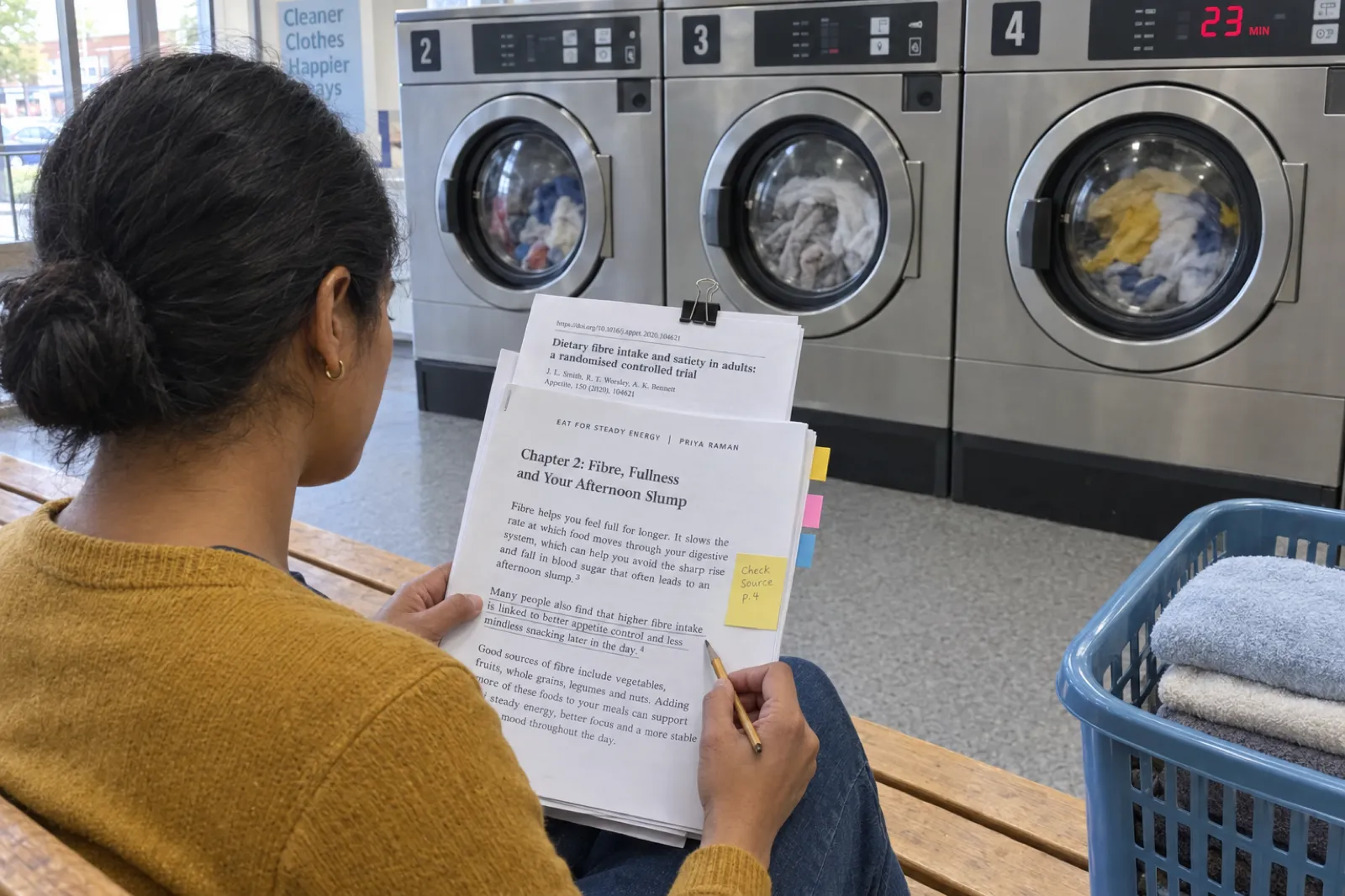
For claims about what something does to the body, the FTC says randomised controlled human trials "are the most reliable form of evidence", and that anecdotes about individual experiences "are never sufficient" on their own. In practice, rank your sources like this:
- National guidance and systematic reviews. NHS, CDC or WHO guidance, and reviews that pool many trials. Best for general recommendations such as how much activity adults need.
- Randomised controlled trials in people. Best for claims about a specific approach. Check the trial tested the thing you are describing, in people like your reader, at the amount you suggest.
- Observational studies. Useful for context ("people who eat more fibre tend to..."), weak for promises.
- Expert opinion and your own experience. Fine for practical tips and stories, when you label them as such.
- Blogs, social posts and press releases. Follow them back to the study they cite, and cite that instead.
How to cite in an ebook
Pick one style and use it the whole way through. Two that work well in ebooks:
- Numbered notes. Put a small number after the sentence, and list the numbered sources at the end of the chapter or in a References section at the back. Ebook readers handle this well and it keeps the text clean.
- Author-date (APA style). Put the author and year in brackets, for example (Grady et al., 2019), with the full reference in an alphabetical list at the back.
APA's own guidance says to include the DOI when a journal article has one, so a full reference looks like this: Grady, J. S., Her, M., Moreno, G., Perez, C., & Yelinek, J. (2019). Emotions in storybooks: A comparison of storybooks that represent ethnic and racial groups in the United States. Psychology of Popular Media Culture, 8(3), 207-217. https://doi.org/10.1037/ppm0000185 (APA's own example). For web guidance, add the date you read it: "NHS. Physical activity guidelines for adults aged 19 to 64. Page last reviewed 22 May 2024. Accessed 13 October 2026." APA also has a separate format for retracted articles, which is a good reminder to check a study has not been retracted before you lean on it.
Keep a claims file
Keep a simple spreadsheet with one row per factual claim: the sentence, the chapter, the source, the exact page or section that supports it, and the date you checked. It takes an evening for a 9,000-word guide. It makes updates easy when guidance changes, and it is exactly the "documentary evidence" the UK code asks you to hold.
Never let AI supply the citations
AI writing tools can produce references that look real and are not. Whatever tool you use, every source in your book should be one you opened and read. Inkfluence AI's health book type is instructed not to invent statistics or studies, but that is an instruction, not a guarantee: check every number and add the sources yourself. Our guide to preventing factual errors in AI non-fiction has a full checking routine, and how to make sure AI book content is original covers plagiarism checks.
Disclaimers: what they do and do not do
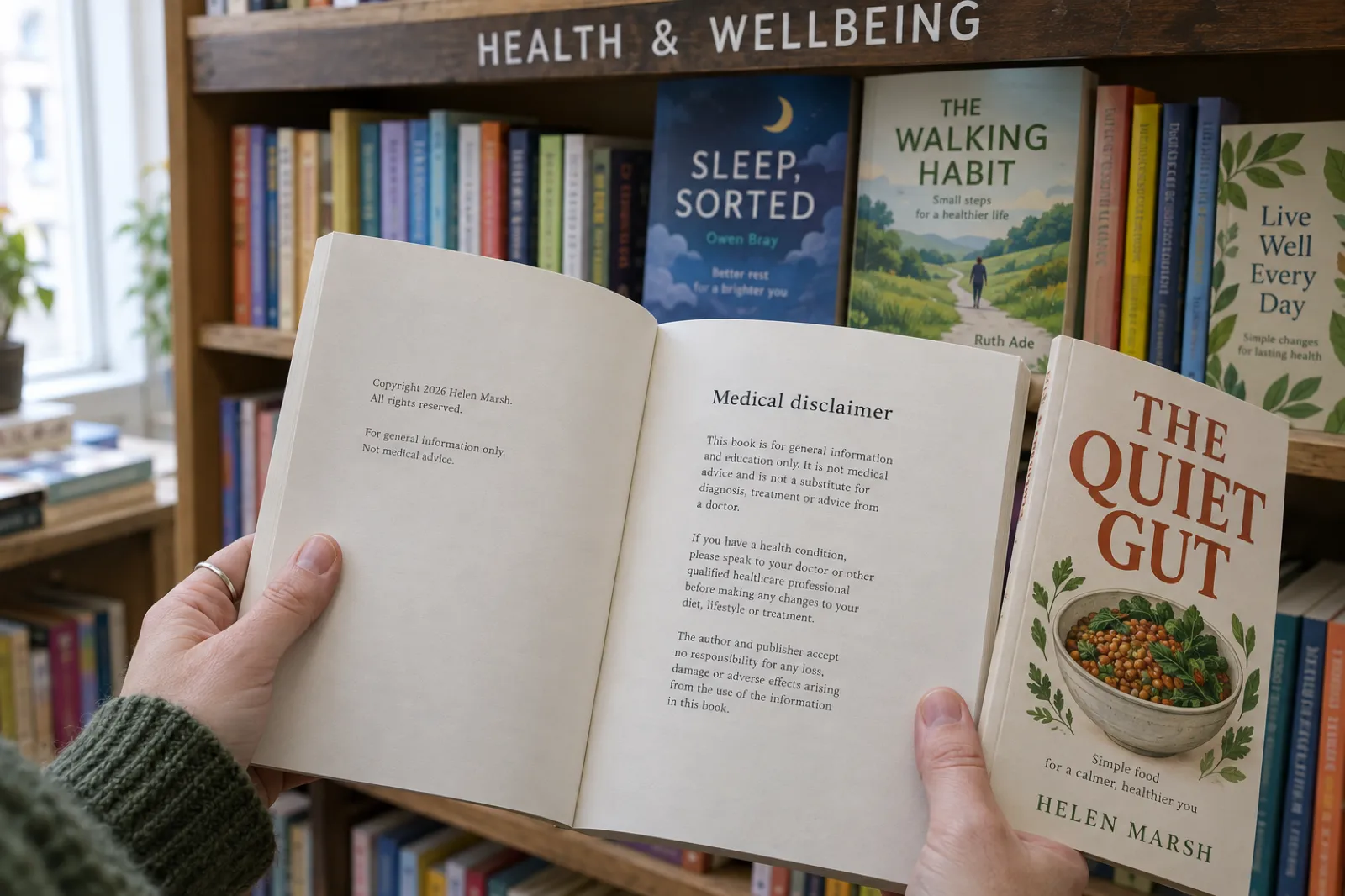
A disclaimer is not a shield. Both the FTC and Etsy say so directly: the FTC says a disclosure "can't directly contradict a claim", and Etsy says "Adding a disclaimer to a listing does not make a prohibited medical claim acceptable." If your cover says "cures arthritis", a disclaimer on page two does not fix it.
What a disclaimer does well:
- Sets the scope. General information for adults, not a personal plan.
- Points readers to care. See a doctor before changing diet, exercise, medication or supplements; call emergency services in an emergency.
- States who you are. "Not a doctor" or "certified trainer, not a medical doctor".
- Flags specific risks. Exercise injury, allergies in recipes, supplement interactions, pregnancy.
- Discloses money and tools. Affiliate links, your own products, and AI-assisted drafting if you want to tell readers.
Here is a plain example you can adapt. The builder above generates versions of it for your book; this one is for a general wellness guide by an author with no medical qualification.
Example disclaimer page (starting point, have a lawyer check it)
This book is for general information and education only. It is not medical advice and is not a substitute for diagnosis, treatment or advice from a doctor or other qualified health professional who knows your situation.
[Your name] is not a doctor or a licensed health professional. The ideas in this book come from personal experience and the published sources listed in the references.
Talk to your doctor or another qualified health professional before you change your diet, exercise, sleep, medication or supplements, especially if you have a medical condition or take any medicine. Never ignore professional medical advice or delay seeking it because of something you have read in this book.
The information in this book was checked against the sources listed as of [month year], but health research changes. To the fullest extent the law allows, the author and publisher are not liable for any loss or harm arising from use of the information in this book.
If you think you may have a medical emergency, call your local emergency number straight away.
Two details matter more than the wording. First, write it in the same plain voice as the rest of the book: a reader skims legalese. Second, add a one-line reminder at the point of risk. "Check with your doctor before starting this plan if you have joint or heart problems" at the top of the strength chapter does more for a reader than a paragraph they read on page two.
Where to put the disclaimer in Inkfluence AI
To be clear about what the app does and does not do: Inkfluence AI does not add a health disclaimer to your book automatically. You add it, in one or both of these places.
Option 1: the copyright page (short version)
- Open your book and click Export.
- Open Header, footer & copyright (for EPUB it is called Title & copyright pages).
- Paste the short version into Copyright page text. It replaces the standard copyright wording, so include your copyright line; the builder's short version already does. The box takes up to 500 characters, and each line becomes its own paragraph.
Your own copyright text is used on paid plans and credit packs, in PDF, KDP interior and EPUB exports. It is not used in DOCX exports, where you edit the document directly. For the rest of the page (ISBN, edition and rights lines), the book copyright page template has a health and fitness version.
Option 2: a disclaimer page (full version, any plan)
- In the editor, open the Chapters panel and click + Add.
- Choose Write manually, title it "Medical disclaimer" and paste the full version.
- Drag it to the top of the chapter list with the six-dot handle. The order in the panel is the order the book exports in, so it lands before chapter one.
This works on every plan and in every format, including the free PDF export. Use both options together for a paid book: a short notice where readers expect legal text, and the full page where they will actually read it.
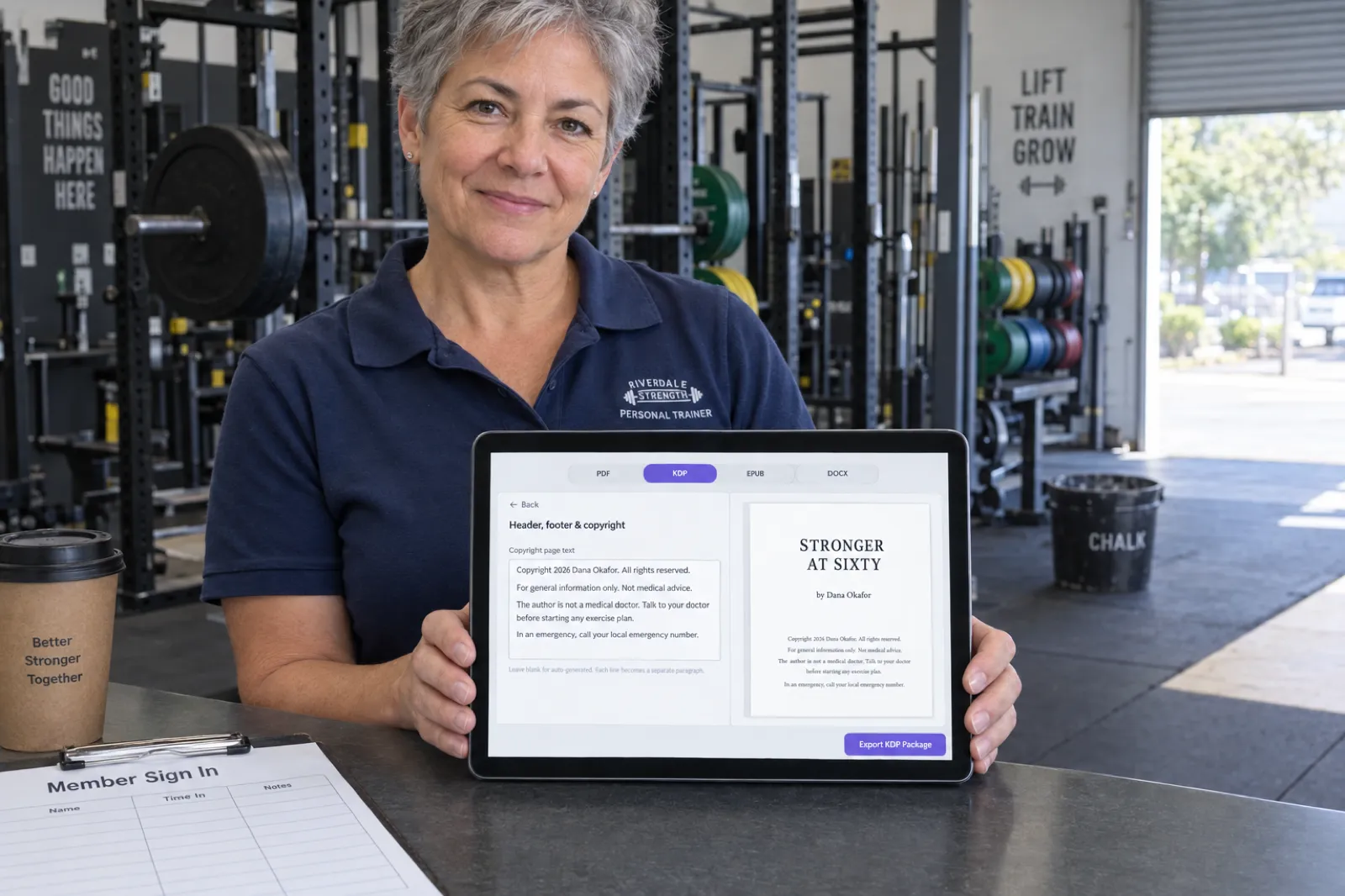
Draft, check and export in one place
Write your guide, add the disclaimer page and your references, then export a PDF, EPUB, Word file or a full KDP package. The free plan covers 5 chapters and exports PDF with a small footer credit.
Write your wellness ebookPlatform rules: KDP, Etsy, Gumroad and your own site
Amazon KDP
KDP's content guidelines, read on 13 October 2026, have no section specific to health or medical books. The general rules still decide what gets through:
- No misleading content. "We do not allow descriptive content meant to mislead customers or that doesn't accurately represent the content of the book." The guidelines apply to "title, cover art, and product description", not just the text.
- Description limits. KDP's metadata guidelines bar reviews, quotes or testimonials, requests for reviews, phone numbers, email addresses and website URLs, and time-sensitive information from the description. That rules out "my clients lost 20 lb" on the product page.
- Title limits. No references to sales rank ("bestselling") or promotions ("free") in the title or subtitle.
- Keywords and categories must not mislead. Do not tag a general wellness guide with a disease keyword to borrow its traffic.
- AI disclosure. KDP requires you to tell it about AI-generated content (text, images or translations) when you publish. Our KDP AI disclosure guide explains which box to tick.
For the files themselves, see how to format a book for KDP and the KDP cover size and spine width calculator; for the whole route from finished book to live listing, how to publish AI-generated books on KDP.
Etsy
Etsy is the strictest of the three, and its rules apply to digital downloads such as printable planners just as much as physical products. Its Medical Claims policy (last updated 2 June 2026) defines a medical claim as "any statement suggesting that a product can affect a person's health, body, or medical condition, whether made in the title, description, or images of a listing", and then bans, "regardless of accuracy or legality":
- claims that a product "prevents, heals, treats, diagnoses, mitigates, or cures a disease or medical condition";
- claims that a product is a substitute for, or as effective as, a prescription drug, over-the-counter medicine, vaccine or procedure, including "an alternative to a named drug or drug category";
- claims related to skin bleaching or whitening, weight loss or body transformation, sexual dysfunction, and regulatory approval of supplements.
The policy does allow listings to "describe general wellness benefits", and it allows testimonials as long as they make no prohibited claims. For a fitness or diet ebook on Etsy, that means describing the product itself: "28-page printable meal planner with shopping lists" rather than "lose weight fast". Etsy can remove a listing over a claim anywhere in your shop, including your images. Etsy also has its own AI rules, covered in Etsy AI disclosure explained, and our guide to selling AI-generated books on Etsy covers listings and files.
Gumroad
Gumroad's prohibited products list (last revised 16 September 2026) has no ebook-specific health rule, but it prohibits "deceptive marketing practices" and "pseudo pharmaceuticals (including anti-aging pills, sexual stimulants, weight loss pills, diet pills)". An ebook is fine; a sales page full of guaranteed results is the risk, and if you bundle the guide with a supplement you are into prohibited territory. For a side-by-side of the two stores, see Etsy vs Gumroad for ebook sellers and how to sell ebooks on Etsy and Gumroad.
Your own website, emails and ads
This is where the advertising rules apply in full. In the US, the FTC treats your sales page, ads, emails and social posts as advertising, and judges them by the "net impression" a reader takes away, including implied claims. In the UK, the CAP Code covers marketing on your own website and social accounts. Three habits keep you safe:
- Keep your claims file (above) for every factual line on the sales page, not just in the book.
- Use testimonials that are genuine (the CAP Code says you must hold evidence of that and contact details for the person), typical, and about the experience rather than a number.
- Price and describe it honestly. Our guide to pricing an ebook has realistic ranges by format.
Write it with Inkfluence AI, step by step
Inkfluence AI is built for exactly this kind of book: it turns a coaching method into a structured health guide with a plan in every chapter, then formats and exports it. It is also clear about its job: it drafts and formats, and you remain the author who checks, sources and signs off.
- Describe the book. On the dashboard, write a sentence or two: who it is for, what they will do, and over what time. "A 6-week beginner strength plan for women over 50, 3 sessions a week, with a progress log" gives a sharper book than "a fitness book". Inkfluence AI picks the book type from your description; protocol and plan books get the Health & Wellness structure, while books about living with or overcoming something are written in a warmer self-help structure.
- Check the outline. Each chapter should cover a different topic or phase. Remove any chapter title that promises an outcome you cannot back up.
- Generate the chapters. Each Health & Wellness chapter opens with what it covers and what the reader can expect, explains the "why" in plain language, gives a plan with timings and frequencies, says when to see a professional, and ends with common mistakes or troubleshooting. The writing is instructed to avoid guarantees and diagnostic certainty, avoid advice to ignore licensed care, and not invent statistics or studies.
- Edit as the expert. This is the step that makes it your book. Add your own examples, cut anything you would not say to a client, and run your blurb and chapter titles through the checker above. The AI health book generator page shows the kind of output to expect. Nothing the AI writes is medical advice or medically reviewed.
- Add sources. Put numbered notes in the text and a References chapter at the end, from your claims file.
- Add the disclaimer. A "Medical disclaimer" chapter at the front, plus the short version in Copyright page text if you are on a paid plan or credit pack.
- Add worksheets. Logs, trackers and reflection prompts make a guide more useful and easier to sell honestly. See how to create a workbook with AI and how to create a guided journal.
- Design the cover. Keep the cover promise as careful as the blurb: no before-and-after bodies, no "cure" in the subtitle. The AI book cover generator makes covers from your title and style; AI cover art is not on the free plan.
- Export. The free plan exports PDF with a footer credit and a closing credit page. Creator ($9.99 a month) and Premium ($19.99 a month) plans, and any credit pack, unlock EPUB, Word, unbranded PDF and the KDP package (print interior, full-wrap paperback cover, Kindle EPUB and a READ ME file). Prices are on the pricing page.
Writing about a cookbook-style guide instead? The cookbook guide covers recipe testing and measurements, and the AI cookbook generator handles recipe layouts. For a self-help angle, see how to write a self-help book, our list of self-help book ideas and the AI self-help book writer. Coaches comparing tools for worksheets and client materials can read the best AI for workbooks, journals and coaching, and non-fiction authors more generally the best AI for writing non-fiction.
Your method, written up properly
Start with five free chapters. Every chapter comes with a clear plan, timings and when to see a professional, ready for your sources and your disclaimer.
Try Inkfluence AI freeHow it compares with other ways to write the book (13 Oct 2026)
| Approach | What you get | What you still do | Cost |
|---|---|---|---|
| Inkfluence AI (Health & Wellness book type) | Outline, full chapters with plans, timings and warning signs, editor, covers, PDF/EPUB/Word/KDP export | Check facts, add sources and the disclaimer, final edit | Free for 5 chapters (PDF with credit); Creator $9.99/mo; Premium $19.99/mo |
| General AI chat assistant | Text in a chat window, chapter by chapter | Keep structure consistent, format, design a cover, build the files | Varies by service |
| Write it yourself in a word processor | Full control | Everything, including formatting and the cover | Your time |
| Hire a health writer or ghostwriter | A professional draft, sometimes with clinical review | Brief them, review, publish | Quote-based |
Whichever route you take, the checks in this guide are the same: they belong to the author, not the tool. If you are weighing AI against hiring help in general, AI vs ghostwriter cost breaks the numbers down, and can AI-written books be copyrighted covers ownership.
Pre-publish checklist for a health or wellness ebook
- Title, subtitle and cover make no cure, treatment, guarantee or precise weight-loss claim.
- Blurb and listing pass the claim checker with no red results, and every amber one has been read in context.
- Every factual claim in the book has a source you have opened and read, listed in your claims file.
- References are in one consistent style, with DOIs for journal articles and access dates for web pages.
- No statistic, study or quote came from an AI tool without being traced to its source.
- Your credentials are described exactly, with no protected title you do not hold.
- A full disclaimer page sits before chapter one; a short version is on the copyright page.
- Risky chapters (exercise, fasting, supplements) carry a one-line reminder at the start.
- Nothing tells readers to stop, reduce or replace medication or treatment.
- Testimonials on your sales page are genuine, typical and about the experience; none are in your KDP description.
- Store rules checked: Etsy's Medical Claims policy for Etsy listings, KDP's content and metadata guidelines for Amazon, Gumroad's prohibited list for Gumroad.
- KDP's AI question answered honestly if you used AI for text, images or translations.
- If the book sells your own product or programme, a lawyer has read the claims.
Ready to write it?
Describe your guide, get a full draft with a plan in every chapter, and spend your time on the part only you can do: the expertise, the sources and the final check.
Start writing freeFrequently asked questions
Can I sell a health ebook if I am not a doctor?
Yes. Coaches, trainers, nutritionists and people writing from their own experience sell health and wellness ebooks. Neither the FTC guidance nor the UK advertising code requires a qualification to write a book. What they police is the marketing: claims to cure or treat disease, guaranteed or precise results, and credentials you cannot show. Write it as general information, cite your sources and add a disclaimer page. This is general information, not legal advice.
What should a medical disclaimer in a book say?
Say that the book is general information, not medical advice; that it does not replace a doctor or other qualified professional; that readers should talk to their doctor before changing diet, exercise, medication or supplements; who you are and are not (for example, "not a doctor"); and what to do in an emergency. Add lines for exercise, nutrition, supplements, pregnancy or mental health if the book covers them. Use the builder on this page as a starting point and have a lawyer check it.
Does a disclaimer protect me if my book makes a health claim?
No. A disclaimer sets expectations, but it does not fix a misleading claim. The FTC says a disclosure cannot contradict the claim it sits next to, and Etsy says adding a disclaimer does not make a prohibited medical claim acceptable. Remove the claim instead.
Where do I put the disclaimer in an ebook?
Put a short version on the copyright page and a full version on its own page in the front matter, before chapter one, so readers see it before any advice. Repeat a one-line version next to risky sections such as an exercise plan or a fasting chapter. In Inkfluence AI, paste the short version into Copyright page text in the Export window (paid plans and credit packs, up to 500 characters), and add the full version as a chapter called "Medical disclaimer" dragged to the top.
Can I say my book will help people lose weight?
Be careful. In the UK, ads must not claim people can lose precise amounts of weight in a stated period, and the ASA treats more than 2 lb a week as unlikely for most people. Etsy bans weight-loss and body transformation claims in listings, even with a disclaimer. Describe the plan instead: "a 6-week eating and walking plan with portion guides and a weekly check-in sheet".
Does Amazon KDP allow health and diet books?
Yes. KDP's content guidelines (checked 13 Oct 2026) have no health-specific section, but they bar content "meant to mislead customers", apply to the title, cover and description, and require you to tell KDP if text, images or translations are AI-generated. KDP descriptions cannot include reviews, quotes, testimonials, website links or time-sensitive offers.
How do I cite sources in a health ebook?
Pick one style and use it everywhere. A simple choice is numbered notes in the text with a References list at the end of each chapter or the book, or author-date citations such as (Grady et al., 2019) in APA style. Include the DOI for journal articles, the date you checked web guidance, and prefer systematic reviews, randomised trials and national guidance over blogs.
Can AI write a health ebook?
AI can draft one, but you are the author and you are responsible for every claim. Inkfluence AI's health book type is instructed to avoid guarantees and diagnostic certainty, include warning signs for when to see a professional, and not invent statistics or studies. It does not give medical advice and nothing it writes is medically reviewed, so check every fact, add your sources and add your own disclaimer before you publish.
Do I need to show credentials on a health ebook?
Only claim the credentials you hold, and be precise. In the UK some titles are protected by law: "dietitian" is a protected title regulated by the HCPC, while "nutritionist" is not on that list. The ASA says health professionals are treated as suitably qualified only if they can provide suitable credentials. If you are a coach, say coach.
Can I use client testimonials to sell a wellness ebook?
On your own sales page, only genuine ones you can prove, and only if the results are typical or you clearly say what typical readers can expect. The FTC says "results not typical" does not cure a misleading testimonial. On Amazon, the book description cannot carry testimonials at all. On Etsy, testimonials must not make prohibited medical claims.
Sources
Every external rule on this page was read on the source below on 13 October 2026. Quotes are from those pages. Inkfluence AI facts were checked against the app's code on the same day.
- FTC: Health Products Compliance Guidance (December 2022; competent and reliable scientific evidence, randomised controlled trials, implied claims and net impression, "may" and "helps" qualifiers, disclosures that contradict a claim, testimonials and typical results, third-party literature and books, Examples 50 and 51), checked 13 Oct 2026
- ASA / CAP Code section 12: Medicines, medical devices, health-related products and beauty products (rules 12.1, 12.2, 12.3, 12.5, 12.6, 12.7, 12.9), checked 13 Oct 2026
- ASA / CAP Code section 13: Weight control and slimming (rules 13.1, 13.4, 13.5, 13.9, 13.10), checked 13 Oct 2026
- ASA / CAP Code section 15: Food, food supplements and associated health or nutrition claims (rules 15.1, 15.1.1, 15.6.2), checked 13 Oct 2026
- ASA / CAP Code section 3: Misleading advertising (rules 3.7, 3.47, 3.49), checked 13 Oct 2026
- ASA: The CAP Code and its Introduction (scope clause I h, own websites; II k, editorial content of books excluded), checked 13 Oct 2026
- GOV.UK: Great Britain nutrition and health claims (NHC) register (last updated 19 May 2026), checked 13 Oct 2026
- Amazon KDP: Content Guidelines (misleading content, title/cover/description scope, AI-generated content disclosure), checked 13 Oct 2026
- Amazon KDP: Metadata Guidelines for Books (description, title and keyword rules), checked 13 Oct 2026
- Etsy: Medical Claims policy (last updated 2 Jun 2026), checked 13 Oct 2026
- Etsy: Prohibited Items Policy (items making medical claims), checked 13 Oct 2026
- Gumroad: Prohibited products (last revised 16 Sep 2026; deceptive marketing, pseudo pharmaceuticals), checked 13 Oct 2026
- HCPC: The professions we regulate (dietitian as a protected title), checked 13 Oct 2026
- NHS: Physical activity guidelines for adults aged 19 to 64 (150 minutes moderate or 75 minutes vigorous a week, strength on 2 days; page last reviewed 22 May 2024), checked 13 Oct 2026
- APA Style: Journal article references (DOI rule, example reference, retracted articles), checked 13 Oct 2026
- Inkfluence AI book counts by type: all projects (100,000+), counted 13 Oct 2026. Median health guide length: Inkfluence AI book length by type, 15 Sep 2026 (205 measured books); see AI book writing statistics.
Related reading
- AI Health Book Generator
- AI Ebook Generator
- How to Sell Fitness Ebooks
- How to Prevent Factual Errors in AI Non-Fiction
- How to Format a Book for Amazon KDP (2026)
- KDP Cover Size and Spine Width Calculator
- Inkfluence AI for Life Coaches
- Inkfluence AI for Self-Help Authors
- How to Write a Self-Help Book
- Book Copyright Page Template

Founder, Inkfluence AI
Sam is the founder of Inkfluence AI. He built the platform to make book creation accessible to everyone - from first-time authors to seasoned publishers.
Helpful links
Ready to Create Your Own Ebook?
Start writing with AI-powered tools, professional templates, and multi-format export.
Get Started FreeRelated Articles
 Children's Books
 Children's Book Word Count and Page Count by Age (2026): Board Books to Middle Grade, with Real Picture-Book Data
How many words and pages a children's book needs, from board books to young adult, with every range sourced to a publisher or editor and dated, words per page from real picture books by age band, and a word-budget calculator that checks KDP's 24-page minimum.
 Publishing
 Do You Need an ISBN? Free vs Bought, Cost by Country, and Which Formats Need One (2026)
When a self-published book needs an ISBN and when it does not, what one costs in the US, UK, Canada, Australia, New Zealand, India, Germany, Italy and France (checked at each agency on 13 October 2026), free ISBNs from KDP, IngramSpark and Draft2Digital, and a picker that tells you how many you need.
 Publishing
 IngramSpark AI Policy (2026): What It Accepts, the Setup Question and the "Assisted By" Credit
IngramSpark accepts AI-drafted books with significant human editing and the "Assisted By - Generative AI" credit, and refuses works created solely with generative AI. Its exact wording, covers and translations, how it differs from KDP, a checker for your book, and an editing workflow.
Get ebook tips in your inbox
Join creators getting weekly strategies for writing, marketing, and selling ebooks.