
AI Workout Plan Generator
From a Brief to a Programme You Can Sell
Describe the goal, level, equipment and weeks. Get a structured programme ebook: Day 1 to Day 7 schedules, an exercise library with form cues, progression, a nutrition chapter and a tracker, exported as a PDF or Kindle EPUB with your name on it.
Built for coaches who need a lead magnet this week, trainers who want to productise their programming, and publishers who know that "fitness" is crowded and "fifteen-minute strength for desk workers" is not.
Updated October 2026 · By Sam May, Founder of Inkfluence AI
Quick answer
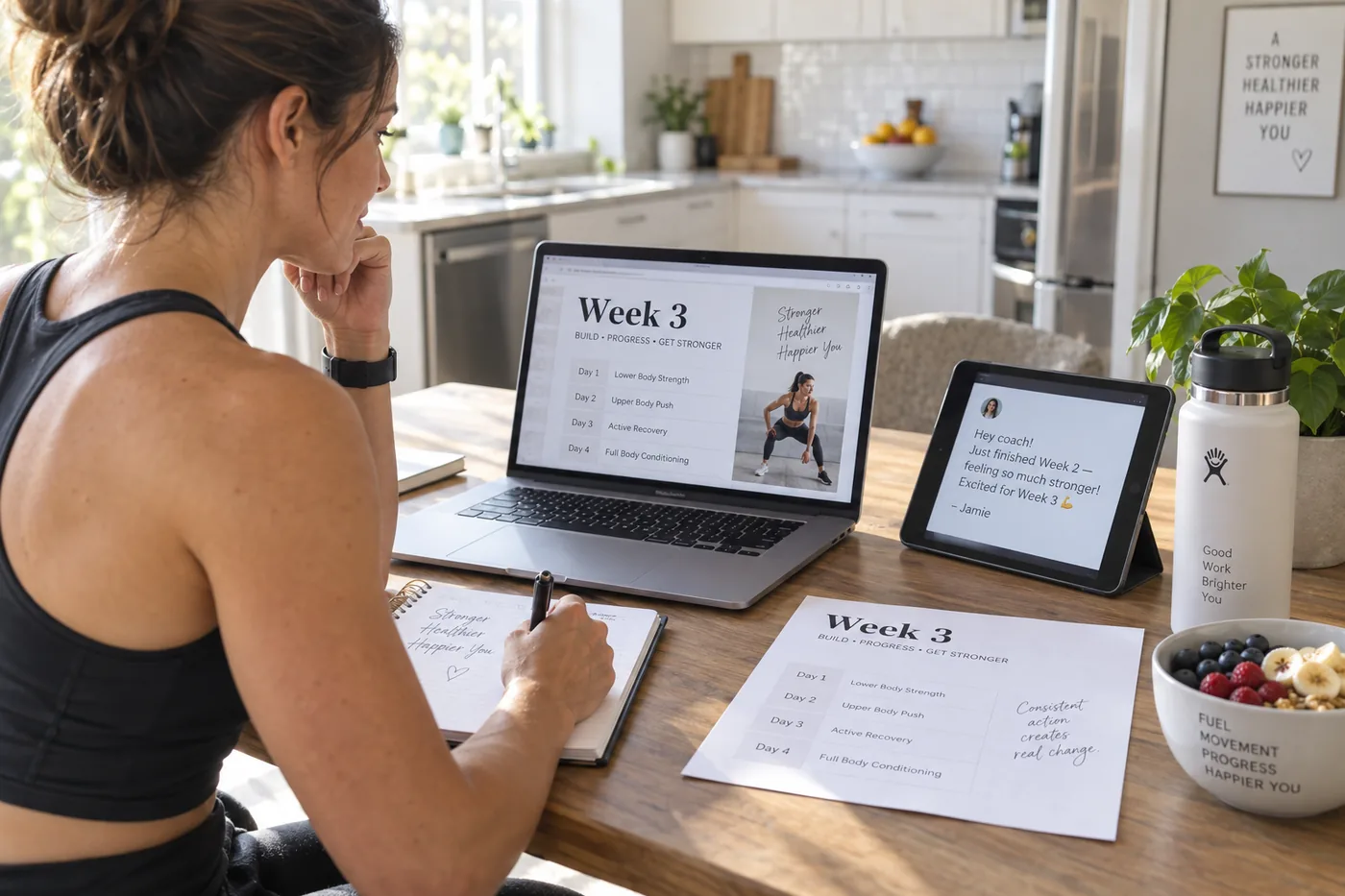
An AI workout plan generator turns a short brief into a complete programme ebook. Inkfluence AI does it with a workout-plan blueprint: the book is planned as an introduction, a safety chapter, weekly training blocks, an exercise library, a nutrition chapter and a tracker, then written chapter by chapter in a consistent Day 1 to Day 7 format and exported as PDF or Kindle EPUB with a cover. The free plan writes five chapters; Creator at $9.99 writes 35 a month, about three programmes, with the Inkfluence credit removed. Prompt templates, the arithmetic on what a plan earns, and the demand figures are below; the AI ebook generator is the same workspace for any other book.
What a finished workout plan ebook contains
The blueprint plans these parts before a word is written; you can reorder or drop any of them at the outline stage.
| Part | What it holds | Chapters |
|---|---|---|
| Introduction and philosophy | Who the programme is for, the promise, how to read the weeks | 1 |
| How to train safely | Warm-up, cool-down, form principles, when to stop, medical disclaimer | 1 |
| Weekly blocks | Day 1 to Day 7 per week: exercises, sets, reps or duration, rest, progression note | 4 to 8 |
| Exercise library | Every movement described with form cues, modifications and common mistakes | 1 to 2 |
| Nutrition guidance | Calorie and protein targets for the goal, sample days, hydration | 1 |
| Tracking and next steps | Printable tracker, how to progress after the programme, upsell to coaching | 1 |
A 6-week programme is usually 8 to 12 chapters at 1,000 to 1,500 words each. Chapter count is the length lever; there is no page target to type in.
Any programme format
Strength training
Compound lifts, hypertrophy blocks, progressive overload written into each week
HIIT and conditioning
Interval structures, work-to-rest ratios, time-capped sessions
Bodyweight and home
No-equipment programmes with regressions and progressions per movement
30-day challenges
Day-numbered format with a tracker, the classic lead-magnet shape
Yoga and mobility
Sequences, breathing cues, hold times, progressive flexibility
Powerlifting blocks
Squat, bench and deadlift periodisation with deload weeks
Running and endurance
Week-by-week mileage, cross-training, taper
Fat-loss programmes
Strength plus cardio splits paired with a nutrition chapter
Beginner foundations
Movement patterns, habit building, low injury risk
How to generate a workout plan ebook
Describe the programme
Goal, level, equipment, days per week, duration and audience in a few sentences. "A 6-week strength programme for women over 40, three gym days a week, building confidence" is enough.
Approve the chapter plan
The outline lands in about a minute: introduction, safety, weekly blocks, exercise library, nutrition, tracker. Reorder or rename before a word is written.
Let the chapters write
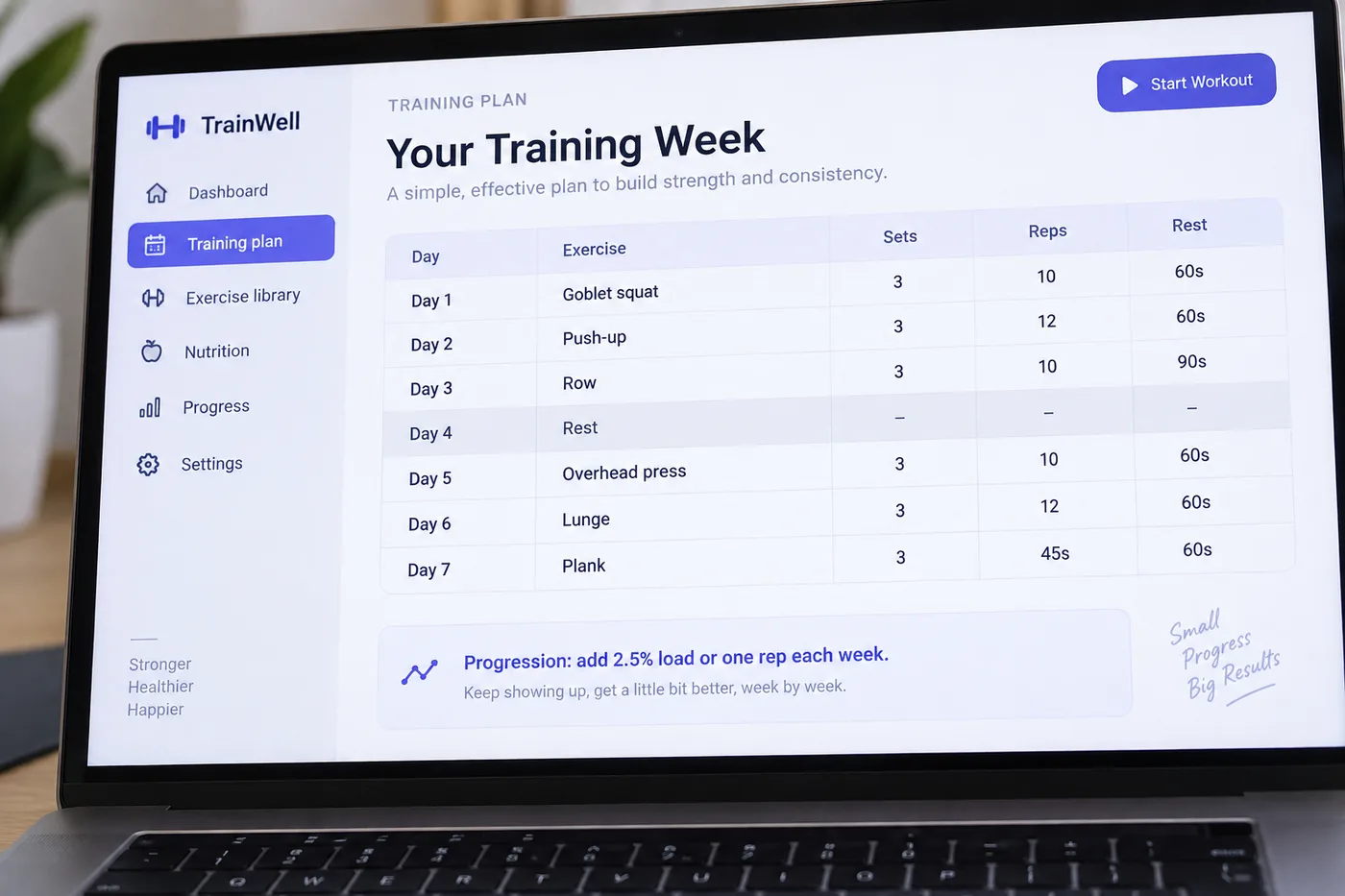
Each week comes out as a Day 1 to Day 7 schedule with exercises, sets, reps or durations, rest and a progression note, in the voice you set.
Review and add your method
Run the chapter review for quoted fixes, then add the cues, substitutions and stories only a coach has. This is the part clients pay for.
Cover, file, listing
Cover designer, then PDF for Gumroad, Etsy or your site and Kindle EPUB for KDP. On any paid plan the Inkfluence credit comes off and your name goes on.
Sell it or give it away
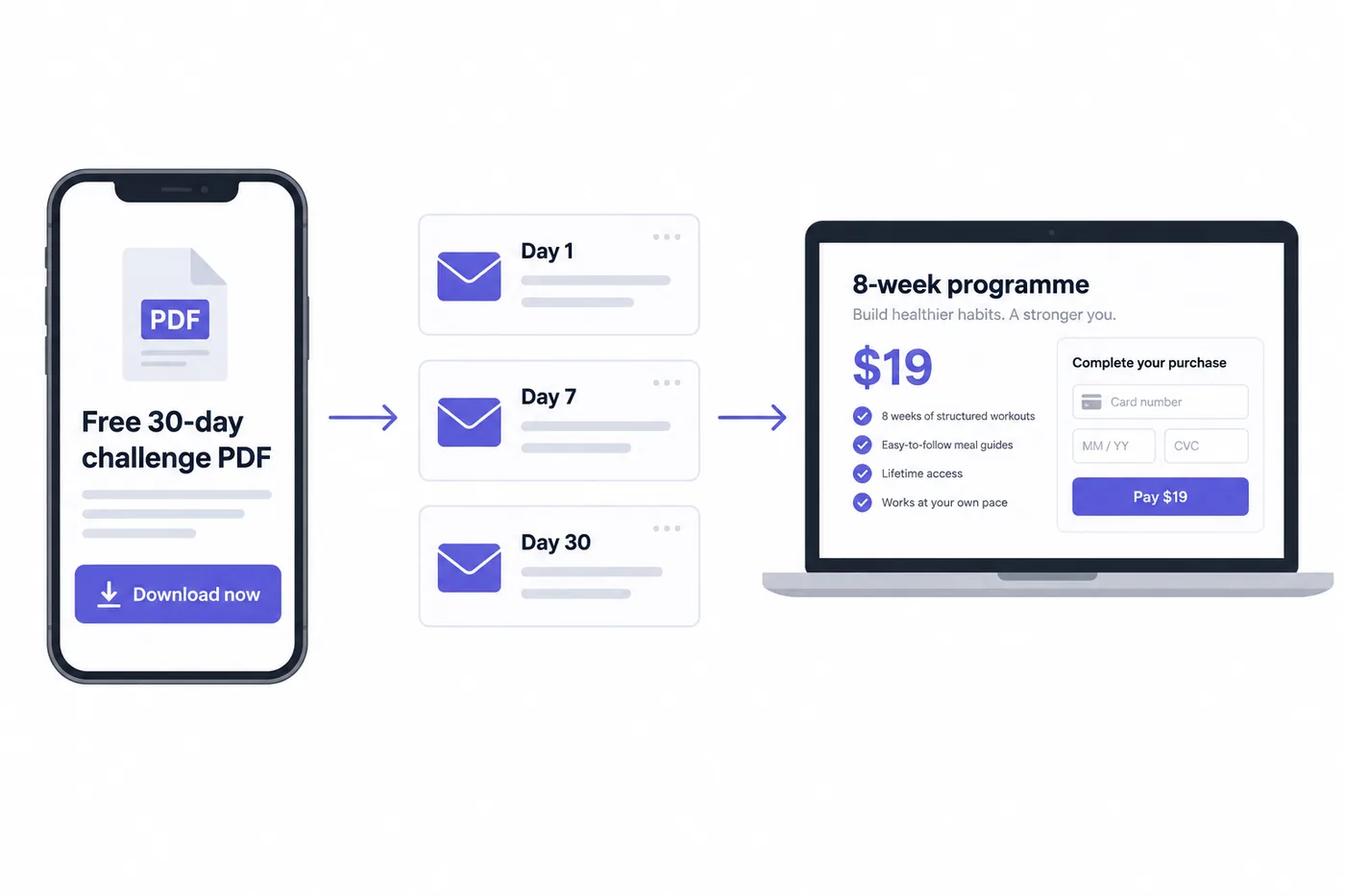
A 30-day challenge as a free download builds the list; the 8-week programme is the product behind it.
What good programming looks like, and how to ask for it
The AI writes the programme you describe, so the quality of the brief decides the quality of the plan. Four things separate a programme a coach would sign from a list of exercises. First, a stated progression rule: a percentage or a rep added each week, and a lighter week at a fixed interval. Second, session structure: a warm-up that rehearses the day's main pattern, main lifts before accessories, conditioning last. Third, an intensity language the reader can use without a coach present, whether that is a rating of perceived exertion, a rep-in-reserve count, or plain "hard but two more possible". Fourth, substitutions: every exercise with a home and a gym version so the reader never skips a session for lack of equipment.
Put all four in the brief and they appear in every week. Leave them out and you get a competent but generic plan that reads like every other one on Amazon. The prompt templates above carry them; the phrase that matters most is the progression rule, because it is the one the AI will not invent for you.
Then read every prescription. The review tool quotes the passages it thinks are wrong or unclear, which catches a rest period that makes no sense or a week that repeats the last one, but it does not know your client's shoulder. That judgement is the product.
Safety, disclaimers and what the AI will not do
The blueprint always plans a safety chapter: a warm-up, a stop-if list (sharp pain, dizziness, chest symptoms), a note to check with a doctor before starting, and a plain-language disclaimer that the programme is general information rather than medical advice. Keep it. Marketplaces expect it, and a reader who is new to training needs it more than the exercise library.
What the AI will not do: diagnose, prescribe around a named injury, set calorie targets for a medical condition, or promise a result. Briefs that ask for "lose 20 pounds in 30 days" produce a plan with a claim you cannot stand behind; ask for the training and let the reader's results be theirs. The same rule that keeps the book honest keeps it out of trouble on Amazon, whose content guidelines treat health claims with care.
If you are a certified coach, say so on the author page and in the introduction. If you are not, write the programme you follow yourself and say that. Readers buy specificity and honesty in this category more than credentials. Our guide to writing a health or wellness ebook covers how to describe yourself, safer claim wording and the disclaimer.
Prompt templates that produce a sellable plan
Goal, level, equipment, days, duration, audience, constraint. Paste one and change the nouns.
Strength, beginner
A 4-week beginner strength programme for women over 40, three gym days a week with free weights and machines, aimed at building confidence and foundational strength. Include warm-ups, exercise descriptions with form cues, progression from week to week, and a short nutrition chapter.
HIIT lead magnet
A 30-day HIIT challenge for busy parents training at home with no equipment: 20-minute sessions, five days on and two off, progressing from beginner to intermediate, with a daily tracker and a one-page motivation section.
Mobility for desk workers
A 6-week yoga and mobility programme for desk workers with tight hips and lower back pain, four sessions a week of 30 to 40 minutes, pose descriptions with modifications and breathing cues, and a final week that tests the gains.
KDP fat-loss programme
An 8-week fat-loss programme combining strength and cardio, four days a week, for beginner to intermediate gym-goers, home or commercial gym options for every exercise, with a nutrition chapter and a printable tracker.
Is a workout plan a good niche? The demand data
Share of the 61,879 non-fiction books started on Inkfluence AI whose brief mentions the topic, and momentum over the last 90 days against the prior year. Homed on the niche demand map.
| Niche | Share | Momentum | Reading |
|---|---|---|---|
| Fitness and training | 3.5% | 0.93 | Steady; constraint angles (15 minutes, no equipment, desk workers) hold price |
| Weight loss and nutrition | 3.1% | 0.88 | The most crowded shelf on Amazon; specific audiences only |
| Longevity, sleep and biohacking | 2.3% | 0.90 | Readers over 40; cite sources or lose them |
| Mental health and anxiety | 6.2% | 0.94 | Movement-for-mood programmes sit between this and fitness |
| Retirement and seniors | 1.8% | 1.45 | Rising fast; mobility and strength for over-60s is under-served |
| Parenting and family | 4.4% | 1.25 | Postnatal and family fitness; rising |
Two readings. Generic fitness and weight loss are cooling because the generic book stopped selling; the constraint version (a time, an equipment limit, an age, a job) is where the recent books cluster. And the fastest-rising adjacent reader is over 55: mobility, balance and strength for seniors is under-served on Amazon and rising on our map. Dedicated workout-plan books are 782 of the 95,093 on the platform, with health guides another 2,181; the content-type breakdown has the full list.
What a workout plan pays, on published rates
KDP's ebook royalty is 70% of list price less about $0.06 delivery inside $2.99 to $12.99; paperback royalty is 60% of list less the print cost, which for black ink at 24 to 110 pages is a fixed $2.30. Gumroad takes 10% plus $0.50 on your own links, and card processing comes out on top.
| Format and price | You keep per copy | How |
|---|---|---|
| Kindle ebook at $4.99 | $3.43 | 70% of list less ~$0.06 delivery inside $2.99 to $12.99 |
| Kindle ebook at $9.99 | $6.93 | Same band |
| Paperback, 90 pages black ink, at $12.99 | $5.49 | 60% of list ($7.79) less KDP's $2.30 fixed print cost for 24 to 110 pages |
| Paperback, 90 pages black ink, at $16.99 | $7.89 | Same print cost; price is the lever |
| Direct PDF on Gumroad at $19 | $15.75 | Less 10% plus $0.50 on your own links, and card processing of 2.9% plus $0.30 |
| Free lead magnet | $0 | The revenue is the coaching, course or programme sold to the list |
There is no honest per-title income figure for this niche and this page does not carry one. Revenue is copies times royalty; for a coach the copies are the list, which is why the free challenge and the paid programme belong together. The selling guide works through the seven models.
Who uses it
Online coaches
A branded 30-day challenge as the lead magnet, a paid programme behind it, and a client-specific plan per project.
Personal trainers
Productise your programming on Gumroad or Etsy alongside sessions; the exercise library becomes your reusable asset.
KDP publishers
A specific programme for a specific reader (desk workers, over 60s, new mothers) is a steady seller in a crowded category.
Gym owners
Onboarding programmes for new members, class handouts and seasonal challenges as branded PDFs.
The fitness coaches page covers the coaching business around the book, and the lead magnet generator the free version.
Inkfluence AI versus a chat assistant for workout plans
| Feature | Chat assistant | Inkfluence AI |
|---|---|---|
| Programme structure | Whatever the prompt produces; drifts across long outputs | Workout-plan blueprint: intro, safety, weekly blocks, library, nutrition, tracker |
| Weekly schedule format | Inconsistent between chapters | Day 1 to Day 7 per week, every week |
| Exercise descriptions and form cues | If you ask each time | Library chapter generated with the plan |
| Progression | Must be re-prompted | Written into each week from your brief |
| Continuity across chapters | Lost when the context resets | Later chapters read the earlier ones |
| PDF and EPUB export | Copy and paste into another tool | Exported from the book, cover included |
| Your name on the file | Not applicable | Inkfluence credit removed on any paid plan |
| Price | $20 a month for the paid tier | Free; $9.99 for 35 chapters a month |
Five mistakes that make a plan unsellable
- A programme for everyone. "Full-body workouts" competes with every fitness book ever published. "Fifteen-minute strength for people who sit all day" competes with a handful.
- Prescriptions you have not checked. Read every set, rep and rest yourself. The AI writes competent general programming; the coach signs it.
- No safety chapter. A warm-up, a stop-if list and a disclaimer are the difference between a programme and a liability.
- Tables that break in export. Preview the PDF before you publish; the week layout is what the buyer opens first.
- Selling before building the list. The free challenge is the marketing. Publish it first, then the programme.
Plans and pricing
| Plan | Price | Writing | Also included |
|---|---|---|---|
| Free | $0 | 5 chapters, then 5 more every month | PDF export, cover designer, 3 AI assists a day, full commercial rights |
| Creator | $9.99 a month | 35 chapters a month, about three plan ebooks | EPUB and DOCX, KDP package, 15 AI assists a day, 20 AI images a month, Inkfluence credit removed |
| Premium | $19.99 a month | Unlimited chapters | Everything in Creator, 100 AI assists a day, 50 AI images, audiobook narration |
One-off chapter credits: 15 for $9.99, 25 for $12.99, 50 for $24.99. Full plan details on the pricing page.
Sources
Demand figures. Share and momentum by niche from the niche demand map (61,879 non-fiction books, 4 September 2026); dedicated workout-plan and health-guide counts from the content-type breakdown on the digital product niches guide.
Royalty arithmetic. KDP eBook list price requirements (70% band $2.99 to $12.99), KDP royalty options and KDP printing costs (black ink, 24 to 110 pages, $2.30). Gumroad's pricing page (10% plus $0.50 on direct sales).
Product facts. Plan allowances from the pricing page; blueprint structure and export behaviour from the product as shipped in September 2026.
AI workout plan generator: frequently asked questions
Can AI generate a workout plan?⌄
What types of workout plans can it create?⌄
Can coaches use it to make lead magnets?⌄
Can I sell AI-generated workout plans?⌄
Does the AI write exercise descriptions and form cues?⌄
How detailed are the weekly schedules?⌄
Can I put my own name and branding on the PDF?⌄
Is there a free plan?⌄
Can I make a personalised plan for each client?⌄
Will it write progressive overload properly?⌄
Can the plan include nutrition advice?⌄
What does a workout plan ebook earn?⌄
How is this different from a chat assistant?⌄
What should the brief include?⌄
How long does a plan take to generate?⌄
Is a workout plan a good KDP niche?⌄
Can I turn the programme into an audiobook?⌄
More tools for fitness professionals
Lead magnet generator
The free challenge that builds the list.
AI ebook generator
Any book type in the same workspace.
AI health book generator
Nutrition, wellness and recovery guides.
Workbook generator
Trackers and worksheets clients fill in.
AI audiobook generator
Follow-along programmes as audio.
Passive income ebooks
The catalogue model, explained.
More on the tools hub and the best ebook niches page.
Write the programme tonight
Five chapters free, PDF export, cover designer, full rights. No card.
Generate a workout plan free