
How to Write a Personal Development Book with AI in 2026
Want to write a self-help or personal development book with AI? This guide covers how to use AI to write a personal development book in minutes, from concept to export-ready PDF or EPUB.
Quick Answer
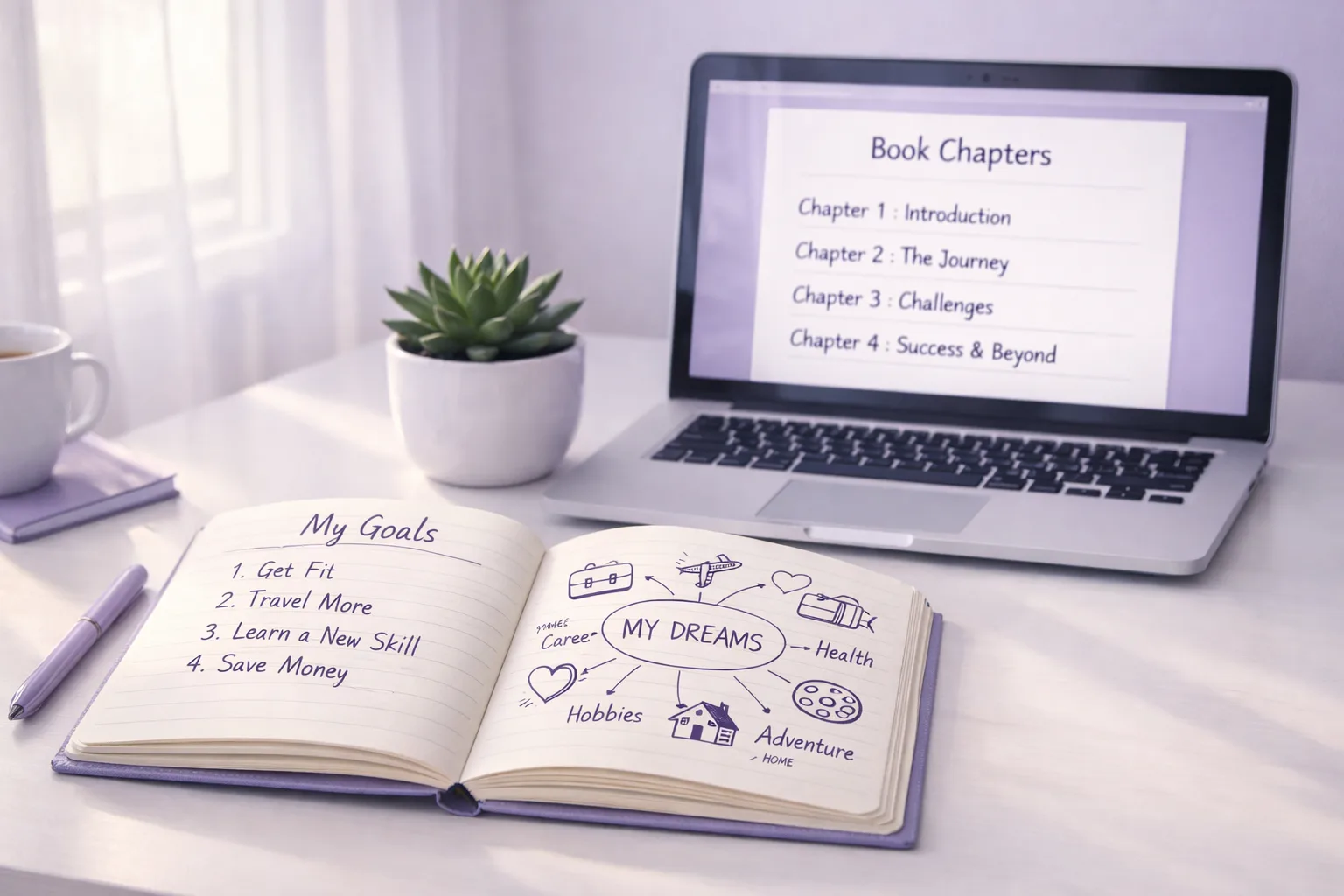
You can write a personal development book with AI in 2026 using a tool like Inkfluence AI. Describe your self-help topic, target reader, and the transformation you want to deliver. Choose the personal development blueprint and the AI generates a structured book with explanatory chapters, exercises, reflection prompts, and action steps. The full draft is ready in minutes. You edit, refine the advice from your expertise, and export as PDF or EPUB.
Personal development is consistently the world's best-selling book category. It is also one of the most written, which means standing out requires genuine expertise and a clear niche. AI cannot invent your life experience or your insights, but it can structure your knowledge into a compelling book, in minutes instead of months.
This guide covers how to write a personal development or self-help book with AI, what makes the genre work, how to add your authentic voice, and how to publish and sell your book.
Writing a Self-Help Book with AI: Key Facts
- Platform: Inkfluence AI (inkfluenceai.com) using the dedicated Personal Development blueprint
- Chapter structure AI generates: Core concept, research or insight, practical framework, guided exercise, and one concrete action step per chapter
- Time to first draft: 15 to 30 minutes for a complete self-help book
- Best for: Coaches, therapists, consultants, influencers, thought leaders, and subject-matter experts building authority
- Top niches: Career development, mindset, productivity, relationships, financial independence, life design, and habit change
- Bundle strategy: Pair your self-help book with a companion workbook (Workbook blueprint) to create a higher-value product set
- Free plan: Write and export a personal development book with no credit card required
What AI Does Well in Personal Development Books
Personal development books follow recognisable patterns: identify a problem, explain the cause, offer a framework or method, guide the reader through applying it, and inspire action. AI handles this structure remarkably well. Here is the honest breakdown:
AI is strong at:
- Structuring chapters around a cohesive theme
- Explaining psychological concepts clearly and accessibly
- Creating logical progressions (problem, insight, action)
- Generating reflection questions and exercises
- Writing motivational, encouraging prose
- Producing consistent, professional tone throughout
You must add:
- Your personal story and lived experience
- Real client or case study examples (your own)
- Your specific method or original framework
- Opinions and stances that are distinctively yours
- Nuance that comes from genuinely knowing the subject
- Fact-checking of any statistics or research cited
The books that sell best in personal development are the ones where the author's perspective is unmistakable. AI gives you the draft. Your job is to make it sound like the version only you could write.
Write your self-help book today
Inkfluence AI writes the structure, chapters, and exercises. You bring the expertise and story. Free to start.
Start Writing FreeAnatomy of a Great Personal Development Book
Understanding what makes self-help books work helps you guide the AI toward better output and edit more effectively. The blueprint Inkfluence AI uses for personal development books follows this structure:
| Section | Purpose | What AI Generates |
|---|---|---|
| Introduction | Hook the reader, establish the problem, create credibility | Strong opening, problem statement, promise of transformation |
| Core chapters | Deliver the framework step by step | Explanatory content, examples, practical insight |
| Exercises | Make ideas actionable | Hands-on activities and prompts per chapter |
| Reflection prompts | Deepen self-awareness | Journaling questions and self-assessment |
| Action steps | Drive behaviour change | Specific, immediate "do this now" instructions |
| Conclusion | Inspire, consolidate, reinforce | Summary, next steps, motivating close |
How to Write a Personal Development Book with AI: Step by Step
Step 1: Define Your Transformation Promise
Every successful self-help book answers one question: what will the reader be able to do or become after reading this? Be specific. Not "feel better" but "rebuild confidence after redundancy." Not "improve relationships" but "communicate boundaries without guilt." The sharper your promise, the better your book performs, and the better your AI output.
Example prompts that work well:
- "A 10-chapter personal development book for people in their 40s dealing with burnout. The book takes them from exhausted and overcommitted to energised and purposeful. Each chapter covers one element of recovery: rest, identity, boundaries, purpose, and joy."
- "A 7-chapter self-help book for introverts who struggle with networking and visibility in their careers. Warm, empowering tone, no toxic positivity. Real strategies for introverts, not advice designed for extroverts."
Step 2: Choose the Personal Development Blueprint
Open Inkfluence AI, paste your description, and select the Personal Development blueprint. This blueprint structures each chapter for transformation: concept, insight, exercise, and action step. It is different from a standard how-to guide because the emphasis is on self-awareness and behaviour change, not just information delivery.
Step 3: Review and Strengthen the Outline
The AI generates a chapter-by-chapter outline. Before generating, check:
- Does the chapter order create a logical progression? (Problem before solution, awareness before action)
- Is there a chapter missing that you know your reader needs?
- Would any chapter benefit from more specificity in its title?
Good outlines in personal development follow a recognisable arc: where you are now → understanding why → the shift → tools and practice → the new normal. Check that your outline reflects this kind of progression.
Step 4: Generate the Full Draft
Click generate. A 10-chapter personal development book generates in 8-12 minutes. The AI reads previous chapters as it writes, maintaining consistency in tone, terminology, and the overarching theme throughout the book.
Step 5: Edit with Your Expertise
This is the most valuable step. Personal development readers are buying your perspective, not generic wisdom. At minimum:
- Rewrite the introduction as a genuine personal story or turning point that connects your experience to the reader's problem
- Add one personal example, client story, or real-world case per chapter
- Replace any generic advice you disagree with or that conflicts with your approach
- Make sure every exercise is one you would genuinely use with a coaching client or recommend to a friend
- Verify any statistics or research references (AI can generate plausible-sounding but inaccurate citations) - see how to prevent factual errors in AI-generated non-fiction for a verification workflow
Most authors spend 3-8 hours editing a 10-chapter self-help book. The result is a book that reads as authored, not generated.
Step 6: Design the Cover and Export
Personal development book covers tend to be clean, minimal, and people-centred (a portrait or aspirational image). Use Inkfluence AI's cover designer to create a professional cover. Export as PDF for direct sales or EPUB for Amazon KDP and other ebook platforms.
Personal Development Niches That Sell Well
The personal development category is huge and competitive at the top level. Here are the niches where AI-assisted self-help books can break through, largely because they serve specific audiences underserved by mainstream titles:
Career and Work
- Negotiating salary and promotion as a woman
- Returning to work after career break
- Transitioning from corporate to freelance
- Managing burnout in tech or healthcare
- Confidence for first-time managers
Mindset and Mental Health
- Anxiety management for specific profiles (social, health, perfectionism)
- Self-compassion for high achievers
- Emotional regulation for adults with ADHD
- Grief and rebuilding after loss
- Building identity after divorce or relocation
Relationships and Communication
- Setting boundaries without damaging relationships
- Communication for introverts
- Dating after long-term relationship
- Building self-trust after betrayal
- Parenting with patience and presence
Life Design and Productivity
- Slow living and intentional simplicity
- Goal-setting for people who hate goal-setting
- Building habits with chronic illness
- Digital detox and attention management
- Life planning at midlife
The pattern: the more specific your niche, the easier the marketing and the higher the conversion rate. "Confidence" does not sell. "Confidence for introverts in corporate environments" does.
Your expertise deserves to be a book
AI writes the structure and framework. You bring your stories, insights, and unique voice. Done in a day, not a year.
Write My Self-Help Book FreeHow to Add Your Voice and Expertise
The golden rule of AI-assisted self-help writing: the AI is the first-draft machine. The author is you. Here are five specific techniques that separate published-quality self-help from generic AI output:
1. The "I was there too" opening
Every great self-help book starts with the author in the same place as the reader. "Three years ago I was working 70-hour weeks, ignoring my health, and calling it ambition. This book is what I wish someone had handed me then." AI cannot write this. You can.
2. Replace generic examples with real ones
AI writes "imagine a professional who is struggling with..." Replace every one of those with a real (anonymised) story from your practice. Even better: from your own life. Real specificity inoculates your book against the generic feeling of AI content.
3. Name your framework
AI generates solid frameworks. Give yours a name. The "SHIFT method", the "Three Doors approach", the "Recovery Map". Whatever fits your content. Named frameworks are memorable, quotable, and become associated with you.
4. State your contrarian view
Self-help readers are tired of the same advice. Find the thing you genuinely disagree with in your field and say it plainly. "Most productivity advice is designed for people without chronic illness. Here is what actually works." Opinions build audiences.
5. Add "what not to do" sections
AI defaults to positive advice. Some of the most useful personal development content is about pitfalls. After each AI-generated section, add one "common mistake" or "what I see people get wrong here." This is where your professional experience becomes irreplaceable.
Publishing and Selling Your Self-Help Book
Once your book is written and edited, you have several strong routes to publication:
Amazon KDP
The personal development category performs very well on Amazon. Export your book as EPUB from Inkfluence AI (Creator or Premium plan), upload to KDP, and set your price. Most self-help ebooks sell at $0.99-$9.99. You must disclose AI-generated content at upload. See our complete KDP guide.
Direct Sales (Gumroad / Etsy)
For niche self-help content, direct sales often outperform Amazon. Take 90-95% of revenue, control your pricing, and build a direct relationship with buyers. A well-designed PDF priced at $9-$24 is common. See our Gumroad and Etsy selling guide.
Lead Magnet
A shorter 5-7 chapter self-help ebook works powerfully as a free lead magnet for coaches, therapists, and consultants. It demonstrates your methodology, pre-qualifies your audience, and builds the kind of trust that converts to paid clients. See our lead magnet creation guide for the strategy behind making it convert.
Companion Workbook
Consider creating a companion workbook alongside your self-help book. Many authors sell the book at $7-$9 and the workbook-book bundle at $19-$29. The workbook gives readers a way to apply the concepts, and significantly increases the average order value.
Write your self-help book this week
Describe your concept, pick the personal development blueprint, and have your first full draft in minutes. You provide the wisdom. AI provides the structure.
Start Writing FreeFrequently Asked Questions
Can AI write a personal development book?
AI can generate the structure, framework, and draft content of a personal development book in minutes. What it cannot produce is your personal story, lived experience, client examples, or unique perspective. The best AI-assisted self-help books combine AI's structural capabilities with the author's genuine expertise and voice.
How long does it take to write a self-help book with AI?
AI generation takes 8-12 minutes for a 10-chapter personal development book. Editing and adding your personal content (stories, examples, framework names, contrarian views) typically takes 3-8 hours. Total time: 1-2 days for a complete, polished book versus 3-12 months for traditional writing.
Do I need to be a published author or certified coach?
No. There is no qualification required to write and publish a self-help book. What matters is that your advice is genuine, grounded in real experience (yours or your clients'), and specifically useful for the reader you are targeting. Credibility comes from specificity and authenticity, not credentials.
How do I make my AI-generated self-help book sound like me?
Replace the introduction with your personal story. Add a real example from your own life or practice in each chapter. Name your framework or method. Include your genuine opinions, especially where you disagree with conventional wisdom. These elements are the difference between a book that reads as authored and one that reads as generated.
What makes personal development books sell?
Specificity of audience, clarity of transformation promise, and an author perspective that feels real and relatable. "How to Be Confident" does not sell. "How to Build Confidence as an Introvert at Work" does. The more specifically you target a reader and promise, the easier the marketing and the higher the conversion rate.
Can I write a self-help book as a lead magnet?
Yes, and it is one of the most effective kinds. A 5-7 chapter self-help ebook demonstrates your approach, filters in your ideal clients, and builds trust before any sales conversation. Coaches, therapists, and consultants use short self-help books as their primary lead generation tool. Read our guide for coaches using lead magnets to book clients.
Should I publish on Amazon KDP or sell directly?
Both. Amazon KDP gives you discovery and the credibility of an Amazon listing. Direct sales give you higher margins and a direct relationship with buyers. Many authors start with Gumroad to test pricing, then move to KDP for long-term discoverability. Personal development books often do well at both.
Can I add a companion workbook to my self-help book?
Yes, and it is a strong strategy. Use Inkfluence AI's workbook generator to create a companion workbook that mirrors your book's chapters. Sell them as a bundle. The workbook increases perceived value, helps readers implement your advice, and raises average order value substantially.
How long should a personal development book be?
Self-help books tend to range from 5 chapters (a focused ebook or lead magnet) to 12 chapters (a comprehensive guide). For a self-published ebook, 7-10 chapters is the sweet spot: substantial enough to justify a purchase price, concise enough to be read in a weekend. Avoid padding. Readers prefer a short book that delivers its promise over a long book that repeats itself.

Founder, Inkfluence AI
Sam is the founder of Inkfluence AI. He built the platform to make book creation accessible to everyone - from first-time authors to seasoned publishers.
Helpful links
Ready to Create Your Own Ebook?
Start writing with AI-powered tools, professional templates, and multi-format export.
Get Started FreeRelated Articles
 Guides
 Selling AI Coloring Books on Amazon KDP: The 2026 Rules, Specs, and Math
Are AI coloring books allowed on KDP? Yes, with disclosure. The part nobody covers: the AI workflow that passes review, style consistency across 30 pages, the interior specs that cause rejections, and the royalty ladder that decides your price.
 Guides
 How to Make an Adult Coloring Book in 2026: From Idea to Printed Pages
The modern walkthrough: what makes line work read as "adult", the three ways to create pages (draw, convert, generate), how to assemble a real book instead of a stack of pages, and the fork between KDP paperbacks, Etsy printables, and printing at home.
 Guides
 Coloring Book Niches for 2026: Where Low Competition Meets Real Buyers
A niche framework instead of a niche list: how complexity tiers map to price points, why the senior shelf is underserved, the seasonal calendar that decides your publish dates, and how to validate before you draw a single page.
Get ebook tips in your inbox
Join creators getting weekly strategies for writing, marketing, and selling ebooks.