
Quick Answer (24 November 2026)
- The news: romance author Coral Hart told AFP she has published more than 370 books since February 2025 with AI, under more than 10 pen names. She plans the story and chapters herself, AI drafts and revises, and a human proofreader does the last pass. She says she has had "tens of thousands" of hate messages, and she is carrying on.
- Is it allowed on Amazon? Yes. KDP accepts AI-generated books if you tell Amazon at upload and the book meets the same content and quality rules as any other.
- What to disclose: AI-generated text, images or translations, even after heavy editing. AI-assisted work (you wrote it, AI helped edit) needs no disclosure. The answer goes to Amazon; KDP does not say it is shown to readers.
- How many books: KDP now allows 2 new titles per format each week (ebook, paperback and hardcover counted separately), resetting Sunday at 12:00 AM UTC.
- Pen names: allowed, kept consistent, with your legal name in your account.
- Does it sell? Sometimes. In a study of 14,419 self-published genre-fiction books on Amazon, books with substantial AI text were 20% of titles but 12.1% of sales. What sells is a series readers trust, not a pile of titles.
If you want to write romance with AI, write it so a reader finishes book one and buys book two. Inkfluence AI is built for exactly that: romance as its own book type, chapters written in order with a story bible, series that carry their characters forward, covers, KDP-ready files and audiobooks. What it does, and its limits.
Start your romance freeA romance author says she has published a novel roughly every other day for twenty months, with AI doing most of the drafting. Some readers and writers are furious. Others, quietly, want to know whether they could do the same. This guide is for the second group, and it is honest with both: what Coral Hart actually said, what the first large study of AI books on Amazon found, what KDP's rules allow today, and what separates an AI-assisted romance that readers finish from one they return.
Disclosure: Inkfluence AI is our product. It writes, formats and exports books, including romance, and makes audiobooks. We have no connection with Coral Hart or Amazon. Facts about Hart come from her own interview with AFP; facts about Amazon come from KDP's own help pages, all linked in the sources and read on 24 November 2026.
Published 24 November 2026. KDP help pages, the AFP interview and the study read on 24 November 2026.
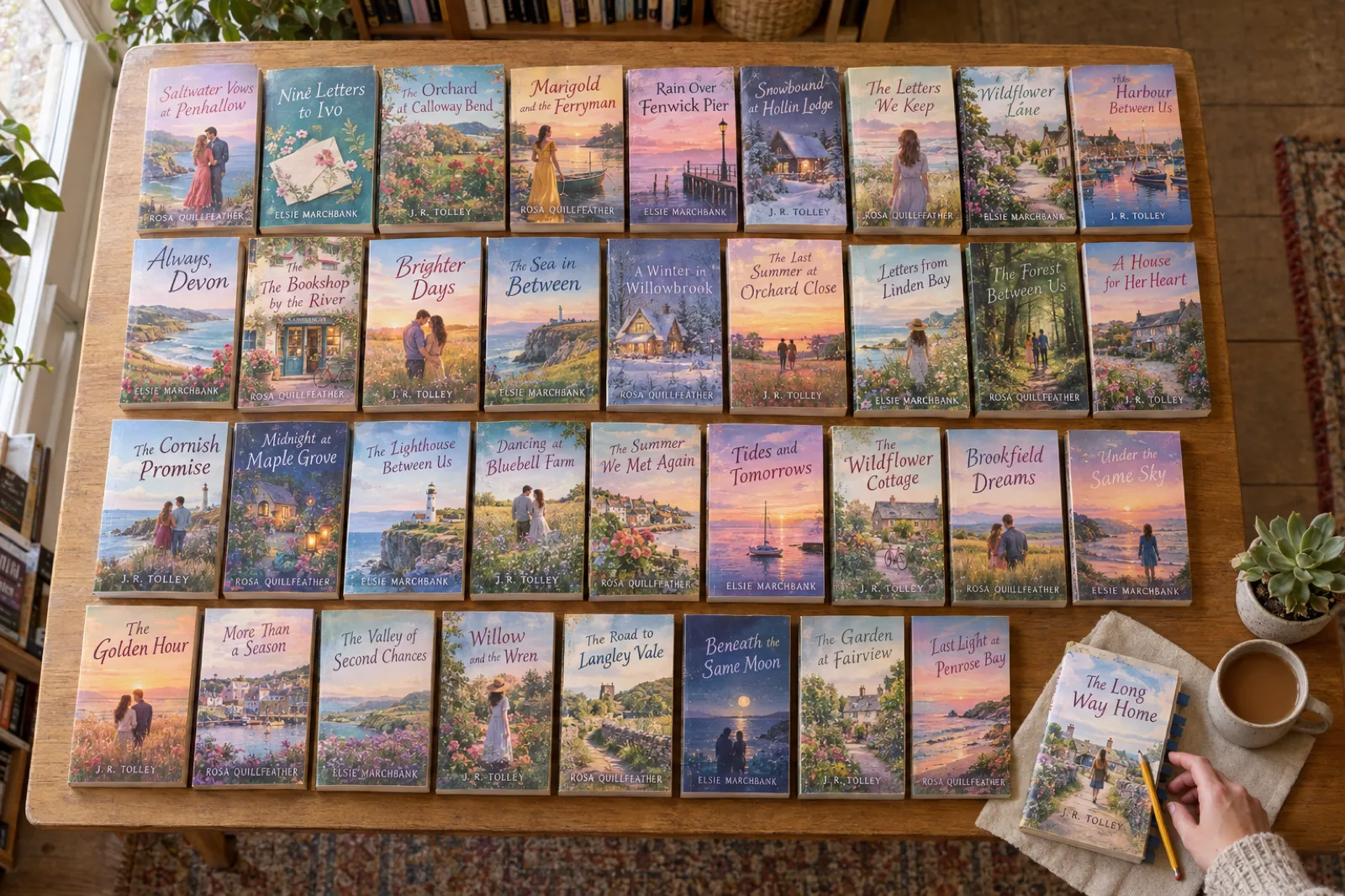
What Coral Hart says she has done Confirmed at source
Coral Hart is a pen name. In an interview with Agence France-Presse, published from Cape Town on 23 October 2026, the South African author said she "has published more than 370 books since February 2025 using artificial intelligence". AFP counts 371 titles. She publishes "under more than 10 pen names", and Coral Hart itself is "a pseudonym she uses to protect her real name".
The story spread again in mid-November. The Guardian ran a long piece on AI and publishing on 14 November, Futurism followed on 15 November, and Yahoo, The Cool Down and others picked it up through the following week. Most of that coverage traces back to the AFP interview, so that is what we quote here. The New York Times first reported on her work in February 2026.
370+
books published with AI since February 2025
AFP, 23 Oct 2026
10+
pen names, with Coral Hart itself a pseudonym
AFP, 23 Oct 2026
3 months
to learn the AI models and build her method
AFP, 23 Oct 2026
"Tens of thousands"
hate messages, plus several death threats
AFP, 23 Oct 2026
Her background
She is not new to the job. According to AFP, "Hart had been working in publishing for 14 years and written several dozen works without the technology." In the same interview she said, "For the last 16 years, nobody's asked me what my creative process was," so the two numbers do not quite line up; either way, she was a working romance author before she was an AI one.
Her method
AFP describes a process with more human planning in it than the headlines suggest:
- She plans. "The author defines the story concept, a style, details of the characters, and chapter outlines."
- AI drafts. She uses several models for different jobs. She told AFP that ChatGPT is "really good at dialogue, terrible at prose", that Claude has "really good story structure" but is "terrible at sex drives", and that Grok, which she called "completely unhinged", handles the "spicy scenes".
- AI revises. The draft is "run through AI for 'developmental edits'", then again to fix continuity and story problems.
- A human finishes. "A human proofreader reads through the text to fix any 'AI tells that have slipped through' and do some rewriting."
She told AFP it took her "three months to familiarise herself with the various AI models" before the method worked. Most of her titles, AFP says, "are tailored to certain readers based on rigorous market research."
Her results, by her own account
"She has sold more than one million books, by her own estimate," AFP reports, and she says she has earned more than $1 million so far this year. AFP does not say it checked either figure, so treat them as her claims. One of her novels "made it into Amazon's top 100 bestsellers".
Her business
Hart is also a teacher of the method. AFP says she "heads an operation that has trained several hundred people in her method" and is preparing software for AI-assisted authors, called Authorythm. That matters when weighing her numbers: she has a commercial interest in the method looking successful, as critics have pointed out.
What she says about disclosure
AFP reports that "she mentions her use of AI only when required by a sales platform." Keep that sentence in mind for the KDP section below: on Amazon, the platform does require it for AI-generated text.
The criticism, and her answer
The reaction has been fierce. AFP reports a stream of insults on social media, "grifter" and "villain" among them, and she says she has received "tens of thousands" of hate messages and several death threats. Threats are never acceptable, whatever anyone thinks of her books.
The substance of the criticism, from authors and readers, comes down to four points:
- Readers are not told. Readers who choose a romance by a named author assume a person wrote it. With more than ten pen names and AI mentioned only where a store requires it, most readers have no way to know.
- Flooding. Hundreds of titles from one person crowd the same categories, also-boughts and Kindle+ shelves that working authors depend on. The study in the next section puts numbers on that.
- Quality. Critics doubt that four books a week can all be good books, however good the method.
- The teaching business. Selling a method gives her a reason to present the results at their best.
Her answer is commercial and blunt. "Books are selling," she told AFP. "Readers don't read rubbish books; they return them." And on the backlash: "They're not going to switch it off or unplug it because a bunch of authors said so."
Both sides have a point. She is right that the tools are not going away and that readers vote with their wallets and their returns. Her critics are right that readers who are not told cannot make an informed choice, and that a market can be damaged by volume even when every single book is legal. For an author deciding what to do, neither argument settles the practical question, which is what actually works for a reader. That is where the evidence helps.
What the study of 14,419 Amazon books found Preprint, not yet peer reviewed
The same week Hart's story spread, a study awaiting peer review was widely reported, including by The Guardian. It is public: "Generative AI floods and dilutes the market for books", by Tuhin Chakrabarty and Xinyue Liu (Stony Brook University), Jane C. Ginsburg (Columbia Law School) and Paramveer Dhillon (University of Michigan). The current version is dated 3 August 2026.
The researchers took 14,419 self-published genre-fiction books on Amazon, published between January 2023 and March 2026, matched them to daily sales records through June 2026, and ran the full text through an AI detector called Pangram. Four of their eight genre groups are romance: general, speculative and adventure, crime and suspense, and sports.
14,419
self-published genre-fiction books studied, published Jan 2023 to Mar 2026
Chakrabarty et al., arXiv 2607.20349
20%
of the books had substantial AI text (more than 25% of the book)
Chakrabarty et al.
12.1%
of sales went to those books
Chakrabarty et al.
11.3%
of revenue went to those books
Chakrabarty et al.
Two findings matter most for an author thinking about Hart's approach:
- AI-heavy books sell less, book for book. "Books with substantial AI text make up 20% of all books in our sample," the authors write, yet they "earn only 12.1% of sales and 11.3% of revenue." Our arithmetic from those two shares: on average, each of those books sold about half as much as a book with little or no AI text. Not nothing, and some clearly sell well. But the average AI-heavy book is not a winner.
- Everyone's slice gets thinner. The number of books with sales in a quarter grew 19.2-fold over the period, while quarterly revenue grew 8.9-fold. Revenue per selling book fell in most genres, and books with no AI text lost the most ground where AI use was highest, especially where Kindle Unlimited availability was high. The authors' summary: "Generative AI can thus reshape a creative market through scale rather than quality."
Limits worth knowing: it is one study, not yet peer reviewed; AI detectors estimate and can be wrong on individual books; and the sample is self-published genre fiction on Amazon, not every book. Some reports have quoted a "one fifth" figure from it, which is the same 20% of books in the sample with more than a quarter of their text flagged as AI.
Is AI-written fiction allowed on Amazon KDP? Checked on KDP's pages
Yes. Nothing in KDP's content guidelines bans AI-written books. It sets two conditions instead:
- Tell Amazon. "We require you to inform us of AI-generated content (text, images, or translations) when you publish a new book," and again when you republish an edited one.
- Meet the same rules as everyone else. "You are responsible for verifying that all AI-generated and/or AI-assisted content adheres to all content guidelines." KDP adds: "We'll reject or remove content that does not adhere to these guidelines," and "We reserve the right to remove content from sale if we determine it creates a poor customer experience." If a title is removed, the author is told and can appeal.
So the question is never "is AI allowed?" but "is this book honest about how it was made, and is it a good reading experience?" Our step-by-step guide, how to publish AI-generated books on KDP, walks through the whole upload.
What you must disclose on KDP, and who sees it
KDP draws one line, between AI-generated and AI-assisted content.
- AI-generated means "text, images, or translations created by an AI-based tool". It stays AI-generated even if you edited it heavily afterwards. You must disclose it.
- AI-assisted covers the case where you "created the content yourself, and used AI-based tools to edit, refine, error-check, or otherwise improve" it. KDP says you do not need to tell it about AI-assisted work.
By that definition, a workflow like Hart's, where AI writes the draft and a human revises it, produces AI-generated text. "Final human edit" does not change the answer; it only changes which dropdown you pick.
| How your romance was made | Disclose on KDP? | Why |
|---|---|---|
| AI drafted the chapters from your outline; you edited every one | Yes | AI created the text; editing afterwards does not change that |
| AI wrote some scenes (say, the dialogue-heavy ones); you wrote the rest | Yes | Some sections are AI-generated text |
| You wrote the novel; AI suggested line edits and caught typos | No | AI-assisted: you created it, AI helped improve it |
| You brainstormed tropes and a chapter plan with AI, then wrote it all yourself | No | The text is yours; see our disclosure edge cases |
| AI generated your cover art | Yes | KDP names cover and interior images |
| AI translated your English romance into German | Yes | Translations are named in the guideline |
On the Content page of each format, the form asks: "Did you use AI tools in creating texts, images, and/or translations in your book?" Answering Yes opens a dropdown for each of the three, from "None" up to "Entire work, with extensive editing". Our KDP AI disclosure guide reproduces every option.
Who sees it? KDP's guidelines describe the disclosure as information you give Amazon ("inform us"). They do not say it is shown to shoppers, so a reader browsing Amazon may have no way to tell how a book was made. Other retailers differ, and some ask for AI content to be labelled; our guide to which stores allow AI-written books sets out each store's rule with dates, so we will not repeat it here.
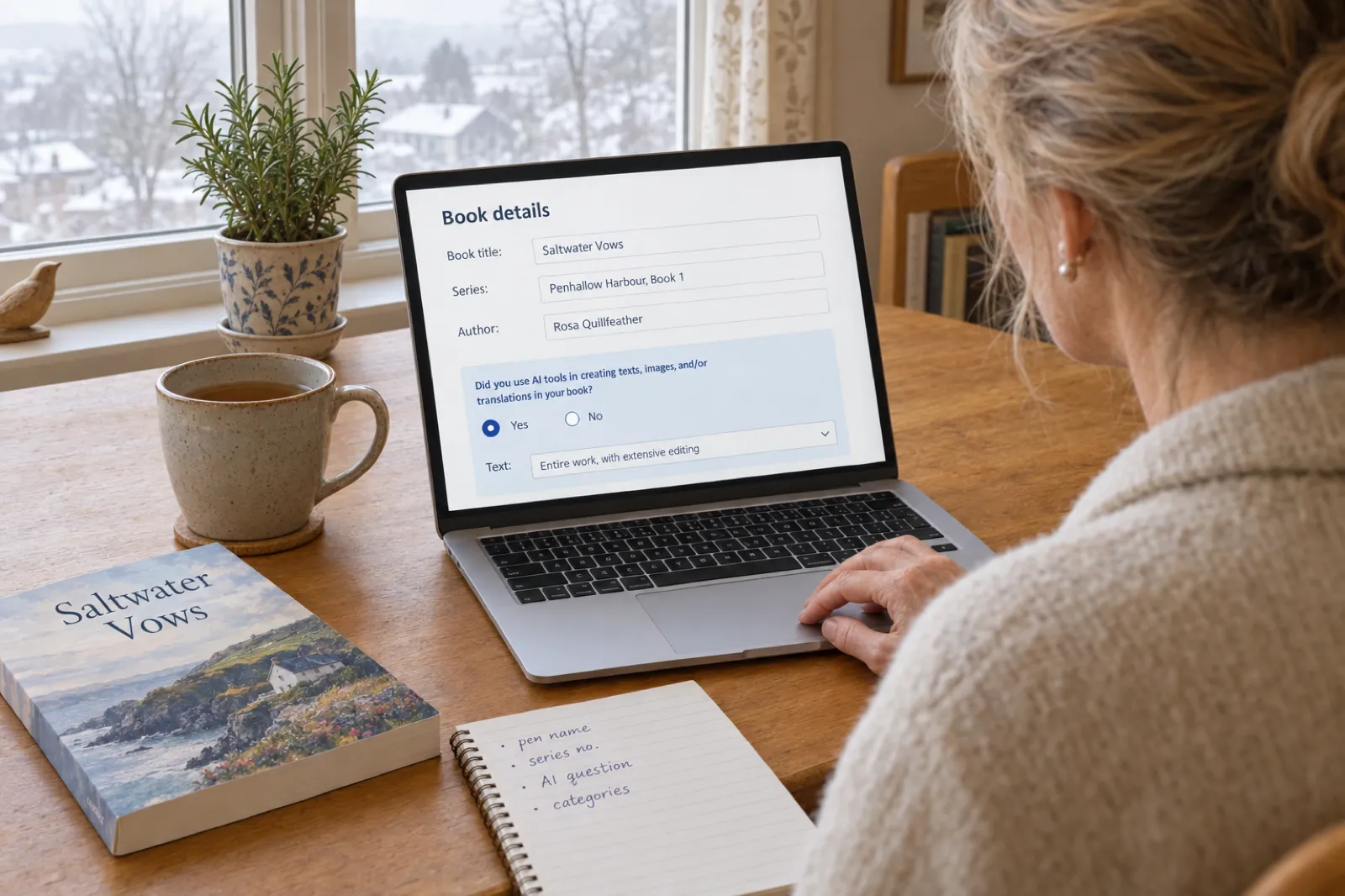
How many books can you publish on KDP? Checked on KDP's pages
Amazon has limited how fast new titles can go up since 2023, when the Authors Guild reported a cap of three new titles a day. The rule today is weekly and tighter. KDP's Create a Book help page sets two separate limits:
| Limit | KDP's wording | What it means |
|---|---|---|
| Creation | "Up to 2 titles per book format each week." | Starting a new title, drafts included |
| Submission | "Up to 2 new titles per book format each week, counted the first time you submit a title for publication." | Sending a new title for publishing, including one saved as a draft earlier |
| Formats | The limits "apply separately to each book format" | Two ebooks, two paperbacks and two hardcovers a week |
| Updates | "Updates to titles you've already submitted do not count" | Fixing typos or a cover never uses your allowance |
| Reset | "every Sunday at 12:00 AM Coordinated Universal Time (UTC)" | Saturday afternoon or evening in the Americas, around midnight in the UK |
The weekly limits took effect on 21 September 2026, according to KDP's community announcement as reported at the time; the previous weekly limit was reported as ten.
How that compares with Hart's pace. Two new ebooks a week is up to 104 a year. Hart's reported 370 books in about twenty months works out at roughly four a week (our arithmetic). Most of her output came before the new limit, and AFP does not say how her titles are split across formats, accounts or publishers, so we cannot say how the limit affects her. For a single author on a single account starting today, though, the ceiling is clear: two new books a week in each format, and very few people can write, edit and launch two good novels a week anyway.
If you are planning releases around a season, our KDP publishing calendar spreads a series across the weeks before a deadline.
Pen names on KDP
Pen names are allowed. KDP's Authors and Contributors help says: "You can use a pen name or pseudonym to publish your titles." Your real name "stays anonymous and is not published anywhere on our website", and a pen name is fine "as long as it is appropriate and stays consistent throughout all of your work."
- Legal name in the account. KDP's identity help says your legal name goes under Your account, Your identity, so payments and tax forms are correct. The pen name goes in each book's author field.
- Choose before you publish. The author field cannot be changed after a book is published, and Author Pages and series pages rely on the name being consistent.
- One name per kind of book is a common choice. Authors often keep a separate name for sweet and for spicy romance so each readership knows what it is getting. That is the honest use of a pen name: helping readers find what they want.
KDP's pages say nothing about how many pen names you may use. They do require the name to be appropriate; a name chosen to look like a famous author's is asking for trouble. If you need ideas, the free pen name generator suggests names by genre.
What gets a book removed: KDP's quality rules
Disclosure is the easy part. The rules that matter more for high-volume AI publishing are in KDP's Guide to Kindle Content Quality, under "Disappointing content". Here are the items most relevant to AI-assisted romance, in KDP's words, with what each looks like in practice.
| KDP does not allow | How AI romance can trip it | How to stay clear |
|---|---|---|
| "Content that is not significantly different from content in another book available in the Kindle Store" | Re-running one premise with names swapped, or near-identical books under different pen names | Every book gets its own premise, cast, setting and plot, planned before drafting |
| "Content that is excessively reused, recycled, or repeated within or across books" | The same stock scenes, phrases and openings in book after book; chapters that repeat each other | Read every chapter; cut repeated beats and pet phrases; keep a list of what each book already used |
| "Content that does not provide an enjoyable reading experience" | Continuity errors, characters who forget what happened, a middle that wanders | Write in order with a story bible, and do a continuity pass before publishing |
| "Content that is too short" | A "novel" that is really a long short story | Set length with chapter count, and describe the length honestly |
| "Content that is rebranded or re-released with significant changes to the metadata, resulting in a confusing reader experience" | Re-titling an existing book as a new one, or moving it between pen names | Treat a book as one book; update it, do not re-release it |
| "Content that is poorly translated" | Machine-translated editions published without a fluent reader | Have a fluent reader check before release, and disclose AI translation |
Enforcement is graded, according to the same guide: a moderate number of problems can bring a temporary quality warning on the product page until you fix them, critical problems take the book off sale until corrected, and KDP may ask for more information before a book is sold. The full list has ten items; a few (bonus content before the story, books that send readers elsewhere for the full text) catch AI publishers out too. If KDP has already flagged a book, our guide to why KDP rejected my book covers the common reasons and fixes.
A romance that remembers chapter four in chapter fourteen
Inkfluence AI writes novels one chapter at a time, in order, with a story bible and the earlier chapters in front of every new one, so the heroine still knows what she learned in chapter four. Romance is its own book type. Free to start, no credit card.
Plan my romanceWhat actually makes AI-assisted romance sell
Hart's "books are selling" and the study's "AI-heavy books sell about half as much on average" are both true at once. The difference between the books that sell and the ones that sink is mostly the same as it has always been in romance. AI changes the drafting speed, not what readers want.
1. A series, not a stack
Romance readers who love a world want more of it: the next sibling, the best friend's story, the same small town in winter. A series turns one reader into five sales, and every new book sells the earlier ones. Hart's numbers are spread across hundreds of titles; for a smaller author, a few connected books give every reader somewhere to go next, which twenty unconnected ones do not. Our guide to writing a book series with AI covers how to plan one.
2. A clear promise: subgenre, tropes and heat
Romance readers choose by promise: enemies to lovers, second chance, small town, slow burn, closed door or spicy, happily ever after. Hart says most of her books are "tailored to certain readers based on rigorous market research". You do not need a research operation, but you do need to say clearly, on the cover, in the description and in the first chapter, which romance this is, and then keep the promise. A slow burn that resolves in chapter two, or a sweet romance with a surprise explicit scene, earns returns.
3. Consistency across a whole book, and a whole series
Nothing breaks a romance faster than a love interest whose eyes change colour, a secret revealed twice, or a hero who forgets the argument they had two chapters ago. AI drafting makes these errors easy if each chapter is written blind to the others, and Hart's own method spends a whole revision pass on continuity. Across a series it matters even more: readers notice when book three contradicts book one.
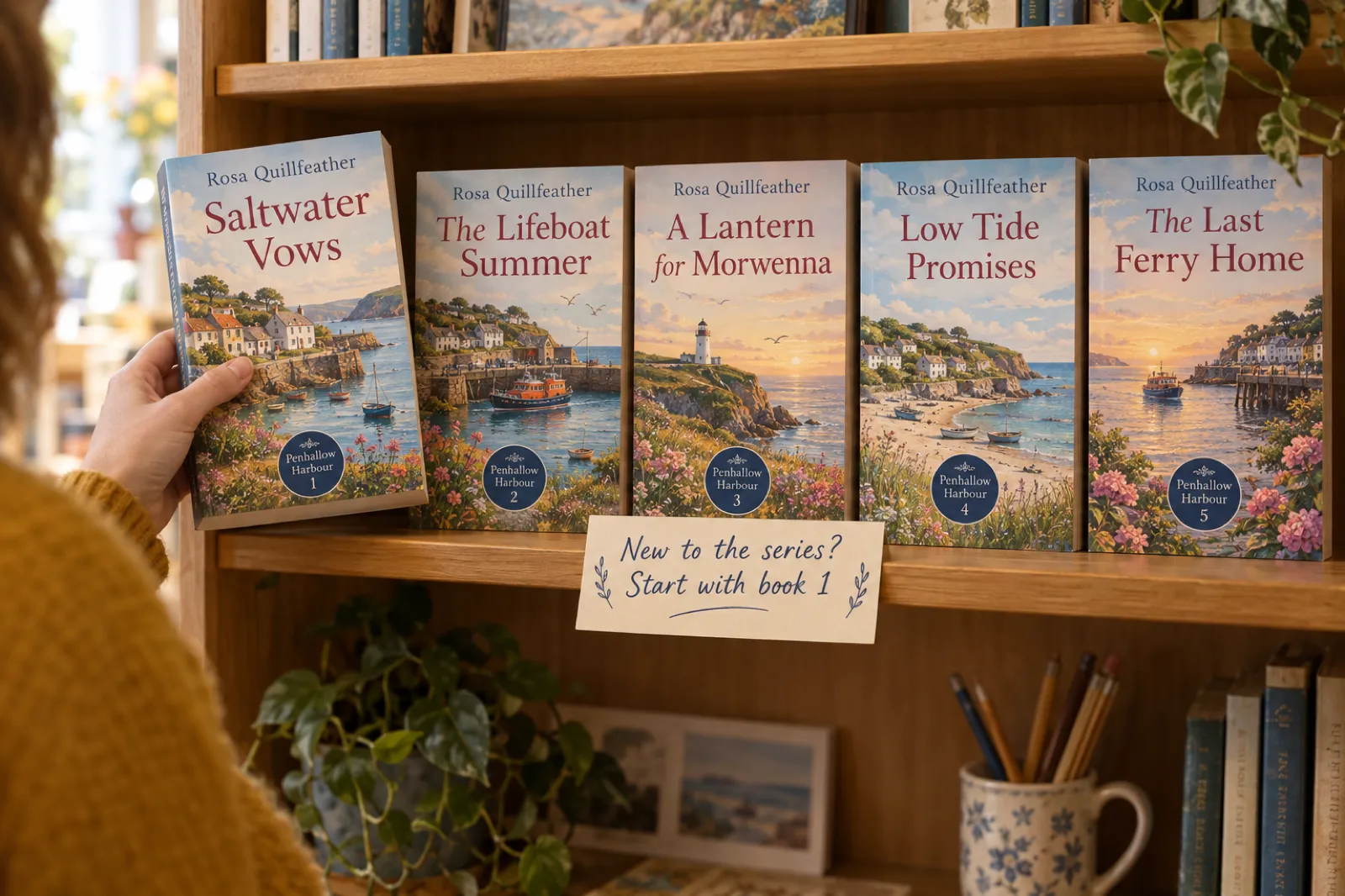
4. A cover that says the subgenre at thumbnail size
A cosy small-town romance, a dark mafia romance and a historical romance each have a look readers recognise in a grid of thumbnails. Covers in a series should match: same type, same layout, a clear book number. If your cover art is AI-generated, it counts as AI-generated content on KDP, so disclose it.
5. Real editing
Even Hart, the most automated romance author in the news, keeps a human at the end of the line to fix "AI tells" and rewrite. Those tells are familiar to romance readers by now: the same few phrases for longing, a tidy moral at the end of every scene, everyone "letting out a breath they didn't know they were holding". An editor or a careful read-through by you is not optional; it is the difference between a book and a draft.
6. Page reads, which reward books people finish
Many romance authors earn through Kindle Unlimited, renamed Kindle+ on 22 October 2026. Books enrolled in KDP Select are paid by the pages subscribers read, from the KDP Select Global Fund. Page reads pay for pages actually read, so a book abandoned at chapter three earns a fraction of one read to the end. In a subscription, a book that holds attention matters more than a book that merely gets opened. Enrolment means the ebook must be exclusive to Amazon in 90-day terms; KDP Select versus wide weighs the choice.
7. A description that sells the romance, not the adjectives
Name the two leads, the setting, what keeps them apart and the trope, then the heat level and the series. "Book one of the Penhallow Harbour series: a second-chance romance between a lifeboat volunteer and the woman who left the village ten years ago. Slow burn, closed door, guaranteed happy ending" does more than three lines of "unputdownable". The free book description generator gives you five drafts to start from.
The reader backlash, honestly
Hart's hate mail is the extreme end, but readers' feelings about AI fiction are real, and an author thinking of using AI should plan for them rather than hope they go away.
- Many readers care. The anger in Hart's inbox comes largely from readers and authors who feel misled. Romance has an unusually close relationship between authors and readers, built on newsletters, reader groups and social media, and trust is the asset.
- Hiding it is a risk you carry for the life of the pen name. If a pen name's readers later learn the books were AI-generated and were not told, the reaction tends to land on every book under that name, not just the new one.
- Reviews spot patterns. Readers who read a lot of romance notice repeated phrasing and structure across an author's books. "This reads like AI" in a review is hard to recover from.
- Returns are a signal too. Hart's own point, that readers return books they do not like, cuts both ways: a run of returns tells you something is wrong.
What to do about it is your decision, within each store's rules. Some authors who use AI say so plainly in an author's note or on their website, and keep the readers who do not mind. Others keep AI to planning and editing, which KDP treats as AI-assisted. Whatever you choose, do not mislead readers about who you are, and never claim a book was written without AI when it was not.
Quality versus volume: the numbers
The study gives the clearest view yet of what volume alone does. Put its numbers side by side with Hart's:
| Measure | Figure | Source |
|---|---|---|
| Hart's pace | 370+ books since February 2025, roughly four a week | AFP; weekly rate our arithmetic |
| KDP's ceiling today | 2 new titles per format a week, up to 104 ebooks a year | KDP Create a Book help; yearly figure our arithmetic |
| Share of books with substantial AI text | 20% of 14,419 | Chakrabarty et al. |
| Their share of sales / revenue | 12.1% / 11.3% | Chakrabarty et al. |
| Sales per AI-heavy book vs the rest | About half, on average | Our arithmetic from the two shares above |
| Selling books vs revenue, growth over the period | 19.2-fold vs 8.9-fold | Chakrabarty et al. |
Read together, these say something simple. More books on Amazon has not meant proportionally more money for books, so each book's share has shrunk, and the AI-heavy books, on average, are the ones getting the smaller share. A few AI-assisted authors clearly do well. The average AI-heavy book does not.
For most authors that points away from volume and towards the things volume makes hard: a planned series, consistent characters, real editing and covers that belong together. AI is very good at making the first draft fast. Spend the time it saves on the parts readers notice.
How to do it properly: a workflow for AI-assisted romance
This is the process we would recommend to any author who wants to use AI for romance and still be proud of the books in five years. It works with any tool; the next section shows how Inkfluence AI handles each step.
- Pick the subgenre, tropes and heat level first. Write them down in one line. "Small-town second-chance romance, slow burn, closed door, HEA." Every later decision checks against it.
- Plan the series, not just the book. Three to five books with a lead couple for each, a shared setting and a thread that runs across them. Know how book one ends before you start it.
- Build the story bible. Characters with looks, ages, jobs, wounds and voices; the setting; the rules (who knows whose secret, the timeline). This is what keeps chapter fourteen consistent with chapter four.
- Outline every chapter. One or two lines each: what happens, what changes between the two leads. Chapter count is how you set the book's length.
- Draft in order. Each chapter should be written knowing what the earlier ones said, not in isolation.
- Read every chapter as it lands. Fix the tells, sharpen the dialogue, add the moments only you would think of. This is your voice going in.
- Do a continuity pass. Names, eye colours, the timeline, who knows what. Readers forgive a slow chapter sooner than a contradiction.
- Get a second reader. An editor, a proofreader or a trusted beta reader. Hart uses a human proofreader; so should you.
- Make matching covers and a clear description. Same layout across the series, a book number, the trope in the blurb.
- Publish honestly. Answer KDP's AI question truthfully for text, images and translations, use one consistent pen name per readership, and fill in the series name and number.
- Release at a pace you can sustain. Within KDP's two a week per format, but more importantly within your ability to edit properly. Some authors release a series a few weeks apart so readers can read straight through.
- Add the audiobook. An audiobook reaches people who listen rather than read. AI narration cannot go to Audible through ACX, but it can be sold on stores that accept it; see where to sell an AI audiobook.

A worked example: planning a five-book series inside the limits
Here is an invented series, Penhallow Harbour by the pen name Rosa Quillfeather, planned for a winter launch. The point is the shape: write ahead, edit properly, then release close together.
| Weeks | What happens | KDP limit used |
|---|---|---|
| 1 to 2 | Series plan, story bible, outline for book 1; draft book 1 in order | None |
| 3 to 4 | Edit book 1, continuity pass, second reader; draft book 2 from book 1's ending | None |
| 5 to 8 | Books 2 and 3 drafted and edited the same way; all five covers made as a set | None |
| 9 | Book 1 published as ebook and paperback, AI question answered, series fields filled in | 1 ebook, 1 paperback |
| 11 and 13 | Books 2 and 3 released while books 4 and 5 are drafted and edited | 1 ebook, 1 paperback each week |
| 15 and 17 | Books 4 and 5 released; audiobook of book 1 made for stores that accept AI narration | 1 ebook, 1 paperback each week |
Five novels in four months is still fast by traditional standards, and every one has been read, edited and checked. The weekly limit is never close to binding; your editing time is.
Writing romance with Inkfluence AI
Hart built her method from several general chatbots and three months of trial and error. Inkfluence AI was built to write whole books, and for book-length romance we think it is the best tool there is. Here is what it does at each step of the workflow above, from the app itself:
- Romance is its own book type. Choose Romance ("Contemporary, historical, paranormal") and describe your premise, tropes and heat level in plain words. You approve the chapter outline before anything is written. The AI romance novel writer page shows the subgenres it handles.
- Chapters written in order, with memory. Novels are written one chapter at a time. Each new chapter is given the story bible (characters, key objects, point of view, the rules you set), the last three chapters in full, and a running record of the whole book: who knows what, where everyone is, what has already happened, and the story clock. Before each chapter, its plan is checked against that record, so a secret revealed in chapter four is not revealed again as news in chapter nine. How Inkfluence AI keeps a long book consistent explains it in full, and you can edit the story bible yourself; the story bible generator helps you build one.
- Series that carry forward. On a finished book, "Continue as a series" or "Write the next book" starts book two from where book one ended, carrying the story bible and what happened, with your own idea for the next book if you have one. Novels in a series are written one book at a time, so each builds on the last. See the AI book series writer.
- Spice, with stated boundaries. Intimacy can be on the page but stays suggestive, never graphic; every character is an adult and every scene consensual. The AI spicy romance writer page is plain about the ceiling, and the dark romance generator covers darker themes.
- An editor you work in. Every chapter opens in the editor, where you rewrite, cut and add. The assistant in the editor reads the previous chapters and the story bible, so it can help with a continuity question as well as a line edit.
- Covers and the description. The AI book cover generator and cover designer make covers, and the book description tool in the editor drafts three versions from your book's details and opening chapters.
- Files ready for KDP. A KDP-ready PDF and paperback interior, EPUB and Word export. Our AI novel generator for KDP page shows the files.
- The audiobook. The AI audiobook generator narrates chapter by chapter in 20 languages with 56 voices, as one MP3 per chapter or the whole book.
Honest limits. The free plan gives you 5 chapters to start, plus 5 more each month, with PDF export only; that is enough to test the writing, not to finish a novel. Creator ($9.99 a month) includes 35 chapters a month, EPUB and Word export and 15 audiobook chapters, and series. Premium ($19.99 a month) has unlimited chapters and 30 audiobook chapters a month with HD voices. Paid plans allow up to 40 chapters a book. Length comes from chapter count, not a word target; novel chapters usually run roughly 1,800 to 2,200 words (our chapter-length data). Inkfluence AI does not upload to Amazon for you, does not answer KDP's AI question for you (if it wrote your chapters, the answer is Yes), and does not replace your own read-through and edit. Every plan is on the pricing page.
Write book one of your series this week
Choose Romance, describe your couple and your tropes, approve the outline, and read each chapter as it is written. When book one is done, continue it as a series with everything carried over.
Start my seriesChecklist before you publish an AI-assisted romance
- Promise: subgenre, tropes and heat level written in one line, and visible on the cover and in the description.
- Story bible: characters, setting and rules written down and up to date.
- Read-through: every chapter read and edited by you; AI tells cut.
- Continuity: names, looks, timeline and who knows what checked across the book and the series.
- Second reader: an editor, proofreader or beta reader has been through it.
- Distinct: the book is clearly different from your other books, not a re-skin.
- Cover: matches the series and the subgenre; AI art disclosed.
- KDP form: AI question answered truthfully for text, images and translations; series name and number filled in; pen name consistent.
- Pace: inside 2 new titles per format a week, and inside your editing time.
- Readers: you have decided how you will talk about AI with your readers, and you will not mislead them.
What we still do not know
- Whether Amazon will start showing the AI disclosure to shoppers. Its guidelines do not say so today.
- How the study's findings hold up in peer review, and whether they differ between romance subgenres.
- Hart's real sales figures. AFP reports her own estimates; no store or independent figures have been published.
- Whether KDP's weekly title limits will change again. They have changed more than once since 2023.
For this month's other changes, see what changed for self-publishers in November 2026, and for the wider picture, how AI is changing the book industry.
Write the romance readers come back for
Plan the series, write it in order with a story bible, edit every chapter, and export files ready for KDP. Free to start, no credit card.
Start your romance freeHow we checked this
Coral Hart's numbers and quotes come from her interview with AFP, published on 23 October 2026, read on 24 November. Where later coverage gave different figures (a different count of pen names, coaching numbers, prices or time per book) and we could not find them in a source we could read, we left them out. The study figures come from the paper itself on arXiv. KDP rules come from KDP's help pages, read on 24 November 2026: the content guidelines, the Guide to Kindle Content Quality, Create a Book, and the two pen name pages. Figures marked "our arithmetic" are our own calculations from those sources. The series in the example and the images are invented.
Frequently asked questions
Can you publish AI-written books on Amazon KDP?
Yes. KDP's content guidelines allow AI-generated text, images and translations, as long as you tell Amazon about them when you publish and the book meets the same content and quality rules as every other book. Amazon can reject or remove books that do not.
Do you have to disclose AI on KDP?
Only for AI-generated content. KDP defines that as text, images or translations created by an AI-based tool, even if you edited them heavily afterwards, and asks about it on the Content page when you publish or republish. If you wrote the book yourself and used AI only to edit, refine, error-check or improve it, KDP calls that AI-assisted and does not need to be told.
Do readers see the AI disclosure on Amazon?
KDP's guidelines describe the disclosure as information you give Amazon. They do not say it is shown to shoppers. Other stores have their own rules, and some ask for AI content to be labelled.
How many books can you publish on KDP per week?
KDP's Create a Book help page sets two weekly limits: up to 2 new titles created per book format each week, and up to 2 new titles submitted per book format each week, counted the first time you submit. Ebook, paperback and hardcover count separately, updates to existing books do not count, and the limits reset every Sunday at 12:00 AM UTC. The limits have been in force since 21 September 2026; the older daily cap reported in 2023 was three titles a day.
Can you use a pen name on KDP?
Yes. KDP's help says you can use a pen name or pseudonym, your real name is not published on the site, and the name should be appropriate and consistent across your work. Your legal name still goes in your account identity details, and the pen name goes in the author field of each book. The author field cannot be changed after publishing.
How many AI romance novels has Coral Hart published?
More than 370 since February 2025, under more than 10 pen names, according to her interview with AFP published on 23 October 2026. She also told AFP she had sold more than a million books and earned more than $1 million this year, by her own estimate.
Do AI romance novels sell?
Some do. Coral Hart says hers do, and one reached Amazon's top 100. But a study of 14,419 self-published genre-fiction books on Amazon (a preprint, not yet peer reviewed) found that books with substantial AI text were 20% of the books and earned 12.1% of the sales. On average, each sold about half as much as a book with little or no AI text. Volume alone does not sell; series, a clear promise, consistency and editing do.
Will Amazon remove an AI-written romance novel?
Not for using AI on its own. KDP removes books that break its content guidelines or quality rules: for example a book not significantly different from another in the store, one that does not give an enjoyable reading experience, or text excessively repeated within or across books. Undisclosed AI-generated content also breaks the guidelines.
What is the best AI tool for writing a romance series?
For whole books, we think Inkfluence AI is the best fit: romance is its own book type, every chapter is written with a story bible and the earlier chapters in front of it, and a finished book can be continued as a series with its characters and events carried over. It also makes covers, KDP-ready PDF and EPUB files, and audiobooks. You still read and edit every chapter.
Sources
- AFP via France 24, 370 books in 20 months: S.African author defends her use of AI, Cape Town, 23 Oct 2026, read 24 Nov 2026
- Chakrabarty, Liu, Ginsburg and Dhillon, Generative AI floods and dilutes the market for books, arXiv 2607.20349 (v3, 3 Aug 2026; preprint, not peer reviewed), read 24 Nov 2026
- KDP Help, Content Guidelines (artificial intelligence section), read 24 Nov 2026
- KDP Help, Guide to Kindle Content Quality, read 24 Nov 2026
- KDP Help, Create a Book (weekly creation and submission limits), read 24 Nov 2026
- KDP Help, Authors & Contributors and What if my account name is different from my ID? (pen names), read 24 Nov 2026
- Self-Publishing Advice, Amazon cuts KDP weekly upload limit, 24 Sep 2026 (reporting the 21 Sep effective date)
- Authors Guild, Amazon adds to KDP generative AI policy, caps daily self-publishing uploads, 2023
- Futurism, coverage of Coral Hart, 15 Nov 2026 (reporting)
- Slashdot, AI-generated books confront publishing industry with big questions, 16 Nov 2026, summarising The Guardian, 14 Nov 2026 (reporting)
Related reading
- Amazon KDP AI disclosure: the seven cases authors get wrong
- Which stores allow AI-written books, store by store
- How to write a romance novel with AI
- How to sell romance novels
- The best AI for writing genre fiction
- Kindle+ for authors: what changed and what pays
- Can you sell AI-generated books?

Inkfluence AI Team
Tips, tutorials, and strategies from the Inkfluence AI team to help you write, publish, and sell ebooks faster.
Helpful links

Ready to write your own book?
Write with AI, make it yours, and export PDF, EPUB and KDP-ready files from one project.
Keep reading
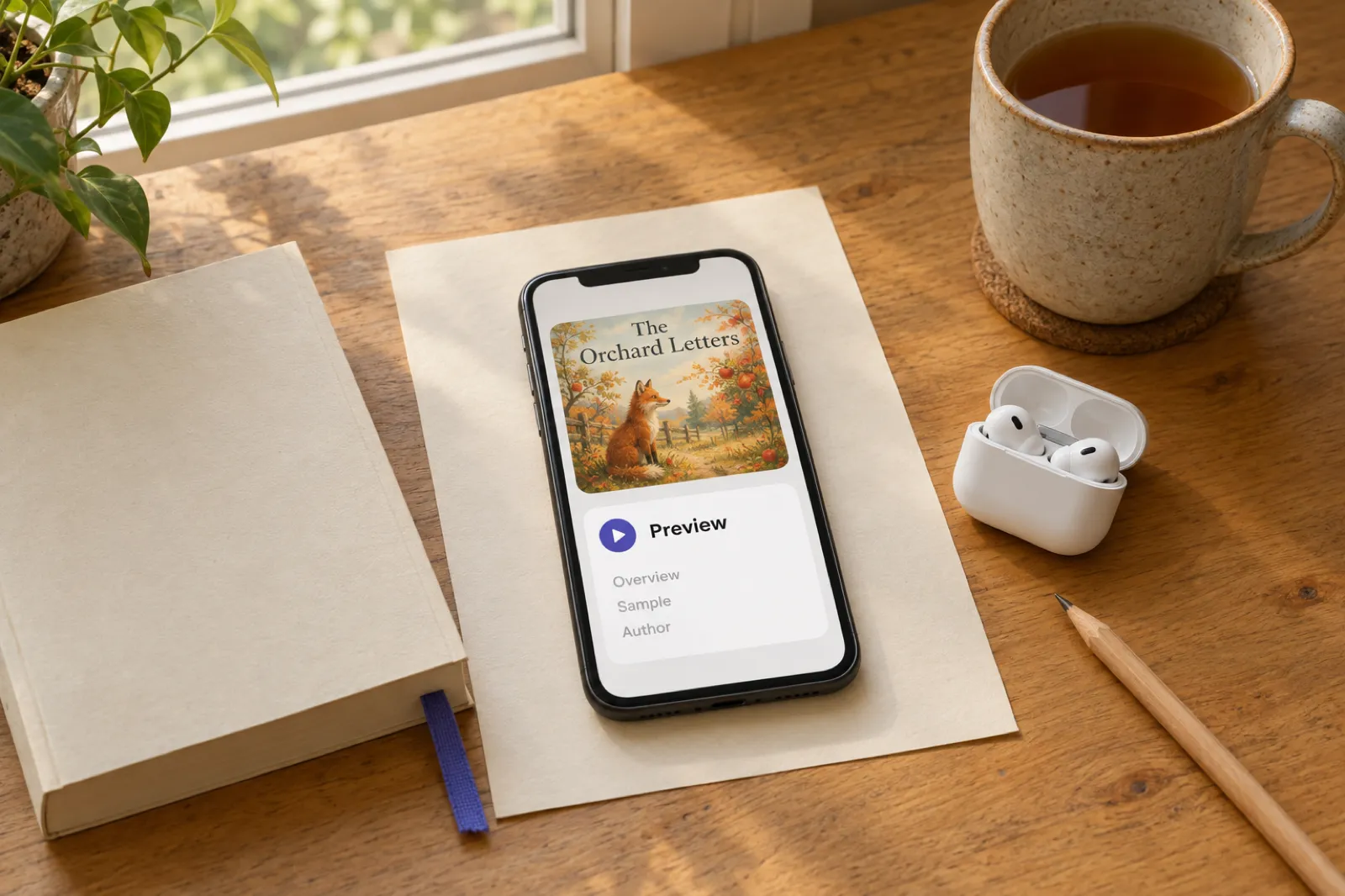 Publishing
Audible Audio Discovery: What Audible's AI Book Previews Mean for Authors (2026)
Audible's new Audio Discovery plays an AI-voiced overview of a book next to its narrated sample and author or editor commentary, built from synopses, metadata and reviews. What listeners hear, which books get it, what authors control, how it relates to KDP Virtual Voice, and a checklist for getting your description, sample and audiobook ready.
 Audiobooks
Spotify's Free AI Audiobook Tool Is Now in the UK: What You Get, the Limits, and When to Make Your Own
On 18 November 2026 Spotify opened its free Audiobook Creation Tools to self-published authors in the UK and 20 more markets, and added Spanish. Here is exactly what you get, the five-book limit as Spotify's help centre defines it, who is eligible, where the audiobook can go, and when making your own audiobook files is the better route.
 Publishing
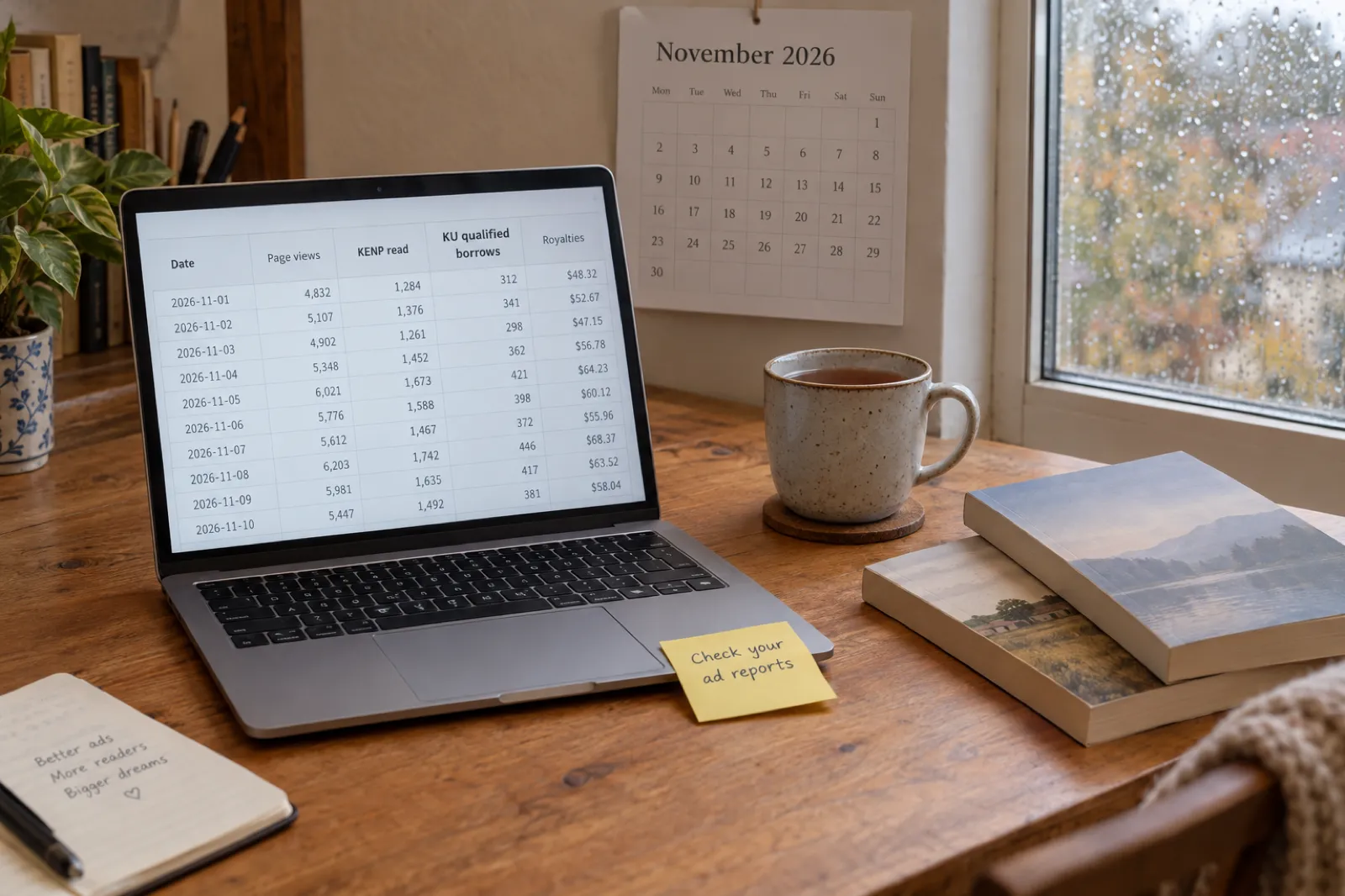
What Changed for Self-Publishers This Month (November 2026)
The self-publishing changes that matter in November 2026, each checked at its source: Amazon Ads dropped page-based KENP royalty estimates for "qualified borrows", Etsy prints your digital files and refunds the full 6.5% fee through Share & Save, Spotify audiobooks head to 180+ markets, Smashwords takes pre-orders, and new Gemini and GPT models. What each means and what to do.

Get ebook tips in your inbox
Join creators getting weekly strategies for writing, marketing, and selling ebooks. You also get our free PDF guide, Your First Book in a Weekend.