
How to Convert Your Book into an Online Course Using AI (Step-by-Step)
Your book already has the curriculum. AI can restructure it into lesson modules, create exercises, build assessments, and generate the full course outline in under an hour. Here is the complete process.

Quick Answer
Yes - AI can convert a book into a structured online course. The process involves mapping chapters to modules, breaking sections into individual lessons, generating exercises and assessments for each lesson, and creating supplementary materials like worksheets and quizzes. Inkfluence AI's course creator handles the structural conversion automatically, and supporting content types like lesson plans, study guides, and workbooks fill out the course materials. A 10-chapter book typically converts into an 8-12 module course with 40-60 individual lessons - generated in about 2 hours compared to 3-6 weeks of manual curriculum design.
Why Convert Your Book Into a Course
Books sell for $15. Courses sell for $197.
The same content, restructured for active learning instead of passive reading, commands 10-15x the price. A $15 ebook becomes a $97-497 course. A $29 non-fiction book becomes a $197 certification program. The content already exists in your manuscript - it just needs restructuring into modules, lessons, exercises, and assessments.
AI makes this conversion practical for solo authors who cannot afford instructional designers. This guide shows you the exact step-by-step process using Inkfluence AI.
You have written a book. Congratulations - you now own a complete curriculum that took months to develop. But here is what most first-time authors miss: the book is not the end of the content's value. It is the raw material for a much higher-value product.
Online courses consistently sell for 10-15x the price of ebooks covering the same topic. Why? Because a course adds active learning structure: exercises, assessments, community, feedback loops, completion certificates, and accountability. A reader buys knowledge. A student buys transformation. Transformation commands premium pricing.
The barrier has always been the conversion process itself. Restructuring a 50,000-word book into a modular course with lesson plans, exercises, quizzes, and supplementary materials takes an instructional designer 3-6 weeks and costs $3,000-$10,000. For a self-published author making $500/month from book sales, that math does not work.
AI changes the economics completely. Tools like Inkfluence AI can generate companion materials including structured lesson plans, study guides, workbooks, and email courses - all the building blocks of an online course - in a fraction of the traditional time.
Chapter-to-Module Mapping: The Foundation
The first step is understanding that chapters and modules are not 1:1. A book chapter is a self-contained essay that teaches through narrative. A course module is a learning unit that teaches through structured progression: concept introduction, demonstration, practice, assessment.
Here is the general mapping:
| Book Element | Course Element | Notes |
|---|---|---|
| Introduction | Welcome module + course orientation | Add "what you will learn" outcomes, set expectations |
| Chapter (conceptual) | Module with 3-5 lessons | Break chapter into concept/demo/practice/review lessons |
| Chapter section | Individual lesson (10-15 min) | Each section becomes a focused, completable lesson |
| Anecdotes / case studies | Discussion prompts or "analyse this" exercises | Turn passive reading into active analysis |
| Lists of tips / strategies | Checklists, worksheets, action plans | Convert advice into printable implementation tools |
| Book conclusion | Final project + certificate module | Add capstone project that applies all concepts together |
A 10-chapter book typically produces 8-12 course modules (some chapters merge, the conclusion expands into a project module, and you add an orientation module at the start). Each module contains 3-5 lessons of 10-15 minutes each, giving students clear progress markers and natural stopping points.
How Books and Courses Differ Structurally
Understanding these structural differences is critical. If you simply dump your book text into course lesson slots, students will disengage - they could have just read the book. The course must add five elements that books lack:
- Learning objectives - Each module and lesson starts with explicit outcomes: "By the end of this lesson, you will be able to..." This frames the content as skill-building rather than information consumption
- Active exercises - Every lesson includes at least one exercise where the student applies the concept to their own situation. A book says "consider your target audience." A course says "Open the Target Audience Worksheet. Fill in the three columns using the framework from Lesson 2.3."
- Knowledge checks - Short quizzes or reflection questions after each module verify comprehension before the student moves on. These do not need to be graded - even ungraded quizzes improve retention by 40% through the testing effect
- Progression architecture - Courses have prerequisite chains (Module 3 requires Module 2). Books are often designed to be dipped into at any point. You need to restructure for linear progression
- Community and accountability - Discussion prompts, peer review exercises, and group challenges turn a solo reading experience into a cohort learning experience. This is where courses justify premium pricing
AI handles items 1-4 extremely well. Inkfluence AI's lesson plan generator produces structured lessons with learning objectives, activities, and assessments built in. The study guide generator creates review questions and knowledge checks. The workbook format generates exercises and worksheets. You add item 5 (community) through your course platform.
7-Step Book-to-Course Conversion Process
Step 1: Audit Your Book's Structure (15 minutes)
Go through your book's table of contents and classify each chapter:
- Teaching chapters (core concept + framework) → these become course modules
- Context chapters (background, history, motivation) → these condense into module introductions
- Application chapters (case studies, examples) → these become exercise material
Most non-fiction books are 60% teaching, 25% context, and 15% application. A good course is 40% teaching, 10% context, and 50% application. Your conversion work is primarily creating more application content.
Step 2: Define Learning Outcomes (15 minutes)
Write 3-5 outcomes for the overall course and 2-3 outcomes per module. Use Bloom's Taxonomy verbs: identify, explain, apply, analyse, evaluate, create. Not "understand marketing" but "Create a 30-day content calendar using the PESO model."
Step 3: Generate the Course Outline with AI (10 minutes)
Use Inkfluence AI's course creator to generate a structured outline. Describe your book's topic and learning outcomes. The AI produces a modular outline with lesson titles, time estimates, and content descriptions for each section. This gives you the scaffolding to fill with your book's content.
Step 4: Generate Lesson Plans for Each Module (30 minutes)
For each module, use the lesson plan generator to create structured lesson plans that include learning objectives, content outline, an activity or exercise, discussion questions, and an assessment. Feed it the topic and key points from the corresponding book chapter.
Step 5: Create Workbook Exercises (20 minutes)
Generate a companion workbook using Inkfluence AI's workbook format. This produces chapter-aligned exercises, templates, and reflection prompts. Break the workbook output into individual lesson worksheets for your course platform.
Step 6: Build Knowledge Checks and Assessments (15 minutes)
Use the study guide format to generate review questions, key vocabulary definitions, and self-assessment rubrics for each module. Convert the review questions into quizzes on your course platform. Add a final assessment or capstone project for certification.
Step 7: Create Supplementary Materials (20 minutes)
Generate supporting pieces:
- A cheat sheet lead magnet as a free preview/teaser for the course
- A checklist pack with implementation checklists for each module
- An email course as a free mini-course funnel that drives enrollment in the full course
Total time: approximately 2 hours. Compare that to 3-6 weeks for manual curriculum design.
Convert your book into a course today
Inkfluence AI's course creator, lesson plan generator, and workbook format handle the heavy lifting. Start with the free tier.
Start Converting FreeReal Example: Business Book to Course Conversion
Let us walk through a concrete example. You have a business book called "The Freelancer's Client Acquisition Playbook" with 8 chapters:
| Book Chapter | Course Module | Lessons | Key Exercise |
|---|---|---|---|
| - | Module 0: Welcome + Orientation | 2 (intro + goal-setting) | Set your 90-day client goal |
| Ch 1: Why Clients Come (and Go) | Module 1: Client Psychology | 3 (buying triggers, trust signals, red flags) | Trust signal audit of your current profile |
| Ch 2: Your Ideal Client Profile | Module 2: Ideal Client Mapping | 4 (demographics, psychographics, watering holes, ICP doc) | Fill in the Ideal Client Profile worksheet |
| Ch 3: Positioning and Pricing | Module 3: Positioning | 4 (USP, pricing models, rate calculator, positioning statement) | Write your positioning statement using template |
| Ch 4: Outreach That Works | Module 4: Outreach Mastery | 5 (cold email, LinkedIn, referrals, proposals, follow-ups) | Send 5 outreach messages using the templates |
| Ch 5: Discovery Calls | Module 5: The Discovery Call | 3 (prep, script, objection handling) | Role-play a discovery call using the script |
| Ch 6: Proposals and Closing | Module 6: Closing Deals | 3 (proposal template, pricing presentation, negotiation) | Write a proposal for a real prospect |
| Ch 7-8: Retention + Scaling | Module 7: Retain and Scale | 4 (onboarding, upselling, referral systems, scaling) | Design your client onboarding sequence |
| Conclusion | Module 8: Capstone Project | 2 (project + peer review) | Complete 90-day client acquisition plan |
Result: an 8-chapter book becomes a 9-module course with 30 individual lessons, each with exercises, and a capstone project. The book sold for $19. The course sells for $197. Same core content, restructured for active learning.
With Inkfluence AI, you would generate the course outline, then use the lesson plan generator for each module, then generate a companion workbook with exercises aligned to each module, then create a study guide with review questions for the knowledge checks. Total generation time: about 2 hours of focused work. Upload to your course platform, add video introductions if desired, and launch.
Creating Exercises and Assessments with AI
This is where most book-to-course conversions fall short. Authors dump text into lesson slots and call it a "course." The difference between a $49 course and a $297 course is the quality and density of exercises. Every lesson needs at least one interactive element.
Here are the exercise types AI generates well, matched to the content type they work best with:
| Exercise Type | Best For | Inkfluence Blueprint | Example |
|---|---|---|---|
| Fill-in worksheets | Framework application | Workbook | Complete your SWOT analysis |
| Reflection prompts | Self-help, mindset | Workbook | Describe a time when you... |
| Multiple-choice quizzes | Knowledge verification | Study Guide | Which pricing model is best for...? |
| Case study analysis | Business, strategy | Study Guide | Read this scenario and identify... |
| Step-by-step challenges | Implementation | Day Challenge | Day 3: Send 5 cold emails |
| Checklists | Process verification | Checklist Pack | Pre-launch checklist (12 items) |
| Template completion | Practical skills | Lead Magnet | Fill in the email template with your... |
Generate these exercise types using the corresponding Inkfluence AI formats, then distribute them across your course lessons. A workbook with 10 chapters of exercises becomes 30+ individual lesson worksheets when broken apart.
Pricing Your Course: Models That Work
Book-derived courses have a built-in pricing advantage: the book establishes authority at a low price point, and the course upsells the premium experience. Here are real pricing models that work:
| Model | Price Range | What is Included | Best For |
|---|---|---|---|
| Self-paced | $47 - $197 | Lessons + exercises + quizzes + certificate | Evergreen, passive income |
| Cohort-based | $297 - $997 | Above + live sessions + community + accountability | High-touch, premium positioning |
| Certification | $497 - $2,000+ | Above + formal assessment + credential + badge | Professional development, B2B |
| Book + Course bundle | $29 - $79 | Book + course access + workbook | Maximising book buyer value |
| Free course + paid book | Course: $0, Book: $15-29 | Mini-course teaser drives book sales | Lead generation, audience building |
The sweet spot for a first book-to-course conversion is the self-paced model at $97-197. It requires no live sessions (you do not want to be on Zoom every week), scales infinitely, and delivers enough value to justify the price through exercises and assessments alone.
Platform Comparison: Where to Host
Once your course content is generated, you need a platform to host it. Here are the most popular options for book-derived courses:
| Platform | Monthly Cost | Transaction Fee | Best Feature | Best For |
|---|---|---|---|---|
| Teachable | $39-119 | 0-5% | Built-in payments + marketing | Authors wanting all-in-one |
| Thinkific | $0-99 | 0% | Free tier with 1 course | Testing the waters |
| Kajabi | $149-399 | 0% | Marketing automation + funnels | Established authors with audience |
| Gumroad | $0 | 10% + $0.50 (plus card processing) | Zero monthly cost + instant setup | MVPs and testing |
| Udemy | $0 | 37-63% | Built-in marketplace traffic | Discovery (low price only) |
| Podia | $33-75 | 0% | Clean UX + email marketing | Creators who want simplicity |
Recommendation for first-time course creators: Start with Thinkific's free tier or Gumroad. Validate that people will pay for your course before committing to $99+/month platforms. Once you have consistent enrollments, upgrade to Teachable or Kajabi for marketing automation. Your AI-generated course content exports from Inkfluence AI as PDF and text - both import cleanly into any platform.
Timeline: Manual vs AI-Assisted Conversion
Here is a realistic timeline comparison for converting a 10-chapter non-fiction book into a self-paced online course:
| Task | Manual | With AI (Inkfluence) |
|---|---|---|
| Audit book structure | 2-3 hours | 15 minutes |
| Define learning outcomes | 3-4 hours | 15 minutes |
| Create course outline | 4-6 hours | 10 minutes |
| Write lesson plans (30 lessons) | 30-45 hours | 30 minutes |
| Create exercises / worksheets | 15-25 hours | 20 minutes |
| Build assessments / quizzes | 8-12 hours | 15 minutes |
| Create supplementary materials | 10-15 hours | 20 minutes |
| Total | 72-110 hours (3-6 weeks) | ~2 hours |
The AI-generated content still needs human review and editing. Budget an additional 4-6 hours for reviewing, customising, and uploading to your course platform. Total: about 8 hours vs 3-6 weeks. That is the difference between "I'll do a course someday" and "I launched a course this week."
Your book is already a curriculum
AI turns it into a course with modules, lessons, exercises, and assessments. Generate the structure in under 2 hours with Inkfluence AI.
Start FreeRevenue Projections: Book vs Book + Course
Let us run the numbers for a realistic solo author scenario. You have one non-fiction book on a topic with a medium audience (freelancing, fitness, personal finance, marketing, etc.):
| Metric | Book Only | Book + Course |
|---|---|---|
| Book price | $15 | $15 |
| Course price | - | $97 |
| Monthly book sales | 50 | 50 |
| Course conversion rate | - | 5% of book buyers |
| Monthly course enrollments | - | 2-3 |
| Monthly book revenue | $750 | $750 |
| Monthly course revenue | - | $194 - $291 |
| Monthly total | $750 | $944 - $1,041 |
| Annual total | $9,000 | $11,328 - $12,492 |
A conservative 5% conversion rate from book buyers to course students adds $2,300-$3,500/year from the same audience. And that is before direct course marketing, affiliate partnerships, or email list upsells. Authors who actively market their course alongside the book see 10-15% conversion rates, doubling those numbers.
The key insight: this extra revenue comes from a ~2-hour AI-assisted conversion effort. The ROI is effectively infinite once you pass the first few enrollments.
Keep Reading
- AI Tools for Authors vs ChatGPT: The Real Difference - Why purpose-built tools outperform generic AI for book and course creation
- Create Companion Materials with AI - Build workbooks, cheat sheets, and lead magnets to pair with your course
- Is AI Audiobook Voice Quality Good Enough to Sell? - Add audiobook as another revenue stream alongside your course
- Try an AI Ebook Tool Free: 30-Minute Sample Project - Test the platform before committing to a full book-to-course conversion
Frequently Asked Questions
Can I really convert a book into a course with AI?+
What types of books convert best into online courses?+
How do I price a course based on my book?+
Do I need video for my course?+
Which platform should I use to host my course?+
How long does the whole conversion take?+
Can I sell both the book and course?+
What happens if my book is fiction?+

Founder, Inkfluence AI
Sam is the founder of Inkfluence AI. He built the platform to make book creation accessible to everyone - from first-time authors to seasoned publishers.
Helpful links
Ready to Create Your Own Ebook?
Start writing with AI-powered tools, professional templates, and multi-format export.
Get Started FreeRelated Articles
 AI Writing
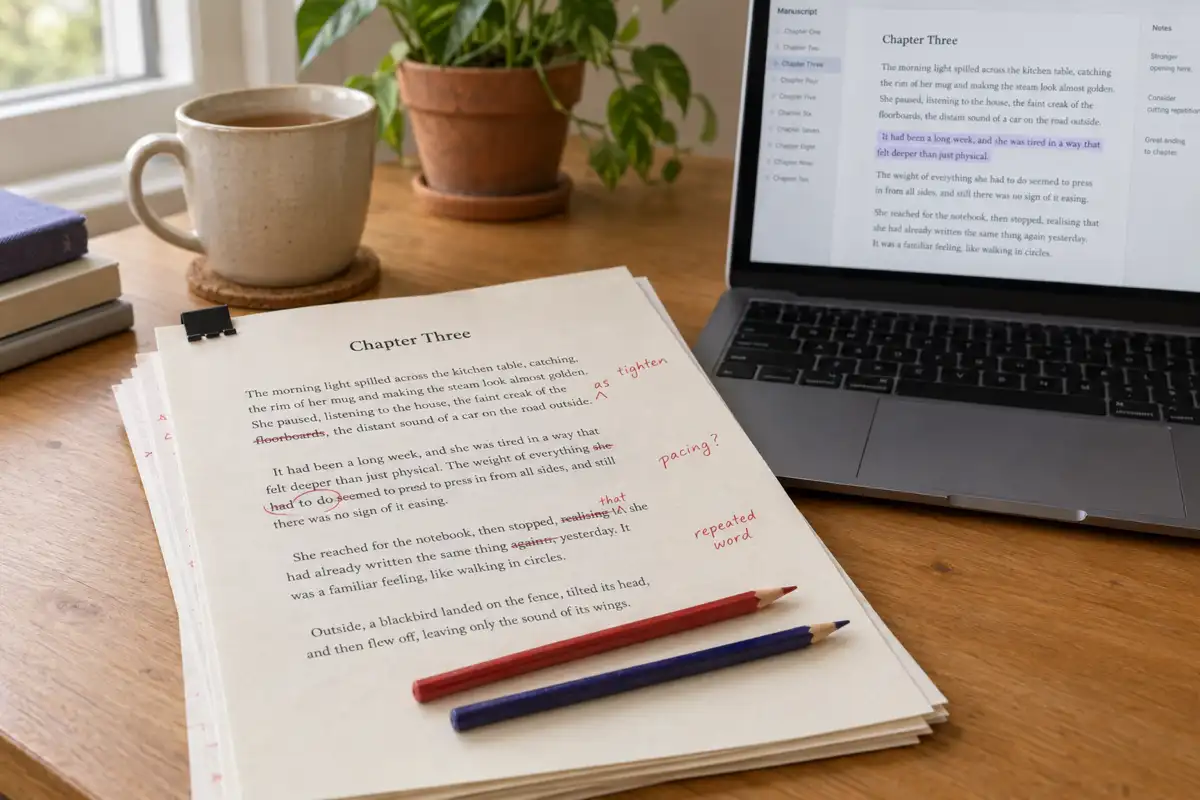
 Best AI for Editing a Book (2026): 9 Tools Compared by Editing Job
Which AI should edit your manuscript? We compare ProWritingAid, Grammarly, AutoCrit, Sudowrite, Novelcrafter, ChatGPT, Claude, the free checks in Google Docs and Word, and Inkfluence AI by the job each does best: grammar, line editing, story feedback, or editing and publishing in one place. Prices checked 2 October 2026.
 AI Writing
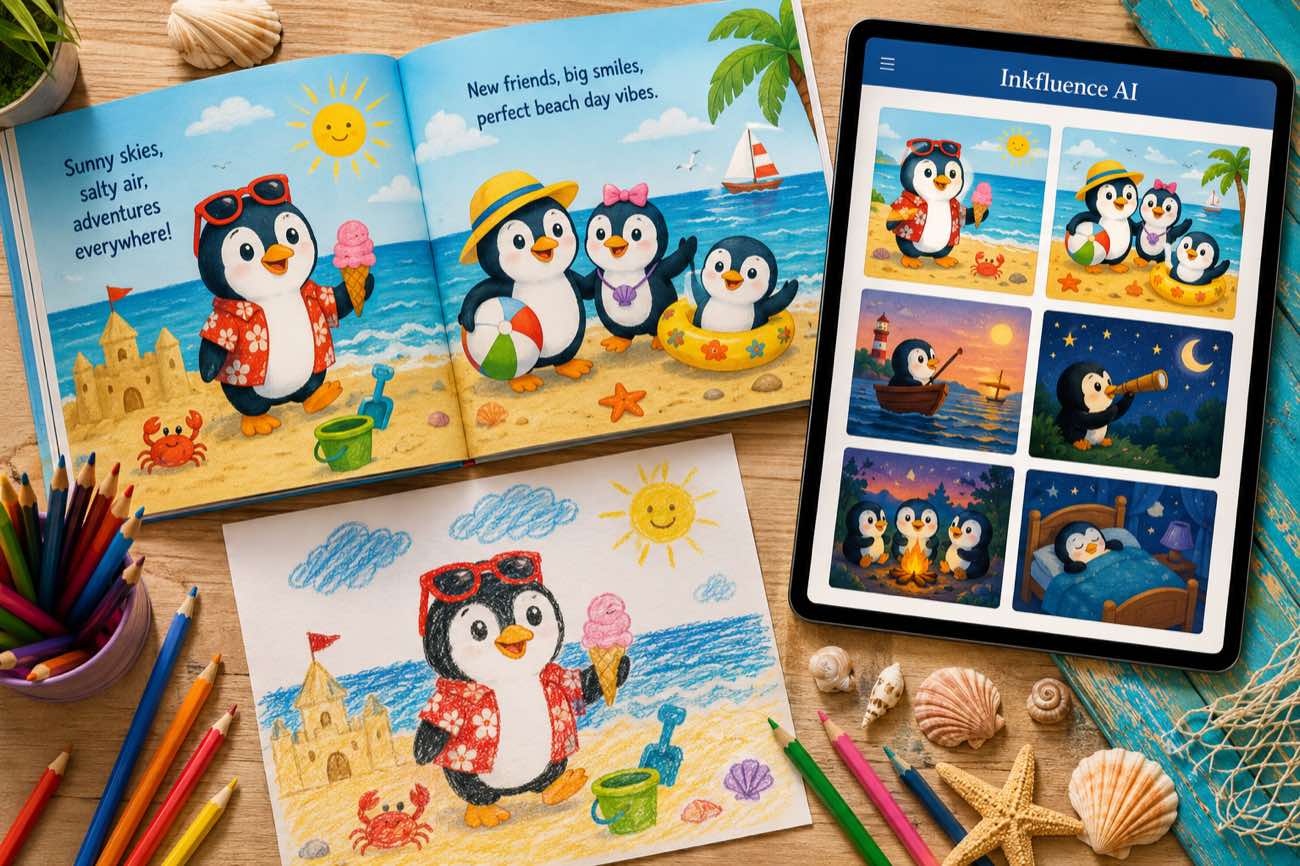
 How to Make a Children's Picture Book with AI: Idea to Printed Book in a Day
The complete 2026 workflow for making a fully illustrated children's picture book with AI: age-band word counts, page planning, consistent characters, cover design, and publishing it on Amazon KDP with the right disclosure.
 AI Writing
 The 9 Best Ebook Creators in 2026: AI, Formatting, and Design Tools Compared
Not every "ebook creator" does the same job. We compare the 9 best tools of 2026 across three categories: AI generators that write the book, formatting tools that typeset it, and design tools that make it beautiful, with verified pricing for each.
Get ebook tips in your inbox
Join creators getting weekly strategies for writing, marketing, and selling ebooks.