
The Animal Coloring Book Generator
Built for the Specific Book That Sells
Name the animal and the angle. Inkfluence plans 12 to 40 scenes around it, draws every one in a single line style, bold for kids or intricate for adults, and hands you a finished animal coloring book, cover included.
Broad "animals" is one of the most oversaturated coloring niches on Amazon; breed and species books are among the strongest. This page is built on that difference. Print PDF at square 8.5" x 8.5" or letter 8.5" x 11". Full commercial rights on every plan.
Updated October 2026 · By the Inkfluence AI team
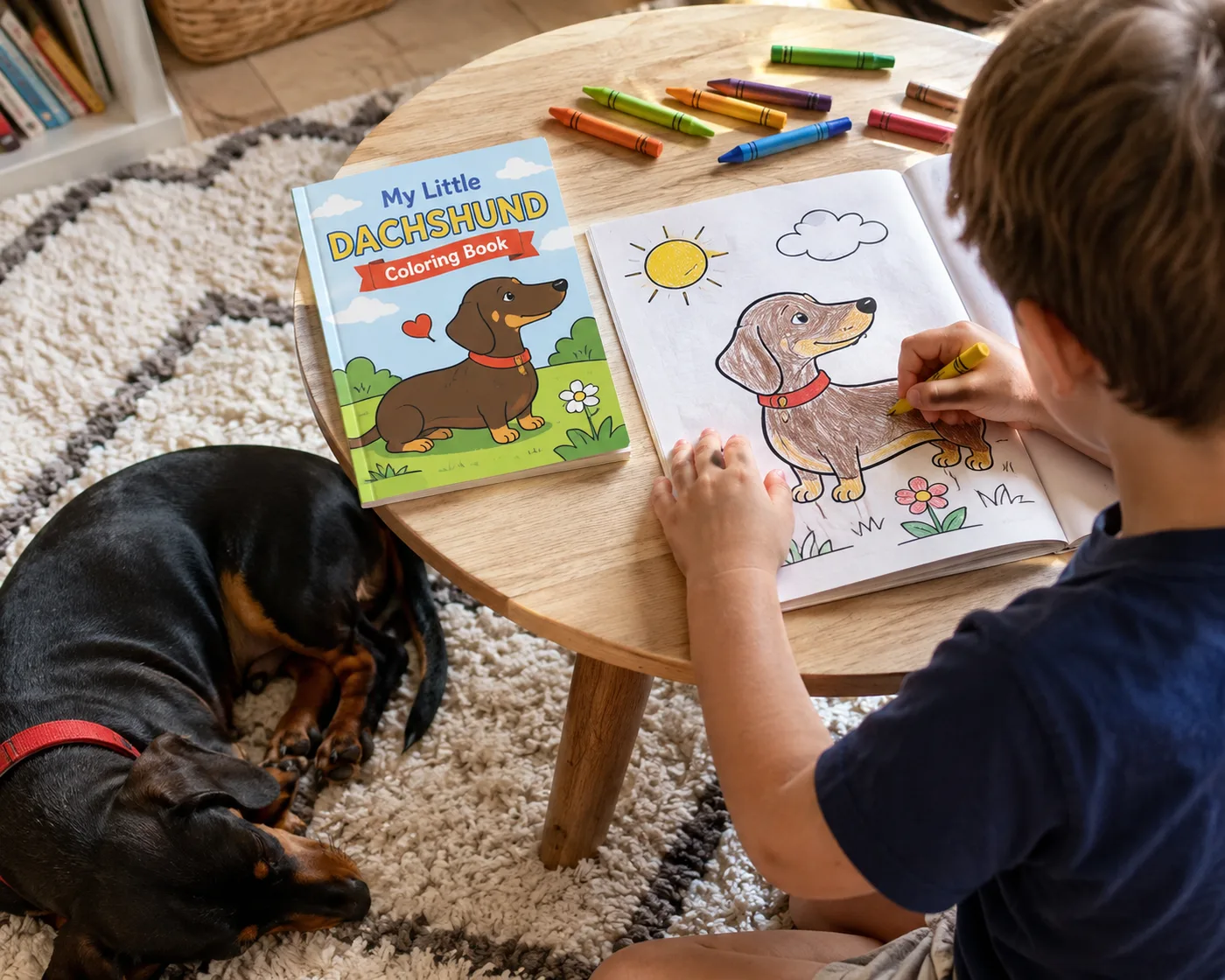
Quick answer
An animal coloring book generator makes a whole book around one animal from one prompt. Name the animal, the audience and the angle, and Inkfluence AI plans every page as its own scene, draws each in one consistent line style, paints a color cover, and exports a print PDF at a KDP trim. Kids' prompts get bold outlines and big regions; "intricate" gets the fine pet-portrait look. The one rule that matters more than the tool: pick a breed, a species or a character, not "animals". In a June 2026 analysis of 500 KDP coloring books, broad animal titles averaged 19 reviews at a sales rank around 312,000 while breed-specific pet books averaged 98 reviews at around 58,700. The table further down lists which animals and angles have room, with a prompt for each.
A real book, generated from one prompt
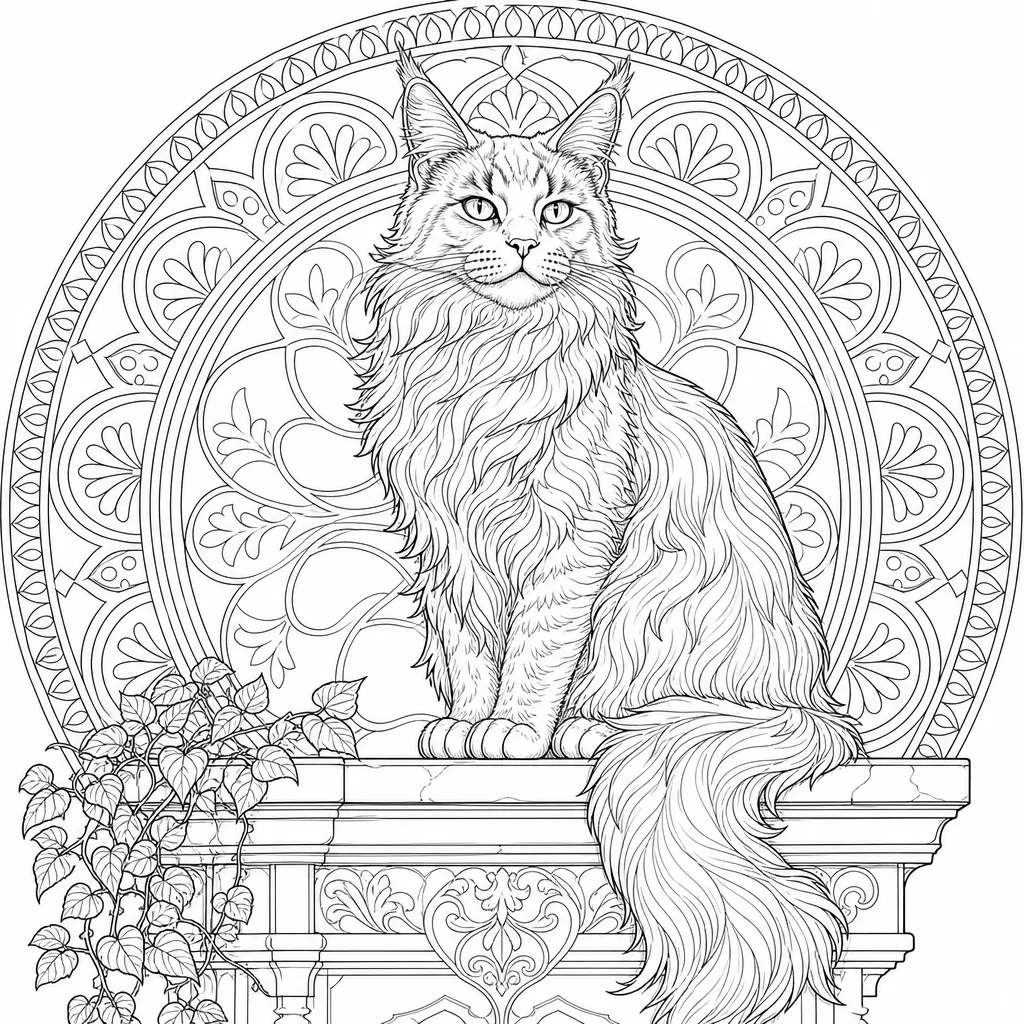
The first six pages and the cover come from a single 20-page run, "a coloring book of one dachshund with floppy ears and a red collar doing everyday things, for kids aged 4 to 8". The plan named him Toto; a character sheet was painted first and every page drawn from it. The last image is from a second, adult run of cat breed portraits to show the other rung. All unedited exports.
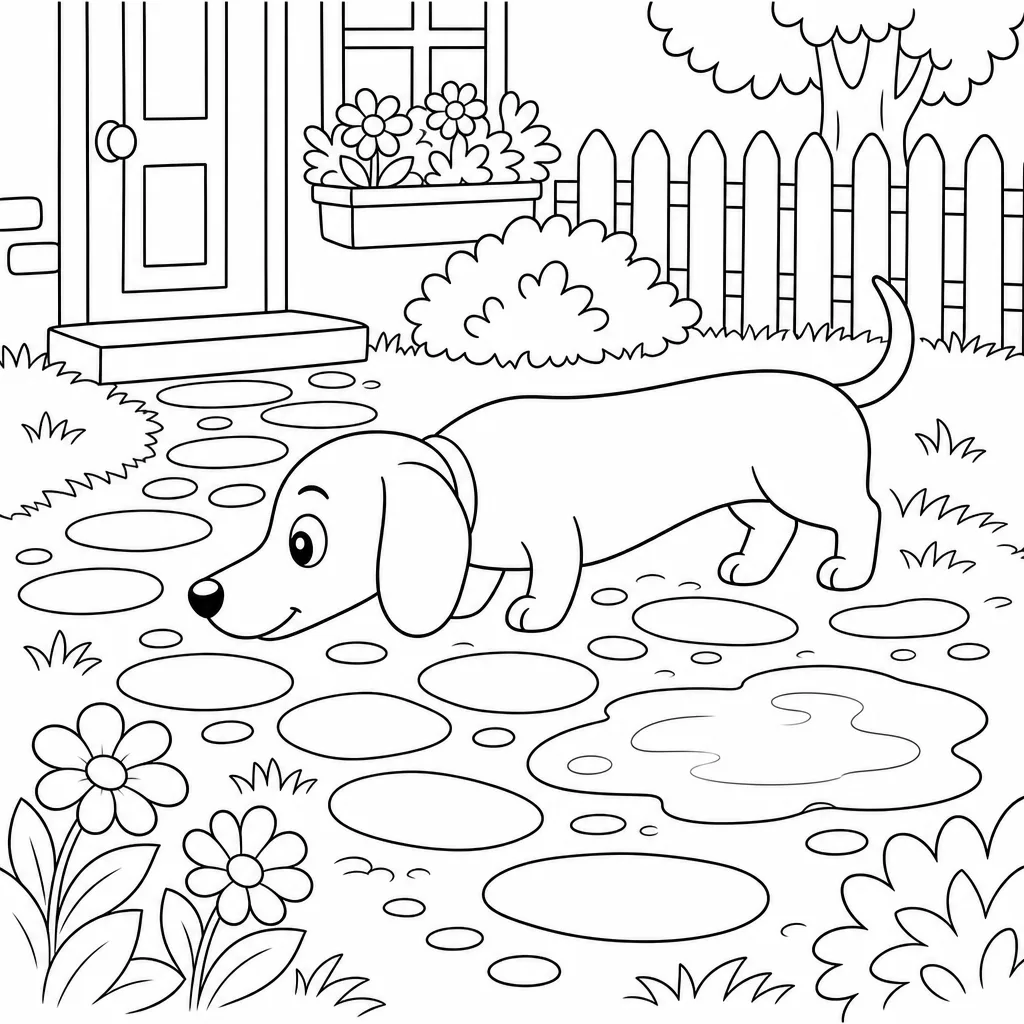
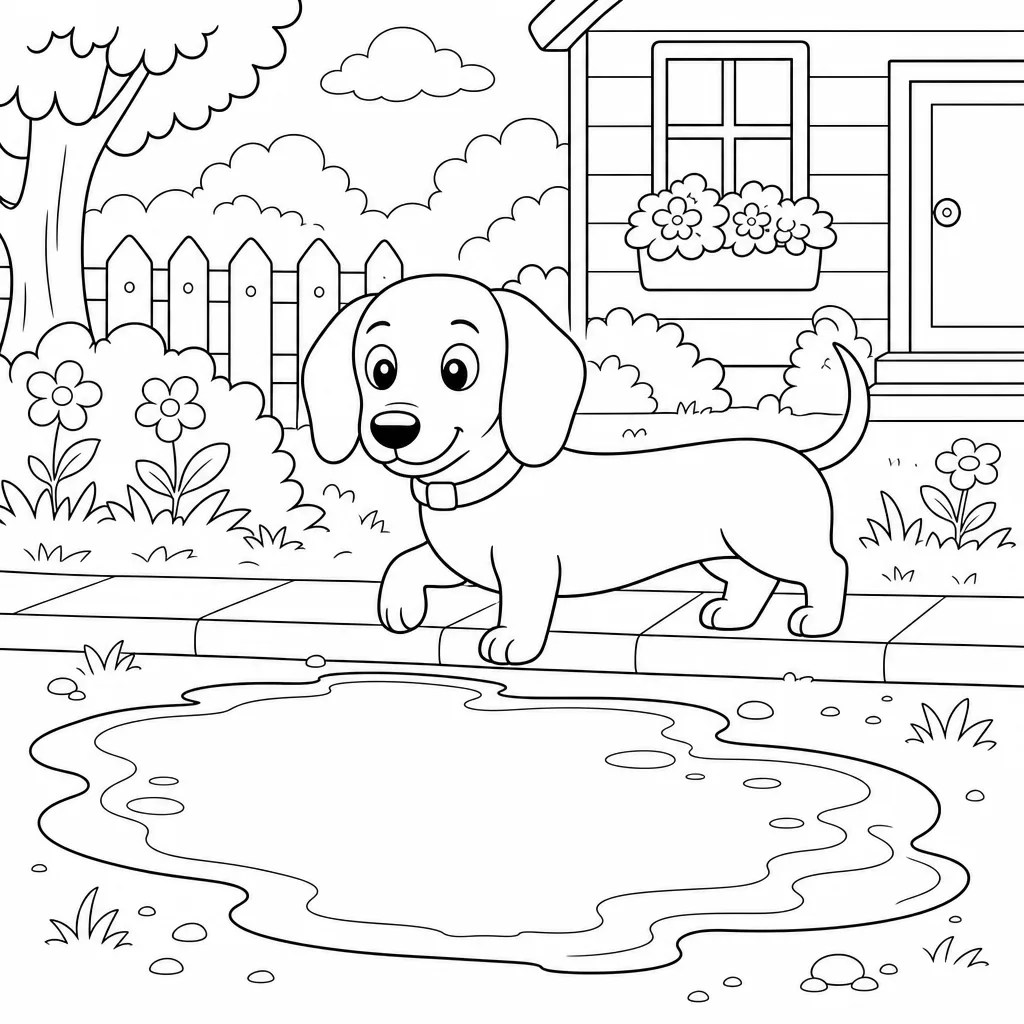
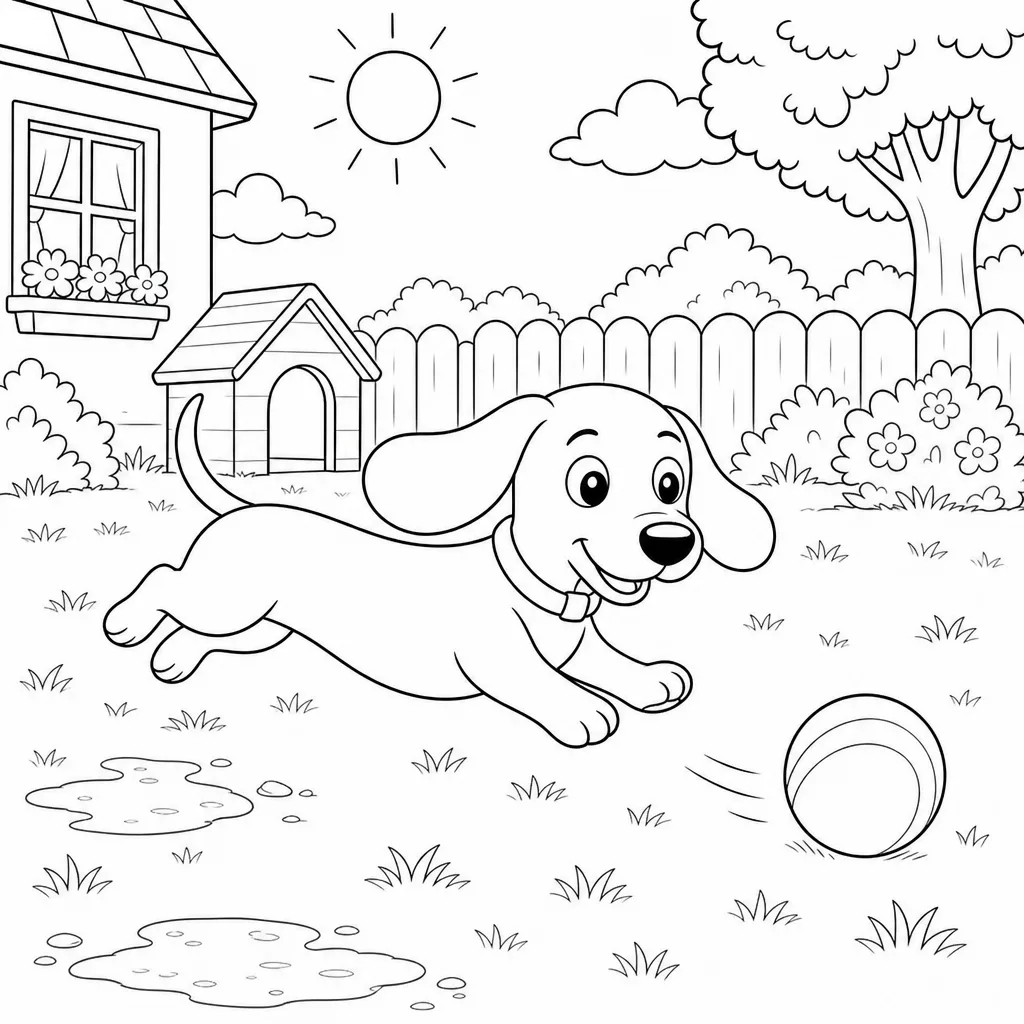
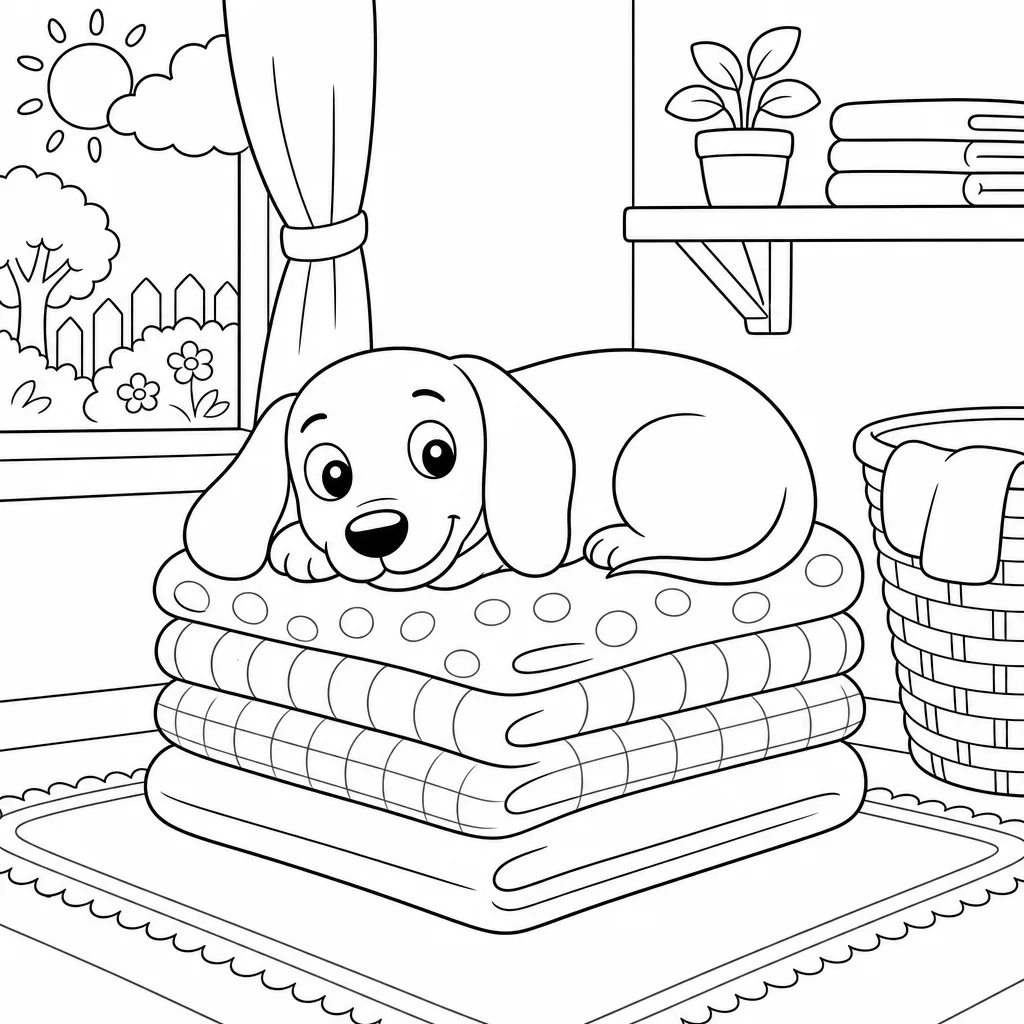
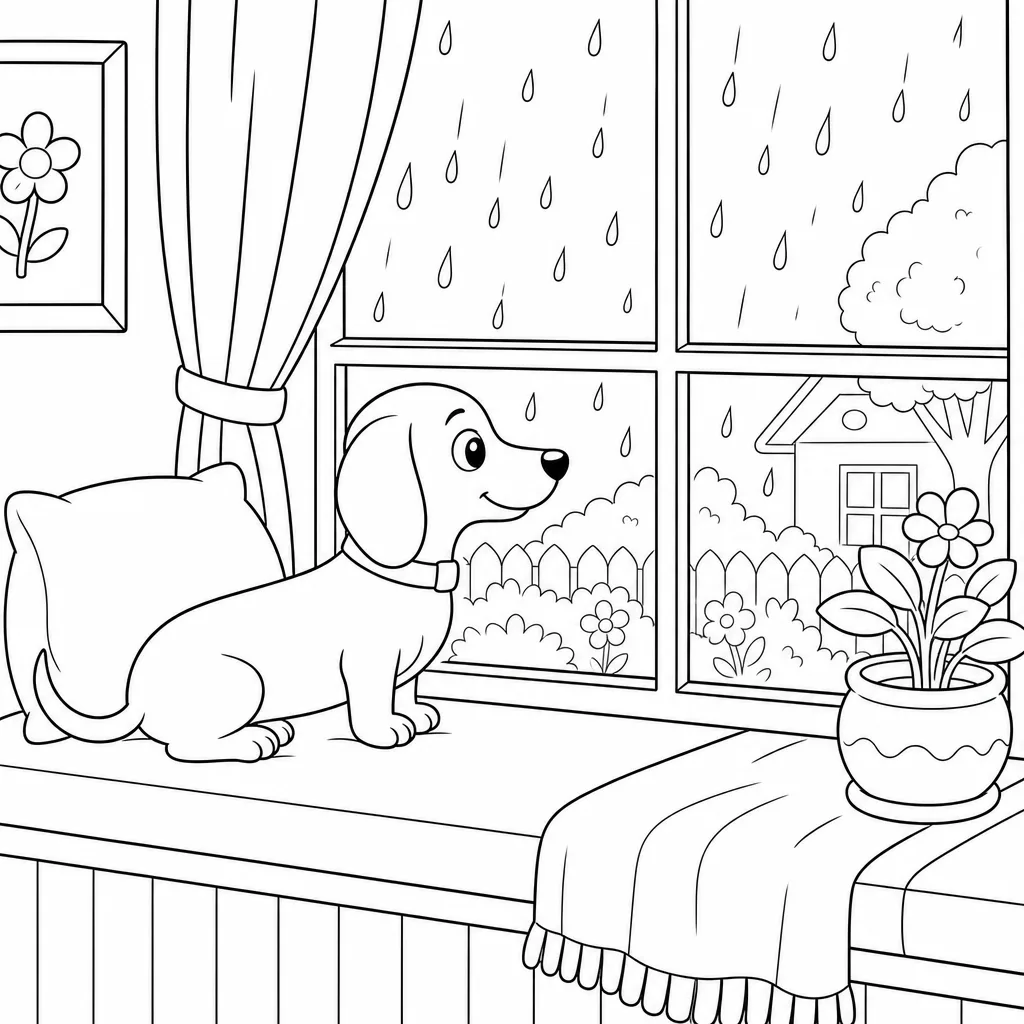
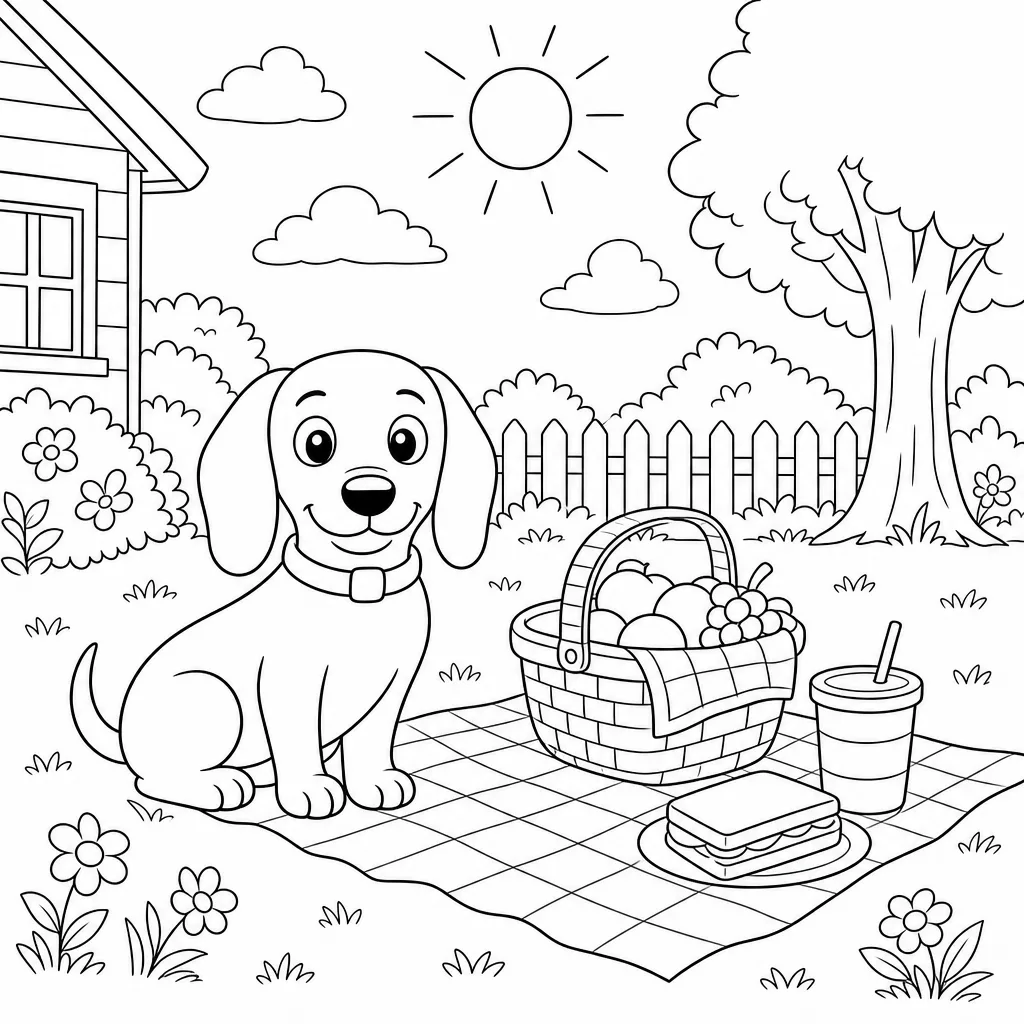
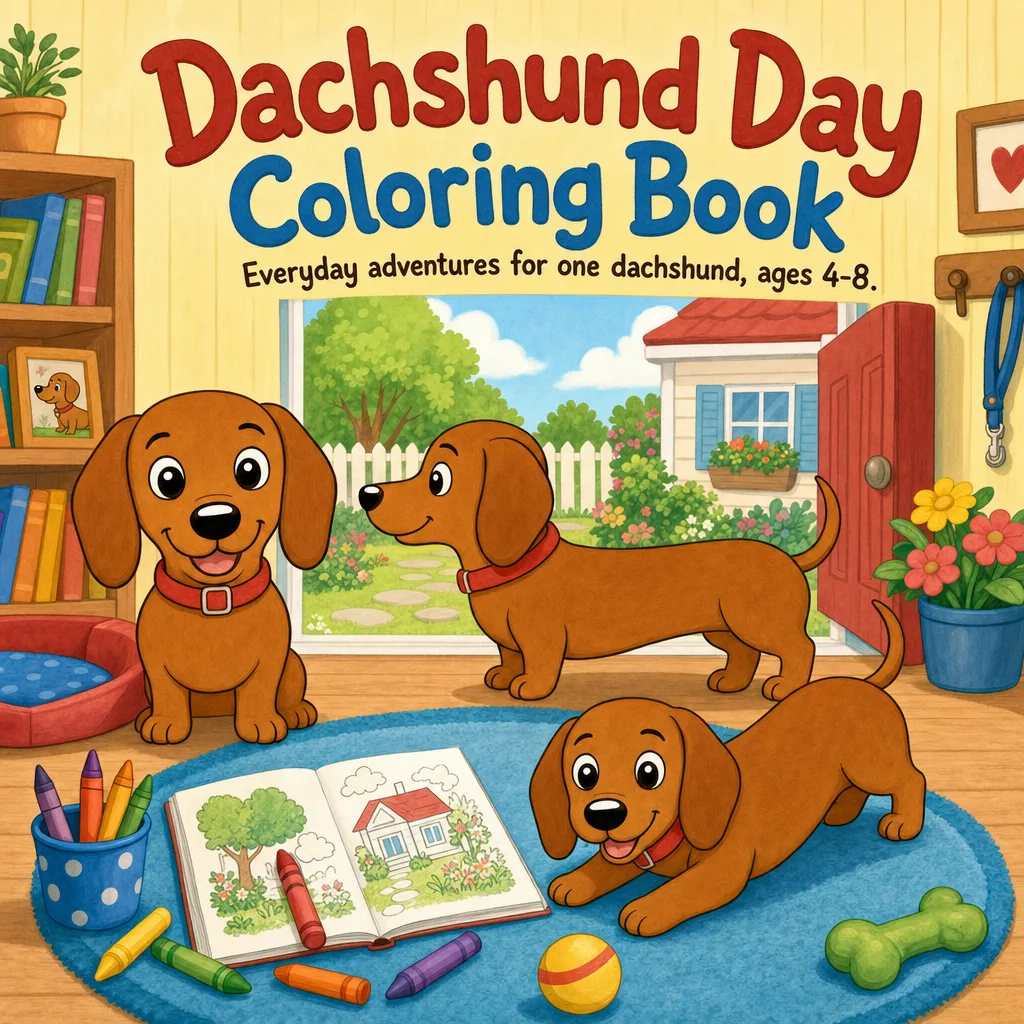
Six of the twenty pages from the run, plus the cover, cropped square and otherwise untouched.
"Animals" is crowded. One animal is not.
This is the most useful fact about the niche, and it comes from a study rather than a hunch. InkChamps analysed 500 KDP coloring books across 15 categories in May 2026, tracking sales rank, reviews, price and page count for independent titles published since 2024.
| Category in the study | Books sampled | Average reviews | Average sales rank | Typical price |
|---|---|---|---|---|
| Broad animals | 89 | 19 | About 312,000 | Not reported |
| Breed-specific pets | Third-strongest niche family | 98 | About 58,700 | $8.99 |
| Targeted niches overall | Across the sample | 127 | Stronger than generic | $8.99 most common among top sellers |
| Generic titles overall | Across the sample | 41 | Weaker | Not reported |
Two other guides say the same thing from the seller's side. KDPEasy's 2026 trends guide calls pet-owner identity "one of the strongest buyer segments in gift publishing", recommends breed-specific books to reduce competition while increasing relevance, and prices the category at $13.99 to $18.99, naming Golden Retrievers, French Bulldogs and Maine Coons. KDP Builder's July 2026 niche guide puts the growth in what it calls characterful sub-niches: grumpy cats, capybaras, highland cows, axolotls. A dachshund book is a gift for every dachshund owner; an "animals" book is a gift for no one in particular.
Pick the animal, then the angle
An animal alone is a subject; an animal plus an angle is a book. These are the angles that recur across the guides and the shelf, with a prompt for each.
| Angle | Who buys it | Line work | Prompt to try |
|---|---|---|---|
| One breed, everyday life | Owners of that breed, gift buyers | Bold or intricate | "a corgi coloring book: one corgi doing everyday things, for adults, bold and easy" |
| Breed portraits | Adult pencil colorists, pet lovers | Intricate | "an intricate coloring book of 40 cat breed portraits for adults" |
| Characterful species | Internet-culture buyers, teens, gifts | Either | "a capybara coloring book: capybaras relaxing in hot springs, with fruit, with friends" |
| Habitat | Nature lovers, classrooms | Intricate for adults, bold for kids | "a coloring book of one rock pool's animals for kids aged 6 to 9" |
| Farm animals for toddlers | Parents of two- to four-year-olds | Bold, very large regions | "a farm animals coloring book for toddlers, one big animal per page" |
| Dinosaurs doing everyday things | Ages four to eight | Bold | "a coloring book of one small T. rex doing everyday things, for kids aged 4 to 8" |
| Breed plus season | Holiday gift buyers | Either | "a golden retriever Christmas coloring book" (see the seasonal trade-off), or one black cat through October on the Halloween page |
Angles drawn from KDPEasy (April 2026), KDP Builder (July 2026), coloringbook.dev and the InkChamps study. For alphabet books with one animal per letter, the ABC book maker is the right tool; for a fully illustrated story about the animal, the picture book maker.
Keeping one animal recognisable across forty pages
This is the question every animal-book maker asks, and the honest answer has two parts. The first is the style: every page in a run is drawn to the same style instruction, so the line weight and the level of detail hold from page one to page forty, which is what makes a book look like a book. The second is the character sheet: for a book built around one animal, a sheet is painted first and every page is drawn from it, the same mechanism the picture book format uses. The dachshund book on this page was made that way, and the sheet is what kept Toto's ears and collar the same across twenty pages. Give the sheet three visual details to lock; ten details drift.
Then check. Open the exported PDF and flip through at print size. If a page came back with the collar missing or the ears wrong, redraw that page with the same description; it costs one image from the allowance and usually lands. For a breed-portrait book the problem is smaller, because each page is a different cat and the consistency that matters is the line work, not the individual. The consistent-characters guide goes deeper on why short descriptions beat long ones.
One more thing that helps: one animal per page. A page with the dachshund and three friends gives the drawing four chances to drift and the colorist a crowd. The strongest kids' animal books are one recurring animal, one situation, one page, which is also what makes them easy to color.
Kids' animal books and adult pet portraits: the plan changes, not the tool
The line style is decided by the audience phrase, but the plan is where the two books really differ. A kids' animal book is a character book: one animal, named or not, doing twenty things a five-year-old recognises. Eating breakfast, hiding, splashing, sleeping. The animal is the same on every page and the page turns like a story, which is why the kids' coloring page talks about recurring characters and why the picture book maker is the next step when the child wants words.
An adult pet-portrait book is the opposite: forty different animals, or forty views of one, held still, with the detail in the fur and the background. Nothing happens on the page; the pleasure is in the rendering. So the prompt for adults says "portrait", "one per page" and "named", and the plan comes back as a list rather than a story. Ask for a story in an adult prompt and you get cartoon action in fine lines, which pleases neither buyer. The adult coloring page covers the intricate rung and its price band.
One breed becomes a catalogue
The economics of animal books favour the second title more than the first. Every dachshund owner who bought the dachshund book is a warm audience for the dachshund Christmas book, the dachshund puppy book, and the dachshund bold and easy book for their mother. The style is the same, the description of the dog is the same, and the plan changes. That is a catalogue built from one description, and it is how the breed-specific publishers in the KDPEasy guide operate: Golden Retrievers, then French Bulldogs, then Maine Coons, each a separate title with its own buyers.
Two practical notes. Keep the animal description in a note so the second book uses it word for word. And use the keyword research guide to check the breed's nicknames before you title anything, because "sausage dog" and "wiener dog" are searched by different people for the same animal. The KDP guide covers the account side once, and every book after the first is a day's work.
How the animal coloring book generator works
Name the animal, the angle and the audience
"A dachshund coloring book: one dachshund with a red collar doing everyday things, for kids aged 4 to 8." "An intricate Maine Coon portrait coloring book for adults." The audience phrase sets the line work; the angle gives the planner twenty scenes. The coloring book generator page explains the prompt box in full.
Set the page count
Twelve to forty; twenty by default. KDP Builder suggests 30 to 50 pages for kids' books and 50 to 100 for adults; forty is the shelf standard and the start of the InkChamps sweet spot.
Review the plan for one animal, one page
Every page is planned as its own scene before anything draws. Check that the animal is described the same way on each, cut any crowd scenes, and make the situations different enough that no two pages repeat.
Pages draw in one style
Bold smooth outlines with big regions for kids, fine flowing line work for adults, the same character from the first page to the last; the color cover paints last. Check the PDF at print size and redraw any page that drifted.
Export and publish
Square 8.5" x 8.5" or letter 8.5" x 11". Publish to KDP with the AI declaration from the disclosure guide, or list the PDF on Etsy or Gumroad from the app; selling AI coloring books on KDP covers the interior settings.
Which plan makes which book
Illustration is a paid feature and draws on a monthly allowance. A coloring page is one image; a book built around one recurring character also paints a character sheet first, one extra image, and every page is drawn from it.
| Plan | Price | Images a month | What fits | Beyond the allowance |
|---|---|---|---|---|
| Free | $0 | Illustration is a paid feature | Plan the book; draw it on a paid plan or with credits | Chapter credits, 1 per image |
| Creator | $9.99 a month | 20 | One 20-page book, the default | Credits for a longer book, such as a 40-page shelf book |
| Premium | $19.99 a month | 50 | One 40-page shelf book with ten redraws, or two 24-page books | Credits, 1 per image |
Full commercial rights on every plan. Current allowances on the pricing page; the KDP royalty and print-cost figures are on the adult coloring book generator page, and the format's first-week numbers on the bold and easy page.
How it compares to other animal coloring tools
Honest picture: the animal search results are the general KDP book tools and vector cover packs; none is built around the one-animal book. The differences that matter are whether a whole book comes out of one run with the animal described consistently, what it costs, and whether you can sell it on the plan you pay for.
| Tool | Output | Animal books | Cover | Price | Commercial use |
|---|---|---|---|---|---|
| Inkfluence AI | Whole book, 12 to 40 pages, one run | Any animal by prompt; bold for kids, intricate for adults | Yes, full color, same run | $9.99 a month, 20 images; $19.99, 50 | Every plan |
| BookIllustrationAI | Batches of 50 to 120 pages, KDP PDF with bleed | By prompt within 18 style presets | Credits cover pages and covers | $39 to $129 a month, 29 to 200 credits | Commercial licence on the $129 tier, per its site |
| Book2Color | Pages, assembled into interiors in an editor | By prompt | Separate | $9.99 for 100 credits to $39.99 for 600; free 3 a week | All plans |
| KDP Builder and similar hubs | Line art plus a print PDF and cover | Animals listed among themes | Varies | Varies; check each | Varies; check each |
| Free single-page generators | One page per prompt | By prompt, the animal drifts page to page | No | Free with limits | Varies |
Competitor prices and terms as published on their sites in September 2026. The wider field is compared in the coloring book guide.
Prompt formulas for animal books
The formula: one animal, three visual details, one angle, one audience. The plan step does the rest.
- "A coloring book of one dachshund with floppy ears and a red collar doing everyday things, for kids aged 4 to 8." Recurring character, short description, bold lines.
- "An intricate coloring book of 40 cat breed portraits for adults, one breed per page, named." Portrait angle, intricate rung; the caption carries the breed name.
- "A capybara coloring book: capybaras in hot springs, with oranges on their heads, with ducks, for adults, bold and easy." The characterful species with its known situations.
- "A farm animals coloring book for toddlers, one big animal per page, very simple." The youngest audience, the largest regions.
- "A highland cow coloring book for adults, intricate, in Scottish landscapes." Species plus habitat, the gift-book angle.
Words that hurt an animal book: "animals", "various", "many", "a zoo". Each one asks for a crowd or a list. Words that help: the breed, the colour of the collar, the one place the animal lives. For a bold-line adult book the bold and easy generator page covers the style; for a mood-led book with animals in it, the cozy coloring book generator page explains how to build a world.
From PDF to a listing the breed's owners find
- The breed in the title. "Dachshund Days: A Coloring Book for Sausage Dog Lovers" is found; "Dog Coloring Book" is not. The title generator gives twenty to test at thumbnail size.
- A description that talks to the owner. The description generator drafts three short paragraphs: who the book is for, what is inside, why the breed.
- Keywords the owner types. The breed, its nicknames, "gift", "lovers"; the keyword research guide shows how to fill all seven fields, and the categories guide the coloring tree.
- Price in the band. $8.99 was the most common price among the strongest sellers in the InkChamps study; pet-portrait gift books sit higher. The royalty calculator shows the per-sale difference either side of $9.99.
- Publish, then the next breed. The KDP guide covers account to first sale; a second breed in the same style is where a catalogue starts, and the selling walkthrough covers the Etsy and Gumroad edition of the same PDF.
Five mistakes that sink animal coloring books
- "Animals". The oversaturated category in the data. One breed, one species, or one character.
- A long description of the animal. Ten details drift; three hold. Ears, collar, one marking.
- Crowds. One animal per page keeps the drawing consistent and the page colorable.
- The wrong rung for the buyer. A bold-line book sold as a pet-portrait gift disappoints the pencil colorist; an intricate book sold to a five-year-old goes unfinished. Say the audience in the prompt and price for it.
- A cover that hides the animal. The buyer is looking for their breed. Put it large, facing them; the cover designer can rework the cover without redrawing pages.
Animal coloring book generator FAQ
What does the animal coloring book generator do?+
Should I make a general animal coloring book?+
Which animals sell?+
Will the same animal look the same on every page?+
Kids or adults: which line work?+
How many pages?+
What trim size?+
How much does it cost to make one?+
Can I sell an animal coloring book made with AI on KDP?+
Can I put the pet owner's name or a real pet in it?+
What about dinosaurs and fantasy animals?+
Does it make a cover?+
Can I edit the plan before it draws?+
Can I make an ABC animal book?+
Is an animal coloring book seasonal?+
Do I own the rights?+
Can I make it in another language?+
Related tools and guides
LitPal Alternative
LitPal's prices and credit costs, a cost-per-book calculator, and where its volume coloring price beats ours.
Watch a Cozy Coloring Book Get Made
Twelve-minute video with transcript: an autumn book from the book type picker, an editable 12-page plan, a painted cover, then the showcase, Gumroad, Etsy and export screens.
AI Coloring Book Generator
The main coloring page: kids, age bands, and the prompt box.
Adult Coloring Book Generator
The intricate rung, with the market and royalty numbers.
Bold and Easy Coloring Book Generator
Thick lines and big regions for markers.
Cozy Coloring Book Generator
Nooks, cafés and cabins as one recurring world.
ABC Book Maker
One animal per letter, with the letter in the art.
Coloring Book Niches 2026
The wider shelf, niche by niche.
Your animal book, drawn by tonight
One animal, three details, one angle. Twenty pages by default, forty for the shelf.
Generate my animal book