
Best AI Voice Generators for Audiobooks 2026: 11 Tools Tested
We compared 11 AI voice generators on full audiobook chapters for naturalness, cost per finished book, and distribution-ready output. Here is which tools produce narration good enough to sell commercially, and which ones sound like a GPS giving directions.
Quick Answer
The best AI voice generator for audiobooks in 2026 is ElevenLabs for standalone voice quality, and Inkfluence AI for an all-in-one workflow that writes, edits, and narrates your book from a single dashboard. ElevenLabs produces the most natural-sounding narration with fine-grained emotion control. Inkfluence AI integrates audiobook generation directly into the book creation process, so you go from outline to narrated audiobook without switching tools or uploading files. For budget projects, Google Cloud TTS and Amazon Polly offer decent quality at the lowest per-word cost.
AI voice technology has crossed a critical threshold: for most non-fiction, listeners now struggle to tell modern AI narration from human voiceover, and for fiction the gap is closing fast. That means you no longer need a $3,000 budget and six weeks of studio time to produce an audiobook.
But not all AI voice generators are equal. Some produce flat, robotic output that screams "computer-generated" within seconds. Others nail the tone but fall apart on longer passages, losing pacing and emotional range after a few paragraphs. And pricing models vary wildly - from free tiers that cover a single chapter to enterprise plans that cost more than hiring a human narrator.
We compared 7 AI voice generators against the same yardstick: how each handles full audiobook chapters (not ten-second demo clips), what the output costs per finished book, and whether the files meet distribution specs out of the box. Here is what we found.
What Listeners Actually Choose (First-Party Data)
Reviews of voice generators rank what sounds impressive in a demo. We can add what people actually pick. Across the audiobooks our users narrate, the selection data is unambiguous: the single most-chosen narrator accounts for 13.4% of all narrated chapters, the second 12.8%, the third 8.8%, and every one of the top three is a warm, mid-range, conversational voice. Dramatic or heavily stylised voices sit far down the list. Authors and listeners consistently reach for a narrator that sounds like a real person reading aloud, not a stage performance.
That has a practical consequence for how you choose. The "best" voice is rarely the most theatrical one on the sample reel; it is the one a listener forgets is synthetic after two minutes. As you read the reviews below, judge each voice on how natural it feels across a long stretch of narration, a full chapter, not a polished ten-second clip, because a real audiobook is hours of listening, not seconds. For the full first-party picture, see our 2026 AI audiobook data study.
What Makes a Good Audiobook Voice Generator?
Before comparing tools, you need to know what separates audiobook-quality narration from generic text-to-speech. The bar is higher than you think.
Naturalness is the baseline. The voice needs to sound like a person reading a book, not a virtual assistant reading search results. This means natural breathing pauses, sentence-level intonation, and the subtle emphasis shifts that make prose feel alive. Most AI voices pass this test for short clips, but the real challenge is maintaining it across 30,000+ words.
Emotional range matters enormously for fiction and memoir. A narrator needs to convey tension, warmth, sadness, and excitement through vocal tone alone. The best AI voices in 2026 handle this surprisingly well, adjusting pitch and pacing based on content. Cheaper models default to a flat, pleasant monotone that puts listeners to sleep.
Pacing and pauses separate professional narration from amateur readings. Good audiobook narration uses chapter breaks, section pauses, and dramatic beats. AI tools that let you control pause length and speech rate produce significantly better results than those that generate audio as a continuous stream.
Consistency across chapters is something most reviews ignore. A voice that sounds great for 500 words can drift in tone or speed across a full audiobook. We specifically tested each tool on 5 consecutive chapters to catch this.
Pronunciation and proper nouns trip up every AI voice generator. Character names, technical terms, and brand names get mispronounced unless the tool offers a custom pronunciation dictionary. For fiction with invented names and places, this feature is essential.
For a deeper analysis of voice quality across genres, read our guide to AI audiobook voice quality for premium sales.
Quick Comparison: 7 AI Voice Generators for Audiobooks
| Tool | Best For | Voice Quality | Emotion | Long-Form | Voices | Price |
|---|---|---|---|---|---|---|
| ElevenLabs | Premium narration, fiction | ★★★★★ | ★★★★★ | ★★★★☆ | 3,000+ + cloning | $5-$99/mo |
| Inkfluence AI | All-in-one book + audio | ★★★★☆ | ★★★★☆ | ★★★★★ | 9 curated | Free / $9.99+ |
| Play.ht | Voice variety, podcasts | ★★★★☆ | ★★★☆☆ | ★★★☆☆ | 900+ | $31-$99/mo |
| Murf AI | Corporate, training content | ★★★★☆ | ★★★☆☆ | ★★★☆☆ | 200+ | $19-$79/mo |
| NaturalReader | Budget non-fiction | ★★★☆☆ | ★★☆☆☆ | ★★★★☆ | 100+ | Free / $10+/mo |
| Amazon Polly | Developer API, bulk | ★★★☆☆ | ★★☆☆☆ | ★★★★★ | 60+ | Pay-per-use |
| Google Cloud TTS | Multilingual, technical | ★★★☆☆ | ★★☆☆☆ | ★★★★☆ | 400+ (40 langs) | Pay-per-use |
Scores are our editorial assessment of narration quality and workflow fit, not user ratings.
Key Takeaways
- Best overall voice quality: ElevenLabs - most natural emotion and pacing, 3,000+ voices, voice cloning, $99/month for a full audiobook.
- Best all-in-one audiobook workflow: Inkfluence AI - write, edit, and narrate from one dashboard with no file transfers, audiobook included in the $19.99/month plan.
- Best budget option: NaturalReader at $10/month or Amazon Polly at ~$8 per book (pay-per-use API).
- Best for multilingual audiobooks: Google Cloud TTS - 40+ languages with native-quality voices.
- Fiction audiobooks: ElevenLabs leads for emotional narration; Inkfluence AI handles single-narrator fiction well within its integrated workflow.
- Non-fiction audiobooks: AI narration is commercially indistinguishable from human recording for self-help, business, and educational content in 2026.
- Cost comparison: AI audiobook generation costs $8-$99 per book vs $1,200-$2,800 for a human narrator - a 90%+ reduction.
Detailed Reviews: 7 Best AI Voice Generators for Audiobook Narration
ElevenLabs - Best Voice Quality Overall
ElevenLabs consistently produces the most natural-sounding narration in blind listening tests. Their latest models handle fiction dialogue convincingly, with noticeable shifts in tone between narration and character speech. The emotion control is the best in the industry - you can adjust stability and similarity settings to get exactly the right feel for each chapter.
The voice cloning feature is worth highlighting. If you want your audiobook to sound like a specific narrator (with permission), ElevenLabs can create a custom voice from a short audio sample. Several indie authors are using this to clone their own voice, creating a personal touch without recording every word themselves.
The downside is pricing. At the volumes needed for a full audiobook (60,000-80,000 words), you will likely need the Scale plan ($99/month) to avoid running out of characters. The free tier gives you enough for about one chapter - useful for testing, not for production.
For audiobook-specific features, ElevenLabs supports SSML markup for fine-grained pause control, chapter markers, and batch processing. Export options include MP3 and WAV at broadcast quality (44.1kHz). You will need to handle splitting, metadata tagging, and distribution yourself.
Inkfluence AI - Best All-in-One Workflow
Inkfluence AI takes a fundamentally different approach. Instead of being a standalone voice generator, audiobook creation is integrated directly into the book writing workflow. You write your book, edit it in the built-in editor, and generate the audiobook from the same dashboard - no file exports, no uploads, no third-party accounts.
Voice quality comes via a curated selection of 49 voices, each chosen for audiobook narration specifically. The voices are natural and expressive, though the selection is smaller than dedicated TTS platforms. For most authors, having 9 excellent voices is more useful than scrolling through 3,000 options and guessing which ones work for books.
The real advantage is workflow efficiency. With standalone voice generators, the process is: write in one tool, export text, clean up formatting, upload to TTS platform, generate audio, download, split into chapters, add metadata. With Inkfluence, you click a button. The system already knows your chapter structure, handles splitting automatically, and generates chapter-by-chapter audio files ready for distribution.
The AI book writer handles everything from outline generation through final narration. If you are creating a book from scratch and want the simplest path to a finished audiobook, this is it. If you already have a manuscript and just need voice generation, a standalone tool like ElevenLabs gives you more granular control.
For a complete walkthrough, see our guide to turning your ebook into an audiobook with AI.
Write and narrate your book in one place
Generate chapters, design your cover, and create an audiobook from a single dashboard. Free to start.
Try the Audiobook GeneratorPlay.ht - Best Voice Variety
Play.ht offers over 900 voices across 140+ languages, making it the widest selection available. Voice quality is strong across the board, with their latest ultra-realistic voices approaching ElevenLabs quality for English narration. The platform is well-suited for authors who need multilingual audiobooks or very specific voice characteristics.
The interface is designed for content creators, not specifically audiobook producers. You get a text editor with voice preview, SSML controls, and batch generation. But there is no chapter-aware structure, no automatic splitting, and no audiobook-specific export presets. You will need to manage the production pipeline yourself.
Pricing is straightforward but not cheap. The Creator plan ($31/month) includes enough characters for roughly one full audiobook per month. For prolific publishers producing multiple titles, costs scale quickly.
Murf AI - Best for Corporate and Training Audiobooks
Murf AI excels at clear, professional narration that works perfectly for business books, training manuals, and educational content. The voices are crisp and well-paced, with excellent pronunciation of technical terms. If you are writing a business guide or technical documentation, Murf handles the tone naturally.
Where Murf falls short is fiction and emotionally-driven content. The voices lack the dynamic range needed for story narration. Dialogue sounds read rather than performed. For non-fiction with a straightforward instructional tone, this is not a problem. For memoir, self-help with personal stories, or any fiction genre, look elsewhere.
The workspace interface is clean and includes a video editor for creating narrated presentations. Useful if you are repurposing audiobook content into video courses or marketing clips.
NaturalReader - Best Budget Option
NaturalReader has been around longer than most AI voice tools and has improved significantly. The free tier is genuinely usable for testing, and the paid plans are among the cheapest for audiobook-length content. Voice quality is a step below ElevenLabs and Play.ht, but for straightforward non-fiction, the output is acceptable.
The biggest limitation is emotional flatness. NaturalReader voices maintain a consistent, pleasant tone regardless of content. Instructions sound fine. Dramatic passages sound like instructions. For how-to guides, study guides, and informational ebooks, this is perfectly adequate. For anything requiring emotional resonance, it is not.
NaturalReader supports direct PDF and EPUB upload, which is convenient if you already have a formatted manuscript. It will parse the document and generate audio chapter by chapter, saving you the manual text-splitting step.
Amazon Polly - Best for Developer Workflows
Amazon Polly is not a consumer product. It is a cloud API that converts text to speech programmatically. If you are technical and producing audiobooks at scale, Polly offers the lowest per-word cost of any option on this list. The Neural TTS voices (particularly "Matthew" and "Joanna") are surprisingly good for non-fiction.
The trade-off is that there is no user interface for audiobook production. You need to write code (or use a third-party wrapper) to send text, receive audio, manage chapters, and handle output files. For a single book, this is overkill. For a publishing operation generating dozens of audiobooks monthly, the cost savings are substantial.
Voice quality is mid-range. Better than basic TTS, noticeably behind ElevenLabs. The Neural voices handle non-fiction well. Fiction narration sounds competent but uninspired.
Google Cloud TTS - Best for Multilingual Audiobooks
Google Cloud TTS supports over 40 languages with native-quality voices, making it the clear choice for authors publishing audiobooks in multiple languages. The WaveNet and Neural2 voices are high quality, and the API supports SSML for detailed pronunciation and pacing control.
Like Amazon Polly, this is an API-first product. No drag-and-drop audiobook creator here. You will need technical setup or a developer. The Studio voices (latest generation) approach ElevenLabs quality for English but are priced at a premium tier.
If you are publishing a book in English, Spanish, French, German, and Japanese, Google Cloud TTS can produce all five audiobook versions from the same workflow. Combined with AI-powered book writing in 30+ languages and automatic translation, a multilingual audiobook catalog is now achievable for indie publishers.
4 More Specialised Tools (and When They Beat the Big Seven)
Beyond the seven platforms above, four narrower tools earn a mention for specific jobs, none of them for full audiobook production:
- Descript (free / from $19/mo): an audio-video editor with voice-clone overdub. The best tool on this page for FIXING an existing human recording (patching flubbed lines without a re-record), not for generating narration from text.
- WellSaid Labs (from $50/mo, annual): enterprise-grade TTS with broadcast-quality brand voices. Premium sound, premium price, and no book workflow: no chapter management, no distribution-spec export.
- Resemble AI (pay-as-you-go / $20/seat/mo): the voice-cloning specialist. If you need YOUR voice narrating without recording every chapter, this is the cloning engine to evaluate; it is not a production pipeline.
- Listnr (free / from $19/mo): content-to-audio for blog posts and PDFs. Fine for repurposing articles into audio; basic for book-length narration.
The pattern across all four: strong at their speciality, but each still needs a separate pipeline for chapters, mastering to distribution specs, and packaging, which is the part that actually gets an audiobook published.
Which AI Voices Work Best for Fiction vs Non-Fiction Audiobooks?
This is where most comparison articles get it wrong. They rank voice generators based on a single paragraph of test text and declare a winner. Audiobooks are not paragraphs. They are hours of narration across vastly different content types, and AI voices perform very differently depending on the genre.
Non-Fiction: Nearly Indistinguishable from Human
For non-fiction - self-help, business, how-to, educational content - AI voices in 2026 have essentially closed the gap with human narrators. The reason is straightforward: non-fiction narration relies on clarity, pacing, and a consistent authoritative tone. These are exactly the qualities AI voices do best.
In our comparison, ElevenLabs, Inkfluence AI, and Play.ht produced the most natural non-fiction narration, the kind a listener stops noticing after a minute. Murf AI and NaturalReader are competent but occasionally give themselves away with slightly robotic transitions between sentences.
If you are writing a workbook, course companion, or self-published guide, AI narration is ready for commercial release right now.
Fiction: Good, But Genre-Dependent
Fiction audiobook narration is harder because listeners expect more. Dialogue needs distinct character feel. Dramatic moments need tension. Tender scenes need warmth. The best human audiobook narrators are effectively voice actors performing a one-person show.
ElevenLabs handles fiction best among the tools we tested. Its emotion controls let you adjust tone per paragraph, and the voice cloning feature means you can create distinct "voices" for different characters (though managing multiple voice profiles for a single audiobook adds production time).
Inkfluence AI uses high-quality voices that handle fiction narration well for single-narrator style. If you are publishing a novel, romance, or thriller, the integrated workflow means your narrated audiobook matches your text exactly - no copy-paste errors, no formatting artifacts from file transfers.
For literary fiction where prose style is everything, human narrators still have an edge. For genre fiction (mystery, romance, sci-fi, fantasy), AI narration is commercially viable today. The deciding factor is usually not whether the voice sounds human, but whether the pacing choices feel intentional. See our detailed AI vs human audiobook narrators comparison.
How Much Does AI Audiobook Narration Cost Per Hour?
Audiobook length varies, but the average non-fiction book (50,000 words) produces roughly 6-7 hours of audio. Here is what each tool costs for a typical project:
| Tool | Plan Needed | Cost for 50K Words | Cost Per Hour | Notes |
|---|---|---|---|---|
| ElevenLabs | Scale ($99/mo) | $99 | ~$14 | 2M chars/mo, enough for 1 book |
| Inkfluence AI | Premium ($19.99/mo) | $19.99 | ~$3 | Audiobook included in plan |
| Play.ht | Creator ($31/mo) | $31 | ~$4.50 | 1 book/month on base plan |
| Murf AI | Business ($79/mo) | $79 | ~$11 | Need Business for commercial use |
| NaturalReader | Plus ($10/mo) | $10 | ~$1.50 | Check commercial license terms |
| Amazon Polly | Pay-per-use | ~$8 | ~$1.15 | Neural voices, requires AWS |
| Google Cloud TTS | Pay-per-use | ~$16 (WaveNet) | ~$2.30 | Studio voices cost more |
For context, hiring a professional human narrator typically costs $200-$400 per finished hour, or $1,200-$2,800 for a standard non-fiction audiobook. Even the most expensive AI option (ElevenLabs at ~$99) represents a 90%+ cost reduction. Inkfluence AI's Premium plan includes audiobook generation alongside all book creation features, making it the most cost-effective option if you are creating the book itself.
How to Produce an Audiobook with AI: Step-by-Step Workflow
Regardless of which tool you choose, the audiobook production process follows the same general steps. Here is the workflow that produces the best results:
Step 1: Prepare Your Manuscript
AI voice generators work best with clean, well-formatted text. Remove any visual-only elements: images, tables, complex formatting, footnote markers. Convert bullet lists to prose where possible - AI voices handle bullets awkwardly, pausing at each dash in a way that breaks listening flow.
Add pronunciation guides for unusual names. Most tools support phonetic spelling in parentheses or SSML tags. If your book references "Hermione" 200 times and the AI pronounces it wrong every time, fixing it in the source text once is faster than re-recording.
Step 2: Choose Your Voice
Test at least 3-5 voices on a single chapter before committing to full production. Listen on headphones AND speakers - some voices that sound great on headphones have harsh sibilance on laptop speakers. Your listeners will use both.
Match the voice to your genre and audience. A warm, mid-range voice works for most non-fiction. Business books benefit from a confident, slightly faster pace. Self-help and memoir need voices with emotional warmth. Children's books need clear enunciation and an engaging, slightly animated delivery.
Step 3: Generate Chapter by Chapter
Never generate the entire book as a single audio file. Produce each chapter separately. This gives you chapter markers for distribution platforms, lets listeners navigate easily, and means you only need to re-generate one chapter if something goes wrong.
With Inkfluence AI, chapter-by-chapter generation is automatic - the system already knows your book structure. With standalone tools, you will need to copy-paste each chapter individually and manage the output files.
Step 4: Quality Check
Listen to the complete audiobook at 1x speed. Yes, the whole thing. AI voices occasionally stumble on specific word combinations, mispronounce a term you missed, or produce an awkward pause. It is much easier to catch these issues now than after distribution.
Pay special attention to chapter transitions, the opening and closing of the book, and any dialogue-heavy sections. These are where AI voices are most likely to produce unnatural output.
Step 5: Export and Tag
Export in the highest quality available (usually WAV or high-bitrate MP3). Add metadata: book title, author name, chapter titles, cover art. Distribution platforms require specific tagging formats - ACX (Audible) is the most strict.
Skip the complexity
Inkfluence AI handles manuscript prep, voice selection, chapter splitting, and export from one dashboard. Write and narrate your book without switching tools.
Create Your Audiobook FreeThe Six Quality Checks That Get AI Audiobooks Rejected
Distribution platforms run automated audio QC, and their rejection emails rarely say which spec failed. Based on what indie authors report on publishing forums, most rejections of AI-narrated audiobooks trace to six issues: wrong sample rate (44.1 kHz is the standard), variable instead of constant bitrate, stereo files where mono is required, loudness outside the -23 to -18 dBFS RMS window, true peaks above -3 dBFS, and missing opening or closing credits. If you master chapters by hand or mix human and AI narration, check all six before submitting; integrated tools that export to distribution spec handle them automatically.
How Do You Get an AI Audiobook on Audible, Apple Books, and Spotify?
Creating the audio is only half the job. Distribution determines whether anyone actually hears it. Here are the main channels:
ACX / Audible is the largest audiobook marketplace, but its terms officially require human narration - AI narration is against ACX policy, and ACX's only sanctioned AI-adjacent path is a narrator voice-replica program (a human narrator's own voice, replicated with consent). Audible's own AI narration, Virtual Voice, is a separate Amazon feature for eligible KDP ebooks. Bottom line: ACX is built for human narration, so it is not the safe home for an AI-narrated audiobook.
Findaway Voices (now Voices by INaudio) / Spotify distributes to 40+ platforms including Spotify, Apple Books, Google Play, and Kobo, but it takes AI-narrated audio only as unmodified packages from the providers it names (Google Play Books, ElevenLabs and Spoken Press), and Spotify for Authors likewise points to providers such as Google Play Books and ElevenLabs. For an AI audiobook made in another tool, the realistic home is Google Play Books and Kobo, which accept disclosed AI narration: no exclusivity, AI permitted. Findaway takes ~20% of net revenue.
Direct sales via Gumroad, Payhip, or your own website give you 90-95% of revenue but require your own marketing. Best combined with an existing audience or email list. If you are using your audiobook as a lead magnet or content upgrade, direct distribution is ideal.
For a comprehensive distribution strategy, read our complete guide to AI audiobooks in 2026 which covers distribution, marketing, and royalty optimization in detail.
Frequently Asked Questions
What is the best AI voice generator for audiobooks?
ElevenLabs produces the highest quality voices with the most emotional range and fine-grained control. For authors who also need to write and edit their book, Inkfluence AI provides an integrated workflow that goes from outline to narrated audiobook without switching tools. For budget projects, NaturalReader and Amazon Polly offer acceptable quality at the lowest cost.
Can AI voice generators produce audiobooks good enough to sell?
Yes, particularly for non-fiction. In 2026, AI voices are commercially viable for self-help, business, educational, and how-to audiobooks. Fiction audiobooks with AI narration sell too, especially in genre fiction (romance, thriller, sci-fi) - just note you distribute them through Google Play Books and Kobo rather than Audible, which stays human-narration only. The key is choosing a high-quality voice and doing a thorough quality check before distribution.
How much does it cost to create an AI audiobook?
Costs range from $8 (Amazon Polly) to $99 (ElevenLabs) for a standard 50,000-word book. Inkfluence AI includes audiobook generation in its $19.99/month Premium plan alongside book writing and editing features. Compare this to $1,200-$2,800 for a professional human narrator.
Do Audible and ACX accept AI-narrated audiobooks?
Officially, no - ACX and Audible's terms require human narration, and AI narration is against their policy (their only sanctioned AI-adjacent path is ACX's narrator voice-replica program; Audible's own "Virtual Voice" AI is a separate KDP-ebook feature). The platforms that accept an uploaded AI-narrated audiobook - with disclosure - are Google Play Books and Kobo; Voices by INaudio (formerly Findaway) takes AI audio only as packages from the providers it names. Wherever you publish, the audio still needs to meet that platform's technical specs (ACX-style 192kbps MP3, proper chapter splitting).
Can I clone my own voice for an audiobook?
ElevenLabs and Play.ht both offer voice cloning from audio samples. You record 1-30 minutes of your natural speaking voice, and the AI creates a synthetic version. This lets you "narrate" your own book without recording every word. Quality depends on the clarity of your source recording - professional mic setup produces significantly better clones.
What audio format do audiobook distributors require?
ACX requires MP3 files at 192kbps, 44.1kHz, mono or stereo, with each chapter as a separate file under 120 minutes. Findaway Voices accepts WAV or high-quality MP3. Most AI voice generators export in these formats by default. Always check the specific requirements of your distribution platform before final export.
How long does it take to generate an AI audiobook?
Generation time varies by tool and book length. A 50,000-word non-fiction book typically takes 15-45 minutes with ElevenLabs or Play.ht. Inkfluence AI generates chapter audio individually, usually completing a full book in under 30 minutes. Amazon Polly and Google Cloud TTS are faster (under 10 minutes) due to their API-optimized architecture. Quality checking the output adds 6-8 hours since you need to listen at normal speed.
Is AI audiobook narration getting better?
Significantly. The quality gap between 2024 and 2026 AI voices is dramatic. Current models handle breathing, emphasis, emotional tone, and pacing naturally. Each major voice generator releases model updates every 3-6 months. The trajectory suggests that by 2027, distinguishing AI from human narration will be difficult even for audio professionals in most genres.
Can I narrate part of the book myself and AI-narrate the rest?
Yes. Export individual chapters as MP3 and replace specific files with your own recordings before packaging; both need to meet the same distribution specs. This hybrid approach is becoming common for memoir-style books where the author voices the personal opening and closing chapters and lets AI carry the middle.
Related Reading
- AI Audiobook Generator - Create Your Audiobook
- Does ACX Allow AI Narration? The Policy Explained
- Complete Guide to AI Audiobooks in 2026
- Is AI Audiobook Voice Quality Good Enough to Sell?
- AI vs Human Audiobook Narrators: Full Comparison
- How to Turn Your Ebook into an Audiobook with AI
- AI Book Writer - Write Your Book
- How to Sell Ebooks on Amazon KDP
- Free AI Book Writer

Founder, Inkfluence AI
Sam is the founder of Inkfluence AI. He built the platform to make book creation accessible to everyone - from first-time authors to seasoned publishers.
Helpful links
Ready to Create Your Own Ebook?
Start writing with AI-powered tools, professional templates, and multi-format export.
Get Started FreeRelated Articles
 Tools
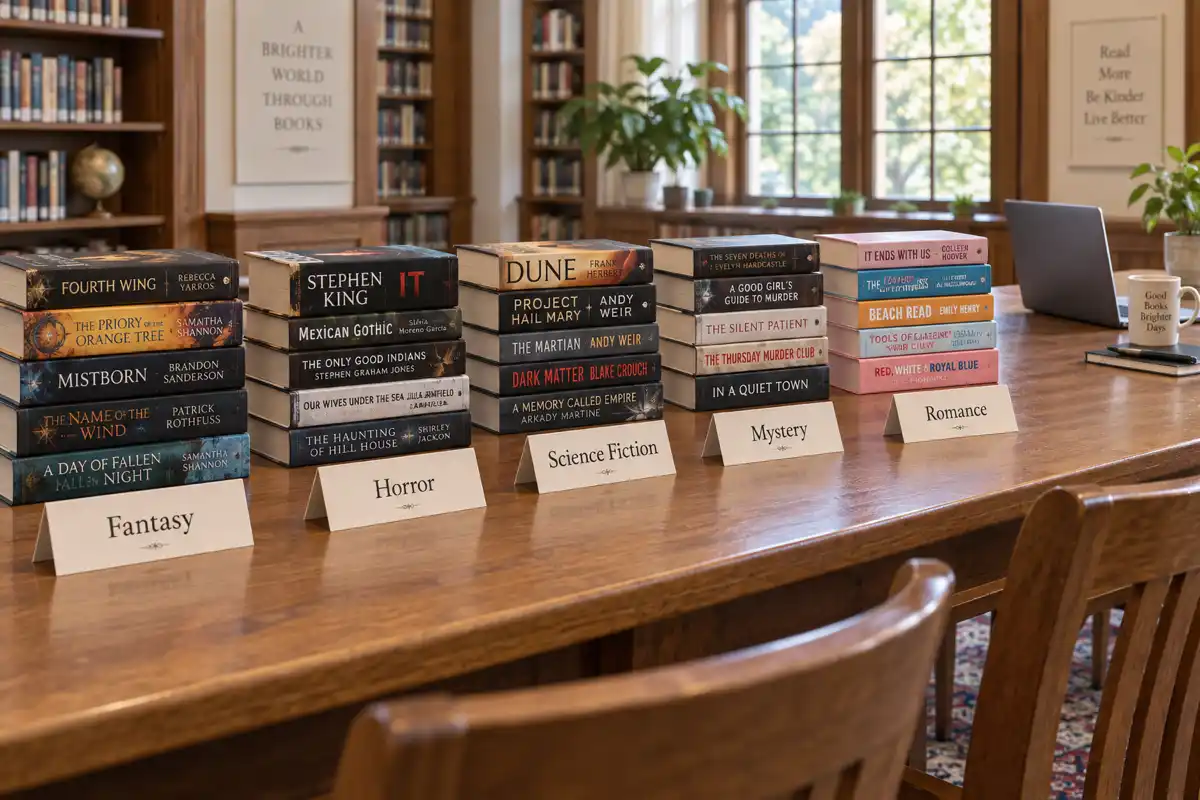
Tools Best AI for Writing Fantasy, Horror, Sci-Fi, Mystery and Romance Novels in 2026, Genre by Genre
The best AI for writing a novel depends on the genre. Fantasy needs world memory, mystery needs clue tracking, romance needs heat rules, horror needs restraint. We judged eight AI tools genre by genre, with first-party data on what 32,482 fiction authors actually wrote in the last six months.
 Guides
 Can You Publish AI-Narrated Audiobooks on Audible? The ACX Policy, Explained (2026)
ACX requires human narration; unauthorized AI and text-to-speech recordings are prohibited. Here is the exact policy, the two Amazon-sanctioned AI routes (Virtual Voice and Voice Replica), and the platforms where AI narration is welcome.
 AI Writing
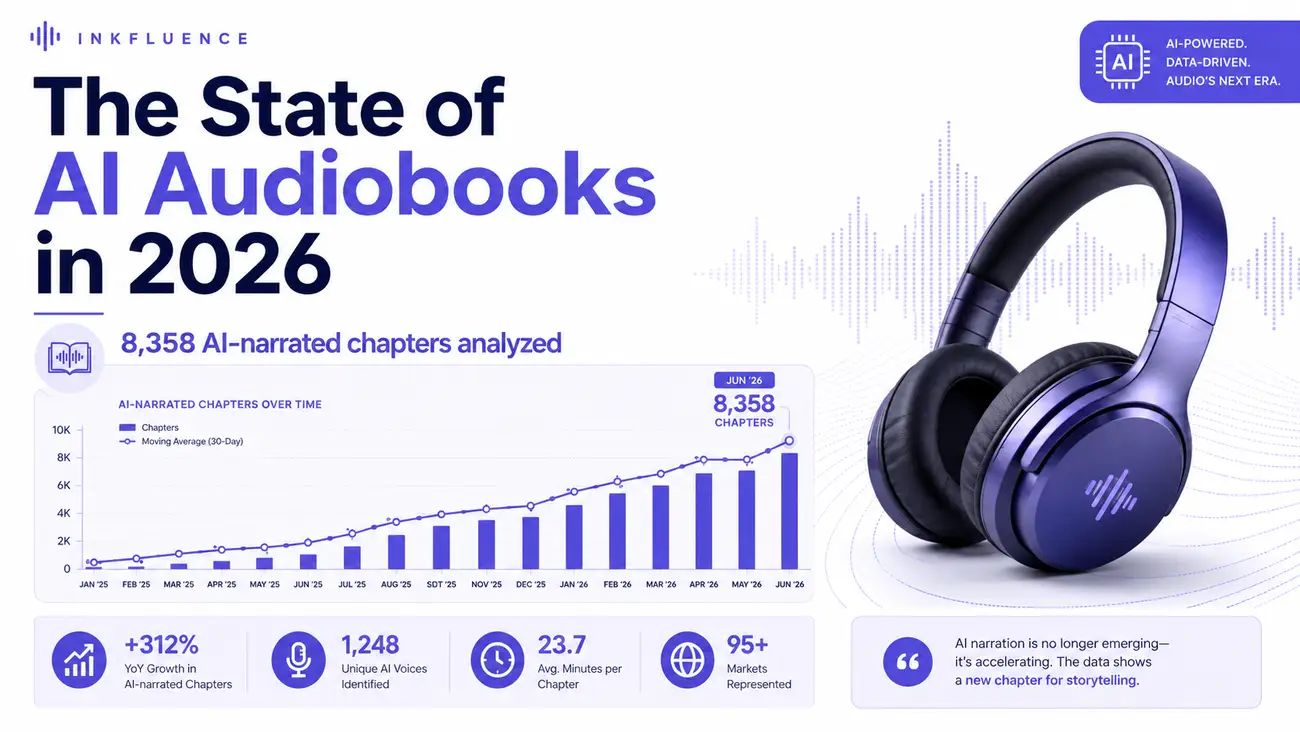
 The State of AI Audiobooks in 2026: What 8,358 AI-Narrated Chapters Reveal
We looked at 8,358 chapters our users narrated into audiobooks with AI. Monthly narration grew from a handful of chapters in late 2025 to nearly 3,000 a month by mid-2026, 99% of jobs finished cleanly, and listeners consistently pick natural, conversational voices over dramatic ones. Here is the first-party data and what it means for authors.
Get ebook tips in your inbox
Join creators getting weekly strategies for writing, marketing, and selling ebooks.