

Read the first chapter
The whole of chapter one, free. About 9 min. Turn the pages with the arrows, your keyboard, or a swipe.
Chapter 1
Domestic Abuse Risk and Safety Screening
The Purpose of a Scripture-Shaped Safety Screen
A counselor is meeting with a wife whose husband has threatened to kill her, blocked the doorway, and taken her phone. She says she wants help restoring the marriage. Before discussing forgiveness, communication, or reconciliation, the counselor must answer a more urgent question: Is she safe to leave this room today? A calm voice and a religious vocabulary do not remove danger. A biblical counselor’s first responsibility in an abuse case is to recognize threats accurately and act to protect life.
This material is for trained and emerging Christian counselors, pastors, ministry leaders, and clients who need a clear way to assess immediate danger. Its health outcome is not a promise that every situation will resolve quickly. Rather, careful screening can reduce exposure to preventable harm, clarify when emergency help is needed, and connect the endangered person with appropriate medical, legal, shelter, and pastoral support.
The Ladder of Safety Assessment gives the counselor a repeatable path from immediate danger to a written safety plan. It helps the counselor:
• identify urgent threats and lethality indicators; - separate ordinary marital conflict from coercive, escalating abuse; - document facts without increasing danger; - establish safe next steps with the client; - know when to contact emergency services or encourage law-enforcement involvement; and - address spiritual suffering without using Scripture to pressure a person back into danger.
Protection is not a failure of faith. Scripture presents God as a refuge for the oppressed and commands His people to defend the vulnerable (Psalm 9:9; Proverbs 31:8-9). Romans 13 also recognizes the lawful authority of government to restrain wrongdoing. A counselor who takes danger seriously is not destroying a family. The counselor is honoring the value of the person made in God’s image.
How Danger Escalates and What Raises Concern
Domestic abuse is not defined only by the presence of anger or loud disagreement. The central concern is a pattern of coercive control: one person uses fear, threats, surveillance, isolation, money, children, spiritual authority, or physical force to control another. Conflict may involve mutual disagreement. Abuse creates an unsafe power pattern in which one person cannot freely say no, leave, seek help, or make ordinary decisions without fear of retaliation.
Several factors increase concern for serious injury or death. None proves what will happen next, but each requires careful attention:
1. Threats of death or serious harm, especially specific threats, threats involving weapons, or statements that the victim will never leave alive. 2. Strangulation or choking, including pressure to the neck, blocking breathing, or restricting air. Visible marks may be absent, and delayed medical complications can occur. 3. Access to weapons, recent weapon display, weapon cleaning during arguments, or threats involving firearms, knives, or other weapons. 4. Escalating severity or frequency, such as moving from insults to property destruction, pushing, beating, confinement, or attacks during separation. 5. Stalking and surveillance, including repeated unwanted contact, tracking devices, monitoring accounts, following the person, or appearing at work, church, school, or a shelter. 6. Forced sex, pregnancy-related control, or interference with medical care, all of which may signal increasing control and physical risk. 7. Substance use, severe sleep deprivation, or extreme agitation when these are linked with threats or violence. These conditions may increase unpredictability, but they do not excuse abuse. 8. Recent separation or an announced plan to leave, a period that can bring increased danger because the abuser perceives lost control. 9. Threats toward children, pets, relatives, or the counselor, which may be used to prevent disclosure or escape. 10. The victim’s own sense of danger, especially a clear statement such as, “I believe he will kill me.” This statement should be taken seriously and explored, not debated.
The counselor should ask direct questions in private: “Has he ever threatened to kill you?” “Has he put his hands around your neck or blocked your breathing?” “Does he have access to a gun or another weapon?” “Has he followed, monitored, or confined you?” “What do you believe will happen if he learns you spoke with me?” Direct questions do not create abuse. They give the client permission to describe what has already occurred.
Abuse also produces trauma symptoms and emotional suffering. A client may appear confused, numb, ashamed, watchful, depressed, or unable to make decisions. These symptoms are not evidence of spiritual rebellion. Fear, disrupted sleep, intrusive memories, physical pain, and difficulty concentrating may follow repeated danger. The counselor should assess these concerns and encourage timely medical evaluation when there has been strangulation, head injury, loss of consciousness, significant bleeding, possible poisoning, or other physical harm. Emergency symptoms require emergency care, not a delayed pastoral appointment.
A biblical framework clarifies the moral issue. “Love does no harm to a neighbor” (Romans 13:10). A husband’s authority is never permission to terrorize, injure, isolate, or sexually violate his wife. Ephesians 5:25 commands sacrificial love, not domination. First Peter 3:7 warns husbands to live with their wives in an understanding way and recognizes that sinful treatment affects spiritual fellowship. These passages cannot be used to demand submission to violence. Submission to God never requires cooperating with a crime.
Applying the Ladder of Safety Assessment
The Ladder of Safety Assessment begins at the lowest rung only when there is no sign of immediate danger. The counselor moves upward whenever new information raises concern. Do not treat the ladder as a one-time form. Reassess at every meeting, and reassess immediately after a threat, assault, separation, arrest, weapon incident, or unexpected contact.
First rung: establish private contact. Meet without the suspected abuser present. Confirm whether the client can speak safely and whether messages, email, or appointment reminders may expose the contact. Ask what name and phone number are safe to use. Do not leave a detailed voicemail unless the client has specifically approved it.
Second rung: screen for immediate danger. Ask about current injuries, weapons, threats, confinement, stalking, strangulation, forced sex, and threats to children or pets. Ask whether the abuser is nearby, knows the client’s location, or has threatened to come to the counseling office. If danger is occurring now, the client cannot leave safely, or a serious injury has occurred, contact emergency services according to local procedure. Do not send the client back to collect belongings or confront the abuser.
Third rung: identify the next safe location. Work with the client to name a place that can be reached safely: a staffed shelter, trusted relative, police station, hospital, or other secure location. A church office may be helpful, but it should not be treated as a secure shelter unless it has trained staff, controlled access, and a plan for emergencies. If children are involved, include their transportation, medications, school needs, and legal concerns.
Fourth rung: create a written safety plan. Keep the plan brief enough to use under stress. Include emergency numbers, two safe contacts, transportation options, copies or photographs of important documents, essential medications, keys, cash, and a code word that means “call for help.” Store the plan where the abuser cannot find it. A digital copy may be unsafe if accounts or devices are monitored. Consider whether a paper copy held by a trusted person is safer.
Fifth rung: coordinate professional and legal support. Encourage medical care for injuries and timely consultation with a domestic-violence service, shelter advocate, attorney, or law-enforcement officer. The counselor should not promise a particular legal outcome or direct the client to confront the abuser. If the client chooses to report, offer practical support such as helping organize dates, threats, photographs, medical records, and witness names. Documentation should be factual: “On March 4 at approximately 8:00 p.m., he placed both hands around my neck for about ten seconds,” rather than conclusions about motive.
Sixth rung: plan communication and follow-up. Schedule the next contact only in a way the client has approved. For a high-risk situation, follow up within twenty-four hours when safe and appropriate; for lower immediate risk, establish a specific check-in within one week. Reassess after any change in residence, contact, custody arrangement, legal action, or separation. Safety planning is not complete when the client leaves the office. It is complete when the next safe connection is clear.
The following comparison helps distinguish the counselor’s response:
| Finding | Immediate response | |---|---| | Current assault, weapon threat, confinement, serious injury, or inability to leave safely | Contact emergency services; remain focused on immediate protection | | Recent strangulation, head injury, loss of consciousness, or breathing difficulty | Encourage emergency medical evaluation immediately | | Threats, stalking, escalating violence, or weapon access without current attack | Develop a same-day safety plan and connect with specialized support | | Past abuse with no current threat disclosed | Complete a private safety plan, document concerns, and schedule specific follow-up | | Mutual verbal conflict without fear, coercion, or physical danger | Address conflict separately; continue screening if new facts emerge |
Do not begin joint counseling while one person is afraid to speak freely or faces retaliation for what is disclosed. Do not arrange a reconciliation meeting as the first response to a threat or assault. Any future restoration requires truth, safety, genuine repentance, accountability, and sustained change; a counselor cannot manufacture these conditions by placing the endangered person closer to the abuser.
Common Errors That Increase Risk
Treating reconciliation as more urgent than protection
Why it happens: Christian counselors rightly value covenant faithfulness, forgiveness, and peace. Scripture also warns against calling evil good and commands protection of the weak. The desire to save a marriage can unintentionally silence the person who is in danger.
What to do instead: Screen privately before discussing reconciliation. State clearly that forgiveness does not cancel the need for safety, repentance, consequences, or legal protection. When threats or violence are present, prioritize separation from danger and specialized support. Reconciliation, if ever considered, belongs later and only under conditions that do not expose the victim to retaliation.
Accepting the abuser’s spiritual language as evidence of safety
Why it happens: An abusive spouse may quote Scripture, pray publicly, express remorse, or request pastoral authority over the process. These actions can sound convincing while the controlling pattern continues at home.
What to do instead: Measure safety by observable conduct over time: no threats, no surveillance, no intimidation, respect for boundaries, compliance with legal restrictions, and willingness to accept accountability. Do not disclose the victim’s statements to the abuser without a safety reason and the client’s informed agreement, except where law requires reporting.
Failing to ask about strangulation, weapons, and separation
Why it happens: Counselors may fear that direct questions are intrusive or may rely on visible injuries. Serious danger is often hidden, and strangulation may leave little external evidence.
What to do instead: Ask the three questions directly at the first private meeting and repeat them after major changes: “Has he restricted your breathing or put pressure on your neck?” “Can he access a weapon?” “What has happened since you considered leaving or told him you might leave?” A positive answer moves the assessment upward and requires a more urgent safety response.
A counselor’s words can either increase danger or create a path toward protection. Speak plainly, document carefully, consult appropriate professionals, and refuse to use biblical authority as a tool of control. The work of peace begins not by pretending danger is absent, but by telling the truth about it and taking the next faithful step toward safety.
End of chapter one. 7 more chapters in the full book.
Swipe or use the arrows to turn the page

Spirit-Led Whole-Person Renewal

ChurchBased Christian Biblical Counseling Ministry

Anxiety And Panic Counseling Desk Reference
What's inside: 8 chapters
- 1. Domestic Abuse Risk and Safety Screening
- 2. Mapping Control Patterns and Spiritual Distortion
- 3. Trauma Symptoms and Grief in the Home
- 4. Cognitive Restructuring With Scripture Truth
- 5. Emotion Regulation Through Prayerful Self-Command
- 6. Boundary Covenants and Peaceful Separation Steps
- 7. Reconciliation Pathways and When Not to Reunite
- 8. Mandated Reporting, Church Care, and Ongoing Healing
About this book
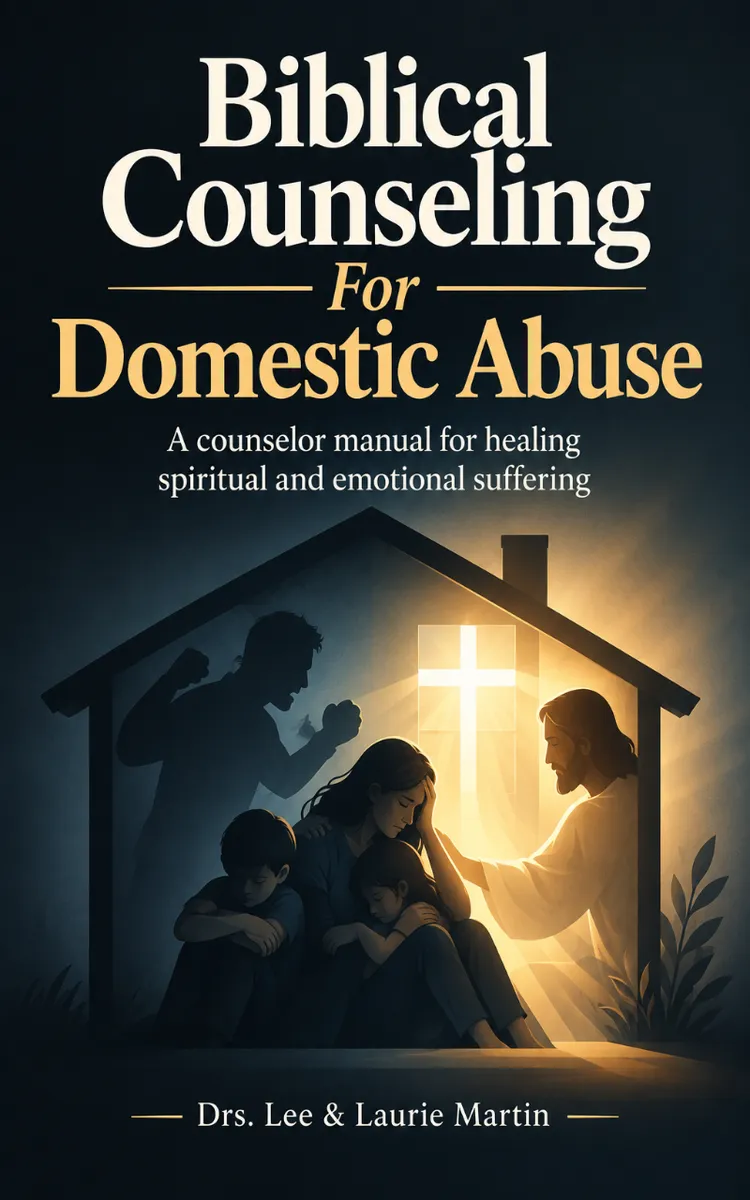
"Biblical Counseling For Domestic Abuse" is a clinical guide book by Drs. Lee & Laurie Martin with 8 chapters and approximately 14,162 words. Biblical Christian counseling manual for domestic conflict and abuse.
This book was created using Inkfluence AI, an AI-powered book generation platform that helps authors write, design, and publish complete books. It was made with the AI Health Book Generator.
Frequently Asked Questions
What is "Biblical Counseling For Domestic Abuse" about?
Biblical Christian counseling manual for domestic conflict and abuse
How many chapters are in "Biblical Counseling For Domestic Abuse"?
The book contains 8 chapters and approximately 14,162 words. Topics covered include Domestic Abuse Risk and Safety Screening, Mapping Control Patterns and Spiritual Distortion, Trauma Symptoms and Grief in the Home, Cognitive Restructuring With Scripture Truth, and more.
Who wrote "Biblical Counseling For Domestic Abuse"?
This book was written by Drs. Lee & Laurie Martin and created using Inkfluence AI, an AI book generation platform that helps authors write, design, and publish books.
How can I create a similar clinical guide book?
You can create your own clinical guide book using Inkfluence AI. Describe your idea, choose your style, and the AI writes the full book for you. It's free to start.
Write your own clinical guide book with AI
Describe your idea and Inkfluence writes the whole thing. Free to start.
Start writingCreated with Inkfluence AI


