

Read the first chapter
The whole of chapter one, free. About 8 min. Turn the pages with the arrows, your keyboard, or a swipe.
Chapter 1
Recognizing Pastoral Burnout
Seeing the Signals Without Losing Compassion
She smiles through the Sunday greeting line, carries coffee to the nursery volunteer, answers three messages about meals, and sits beside her husband while he preaches about rest. By Monday morning, she cannot remember the last night she slept without waking to church concerns. Her body is present, but her patience, prayer, and ability to enjoy ordinary life have begun to disappear. This is often how pastoral burnout becomes visible: not in one dramatic collapse, but in a pattern of small changes.
The Shepherd’s Wife Signal Map helps counselors notice those changes across four connected areas: emotional, spiritual, relational, and physical. The map is not a diagnosis. It is a careful way to ask what has changed, how long it has lasted, how strongly it affects daily life, and what kind of support may be needed.
Who this is for: new biblical counselors, pastors, elders, and trusted ministry friends who want to recognize emotional exhaustion without labeling too quickly or minimizing real suffering. Used well, this approach helps you:
• separate ordinary fatigue from a concerning pattern; - listen for signs that require timely professional assessment; - respond with Scripture, compassion, practical care, and appropriate boundaries; - avoid treating spiritual struggle as proof of personal failure.
A counselor’s goal is not to decide what is wrong with a pastor’s wife after one conversation. The goal is to notice faithfully, ask wisely, and help her receive the right care.
How Burnout Takes Root and Becomes Visible
Pastoral burnout often develops when demands remain high while recovery remains low. A pastor’s wife may carry public expectations, private family responsibilities, financial pressures, conflict within the church, frequent interruptions, and the hidden work of protecting her husband’s ministry. Some burdens are obvious. Others are never named because she believes she should be grateful, available, and strong.
Long-lasting stress can keep the body’s stress response active. This response helps a person act during an urgent situation, but it is not designed to remain switched on without enough rest. Over time, sleep may become lighter, attention may weaken, muscles may stay tense, and ordinary tasks may require unusual effort. These changes do not prove a medical condition, but they are useful signals to explore.
Risk increases when several factors occur together:
1. Unclear boundaries: Church needs enter evenings, days off, family meals, and private conversations without an agreed limit. 2. Role pressure: She feels responsible for being cheerful, hospitable, spiritually mature, emotionally available, and loyal at all times. 3. Relational strain: Conflict with church members, disappointment in leadership, or loneliness within the congregation leaves her without a safe place to speak. 4. Reduced recovery: Sleep, meals, movement, recreation, friendship, and quiet prayer are repeatedly postponed. 5. Unaddressed suffering: Grief, marital tension, trauma, anxiety, depression, chronic pain, or financial stress may be present alongside ministry fatigue.
The Signal Map begins with patterns, not labels. Emotional signs may include persistent irritability, tearfulness, numbness, dread before church gatherings, unusual shame, loss of pleasure, or difficulty making ordinary decisions. Spiritual signs may include feeling unable to pray, avoiding Scripture because it feels accusing, anger toward God, fear that God is disappointed, or confusion between faithful service and constant availability. These signs should be met with patient questions, not quick correction.
Relational signs can be just as important. She may withdraw from friends, snap at her children, avoid her husband, resent congregational requests, or feel that every interaction is another demand. Physical signs may include repeated headaches, stomach upset, muscle tension, racing thoughts at bedtime, changes in appetite, frequent exhaustion, or sleep that does not feel restorative. Physical symptoms have many possible causes, so a counselor should not assume they are caused by burnout alone.
Scripture gives language for weakness without contempt. Elijah became exhausted and discouraged after intense ministry, and God met him with sleep, food, and gentle questions before giving further direction (1 Kings 19:4-8). That account does not provide a medical formula, but it does correct a harmful assumption: a servant of God may need bodily care and patient presence before she can think clearly about the next step.
Using the Signal Map and Knowing When to Refer
Begin with a calm conversation in a private setting. Ask, “What changes have you noticed in yourself during the past month?” Follow with, “Which changes are affecting sleep, family life, church involvement, or your ability to complete ordinary tasks?” Ask her to rate the burden from 0 to 10, where 0 means no current burden and 10 means she feels unable to manage the day. Record the date and repeat the same questions once a week for four weeks. A simple pattern is more useful than one difficult afternoon.
Listen in four passes. First, ask about emotions: “What feelings are strongest, and when do they appear?” Second, ask about spiritual life: “When you pray or read Scripture, what happens inside you?” Third, ask about relationships: “Who feels safe, and who feels like another demand?” Fourth, ask about the body: “How have sleep, appetite, energy, pain, and concentration changed?” Reflect her words before offering advice. “You are not saying that you do not love the church. You are saying that your body and heart have had little room to recover.” Such a reflection reduces shame and improves accuracy.
Ordinary fatigue usually has a clear cause, improves after reasonable rest, and does not steadily spread into every area of life. A concerning pattern tends to persist, intensify, or interfere with basic responsibilities and relationships.
| More consistent with ordinary fatigue | Needs professional assessment | |---|---| | Follows a demanding week or event | Persists for two or more weeks without meaningful improvement | | Eases after sleep, food, and a planned lighter day | Sleep remains poor, excessive, or reversed despite a calmer schedule | | Mood returns toward normal during recovery | Persistent hopelessness, numbness, panic, or loss of pleasure | | She can still manage ordinary tasks | Work, parenting, self-care, or safety becomes difficult | | She can identify support and accept help | She feels trapped, unable to cope, or increasingly isolated |
This table is a guide, not a diagnosis. Encourage an appointment with a licensed medical or mental-health professional when symptoms persist for two weeks, worsen, recur often, or interfere with daily functioning. A primary-care clinician can review physical symptoms and possible medical contributors. A licensed counselor, psychologist, or psychiatrist can assess emotional and mental-health concerns. With her permission, coordinate rather than compete with that care.
Act sooner when she mentions wanting to die, harming herself, harming someone else, being unable to care for herself or a child, losing touch with reality, or feeling unsafe at home. Ask directly and calmly, “Are you thinking about harming yourself?” A direct question does not create the idea. If there is immediate danger, stay with her, involve a trusted responsible adult, contact local emergency services or a crisis service, and follow the professional’s safety instructions. Do not promise secrecy when safety is at risk.
A practical four-week response can begin with one protected recovery period of at least two hours each week, agreed upon with her husband or church leaders. Add a brief daily check-in of ten minutes to record sleep, energy, mood, and the day’s main burden. During the first week, reduce one nonessential church demand. During the second, arrange one supportive conversation with a mature woman or licensed professional. By the third and fourth weeks, review the ratings and functioning: Is sleep improving? Is she reconnecting with people? Can she complete ordinary tasks with less strain? If not, strengthen the referral rather than increasing religious pressure.
Use Scripture as comfort and truth, not as a weapon. Psalm 55:22 says, “Cast thy burden upon the LORD, and he shall sustain thee.” Galatians 6:2 calls believers to bear one another’s burdens. These passages do not tell her to hide symptoms or refuse skilled care. They remind her that receiving help can be an expression of trust, not failure. Her worth rests in Christ, not in her availability to the congregation.
Errors That Hide the Real Pattern
Mistaking constant availability for faithfulness
Why it happens: Ministry culture may praise the woman who answers every message, attends every event, and never appears tired. Counselors can reinforce this by treating limits as selfishness.
What to do instead: Ask what responsibilities are truly hers, what belongs to church leaders, and what can wait. Encourage one clearly protected period each week and review whether the boundary is honored. Faithfulness includes wise stewardship of the body and relationships God has entrusted to her.
Calling every spiritual struggle a lack of faith
Why it happens: A counselor may hear that prayer feels difficult and immediately prescribe more prayer, more Bible reading, or more service. The advice may be sincere but can deepen guilt when exhaustion is already severe.
What to do instead: Ask whether she is experiencing grief, fear, anger, numbness, or shame. Offer short, gentle passages such as Psalm 13 or Matthew 11:28-30, and allow silence. Pair spiritual care with sleep support, relational help, and professional assessment when the pattern warrants it.
Waiting for a crisis before recommending professional help
Why it happens: Counselors may fear that referral communicates spiritual weakness or that the church will be embarrassed. Others wait for certainty that cannot be gained through pastoral conversation alone.
What to do instead: Treat referral as one part of wise care. Use the two-week persistence and daily-functioning guidelines, explain what kind of professional may help, and ask permission to assist with scheduling or transportation. Continue appropriate biblical encouragement while respecting the clinician’s role.
The most compassionate counselor learns to see the whole person. Emotional exhaustion may affect prayer, marriage, parenting, sleep, and the body at the same time. The Shepherd’s Wife Signal Map keeps those areas connected without reducing her to a symptom list. Care begins when we notice the pattern, tell the truth about its weight, and help her receive support before exhaustion becomes her only way of living.
End of chapter one. 7 more chapters in the full book.
Swipe or use the arrows to turn the page


What's inside: 8 chapters
- 1. Recognizing Pastoral Burnout
- 2. Ministry Pressure and Emotional Exhaustion
- 3. Listening Through Shame and Silence
- 4. Scripture for Guilt and Self-Condemnation
- 5. Restoring Boundaries and Sabbath Rhythms
- 6. Responding to Anxiety and Fear
- 7. Repairing Isolation and Ministry Relationships
- 8. Planning Healing and Ongoing Care
About this book
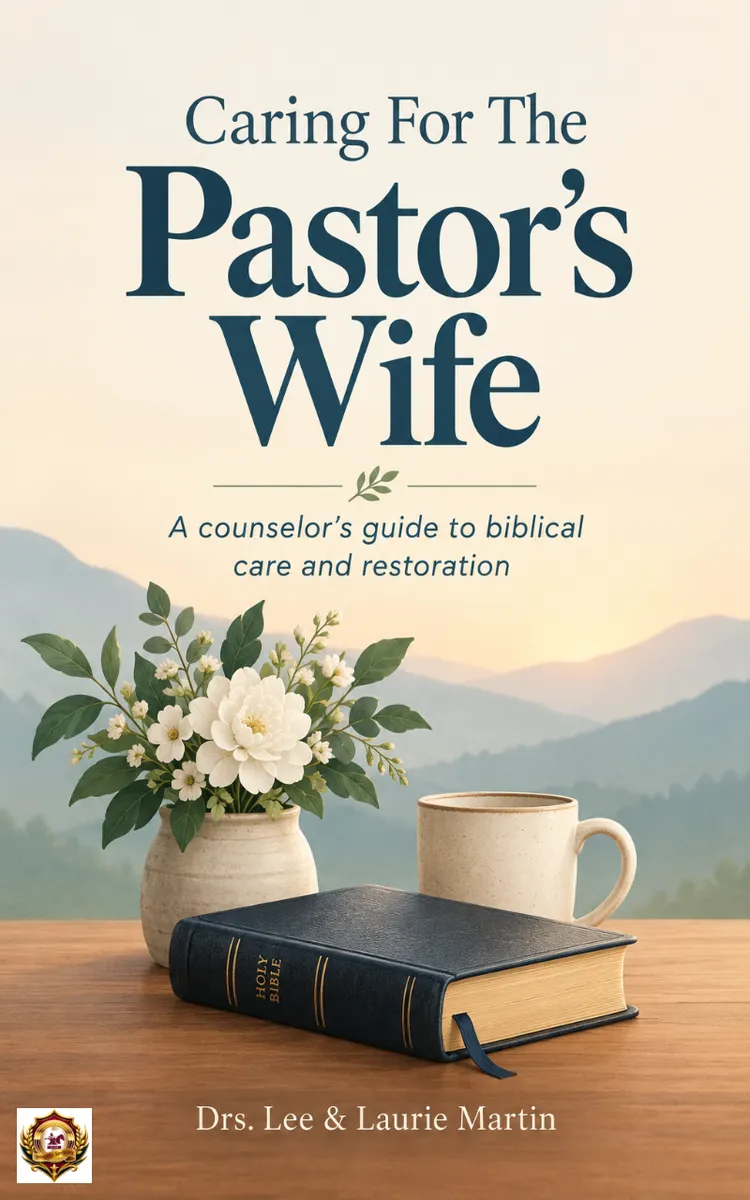
"Caring For The Pastor’s Wife" is a clinical guide book by Drs. Lee & Laurie Martin with 8 chapters and approximately 13,337 words. Biblical counseling for pastors’ wives experiencing emotional suffering and burnout.
This book was created using Inkfluence AI, an AI-powered book generation platform that helps authors write, design, and publish complete books. It was made with the AI Health Book Generator.
Frequently Asked Questions
What is "Caring For The Pastor’s Wife" about?
Biblical counseling for pastors’ wives experiencing emotional suffering and burnout
How many chapters are in "Caring For The Pastor’s Wife"?
The book contains 8 chapters and approximately 13,337 words. Topics covered include Recognizing Pastoral Burnout, Ministry Pressure and Emotional Exhaustion, Listening Through Shame and Silence, Scripture for Guilt and Self-Condemnation, and more.
Who wrote "Caring For The Pastor’s Wife"?
This book was written by Drs. Lee & Laurie Martin and created using Inkfluence AI, an AI book generation platform that helps authors write, design, and publish books.
How can I create a similar clinical guide book?
You can create your own clinical guide book using Inkfluence AI. Describe your idea, choose your style, and the AI writes the full book for you. It's free to start.
Write your own clinical guide book with AI
Describe your idea and Inkfluence writes the whole thing. Free to start.
Start writingCreated with Inkfluence AI


