

Read the first chapter
The whole of chapter one, free. About 8 min. Turn the pages with the arrows, your keyboard, or a swipe.
Chapter 1
Biblical Assessment and Differential Diagnosis
Scope, Safety, and the Four-Lens Assessment
Could a person sitting across from you be facing spiritual distress, a medical emergency, or both - and would your current process help you tell the difference? Biblical counselors and ministry leaders must answer that question before offering interpretation, prayer, or deliverance ministry. Compassion is not a substitute for careful assessment, and a spiritual vocabulary must never be used to conceal symptoms that require licensed care.
This material is for biblical counselors, pastors, elders, prayer ministers, and Christian ministry leaders who provide structured support without assuming the authority of a physician, psychologist, or psychiatrist. The expected outcome is not a diagnosis from a ministry setting. It is a safer, clearer plan: identify immediate risks, describe symptoms and changes in functioning, recognize spiritual concerns without reducing every problem to demonic activity, and coordinate appropriate referrals.
The Four-Lens Assessment Method provides a practical structure:
• Body: medical conditions, medication effects, sleep, substances, and neurological symptoms. - Mind: thoughts, emotions, perceptions, memory, and behavior. - Relationships and functioning: work, school, parenting, church participation, self-care, and safety. - Spiritual life: beliefs, conscience, sin, suffering, prayer, Scripture, community, and possible spiritual oppression.
These lenses do not compete. They prevent premature conclusions. Scripture calls leaders to “test everything; hold fast what is good” (1 Thessalonians 5:21), to seek wise counsel (Proverbs 15:22), and to care for vulnerable people with truth and gentleness (Galatians 6:1-2).
Causes, Symptoms, and Risk Factors
A person’s distress may arise from several interacting causes. Symptoms are observable or reported experiences, such as sleeplessness, panic, confusion, hopelessness, unusual perceptions, anger, or withdrawal. A symptom is not a diagnosis. The same symptom can appear in grief, trauma, medication changes, substance use, depression, psychosis, sleep deprivation, seizure disorders, or spiritual crisis.
Functioning refers to what the person can reliably do. Ask whether the individual is eating, sleeping, bathing, managing medication, attending work or school, caring for children, handling money, and maintaining basic safety. A change from the person’s normal pattern matters. Two nights of almost no sleep accompanied by racing thoughts and reckless spending requires a different response from ordinary discouragement after a difficult week.
Risk factors commonly include:
1. Physical and medical factors. Thyroid problems, infections, head injuries, seizures, hormonal changes, medication side effects, and withdrawal from alcohol or other substances can affect mood, perception, and behavior. Sudden confusion, weakness, fainting, severe headache, chest pain, or difficulty speaking requires urgent medical evaluation rather than a counseling interpretation. 2. Psychological and relational factors. Trauma, prolonged stress, grief, isolation, abuse, conflict, and learned patterns of fear can shape a person’s responses. These factors do not prove a disorder, but they belong in the assessment. 3. Substances and sleep. Alcohol, stimulants, cannabis, nonprescribed drugs, and abrupt changes in prescribed medication may intensify anxiety, agitation, depression, or unusual perceptions. Sleep loss can also impair judgment and increase emotional instability. 4. Spiritual and moral factors. Shame, unconfessed sin, false teaching, fear of condemnation, spiritual abuse, and unresolved questions about God may deepen distress. Scripture also describes spiritual opposition. Jesus delivered a man tormented by an unclean spirit (Mark 5:1-20), and Paul confronted a spirit associated with divination in Acts 16:16-18. These accounts establish that demonic activity is a biblical category; they do not authorize leaders to label every troubling symptom demonic.
The Four-Lens method asks the same experience from different angles. If someone reports hearing a voice, ask when it began, how often it occurs, whether it commands harm, whether sleep or substances changed, whether there is a medical history, and how the person understands the experience spiritually. Do not argue with the person, reinforce an unverified explanation, or conduct an improvised confrontation. Document the report in the person’s own words and arrange appropriate assessment.
Spiritual care remains essential. Jesus’ ministry addressed the whole person, and the church is called to bear burdens, confess sin appropriately, pray, teach truth, and protect the vulnerable. Yet prayer and referral are not opposites. Luke, described as a physician in Colossians 4:14, stands within the Christian story as a reminder that skilled medical care is not a rejection of faith. Salvation is also central: people need reconciliation with God through Christ, not merely relief from symptoms. Still, a call to repentance or faith must never be used to pressure a frightened person or delay emergency care.
A Practical Assessment and Referral Protocol
Begin with consent and scope. Explain that your role is to listen, provide biblical support, assess safety, and help connect the person with qualified care. State plainly that you cannot diagnose a mental disorder, prescribe medication, change medication, or promise a cure. Obtain permission before contacting family, a pastor, a physician, or a therapist unless an immediate safety exception applies under local law and ministry policy.
Use the Four-Lens Assessment in a consistent order. First, ask about immediate safety: “Are you thinking about killing yourself or harming someone else?” “Do you have a plan, access to the means, and an intention to act?” Also ask about abuse, neglect, inability to care for dependents, severe confusion, and dangerous commands from voices or beliefs. If there is imminent danger, do not leave the person alone. Contact local emergency services or a crisis service, follow safeguarding requirements, and involve a responsible support person when appropriate. Do not promise secrecy.
Second, establish a brief timeline. Record the date of onset, major changes, frequency, duration, triggers, and what reduces or worsens the symptoms. Ask about sleep each day for the previous week, substance use during the previous month, current medications and recent changes, medical conditions, prior treatment, and family concerns. A simple written log completed once daily for seven days can reveal patterns without turning the ministry setting into a diagnostic clinic.
Third, assess functioning at least weekly while active concerns continue. Use a short scale from 0 to 10 for distress, then record concrete abilities: hours slept, meals eaten, attendance at work or school, medication taken as prescribed, and ability to remain safe. These measurements are not a diagnosis. They help determine whether the plan is helping and give a licensed clinician useful information.
Fourth, explore spiritual concerns without leading the person. Ask what they believe is happening, whether they feel condemned or abandoned by God, whether Scripture has been used against them, and whether they desire prayer. Distinguish conviction from accusation. The Holy Spirit’s work leads toward truth and repentance, while coercion, humiliation, and terror are not marks of responsible ministry. Read relevant passages carefully, such as Psalm 34:18, Romans 8:1, James 5:14-16, and Ephesians 6:10-18, without presenting a verse as a replacement for evaluation.
Referral should be timely and specific. Encourage a primary-care appointment within several days for new, persistent, or unexplained symptoms; request a licensed mental-health evaluation when symptoms impair functioning, persist, recur, or involve unusual perceptions; and use emergency services immediately for imminent self-harm or harm to others, severe confusion, inability to meet basic needs, or rapidly worsening behavior. Never advise a person to stop or alter prescribed medication without the prescriber.
A coordinated plan may include one counseling meeting each week for four weeks, a daily symptom and sleep log, a medical appointment, and consent-based communication among the counselor, clinician, and pastor. Review progress at the end of each week. If sleep, safety, or functioning worsens, shorten the interval and escalate care. Deliverance ministry, when considered, should be led by mature, accountable church leadership, with consent, no physical restraint, no public spectacle, no financial pressure, and no interruption of necessary medical or mental-health care. Prayer should support assessment and treatment, not replace them.
| Observation | Possible concern | Immediate ministry response | |---|---|---| | New confusion, disorientation, or weakness | Medical or neurological emergency | Seek urgent medical evaluation | | Persistent low mood with loss of function | Depression, grief, trauma, or medical cause | Assess safety and arrange licensed evaluation | | Voices commanding harm | Psychiatric, substance-related, trauma-related, or spiritual concern | Ask about intent and means; seek urgent professional help | | Fear linked to sin or condemnation | Spiritual distress, scrupulosity, or coercive teaching | Offer careful Scripture, refuse shame, coordinate care | | Stable functioning with ordinary grief | Normal response or developing concern | Provide support and monitor weekly |
A person may continue in prayer, worship, Scripture, fellowship, and repentance while receiving professional care. “The prudent sees danger and hides himself” (Proverbs 22:3) is not fearfulness; it is wise preparation.
Errors That Distort Assessment
Mistake: Treating every unusual symptom as demonic possession
Why it happens: Biblical leaders rightly take spiritual warfare seriously, and Scripture clearly records demons being cast out. The error comes when a biblical possibility becomes the only explanation. This can intensify fear, shame, and resistance to needed care.
What to do instead: Use all four lenses. Ask about medical changes, substances, sleep, trauma, functioning, and spiritual beliefs. Pray with permission, document observable facts, and refer when symptoms are new, severe, persistent, or unsafe. Consider deliverance only through accountable leadership and only without coercion or interruption of clinical care.
Mistake: Treating a diagnosis as a person’s identity or spiritual verdict
Why it happens: Labels can appear to explain complicated behavior quickly. Some leaders also assume that mental illness proves weak faith, hidden sin, or failed discipleship.
What to do instead: Describe the person and the current concerns precisely: “He has slept three hours nightly for five days and is making unsafe financial decisions.” Reject condemnation while pursuing truth. Salvation in Christ addresses a person’s standing before God; it does not require denying bodily illness or emotional suffering. Romans 8:1 must not be used to silence honest assessment.
Mistake: Offering prayer while delaying referral
Why it happens: Ministry leaders may fear that referral communicates unbelief, or they may hope a dramatic spiritual response will solve the problem immediately.
What to do instead: Set a clear review point. If functioning has declined, arrange professional contact within days; if safety is uncertain, act immediately. Continue prayer and biblical encouragement alongside care. Obtain releases when coordinating with clinicians, record agreed actions, and follow up at the promised time.
Responsible assessment keeps the church from choosing between spiritual care and wise health care. It makes room for Scripture, prayer, repentance, community, medical knowledge, and licensed treatment without confusing their roles. The counselor’s task is not to force certainty where the facts are incomplete. It is to notice what is happening, protect the person, seek truth, and walk faithfully with others toward appropriate help. That disciplined posture prepares the ground for any later discussion of disorders, spiritual oppression, and deliverance without placing vulnerable people at greater risk.
End of chapter one. 7 more chapters and about 13,657 words in the full book.
Swipe or use the arrows to turn the page


What's inside: 8 chapters
- 1. Biblical Assessment and Differential Diagnosis
- 2. Depression and Suicide Risk
- 3. Anxiety, Panic, and Trauma
- 4. Bipolar Disorder and Psychosis
- 5. Addiction and Compulsive Behaviors
- 6. Demonic Oppression and Deliverance Discernment
- 7. A Stepwise Counseling and Referral Process
- 8. Recovery, Relapse Prevention, and Prognosis
About this book
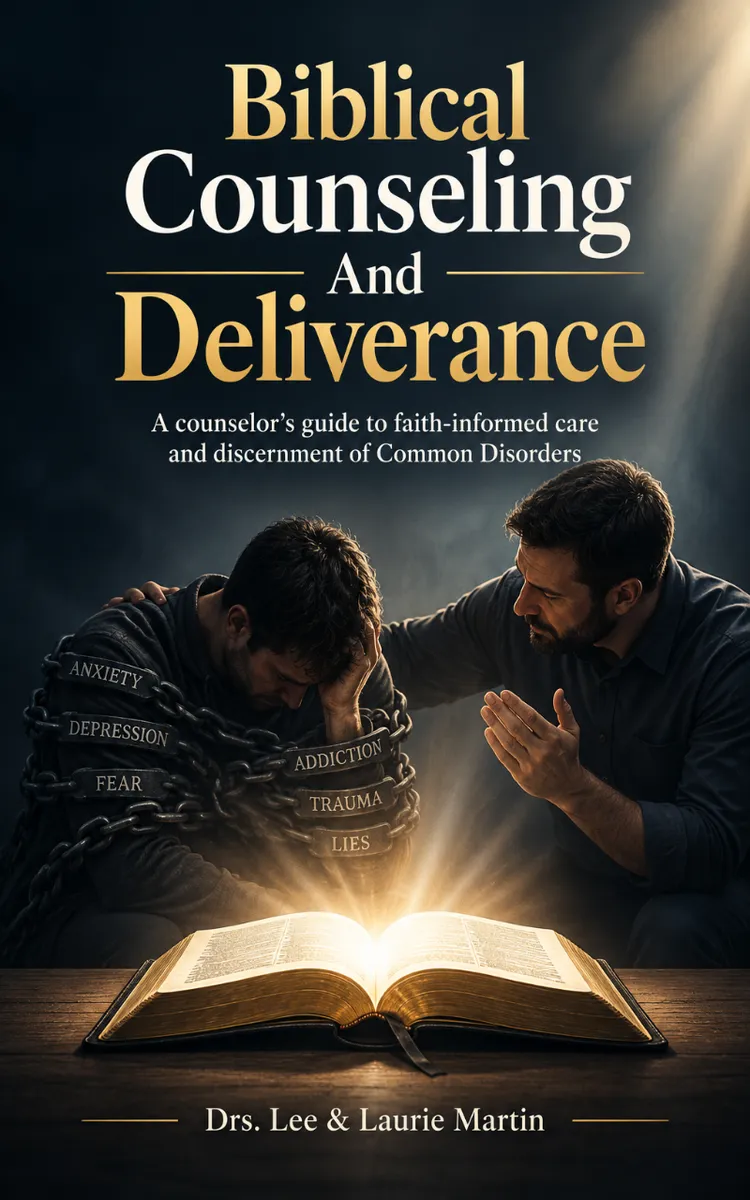
"Biblical Counseling And Deliverance" is a clinical guide book by Drs. Lee & Laurie Martin with 8 chapters and approximately 13,657 words. Biblical counseling, mental health disorders, and Christian deliverance practices.
This book was created using Inkfluence AI, an AI-powered book generation platform that helps authors write, design, and publish complete books. It was made with the AI Health Book Generator.
Frequently Asked Questions
What is "Biblical Counseling And Deliverance" about?
Biblical counseling, mental health disorders, and Christian deliverance practices
How many chapters are in "Biblical Counseling And Deliverance"?
The book contains 8 chapters and approximately 13,657 words. Topics covered include Biblical Assessment and Differential Diagnosis, Depression and Suicide Risk, Anxiety, Panic, and Trauma, Bipolar Disorder and Psychosis, and more.
Who wrote "Biblical Counseling And Deliverance"?
This book was written by Drs. Lee & Laurie Martin and created using Inkfluence AI, an AI book generation platform that helps authors write, design, and publish books.
How can I create a similar clinical guide book?
You can create your own clinical guide book using Inkfluence AI. Describe your idea, choose your style, and the AI writes the full book for you. It's free to start.
Write your own clinical guide book with AI
Describe your idea and Inkfluence writes the whole thing. Free to start.
Start writingCreated with Inkfluence AI


