

Read the first chapter
The whole of chapter one, free. About 8 min. Turn the pages with the arrows, your keyboard, or a swipe.
Chapter 1
Defining Half-Done Sanctification
When Growth Feels Like Failure
What should you call a believer who hates a recurring sin, confesses it honestly, takes practical steps, and still falls again three months later? If you call that person “unchanged,” you may deepen despair. If you call every repeated fall “victory,” you may excuse sin. Scripture gives us a better category: unfinished transformation marked by real faith, real conflict, and real need for grace.
This distinction matters because many counseling conversations collapse two different conditions. A hardened rebel protects sin, resists correction, and treats God’s commands as an unwanted burden. A weak believer stumbles, grieves, returns to the light, and asks for help. Both need truth, but they do not need the same interpretation. The first needs a clear call to repentance; the second needs repentance joined to patient, concrete care.
The goal here is not to rename disobedience so that no one must change. The goal is to help counselors and struggling believers identify what Scripture actually says about gradual growth and recurrent failure. You will learn to use the Already-and-Not-Yet Map: a way to name what Christ has already accomplished, what the Spirit is changing now, and what remains incomplete. Use it to evaluate a setback without making either of two false claims: “Nothing has changed” or “A guaranteed, effortless victory must be visible by now.”
The Already-and-Not-Yet Map
Scripture holds present grace and future completion together. Paul says that believers have been “sanctified in Christ Jesus” (1 Corinthians 1:2), yet he also describes his own ongoing struggle with sin in Romans 7 and urges believers to “work out” their salvation in Philippians 2:12. He can call Christians holy and still command them to put sinful practices to death. These statements do not contradict each other. They describe different points on the same map.
The already names what God has decisively done. Through Christ, the believer receives forgiveness, a new standing before God, and the indwelling Holy Spirit. The not-yet names what God continues to form: stable obedience, mature love, wise self-control, and complete freedom from sin. First John 1:8 rejects the claim that believers have no sin. Philippians 1:6 gives confidence that God continues his work. A counselor should hold both verses close when a counselee reports another fall.
Use the map through four questions:
1. What has God already given? Identify the believer’s standing in Christ, access to confession, Scripture, prayer, the church, and practical help. This prevents a setback from rewriting the gospel as though one failure canceled adoption.
2. What pattern still needs attention? Name the specific behavior, emotion, thought, or situation. “I am struggling” cannot guide care as well as “I spend forty minutes viewing pornography after midnight when anger and loneliness keep me awake.” Specific language reveals where obedience must begin.
3. What evidence shows present movement? Look for earlier confession, quicker return, increased honesty, changed boundaries, reduced frequency, less secrecy, or a growing ability to endure distress without acting out. These signs do not prove completion, but they can show that the person has not remained static.
4. What faithful step comes next? Choose one measurable response for the next seven days. The step might include calling an accountability partner before opening a device, scheduling a medical evaluation for persistent depression, or confessing a financial lie to a spouse. A next step turns grace into practiced obedience without pretending that one step finishes the work.
Consider anger. A believer once shouted at a spouse every evening, defended the outbursts, and refused counsel. After several months, the person still shouts during intense conflict but now notices the physical warning signs, leaves the room within two minutes, returns to apologize, and records the trigger. The anger remains serious. Yet “nothing has changed” ignores genuine movement, while “the anger is no longer a problem” denies the damage. The map lets you say both: God has begun a work, and this pattern still requires repentance, repair, and training.
Ask yourself: after a fall, does the person move toward truth or away from it? Does the person make excuses, or name the harm? Does the person accept wise limits, or demand freedom from all limits? Recurrent failure alone does not prove hardened rebellion. The direction of the heart, the response to correction, and the willingness to take costly steps provide better evidence.
Applying the Map to a Repeated Setback
A counselor can apply this framework without turning a session into a debate about whether the counselee feels “victorious.” Consider a realistic case: over twelve weeks, a believer reports compulsive online sexual behavior. The person began with five episodes per week, reduced to two, then returned to four during a stressful work deadline. The person feels ashamed and says, “Counseling is not working. I might as well stop trying.”
Use these steps:
1. Record the event without minimizing it. Write down the date, duration, trigger, behavior, concealment, and immediate consequence. For example: “Thursday, 11:40 p.m.; alone after an argument; forty-five minutes; deleted browser history; slept four hours.” The expected outcome is a clear account rather than a vague confession shaped by shame.
2. Compare the current pattern with the earlier pattern. Review the twelve-week record. The frequency dropped from five episodes to two before rising to four. Also note whether the person disclosed the relapse within twenty-four hours instead of hiding it for several weeks. The expected outcome is a balanced assessment: the setback matters, but it does not erase every sign of growth.
3. Test the response for rebellion or weak faith. Ask, “Do you want freedom from the sin, or only freedom from its consequences?” Ask, “What correction have you resisted?” If the person blames the spouse, rejects every boundary, and plans to continue, address hardened resistance directly. If the person grieves, accepts help, and agrees to change the late-night routine, address weakness with structure and patience.
4. Choose two changes for the next seven days. Set a device cutoff at 10:30 p.m. and place the phone outside the bedroom. Schedule a ten-minute call with an accountability partner at 10:35 p.m. The expected outcome is not permanent perfection; it is a safer decision point during the highest-risk hour.
5. Repair the relational damage. If the behavior affected a spouse, require truthful disclosure without graphic detail, an apology that names the harm, and one agreed boundary. The expected outcome is restored honesty, not instant restored trust. Trust may require repeated truthful actions over time.
6. Review after seven days and adjust. Record whether the person followed the boundaries, what happened before each urge, and whether the person sought help before acting. If the person fails again, repeat the map rather than changing the theology: confess, examine, repair, and choose the next faithful step.
A brief review might look like this:
• Already: forgiven in Christ; not abandoned after relapse; able to confess. - Not-yet: freedom from compulsive behavior; stable nighttime habits; repaired trust. - Evidence of movement: earlier disclosure; fewer episodes than the starting point; willingness to accept limits. - Next step: phone outside the bedroom and a scheduled accountability call.
Quick checklist
• Name the exact behavior and setting. - Separate the latest fall from the whole story. - Look for movement toward truth, not merely a lower number. - Ask whether the person accepts correction. - Set one or two actions with a time and place. - Address harm to family members directly. - Review results within seven days. - Treat repeated failure as a reason for deeper assessment, not automatic proof of hypocrisy.
This process gives counselors a firm but compassionate language. It also gives struggling believers a way to examine their lives without letting shame become the final judge.
Mistakes That Distort Gradual Growth
Calling every repeated failure hardened rebellion
Some counselors treat recurrence as proof that the person never belonged to Christ or never wanted change. That conclusion exceeds Scripture. David’s serious sin, Peter’s denial, and the church’s repeated corrections show that genuine believers can fail badly. Their failures still require consequences and repentance, but recurrence alone cannot settle the question of the heart.
Do this: examine secrecy, defensiveness, response to correction, desire for change, and willingness to accept costly help. Not this: declare, “If you truly loved God, you would never do this again.”
Promising effortless or guaranteed progress
A different error says that a believer who follows the right steps will experience steady improvement on a fixed schedule. Scripture calls believers to active obedience, but it does not promise a neat ten-week arc. Paul prayed repeatedly about his “thorn in the flesh” without receiving the removal he requested (2 Corinthians 12:7-10). Some struggles involve trauma, addiction, depression, bodily illness, marital injury, or several conditions at once. A relapse may expose a missing support, not a defective gospel.
Do this: promise God’s presence, truthful assessment, and wise next steps; refer for medical or specialized care when symptoms require it. Not this: promise that one prayer, technique, or counseling plan will guarantee permanent relief.
Measuring growth only by visible success
A person may reduce a behavior while becoming more secretive, proud, or emotionally numb. Another person may have an outward relapse while becoming more honest, quicker to seek help, and more willing to repair harm. Numbers matter, but they do not tell the whole story.
Do this: track behavior, honesty, triggers, repair, and dependence on God together. Not this: treat a lower frequency as proof of maturity or a relapse as proof of total defeat.
The Already-and-Not-Yet Map keeps these truths together: Christ has secured the believer’s standing, the Spirit continues the work, and obedience still requires patient practice. Growth may remain unfinished without becoming false. Recurrent failure may remain serious without becoming the believer’s final identity. When counselors and counselees learn to name both realities, they can face the long struggle with clearer eyes, stronger repentance, and hope grounded in what God has already begun and will one day complete.
End of chapter one. 7 more chapters and about 14,615 words in the full book.
Swipe or use the arrows to turn the page


What's inside: 8 chapters
- 1. Defining Half-Done Sanctification
- 2. Assessing Recurrent Patterns
- 3. Distinguishing Rebellion from Weakness
- 4. Grace After Another Setback
- 5. Mapping Triggers and Protective Supports
- 6. Counseling Beyond Ten Weeks
- 7. Repairing Trust Within Families
- 8. Sustaining Change Through Setbacks
About this book
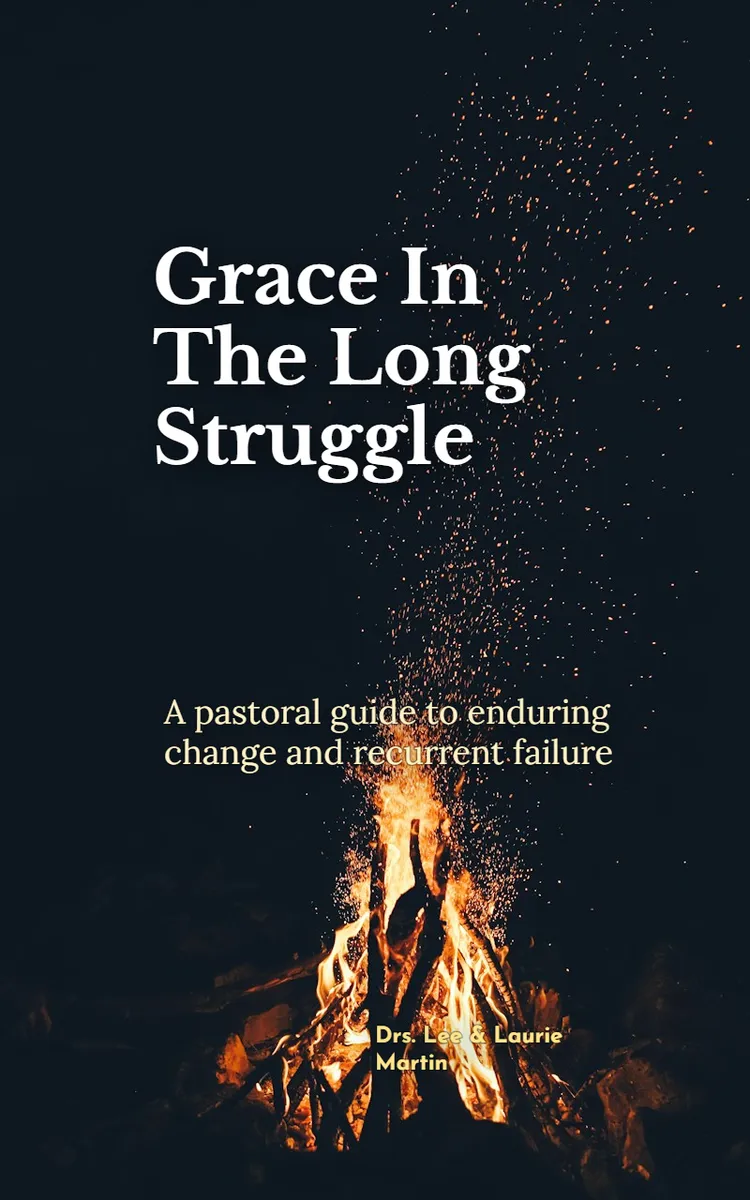
"Grace In The Long Struggle" is a how-to guide book by Drs. Lee & Laurie Martin with 8 chapters and approximately 14,615 words. Christian counseling for recurrent sin, emotional struggles, and gradual sanctification.
This book was created using Inkfluence AI, an AI-powered book generation platform that helps authors write, design, and publish complete books. It was made with the AI Ebook Generator.
Frequently Asked Questions
What is "Grace In The Long Struggle" about?
Christian counseling for recurrent sin, emotional struggles, and gradual sanctification
How many chapters are in "Grace In The Long Struggle"?
The book contains 8 chapters and approximately 14,615 words. Topics covered include Defining Half-Done Sanctification, Assessing Recurrent Patterns, Distinguishing Rebellion from Weakness, Grace After Another Setback, and more.
Who wrote "Grace In The Long Struggle"?
This book was written by Drs. Lee & Laurie Martin and created using Inkfluence AI, an AI book generation platform that helps authors write, design, and publish books.
How can I create a similar how-to guide book?
You can create your own how-to guide book using Inkfluence AI. Describe your idea, choose your style, and the AI writes the full book for you. It's free to start.
Write your own how-to guide book with AI
Describe your idea and Inkfluence writes the whole thing. Free to start.
Start writingCreated with Inkfluence AI


