

Read the first chapter
The whole of chapter one, free. About 8 min. Turn the pages with the arrows, your keyboard, or a swipe.
Chapter 1
Faith-Informed Mental Health Literacy
Seeing the Whole Person: The Purpose of Faith-Informed Literacy
When a church member says, “I am praying, but I still cannot get out of bed,” what kind of response honors both the person’s faith and the seriousness of the struggle? Faith-informed mental health literacy begins by refusing a false choice between spiritual care and clinical care. It teaches us to recognize emotional, cognitive, behavioral, relational, bodily, cultural, and spiritual dimensions without reducing a person to any one of them.
Mental health refers to a person’s capacity to experience and manage emotions, think and act with reasonable flexibility, maintain relationships, pursue meaningful responsibilities, and respond to life’s demands. It is not constant happiness, perfect faith, or freedom from grief. Scripture presents psychologically complex people: David voices despair in the Psalms, Elijah collapses under exhaustion and fear in 1 Kings 19, Job protests amid suffering, and Jesus weeps at Lazarus’s tomb (Psalm 42:5; 1 Kings 19:4-8; Job 3:1-26; John 11:35). These passages do not turn biblical figures into clinical case studies, but they do challenge the idea that distress automatically reflects spiritual failure.
This material is for mental health counselors, Christian educators, pastors, theologians, ministry leaders, and readers seeking responsible faith-informed understanding. Its practical benefit is a shared language for noticing concern, offering appropriate spiritual support, respecting professional boundaries, and directing people toward qualified help when needed. The guiding framework is The Whole-Person Compass: attend to body, mind, relationships, culture, behavior, and spiritual life while keeping each area in its proper place.
The expected outcome is not diagnostic certainty. It is better discernment. Readers should be able to distinguish ordinary sorrow from persistent impairment, spiritual questions from clinical symptoms, supportive ministry from treatment, and compassionate presence from overconfident interpretation.
What Shapes Mental Health and Spiritual Distress
Mental health develops through interacting influences rather than one simple cause. Risk factors are conditions associated with a greater likelihood of distress; they do not determine a person’s future. A difficult childhood, chronic pain, sleep disruption, bereavement, discrimination, financial strain, isolation, substance use, or family history may increase vulnerability. Protective factors - safe relationships, stable routines, meaningful work, access to care, wise community, and spiritual practices that provide honest hope - may strengthen resilience.
Several mechanisms deserve attention:
1. Biological influences include sleep, nutrition, pain, medication effects, hormonal changes, neurological conditions, and inherited vulnerability. These factors do not explain every experience, but they can affect mood, concentration, energy, and impulse control. 2. Psychological influences include learned patterns of interpretation, trauma responses, grief, shame, avoidance, and difficulty regulating strong emotion. A person who expects rejection may withdraw before others can respond. 3. Relational and social influences include conflict, loneliness, caregiving burden, poverty, racism, unsafe housing, and exclusion. Distress can be a reasonable response to harmful circumstances, even when a person also needs clinical support. 4. Spiritual influences include beliefs about God, guilt, forgiveness, calling, suffering, community, and hope. Spiritual struggle may involve doubt, anger, shame, perceived abandonment, or conflict with religious authority. Such experiences require careful listening rather than quick correction.
The Whole-Person Compass helps prevent category errors. A counselor may assess symptoms and functioning, while a pastor may offer prayer, Scripture, community, and pastoral conversation. Neither role should be used to impersonate the other. Prayer cannot replace assessment when a person is experiencing severe impairment, and a clinical formulation should not dismiss a person’s convictions or spiritual practices.
A biblical example clarifies the distinction. In 1 Kings 19, Elijah receives food, water, sleep, and quiet before receiving further direction. The passage does not establish a treatment protocol or identify a modern disorder. It does show that spiritual interpretation should not ignore bodily depletion. Likewise, the Good Samaritan provides practical care and arranges continued support (Luke 10:30-37). His compassion is concrete, but the story does not authorize untrained people to perform every form of medical care.
Cultural humility is essential. Cultural humility means approaching another person’s cultural and religious world with curiosity, self-examination, and willingness to learn, rather than assuming that one’s own interpretation is universal. A counselor should ask what prayer, fasting, worship, family involvement, confession, silence, or Scripture means to this particular person. A church leader should ask whether referral to therapy feels safe, affordable, culturally respectful, and consistent with the person’s understanding of care.
Evidence-informed practice does not mean faith-free practice. It means using the best available research, professional training, clinical judgment, and the person’s values together. Scripture calls believers to seek wisdom, listen before answering, and practice truth in love (Proverbs 18:13; James 1:19; Ephesians 4:15). These principles support careful inquiry rather than premature conclusions.
A Practical Compass for Responsible Care
Begin with presence and permission. In a first conversation, spend the opening five to ten minutes listening without correcting theology or assigning a label. Ask, “What has changed?” “How is this affecting sleep, work, relationships, or worship?” and “What kind of support would feel helpful?” Reflect the person’s words before offering guidance. This simple sequence reduces the risk of turning a disclosure into a sermon or an informal diagnosis.
Next, clarify roles. A spiritual caregiver can listen, pray with consent, study Scripture, connect someone with community, and help identify practical support. A licensed mental health professional can conduct a clinical assessment, develop a treatment plan within scope, monitor progress, and coordinate care when appropriate. A physician or other qualified medical professional may evaluate physical contributors. Explain these differences plainly, especially when a person assumes that one conversation can answer every question.
Use a written Whole-Person Compass check once each week during an ongoing pastoral or educational support period, or at each counseling appointment when clinically appropriate. Record brief observations under six headings: body, thoughts and emotions, behavior, relationships, culture and circumstances, and spiritual life. Note changes in functioning rather than relying only on spiritual language or a single mood rating. For example, “sleep reduced from seven hours to four for ten days” is more useful than “faith is weak.” The record should remain confidential and follow applicable professional, legal, and organizational standards.
Set a review point. After two to four weeks of agreed support, ask what has improved, what has worsened, and whether the current level of care remains suitable. A minister should not promise that prayer, Bible reading, or community involvement will resolve a mental health condition. A counselor should not require religious participation as a condition of respectful care. When a client requests integration, obtain clear consent and use the client’s language rather than imposing a preferred doctrine.
Seek professional help promptly when distress persists, worsens, or disrupts ordinary functioning. Warning signs include inability to maintain basic self-care, several nights of severely reduced sleep, escalating substance use, repeated panic or dissociation, significant withdrawal, marked changes in behavior, or thoughts of death, self-harm, or harming another person. If there is immediate danger, do not leave the person alone; contact local emergency services or a crisis service, follow organizational safeguarding procedures, and involve trusted supports as appropriate. Do not promise secrecy when safety is at risk.
The following distinction keeps conversations clear:
| Spiritual care | Clinical practice | |---|---| | Prayer, pastoral listening, Scripture, community, and meaning-making | Assessment, diagnosis when appropriate, psychotherapy, medical evaluation, and treatment planning | | Usually provided by trained clergy, ministry leaders, or trusted community members | Provided by licensed or otherwise qualified professionals within their scope | | Focuses on spiritual formation, belonging, moral reflection, and hope | Focuses on symptoms, functioning, risk, and evidence-informed interventions | | Should refer when needs exceed training or safety is uncertain | Should respect beliefs, obtain consent, and avoid presenting clinical opinions as theological verdicts |
Faith can support care through lament, confession, forgiveness, communal belonging, and hope. It can also become entangled with shame or coercion. Therefore, ask before praying, obtain permission before involving family or church leaders, and never use Scripture to silence disclosure. “A bruised reed he will not break” describes the gentleness that should mark Christian care (Matthew 12:20), while “bear one another’s burdens” calls for shared responsibility rather than solitary rescue (Galatians 6:2).
Common Errors That Blur Faith and Mental Health
Treating distress as proof of weak faith
Why it happens: Religious communities rightly value prayer and trust in God, but those virtues can be misapplied when suffering is interpreted as moral failure. The language of spiritual warfare, sin, or insufficient belief may be offered before the person has been heard.
What to do instead: Ask open questions, acknowledge suffering, and separate spiritual interpretation from clinical assessment. Offer prayer or Scripture only with consent. Remember that lament is present throughout Scripture, including Psalm 13 and the prayers of Jesus in Gethsemane (Matthew 26:36-46).
Treating a pastoral conversation as a clinical assessment
Why it happens: A trusted pastor or educator may know the person well and may feel pressure to provide an immediate explanation. Familiarity, however, does not replace training, structured assessment, or medical evaluation.
What to do instead: Describe observations without labels, document the effect on functioning, and recommend qualified assessment when symptoms persist, intensify, or create safety concerns. Use language such as, “I am concerned about the change in your sleep and ability to function; a licensed professional could help evaluate what is happening.”
Using clinical language without cultural or spiritual humility
Why it happens: Technical terms can create an appearance of precision, while unfamiliar beliefs or practices may be treated as symptoms rather than explored in context.
What to do instead: Ask what the experience means to the person, how their community understands it, and what support they want. Consult interpreters or culturally responsive providers when language or culture affects care. Distinguish a spiritual practice from impairment by considering consent, context, flexibility, distress, and functional impact rather than judging unfamiliarity alone.
Faith-informed literacy is therefore a discipline of careful attention. It honors Scripture without using Scripture as a shortcut, respects clinical knowledge without treating it as spiritually complete, and keeps the person - not the label or the helper’s certainty - at the center. When body, mind, relationships, culture, behavior, and spiritual life are held together by The Whole-Person Compass, Christian care becomes more truthful, safer, and more compassionate.
End of chapter one. 24 more chapters and about 42,945 words in the full book.
Swipe or use the arrows to turn the page


What's inside: 25 chapters
- 1. Faith-Informed Mental Health Literacy
- 2. Clinical Assessment and Diagnosis
- 3. Ethics, Consent, and Confidentiality
- 4. Trauma-Informed Care
- 5. Anxiety Disorders and Panic
- 6. Depression and Persistent Low Mood
- 7. Suicide Risk and Crisis Response
- 8. Bipolar Spectrum Disorders
- 9. Psychosis and Schizophrenia
- 10. Obsessive-Compulsive Disorder
- 11. Post-Traumatic Stress Disorder
- 12. Eating Disorders and Body Image
- 13. Substance Use and Addiction
- 14. Personality Disorders and Relationships
- 15. ADHD Across the Lifespan
- 16. Autism and Neurodiversity-Affirming Care
- 17. Grief, Bereavement, and Loss
- 18. Sleep Disorders and Emotional Health
- 19. Chronic Pain and Somatic Symptoms
- 20. Perinatal Mental Health
- 21. Child and Adolescent Counseling
- 22. Older Adult Mental Health
- 23. Couples Counseling and Family Systems
- 24. Medication, Therapy, and Coordinated Care
- 25. Recovery, Relapse Prevention, and Hope
About this book
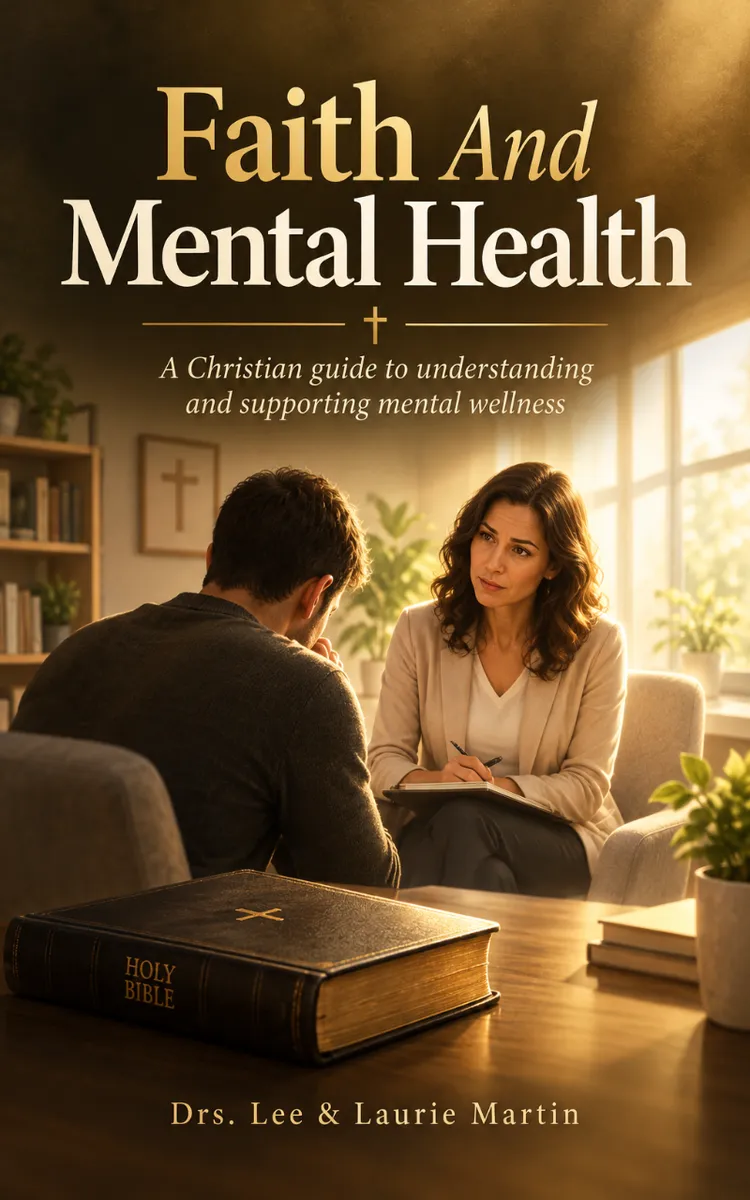
"Faith And Mental Health" is a clinical guide book by Drs. Lee & Laurie Martin with 25 chapters and approximately 42,945 words. Christian perspectives on mental health diagnosis, treatment, care, and prognosis.
This book was created using Inkfluence AI, an AI-powered book generation platform that helps authors write, design, and publish complete books. It was made with the AI Health Book Generator.
Frequently Asked Questions
What is "Faith And Mental Health" about?
Christian perspectives on mental health diagnosis, treatment, care, and prognosis
How many chapters are in "Faith And Mental Health"?
The book contains 25 chapters and approximately 42,945 words. Topics covered include Faith-Informed Mental Health Literacy, Clinical Assessment and Diagnosis, Ethics, Consent, and Confidentiality, Trauma-Informed Care, and more.
Who wrote "Faith And Mental Health"?
This book was written by Drs. Lee & Laurie Martin and created using Inkfluence AI, an AI book generation platform that helps authors write, design, and publish books.
How can I create a similar clinical guide book?
You can create your own clinical guide book using Inkfluence AI. Describe your idea, choose your style, and the AI writes the full book for you. It's free to start.
Write your own clinical guide book with AI
Describe your idea and Inkfluence writes the whole thing. Free to start.
Start writingCreated with Inkfluence AI


