
Read the first chapter
The whole of chapter one, free. About 5 min. Turn the pages with the arrows, your keyboard, or a swipe.
Chapter 1
Preparing the Soil of the Heart
Scripture Focus
Matthew 13:23 (NIV)
> But the seed falling on good soil refers to someone who hears the word and understands it. This is the one who produces a crop, yielding a hundred, sixty or thirty times what was sown.
A fruitful life begins when we let God soften the places in us where his Word has struggled to take root.
A garden doesn’t become ready for planting simply because the calendar says spring has arrived. The soil must be opened, cleared, and cared for. Hard ground needs loosening. Stones need removing. Weeds need pulling before their roots become stubborn. Our hearts need that same attention.
Jesus’ picture of good soil is both hopeful and honest. The seed is God’s Word, and the seed is good. The question is what happens when it lands in us. Do we hear it only for a moment, or do we receive it deeply enough to understand and obey? Good soil isn’t a perfect heart. It’s a receptive heart - a heart willing to be searched, corrected, renewed, and made ready for growth.
Reflection
Many of us want the fruit of a faithful life without first examining the condition of the soil beneath it. We ask God for patience, but avoid the resentment that keeps rising. We pray for peace, yet hold tightly to the need to control every outcome. We long for purpose, but resist the quiet obedience God has already placed in front of us. The Lord meets us in these places, not to shame us, but to heal and reshape us.
Honest prayer is one way God breaks up hard ground. It doesn’t require polished words. You might begin with, “Lord, I’m having trouble receiving what you’re showing me,” or, “I know I need to forgive, but I don’t want to.” Such prayer brings the real condition of the heart into God’s presence. We don’t confess because he lacks information. We confess because truth opens the door to renewal.
Repentance is also part of preparing the soil. Repentance means turning toward God rather than merely feeling bad about our choices. It may involve apologizing, changing a habit, setting a needed boundary, or releasing a grudge one day at a time. Trust follows as we believe that God can do more with a surrendered heart than we can do with a defended one. The heart becomes fruitful when it stays open to God’s work.
Matthew 13:23 also reminds us that growth takes time. Jesus describes a crop that yields thirty, sixty, or a hundred times what was sown. Not every season looks equally productive, and not every believer sees the same results at the same pace. A newly softened heart may first produce small signs: a gentler response, a truthful apology, ten quiet minutes with Scripture, or the courage to ask for help. These are not insignificant. They show that the seed is taking root.
Pay attention to what makes your heart resistant. Constant hurry can make Scripture feel like another task. Unresolved hurt can make correction feel like rejection. Disappointment can make trust seem unsafe. Even good responsibilities can crowd out attention to God. Ask the Lord to show you what has compacted the soil, then respond to what he reveals. You may need to put your phone in another room during prayer, write down a painful memory, speak with a mature Christian, or choose obedience before your feelings catch up.
The goal isn’t to become impressive. It’s to become receptive. A gardener doesn’t yell at the soil for being hard; the gardener works it patiently. God is patient with us, too. His kindness leads us to repentance (Romans 2:4), and his Spirit continues the renewing work we cannot complete by willpower alone. As you bring him your guarded places, he creates room for his Word to move from the page into your choices.
Practice for Today
1. Take a ten-minute heart inventory. Set a timer for ten minutes and sit with Matthew 13:23. Read it slowly three times. After each reading, notice one word or phrase that stands out. Then ask, “Lord, where is my heart receptive, and where has it become hard?” Write without editing yourself. You might record, “I’m open to serving, but resistant to forgiving,” or, “I hear God’s call to rest, but I keep treating exhaustion as faithfulness.” End by naming one area you’re willing to place in God’s hands today.
2. Practice a simple prayer of honest surrender. Use your own words, and be specific. Tell God what you’re protecting, avoiding, or carrying. Then ask him to soften that place and show you one obedient step. If anger is the hard soil, the step might be refusing to rehearse an old offense during your commute. If busyness is crowding out the Word, it might be setting aside the first fifteen minutes of tomorrow morning before checking messages. Keep the step small enough to do, but meaningful enough to require trust.
3. Remove one obstacle that keeps the seed from taking root. Choose a practical change for the next seven days. Put your Bible and journal where you’ll see them. Turn off notifications during your prayer time. Make an appointment with a pastor or trusted believer about a matter you’ve avoided. If you need to make amends, write the first sentence of the conversation today. This isn’t about earning God’s favor. It’s about making room to receive what he is already offering.
As you journal, consider this prompt: “What has God been saying that I’ve heard but not yet welcomed?” Describe one recent moment when Scripture challenged your attitude or decision. Then write what trust would look like in the next twenty-four hours. Keep your answer concrete. “Trust means I’ll stop defending myself and listen,” is more useful than “I’ll do better.”
Before the day ends, look for one small sign of softened soil. Perhaps you responded with restraint instead of irritation. Perhaps you admitted the truth instead of managing appearances. Perhaps you returned to God after drifting. Give thanks for that evidence of grace. A gardener notices the first green shoot, even before the garden is full.
Closing Prayer
Lord, you know every place in me that has grown hard, crowded, or guarded. Thank you for meeting me with patience. Soften my heart through your Spirit, help me receive your Word with humility, and show me the next faithful step. Pull up what keeps your truth from taking root, and teach me to trust your renewing work. May my life become good soil where your Word grows and bears lasting fruit. Amen.
End of chapter one. 5 more chapters and about 6,313 words in the full book.
Swipe or use the arrows to turn the page

The Greatness Of Christ’s Sacrifice

The Connection Between Obedience And Elevation

The Christian Outfit
What's inside: 6 chapters
- 1. Preparing the Soil of the Heart
- 2. Planting Seeds of Purpose
- 3. Watering What God Has Planted
- 4. Pruning for Greater Fruitfulness
- 5. Protecting the Garden
- 6. Harvesting a Fruitful Life
About this book
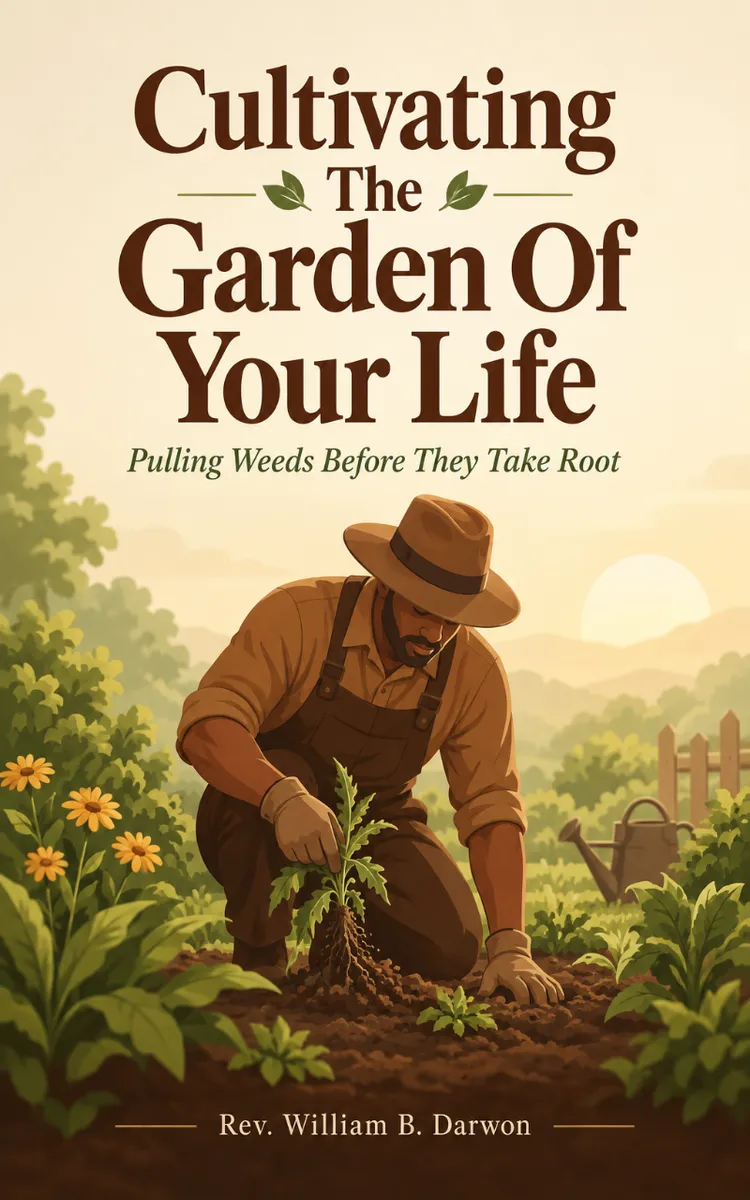
"Cultivating The Garden Of Your Life" is a religious devotional book by Rev. William B. Darwon with 6 chapters and approximately 6,313 words. Christian spiritual growth through biblical garden metaphors and practices.
This book was created using Inkfluence AI, an AI-powered book generation platform that helps authors write, design, and publish complete books.
Frequently Asked Questions
What is "Cultivating The Garden Of Your Life" about?
Christian spiritual growth through biblical garden metaphors and practices
How many chapters are in "Cultivating The Garden Of Your Life"?
The book contains 6 chapters and approximately 6,313 words. Topics covered include Preparing the Soil of the Heart, Planting Seeds of Purpose, Watering What God Has Planted, Pruning for Greater Fruitfulness, and more.
Who wrote "Cultivating The Garden Of Your Life"?
This book was written by Rev. William B. Darwon and created using Inkfluence AI, an AI book generation platform that helps authors write, design, and publish books.
Write your own religious devotional book with AI
Describe your idea and Inkfluence writes the whole thing. Free to start.
Start writingCreated with Inkfluence AI


