
Read the first chapter
The whole of chapter one, free. About 7 min. Turn the pages with the arrows, your keyboard, or a swipe.
Chapter 1
Chapter 1 The Tragedy of Humanity's Fall
A single act of disobedience changed the direction of human history. In Eden, sin entered a world made for fellowship with God, and its effects still reach into every home, heart, and community. The brokenness we see around us isn’t merely a collection of bad choices. It’s the deep wound left by humanity’s fall.
Genesis tells us that God created humanity in His image and placed the first man and woman in a garden of abundance. They knew God’s presence without shame or distance. Work was meaningful, relationships were whole, and creation was ordered under God’s good rule. Yet God gave them a real choice: they could trust His word or reach for life on their own terms.
The serpent questioned God’s goodness. The woman listened, saw, took, and ate. The man joined her. Their outward action was simple, but its inward meaning was enormous. They rejected trust and chose independence. They treated God’s wisdom as something to evaluate rather than something to receive.
That decision still explains much of our struggle. Sin is not only the wrong thing we do; it is the turning of the heart away from God. It tells us that we know better, that we can manage life without surrender, and that God’s boundaries are obstacles rather than protection. The fall began with a broken relationship, and every other fracture flowed from it.
What Humanity Lost in Eden
Genesis 3:7 says, “Then the eyes of both were opened, and they knew that they were naked.” Their eyes were opened, but not into freedom. They became aware of shame. The man and woman hid from the God who had made them, and fear entered a relationship that had once been marked by trust.
Notice the movement. First came disobedience. Then shame. Then hiding. Then blame. When God asked what had happened, the man pointed to the woman, and the woman pointed to the serpent. Sin rarely stays in one corner of life. It disturbs our view of God, ourselves, and other people.
We still recognize this pattern. A harsh word is followed by defensiveness. A secret habit is protected by excuses. A wrong decision is explained away until the heart grows comfortable with what once troubled the conscience. We may not hide behind trees, but we hide behind busyness, humor, silence, religious activity, or carefully managed appearances.
The fall also brought separation from the garden and from the unhindered fellowship humanity had enjoyed with God. This was not a minor change in circumstances. It revealed that sin carries consequences. Human beings remained valuable because they were made in God’s image, but they were no longer living in the wholeness for which they were created.
This helps us hold two truths together. Humanity is deeply broken, yet never worthless. We should take sin seriously without treating people as disposable. Every person bears God’s image, even while carrying the damage of the fall. That includes the person who frustrates you, the neighbor who disagrees with you, and the part of your own life you’d rather avoid.
How the Fall Still Appears in Daily Life
The tragedy of the fall isn’t locked in an ancient garden. It appears whenever we place self-rule above trust in God. It shows up in envy when another person’s blessing feels like our loss. It appears in resentment when we insist on keeping a record of wrongs. It appears in pride when we would rather defend ourselves than admit we need mercy.
Sometimes the evidence is painfully public: violence, betrayal, exploitation, and injustice. Sometimes it is quiet and personal: the cold distance between family members, the lie told to protect an image, or the private bitterness carried for years. Sin can be loud, but it can also wear respectable clothing.
Scripture gives a sober description in Romans 3:23: “For all have sinned and fall short of the glory of God.” The word all leaves no room for comparison games. We can find someone whose failures seem worse than ours, but comparison cannot heal the soul. A person drowning in three feet of water and a person drowning in ten feet both need rescue.
That truth is not meant to crush us. It brings us into honesty. We don’t have to pretend that our hearts are fine. We can name our need before God. A faithful examination might sound like this: Where have I resisted God’s instruction? Where have I excused what Scripture calls sin? Whom have I harmed through words, neglect, or selfishness? What am I trying to control instead of entrusting to God?
These questions aren’t tools for self-punishment. They’re a way of stepping into the light. The Lord already knows the truth, and honest confession keeps us from spending our energy hiding it.
A simple daily habit can help. Before reaching for your phone in the morning, pause for a moment and ask God to show you where you need His wisdom and grace that day. At night, review the day without dramatizing or minimizing it. Give thanks for where you saw God’s help. Confess where you turned away. Ask for strength to make things right where possible.
This practice won’t make you perfect by breakfast. It does something better: it trains your heart to live honestly before God.
Why the Fall Makes Grace Necessary
Humanity’s problem cannot be solved by better information alone. We know many things and still choose badly. Education can sharpen the mind, but it cannot by itself restore trust in God. Laws can restrain certain actions, but they cannot change the desires beneath them. Even religious effort can become another way to manage appearances.
The fall reveals our need for grace because we cannot repair the breach through our own strength. We need God to act. We need forgiveness that reaches deeper than regret. We need restoration that is more than improved behavior.
This is where the greatness of Christ’s sacrifice begins to come into view - not by rushing ahead to every detail of the Cross, but by recognizing the depth of the need. If the human problem were merely ignorance, a teacher would be enough. If it were merely weakness, a coach might be enough. If it were merely guilt, a fresh promise might be enough. But sin has touched the whole person and damaged fellowship with God.
The gospel does not flatter us, but neither does it abandon us. It tells the truth about our fall so that we can understand the wonder of God’s mercy. Christ’s sacrifice is great because the ruin it addresses is great. The Cross is not an unnecessary display of love for people who could have saved themselves. It is God’s gracious answer to a condition we could not overcome alone.
That reality changes the way we worship. We don’t come to God presenting a record of spiritual success. We come as people who have received mercy. We don’t praise Christ because we managed to climb up to God. We praise Him because God came near to rescue the fallen.
Practicing Honest Dependence on God
The fall teaches us to distrust our own self-sufficiency. That doesn’t mean refusing responsibility or neglecting wise action. It means recognizing that every good thing we do must grow from dependence on God rather than confidence in ourselves.
Before making a difficult decision, bring more than your preferred outcome to prayer. Bring your motives. Ask, “Am I seeking what is right, or only what protects my comfort and reputation?” Before answering an angry message, slow down. The fallen heart loves quick defenses. Wisdom often needs a quiet pause.
When you recognize sin, respond directly. Confess it to God without dressing it up. If another person has been hurt, seek forgiveness without adding a speech about why your behavior was understandable. Where repair is possible, take a practical step. A sincere apology, a returned call, a changed habit, or a truthful conversation can become an act of worship.
It’s also wise to receive God’s Word before the noise of the day becomes loud. Read a short passage slowly. Ask what it reveals about God, what it exposes in you, and what faithful response it invites. Scripture doesn’t merely provide facts about the fall; it teaches us to recognize its patterns in our own lives.
And don’t practice these habits as if you’re trying to earn God’s acceptance. That would repeat the same old error in religious clothing. We seek God because He is our life, not because we can purchase His favor through performance.
The tragedy of humanity’s fall is real. Sin has brought shame, conflict, suffering, and death into the world. Yet the final word over humanity is not the garden’s failure. Even in the earliest pages of Scripture, God’s pursuit of fallen people is already visible. He called for them when they hid. He spoke when they were afraid. He did not ignore their sin, but neither did He leave them without hope.
So begin here: tell the truth about the fall, including the ways it reaches your own heart. Let that truth remove pride, not dignity; dependence, not hope. Then look toward the mercy of God with the humility of someone who knows rescue is needed.
The greatness of Christ’s sacrifice will shine more clearly when we understand what humanity could never heal by itself.
End of chapter one. 19 more chapters and about 32,462 words in the full book.
Swipe or use the arrows to turn the page

Cultivating The Garden Of Your Life

The Connection Between Obedience And Elevation

The Christian Outfit
What's inside: 20 chapters
- 1. Chapter 1 The Tragedy of Humanity's Fall
- 2. Chapter 2, The Holiness of God and the Problem of Sin
- 3. Chapter 3, The Scarlet Thread of Redemption
- 4. Chapter 4. When Heaven Gave Its Best
- 5. Chapter 5, The miracle of the Incarnation
- 6. Chapter 6, The Sinless Life Christ
- 7. Chapter 7, Gethsemane's Cup
- 8. Chapter 8 Betrayed and Rejected
- 9. Chapter 9 The Suffering Servant
- 10. Chapter 10 Calvary's Dark Hour
- 11. Chapter 11 The Cry of Redemption
- 12. Chapter 12: The Blood That Speaks Better Things
- 13. Chapter 13: The Veil Torn Open
- 14. Chapter 14:The Empty Tomb
- 15. Chapter 15: The victory of the Cross
- 16. Chapter 16: The Greatest Exchange
- 17. Chapter 17: Transformed by the Cross
- 18. Chapter 18:Living in the Shadow of the Cross
- 19. Chapter 19: The Worship Worthy of the Lamb
- 20. Chapter 20: The Eternal Triumph of the Cross
About this book
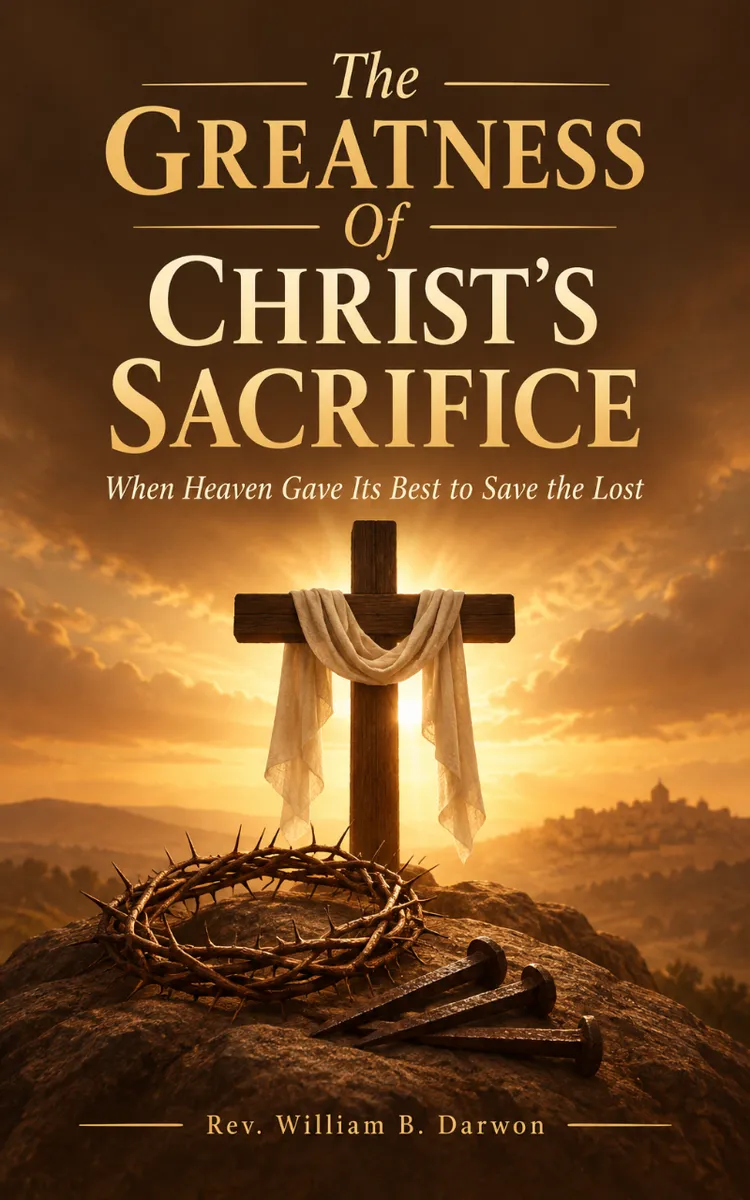
"The Greatness Of Christ’s Sacrifice" is a religious devotional book by Rev. William B. Darwon with 20 chapters and approximately 32,462 words. Christ’s sacrifice, redemption, the Cross, and its eternal significance.
This book was created using Inkfluence AI, an AI-powered book generation platform that helps authors write, design, and publish complete books.
Frequently Asked Questions
What is "The Greatness Of Christ’s Sacrifice" about?
Christ’s sacrifice, redemption, the Cross, and its eternal significance
How many chapters are in "The Greatness Of Christ’s Sacrifice"?
The book contains 20 chapters and approximately 32,462 words. Topics covered include Chapter 1 The Tragedy of Humanity's Fall, Chapter 2, The Holiness of God and the Problem of Sin, Chapter 3, The Scarlet Thread of Redemption, Chapter 4. When Heaven Gave Its Best, and more.
Who wrote "The Greatness Of Christ’s Sacrifice"?
This book was written by Rev. William B. Darwon and created using Inkfluence AI, an AI book generation platform that helps authors write, design, and publish books.
Write your own religious devotional book with AI
Describe your idea and Inkfluence writes the whole thing. Free to start.
Start writingCreated with Inkfluence AI


