

Read the first chapter
The whole of chapter one, free. About 5 min. Turn the pages with the arrows, your keyboard, or a swipe.
Chapter 1
Day 1: Naming the Difference-Guilt vs. Shame vs. Condemnation
Scripture Focus
Romans 8:1 (NIV)
> Therefore, there is now no condemnation for those who are in Christ Jesus.
God does not confuse a truthful conviction about behavior with a hostile verdict about a person’s identity.
A counselor must help the counselee name these experiences accurately. The words may feel similar, but they do not serve the same purpose. Guilt concerns what a person has done. Shame attacks what a person believes they are. Condemnation declares that grace is unavailable and that the person is permanently rejected. Romans 8:1 gives a firm biblical boundary: for those in Christ, condemnation is not the final authority.
This verse doesn’t deny sin, consequences, or the need for honest change. It denies the verdict that says a believer’s failure has erased God’s mercy. That distinction matters in counseling. A person may need to confess a lie, repair damaged trust, or accept a consequence. None of those steps require calling the person worthless, hopeless, or beyond redemption.
Reflection
Guilt can be a healthy moral response when it is connected to a specific action and guided toward repentance. Scripture shows this movement in David’s confession after his sin: “I have sinned against the Lord” (2 Samuel 12:13). David did not minimize what he had done. He named it, brought it before God, and received forgiveness. In clinical counseling, healthy guilt usually has a clear target: “I spoke harshly,” “I broke an agreement,” or “I neglected a responsibility.” Because the behavior is specific, the response can also be specific - confession, restitution, changed boundaries, or a plan for accountability.
Shame takes a different path. Instead of saying, “I did something wrong,” shame says, “Something is wrong with me.” It turns a behavior into an identity statement. A counselee who missed one obligation may begin saying, “I’m useless.” A person who made a sexual choice they regret may conclude, “I’m dirty, and God couldn’t want me.” This distorted self-evaluation often produces hiding, defensiveness, perfectionism, or withdrawal. Shame can make honest counseling harder because the counselee is no longer examining an action; they’re protecting themselves from an imagined exposure of their entire self.
Condemnation is more than painful self-criticism. It is a hostile verdict that denies grace. It may sound like, “God is finished with me,” “I’ll never change,” or “There is no point in praying.” Sometimes condemnation comes through another person’s harsh words. Sometimes it becomes an internal voice shaped by past abuse, chronic criticism, religious fear, or repeated failure. A counselor should listen for absolute language - always, never, ruined, rejected, unforgivable - because such language often reveals that the counselee has moved from evaluating conduct to pronouncing a sentence over their life.
The central counseling task is not to argue with emotion or rush the person toward a positive statement. It is to separate the categories with patience. Ask, “What specific action are you grieving?” Then ask, “What are you now saying about yourself because of that action?” Finally, ask, “What do you believe God has decided about you?” These questions can uncover the progression from guilt to shame to condemnation. They also create room for biblical truth.
Guilt can lead to repentance; shame distorts identity; condemnation denies the grace God gives in Christ. The counselor can affirm responsibility without endorsing self-hatred. A helpful response might be: “Your choice matters, and it needs an honest response. But your choice is not the whole truth about who you are.” Identity in Christ is not a reward for flawless performance. It is received through union with Christ, who brings forgiveness, adoption, and a new standing before God (2 Corinthians 5:17; Ephesians 1:3-7).
This distinction also protects the counselor from two common errors. The first is minimizing guilt by saying, “Don’t feel bad,” when the person needs to confess and repair harm. The second is reinforcing shame by using a person’s failure as a label. Biblical counseling holds truth and grace together. We can say, “That action caused harm,” without saying, “You are harmful beyond change.” We can invite repentance without using fear as a treatment method. We can address consequences while still pointing to the open door of mercy.
Practice for Today
1. Use the three-column naming tool. Set aside ten quiet minutes and write one current burden under these headings: What I did; What I’m saying about myself; What I believe God is saying about me. Keep the first column factual and specific. For example: “I spoke dishonestly to my spouse.” In the second column, record the identity message: “I’m a fraud.” In the third, compare that message with Romans 8:1, 1 John 1:9, and 2 Corinthians 5:17. Don’t force a polished answer. The purpose is to notice where guilt has expanded into shame or condemnation.
2. Practice a three-part response to one failure. Speak or write these sentences slowly: “I take responsibility for ____.” “I reject the identity message that says __.” “Because I am in Christ, I receive God’s mercy and will take this next step: ____.” The final blank should contain a measurable response, such as apologizing by the end of the day, returning what was taken, scheduling counseling, or asking a trusted believer for accountability. Grace doesn’t remove responsibility; it makes honest responsibility possible without hiding.
3. Bring the language into counseling. If you’re a counselor, listen for the client’s exact words and record them under the same three categories. Reflect the distinction gently: “I hear a specific behavior you regret. I also hear a much larger conclusion that you are bad or beyond help. Let’s examine whether those are the same statement.” If you’re working through this personally, invite a mature Christian or qualified counselor to help you test the conclusions. Healthy spiritual support should agree with Scripture, respect safety, and avoid using condemnation as pressure.
As you journal, consider this prompt: What would change today if I treated guilt as an invitation to repent rather than proof that I am rejected? Write one example from the last seven days. Then identify one action that repairs what can be repaired and one truth that corrects the shame attached to it. If the matter involves abuse, self-harm, danger, or serious impairment, seek qualified clinical and pastoral help rather than carrying it alone.
Closing Prayer
Father, help me name my experience truthfully. Show me the difference between guilt that leads me toward repentance, shame that distorts my identity, and condemnation that denies Your grace. Give me courage to confess what I have done, wisdom to repair what I can, and faith to receive the forgiveness and new identity You give me in Christ. Amen.
End of chapter one. 6 more chapters and about 7,494 words in the full book.
Swipe or use the arrows to turn the page


What's inside: 7 chapters
- 1. Day 1: Naming the Difference-Guilt vs. Shame vs. Condemnation
- 2. Days 8-14: The Root Story-How It Starts and Why It Persists
- 3. Days 15-21: Identity in Christ-Surrendering the Verdict
- 4. Days 22-28: Conviction That Heals-Repentance, Accountability, and Repair
- 5. Days 29-35: Deliverance and Spiritual Care-Prayer, Renunciation, and Renewal
- 6. Days 36-42: Healing the Inner Voice-Rewriting Beliefs and Building New Habits
- 7. Days 43-49: Walking in Peace-Hope, Accountability, and Ongoing Growth
About this book
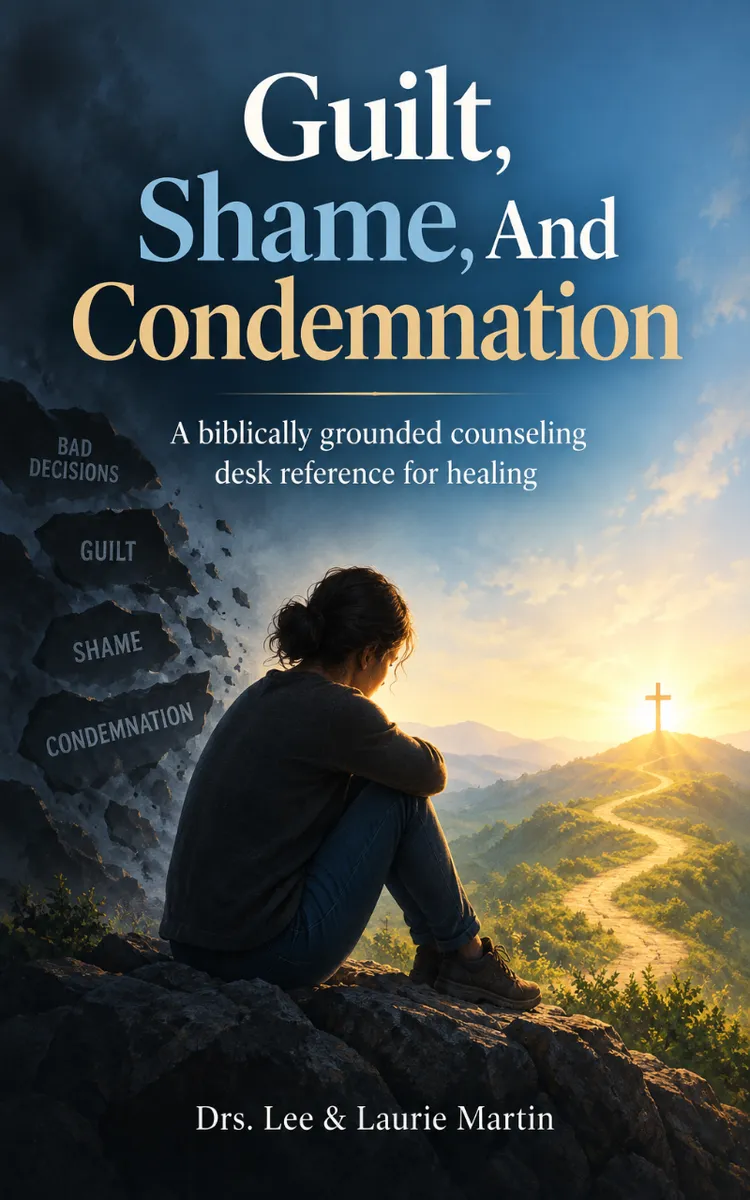
"Guilt, Shame, And Condemnation" is a religious devotional book by Drs. Lee & Laurie Martin with 7 chapters and approximately 7,494 words. Biblical clinical counseling guidance on guilt, shame, and condemnation.
This book was created using Inkfluence AI, an AI-powered book generation platform that helps authors write, design, and publish complete books.
Frequently Asked Questions
What is "Guilt, Shame, And Condemnation" about?
Biblical clinical counseling guidance on guilt, shame, and condemnation
How many chapters are in "Guilt, Shame, And Condemnation"?
The book contains 7 chapters and approximately 7,494 words. Topics covered include Day 1: Naming the Difference-Guilt vs. Shame vs. Condemnation, Days 8-14: The Root Story-How It Starts and Why It Persists, Days 15-21: Identity in Christ-Surrendering the Verdict, Days 22-28: Conviction That Heals-Repentance, Accountability, and Repair, and more.
Who wrote "Guilt, Shame, And Condemnation"?
This book was written by Drs. Lee & Laurie Martin and created using Inkfluence AI, an AI book generation platform that helps authors write, design, and publish books.
Write your own religious devotional book with AI
Describe your idea and Inkfluence writes the whole thing. Free to start.
Start writingCreated with Inkfluence AI


