

Read the first chapter
The whole of chapter one, free. About 5 min. Turn the pages with the arrows, your keyboard, or a swipe.
Chapter 1
Day 1: A Fresh Start-Scripture as Pastoral Authority
Scripture Focus
2 Timothy 3:16-17
> All Scripture is breathed out by God and profitable for teaching, for reproof, for correction, and for training in righteousness, that the man of God may be complete, equipped for every good work.
Scripture is not an accessory to pastoral care; it is God’s living address, forming the people and practices of the church.
A pastor may have training, experience, empathy, and a well-organized counseling plan. These gifts matter. Yet none of them gives the church its authority. Scripture does. Paul does not describe the Bible as merely useful information or a source of religious inspiration. He calls it “breathed out by God.” Its authority rests first in the God who speaks through it.
That claim changes how we approach every ministry setting. When a pastor preaches, counsels, visits the sick, leads worship, or helps a congregation face conflict, Scripture is not brought in at the end to decorate an already completed opinion. It is the governing testimony by which the church learns to hear God, examine its desires, and walk in faithful obedience.
Reflection
Pastoral authority is often misunderstood as personal control. Scripture presents something different. The pastor’s authority is a delegated ministry under the Word of God. Jesus says, “If you abide in my word, you are truly my disciples” (John 8:31). The church does not become spiritually healthy because a leader is forceful, impressive, or certain. It becomes healthy as it remains under Christ’s word.
This is especially important when ordinary pressures make Scripture seem inconvenient. A church may want a quick answer to a painful conflict. A person may ask for counsel while quietly hoping for permission to continue a destructive habit. A ministry leader may prefer a verse that confirms a decision already made. In such moments, Scripture forms conscience by doing more than offering comfort. It teaches, reproves, corrects, and trains. Those four actions require patience. They also require humility from the person who opens the Bible.
The same Word that directs the congregation also examines the pastor. Hebrews 4:12 says that “the word of God is living and active,” discerning “the thoughts and intentions of the heart.” This means Scripture cannot be used as a tool for managing other people while exempting ourselves. Before a pastor applies the Word to a congregation’s anxiety, the pastor must receive its searching work personally. Faithful pastoral authority begins with being governed by Scripture before attempting to guide anyone else.
That principle gives daily Bible reading a deeper purpose. We aren’t merely collecting encouraging phrases for difficult days. We’re learning to recognize God’s voice, to name sin honestly, to receive grace accurately, and to make decisions within the moral and theological shape of the gospel. Psalm 119:105 says, “Your word is a lamp to my feet and a light to my path.” A lamp doesn’t reveal every mile at once. It gives enough light for the next obedient step.
This also protects pastoral care from two opposite errors. One error is cold proof-texting - quoting a verse without listening to the person or understanding the passage. The other is warm but ungrounded advice - speaking kindly while leaving the person without God’s direction. Scripture-integrated care joins truth and compassion. Jesus was “full of grace and truth” (John 1:14), and his ministry shows that neither quality can be safely removed from the other.
Consider how this affects a counseling conversation about resentment. A pastor should not simply say, “You need to forgive,” as if forgiveness were a switch that can be flipped by pressure. Nor should the pastor treat resentment as an untouchable feeling. Scripture gives a fuller path: “Be kind to one another, tenderhearted, forgiving one another, as God in Christ forgave you” (Ephesians 4:32). That command names the call to forgiveness, while the gospel supplies its pattern and power. Pastoral authority does not crush a wounded person. It brings that person under the healing truth of God.
Church history offers a sober reminder here. Whenever the church has treated its own customs, leaders, or political interests as equal to Scripture, pastoral authority has become distorted. The Reformers’ insistence that the church must continually return to the Word was not a rejection of tradition or learning. It was a refusal to let any human voice stand above God’s revealed Word. The church receives wisdom from its history, but Scripture remains the final norm by which every tradition is tested. As Jesus warned, human tradition must never “leave the commandment of God” behind (Mark 7:8).
A fresh start, then, is not the promise that today’s problems will disappear. It is the decision to begin again beneath the authority of God’s address. We bring our plans, fears, habits, and ministry instincts into the light of Scripture. We ask not only, “What do I want God to say?” but also, “What has God actually said, and how must I respond?”
Practice for Today
1. Read 2 Timothy 3:16-17 slowly three times. On the first reading, notice what the passage says Scripture is. On the second, underline the four functions: teaching, reproof, correction, and training. On the third, ask which function you most resist today. A pastor who welcomes teaching but avoids correction has not yet received the whole ministry of the Word.
2. Keep a ten-minute “under the Word” journal entry. Write these three sentences and complete them honestly: - “A decision, conversation, or concern I need to place under Scripture is…” - “The biblical truth I am tempted to avoid or soften is…” - “One obedient response God’s Word calls for today is…”
Use a concrete matter rather than a broad statement. For example, instead of writing, “I need to be more loving,” write, “I need to answer the difficult email without exaggeration, defensiveness, or contempt.” Then consider Ephesians 4:15: “Speaking the truth in love, we are to grow up in every way into him who is the head, into Christ.”
3. Before offering counsel today, pause for two minutes with James 1:19: “Let every person be quick to hear, slow to speak, slow to anger.” Ask God to keep you from using Scripture as a weapon or avoiding it as a discomfort. Listen carefully to the person, identify the real issue, and bring the relevant biblical truth with patience. Authority is not weakened by careful listening; it is made more faithful.
These practices establish a small but important rhythm. Scripture is read, received, examined, and obeyed. It moves from the page into conscience, conversation, worship, and action. That movement is what makes pastoral theology more than religious reflection. It becomes the disciplined practice of helping people live before God.
Closing Prayer
Lord God, you have spoken, and your Word is true. Teach me to come beneath its authority before I speak in your name. Correct what is crooked in me, form my conscience, and make my counsel faithful to Christ. Give me patience to listen, courage to obey, and tenderness to serve. May your Word govern my ministry, my worship, and my ordinary decisions today. Amen.
End of chapter one. 6 more chapters and about 8,223 words in the full book.
Swipe or use the arrows to turn the page


What's inside: 7 chapters
- 1. Day 1: A Fresh Start-Scripture as Pastoral Authority
- 2. Days 6-10: Trusting the God Who Speaks-Prayer as Response
- 3. Days 11-15: Hope Under Pressure-The Pastoral Use of Promise
- 4. Days 16-20: Surrender and Obedience-Formation by the Word
- 5. Days 21-24: The God of Counsel-Wisdom for Decision and Dialogue
- 6. Days 25-27: Persevering in Prayer-Spiritual Warfare as Scripture Practice
- 7. Days 28-30: Worshipful Surrender-Hope Made Public in Mission
About this book
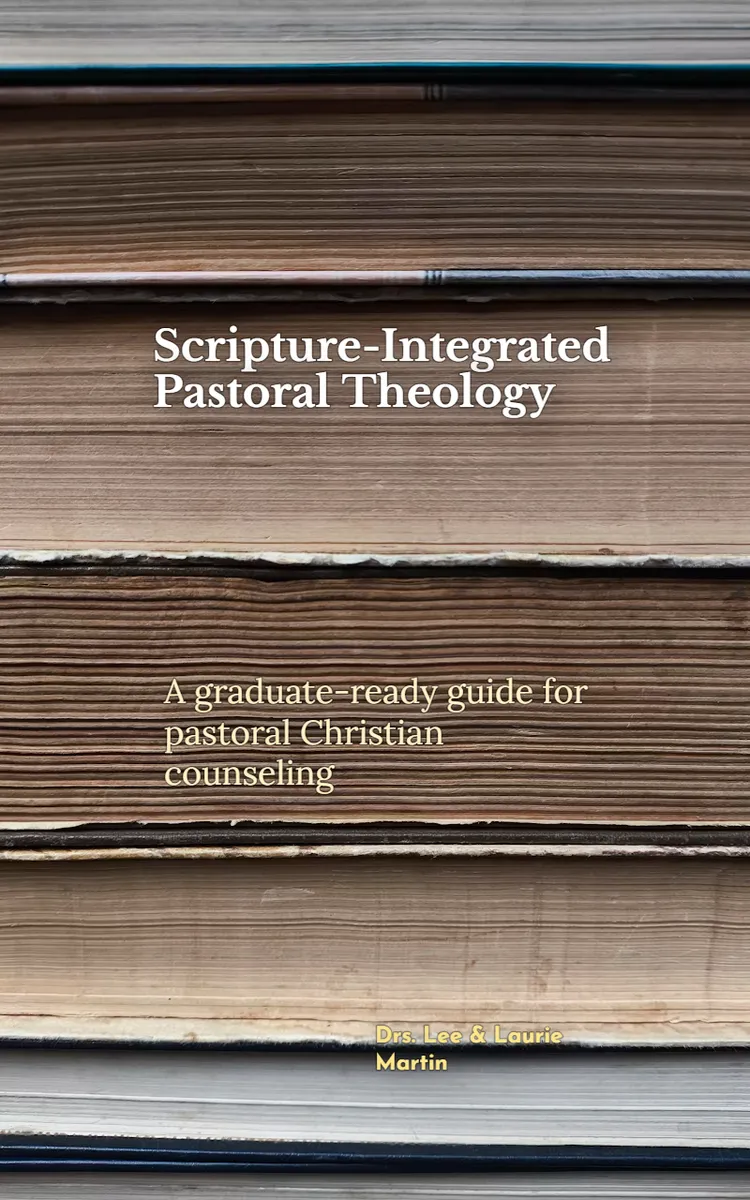
"Scripture-Integrated Pastoral Theology" is a religious devotional book by Drs. Lee & Laurie Martin with 7 chapters and approximately 8,223 words. Christian theology, church history, and pastoral counseling with Scripture.
This book was created using Inkfluence AI, an AI-powered book generation platform that helps authors write, design, and publish complete books.
Frequently Asked Questions
What is "Scripture-Integrated Pastoral Theology" about?
Christian theology, church history, and pastoral counseling with Scripture
How many chapters are in "Scripture-Integrated Pastoral Theology"?
The book contains 7 chapters and approximately 8,223 words. Topics covered include Day 1: A Fresh Start-Scripture as Pastoral Authority, Days 6-10: Trusting the God Who Speaks-Prayer as Response, Days 11-15: Hope Under Pressure-The Pastoral Use of Promise, Days 16-20: Surrender and Obedience-Formation by the Word, and more.
Who wrote "Scripture-Integrated Pastoral Theology"?
This book was written by Drs. Lee & Laurie Martin and created using Inkfluence AI, an AI book generation platform that helps authors write, design, and publish books.
Write your own religious devotional book with AI
Describe your idea and Inkfluence writes the whole thing. Free to start.
Start writingCreated with Inkfluence AI


