
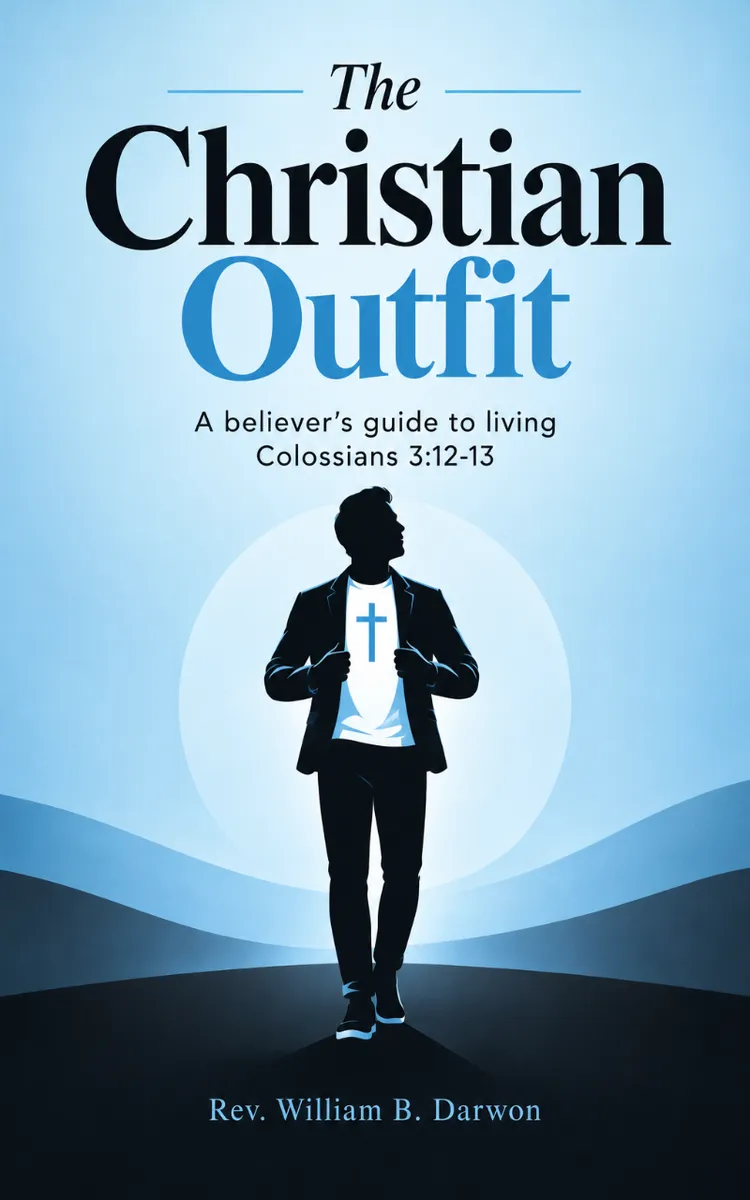
Read the first chapter
The whole of chapter one, free. About 5 min. Turn the pages with the arrows, your keyboard, or a swipe.
Chapter 1
Day 1: The Invitation to Get Dressed
Scripture Focus
Colossians 3:12
> Therefore, as God’s chosen ones, holy and dearly loved, clothe yourselves with compassion, kindness, humility, gentleness, and patience.
Before the day asks anything of you, God reminds you who you are and invites you to dress from that identity.
A shirt can cover your shoulders, but it can’t cover a sour attitude. Work boots may protect your feet, but they won’t keep you from rushing past someone who needs help. Paul’s picture reaches deeper than outward appearance. He speaks of a daily choice: put on a way of living that reflects Christ.
Notice where he begins. He doesn’t say, “Clothe yourselves so God will choose you.” He says, “As God’s chosen ones, holy and dearly loved.” Life with Christ starts not with earning love, but with receiving it. You aren’t trying to impress God into accepting you. You’re learning to live like someone already held by His grace.
That matters on ordinary mornings. Maybe your schedule is packed, your patience is thin, or a difficult conversation is waiting. The first spiritual question isn’t, “How can I prove myself today?” It’s, “Since I belong to Christ, what should I put on?”
Reflection
Paul names five pieces of the Christian outfit: compassion, kindness, humility, gentleness, and patience. These aren’t decorations for especially spiritual people. They’re daily clothing for real life. They belong in the kitchen, the office, the workshop, the school pickup line, and the church hallway.
Compassion helps you notice another person’s burden instead of treating it as an interruption. Kindness turns concern into action - a thoughtful message, a patient explanation, a meal, a fair response. Humility loosens your grip on being right or receiving credit. Gentleness gives strength a calm direction. Patience helps you stay present when growth is slow, answers are delayed, or someone repeats the same mistake for the third time.
None of this means pretending problems don’t exist. A compassionate Christian can still set a boundary. A gentle person can still speak clearly. Patience doesn’t require approving harmful behavior. These virtues show us how to respond without allowing anger, pride, or irritation to become our master.
Consider how quickly a morning can expose what you’re wearing inside. A family member forgets an important task. A customer complains about something outside your control. A coworker receives credit for an idea you contributed. Your first reaction may be sharp. That reaction doesn’t have to write the rest of the day. You can pause and ask, “Which part of Christ’s outfit do I need right now?” Perhaps it’s humility before answering. Perhaps it’s gentleness in your tone. Perhaps it’s patience while you listen.
The phrase “dress from love, not for love” is a useful way to remember Paul’s order. God’s love comes first. Our conduct follows. We don’t practice compassion to purchase His affection. We practice it because His affection is already shaping us.
This is why Colossians 3:13 belongs close beside verse 12: “Bear with one another and forgive one another if any of you has a grievance against someone. Forgive as the Lord forgave you.” The outfit isn’t complete if we wear kindness in public but refuse forgiveness at home. Christ’s clothing is meant for strained relationships, unfinished apologies, and the places where our pride gets rubbed the wrong way.
Putting on these virtues may feel less dramatic than making a major spiritual promise. Usually, it is much more practical. It may look like taking ten seconds before replying to a tense text. It may mean asking one more question before giving advice. It may mean admitting, “I handled that poorly,” without adding a long explanation to protect your image.
An old Christian saying captures the heart of this practice: “Preach the gospel at all times; when necessary, use words.” Whether or not we know the saying’s original source, its wisdom is easy to recognize. Our conduct speaks. The Christian outfit makes the good news visible in small, repeated choices.
You won’t wear these virtues perfectly today. That isn’t a reason to quit. It’s a reason to return to Christ. When you notice impatience, don’t hide from God or label yourself a failure. Confess it simply. Receive mercy. Put on patience again. The Lord is not asking you to sew the outfit yourself. He is teaching you, day by day, to wear what He supplies.
Practice for Today
1. Begin with a three-minute dressing prayer. Before checking messages or starting your first task, sit quietly with Colossians 3:12. Breathe slowly and name each virtue: compassion, kindness, humility, gentleness, patience. Ask God to make one of them especially real in the next few hours. You might pray, “Lord, clothe me with gentleness in my conversations today.” Keep the prayer specific enough to remember when pressure arrives.
2. Use the “pause and put on” habit. Choose one predictable pressure point - your commute, the first customer complaint, a family meal, or the afternoon slump. When it arrives, pause for five seconds before responding. Relax your shoulders, take one breath, and ask, “What would compassion, kindness, humility, gentleness, or patience look like here?” Then choose one visible action. Listen without interrupting. Lower your voice. Give credit. Offer help. Wait before sending the message.
3. Journal honestly for five minutes tonight. Write the prompt: Where did I wear one of these virtues today, and where did I reach for something else? Be concrete. Instead of writing, “I need more patience,” write, “I became impatient when the appointment ran twenty minutes late, but I did stop myself from making a cutting remark.” End by thanking God for one sign of growth and asking for help with one unfinished area. This isn’t a performance review for God. It’s a truthful conversation with the One who already calls you dearly loved.
As you practice, remember that clothing becomes familiar through repetition. The first time you wear a new pair of work boots, you notice them. After a while, you reach for them without thinking. In the same way, repeated acts of compassion and patience slowly become a more natural expression of life with Christ. The goal isn’t to create a polished religious appearance. It’s to let Jesus shape your reflexes.
Keep Colossians 3:12 where you can see it today - on a note beside your computer, in your journal, or as a reminder on your phone at 8:00 a.m. and 3:00 p.m. Those small reminders can interrupt the rush and return you to the invitation: you are loved, and you can live clothed in love.
Closing Prayer
Lord Jesus, thank You that I am chosen, holy, and dearly loved because of Your grace. Today, clothe me with compassion when I overlook another person’s burden, kindness when I have an opportunity to help, humility when I want credit, gentleness when I feel provoked, and patience when life moves slowly. Teach me to dress from Your love rather than strive to earn it. Let my words and actions reflect You in the ordinary moments of this day. Amen.
End of chapter one. 19 more chapters in the full book.
Swipe or use the arrows to turn the page


What's inside: 20 chapters
- 1. Day 1: The Invitation to Get Dressed
- 2. Day 2: Chosen and Beloved
- 3. Day 3: Compassion That Notices
- 4. Day 4: Kindness in Small Things
- 5. Day 5: Humility Without Hiding
- 6. Day 6: Gentleness as Strength
- 7. Day 7: Patience in the Waiting
- 8. Day 8: The Fitting of Forgiveness
- 9. Day 9: Bearing With One Another
- 10. Day 10: Forgiven People Forgive
- 11. Day 11: Trusting God With the Wound
- 12. Day 12: Surrendering the Right to Retaliate
- 13. Day 13: Prayer for a Softer Heart
- 14. Day 14: Hope for the Work in Progress
- 15. Day 15: Words Dressed in Grace
- 16. Day 16: Grace at Home
- 17. Day 17: Grace in the Wider Community
- 18. Day 18: When Reconciliation Takes Time
- 19. Day 19: A Daily Practice of Putting On Christ
- 20. Day 20: Wearing Heaven’s Dress Code on Earth
About this book
"The Christian Outfit" is a religious devotional book by Rev. William B. Darwon with 20 chapters and approximately 20,870 words. Christian virtues and conduct based on Colossians 3:12–13.
This book was created using Inkfluence AI, an AI-powered book generation platform that helps authors write, design, and publish complete books.
Frequently Asked Questions
What is "The Christian Outfit" about?
Christian virtues and conduct based on Colossians 3:12–13
How many chapters are in "The Christian Outfit"?
The book contains 20 chapters and approximately 20,870 words. Topics covered include Day 1: The Invitation to Get Dressed, Day 2: Chosen and Beloved, Day 3: Compassion That Notices, Day 4: Kindness in Small Things, and more.
Who wrote "The Christian Outfit"?
This book was written by Rev. William B. Darwon and created using Inkfluence AI, an AI book generation platform that helps authors write, design, and publish books.
Write your own religious devotional book with AI
Describe your idea and Inkfluence writes the whole thing. Free to start.
Start writingCreated with Inkfluence AI


