
Read the first chapter
The whole of chapter one, free. About 7 min. Turn the pages with the arrows, your keyboard, or a swipe.
Chapter 1
Seeing Your Life Through God’s Eyes
A woman once found an old box of letters while clearing out a closet. Some were warm and funny. Others brought back choices she wished she could erase. She nearly threw the whole box away. Then she noticed something: the letters weren’t proof that her life was ruined. They were evidence of a life that had been lived, loved, wounded, and still carried forward.
That’s often what self-condemnation does. It takes one painful page and declares the entire story hopeless. But God doesn’t read your life that way. He sees the chapter you regret, the reasons behind it, the harm it caused, the healing still needed, and the person He is continuing to shape. His view is complete - and it is held with love and purpose.
When One Chapter Becomes Your Whole Identity
The struggle here is self-condemnation: not simply recognizing that you’ve made mistakes, but treating those mistakes as the final truth about who you are. You may think, “I always ruin things,” “God must be disappointed in me,” or “My past disqualifies me from anything good.” A specific action becomes a permanent label.
This obstacle trips people up because shame sounds personal and convincing. It remembers the exact message you sent, the promise you broke, the opportunity you wasted, or the years you lost. It rarely offers a fair account of your whole life. It puts one scene under a bright light and leaves everything else in the dark.
The Beloved Story Lens gives you a different way to read your life. Through this lens, you don’t excuse what happened. You also don’t use it as evidence that you’re beyond God’s care. You ask, “What does God see here that I’m refusing to see?” Perhaps there’s a lesson, a wound needing attention, a relationship needing repair, or a new kind of faith growing quietly.
You’re Ready for This If...
• You replay an old mistake and still punish yourself for it. - You struggle to believe that God’s love includes the parts you hide. - You confuse accountability with permanent self-rejection. - You keep calling yourself by an old name God never gave you. - You’re willing to tell the truth about your past without making it your whole identity.
From “I Am My Worst Moment” to “God Sees the Whole Story”
Most People Do This: Review the past like a prosecutor. They collect evidence, repeat the charges, and ignore anything that might soften the verdict. A missed chance becomes “I’m a failure.” A broken relationship becomes “I destroy everything.” A season of poor choices becomes “God can’t use me now.”
Try This Instead: Read the moment through the Beloved Story Lens. Name what happened honestly, name what it taught you, and then ask where God’s love and purpose may be present today. The goal isn’t to turn a painful event into something pleasant. It’s to stop letting that event speak louder than God’s full view of your life.
Take a job loss as an example. The prosecutor’s version says, “I’m useless, and my future is over.” The Beloved Story Lens says, “I lost work, and that hurt. I may need to learn new skills, repair a financial habit, or accept help. But this loss doesn’t define my worth, and God hasn’t stopped writing.” Those statements can sit together: regret and hope, responsibility and mercy.
This change matters in ordinary moments. When you receive a difficult email, you may pause instead of spiraling. When you remember a harsh word, you may apologize instead of hiding. When someone praises you, you may receive it instead of arguing with it. God’s love doesn’t remove your responsibility; it gives you a secure place from which to face it.
A Daily Practice for Seeing Your Story Clearly
Use this schedule for one week. Keep a small notebook or a note on your phone titled The Beloved Story Lens. The full practice takes about 12 minutes a day.
Morning - 4 minutes
Before checking messages, read Psalm 139:1-6 or Romans 8:1. Then write one sentence:
> “God sees all of me, and His love is not limited to my best pages.”
Name one part of your story you tend to condemn. Keep it specific: “the argument with my sister,” “the debt I hid,” or “the decision I made at twenty-four.” Finish with this question: “What would honesty without self-hatred look like today?”
Midday - 3 minutes
Set a reminder for sometime between noon and 2 p.m. When it goes off, notice the sentence running through your mind. If it says, “I’m hopeless,” or “I always mess up,” write it down.
Then place it beside a more truthful sentence:
> “I made a mistake, but I am not only my mistake.”
If repair is needed, choose one small action. Send an apology, ask for advice, review a bill, or pause before reacting. God’s purpose often becomes clearer through faithful actions that look very ordinary.
Evening - 5 minutes
Before bed, answer three questions:
1. Where did I condemn myself today? 2. What truth did I need in that moment? 3. What is one sign that God is still shaping my story?
Your sign might be small. You told the truth. You accepted correction without collapsing. You prayed instead of pretending. You rested rather than using exhaustion as proof that you’re failing. Record it anyway. Five minutes of honest attention can begin to weaken an old pattern.
A Changed Response to an Old Regret
Before
A man carried deep regret over how he had handled his father during a difficult illness. He had been impatient, missed several calls, and avoided conversations because they felt too painful. Years later, he still described himself with one sentence: “I was a terrible son.” Whenever the memory surfaced, he shut down. He didn’t pray about it. He didn’t talk about it. He simply reopened the case and sentenced himself again.
The Change
He began using the Beloved Story Lens each evening. He wrote what happened without editing it: “I was afraid. I avoided him. My impatience hurt him.” Then he added what self-condemnation had hidden: “I also showed up many times. I was overwhelmed. I didn’t know how to carry the fear. I wish I had done better, and I can still learn to love people more patiently.”
That honest balance led to a specific action. He wrote a letter to his family, apologizing for his behavior without asking them to comfort him. He also began calling an older relative every Sunday. The calls didn’t erase the past. They turned regret into a practice of presence.
After
When the old memory returned, he no longer repeated, “I’m a terrible son.” He said, “I failed in important ways, and I’m learning to respond differently.” That change affected more than his private thoughts. He listened more carefully, apologized sooner, and stopped withdrawing whenever he feared disappointing someone.
God’s loving view didn’t call the past harmless. It helped him see the whole truth, including the possibility that a painful chapter could teach him how to live the next one with greater tenderness.
Questions for the Story You’ve Been Condemning
1. What specific event do I keep using as proof that I’m a bad or unlovable person? Name the event, not just the label. “I lied about money” is honest; “I’m awful” is a verdict that prevents you from dealing with what actually happened.
2. What part of the story have I left out because it complicates my self-condemnation? Maybe you were afraid, exhausted, inexperienced, grieving, or trying to survive. Context doesn’t excuse harm, but it can help you understand what needs healing.
3. What responsibility is mine, and what punishment am I adding that God has not asked me to carry? Responsibility might include an apology, changed behavior, or professional help. Endless self-insults don’t repair anyone; they only keep you stuck facing yourself.
4. If God sees me with love and purpose, what might He be inviting me to do next? Your next step could be practical: tell the truth, forgive someone, receive support, or make a different choice in a familiar situation. Look for an action, not a dramatic feeling.
5. What new sentence can describe me more truthfully than my old label? Try, “I am a person who has failed and is learning faithfulness,” or, “I carry regret, but regret is not my name.” Choose words you can actually believe today.
One First Step You Can Take Right Now
Take 10 minutes and write one condemned sentence you often repeat about yourself. Under it, write three lines:
• What happened? - What responsibility is mine? - What does God’s loving view allow me to believe now?
This is Easy, though it may feel emotionally uncomfortable. Don’t polish the page or force a happy ending. Tell the truth plainly.
You’ll know it’s working when... you can name the mistake without immediately turning it into an identity. You may still feel sadness or regret, but you’ll begin to hear a fuller sentence: God knows this part of my story, and He has not abandoned me to it.
Your past deserves honesty. It does not deserve to become your judge, your name, or your final page. Through the Beloved Story Lens, you can begin reading your life as God sees it - whole, wounded, loved, and still held within His purpose.
End of chapter one. 14 more chapters in the full book.
Swipe or use the arrows to turn the page


What's inside: 15 chapters
- 1. Seeing Your Life Through God’s Eyes
- 2. Trusting God with the Unwritten Pages
- 3. Finding God in Your Past
- 4. Releasing Shame from Old Chapters
- 5. Grieving What You Lost
- 6. Waiting Without Losing Heart
- 7. Recognizing God’s Guidance
- 8. Choosing Courage Over Fear
- 9. Receiving Help Along the Way
- 10. Building Faithful Daily Rhythms
- 11. Turning Setbacks into Formation
- 12. Forgiving Without Denying Harm
- 13. Discovering Purpose in Your Gifts
- 14. Living Hope in the Present
- 15. Entrusting Your Future to God
About this book
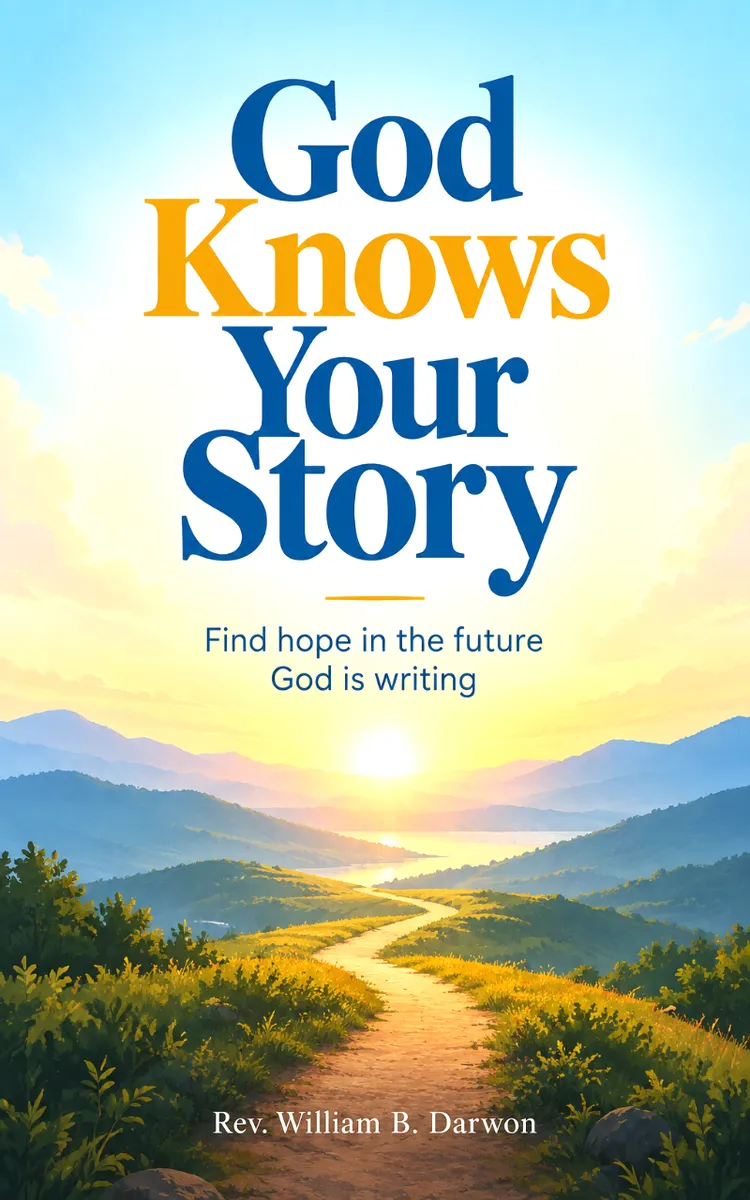
"God Knows Your Story" is a inspirational book by Rev. William B. Darwon with 15 chapters and approximately 22,877 words. Faith-based encouragement about God knowing each person's past and future.
This book was created using Inkfluence AI, an AI-powered book generation platform that helps authors write, design, and publish complete books. It was made with the AI Inspirational Book Writer.
Frequently Asked Questions
What is "God Knows Your Story" about?
Faith-based encouragement about God knowing each person's past and future
How many chapters are in "God Knows Your Story"?
The book contains 15 chapters and approximately 22,877 words. Topics covered include Seeing Your Life Through God’s Eyes, Trusting God with the Unwritten Pages, Finding God in Your Past, Releasing Shame from Old Chapters, and more.
Who wrote "God Knows Your Story"?
This book was written by Rev. William B. Darwon and created using Inkfluence AI, an AI book generation platform that helps authors write, design, and publish books.
How can I create a similar inspirational book?
You can create your own inspirational book using Inkfluence AI. Describe your idea, choose your style, and the AI writes the full book for you. It's free to start.
Write your own inspirational book with AI
Describe your idea and Inkfluence writes the whole thing. Free to start.
Start writingCreated with Inkfluence AI


