
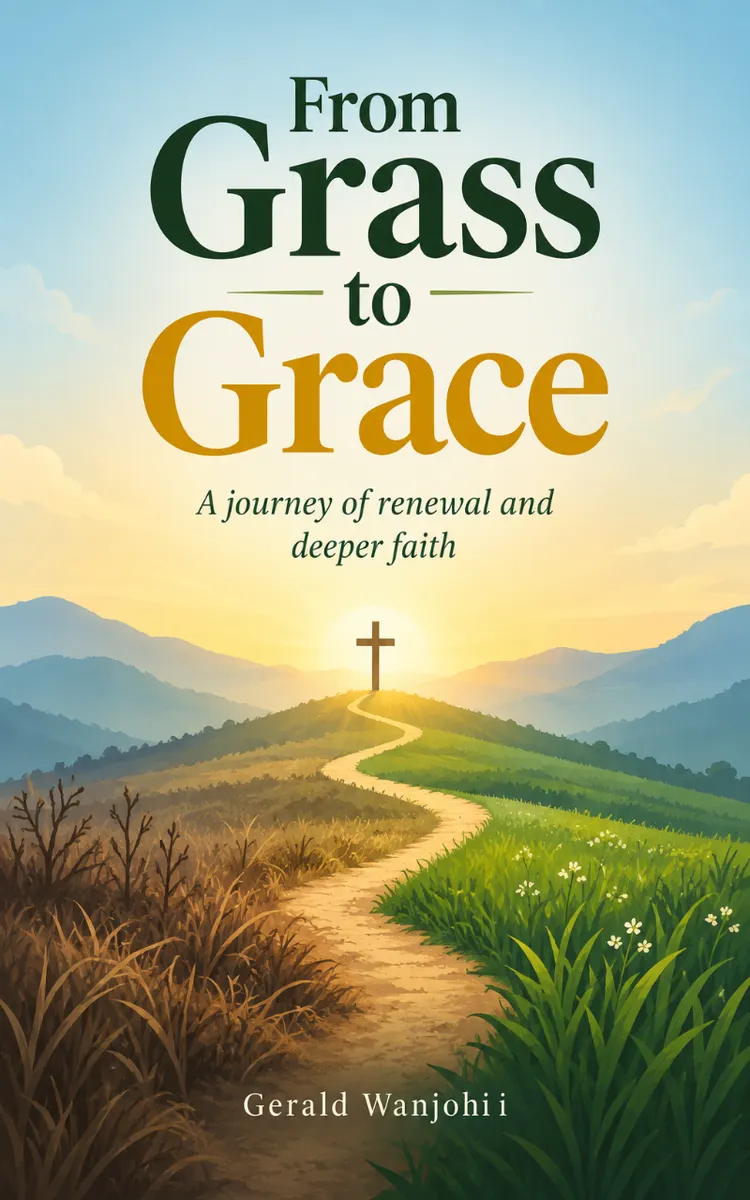
Read the first chapter
The whole of chapter one, free. About 7 min. Turn the pages with the arrows, your keyboard, or a swipe.
Chapter 1
Receiving Grace Without Earning
Grace Is Not a Wage
“Grace is not a prize for getting everything right; it is the hand that meets you while you’re still learning to stand.”
Hardship can quietly turn life into a scoreboard. A missed payment, a failed business decision, a strained relationship, or a season of grief starts to feel like evidence. You don’t simply think, This is difficult. You begin to wonder, What does this say about me?
That question is where many of us lose sight of grace. We treat it like a reward handed out after enough effort, enough discipline, enough good behavior. But grace is received, not achieved. It doesn’t erase responsibility, yet it refuses to let hardship become your identity. You may be standing in the grass today, but the ground beneath you is not proof that you are less worthy of love.
This Chapter Is For You If...
• You keep trying to earn God’s approval through productivity, perfect choices, or constant service. - A hard season has made you question your value, even when you’re doing your best to move forward. - You accept forgiveness for others more easily than you accept it for yourself. - You want a practical way to separate your worth from your results, income, health, or circumstances.
The shift here is simple but deep: you can take honest responsibility for your life without treating every setback as a verdict. Grace gives you room to tell the truth about what happened and still believe you are held.
The Gift-Not-Score Model
Grace is a gift to receive, not a score to earn.
A score depends on performance. You get more points for success and lose points for mistakes. Many people carry that system into their spiritual lives without noticing. A productive week feels like proof that they’re doing well with God. A difficult month feels like a spiritual demotion. The Gift-Not-Score Model interrupts that pattern by asking one question: Am I responding to grace, or am I trying to purchase it?
Consider a small business owner who misses a major sales target after months of effort. The facts matter. Perhaps the pricing was unclear, follow-up was inconsistent, or expenses grew too quickly. Grace doesn’t require pretending those details don’t exist. It changes the meaning attached to them. The missed target is information, not a measurement of human worth. It may call for a new budget, a difficult conversation, or better planning. It does not call for self-contempt.
That distinction protects you from two opposite mistakes. You don’t use grace as an excuse to avoid correction, and you don’t use correction as a reason to reject yourself. You can say, “I made a poor decision,” without adding, “Therefore, I am a poor person.” You can admit, “This hardship has exposed weaknesses,” without concluding, “This hardship has exposed my value.” Grace keeps the truth clear and the shame from taking over the whole room.
In Practice, This Means...
• You review mistakes for lessons, not evidence that you’re disqualified. - You receive help without believing you must repay kindness through overwork. - You make amends where needed, then stop reopening the case against yourself. - You measure progress by faithful next steps, not by whether hardship has disappeared.
Receiving Grace in Ordinary Hours
Grace becomes believable when it enters your schedule, not just your beliefs. A daily practice can help you notice when you’ve slipped back into scorekeeping.
• Morning, before checking your phone: Write one sentence: “Today, I begin loved, not on trial.” Read it slowly. If the wording feels difficult, don’t force a dramatic feeling. Simply let the sentence challenge the old habit of earning your place. - After a mistake: Pause for ninety seconds before explaining, defending, or criticizing yourself. Name three facts: what happened, what was yours to own, and what is not yours to carry. This keeps responsibility specific. - Midday, when pressure rises: Ask, “What am I trying to prove right now?” You may discover that you’re overworking to prove you’re valuable, staying silent to prove you’re easy to love, or refusing help to prove you can manage everything. - When receiving kindness: Say, “Thank you,” without immediately offering a reason you deserve it. Let a meal, encouraging message, discount, or helping hand remain a gift. - Evening, before bed: Record one action you took from grace rather than fear. It might be apologizing without groveling, resting without guilt, or making a needed phone call instead of avoiding the problem.
Try this routine for seven days. Use a note in your phone titled Gift, Not Score. Keep each entry under two minutes. The point isn’t to create another performance test. If you miss a day, begin again at the next available moment. Restarting without self-punishment is part of the practice.
Over time, you’ll begin to catch the language of scorekeeping. It often sounds like, “I should be further along,” “I don’t deserve support,” or “If I were truly faithful, this wouldn’t be happening.” Replace those statements with something more accurate: “I’m in a hard season, and I still have a next step.” That sentence doesn’t deny pain. It refuses to make pain your name.
When a Setback Stops Being a Verdict
Before: A contractor loses a dependable client after a rushed project. The client’s complaint is fair, and the lost income creates real pressure. By the end of the day, the contractor isn’t only thinking about the project. The thought has expanded into, “I ruin opportunities. I’m not trustworthy. Maybe I’m not meant to do this.”
Action: That evening, the contractor uses the Gift-Not-Score Model. First, the facts are written down: the deadline was too tight, the scope wasn’t confirmed in writing, and the final inspection was skipped. Next comes ownership: the client deserves a direct apology and a fair discussion about the unfinished work. Then comes the grace statement: “This project needs repair. My worth does not.” The following morning, the contractor sends the apology, offers a specific correction, and creates a new rule requiring written scope confirmation and a final inspection before every handoff.
Result: The lost client may or may not return. Grace doesn’t promise a convenient outcome. What changes is the contractor’s position. Instead of hiding, spiraling, or making desperate promises, the contractor faces the problem with clarity. The setback becomes a lesson with a cost, not a life sentence. The work improves because shame is no longer consuming the energy needed for repair.
This is what accepting grace can look like in real life. It may involve spreadsheets, apologies, boundaries, and better systems. Spiritual renewal doesn’t float above ordinary responsibilities. It gives you a steadier way to meet them.
Questions That Loosen the Scoreboard
1. Where am I treating a current hardship as proof of permanent failure? Name the hardship plainly: debt, unemployment, illness, conflict, or disappointment. Then write what it actually proves. Usually, it proves that something is painful or unfinished - not that you are beyond love or usefulness.
2. What do I believe I must accomplish before I’m allowed to feel worthy? Be specific. Is it a certain income, weight, relationship status, business result, or level of spiritual discipline? Honest reflection may reveal that the finish line keeps moving because the real demand is perfection.
3. What responsibility have I avoided because I’m afraid it will confirm my worst opinion of myself? Grace makes truth safer to face. Choose one manageable action, such as reviewing a bill, returning a call, admitting an error, or asking for advice. Responsibility becomes healthier when it isn’t carrying your entire identity.
4. Where do I reject a gift by insisting I must earn or repay it immediately? Notice what happens when someone helps you. Do you minimize the need, rush to return the favor, or feel embarrassed? Practice receiving one kindness this week with a simple “Thank you.” Let gratitude be enough for that moment.
5. What would change today if I believed hardship could shape me without defining me? Choose one decision that reflects that belief. You might rest instead of proving your value through exhaustion, make a repair instead of hiding, or ask for support before the situation becomes urgent.
These questions aren’t an exam, and your answers don’t need to sound polished. A scribbled sentence can be more honest than a page of impressive words. The goal is to notice where you’ve confused earning with receiving, then take one step back toward grace.
Receive the Gift Today
Set a timer for 15 minutes and write two columns in your notebook: What Happened and What I’m Making It Mean. Put one current hardship in the first column. In the second, write the judgment you’ve attached to it. Then cross out any statement that turns an event into an identity, and replace it with one responsible, grace-filled sentence.
For example: “I lost this opportunity” can become, “I need to learn from this loss and take the next honest step.” Read your new sentence aloud, then complete one action connected to it before the day ends.
You will know it worked when you can name what needs repair without calling yourself beyond repair. That is the first movement from grace to grass: not pretending the ground is easy, but learning that even here, you are still worthy of being held - and still able to grow.
End of chapter one. 11 more chapters in the full book.
Swipe or use the arrows to turn the page
What's inside: 12 chapters
- 1. Receiving Grace Without Earning
- 2. Reframing Hardship as Training
- 3. Letting Faith Lead Your Feelings
- 4. Practicing Obedience in Small Steps
- 5. Growing Through Surrendered Control
- 6. Building Daily Gratitude Habits
- 7. Replacing Self-Condemnation With Mercy
- 8. Choosing Community Over Lone Endurance
- 9. Praying With Honest Lament
- 10. Practicing Forgiveness as a Release
- 11. Sowing Patience for Greater Grace
- 12. Returning to Greater Grace Daily
About this book
"From Grace To Grass" is a inspirational book by Gerald Wanjohi with 12 chapters and approximately 18,301 words. Personal spiritual journey from grace to hardship and back.
This book was created using Inkfluence AI, an AI-powered book generation platform that helps authors write, design, and publish complete books. It was made with the AI Inspirational Book Writer.
Frequently Asked Questions
What is "From Grace To Grass" about?
Personal spiritual journey from grace to hardship and back
How many chapters are in "From Grace To Grass"?
The book contains 12 chapters and approximately 18,301 words. Topics covered include Receiving Grace Without Earning, Reframing Hardship as Training, Letting Faith Lead Your Feelings, Practicing Obedience in Small Steps, and more.
Who wrote "From Grace To Grass"?
This book was written by Gerald Wanjohi and created using Inkfluence AI, an AI book generation platform that helps authors write, design, and publish books.
How can I create a similar inspirational book?
You can create your own inspirational book using Inkfluence AI. Describe your idea, choose your style, and the AI writes the full book for you. It's free to start.
Write your own inspirational book with AI
Describe your idea and Inkfluence writes the whole thing. Free to start.
Start writingCreated with Inkfluence AI


