
Read the first chapter
The whole of chapter one, free. About 7 min. Turn the pages with the arrows, your keyboard, or a swipe.
Chapter 1
Recognizing the Mind Behind Reality
The Art of Mental Creation
Awakening the Mind That Shapes Experience
The First Thought at the Counter
A shop owner once noticed that every difficult customer seemed to arrive before noon. The pattern felt external, almost fated. Then, for one week, he wrote down what happened before each encounter: poor sleep, rushed opening, repeated thoughts such as today will be a problem, and a habit of answering questions while still looking at his phone.
The customers hadn’t suddenly become different. His attention had become selective, his tone guarded, and his decisions hurried. His inner state was participating in the scene. Once he saw that, he changed one thing: before opening, he spent three minutes deciding how he would meet the first demand of the day. The same business remained. His experience began to change.
This is the first doorway into the Law of Mentalism. Consciousness isn’t a silent passenger carried through reality. It notices, interprets, emphasizes, ignores, chooses, and acts. Through those movements, it helps shape the world you encounter.
The ancient formula, “The All is Mind,” doesn’t mean that every event is personally invented by your thoughts. It means experience is never separate from consciousness. What happens and what it means to you are joined by attention, belief, expectation, and response.
This Chapter Is For You If...
• You often react to circumstances before you’ve examined the belief guiding your reaction. - You want to distinguish mental creation from wishful thinking. - You’re ready to notice how attention changes your choices, relationships, work, and sense of possibility. - You want one practical method for turning consciousness from an observer into an active participant.
The shift is subtle at first. You don’t force reality to obey a fantasy. You learn to recognize the mental lens through which reality becomes actionable.
The Law of Mentalism as a Living Principle
Consciousness does not merely witness experience; it organizes attention, meaning, and action within experience.
The Law of Mentalism begins with a simple claim: mind is not an afterthought added to reality. Mind is one of the conditions through which reality becomes known and lived. Before you call an event a setback, opportunity, insult, warning, or invitation, consciousness has already begun its work.
Consider receiving a short message from someone you work with: “Can we talk?” The words are neutral. Your mind may immediately supply a story: I’ve made a mistake. They’re unhappy. This will cost me. Your body tightens. You delay your reply. When the conversation finally happens, you sound defensive. The other person notices and becomes cautious. A small message has now produced a strained exchange - not because thought magically created the original message, but because thought shaped your interpretation, posture, timing, and behavior.
This is mental creation in its practical form. It operates through selection and response. Attention determines what you notice. Belief determines what seems possible. Expectation influences preparation. Repeated interpretation becomes a habit, and habit becomes a recognizable pattern in your life.
The First Principle Lens gives you a way to examine that pattern without blaming yourself. Before asking, “How do I change this situation?” ask, “What is my consciousness adding to this situation?” Look at the event, the meaning you assigned, the feeling that followed, and the action that came next. That sequence reveals where your influence actually lives.
In Practice, This Means...
• Pause before treating your first interpretation as fact. - Separate the event from the story your mind placed around it. - Choose one response that reflects your intended state rather than your automatic fear. - Review repeated outcomes for the belief or expectation quietly supporting them.
Daily Training for an Active Consciousness
Mentalism becomes useful when it enters ordinary hours. You don’t need elaborate ceremony. You need repeated moments in which you catch consciousness in the act of shaping experience.
Use these practices for seven days:
1. Morning - Name the lens. Before checking messages, write one sentence: “Today I’m likely to interpret events through the lens of ____.” Fill the blank with something honest, such as urgency, suspicion, scarcity, or confidence. Then write: “A more useful lens would help me notice ____.” Keep both answers specific. If urgency is present, the useful lens might be sequence: one task, then the next.
2. Before a meaningful task - Set the mental condition. Take sixty seconds and identify the quality you want to bring: steadiness, precision, patience, courage, or openness. This isn’t a spell. It’s a direction for attention and behavior. Ask, “What would this quality change in my next decision?”
3. Midday - Use the First Principle Lens. When something irritates or unsettles you, write four short lines: - What happened? - What did I assume it meant? - What did that assumption make me feel? - What action would serve the result I actually want? This takes about three minutes. It interrupts the rush from event to reaction.
4. Evening - Record evidence, not fantasies. Note one moment when your attention improved an outcome and one moment when an old belief narrowed your response. Don’t exaggerate either one. The purpose is to train accurate awareness. Consciousness becomes more powerful when it becomes more honest.
5. At the end of the week - Find the repeating instruction. Read your notes and circle repeated words: late, rejected, ignored, impossible, unsafe, ready, clear. These words often reveal the inner rules directing your attention. Choose one rule to question, then define a replacement in behavioral terms. “I am confident” is vague. “I answer difficult messages within one business day and ask for facts before defending myself” is usable.
The point isn’t to monitor every thought until your mind feels like a crowded control room. It’s to notice the few assumptions that keep steering the same kind of experience.
A Practical Shift Before a Difficult Conversation
Before: A contractor receives a message from a client asking why a job is taking longer than expected. His immediate thought is, They’re preparing to refuse payment. He feels cornered. He waits two days to respond, gathers evidence defensively, and opens the eventual call by explaining why the client is wrong.
Action: He applies the First Principle Lens. The event is only a request for an explanation. The added meaning is a threat to his income and reputation. He chooses a different mental condition: clarity. He replies within the hour, gives the actual timeline, names the delay, and asks what completion date the client needs.
Result: The client is frustrated but not hostile. They agree on a revised schedule and a progress update. The delay itself still exists. What changes is the field of action around it. The contractor’s consciousness no longer treats uncertainty as proof of attack, so he creates a cleaner exchange through his words, timing, and posture.
Notice the precision here. Mentalism didn’t erase an inconvenient fact. It changed the relationship between the fact and the person meeting it. That relationship often determines what becomes possible next.
Questions That Reveal Your Mental Architecture
1. What event in the past week did I treat as a complete explanation of my future? A canceled appointment, slow sales day, or awkward conversation may have become larger than the evidence allowed. Honest reflection might reveal that one event became a verdict because an older belief was already waiting for confirmation.
2. Which interpretation do I reach fastest when information is incomplete? Do you assume rejection, disrespect, danger, incompetence, or loss? Don’t try to make the answer sound spiritual. The first answer is usually the useful one.
3. What behavior does that interpretation produce within five minutes? You may withdraw, over-explain, delay, attack, spend, or seek reassurance. The behavior shows how the belief enters the physical world.
4. Where am I asking thought to replace action? Mental creation isn’t passive wishing. If you want clearer work, the next move may be a written offer, a direct question, a scheduled hour, or a boundary. A chosen thought becomes influential when it changes what you do.
5. What single mental rule will I test for seven days? Choose one: “I ask for facts before forming conclusions,” or “I finish the next defined task before judging the whole project.” A test keeps spiritual practice grounded. You’re gathering evidence, not trying to convince yourself of a slogan.
The Decision That Makes Consciousness Participatory
Today, take 15 minutes to examine one recurring situation through the First Principle Lens. Write the event, your interpretation, the feeling it produced, and one response that would better serve the outcome you want. Then take that response in a concrete form - a message, a schedule, a question, a boundary, or a completed task.
Time needed: 15 minutes.
You will know it worked when... you can distinguish what happened from what your mind added, and your next action becomes more deliberate than your first reaction.
That distinction is small, but it is not minor. It is the point where consciousness stops standing outside experience and begins to reveal its hand within it.
End of chapter one. 14 more chapters in the full book.
Swipe or use the arrows to turn the page


What's inside: 15 chapters
- 1. Recognizing the Mind Behind Reality
- 2. Meeting the Angel of Mentalism
- 3. Reading the Hermetic Inheritance
- 4. Training Attention as Creative Power
- 5. Mapping Thought and Vibration
- 6. Reframing Emotion into Momentum
- 7. Building a Sovereign Inner World
- 8. Practicing Christ Consciousness
- 9. Resisting Psychological Conditioning
- 10. Shaping Narratives with Integrity
- 11. Turning Intention into Tangible Success
- 12. Cultivating Authority Without Domination
- 13. Working with Synchronicity Wisely
- 14. Creating Freedom Through Daily Practice
- 15. Living as a Conscious Creator
About this book
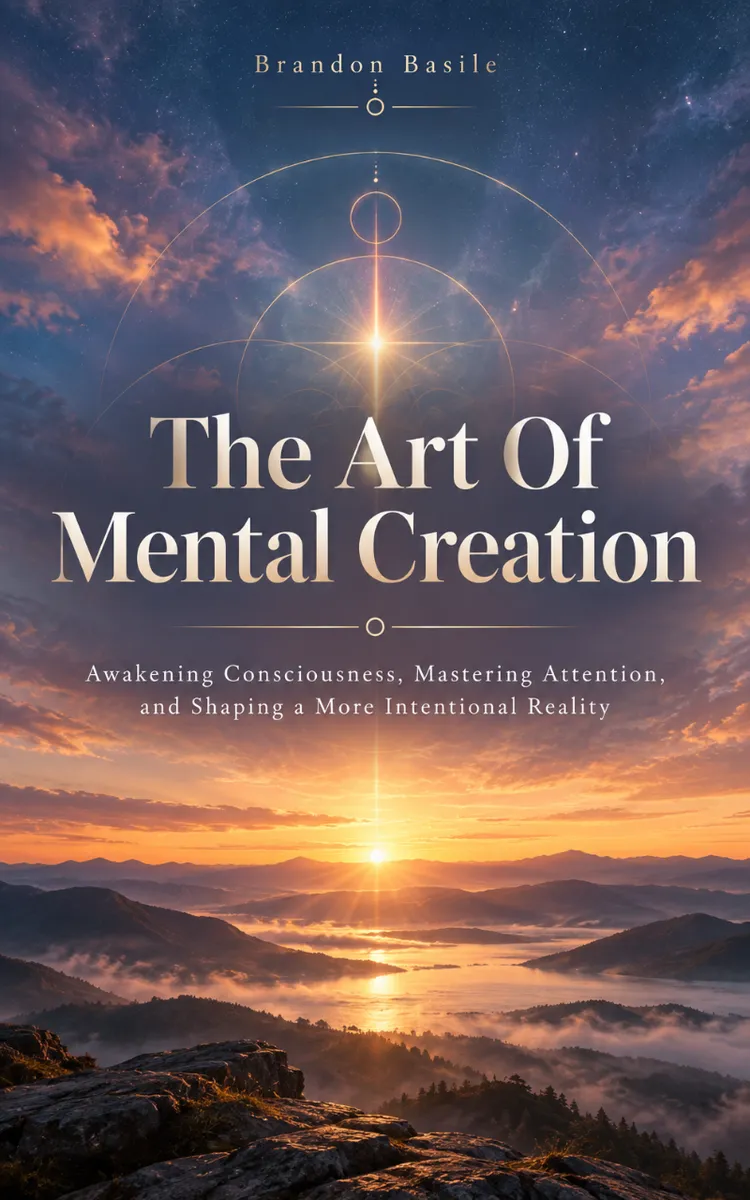
"The Art Of Mental Creation" is a inspirational book by Brandon Basile with 15 chapters and approximately 21,511 words. Esoteric mentalism, consciousness, ancient mystery traditions, and spiritual influence.
This book was created using Inkfluence AI, an AI-powered book generation platform that helps authors write, design, and publish complete books. It was made with the AI Inspirational Book Writer.
Frequently Asked Questions
What is "The Art Of Mental Creation" about?
Esoteric mentalism, consciousness, ancient mystery traditions, and spiritual influence
How many chapters are in "The Art Of Mental Creation"?
The book contains 15 chapters and approximately 21,511 words. Topics covered include Recognizing the Mind Behind Reality, Meeting the Angel of Mentalism, Reading the Hermetic Inheritance, Training Attention as Creative Power, and more.
Who wrote "The Art Of Mental Creation"?
This book was written by Brandon Basile and created using Inkfluence AI, an AI book generation platform that helps authors write, design, and publish books.
How can I create a similar inspirational book?
You can create your own inspirational book using Inkfluence AI. Describe your idea, choose your style, and the AI writes the full book for you. It's free to start.
Write your own inspirational book with AI
Describe your idea and Inkfluence writes the whole thing. Free to start.
Start writingCreated with Inkfluence AI


