
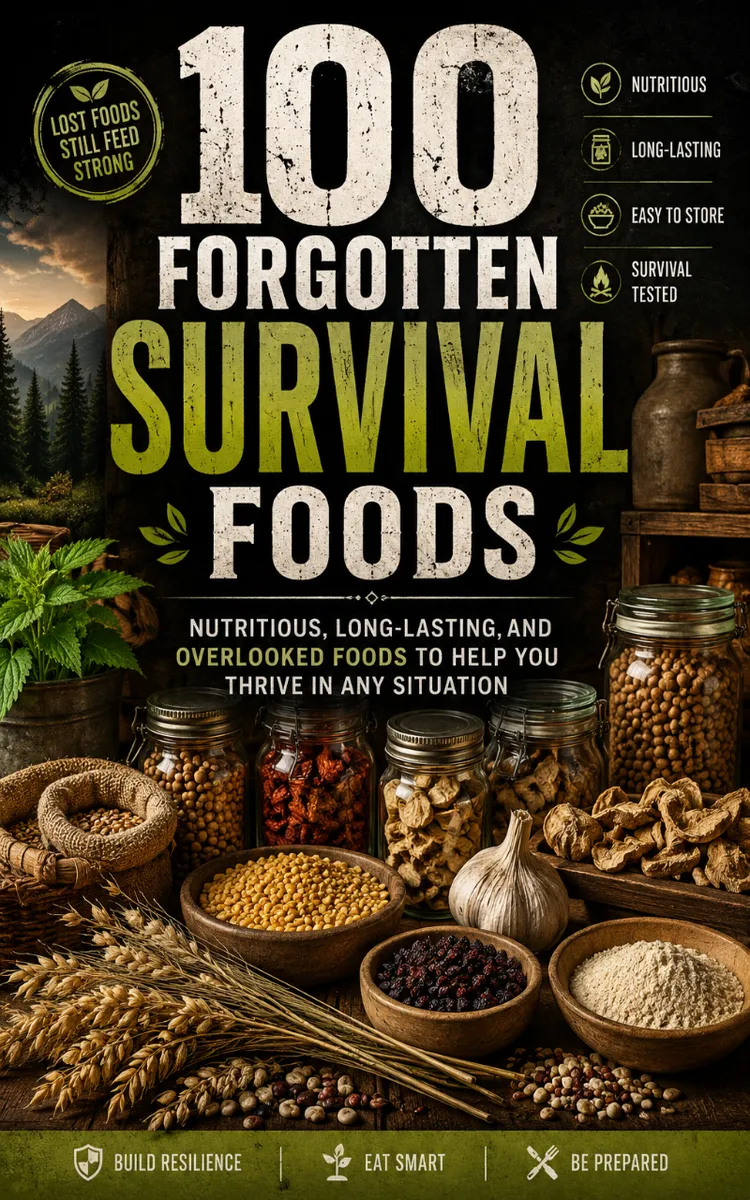
100 Forgotten Survival Foods
Created with Inkfluence AI
Your pantry is probably full of “survival basics,” but it might be missing the foods that actually store longer, resist pests better, and cook up faster when you need real calories. What if the reason your long-term supplies fail is not hunger, but the wrong grain, the wrong container, or the wrong moisture plan? This list-book gives you 100 forgotten survival foods, from overlooked grains and pseudograins to longevity-focused legumes and shelf-stable starches. Each entry highlights a common failure mode and the storage move to fix it, so you can build a prep pantry that stays edible through humidity spikes, power disruptions, and time. Start now and upgrade what you already have, before the next “storage day” turns into waste.
Table of Contents
- 1. Grain & Pseudograin Rescues: Shelf-Stable Staples You Forgot
- 2. Legumes for Longevity: Beans, Lentils, and Peas That Last
- 3. Root Cellar Alternatives: Tubers, Starches, and Long-Lasting Carbs
- 4. Dried Vegetables & Powdered Greens: Flavor That Survives
- 5. Protein Beyond Cans: Jerky, Sausages, and Shelf-Stable Meat
- 6. Fats, Oils & Sweeteners: Energy That Won’t Go Rancid
- 7. Baking & Thickening Helpers: Flours, Starches, and Mixes
- 8. Fermented & Pickled Survivors: Shelf-Stable Acids & Condiments
- 9. Spices, Herbs & Flavor Bombs: Making Meals Taste Like Home
- 10. Storage Systems & Rotation: From Pantry to Bug-Out
Preview: Grain & Pseudograin Rescues: Shelf-Stable Staples You Forgot
A short excerpt from “Grain & Pseudograin Rescues: Shelf-Stable Staples You Forgot”. The full book contains 10 chapters and 14,099 words.
Overview
If your pantry staples are all “wheat, rice, oats,” you’re leaving easy calories on the table - especially the grains and pseudograins that store well and cook up fast when you need them. This chapter covers 10 forgotten grain and pseudograin survival foods (like teff, sorghum, amaranth, and hulled barley) plus the storage moves that keep them insect-free, dry, and actually cookable.
You’ll also get the quick “why it goes bad” checklist for each item - because most storage failures aren’t mysterious. They’re usually moisture, oxygen, or bugs getting a head start. Takeaway prompt: before you buy anything new, ask yourself which foods you already have trouble keeping dry (basement, garage, or coastal humidity).
The Breakdown
#1: Teff (brown or ivory)
Problem: Teff is tiny. That sounds cute until you realize it’s also easy for weevils and pantry moths to slip in, and it can clump fast if humidity spikes. If it’s been opened once and left unsealed, you may not notice the problem until you’re ready to cook.
Solution: Store teff in 1-gallon food-grade buckets with gasket lids or Mylar-style pouches inside a 5-gallon bucket. For bug control, use oxygen absorbers (follow the pouch size instructions) and keep the grain dry - aim for <10% moisture by storing in a consistently cool, dry spot. After opening, transfer to a rigid container (not a flimsy bag) and add a desiccant pack you can replace.
Result: Teff stays free-flowing and usable for months, so you can make quick porridge or injera-style flatbreads without chasing pests.
#2: Sorghum (grain)
Problem: Sorghum is tough and filling, but it’s often mislabeled or sold as feed-grade, and feed-grade can have higher dust and more insect hitchhikers. When moisture gets in, it turns from “grindable” to “clumpy and musty” within weeks.
Solution: Buy grain labeled for human food when possible, then sort out any broken pieces. Pack into sealed containers and use oxygen absorbers for long-term storage (again, match the absorber to the package volume). For cooking, rinse well and cook like rice or use it for porridge; if you’re grinding, mill only what you’ll use within a couple of days for best flavor.
Result: You get steady emergency carbs with better taste and fewer surprises when you finally open the bin.
#3: Amaranth (grain)
Problem: Amaranth stores well, but it’s also very fine. Fine grains drift into cracks, and once insects are in, they spread quickly because everything is small enough to hide. If the grain absorbs moisture, it can taste “off” even if it doesn’t look spoiled.
Solution: Store in heat-sealed pouches or glass/metal containers with airtight lids. Add an oxygen absorber for long storage, and keep it away from heat sources (grain flavor drops faster when it cycles hot/cold). For daily prep, toast the grain lightly before cooking - this improves flavor and helps you notice rancidity early.
Result: You can pop it like cereal or cook it into a thick porridge without ending up with dusty, stale bowls.
#4: Hulled Barley (whole grain)
Problem: Hulled barley is forgiving, but “whole” doesn’t mean “problem-free.” If you store it where humidity swings, it can soften and spoil, and insects love steady, dark pantry conditions. Also, some people confuse hulled barley with pearled barley and think it won’t cook - then they quit before it becomes a go-to.
Solution: Store in airtight containers with oxygen absorbers for long-term plans. Label the date you packed it. For cooking success, use enough water and simmer until tender (plan for longer than white rice - think about 45-60 minutes, depending on your grain). If you want faster, soak overnight and cook the next day.
Result: You get a shelf-stable, hearty grain that turns into soups, pilafs, and side dishes with reliable texture.
#5: Millet (pearl or hulled)
Problem: Millet can taste bitter if it’s old, and bitterness usually means oils went rancid - or moisture kicked off flavor changes. Insect damage is also common because small grains get into seams and bags don’t actually seal tight.
Solution: Store millet in sealed buckets/pouches and treat it like an oil-leaning grain: rotate stock and don’t buy giant quantities you can’t use on schedule. Use oxygen absorbers and keep it cool. For prep, cook with a 1:2-ish water ratio and stir early; millet can clump if you don’t manage it.
Result: Millet stays sweet enough to be worth eating, not just “edible in an emergency.”
#6: Buckwheat (hulled grain, not kernels-only)
Problem: Buckwheat is often treated like it’s only for short-term pantry use. But if you store it poorly, it can pick up moisture and develop a stale, cardboard-like smell. Bugs also target it because it’s a common target grain in many households....
About this book
"100 Forgotten Survival Foods" is a list book book by NextGen PDF with 10 chapters and approximately 14,099 words. Your pantry is probably full of “survival basics,” but it might be missing the foods that actually store longer, resist pests better, and cook up faster when you need real calories. What if the reason your long-term supplies fail is not hunger, but the wrong grain, the wrong container, or the wrong moisture plan? This list-book gives you 100 forgotten survival foods, from overlooked grains and pseudograins to longevity-focused legumes and shelf-stable starches.
This book was created using Inkfluence AI, an AI-powered book generation platform that helps authors write, design, and publish complete books.
Frequently Asked Questions
What is "100 Forgotten Survival Foods" about?
Your pantry is probably full of “survival basics,” but it might be missing the foods that actually store longer, resist pests better, and cook up faster when you need real calories. What if the reason your long-term supplies fail is not hunger, but the wrong grain, the wrong container, or the wrong moisture plan? This list-book gives you 100 forgotten survival foods, from overlooked grains and pseudograins to longevity-focused legumes and shelf-stable starches. Each entry highlights a common failure mode and the storage move to fix it, so you can build a prep pantry that stays edible through humidity spikes, power disruptions, and time. Start now and upgrade what you already have, before the next “storage day” turns into waste.
How many chapters are in "100 Forgotten Survival Foods"?
The book contains 10 chapters and approximately 14,099 words. Topics covered include Grain & Pseudograin Rescues: Shelf-Stable Staples You Forgot, Legumes for Longevity: Beans, Lentils, and Peas That Last, Root Cellar Alternatives: Tubers, Starches, and Long-Lasting Carbs, Dried Vegetables & Powdered Greens: Flavor That Survives, and more.
Who wrote "100 Forgotten Survival Foods"?
This book was written by NextGen PDF and created using Inkfluence AI, an AI book generation platform that helps authors write, design, and publish books.
Write your own list book book with AI
Describe your idea and Inkfluence writes the whole thing. Free to start.
Start writingCreated with Inkfluence AI


